#ColoradoRiver #Drought Task Force Shows Support for State Water Projects and #Colorado Water Plan — Colorado Department of Natural Resources

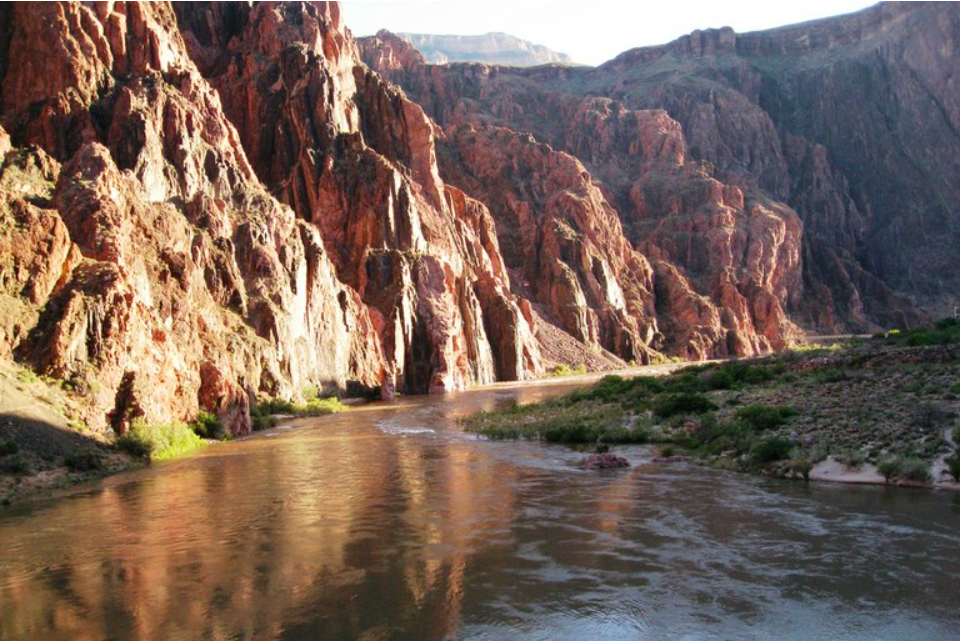
The Colorado River and other crucial sources of water in the West are declining, thanks to climate change. brewbooks/CC Flickr

Click the link to read the release on the Department of Natural Resources website (Chris Arend):

The Colorado Department of Natural Resources (DNR) and the Colorado Department of Agriculture (CDA) would like to congratulate the Colorado River Drought Task Force, who voted today to recommend a number of drought mitigation concepts for consideration by the Colorado General Assembly for potential legislation.

“The 17 members of the task force, representing diverse interests throughout Colorado, worked diligently on a short timeline to come together and support thoughtful and impactful ideas on how we can protect Colorado’s most precious resource– our water,” said Dan Gibbs, Executive Director, Department of Natural Resources. “I want to thank the Task Force for their hard work and conscientious consideration of drought, water supply and infrastructure, and wildlife issues these past few months. I also want to thank the engagement and initiative of the Colorado legislators who formed the Task Force, particularly Senator Dylan Roberts and Speaker Julie McCluskie. Their leadership has elevated these critical issues and we look forward to working with them and continuing conversations on relevant legislative proposals in the upcoming 2024 legislative session.”

“The Colorado River Drought Task Force’s representation gave a voice to those who have and will be most directly affected by our challenges on the Colorado River,” said Kate Greenberg, Colorado Commissioner of Agriculture. “The grim hydrologic reality that Colorado’s farmers and ranchers in particular have been living with for the past several decades has now reached a crisis point for others. The agricultural community will continue to lead the effort to live within the means of the river. Along with the recommendations of the task force, we hope that their example and efforts will see tangible, impactful results in the coming years for the Colorado River Basin.”

In addition, the Sub-Task Force on Tribal Matters has worked collaboratively to understand the barriers preventing the Southern Ute Tribe and Ute Mountain Ute Tribe from fully developing their water rights. 

“I want to thank Letisha Yazzie with the Ute Mountain Ute Tribe and Lisa Yellow Eagle with the Southern Ute Tribe for this valuable opportunity to identify solutions and funding that will undoubtedly benefit each Tribal Nation,” said Rebecca Mitchell, Colorado’s full-time Commissioner to the Upper Colorado River Commission, and member of the Sub-Task Force. “I look forward to when the Sub-Task Force finalizes its recommendations on Dec. 8.”

The work of the Drought Task Force comes at a time when the Colorado River faces significant challenges. Decades of unprecedented climate change-fueled drought, coupled with years of overuse in the Lower Basin States, means there’s now less water in the reservoirs. The Tribes and States that share this vital resource are confronted with the extraordinary challenge of creating new operating rules for Lake Powell and Lake Mead to sustain and share this dwindling resource.

Many final recommendations of the Drought Task Force align with the ongoing work of the Colorado Water Plan, which conserves and protects Colorado’s water for present and future generations. The Colorado Water Conservation Board oversees the Colorado Water Plan, and DNR is excited to see the Drought Task Force support items like prioritizing forest health and wildfire-ready watersheds, increasing funding for the state’s turf removal program, and expanding tools to support environmental streamflows.

The CWCB’s proposed 2024 Projects Bill, which makes recommendations to the legislature to support water projects and loans, includes more than $23.3 million for Water Plan Grants, $2 million for turf replacement efforts, $4 million for programs aimed at improving drought resiliency, and $1.8 million for high-tech water measurement. 

For Rebecca Mitchell, it is clear that the responsibility to live within the means of the river, and to build healthy reservoirs to see us through dry years, starts with the states downstream of Lake Powell and Lake Mead. Last year, the three Lower Basin states used an estimated 10.3 million acre-feet of water from the Colorado River. The four Upper Basin States only used an estimated 4 million acre-feet. It is obvious that any durable solution needs to begin with addressing this systemic overuse.

At this critical juncture, Commissioner Mitchell is focused on negotiating a sustainable path forward for the post-2026 operations of Lake Powell and Lake Mead, one that is protective of both Colorado’s significant interests in the Colorado River and the 40 million people who rely on it. Commissioner Mitchell has developed priorities that will serve as her North Star throughout these negotiations. One of them is that water users in the Upper Basin are just as important as those in the Lower Basin. The hard work of the Drought Task Force has made this clear.

One of DNR’s top priorities is to help Colorado build resiliency in the face of challenging hydrologic conditions in the Colorado River Basin so that we have vibrant communities, robust agriculture, and thriving watersheds. We are better able to make long-term, viable decisions when we work together. DNR and CDA appreciate the Task Forces and legislature’s recognition that, to make this future a reality, we need to unite around consensus-based solutions that do not hinder Colorado’s ability to protect its interests in the Colorado River at this pivotal time.

DNR and CDA look forward to working with legislators, water providers, municipalities, agricultural interests, conservation organizations, and other stakeholders on drought resiliency solutions that provide for long-term sustainable solutions that benefit Colorado’s economy, communities, and environment.   

#ColoradoRiver #Drought Task Force offers slate of potential fixes to drought-proof ailing waterway — Fresh Water News #COriver #aridification

“New plot using the nClimGrid data, which is a better source than PRISM for long-term trends. Of course, the combined reservoir contents increase from last year, but the increase is less than 2011 and looks puny compared to the ‘hole’ in the reservoirs. The blue Loess lines subtly change. Last year those lines ended pointing downwards. This year they end flat-ish. 2023 temps were still above the 20th century average, although close. Another interesting aspect is that the 20C Mean and 21C Mean lines on the individual plots really don’t change much. Finally, the 2023 Natural Flows are almost exactly equal to 2019. (17.678 maf vs 17.672 maf). For all the hoopla about how this was record-setting year, the fact is that this year was significantly less than 2011 (20.159 maf) and no different than 2019” — Brad Udall

Click the link to read the article on the Fresh Water News website (Jerd Smith):

December 6, 2023

Colorado could spend millions more to replace water-hungry lawns, keep extra water in streams to protect fish and their habitats, and repair water-wasting farm and city delivery systems, according to a list of potential fixes from a state task force hoping to drought-proof the Colorado River.

The 17-member panel finished its preliminary list of recommendations [December 1, 2023]. It will finalize the list Thursday and hone it for a final report to lawmakers due December 15, 2023.

The task force’s job has been to identify new policies and tools to help save water and ensure neither Colorado water users nor the environment are adversely affected by any new federal Colorado River agreements designed to protect the drought-strapped river across the seven-state region where it flows.

Created by lawmakers last spring when they approved Senate Bill 23-295, the task force includes representatives of environmental and agricultural groups, urban and rural water users, and the Southern Ute and Ute Mountain Ute tribes, among others.

In all, 24 recommendations will be voted on this week, covering a broad range of options, including small storage projects, more flexibility in sharing water stored in reservoirs, and new tools to measure water so that conservation programs can operate effectively.

“It has been a very short timeline, but it has been concentrated time,” task force chair Kathy Chandler-Henry said. “People showed up every other week in far-flung places for five-hour meetings and we have worked well together. It has felt as if it was a common goal to do something positive for drought in Colorado and get something useful to the legislature.”

The recommendations could make their way to lawmakers next year, or could be addressed by water agencies if no legislation is required to make the changes.

Among the proposals is a request to dramatically boost funding for a new state program that gives cities, water districts and nonprofits cash to help residents and businesses tear out thirsty lawns and replace them with water-saving landscapes. Last year, lawmakers provided $2 million for the work, including $1.5 million in actual grants. But some task force members would like to see that number rise significantly, perhaps as high as $5 million, according to Randi Kim, utilities director for the City of Grand Junction. Nevada spends $24 million on such programs, according to the task force.

“The current levels are helpful,” Kim said. “We received a $25,000 grant and we can do about 50 single-family homes. More money would have a broader effect.”

Also on the list are several proposals that would bolster tools used to keep water in streams, including a state program that allows water to be loaned to a stream for a certain period of time. Under one task force recommendation, the loan program could be operated for longer periods of time.

In another proposal, Tri-State Generation and Transmission Association is asking that water rights it controls, which are used to help run its coal plants in the Yampa River Valley, be preserved once the plants are shut down, a process that is scheduled to occur between 2025 and 2028. The recommendation isn’t specific only to Tri-State, but could include other utilities with coal-fired power plants and creates a pilot program in the Yampa Valley.

Under Colorado law, the rights to water that is no longer used must be transferred or sold to another user or the water  must be returned to the river. Traditionally, the idea has been to prevent water right holders from hoarding water they are not using. But the utility is asking that its water rights be protected and left in the river even if they are not being used through 2050, in case they are needed for future green power projects.

Such proposals have won the support of environmental groups, including Conservation Colorado, which maintain that finding ways to leave additional water in streams offers more protection for the environment, and the communities and recreation economies that rely on the waterways.

“The Western Slope in particular has been threatened by drought, by river closures due to low flows, and fish kills due to low flows. These measures could help Colorado become more resilient,” said Josh Kuhn, senior water campaign manager for Conservation Colorado.

There also are recommendations to provide more funding to improve leaky water systems for irrigators and cities. Though water funding has increased from some sources, such as tax revenue from sports betting in Colorado and from the federal government, task force members said funding is still difficult to come by and needs to be prioritized.

Steve Wolff, a task force member representing the Southwestern Water Conservation District in Durango, said it’s unclear how many of the recommendations will turn into on-the-ground drought fixes.

“I certainly think it’s been a good discussion,” Wolff said. “But a lot of these things involve more funding. We need to understand if by doing these things, are we taking money from elsewhere and is that fair? I think it would be helpful to start prioritizing, whether it should be for aging infrastructure, or more storage, or other things.”

More by Jerd SmithJerd Smith is editor of Fresh Water News. She can be reached at 720-398-6474, via email at jerd@wateredco.org or @jerd_smith.

Map credit: AGU

After Clean Water Act ruling, states that want to protect affected wetlands need millions

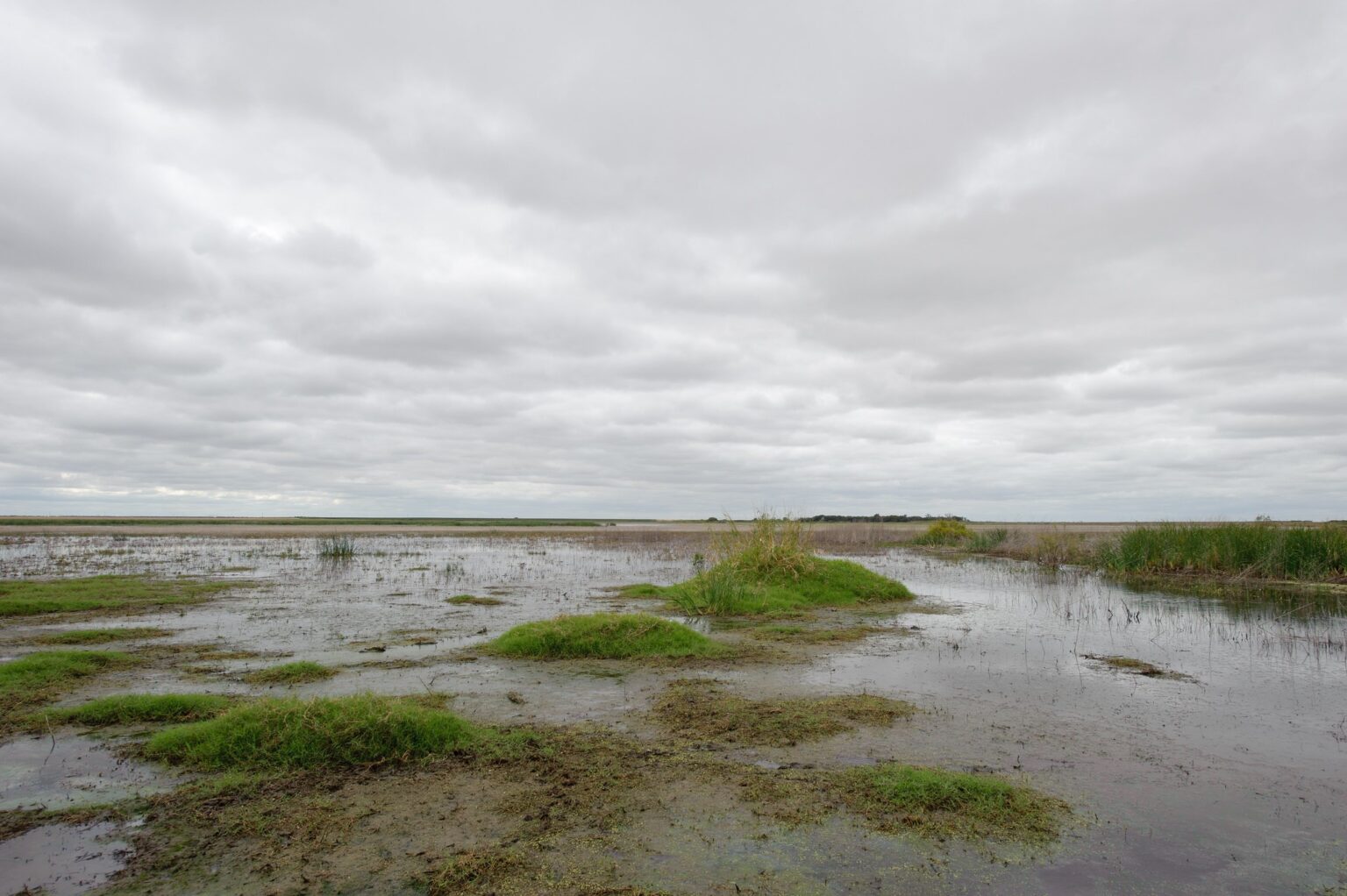
Millions of acres of wetlands recently lost federal protection under the Clean Water Act after a U.S. Supreme Court ruling. Some states are attempting to fill the void, but permitting programs — and the staff needed to enforce them — have proven costly. Flickr/USDA NRCS TX

by Alex Brown, Stateline
December 5, 2023

Earlier this year, the U.S. Supreme Court stripped federal oversight from millions of acres of wetlands long protected under the Clean Water Act. Now, erecting safeguards to ensure those waters are not polluted, drained or filled in by developers falls to the states.

They’re finding that it’s not easy.

“States and tribes already didn’t have enough funding to support the programs they have, and now they are being put in a position where they need to step up,” said Marla Stelk, executive director of the National Association of Wetland Managers, a nonprofit group that represents state and tribal regulators.

Wetlands play a crucial role in filtering pollution and nutrient runoff. They also absorb stormwater, help to recharge aquifers and provide essential habitat for many species. When wetland areas are lost, water managers say, communities may suffer from flooding, become more vulnerable to droughts or require expensive treatment plants to make water safe to drink.

In some states, the loss of federal rules means that many waters are now largely unregulated. Some lawmakers, mostly in Democratic-led states, are looking to craft rules to replace the lost Clean Water Act protections, but they expect a yearslong process just to get new regulations on the books.

Other states have had strong rules in place even without the federal coverage. But now they can no longer rely on federal partners such as the U.S. Environmental Protection Agency to help enforce those standards. Regulators in those states are asking lawmakers for millions of dollars to hire more staff to process permits and monitor water quality.

States and tribes already didn’t have enough funding to support the programs they have, and now they are being put in a position where they need to step up.

– Marla Stelk, executive director with the National Association of Wetland Managers

Meanwhile, some conservative states view the rollback as an opportunity for developers and industry. Soon after the court decision, North Carolina passed a law eliminating all state protections that exceeded the federal standard. Environmental advocates say other business-friendly states are unlikely to enact their own protections, and fear that some will follow North Carolina’s lead by cutting existing rules.

“It ought to help with regard to costs and predictability,” said Ray Starling, president of the NC Chamber Legal Institute, the legal strategy arm of the business advocacy group, in a June interview with Stateline. “The Supreme Court knew that this would end up yielding quite a bit more jurisdiction to the states. We would argue that’s actually good.”

State leaders say they remain unclear on exactly which waters have lost federal oversight following the Supreme Court decision and a subsequent EPA rule based on it. Officials expect plenty of litigation as they attempt to make sense of murky legal definitions from the feds. Some fear that developers may take advantage of the confusion, using states’ uncertainty as implicit permission to bulldoze wetlands.

“Every state’s risk has increased,” said Julian Gonzalez, senior legislative counsel for policy and legislation at Earthjustice, an environmental law group. “The whole point of the Clean Water Act was to ensure that there’s not a patchwork of regulations. Even when EPA had full jurisdiction, there were tons of enforcement issues all across the country. This is only going to exacerbate them.”

Staffing shortfalls

In May, the Supreme Court ruled that the Clean Water Act does not cover wetlands that lack a continuous surface connection to a larger body of water, which excludes many waters that connect underground. The court also narrowed the law to exclude from protection “ephemeral” streams that flow only seasonally.

Of the nation’s 118 million acres of wetlands, more than half could lose federal protection under the new definition, Earthjustice estimated. The EPA in August issued a new rule revising its regulation known as the “waters of the United States” rule to meet the court’s limitations.

Half the nation’s wetlands just lost federal protection. Their fate is up to states.

https://stateline.org/2023/06/16/half-the-nations-wetlands-just-lost-federal-protection-their-fate-is-up-to-states/embed/#?secret=HZPvD6wZlu#?secret=oxXGJjKM3F

“We still don’t know how [courts] are fully going to interpret what constitutes a surface connection, but we’re still assuming that at least 50% of [Washington’s] wetlands are no longer jurisdictional [under the Clean Water Act],” said Lauren Driscoll, manager of the wetlands program with the Washington State Department of Ecology.

With the feds bowing out, Driscoll’s agency may have to process an additional 50 to 100 permits a year, up from the 12 or so it currently handles. The agency is currently enforcing state wetland standards using a customized administrative order for each permit. Regulators are asking state lawmakers to enact a dedicated permit program that would create a standardized application process.

The agency also is seeking 10 more staffers to process permits, and three more temporary workers to help develop the new program. Once established, the permit program will cost about $2.2 million per year to administer, Driscoll said.

In California, regulators say they’ll also need more funding and staff to enforce state wetlands laws. For waters that are losing federal protection, states such as California will lose access to environmental analyses, expertise and staff capacity from federal partners such as the U.S. Army Corps of Engineers.

“We are anticipating no longer having support from the [U.S.] Army Corps of Engineers for things we’ve relied on them to do on the technical side” in waters that are no longer protected as waters of the United States, said Karen Mogus, deputy director of the Division of Water Quality within the State Water Resources Control Board. “We have protections in place, we have state authority, but we are certainly seeking additional resources to cover the gap that we have estimated is going to be opened up.”

While the agency’s specific funding request remains confidential, Mogus said, the loss of federal support could delay the issuance of permits. Regulators also might have to set up a state version of a federal pollution discharge program that covers wastewater plants and other industries.

GET THE MORNING HEADLINES DELIVERED TO YOUR INBOX

SUBSCRIBE

A few states already have passed laws that are broader than the federal standard, with well-established permit programs to uphold them. In Minnesota, for instance, state officials say their efforts will be largely unaffected by the court decision. But they acknowledge that other states may be hard-pressed to enact protections such as Minnesota’s 1991 Wetland Conservation Act.

“It would be very difficult to even consider doing something like that today,” said Dave Weirens, assistant director for programs and policy with the Minnesota Board of Water and Soil Resources. “Democrats and Republicans found it easier to find common cause to solve problems than they do today.”

Last year, New York lawmakers passed a measure to expand the wetlands covered by state regulators, in part because of the pending Supreme Court case. Officials with the state Department of Environmental Conservation did not grant an interview about that effort, but supplied a statement saying the expansion would protect an additional 1 million acres of wetlands.

Making investments

Other states are working to put firmer protections on the books. In New Mexico, officials already had been working prior to the ruling to establish a surface water permitting program.

While the state currently has standards to protect wetlands, it’s enforcing them via administrative orders rather than a well-defined program. Agency officials have been coordinating with counterparts in Washington state, which is also using administrative orders, even as both states work toward a more defined program.

“We’d like to get away from boutique permits, these individual one-off permits and standardize this,” said John Rhoderick, director of the Water Protection Division within the state Environment Department. “Each permit is an adventure to say the least.”

Rhoderick said it will take about five years to get the state program fully established, requiring an additional 35 to 40 staff members and $5 million to $6 million per year. He said state lawmakers have been supportive of that effort, and he anticipates they will empower his agency to begin a rulemaking process late next year.

More States Want Power to Approve Wetlands Development

https://stateline.org/2022/05/11/more-states-want-power-to-approve-wetlands-development/embed/#?secret=J9XXl4rZeN#?secret=rvaHPQI8eS

Colorado is among the states without strong wetlands protections. Gov. Jared Polis, a Democrat, has proposed $600,000 in his budget request as an “initial investment” toward developing a program, spokesperson Katherine Jones said in an email. The governor’s office declined an interview request seeking more details on that proposed program. Developers in the state say they’re monitoring the process, while environmental advocates say they’re working with officials to craft laws that will restore protections for Colorado’s waters.

“We are fully intent, both advocates and the government, to get a program in place that will at a minimum return us to where we were at [with federal oversight],” said Ean Tafoya, Colorado state director with GreenLatinos, an environmental justice organization. “What’s frustrating is that we could have been taking these steps a few years ago.”

While Polis’ budget request may help to kick-start a rulemaking process, Tafoya said, establishing a full regulatory program will cost millions of dollars. While specific bill language hasn’t been released, he said he expects lawmakers to consider legislation that would direct the state Water Quality Control Division to establish standards by a certain date.

Illinois activists also are pushing for legislative action.

“Wetlands are one of the few natural tools we have to filter our nutrient pollution, and they have the capacity to hold water, which helps mitigate flooding,” said Eliot Clay, land use programs director with the Illinois Environmental Council. “They are going to help us get through some of the worst impacts of climate change.”

At present, Clay said, the state’s wetlands protections are vague, and the state Department of Natural Resources is understaffed. But he believes Democratic Gov. JB Pritzker is interested in bolstering the state’s standards, and advocates expect to see a bill in the legislature next year.

Pritzker’s office did not respond to a request for comment.

SUPPORT NEWS YOU TRUST.

DONATE

Stateline is part of States Newsroom, a nonprofit news network supported by grants and a coalition of donors as a 501c(3) public charity. Stateline maintains editorial independence. Contact Editor Scott S. Greenberger for questions: info@stateline.org. Follow Stateline on Facebook and Twitter.