
Click the link to go to the CRWUA website to access the presentations from the conference.

Click the link to go to the CRWUA website to access the presentations from the conference.

Click the link to read the article on the InkStain website (John Fleck):
December 20, 2023
The news out of last week’s Colorado River Water Users Association is that, behind the scenes, a deal is taking shape with the potential to bring Colorado River Basin water use into balance with water supply.
The deal would eliminate the “structural deficit”, and creates a framework for a compromise over the Upper Basin’s Lee Ferry delivery/non-depletion obligation.
This is huge. But so are the caveats – in terms of both the challenges remaining for a deal, and the definition of the problem we are trying to solve.
The U.S. Lower Basin states – California, Arizona, and Nevada – have converged on a set of numbers to permanently reduce their use on a year-in, year-out basis by a minimum of 1.25 million acre feet per year, eliminating the “structural deficit” – the year-in, year-out gap between inflows and outflows that has drained Lake Mead over the last two decades.
California and Arizona seem to have found a path to a compromise (the details of which have not been made public) after the early-2023 cage match that seemed to place us on the path to interstate litigation, with six states arguing for sharing the pain and California insisting on a priority administration that would have largely placed the burden of the impact of climate change on Arizona.
If separate negotiations with Mexico lead to additional reductions south of the border (which is how this has played out in the last two rounds of basin scheming), total durable, permanent Lower Basin reductions on the order of 1.5 million acre feet a year appear to be within reach.
If more cuts than that are needed to balance the system, the Lower Basin states at CRWUA made it pointedly, publicly clear that they are asking the Upper Basin states to share in the additional pain.
Implicit in that final point is the opportunity for a version of what we used to call the “Grand Bargain” – a Lower Basin concession that the river’s flow may not be sufficient to deliver 82.5 million acre feet per year. That would require even deeper cuts in the Lower Basin. To avoid interstate litigation over a Colorado River Compact delivery shortfall, the Lower Basin is offering a “Modest Bargain” of a sort – an Upper Basin contribution of water matching in some way (it’s not clear in what proportion to the additional Lower Basin cuts) in return for the Lower Basin not wading into a legal fight over the meaning of Article III(d) of the Colorado River Compact.
To the extent that this moves from the meeting rooms and hallway conversations of CRWUA to public view, the seven states need to come together on something that can be put down in writing, publicly, by (I think) March in order for the Bureau of Reclamation wizards to begin the modeling work. So this is on a very fast track.
This is a very big deal, and very good news. But….
SOME TERMS AND CONDITIONS MAY APPLY
There are a bunch of caveats.
The final AZ-CA-NV split of the 1.25-ish million acre feet is not fixed, but it is close, converging on a set of numbers that make sense, respecting some of California’s senior priority status, but not insisting on it as thoroughly as the state’s proposal of last February.
Suffice to say that the remarkable Lower Basin use numbers this year – currently at 5.8 million acre feet for the three U.S. states, the lowest total U.S. draw on Lake Mead since the modern record-keeping regime began in 1964 – shows that cuts like this are totally doable without wrecking the economies of the three states.
If we don’t have three-state numbers yet, we’re a lot farther from figuring out how each of the three states will divvy up the cuts among their users. This will be hard. Well for two of the states, anyway, Nevada just has one major user to do the divvying.
But will voluntary cuts of the scale needed be possible without the big inflow of federal cash that has helped so much this year? The precedent set by all the money sloshing around the Lower Basin right now poses a challenge.
And what of the Upper Basin’s relentless “it’s a Lower Basin over-use problem!” rhetoric over the last year. Now that the Lower Basin folks have basically said “Yup, and here’s what we’re gonna do about that”, have the Upper Basin folks painted themselves into a corner that makes the broader compromise needed on the next steps that much harder?
WHO’S AT THE TABLE RIGHT NOW?
All of this is predicated on a narrow definition of the problem we are trying to solve, which is basically a mass balance problem – figuring out how to match our use of water with the supply available, rather than over-using and draining the reservoirs. This is important! But it’s not the only thing.
This is a process dominated by the economically and politically powerful current water users. If we have a collective action problem here, we also have a “collective agency” problem. It is a system under which “agency” – the power to influence outcomes – is tightly controlled and narrowly distributed.
What about interests other than the big water agencies and their representatives in state government? This is clearly a state-to-state conversation right now, heading toward a desire for a seven-state proposal come March. In the last two rounds of this – the 2007 Interim Guidelines and the Drought Contingency Plan – the states’ proposals have carried the day.
What about the Colorado River Basin’s 30 Tribal Sovereigns? It’s not clear to me how their needs and interests are being incorporated into this process. In this regard, one is reminded of Neil Gorsuch’s dissent in this year’s Navajo decision, where he analogized to the tribe standing in line after line again and again at the DMV, only to be told that this isn’t the right line. Then which is?
What about non-water-consuming environmental values, which have similarly had a hard time figuring out which process might be the right one? The states could, in theory, act on behalf of those non-water agency interests in the deal they’re so furiously negotiating. Will they? Will the federal government step in and insist if the states don’t?
There was hope as we headed into the negotiation of the post-2026 river management regime that broader interests and values would be represented. It will be interesting to see what else beyond a seven-state proposal gets consideration in the discussions to come.
A note on sources and methods: I spent last week resting, looking at art, watching falling snow, reading a book (actually several), and not going to CRWUA. My deep thanks to my many friends who attended and filled me in what they heard and saw. All errors are mine. (Also, is that a Cocker Spaniel in the picture, a couple of seats to the chair’s left?)

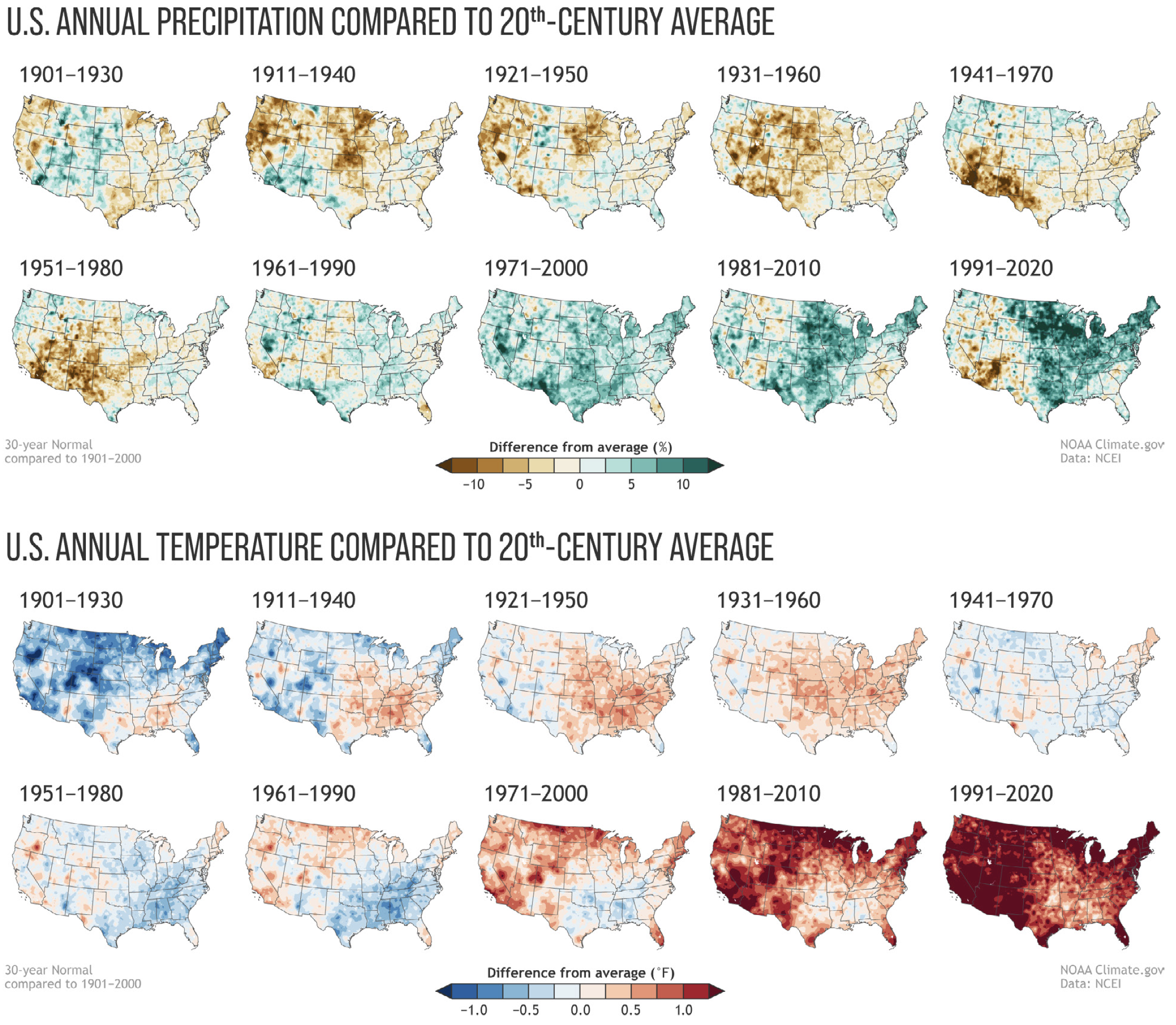
Click the link to access the report on the NIDIS website (Britt Parker; Joel Lisonbee, Elizabeth Ossowski ; Holly R. Prendeville; Dennis Todey). Here’s the executive summary:
Over the past few decades, significant advances have been made to improve the Nation’s capacity to proactively manage drought risk by providing those affected with the best available information and resources to diagnose and quantify—or assess—drought conditions. Drought assessments can be a snapshot of present drought severity and extent, an analysis over time of drought duration, a retrospective look at the underlying drivers of a drought, an analysis of the impacts of drought on people or systems, or any other attempt to understand the dynamics of a particular drought. These assessments have a vital role to play in supporting communities in preparing for, mitigating, and responding to drought.
Improvements in data products, more accurate drought assessments, and investments in better coordination have served drought-prone communities well. Continuous integration of new needs and requirements from those communities is essential to maintaining the continuity of progress our country has already made. Today, the changing climate is causing the probability of extreme events to change, a phenomenon known statistically as non-sta-tionarity. In the future, the intensity, duration, and frequency of droughts may change. This poses new challenges that are being raised by scientists, decision-makers, and practitioners. These challenges include the difficulty to distinguish natural variability, meaning the naturally occurring oscillations in the climate system, from forced trends, or the seemingly permanent changes caused by anthropogenic climate change. This also includes the complexity of understanding drought within socio-economic considerations and resource constraints (e.g., funding, capacity) that might limit the ability to integrate the latest science into operational data products.
Around the country, those engaged in drought decision-making are considering a number of questions such as: Do current methods for assessing drought conditions consistently and deliberately consider non-stationarity? If not, could this result in a missed opportunity to promote drought planning and response strategies that build long-term community resilience and reduce risk? What research is needed to produce drought indicators that account for climate change? And what resources are available to support their development and integration into the current suite of indicators?
A technical meeting to discuss this issue was co-hosted by NOAA’s National Integrated Drought Information System (NIDIS) and USDA Climate Hubs on February 28–March 1, 2023, where scientists, decision-makers, and practitioners were asked to address an overarching question: “What approaches should be taken to better incorporate non-stationarity into drought assessment?” Answering this question thoroughly demands thoughtful consideration of (1) the phenomenon of drought itself; (2) the experience of drought and its impacts; (3) the purpose of assessment of drought and its impacts; and (4) the preparation for and response to drought and its impacts, including actions to reduce impacts as well as policies and adaptation. Of these considerations, the technical workshop focused largely on better understanding and assessing the phenomenon itself by breaking the topic down into four sub-topics: (1) considering climate variability and drought assessment; (2) understanding drought in an aridifying (drier-trending) climate; (3) discerning drought in a humidifying (wetter-trending) climate; and (4) defining drought in terms of risk and likelihood of event.

This report captures the ideas and feedback of more than 100 subject matter experts from over 44 institutions across the drought research and practitioner communities who participated in the meeting and reviewed this report. The two-day meeting identified priority actions and outstanding research questions that would continue to advance drought assessment in a changing climate. From the large volume of input received at the meeting, ideas were collated and refined; however, they were not distilled down to a few top priorities, nor were ideas further fleshed out to incorporate a prescriptive scale for implementation. Instead, this report captures the breadth of feedback from the meeting itself.
In total, the report highlights priority actions and research questions across the following fifteen focus areas to improve drought assessment by addressing gaps identified by the research and practitioner community. These fifteen focus areas are presented individually with the acknowledgement that if they are approached as siloes, progress will be curtailed. Many are cross-cutting, progress in one will accelerate progress in another, and it is key that the drought community approach these issues collaboratively. Finally, while the primary focus of the technical working meeting was on better understanding and assessing the phenomenon (of drought) itself, focus areas on related planning, governance, and communication considerations are also critically important and were captured.
- Learning with Indigenous Communities
- Benchmarking our Understanding and Assessment of Drought in a Changing Climate
- Ensuring Equity in Drought Monitoring and Assessment
- Evaluating Data Relevance, Fidelity, Integration, Metadata and New Technologies
- Determining the Physical Drivers of Drought and How They Are Changing
- Understanding Drivers of Aridification and Their Interactions with Drought
- Addressing Regional Differences in Non-stationarity
- Improving Drought Indicator Performance
- Using Precipitation Effectiveness More Broadly to Capture Rainfall Variability
- Quantifying Water Demand in a Changing Climate
- Evaluating Drought Impacts and How They Are Changing
- Assessing Drought in Terms of Risk
- Assessing Policy through the Lens of Non-stationarity
- Strengthening Planning, Management, and Adaptation
- Improving Communication and Collaborative Knowledge Exchange
Across this discussion of diverse and important focus areas, chronic issues emerged that plague our Nation’s efforts to adequately assess drought and its impacts, and these are exacerbated by climate change. These include gaps in drought monitoring and assessment that present equity issues and under-resourced observation and monitoring networks that require additional investment.
This report offers a rich collection of ideas for action and research that federal, tribal, state, local agencies and academic institutions can advance. Further prioritization and specification may be warranted to discern where limited resources might be most impactful, and this will be the focus of an accompanying synthesis paper for publication in 2024. Although the intent of the report is not to provide authoritative guidance or design specifications for specific research or programmatic endeavors, it is intended to illuminate current and future needs to best account for a changing climate in our drought assessment practices.