Day: December 20, 2023
Share your input: Planning greenhouse gas emissions reductions for midstream oil and gas facilities — #Colorado Department of Public Health & Environment #ActOnClimate #KeepItInTheGround
From email from CDPHE:
Join the Air Pollution Control Division to discuss further reducing greenhouse gas emissions from oil and gas operations. The division is leading a workgroup that is making a plan to address emissions from the industry’s midstream facilities. Midstream facilities include compressor stations and natural gas processing plants. Fuel combustion equipment at these facilities emit greenhouse gases and other air pollutants. This equipment includes engines, boilers, reboilers, heaters, and turbines.
Public feedback will help the workgroup draft an emissions reduction plan. The draft plan will be open for public comment in 2024. See below for more details and opportunities to comment on the draft plan, once available.
The division invites all Coloradans to participate. In particular, the division would like to hear from:
- Communities living or working near midstream oil and gas facilities.
- Communities disproportionately impacted by pollution.
The public meeting agenda will include:
- A plain language presentation.
- An opportunity to provide public comments.
- A question and answer session.
Registration is required. Language interpretation services are available upon request.
Registration:
- Virtual meeting: Thursday, January 18, 10 – 11:30 a.m.
- Register to join the Jan. 18 meeting.
- Virtual meeting: Tuesday, February 20, 2 – 3:30 p.m.
- Register to join the Feb. 20 meeting.
- Virtual meeting: Thursday, March 7, 10 – 11:30 a.m.
- Register to join the March 7 meeting.
Questions? Contact cdphe_apcd_outreach@state.co.us. Please include “Midstream Public Meeting” in the subject line. More information is available on the division’s website, including a fact sheet.
Draft emission reduction plan for oil and gas midstream facilities
Join us in spring 2024 for public meetings on the draft emission reduction plan. The plan will focus on reducing greenhouse gas emissions from midstream oil and gas facilities.
The draft emissions reduction plan will be available on the division’s website. The draft plan will also be open for a 30-day public comment period once available, starting likely in mid-April 2024.
The meeting agenda will include:
- An opportunity to provide verbal public comments.
- Information on how to submit a written public comment.
Registration is required. Language interpretation services are available upon request.
Registration:
- Virtual meeting: Saturday, April 27, 10 a.m. – 12 p.m.
- Register to join the April 27 event.
- Virtual meeting: Thursday, May 2, 6 – 8 p.m.
- Register to join the May 2 event.
Questions? Contact cdphe_apcd_outreach@state.co.us. Please include “Midstream Public Meeting” in the subject line.
Background on Colorado’s greenhouse gas reduction planning
This work is part of Colorado’s ongoing efforts to achieve greenhouse gas reduction targets.
Colorado’s Greenhouse Gas Pollution Reduction Roadmap outlines targets by sector.
The Colorado Environmental Justice Act set statewide greenhouse gas reduction targets for the industrial sector. This includes reducing greenhouse gas emissions 20% by 2030 below the 2015 baseline for fuel combustion equipment in the oil and gas midstream segment.
For more information, please visit the division’s greenhouse gas reduction planning program webpage. Register to receive email updates.
Meeting accommodation notice
Auxiliary aids and services for individuals with disabilities may be provided upon request. Please notify cdphe_apcd_outreach@state.co.us and the Nondiscrimination Coordinator at cdphe_nondiscrimination@state.co.us or 303-692-2102 at least one week prior to the meeting to make arrangements.
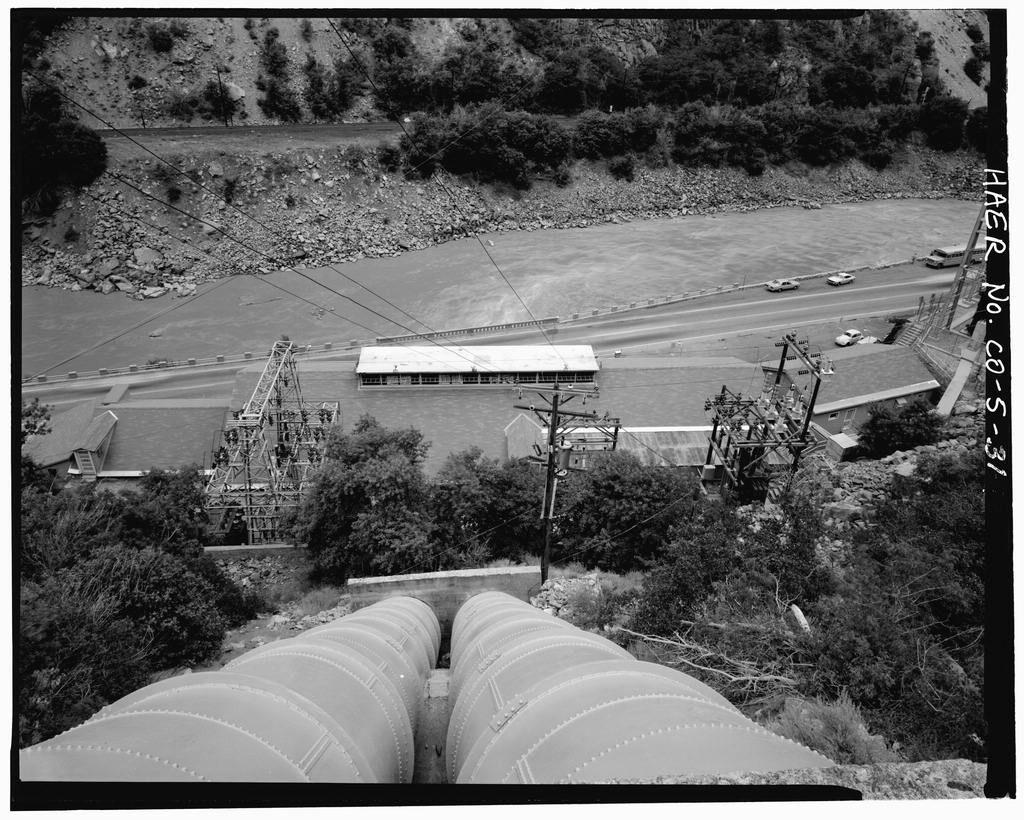
Colorado River District inks historic water rights deal for Western Slope: Water for Shoshone hydropower plant is key to #ColoradoRiver flows — @AspenJournalism #COriver #aridification

Click the link to read the article on the Aspen Journalism website (Heather Sackett):
Water managers, state and county elected officials and representatives from environmental and recreation organizations all gathered in Glenwood Springs on Tuesday to mark a historic deal intended to keep water in the Colorado River.
The Glenwood Springs-based Colorado River Water Conservation District has inked a nearly $100 million deal with Xcel Energy to buy one of the oldest and biggest non-consumptive water rights on the main stem of the Colorado River, a first step in ensuring the water continues flowing west.
“How does history feel?” Marc Catlin, vice president of the River District and state Representative from District 58, asked the audience. “Feels pretty good today, doesn’t it?”
At a packed meeting at the Hotel Colorado, River District President and Eagle County Commissioner Kathy Chandler-Henry signed a purchase and sale agreement with Xcel Energy for water rights associated with the Shoshone hydropower plant in Glenwood Canyon. The River District and other partners will pay $98.5 million for two water rights: a 1902 right for 1,250 cubic feet per second and another from 1929 for 158 cfs.
River District board members on Tuesday approved the purchase and sale agreement with Public Service Company of Colorado, a subsidiary of Xcel Energy, and approved spending $20 million from River District’s Community Funding Partnership grant program toward the deal.
The move represents the culmination of years of work on the part of the River District to secure the rights.
“Over the past few decades, 19 western Colorado entities have been working together tirelessly to find a permanent way to preserve these flows, which served as the backbone of western Colorado’s economy and environment,” River District General Manager Andy Mueller said.
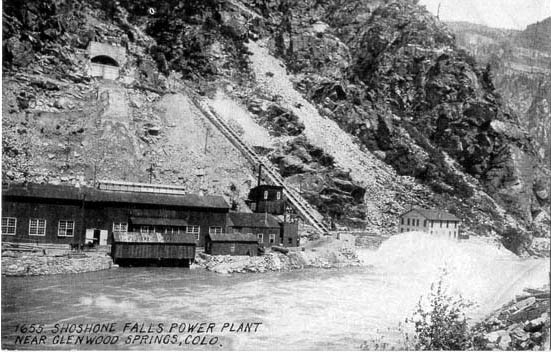
When the Shoshone plant is operating, it draws 1,408 cfs of water downstream, which adds up to about 1 million acre-feet each year, according to the River District. Upstream junior water rights holders, some of which are Front Range diverters that take water from the headwaters across the Continental Divide, must leave enough water in the river for Shoshone to receive its full amount. It also means that the water is available for other downstream users on the Western Slope, including for endangered fish in the critical 15-mile reach of the Colorado River in the Grand Valley.
In recent years, the Shoshone plant has been down often for maintenance and has been damaged or made inaccessible by ice jams, wildfires, rockfall and mudslides in the disaster-prone canyon. A 2016 agreement known as the Shoshone Outage Protocol (SHOP) allows the plant to continue calling for water even when it’s not operable. But SHOP is not permanent, which made Western Slope water managers uneasy. They worried that if Xcel sold or stopped operating the plant permanently, that water would no longer continue flowing downstream or another entity would seek to purchase the water rights.
According to Hollie Velasquez Horvath, regional vice president for state affairs and community relations for Xcel, the River District approached the utility four times about purchasing the rights.
“While we have no plans to not operate the Shoshone plant, we also understand the critical risk if there is ever a point in which that plant does not operate for our customers,” Horvath said. “This deal is important to our customers and I know our communities on the Western Slope.”
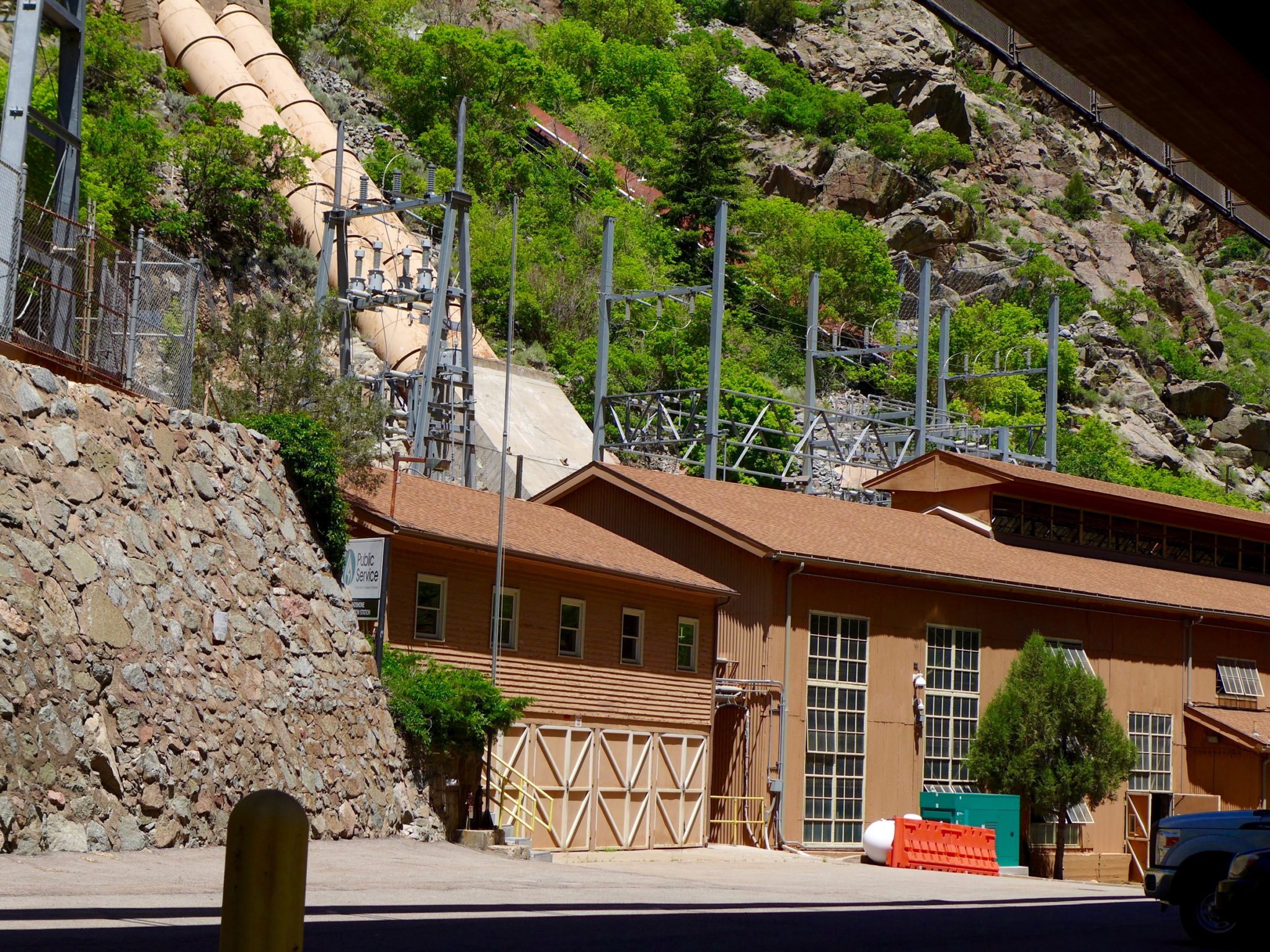
Xcel will continue to lease the hydropower rights from the River District for as long as the plant is in operation. The reach where the instream flow rights tied to the deal would be used would run about 2.4 miles from the point of diversion at the Shoshone Dam at the Hanging Lake Tunnel to the outfall of the powerplant penstocks.
Commissioners through whose counties the Colorado River and its tributaries flow — Grand, Summit, Eagle, Garfield, Mesa — each got a few minutes at the podium.
“Grand County is the most heavily diverted … in the state and this is a big deal for us,” said Merrit Linke, commissioner from Grand County, much of whose headwaters are taken eastward to the Front Range. “From tourism to ag and everything in between, Grand County relies on the Colorado and its tributaries. Just to name a few: Williams Fork, Willow Creek, the Fraser, the Muddy, the Blue. For all of those tributaries of the Colorado that flow west, thank you.”
Funding needed
According to the purchase and sale agreement, the River District must pay $1 million by Jan. 1, but that is just the start. Closing the deal is contingent on four more conditions that must be fulfilled by the end of 2027: negotiation of an instream flow agreement with the Colorado Water Conservation Board, (the only entity allowed to hold instream flow rights); a change of water right decree that would allow the rights to be used for instream flow in addition to hydropower; approval of the deal by the Colorado Public Utilities Commission; and securing the remaining funding.
The River District has asked the CWCB to contribute $20 million; $10 million is expected to come from the Western Slope coalition, a group including the River District and 18 other local governments and water entities, and the remaining $49 million from the U.S. Bureau of Reclamation through the Inflation Reduction Act that made available $4 billion in funding for drought mitigation.
At Tuesday’s event, which also served as the kick-off for the Shoshone Water Right Preservation Campaign, elected officials vowed to raise their share of the money.
“Garfield County is committed to this project, not only in heart and soul, but in money,” said Garfield County Commissioner John Martin. “We’re going to raise as much as possible and we’re challenging each one of you. … Don’t give me $100, don’t give me $1,000, don’t just give me $1 million.”
State Sen. Dylan Roberts, a Democrat from District 8, which includes Clear Creek, Eagle, Garfield, Gilpin, Grand, Jackson, Moffat, Rio Blanco, Routt and Summit counties, committed to working to secure the funding from the CWCB.
“I applaud you on your excellent work and express my solemn and steadfast commitment to make sure that the state of Colorado does its part in making sure that we can preserve the Shoshone water rights forever,” Roberts said.
Mueller told Aspen Journalism in an earlier interview that securing the Shoshone water rights has been a goal of the River District since the organization’s inception in 1937. He said the deal is a permanent solution to keep water in the river, whose flows have been diminished by drought and climate change.
“While $99 million seems like a lot, in terms of its value to the river and in the communities that depend on it, it’s worth vastly more than that,” he said.
More Shoshone coverage from Coyote Gulch.