
Click the link to read the conference Tweets.
Click the link to read the article on the Arizona Department of Water Resources website:
An essential part of knowing where you’re going is having a solid understanding of where you’ve been.
That’s no less true for the future of the Colorado River system – one of the most complex managed waterways in the world – than it is for anything else.
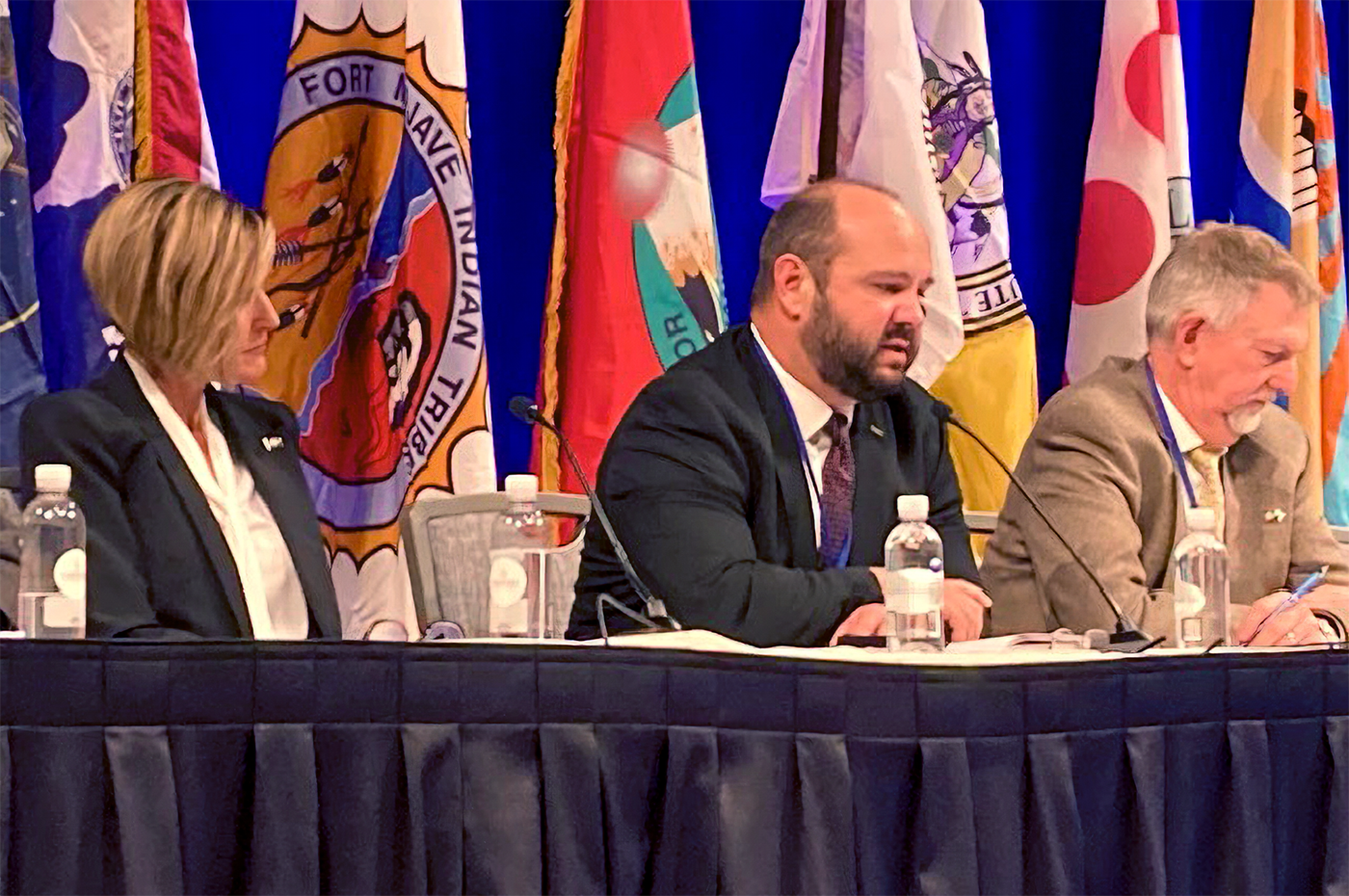
At the Colorado River Water Users Association’s annual end-of-year conference, a panel of river experts on Wednesday summarized and analyzed the sometimes-positive, sometimes not-so-positive recent history of the river.
The panelists of “A Site Review: Effectiveness of Current and Past Programs” included:
Moderator Terry Fulp, the former Regional Director, Lower Colorado River Basin, Bureau of Reclamation; David Palumbo, Deputy Commissioner of Operations, Bureau of Reclamation; Eric Kuhn, the retired General Manager of the Colorado River Water Conservation District of Colorado; Amy Haas, Executive Director, Colorado River Authority of Utah; Patrick Dent, Deputy General Manager, Central Arizona Water Conservation District; and, Greg Walch, General Counsel, Southern Nevada Water Authority.
Summarizing the status of the river system today, Eric Kuhn of Colorado observed that the 2023 winter snowpack season in his state “is off to an uninspiring start.”
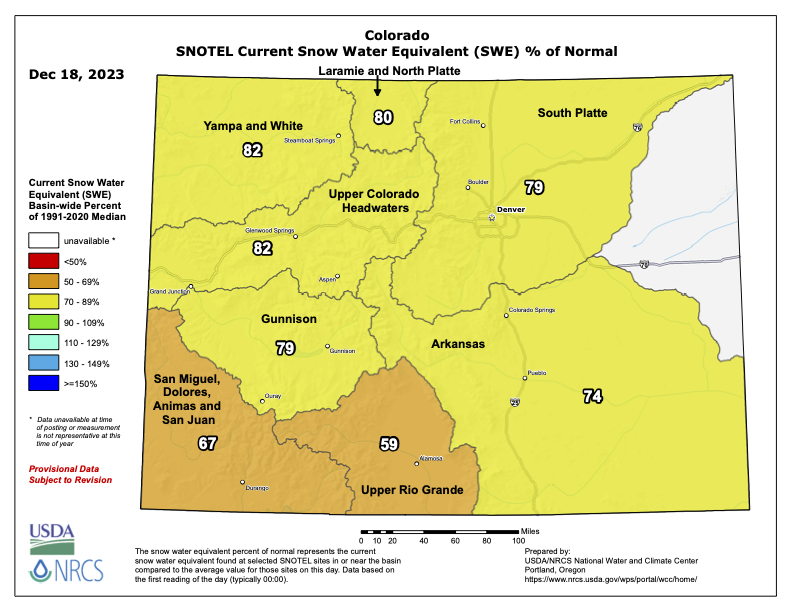
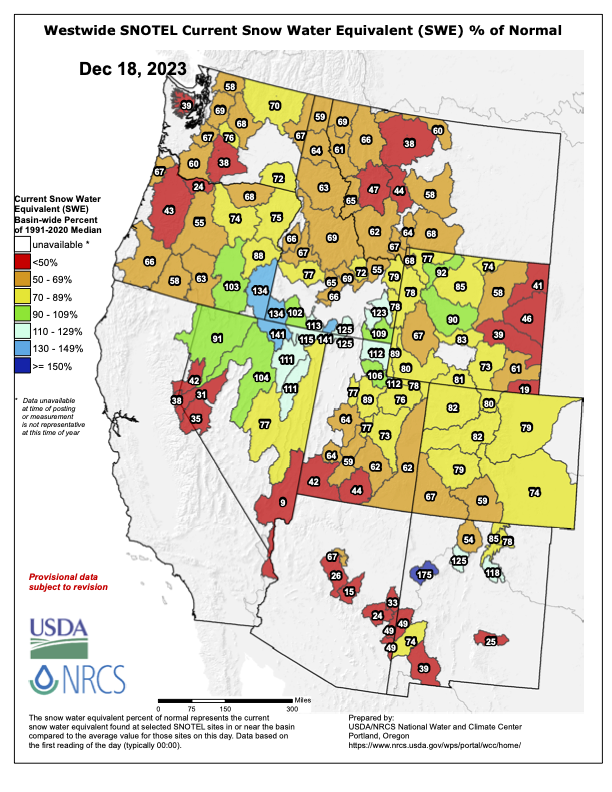
He observed that Colorado snowpack today stands at about 60 percent of normal. The next 24-month study of river conditions, produced by the Bureau of Reclamation, could show a river-production drop of 1 million acre-feet from previous expectations, he said.
David Palumbo of the Bureau discussed the wide range of federal programs that are being implemented currently, many of them dedicated to conserving water in the river system.
The now-famous “2007 Interim Guidelines,” which set guidelines for shortages that each Lower Basin state would take in the event of delivery shortfalls, “were fundamental to the operation of the Colorado River,” he said.
Although those ’07 Guidelines proved insufficient for keeping the river system reservoirs from descending to critical surface levels, they were “rooted in the best available guidelines that we had at the time.”
Amy Haas of Utah recalled the history of the 2019 Drought Contingency Plannegotiations – the second great collaborative effort by Colorado River user-states to protect the system.
Patrick Dent of the Central Arizona Water Conservation District – operators of the Central Arizona Project canal system – observed the substantial increases in conservation efforts over the years. Conservation in 2014 by the Colorado River states amounted to less than 1 million acre-feet.
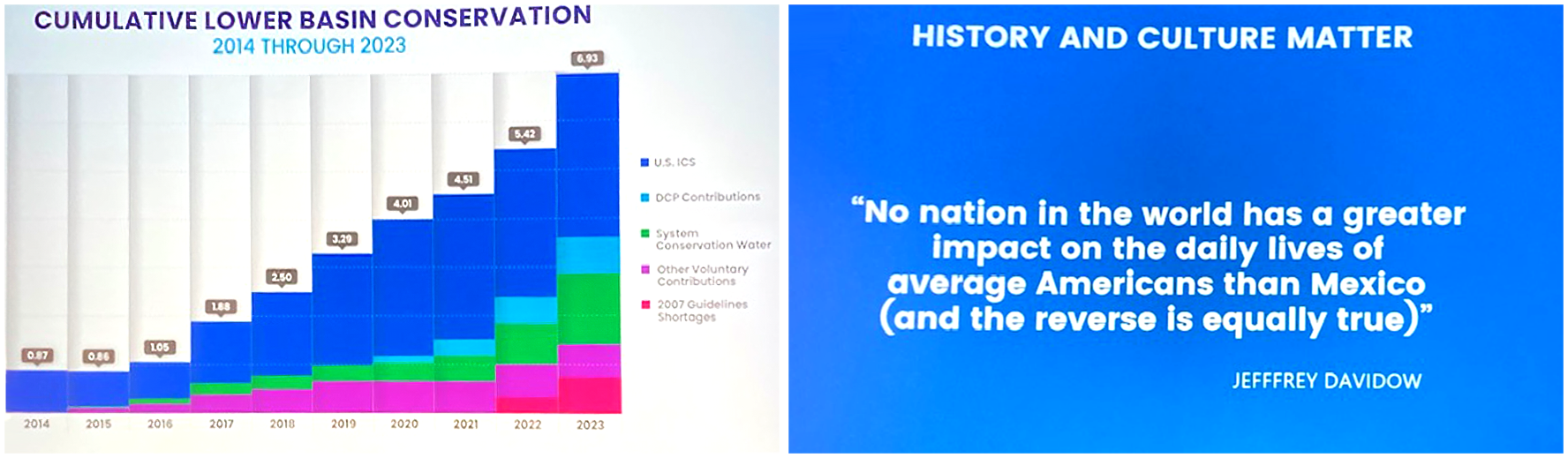
By 2023, however, the amount conserved to protect the system shot up to 6.93 million acre-feet. That staggering conservation figure, he noted, Intentionally Created Surplus water stored by the United States; contributions stipulated in the 2019 Drought Contingency Plan; system conservation efforts and other conservation efforts, as well as water saved under the terms of the ’07 Guidelines.

Click the link to read the article on The Denver Post website (Elise Schmelzer). Here’s an excerpt:
The final recommendations from a statewide task force charged with finding water-saving solutions for the drying Colorado River focus largely on expanding and tweaking existing programs…Delivered after four months of hours-long meetings, all but one of the eight recommendations would expand or change current programs, including initiatives aimed at continuing the measurement of snowpack, improving water infrastructure and boosting a program to replace thirsty grasses with native plants…
State lawmakers formed the 17-member Colorado River Drought Task Force in May, charging it with drafting recommendations for legislation to address drought and overuse in the Colorado River Basin. Members of the task force spanned a wide range of water interests, including representatives from environmental nonprofits, utility companies, the agricultural sector, state and local government, the Ute Mountain Ute and Southern Ute tribes…
The task force’s eight recommendations to the legislature are to:
- Expand a program that helps local entities apply for federal grant money for water projects
- Direct more money to state programs that pay for improving and repairing aging water infrastructure, like ditches and headgates. The improvements will help water systems be more efficient and lose less water to leakage or transit.
- Create stronger criteria to receive state funding for Community Wildfire Protection Plans
- Expand a program that allows some water rights holders to loan their water to the Colorado Water Conservation Board to preserve and improve the environment
- Expand statewide a program that allows agricultural water rights holders to lease, loan or trade part of their allotment
- Continue funding improvements to technology to measure stream flows and snowpack statewide
- Pay for a statewide assessment of changes in riparian plant communities and fund a statewide program to control and remove invasive plant species that hurt waterways, such as tamarisk and Russian olives
- Increase funding from $2 million to $5 million for an already established program that incentivizes the replacement of water-sucking turf with native grasses and plants
[…]
The task force’s recommendations might do some good but they only “scratch the surface of the problem,” Mark Squillace, a water law professor at the University of Colorado, wrote in an email. The inherent problem is that people who use Colorado River water are using more than the river produces in an average year, he said. Solutions must involve permanent reduction of consumption, he said, such as paying farmers to switch to plants that consume less water or limiting water rights so that farmers have a slightly shorter growing season. More broadly, the seven Colorado River states should consider creating a new compact with a promise to modernize their water laws, he said.


Click the link to read the article on the Politico Website (Annie Snider and Camille von Kaenel). Here’s an excerpt:
Western states are on a collision course as they scramble to cut a deal to dramatically shrink their use of the drought-stricken Colorado River ahead of a March deadline from the Biden administration. The brawl unfolding among the states that rely on the West’s most important waterway will shape the economies for cities from Denver to Los Angeles as well as some of the nation’s most productive agricultural areas. And it poses a political dilemma for President Joe Biden, who could see the problem complicate his political calculations in a trio of swing states — Arizona, Nevada and Colorado — along with California, home to many of his most deep-pocketed donors…The tensions were apparent this week as negotiators here exchanged heated words from the podium in front of the hundreds of technocrats, tribes, and farmers who manage the river’s water and were gathered at a Las Vegas casino for their annual conference.

“Ideally this is something that all seven basin states can come up with together. But I want to be real clear that we can’t accept something that continues to drain the system, that puts 40 million people at risk,” said Becky Mitchell, the fiery lead negotiator for the state of Colorado who has objected to her state accepting reductions to its water use…
Much of the tension now centers on whether the Upper Basin states should share in the cuts needed to bring water use in line with the shrinking supply. Arizona, Nevada and California’s negotiators say they are close to a long-term deal that would stanch their use to bring it in line with the water that the river has delivered historically — a gap known as the “structural deficit.” But that just deals with the century-old over-allocation problem. Those reductions will almost certainly fall short of what will be needed to deal with the pain Mother Nature is inflicting, and those Lower Basin states argue that burden should be shared by Wyoming, Colorado, Utah and New Mexico, as well as Mexico, which gets a slice of the river, too…

“The structural deficit — we’re going to own that,” said Tom Buschatzke, Arizona’s lead negotiator. But what it takes after that to stabilize the river “will be a shared responsibility. A shared responsibility for everybody in the basin — all seven states and Mexico.”