The federal government is paying #California to use less water, but #Utah’s water experts worry the model isn’t sustainable — The Salt Lake Tribune #CRWUA2023 #ColoradoRiver #COriver #aridification

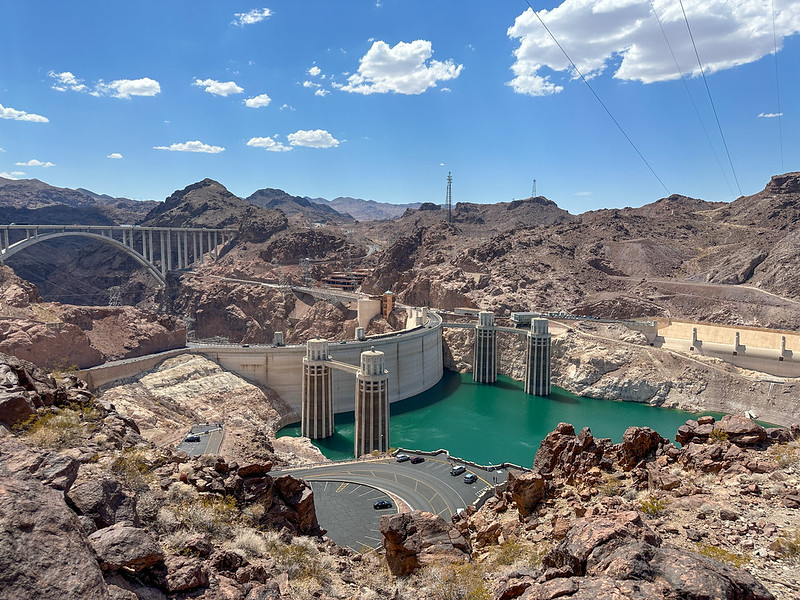
The current water level of Lake Mead behind the Hoover Dam July 2023. Photo credit: Reclamation

Click the link to read the article on The Salt Lake Tribune website (Anastasia Hufham). Here’s an excerpt:

December 15, 2023

California just agreed to significantly cut its Colorado River water use, but the deal might not be the conservation boon that it seems. On Wednesday, the Biden administration agreed to divert $295 million in water infrastructure funds to California. In exchange, California, which gets more Colorado River water per year than any other state, will conserve 643,000 acre-feet of water in Lake Mead through 2025. California’s water cuts are part of an agreement solidified in May between the Lower Colorado River Basin states — Arizona, California and Nevada — to cut their water use by at least 3 million acre-feet through the end of 2026. According to that agreement, the Lower Basin states will be compensated with funding from the Inflation Reduction Act for conserving 2.3 million acre-feet. The remaining 700,000 million acre-feet of water will be conserved voluntarily.

California’s recent water cuts are a positive sign of cooperation and a step in the right direction, Amy Haas, executive director of the Colorado River Authority of Utah, told The Salt Lake Tribune.

“But one of my concerns, from a Utah perspective, is an over-reliance on compensated conservation,” she said. “This money is going to go away. So, what do we need to do to be prepared for in the way of reductions after 2026? And what happens if some of those reductions are not compensated?”

Haas referred to the Inflation Reduction Act and Bipartisan Infrastructure Law funding. Those laws provided billions of dollars for water infrastructure projects, but eventually, that funding will run out…

“[The water cuts are] predicated on the unspoken assumption that this whole reduction in flows is temporary, that this is a drought and we’re going to get out of it, so let’s just spend some money to overcome it,” Zachary Frankel, executive director of the nonprofit Utah Rivers Council, told The Tribune…

Wednesday’s agreement follows on the heels of a deal made last week between the Biden administration and California’s Imperial Irrigation District, which receives 3.1 million acre-feet of Colorado River water each year. The federal government will send $77.6 million worth of new investments to the district, and the district will cut 100,000 acre-feet of its Colorado River water in 2023.

“At the end of the day, from an Upper Basin standpoint, we’ve got to make sure that conservation is really going to happen,” Haas said.

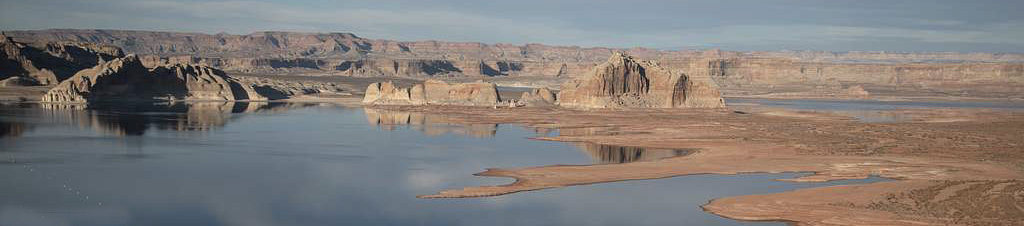
Lake Powell Photo credit: Center for Colorado River Studies

#Colorado Parks & Wildlife partners with USFWS, Great Sand Dunes National Park to expand #RioGrande chub and sucker populations

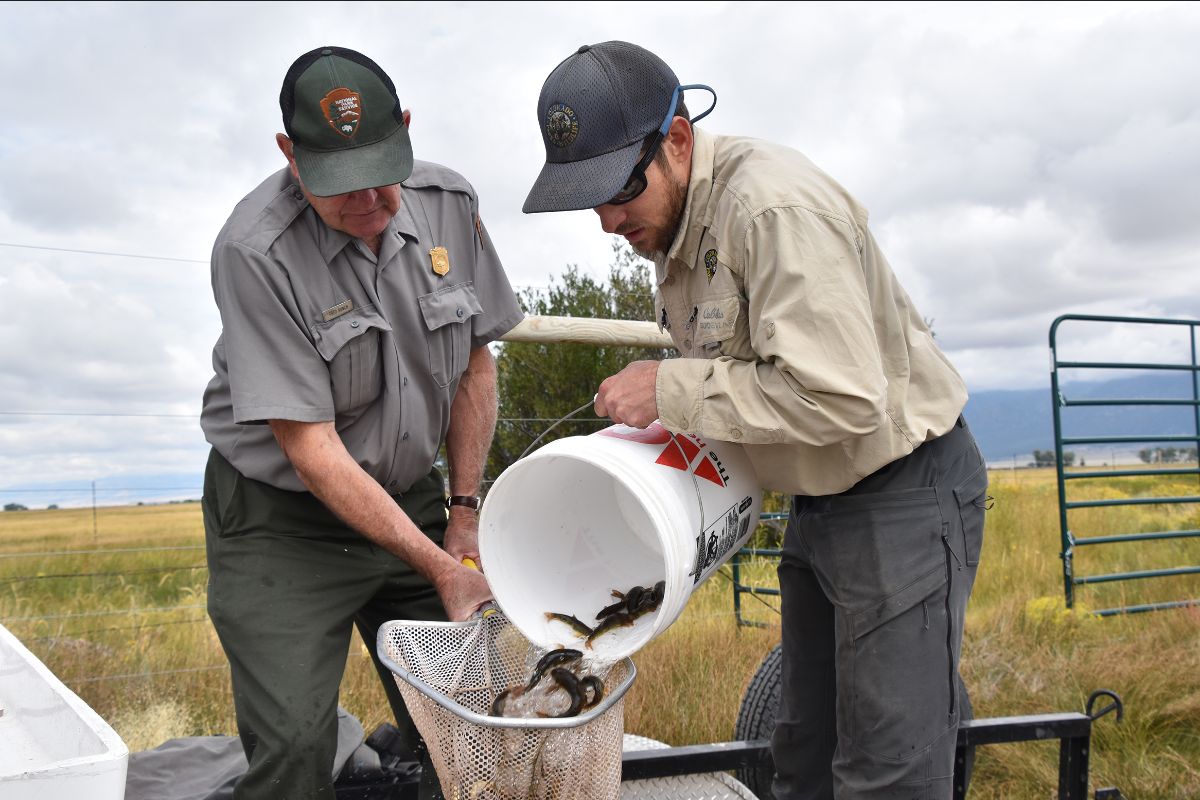
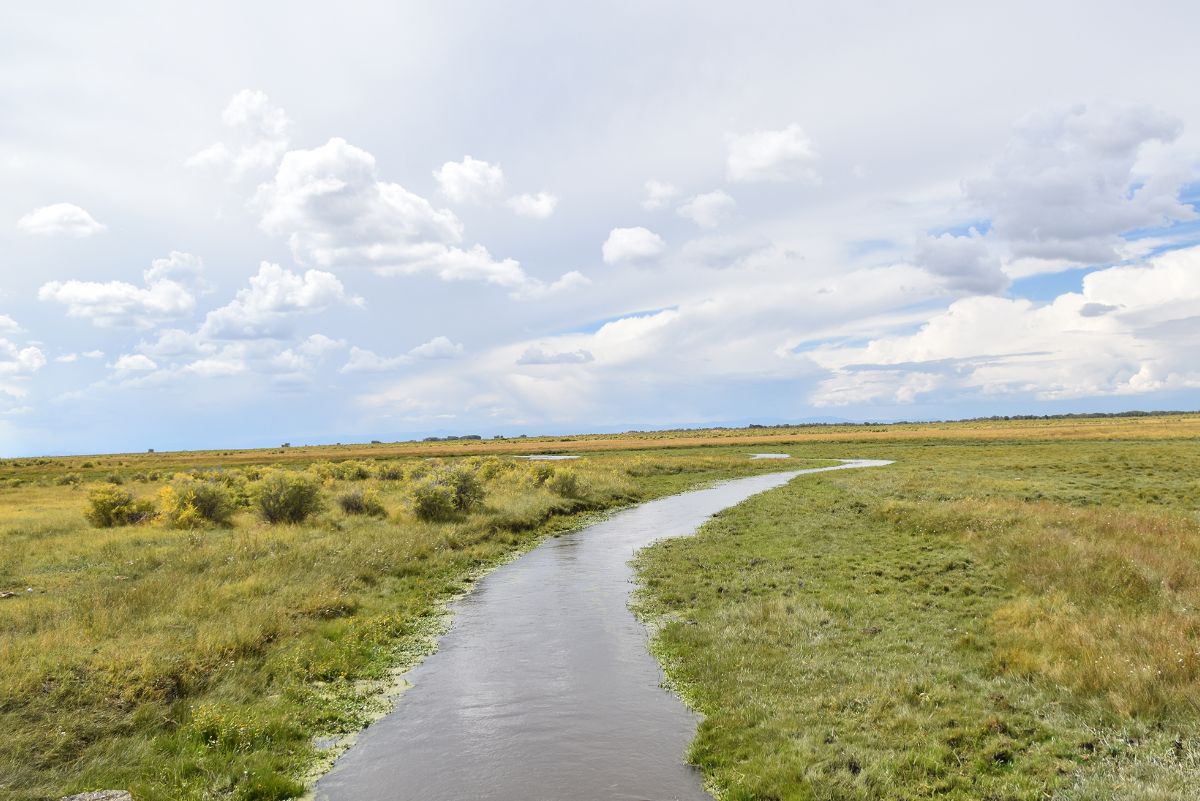
CPW’s Daniel Cammack, right, and Fred Bunch of Great Sand Dunes National Park transfer Rio Grande chub and sucker captured from Crestone Creek into a holding tank for transport to Big Spring Creek on Sept. 26, 2023 in the San Luis Valley. CPW photos/John Livingston

Click the link to read the release on the Colorado Parks & Wildlife website (John Livingston):

December 22, 2023

A decades-long effort to establish new populations of imperiled Rio Grande chub and Rio Grande sucker fish in Colorado’s San Luis Valley led to a historic day on the Medano Ranch of Great Sand Dunes National Park and Preserve.

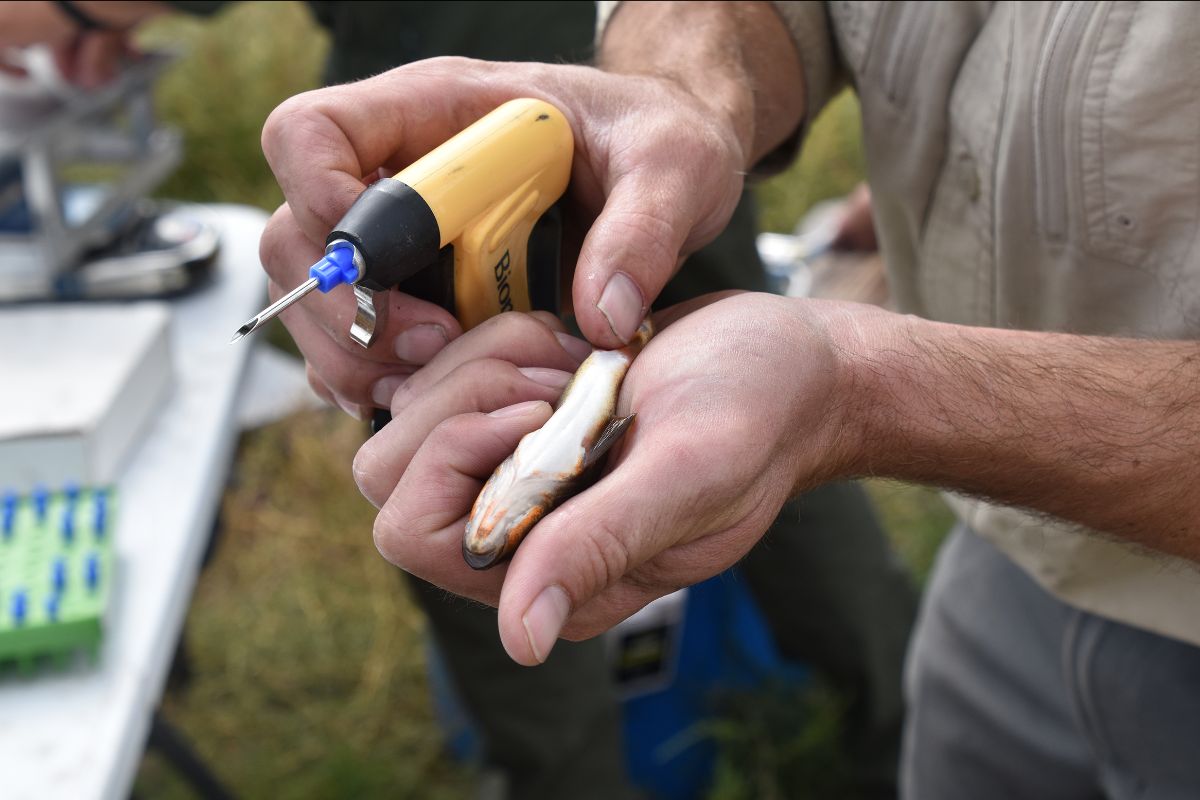
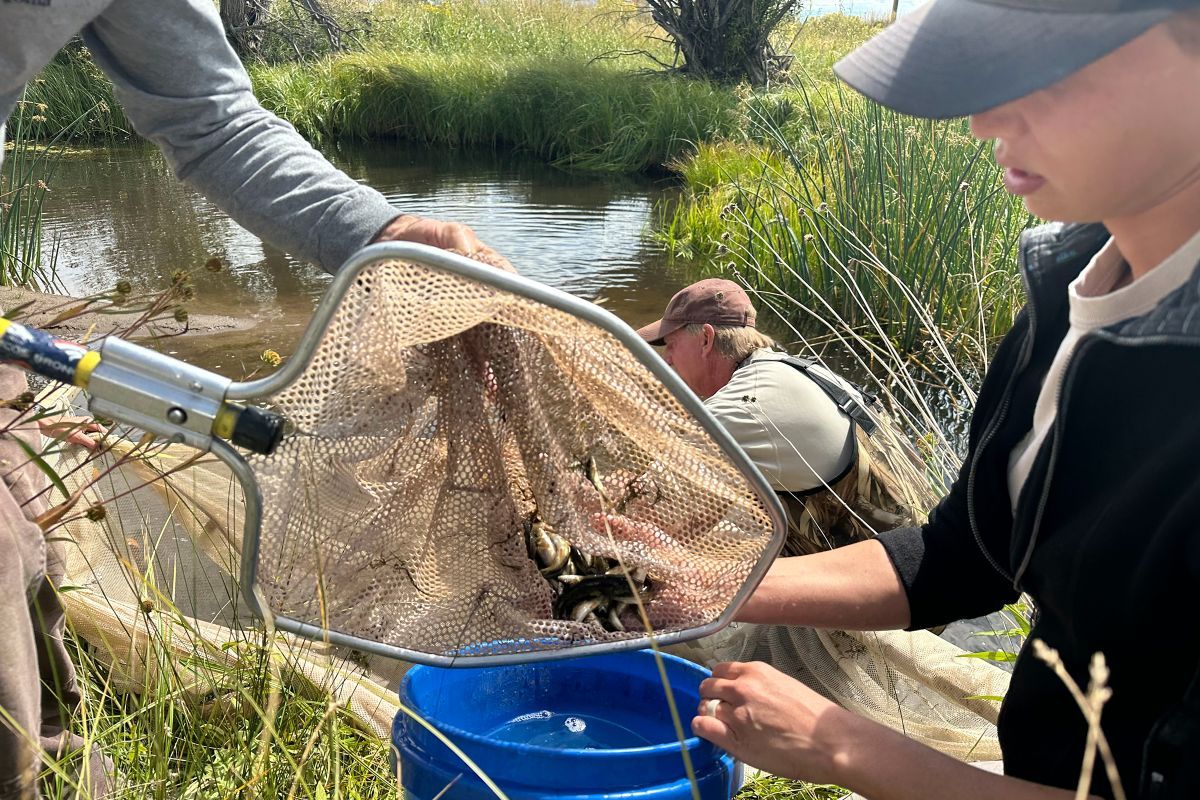
Colorado Parks and Wildlife (CPW) collaborated with the U.S. Fish and Wildlife Service (USFWS) and National Park Service (NPS) on Sept. 26, 2023 to translocate a population of Rio Grande chub and sucker from Crestone Creek on the Baca National Wildlife Refuge to Big Spring Creek on the Medano Ranch. 

More than 600 fish were collected from Crestone Creek and transported to Big Spring Creek, where aquatic biologists hope to create a new self-sustaining population of the native fishes. Currently, there are only seven known self-sustaining populations of Rio Grande sucker in the state.

“This is just a good collaboration between the National Park Service, U.S. Fish and Wildlife Service and CPW and shows good common-sense management to replicate this resource in newly acquired habitat,” said CPW Native Aquatic Species Biologist Daniel Cammack. “Using these fish from Crestone Creek and moving them to a habitat where they are likely to thrive and start another population is a really great effort.”

Rio Grande chub and suckers are currently petitioned to be listed as federally endangered. In Colorado, Rio Grande chubs are listed as a species of special concern and have lost as much as 80% of their historical range within the upper Rio Grande Basin. Rio Grande suckers are a state endangered species, whose occupancy has declined as much as 90%.

The NPS acquisition of Big Spring Creek and the Medano Ranch from The Nature Conservancy presented a unique opportunity to restore these fish to historic habitat in the low gradient creek. The creek is sustained by a perennial supply of spring water that averages 5 cubic feet per second, making it pristine habitat for the native fish species.

Through consistent monitoring of Big Spring Creek, the NPS determined conditions would be suitable for Rio Grande chub and sucker. As soon as it was deemed quality habitat, all three agencies worked together to quickly populate the stream.

“This is a great opportunity to replicate an imperiled population from 20 miles north of us on the Baca Refuge,” said Dewane Mosher, biologist for Great Sand Dunes National Park. “It’s important to secure those genetics from the wild fish here in the National Park.”

Crestone Creek exists on the Baca National Wildlife Refuge, adjacent to Great Sand Dunes National Park and is roughly 20 miles north of the Medano Ranch. Fish were first discovered in Crestone Creek in the early 2000s by Ron Garcia, manager of the Baca Refuge. CPW aquatic biologist John Alves identified the population of fish as Rio Grande chub and sucker, only the second known population of both species that existed at that time. 

Since that important discovery, CPW has worked with USFWS to protect and expand the population on the refuge, which is considered one of the most important populations in the species’ range.

“This is an ideal opportunity and it was a historic day to restore some native fish into Big Spring Creek here at the Medano Ranch,” said Fred Bunch, Chief of Resources Management for the Great Sand Dunes National Park and Preserve. “We want to restore endangered species to their habitat. We are very optimistic about their chances of making it here. We want to help these species expand their habitat, and we want to be true to our word and do what we can to help these species.”

The translocation project also allowed CPW and the USFWS to salvage a portion of the population within Crestone Creek. The creek flowing through the Baca Refuge has fluctuating water flows and was running below 1 cfs in September. The Rio Grande chub and suckers occupied small pools where high densities could have led to natural mortality in the winter. 

“Historically, Big Spring and Crestone would have been connected here in the Valley and fish may have migrated from one creek to another,” said USFWS Fish Biologist Cole Brittain. “However, with recent drying and lack of water from the abundance of agriculture and ranching related water use, we don’t have those same connections today.

“With the NPS acquiring this property, we can manually transport these fish, and that’s a unique opportunity. This project is 20 years in the making and one we wish we could replicate all over the place, but these properties don’t come by very often. It takes a lot of work from a bunch of agencies.”

Plans are in place to continue introducing more chub and suckers to Big Spring Creek in 2024 utilizing fish from CPW’s John W. Mumma Native Aquatic Species Restoration Facility and additional salvage of wild fish from Crestone Creek as opportunities are presented.

“Past experience with these reintroductions suggests that it can take anywhere from two to five years of stocking before a self-sustaining population is created,” Cammack said. “We will continue to monitor annually, hoping to detect young-of-year fish, providing evidence that natural reproduction is taking place.”

CPW, NPS and USFWS will remain committed to the protection and restoration of these fish to their native range, as projects such as Big Spring Creek align with their shared mission.

“They’re not the species people want to go out and catch on hook and line, but they are an important part of Colorado’s natural legacy,” Cammack said. “They evolved in this landscape, and if you want to consider the environment good as a whole, we want to keep all the pieces. It’s important we not only pay attention to sport fish but also these native species that historically haven’t been managed very well.”

The #ColoradoRiver crisis may be solved with ‘silver buckshot’ as new rules are hard to come by — KUNC #CRWUA2023 #COriver #aridification

From left, J.B. Hamby, chair of the Colorado River Board of California, Tom Buschatzke, Arizona Department of Water Resources; Becky Mitchell, Colorado representative to the Upper Colorado River Commission. Hamby and Buschatzke acknowledged during this panel at the Colorado River Water Users Association annual conference that the lower basin must own the structural deficit, something the upper basin has been pushing for for years. CREDIT: TOM YULSMAN/WATER DESK, UNIVERSITY OF COLORADO, BOULDER

Click the link to read the article on the KUNC website (Alex Hager). Here’s an excerpt:

December 15, 2023

The future of the Colorado River is being hashed out behind closed doors, and negotiators appear far from a long-term solution to the wide gap between water supply and water demand. At the Colorado River Water Users Association annual meeting in Las Vegas, representatives from the seven states that use the river spent three days opining on the progress of ongoing talks to determine how water will be managed after 2026, when the current set of rules expires…In a massive ballroom at the Las Vegas Paris Hotel, John Entsminger, Nevada’s top water negotiator, forecasted that the next river-sharing agreement will be “a messy compromise that will be judged harshly by history.” He and delegates from six other states that use water from the Colorado River are trying to agree on a new set of rules for sharing the dwindling supply. The current guidelines expire in 2026. Entsminger said a final agreement may join a patchwork of deals that have incrementally, but perhaps insufficiently, tweaked water use in response to two decades of dry conditions fueled by climate change.

“If you look at the last 25 years of the Colorado River, you know these imperfect, messy compromises step by step by step have gotten us much closer to equilibrium than we were at the turn of the century,” he said…

The structural deficit refers to the consumption by Lower Basin states of more water than enters Lake Mead each year. The deficit, which includes losses from evaporation, is estimated at 1.2 million acre-feet a year. (Image: Central Arizona Project circa 2019)

Some experts rallied for updates to the way water is measured. The Lower Basin states have come under fire for failing to account for “system loss,” or the water lost to evaporation and leaky canals, and critics say the official tally of how much water is in the Colorado River needs to account for that. Those losses total about 1.5 million acre-feet each year, mostly due to evaporation from the surface of Lake Mead, the nation’s largest reservoir. An acre-foot is the amount of water needed to fill one acre of land to a height of one foot. One acre-foot generally provides enough water for one to two households for a year.

“I don’t think the Lower Basin is going to agree to call it what it is, because there are a lot of political and legal issues around it,” said Andy Mueller, general manager of the Colorado River District. “But if they would just permanently reduce their use, including that 1.5 million, I think we’d be a whole lot better off as a system.”

“New plot using the nClimGrid data, which is a better source than PRISM for long-term trends. Of course, the combined reservoir contents increase from last year, but the increase is less than 2011 and looks puny compared to the ‘hole’ in the reservoirs. The blue Loess lines subtly change. Last year those lines ended pointing downwards. This year they end flat-ish. 2023 temps were still above the 20th century average, although close. Another interesting aspect is that the 20C Mean and 21C Mean lines on the individual plots really don’t change much. Finally, the 2023 Natural Flows are almost exactly equal to 2019. (17.678 maf vs 17.672 maf). For all the hoopla about how this was record-setting year, the fact is that this year was significantly less than 2011 (20.159 maf) and no different than 2019” — Brad Udall

Robert Sakata Named as first-ever #Colorado Department of Agriculture Agricultural Water Policy Advisor

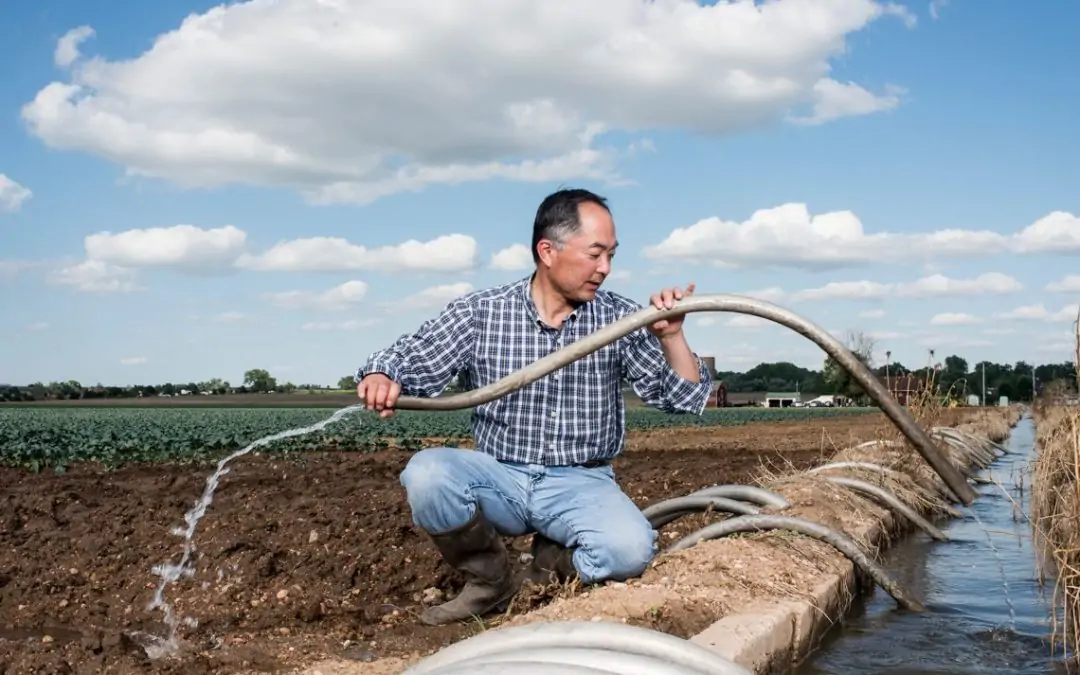
Robert “Bob” Sakata setting a siphon tube. Photo credit: Water Education Colorado

Click the link to read the article on the Colorado Department of Agriculture website:

December 7, 2023

The Colorado Department of Agriculture has hired farmer Robert Sakata to serve as the first Agricultural Water Policy Advisor, a position which was created as a result of funding approved during the 2023 legislative session to engage with Colorado farmers and ranchers on water issues affecting agricultural users. He will start in his role effective January 1, 2024.

“I am beyond excited to have Robert joining our CDA team,” said Commissioner of Agriculture Kate Greenberg. “His lifetime of experience in water and as a farmer, his service to the state over many decades serving on related boards and commissions, and his clear commitment to serving Colorado’s agriculture communities make him the right person at the right time. At a time when agricultural producers are facing historic challenges, Robert will bring both empathy and expertise to the table to represent CDA in supporting ag through these challenges. We look forward to seeing all that he will do in this new role.”

Sakata is President of Sakata Farms Inc. in Brighton, Colorado which was started by his father Bob, and currently cares for 2,500 acres of irrigated farm ground between Brighton, Platteville and Hudson. He attended the University of Colorado studying Molecular Cellular & Developmental Biology and child psychology.

Growing up on the family farm, his parents were a great example of how important involvement in the community is. Following their footsteps, Robert is the founding president of the board of directors for the Colorado Fruit & Vegetable Growers Association which was created to fill a need for a common voice representing produce growers across the state.

“Robert brings experience that can only be gained by making a living in irrigated agriculture to this position,” Conservation Services Director Les Owen noted. “This will make him a tremendous asset to CDA in advocating for the agriculture industry on water issues.”

Sakata was appointed by Governor Polis in 2021 to serve on the Colorado Water Conservation Board (CWCB) as a representative of the South Platte Basin. Following the January meeting, Sakata will complete his term and serve as Commissioner Greenberg’s delegate to the CWCB.

Sakata also serves on the boards of the Fulton Irrigation Company, Brighton Ditch Company, and the New Brantner Irrigation Ditch Company. Robert’s past service on organizations include the Metro Basin Roundtable since its inception, the Colorado Water Congress Board of Directors, the National Onion Association Board of Trustees, Adams County Farm Bureau Board of Directors, and Colorado Onion Association Board of Directors.

Sakata served Colorado and worked closely with the Colorado Department of Agriculture for 15 years as a member of the Water Quality Control Commission, having been appointed by three different governors.

In the Fall of 2022, the Colorado Farm Bureau awarded Sakata the “Outside of Farm Bureau Service to Agriculture Award,’ a recognition that his recently passed father received in 2013.

In speaking of public service, Sakata said, “I am honored to be able to participate in water discussions no matter where in order to build trust and foster positive relationships that can carry meaningful dialogue forward.”


 El Departamento de Agricultura de Colorado (CDA) ha contratado al agricultor Robert Sakata como el primer asesor de políticas de agua agrícola. El puesto fue creado por la financiación aprobada durante la sesión legislativa de 2023 para trabajar con los agricultores y ganaderos de Colorado en asuntos de agua en la agricultura. Ocupará su cargo a partir del 1 de enero de 2024.

“Estoy super emocionada de tener a Robert en nuestro equipo de CDA,” dijo la Comisionada de Agricultura, Kate Greenberg. “Su experiencia de toda una vida en el sector del agua y como agricultor, su servicio al estado durante muchas décadas en juntas y comisiones relacionadas, y su compromiso total de servir a las comunidades agrícolas de Colorado son reflejantes de una persona perfecta en el momento perfecto. En un tiempo en que productores agrícolas se enfrentan con desafíos históricos, Robert aportará empatía y sabiduría para representar al CDA en el apoyo a la agricultura durante estos tiempos duros. Anticipamos ver todo lo que puede hacer en este nuevo rol.”

Sakata es presidente de Sakata Farms Inc. en Brighton (Colorado), granja fundada por su padre Bob de 2,500 acres de tierras de riego entre Brighton, Platteville y Hudson. Estudió Biología Molecular, Celular y del Desarrollo, y Psicología Infantil en la Universidad de Colorado.

Criado en la granja familiar, sus padres fueron un gran ejemplo de lo importante que es participar en la comunidad. Siguiendo los pasos de sus padres, Robert es el presidente fundador de la junta directiva de la Asociación de Productores de Frutas y Hortalizas de Colorado, que fue creada para dar una voz común y necesaria y representante de los productores de verdura y fruta de todo el estado.

“Robert aporta a este puesto una experiencia que solo puede adquirirse ganándose la vida en la agricultura de riego,” señaló Les Owen, Director de los Servicios de Conservación. “Esto le convertirá en un gran activo para CDA a la hora de defender a la industria agrícola en cuestiones relacionadas con el agua.”

Sakata fue designado por el Gobernador Polis en 2021 para formar parte de la Junta de Conservación del Agua de Colorado (CWCB) como representante de la cuenca de South Platte. Después de la reunión de este enero, Sakata completará su mandato y se desempeñará como delegado de la Comisionada Greenberg ante la CWCB.

Sakata también forma parte de los consejos de Fulton Irrigation Company, Brighton Ditch Company y New Brantner Irrigation Ditch Company. Robert ha trabajado en organizaciones como la Mesa Redonda de la Cuenca Metropolitana desde su creación, la Junta Directiva del Congreso del Agua de Colorado, la Junta Directiva de la Asociación Nacional de Productores de Cebolla, la Junta Directiva de la Oficina Agrícola del condado de Adams y la Junta Directiva de la Asociación de Productores de Cebolla de Colorado.

Sakata sirvió a Colorado y trabajó estrechamente con el Departamento de Agricultura de Colorado durante 15 años como miembro de la Comisión de Control de la Calidad del Agua, habiendo sido nombrado por tres gobernadores diferentes.

En otoño de 2022, el Departamento de Agricultura de Colorado concedió a Sakata el “Premio al Servicio a la Agricultura fuera del Departamento de Agricultura”, un reconocimiento que su padre, recién difunto, recibió en 2013.

Al hablar del servicio público, Sakata señaló, “Es un honor para mí poder participar en debates sobre el agua, dondequiera que sea, con el fin de generar confianza y fomentar relaciones positivas que puedan llevar adelante un diálogo significativo.”

I’m a #Climate Scientist. I’m Not Screaming Into the Void Anymore — Kate Marvel in The New York Times

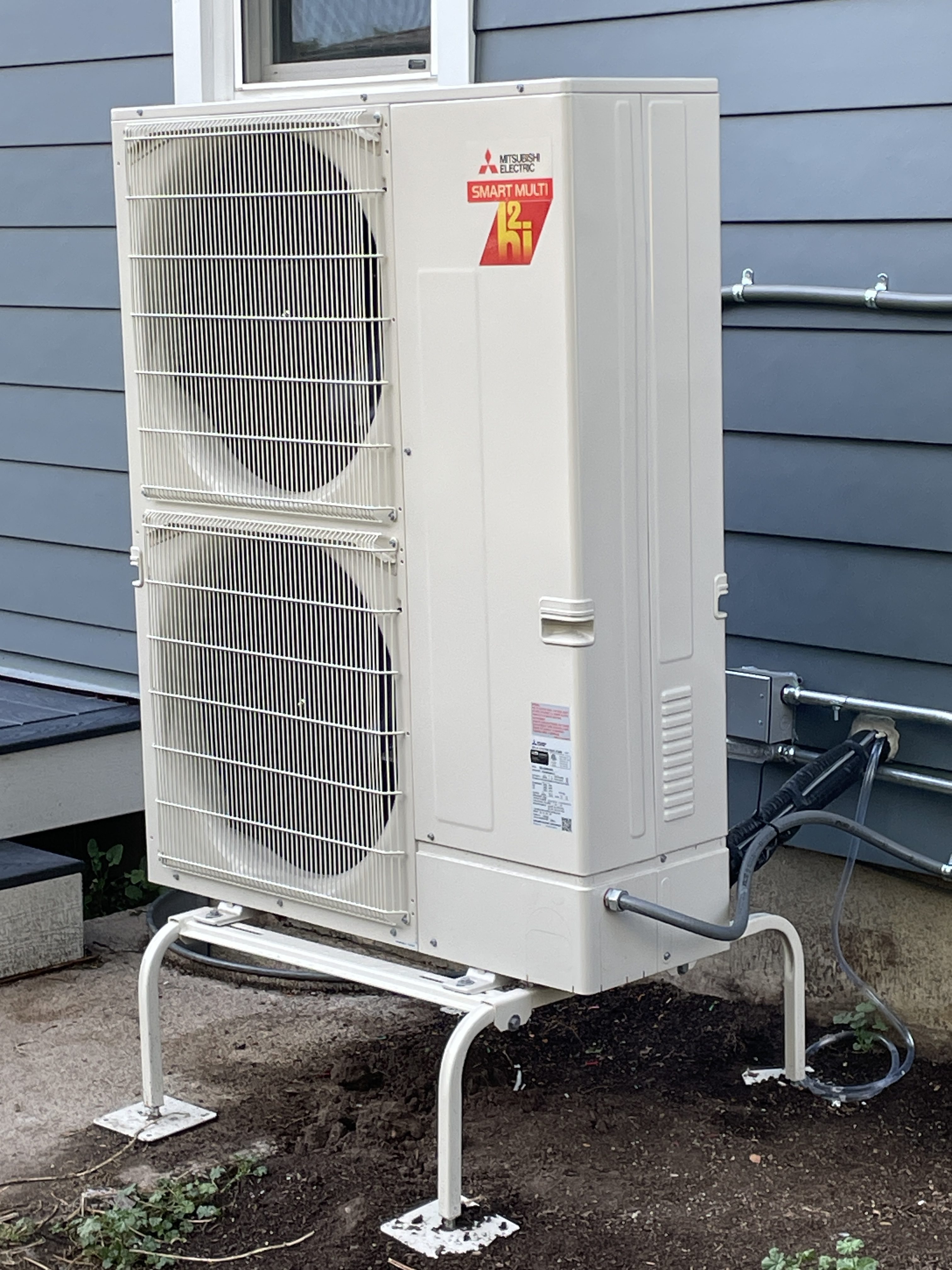
The shiny new cold-weather air source heat pump installed during summer 2023 at Coyote Gulch Manor.

Click the link to read the article on The New York Times website (Kate Marvel). Here’s an excerpt:

November 18, 2023

Two and a half years ago, when I was asked to help write the most authoritative report on climate change in the United States, I hesitated. Did we really need another warning of the dire consequences of climate change in this country? The answer, legally, was yes: Congress mandates that the National Climate Assessment be updated every four years or so. But after four previous assessments and six United Nations reports since 1990, I was skeptical that what we needed to address climate change was yet another report. In the end, I said yes, but reluctantly. Frankly, I was sick of admonishing people about how bad things could get. Scientists have raised the alarm over and over again, and still the temperature rises. Extreme events like heat waves, floods and droughts are becoming more severe and frequent, exactly as we predicted they would. We were proved right. It didn’t seem to matter. Our report, which was released on Tuesday [November 14, 2023], contains more dire warnings. There are plenty of new reasons for despair. Thanks to recent scientific advances, we can now link climate change to specific extreme weather disasters, and we have a better understanding of how the feedback loops in the climate system can make warming even worse. We can also now more confidently forecast catastrophic outcomes if global emissions continue on their current trajectory. But to me, the most surprising new finding in the Fifth National Climate Assessment is this: There has been genuine progress, too…

…as we wrote the report, I learned other, even more mind-boggling numbers. In the last decade, the cost of wind energy has declined by 70 percent and solar has declined 90 percent. Renewables now make up 80 percent of new electricity generation capacity. Our country’s greenhouse gas emissions are falling, even as our G.D.P. and population grow…Some politicians now actually campaign on climate change, instead of ignoring or lying about it. Congress passed federal climate legislation — something I’d long regarded as impossible — in 2022 as we turned in the first draft. And while the report stresses the urgency of limiting warming to prevent terrible risks, it has a new message, too: We can do thisWe now know how to make the dramatic emissions cuts we’d need to limit warming, and it’s very possible to do this in a way that’s sustainable, healthy and fair. The conversation has moved on, and the role of scientists has changed. We’re not just warning of danger anymore. We’re showing the way to safety.

The reason is that now, we have a better story to tell. The evidence is clear: Responding to climate change will not only create a better world for our children and grandchildren, but it will also make the world better for us right now. Eliminating the sources of greenhouse gas emissions will make our air and water cleaner, our economy stronger and our quality of life better. It could save hundreds of thousands or even millions of lives across the country through air quality benefits alone. Using land more wisely can both limit climate change and protect biodiversity. Climate change most strongly affects communities that get a raw deal in our society: people with low incomes, people of color, children and the elderly. And climate action can be an opportunity to redress legacies of racism, neglect and injustice.