Coyote Gulch scores a new cycling water bottle


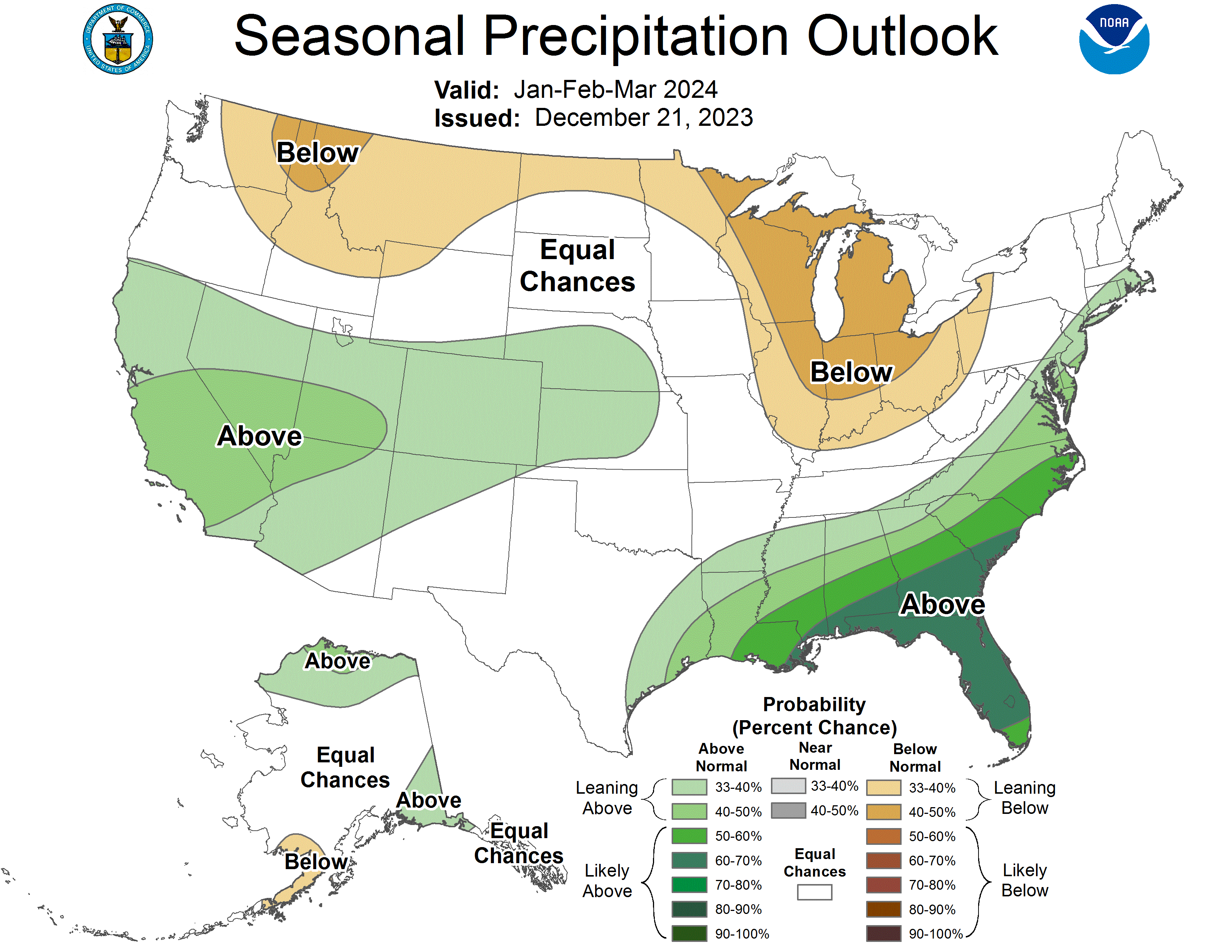
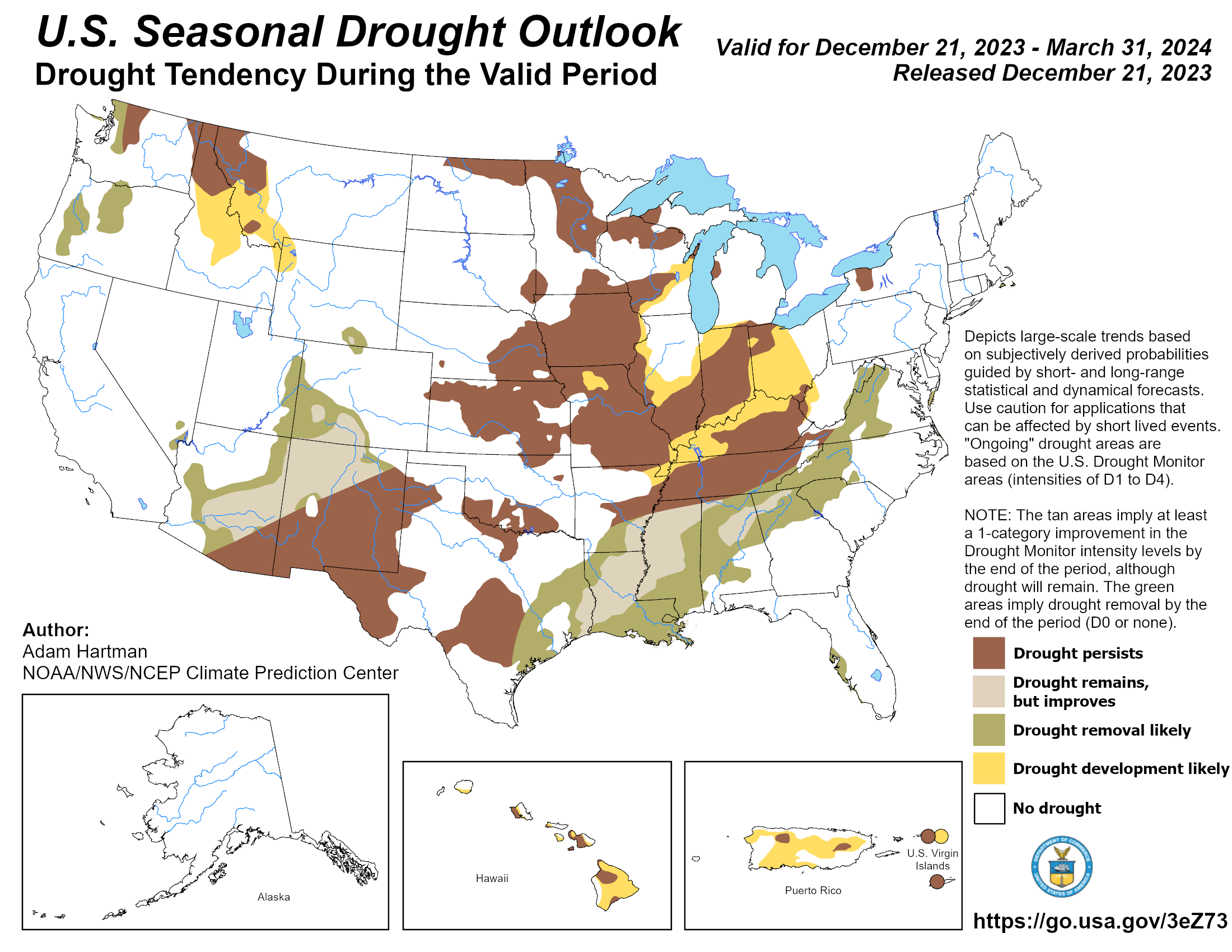
Click on a thumbnail graphic to view a gallery of drought data from the US Drought Monitor website.
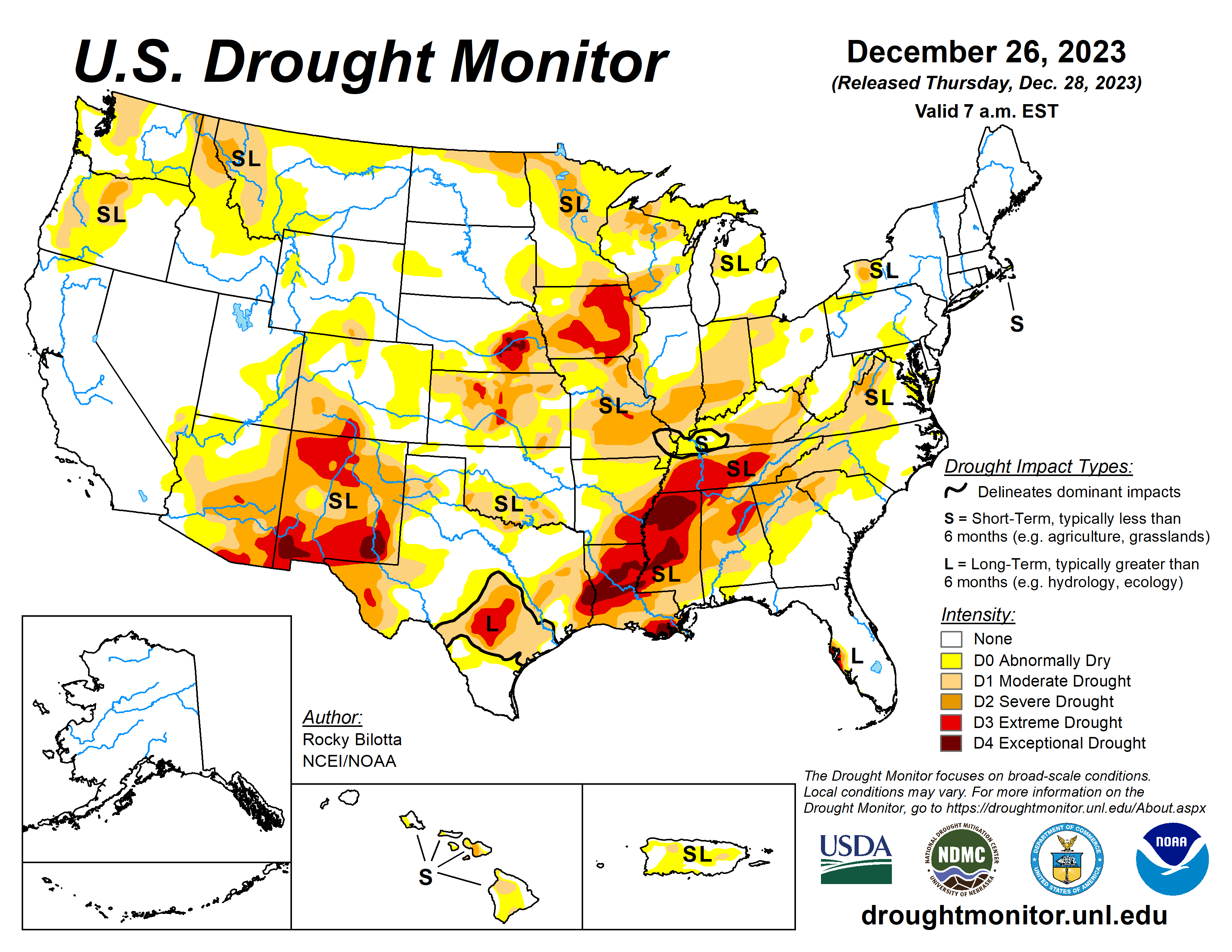
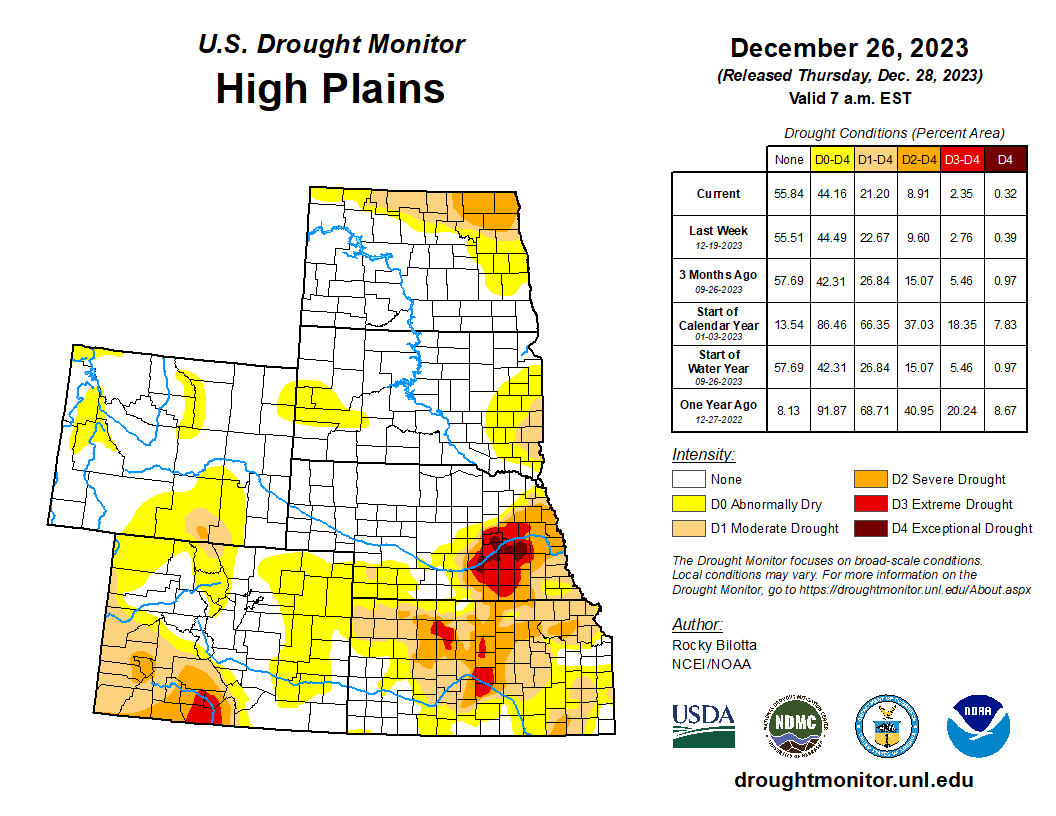
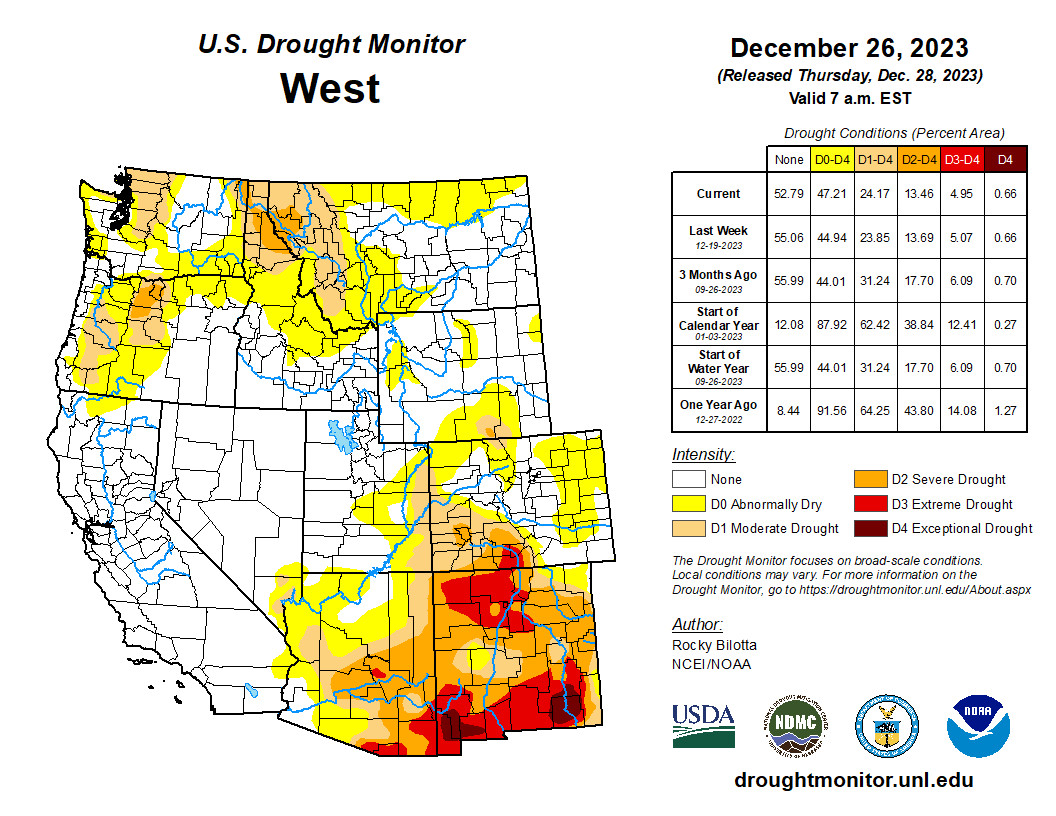

Click the link to go to the US Drought Monitor website. Here’s an excerpt:
This Week’s Drought Summary
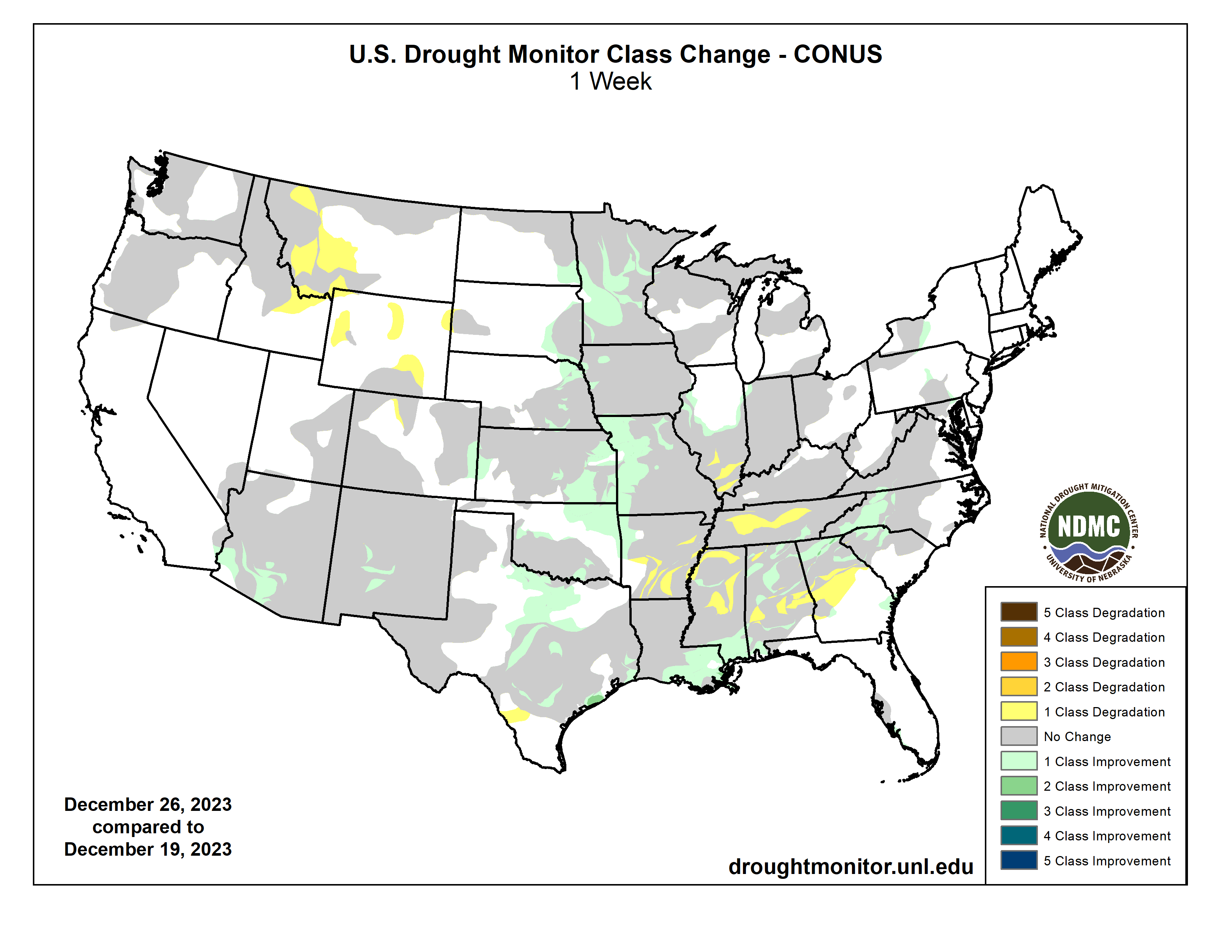
A low pressure system developed over the central Plains in conjunction with an amplifying upper-level trough dipping into the northern Plains brought active weather across much of the central to eastern U.S. Warm and moist air from the Gulf of Mexico moved northward ahead of the developing low pressure, producing widespread moderate to heavy rainfall from Texas to Louisiana. Meanwhile, a cold air mass from Canada dipped into the northern portions of the U.S. brought blizzard conditions to portions of the Central Plains and Upper Midwest. Temperatures were above-normal across most of the U.S., by as much as 20+ degrees F above average in parts of the Upper Midwest and Northern Plains. The most widespread improvements were made to parts of central Texas, eastern Nebraska, eastern Kansas, southern Louisiana and from northern Alabama to western North Carolina, where above-normal precipitation was observed this past week. Dry conditions continued across the eastern portions of the Southern region, with degradations occurring across much of Mississippi and into Arkansas and Tennessee. Drought and abnormal dryness were also expanded or intensified in portions of the northern Rockies and in parts southern Illinois, southern Texas and in the Southeast. In Hawaii, heavy rainfall improved conditions over parts of Kauai, Oahu and the Big Island, while no changes occurred on Molokai, Lanai or Maui…
High Plains
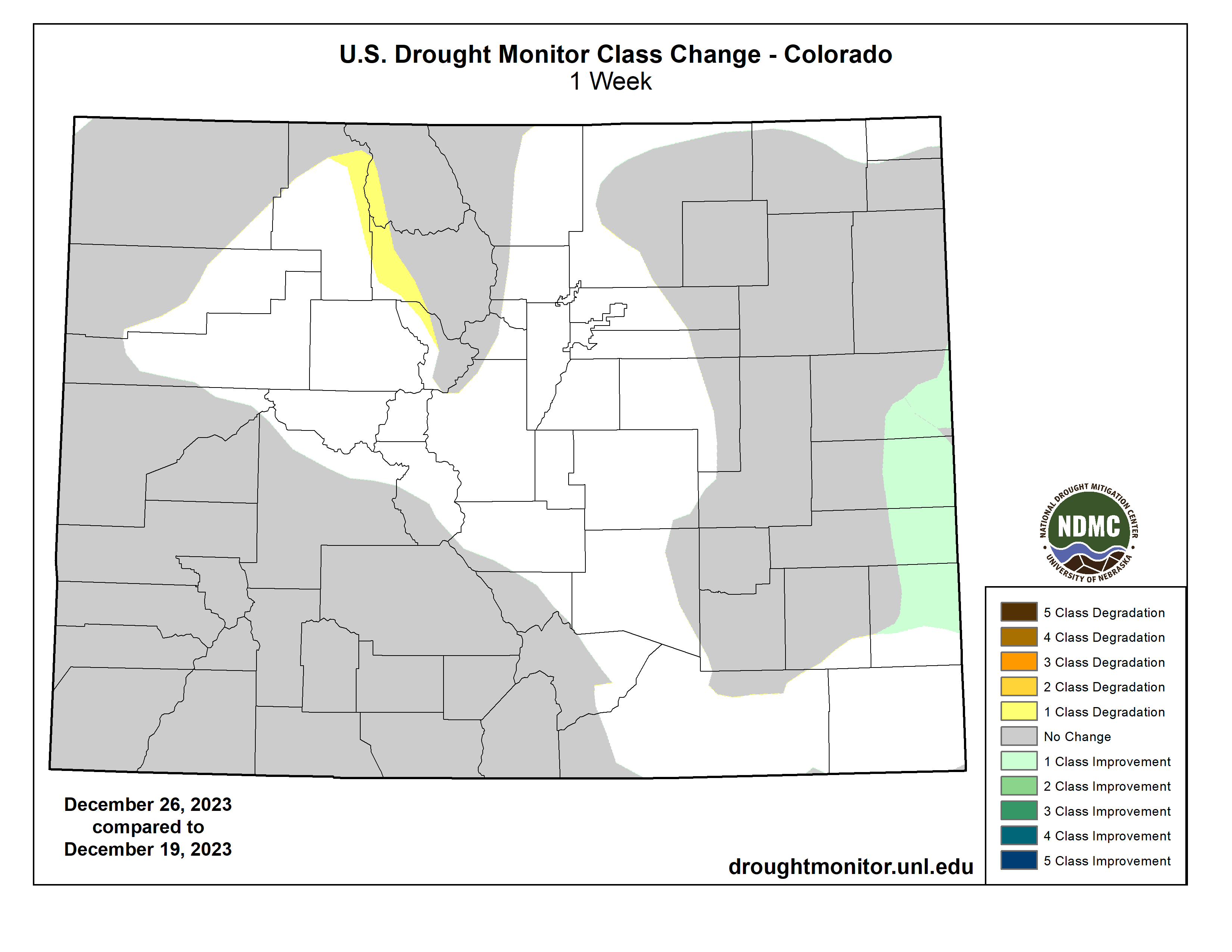
Heavy precipitation fell over much of eastern portions of the region, where rainfall totals were greater than 600% of normal and ranged between 1 to 4 inches this week. Exceptional drought (D4) was improved in eastern Nebraska, while extreme drought (D3) was improved in eastern portions of Nebraska and Kansas where precipitation totals were up to 3 inches above normal for the week. Above-normal precipitation also led to improvements to severe drought (D2) and moderate drought (D1) over parts of eastern Kansas and northeast Nebraska. Abnormal dryness (D0) was improved along parts of the eastern border of the High Plains and in portions of western Kansas and eastern Colorado. Conversely, dry conditions persisted in portions of eastern Colorado and Wyoming where precipitation remains below normal this week. Deteriorating conditions shown in short-term SPI/SPEI, streamflow, soil moisture and snow water equivalent (SWE) data justified degradations across these states. Abnormal dryness was expanded in parts of northern Colorado and in eastern and southern Wyoming, while abnormal dryness was introduced in north-central and northeast Wyoming…
West
Much of the West remained as status quo this week. Precipitation fell across much of the region, which was enough to prevent further degradation but not enough to warrant large improvements. Heavier precipitation fell across the southern portions of Arizona and New Mexico, where rain totals were greater than 600% above normal this week. These beneficial rains, along with precipitation percentiles and short-term SPI/SPEI, soil moisture and streamflow data, resulted in abnormal dryness (D0) and moderate (D1) to extreme (D3) drought improvements along the southern border. Portions of La Paz and Yuma counties reported weekly rainfall totals up to 6 inches above normal. Conditions remained dry in northern parts of the Rockies, resulting in further deterioration across western Montana and eastern Idaho. Moderate drought and abnormal dryness were expanded in these areas based on short-term SPI/SPEI data, low snow water equivalent (SWE) percentiles and precipitation and soil moisture deficits. As for temperature this week, much of the region was above normal with well-above-normal temperatures were observed in parts of northeast Montana which were greater than 10 degrees F above normal…
South
Dry conditions continued across the eastern portions of the Southern region this week while heavy precipitation fell across much of Oklahoma and over parts of central and eastern Texas. Large portions of eastern Texas and Oklahoma received between 2 inches to 5 inches of rainfall (300% to 600% above normal) this week, resulting in improvement of exceptional drought (D4) in eastern Texas while extreme drought (D3) was removed from northeast Oklahoma and improved in parts of central and eastern Texas. Improvements were also made to moderate drought (D1) to severe drought (D2) conditions, along with abnormal dryness (D0), in this part of the region. Heavy rain was reported (2 to 4 inches of rainfall) over parts of southeastern Louisiana this week, resulting in the 1-category improvement across the area. Conversely, conditions continued to deteriorate in parts of Mississippi, Arkansas and Tennessee, where precipitation totals were 2 to 4 inches below normal this month. Exceptional drought was expanded in parts of central and northern Mississippi and was introduced into eastern Arkansas, while extreme drought was expanded into the northern portions of Tennessee and in parts of Mississippi and Arkansas this week. The expansion and intensification of drought categories were based on short-term SPI/SPEI, NDMC’s short-term blend, streamflow and soil moisture data…
Looking Ahead
During the next five days (December 26-30, 2023), An initial Plains/Midwest upper low will work to establish the eastern upper trough, and an associated surface system will spread rainfall of varying intensity over the East early-mid week along with the potential for lingering snow over the north-central Plains. Over the West, most precipitation should focus near the West Coast with a couple frontal systems tending to produce the highest totals over/near northern California. In terms of temperatures, expect unseasonably warm conditions in the East Tuesday and Wednesday ahead of the approaching frontal system. Morning lows should be particularly anomalous with readings 20-30 degrees above normal for much of the East and Upper Midwest. Warmer than normal temperatures will likely linger even longer in the Northeast through Thursday or Friday. Cooler air behind the system will initially still be on the mild side, with only slightly below normal readings over the central-southern Rockies/Plains on Tuesday. As upper troughing becomes established over the East later in the week, the Southeast and vicinity should trend cooler with temperatures dropping to 5-10 degrees or so below normal. Much of the West should see moderately above normal temperatures through the period.
The Climate Prediction Center’s 6-10 day outlook (valid December 31, 2023 – January 4, 2024) favors above-normal precipitation from California to Alabama, and across much of Alaska, with below-normal precipitation most likely from the northern Plains to the Northeast, in portions of the Northwest and Hawaii, and in parts of southern Florida and Alaska Panhandle. Increased probabilities for below-normal temperatures are forecast for much of southeastern U.S. and on the eastern islands of Hawaii, while above-normal temperatures over much of the West, along the northern tier and in parts of the southern Plains, as well as Alaska and western islands of Hawaii.


Click the link to read the article on the Arizona Department of Water Resources website:
December 21, 2023
At this time last year, conditions in the Colorado River Basin were dire. We knew we were heading into the first Tier 2a shortage for 2023. But we also knew that more needed to be done to stabilize the critical levels of the Basin’s two main reservoirs – Lake Powell (held back by Glen Canyon Dam) and Lake Mead (held back by Hoover Dam). Lake Powell was set to release the lowest volume since filling and Mead was anticipated to head into a Tier 3 shortage or greater in 2024. The Bureau of Reclamation (Reclamation) was considering additional protection measures as part of a Supplemental Environmental Impact Statement (SEIS) that would modify Powell and Mead operations.
So, what happened this year – and where are we headed for 2024 and beyond?
2023: Mother Nature and the Lower Basin States step up
The Basin experienced excellent snowpack last winter and above average runoff in 2023. That helped forestall an immediate crisis, but more actions were necessary. In April, Reclamation released the Draft SEIS, with action alternatives that were unacceptable to the Lower Basin States. In May, Arizona, California and Nevada announced a consensus proposal to conserve historic volumes of Colorado River water in Lake Mead. With this proposal in hand, Reclamation withdrew its Draft SEIS and in October released the revised Draft SEIS with the Lower Basin States’ consensus proposal designated as an Action Alternative. We anticipate a final decision in spring 2024.Historic conservation in Arizona
Arizona has already made significant progress toward the Lower Basin States proposal, conserving those historic volumes of water in Lake Mead. In 2023, we’ve conserved nearly 950,000 acre-feet, including our mandatory 592,000 Tier 2a shortage reduction, plus an additional voluntary contribution of more than 356,000 acre-feet. A big thank you to our 2023 conservation champions.
2024: A return to Tier 1 shortage
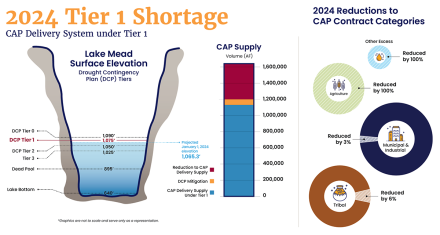
The combination of favorable basin-wide hydrology and conservation efforts across the Lower Basin have improved the reservoir contents to the point that in August, Reclamation announced a Tier 1 shortage reduction for 2024 and not the Tier 3 or greater reduction that was anticipated earlier in the year. This still requires a heavy lift from Arizona with a 512,000 acre-foot reduction, just 80,000 acre-feet less than the Tier 2a shortage reduction we’ve taken this year. This represents about 30 percent of CAP’s normal supply; about 18 percent of Arizona’s Colorado River supply; and just under 8 percent of Arizona’s total water use.Looking toward the future
The 2007 Shortage-Sharing Guidelines and the Drought Contingency Plans expire in 2026. The good hydrology and additional voluntary conservation in the Lower Colorado River Basin have resulted in a relatively stable Colorado River Basin system in the short-term, giving the Basin states and Mexico a bit of breathing room to negotiate the next set of guidelines that will go into effect post-2026.In June of this year, Reclamation formally announced its intent to prepare an Environmental Impact Statement (EIS) for post-2026 operations and solicited public comments on the scope of specific operational guidelines, strategies and related issues. In October, Reclamation released its post-2026 Scoping Report, which summarized the more than 24,000 comments received and identified its anticipated purpose, need and proposed federal action.
Arizona has been working with the Lower Basin states to come up with concepts that would lead to a sustainable river system. The Lower Basin’s stated primary objectives are to:
• Improve the sustainability of the Colorado River over a broad, but plausible range of future conditions
• Increase the predictability of reductions
• Address the structural deficit by sharing reductions among the Lower Basin states and Mexico
• Share the risks and benefits of the system equitably within and between the basinsAt the Arizona Reconsultation Committee meeting in November 2023, a new system contents approach was presented, basing shortage reductions on the volume of water available within Lake Mead, Lake Powell and the other major reservoirs in the system (Blue Mesa, Flaming Gorge, Havasu, Mohave and Navajo).
Unlike the current approach, which is based on the elevations of only Lake Powell and Lake Mead, the new dynamic approach is based on water available in all major reservoirs in the Colorado River system. This approach helps provide a clearer picture of the health of the system, as well as achieve supply/demand balance by triggering reductions based on the health of the system. To provide as much certainty as possible to water users, and with the understanding that drier futures are likely, the intent is to keep the reservoir contents in a range that ensures a less variable reduction volume. Of course, the primary goal is to avoid crashing the system with this approach. We anticipate a draft EIS in late 2024 with a public comment period to follow.
We anticipate that other alternatives will be put forward and that Reclamation will issue a draft EIS in late 2024 with a comment period to follow.

Click the link to read the article on the Water Education Colorado website (Shannon Mullane):
December 27, 2023
Federal forecasts for the Colorado River’s water supply — the water source for 40 million people — predict a substantial drop as the snow season limps into the new year.
Water flowing into Lake Powell is forecasted to be 79% of its historical average, according to a December monthly report from the U.S. Bureau of Reclamation. One major cause is the poor showing of snow in the Rocky Mountains, but it’s not time to panic yet, water experts say.

“It’s December, we still have several months of accumulation potential,” said Russ Schumacher, Colorado’s state climatologist. “There’s no reason to freak-out about solely the fact that snowpack is low at this point because there’s still time to make that up. But we also know that, as the climate has been warming, the snowpack that we do get doesn’t go quite as far.”
In the Colorado River Basin, which stretches across seven Western states, a system of reservoirs catches water and meticulously times releases to provide a steady flow to farms, cities, industries and ecosystems around the basin.
The largest reservoirs are Lake Powell on the Utah-Arizona border and Lake Mead on the Arizona-Nevada border. Together, they can store up to 53.9 million acre-feet of water, or about 92% of the reservoir storage capacity in the entire Colorado River Basin.
Both were drawn down to historic lows in the early 2020s. The good water year in 2023, when the basin saw above-average snow and rain, brought the reservoirs back from the brink of a crisis, but neither is close to its average conditions, let alone near full capacity.
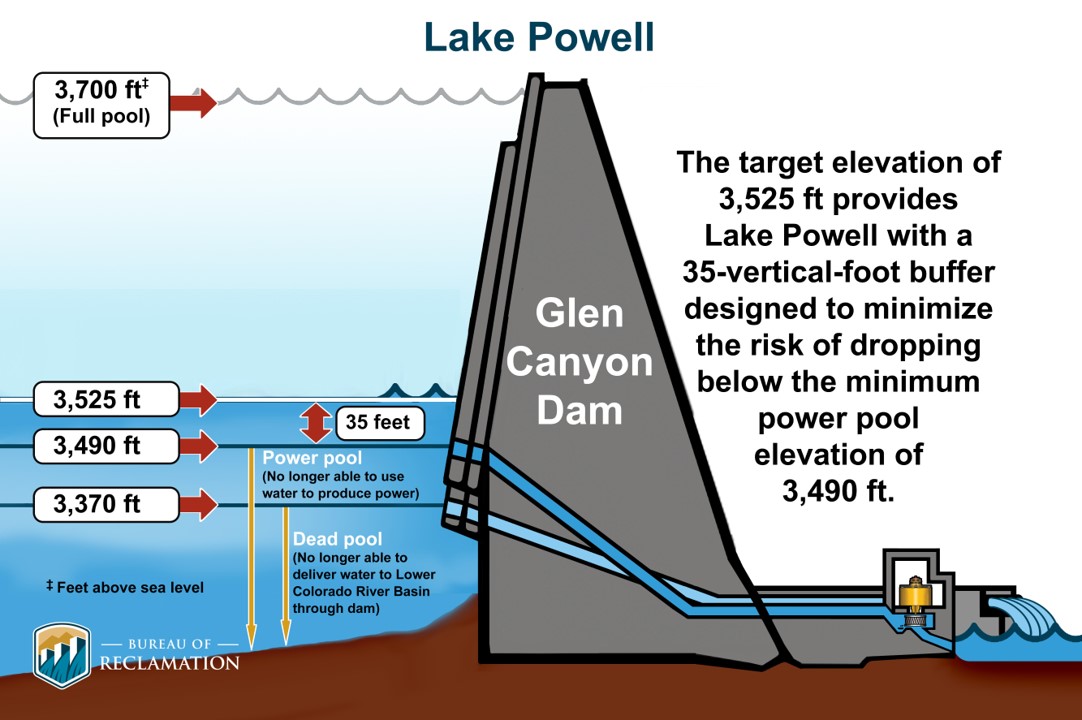
A bad water year — with below-average precipitation and hotter conditions — could send the reservoirs back toward dangerous lows, experts say. At Lake Powell, Glen Canyon Dam can no longer generate hydroelectric power when the water level falls below 3,490 feet or release water at all when the level falls below 3,370 feet.
The outlook for Lake Powell has grown more grim since the start of the water year in October. The Bureau of Reclamation estimated that a total of about 9.4 million acre-feet of water would flow into Lake Powell between October 2023 and September 2024.
That estimate has dropped by nearly 2 million acre-feet. The December forecast estimates the reservoir will receive about 7.62 million acre-feet of water by September, about 79% of the 30-year average from 1991 to 2020.
Two million acre-feet is enough water to fill Blue Mesa twice over — the largest reservoir in Colorado — or to supply one year of water for about 4 million typical urban households.
For reference, last year’s record snowpack sent more than 12 million acre-feet of water into the immense reservoir.
Even with just 7.62 million acre-feet expected to flow into Powell, Glen Canyon Dam is set to release 7.48 million acre-feet of water downstream to Lake Mead, an amount set by interstate agreements that govern how the reservoirs operate.

Some projections indicate that the reservoir levels could fall low enough to trigger more emergency releases into Lake Powell from Upper Basin reservoirs, like Blue Mesa, which sits on the Gunnison River near the city of Gunnison.
River officials called on Blue Mesa to send water down to Lake Powell in 2021 to boost the reservoir’s water levels. That debt will be repaid by the end of December, said Chuck Cullom, executive director for the Upper Colorado River Commission, an interstate body that helps manage the Colorado River’s water.
“Between now and 2026, I would just highlight for folks that it could be Groundhog Day in the early spring and summer about declining towards critical elevations,” Cullom said during an Upper Colorado River Commission meeting Dec. 13 in Las Vegas.
The accumulation of snow in the mountains of Colorado, Wyoming and Utah provides much of the water for the Colorado River Basin. So far, that snowpack is off to a poor start, Schumacher said.
Federal data shows that the snowpack in the Upper Basin — Colorado, New Mexico, Utah and Wyoming — is the third lowest for the end of December since 1986, he said.
It’s similar to 2018, a year no one wants to repeat in the Southwest, Schumacher said.
“That was a year that started off bad and never recovered,” he said.
This year, warmer water temperatures in the Pacific Ocean are causing El Niño weather patterns, which normally bring slightly more precipitation to the Southwest and slightly less moisture to the mountains in northern Colorado.
“At this point in the winter, the way bigger uncertainty is that we just don’t know what’s going to happen with the weather for the next few months,” Schumacher said.
More by Shannon MullaneShannon Mullane writes about the Colorado River Basin and Western water issues for The Colorado Sun. She frequently covers water news related to Western tribes, Western Slope and Colorado with an eye on issues related to resource management, the environment and equity. She can be reached at shannon@coloradosun.com.

Click the link to read the article on the Water Education Colorado website (Shannon Mullane):
December 27, 2023
For tribal nations in the Colorado River Basin, repairing a century of exclusion is a crucial step in planning for the river’s future. A new proposal could grant them a permanent seat at the table.
Collectively, the 30 tribal nations in the basin have rights to about 26% of the Colorado River’s average flow, but states and the federal government have repeatedly left them out of major decisions about how the river’s water is stored, divided up and distributed. This month, tribal representatives from around the Colorado River Basin took the mic at the biggest basin gathering of the year with a focus on correcting historical wrongs and asserting their rights to water.
“We are still not directly engaged in the process that determines [the river’s] future,” Amelia Flores, chairwoman of the Colorado River Indian Tribes, four tribes with land in Arizona and California said at the 2023 Colorado River Water Users Association conference in Las Vegas. “… Our livelihoods and our traditions have no voice. We must do better.”
Tribal water concerns have been addressed through legislation, court decisions, contracts and more through the decades. However, tribal leaders say they are informed of decisions about how the river is managed, instead of being included in the decision-making process.
State and federal leaders did not include tribes in the creation of the 1922 Colorado River Compact, which forms the foundation of how the river’s water is managed, despite federal recognition of tribal water rights in years prior. As recently as 2007 and 2019, state and federal partners developed new rules for managing the river in response to prolonged drought, but again, tribes were not included.
As basin officials plan for the river’s future after 2026, when the current rules expire, tribal representatives say history cannot repeat itself. “I’ve heard all the arguments as to why it’s not feasible to have representation of tribes at the negotiation table with the state and federal governments,” Flores said. “I’m not buying it.”

For the first time, six tribal nations are negotiating an agreement with four basin states and the federal government to give them a permanent voice at one important table. In 2022, tribes with land in the Upper Basin — Colorado, New Mexico, Utah and Wyoming — began meeting with the Upper Colorado River Commission, a governance body made up of federal and Upper Basin state officials.
“This relationship that we’ve formed is very, very important on how the Upper Basin moves as a collective,” said Lorelei Cloud, acting chairwoman of the Southern Ute Indian Tribe, which has land in southwestern Colorado. “We’ve gotten to a point now where we are sharing information with each other, and that’s been monumental.”
The draft agreement would formalize meetings between tribal, state and federal governments, regardless of any future changeover in leadership. The commission will consider and possibly vote on the agreement in February, according to Chuck Cullom, the commission’s executive director, who called the agreement “historic” but overdue. “It’s something we should’ve been doing much earlier,” Cullom said.
The river commission and tribal representatives highlighted the new agreement during a Dec. 13 meeting at the Las Vegas conference. The meeting marked the 75th anniversary of the commission and the second time all six tribes were invited to participate. The first was in 2022.
Tribal representatives from across the basin voiced their main goals and concerns in discussions related to water policy, agriculture and the river’s future at the conference, which brings together all of the key players in the Colorado River Basin each year.
Unused water is a key issue for tribal leaders. About a dozen nations across the Colorado River Basin, including the Ute Mountain Ute Tribe, which also is in southwestern Colorado, still had unquantified water rights as of 2021.
Settling these rights for the Ute Mountain Ute Tribe needs to happen before 2026, Chairman Manuel Heart said. The tribe has completed the legal process to quantify the amount of water tied to its rights in Colorado but not in New Mexico and Utah.
In some cases, tribes may have quantified water rights but lack the infrastructure to deliver it to homes, businesses and farms. Both tribes in Colorado have rights to water they currently can’t access in Lake Nighthorse Reservoir near Durango.
That water flows downstream to Lake Powell and the Lower Basin — where water users can get paid to let it flow by their lands, according to Upper Basin officials. Tribes, however, aren’t compensated for their unused water from settled water rights.
“I’d really like to see full support from all seven states to say yes, we do support tribes,” Heart said. “There’s a lot of water that’s in the basin that’s unaccounted for, that they’re not even compensated for.”
The Upper Colorado River Commission is trying to estimate just how much of this water flows downstream to benefit the Lower Basin, officials said.

“The last 20 years have been really hard for all of us, both Upper and Lower Basin. Every person,” Heart said. “Demand, today, is at a high level. We can’t meet that demand.”
The basin needs to look at new opportunities and partnerships, and work within the limits of the river, several tribal leaders said. “We should all have the fundamental right to access clean water,” Heart said. “We should all have the right to use these waters based on what our needs are.”

