Click the link to read the article on the Sibley’s Rivers website (George Sibley):
I was planning for this post to be tip-toeing into a conversation about the prior appropriation doctrine, a conversation which we badly need to have throughout the interior West, but which will likely be vigorously, even violently, opposed by those holding senior water rights in every western watershed.
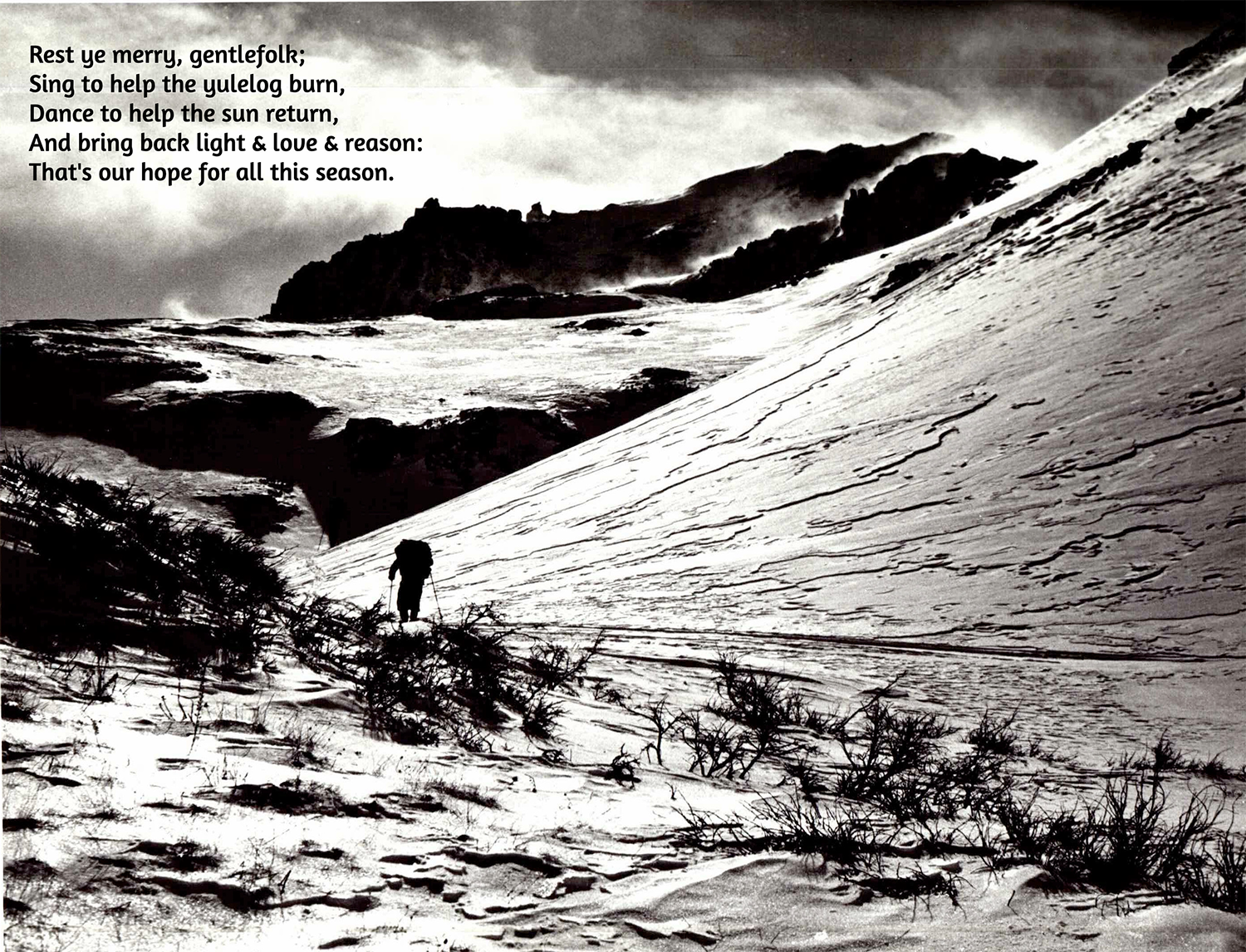
But instead of that – I’ve been captured by the season, the dark season of long nights and short days that has made us – all the way back to our distant ancestors living in stick-and-mud wickiups (maybe especially them) – want to take a break from the daily round, and instead contemplate the larger problem of helping the sun return. So – a short break here, from worrying about the water we don’t have, or about 2026 and a new set of bandaids and splints for dragging into the future the Marley’s Chain that we call the Law of the River. No big bonfire either, or Saturnalia or Christmas or Kwanzaa just yet, although each in its good time. Instead, just a celebration, or at least acknowledgement, of our currently fading sun – and a revisit to the relationship between the sun and the water that the sun giveth and taketh away, the two things without which we would not be here.
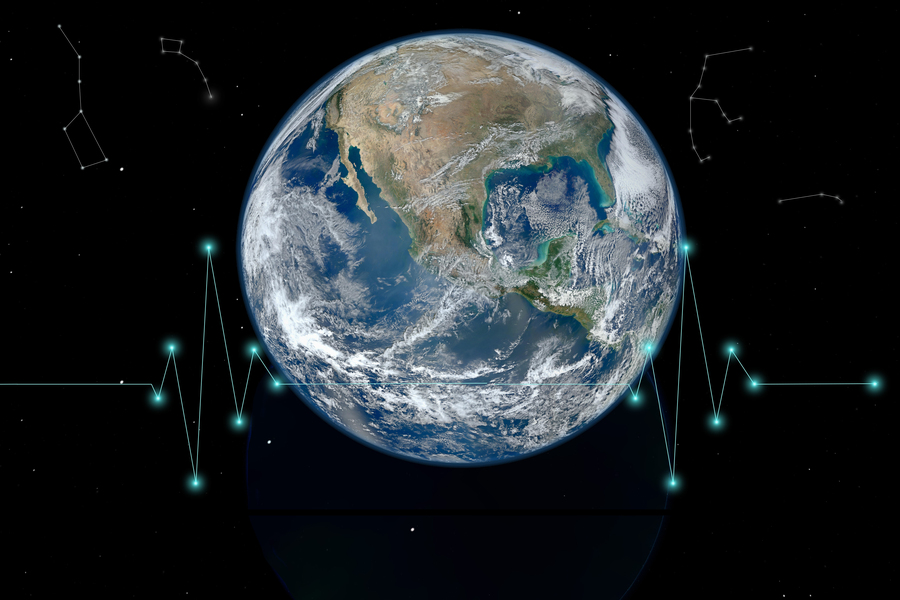
Think, for starters, of the planet misnamed ‘Earth,’ held by the mysterious force of gravity in an uneven circle around the sun at about 66,000 miles per hour, too fast for gravity’s centripetal force to pull it into the sun, but not so fast that centrifugal force would let it leave the sun’s’pull on a straight line into the black night of space – a delicate kind of dynamic balance.
But – ‘Earth’: had we seen it first from above like we can now, from satellites on the upper edge of our atmosphere, we would have called the planet ‘Water,’ or maybe more romantically, ‘Oceania.’ Water covers 70 percent of the planet; we are a planet awash in water. Where the water came from, we can only hypothesize; but we have it – and we are also just the right distance from the sun we circle so that a lot of our water is in its liquid form. A few million miles closer to the sun and our water would be vapor in the atmosphere, as on Venus; a few million miles farther away, and the oceans and land would lie under deep layers of ice – the recent Pleistocene writ larger. But we are in the ‘sweet spot’ between those extremes, where the tilt of the planet is such that in our year’s passage around the sun, most of us are getting a taste of both the water-as-ice world and the water-as-vapor world, winter and summer; but thanks be, water-as-liquid continues to be where, or what, most of the water is.
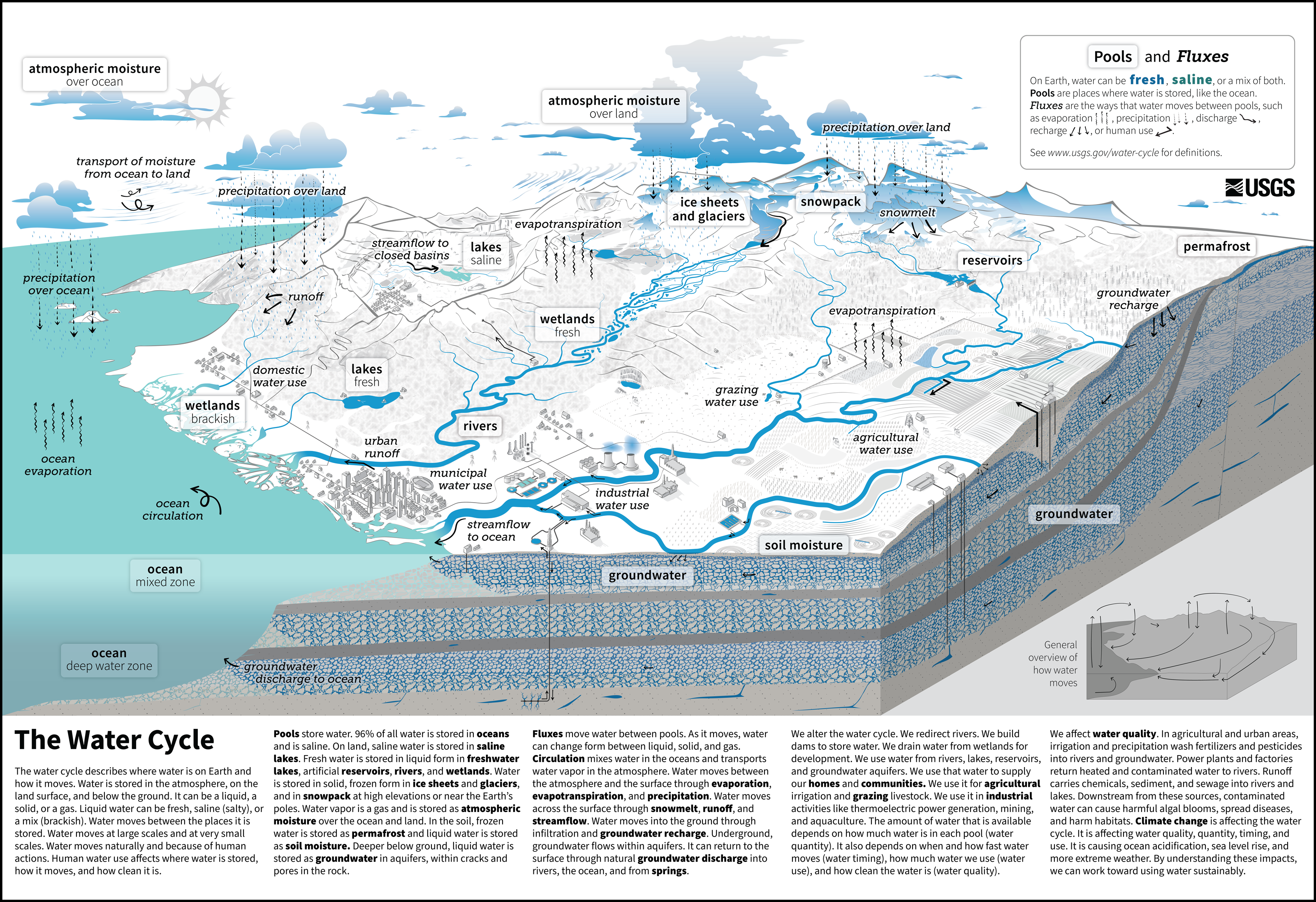
The majority of that water, of course – 97 percent of it – is too salty for land-based life on the 30 percent of the planet currently not underwater. We know that the presence of any water at all on that 30 percent of the planet depends on the sun turning water-as-liquid to water-as-vapor – in effect, ‘desalinating’ it – then wafting some of that cleansed water-as-vapor over the land on winds also generated by the sun, where the water-as-vapor cools as it rises over the land and condenses as precipitation – water-as-ice or water-as-liquid, but either way, what we call ‘freshwater,’ and need more than any other single resource (with the possible exception of the sun).
More than two-thirds of the freshwater that falls over the land gets ‘banked’ on the planet’s remaining glaciers and ice sheets, mostly useless to life. A majority of the remaining third (of just 3 percent of the total water, remember) soaks in as groundwater, some of it ‘tributary’ (eventually working its way underground into streams), and the rest non-tributary (going into ‘deep-storage’ in aquifers). The top layer of water that soaks into the ground is what most of our land-based plants depend on for life and living.
The diminished remainder – less than one percent of all the water on the planet – is surface water: the rivers, streams and lakes we see, use, play in and generally love to death. This is the water that most of the animal life on earth, including us mammals, depend on for life and living. We human mammals, however, have learned how to pump groundwater up to the surface for animal uses.
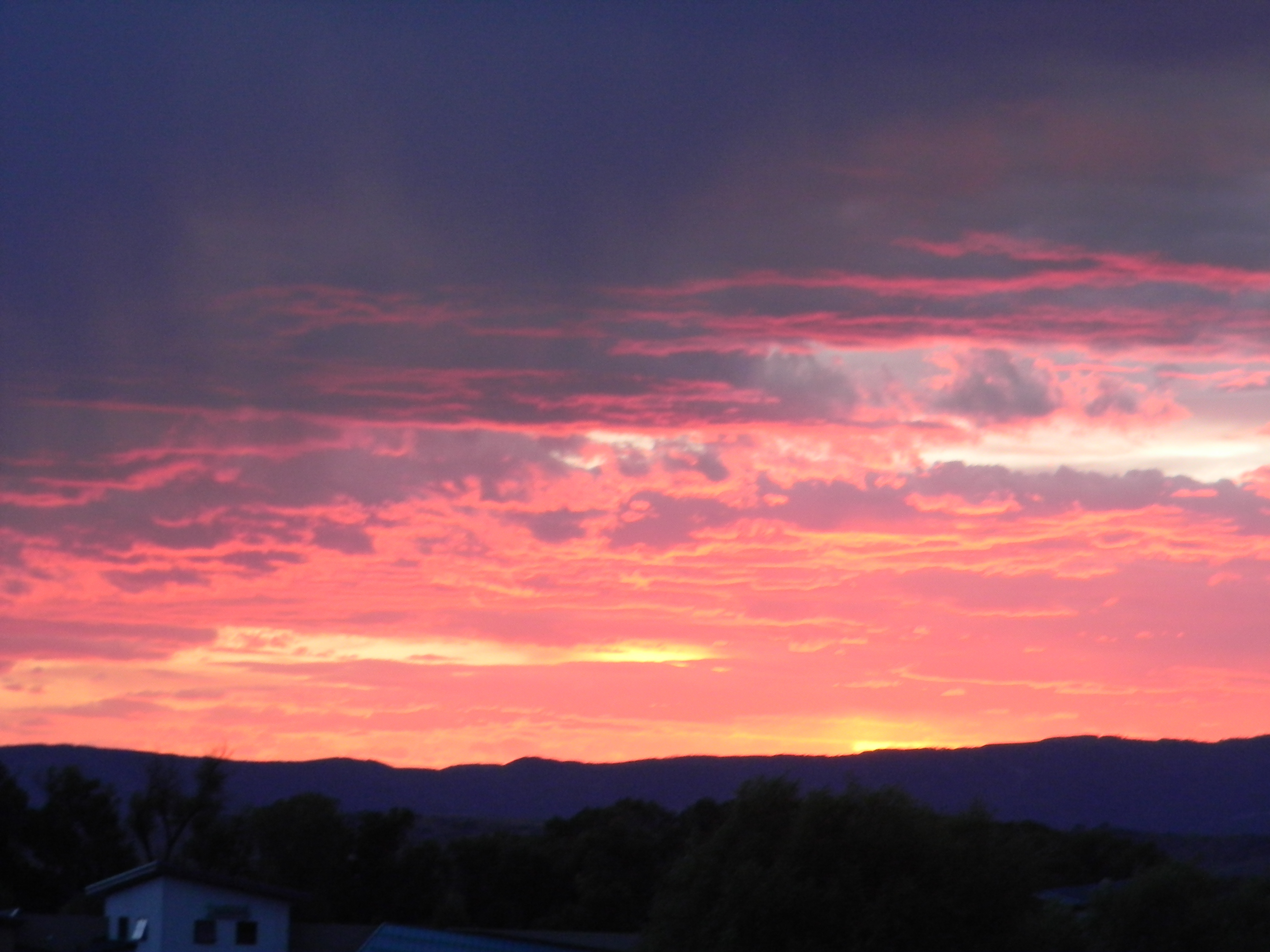
But this is the point at which the sun ceases to be just a good friend. Its propensity for turning water-as-liquid into water-as-vapor does not stop at the edge of the ocean, and as soon as the sun and its agent winds deliver the precipitation to us – mostly water-as-ice in the Colorado River’s mountains – it goes to work converting it back to water-as-vapor.
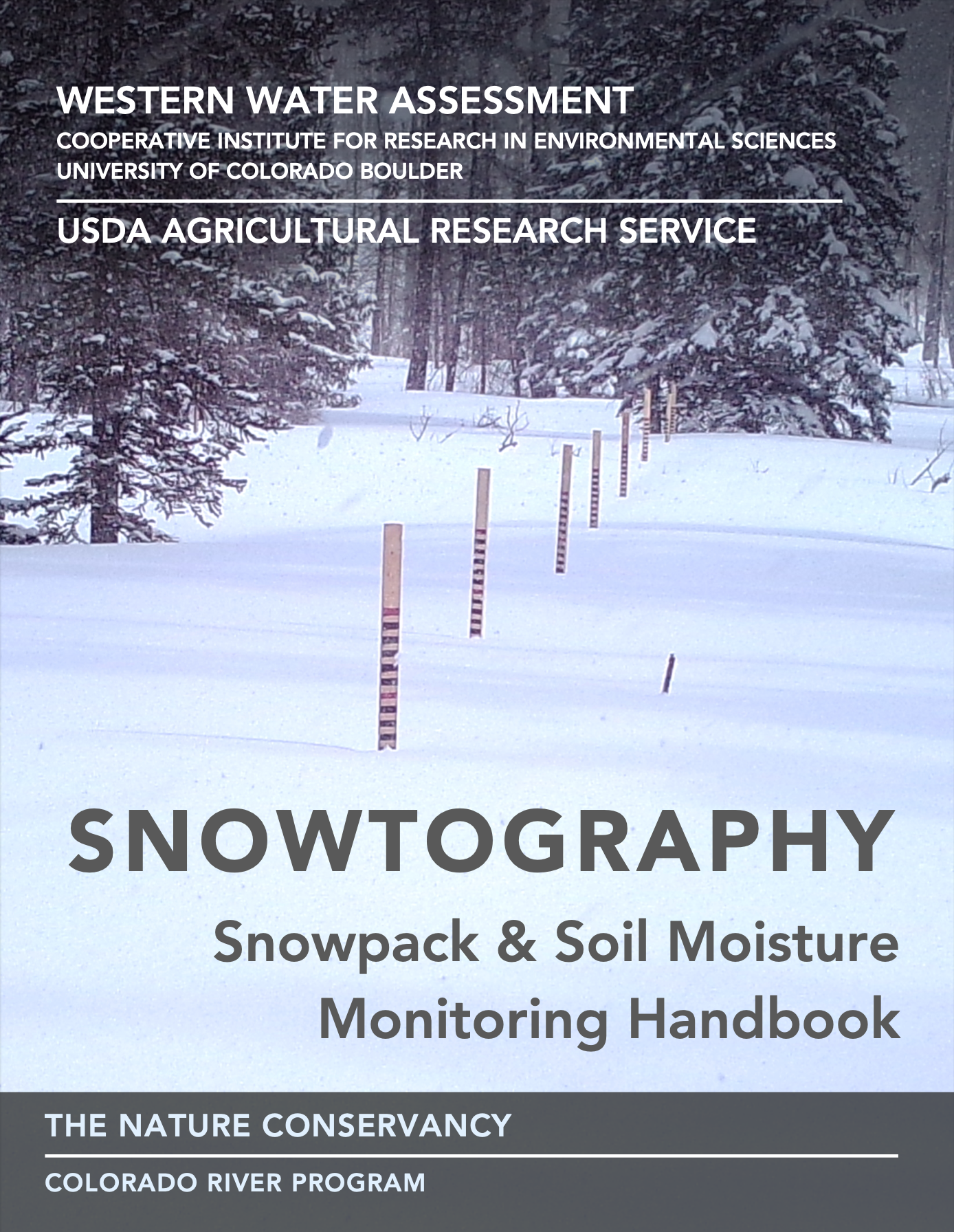
The sun and wind don’t even wait till the water-as-ice turns to water-as-liquid; the wind goes to work as soon as the snow lands, the sun as soon as the clouds disperse; both sun and wind begin turning an unknown quantity of the water-as-ice directly into water-as-vapor, through the process of sublimation. Only snow that falls on the lee and shaded side of rocks, trees or ridges, or falls through a forest to the ground, is safe from the sun and wind. If it is intercepted on the branches of forest trees, it is sublimated from there too. Estimates of the amount of a snowpack lost to sublimation on exposed areas range as high as 30 percent. Researchers on a large Department of Energy project are making a very complex and instrument-intensive effort to determine more accurately how much is lost to sublimation, and studies are going on in the Western forests to see if there are management strategies that would better protect the snow from sublimation.
The snowpack that survives the winter melts in the spring and early summer, water-as-liquid that either soaks into the ground or runs off in streams, both processes in which its meets other sets of challenges from the sun. The sun that soaks into the ground is eagerly sought out by the roots of plants, and is carried up into their stems, leaves and flowers. There, around 5-10 percent goes into the growth of the plants, and most of the rest is transpired through leaves into the atmosphere as vapor, partly to create a favorable micro-environment around the plant, and – one irrationally suspects – patly because that’s what their lord and master sun wants them to do. (False fact alert.)
The water that runs off, either because the slope is too steep or rocky to soak in or because the ground is already saturated, encounters other challenges. Bouncing down the mountainsides in whitewater streams, dry air catches and vaporizes tiny droplets. Then once the water-as-liquid calms down in the valleys, it encounters lots of users, including us. Much of it is captured by plants, some ‘wild,’ some domesticated, with a large portion of that being transpired back to the atmosphere. Anywhere it is exposed to the sun, some of it is evaporated. In the Colorado River Basin, the water-as-liquid eventually encounters a dam and reservoir, where it becomes a sitting duck for the sun. The hotter the reservoir’s environment, the more is lost – although reservoirs in the upper reaches of the river are only partially exempted from evaporation; they lose water-as-liquid into thinner dry air. Again, we don’t have an accurate measure of evaporation from the sun and its sidekick winds, but estimates I’ve seen are around 800,000 acre-feet in ‘system losses’ (mostly evaporation) from the states above the canyons, and 1.2 million acre-feet system losses from the states below the canyons. Nearly a sixth of the river as it has been running the past 20 years – and those numbers get a little worse in dry years of low precipitation.
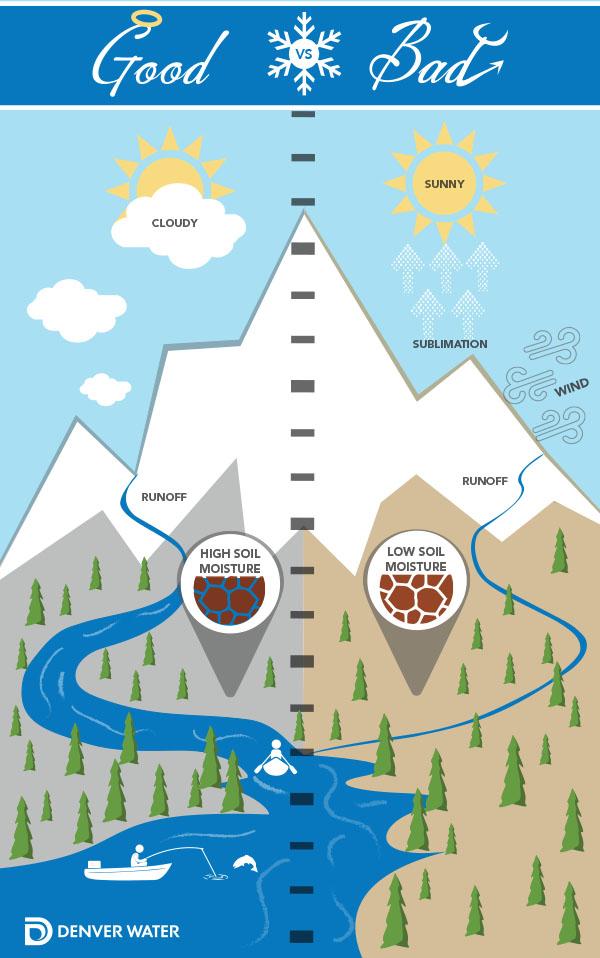
So the sun giveth and the sun taketh away. A 2022 summary study of Colorado River science cites findings that only 10 percent of the precipitation that falls over the Colorado River Basin actually shows up in the river. A goodly portion of the rest undoubtedly goes to groundwater – but a recent US Geological Survey study (too complex in its science for me to really comprehend) shows that roughly half of the river’s water below the snowpack zone (roughly 8,000 feet elevation and above) is groundwater making its way into the stream. Since about 85 percent of the river’s water originates above the 8,000 foot elevation, the sun clearly does quite a lot of its taking-away before the streams ever emerge in what could be called the human-use region.
There is, however, another co-conspirator with the sun, in determining the ratio of water-as-liquid to water-as-vapor, and that is the planet’s atmosphere – what is in the atmosphere. The atmosphere has a regulatory function for the ratios of water-as-ice to water-as-liquid, and water-as-liquid to water-as-vapor. Small changes in the amount of carbon and nitrogen gases in the atmosphere change those ratios significantly. At the height of the Pleistocene Epoch (most of the past two million years plus) the quantity of carbon gases in the atmosphere had dropped to less than 200 parts per million (ppm), decreasing the capacity of the atmosphere to hold solar heat, and the precipitation that fell as snow and piled up in glaciers in the mountains and ice sheets on the leveler land – ice masses with a weight sufficient to crack and depress the continental crust, leaving depressions that filled up with the Great Lakes when the ice melted.
Sometime in the last half-million years or so, however, something caused the carbon gases in the atmosphere to begin slowly increasing, and the balance of water on earth began to shift back from the cold dry epoch of water-as-ice toward water-as-liquid. Perhaps volcanic activity, perhaps fires in forests dried out for want of water, maybe some assistance from paleo-people burning forests and grasslands to keep forage optimal for the animals they hunted – some combination of factors and events bumped up the carbon gases in the atmosphere to 300 ppm plus or minus, and the planetary climate grew warmer and wetter, mellowing into the Holocene Epoch these past 10,000-15,000 years.
So comparatively mellow was the Holocene, with water-as-liquid replacing water-as-ice in comparative abundance, that all the forms of life that had survived the Pleistocene thrived – thrived so well that many species, plant and animal, experienced episodes of the ‘trauma of success’: outgrowing their resource base in episodes of swarming, and ultimately being brought back into balance through rough action by the rest of their environments, by ‘nature’ – a menu of measures that includes pandemic disease, famine, infighting, social breakdown, and all the other consequences of too many individuals competing for too little food, water, and ‘elbow room.’
We are certainly in that category of swarming species, but are a unique case, being not locked into instinctual behavior, but either blessed or cursed with the capacity to see what’s going on and take steps to adapt culturally, thus avoiding (or at least deferring) the depredations of famine, pandemic disease and war over food, water and land. But our adaptations get ever more complex and difficult to maintain, and usually have unforeseen consequences that have to be dealt with through even more complexity.
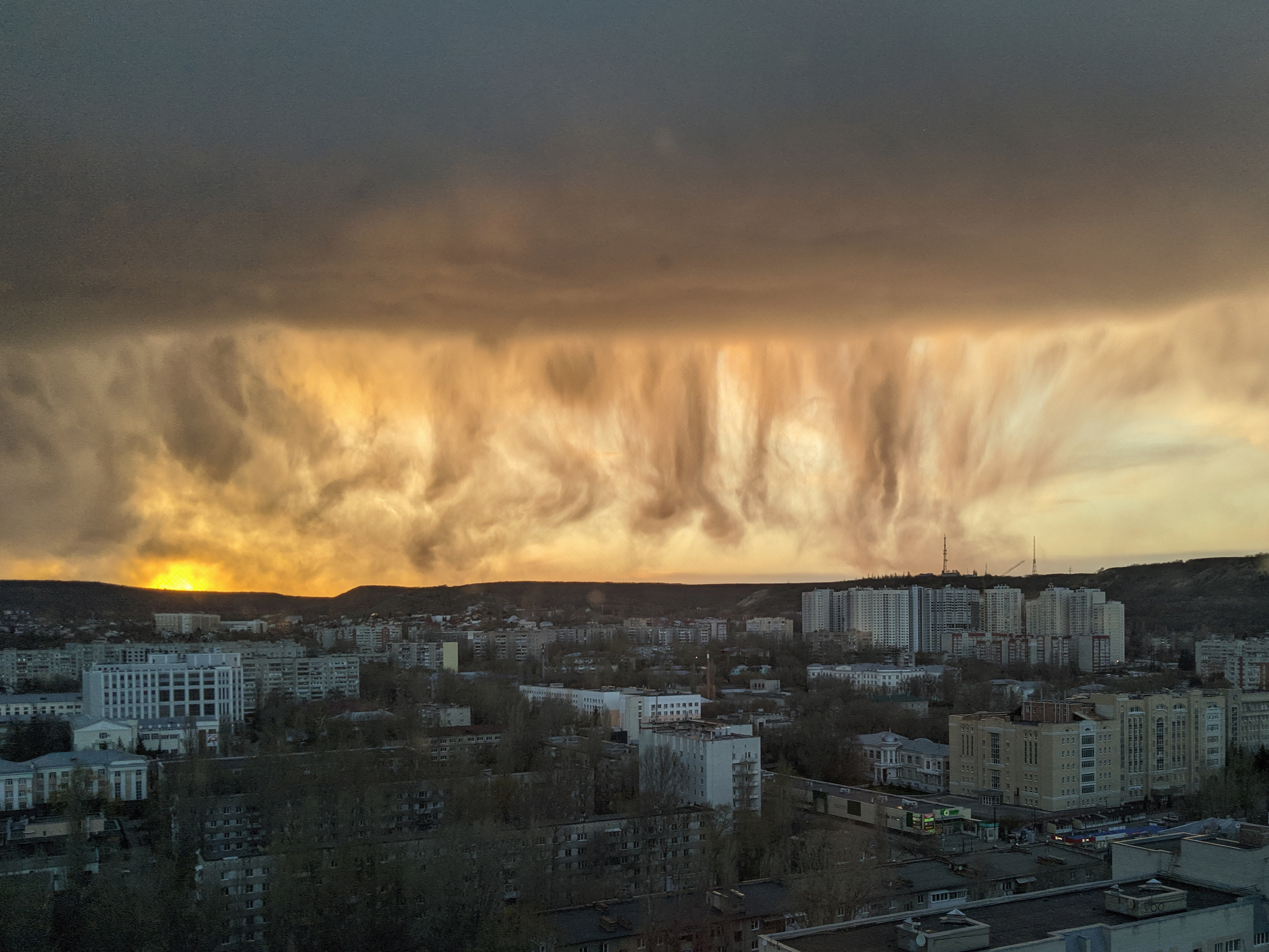
Our current success in staying ahead of the disasters that usually brings swarming species back into balance quickly, if brutally, has depended heavily on releasing carbon substances long sequestered in the ground, burning them – and consequently driving up the capacity of the atmosphere to hold the sun’s heat. The good news there is that we’ve probably precluded the usual interstadial return to the Pleistocene winter. But the bad news is that we have begun to significantly increase the conversion of water-as-liquid to water-as-vapor. We’ve all seen the summer virga, when falling precipitation over a desert is evaporated by rising heat before it can get to the ground – beautiful in the desert, but not something we want to see everywhere and all the time….
But time next year for all that. Wishing you all a meaningful and (if it’s not contradictory) joyful holiday season. See you again in 2024 – when we’ll again go down by the river and all its problems (for which a good primer would be to look at the Seven Principles of Kwanzaa).