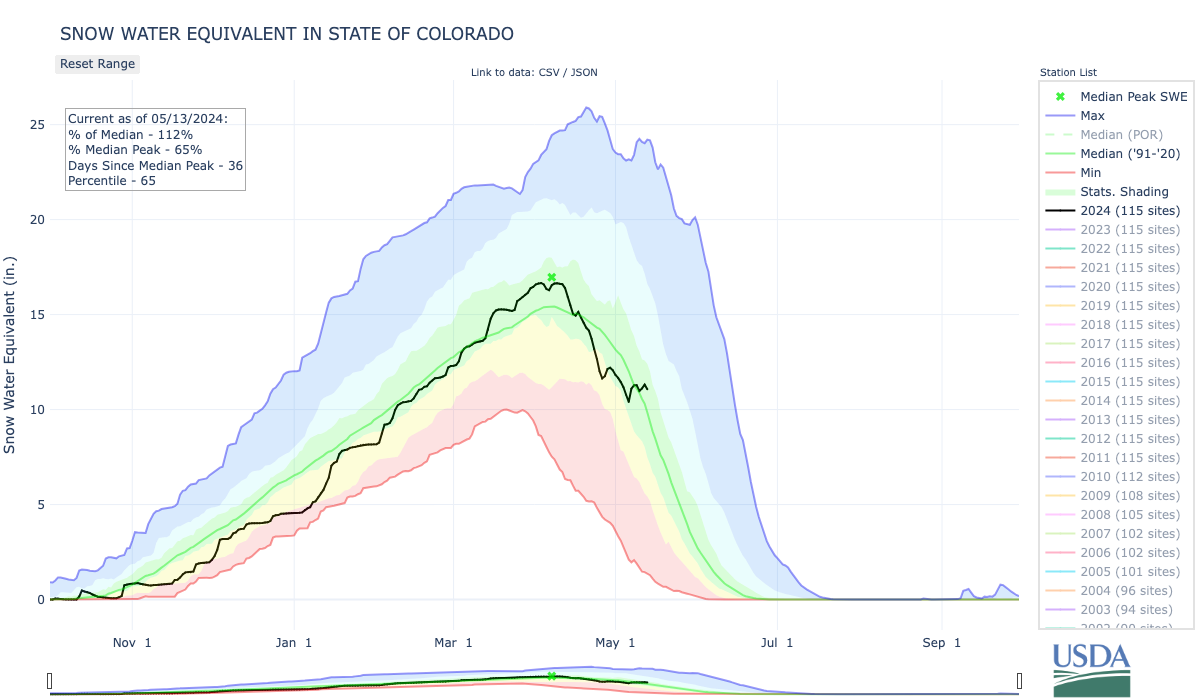
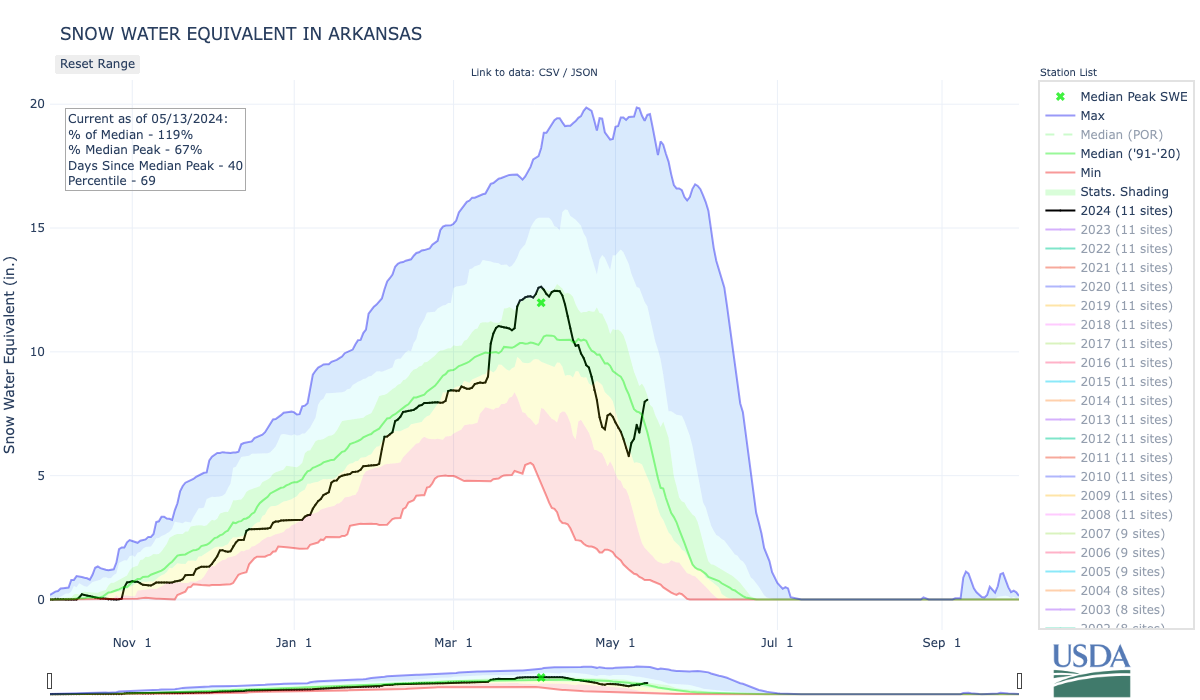
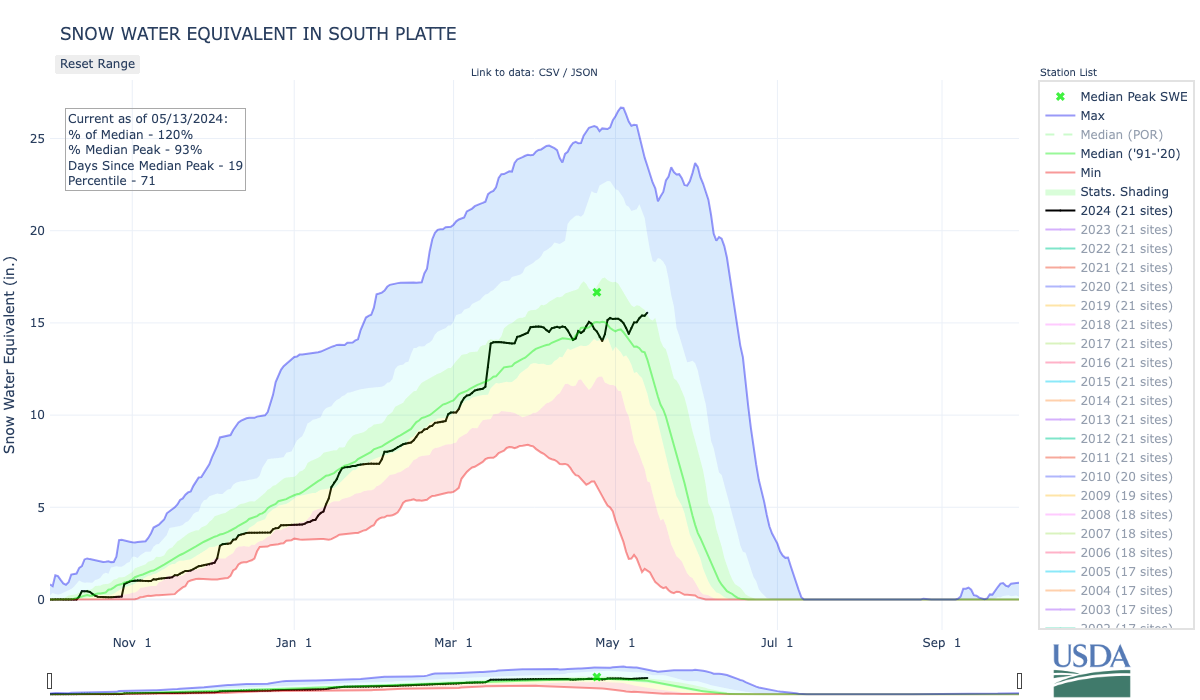
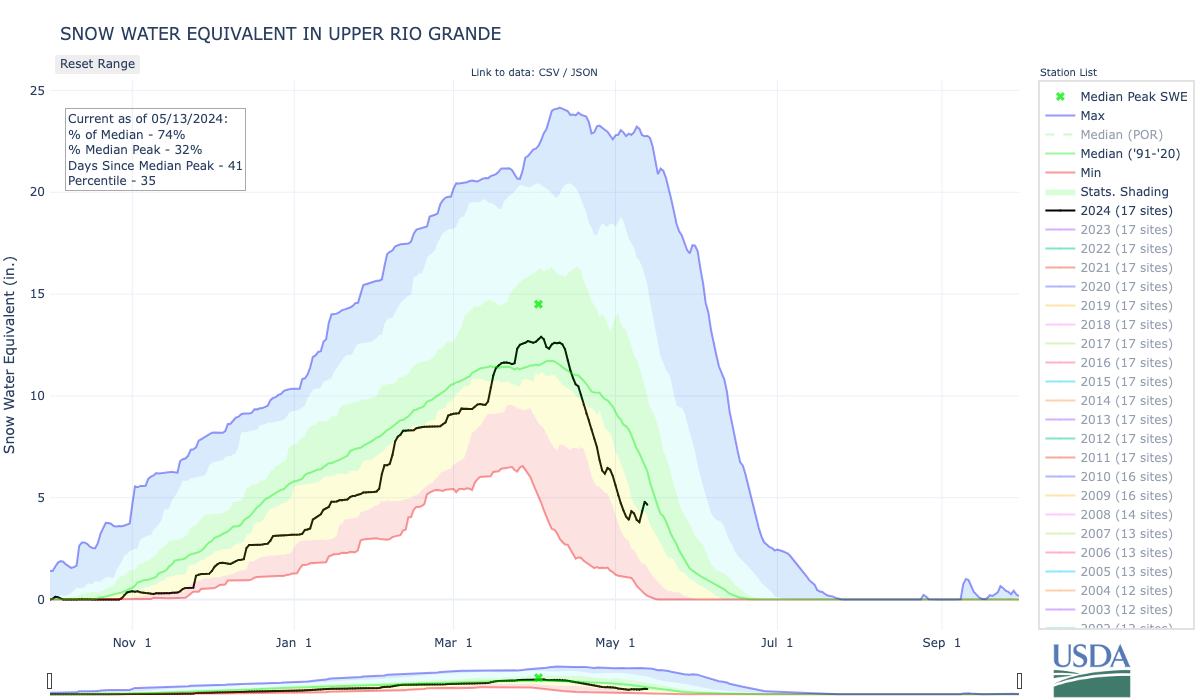

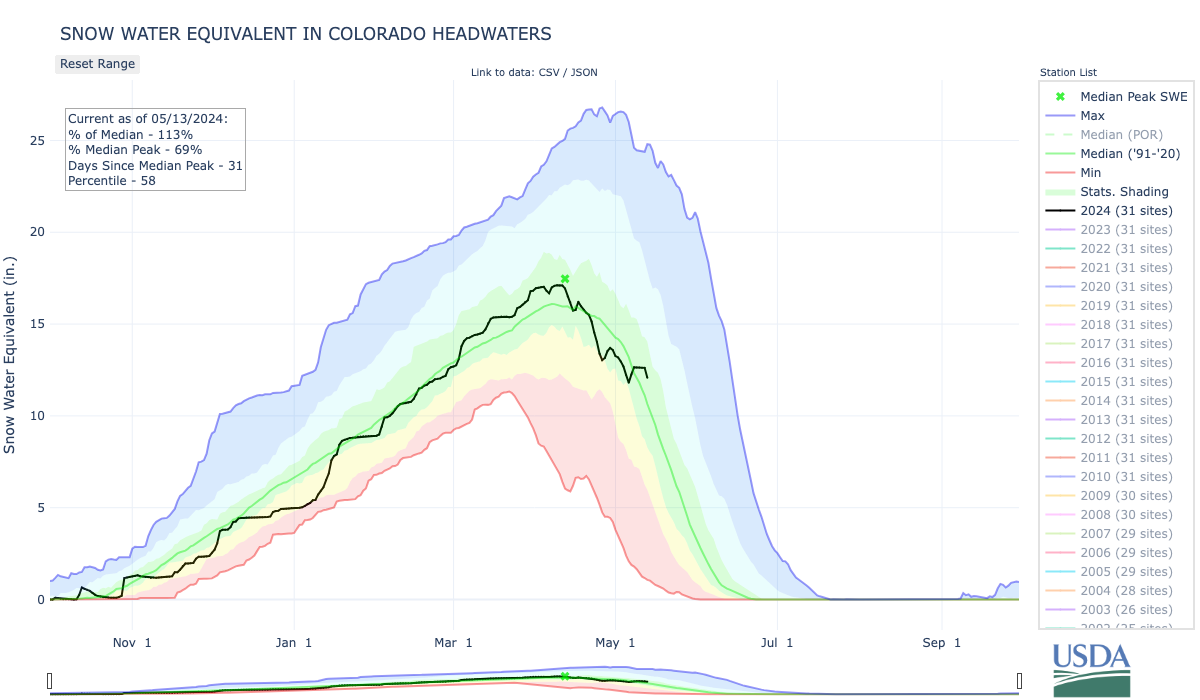
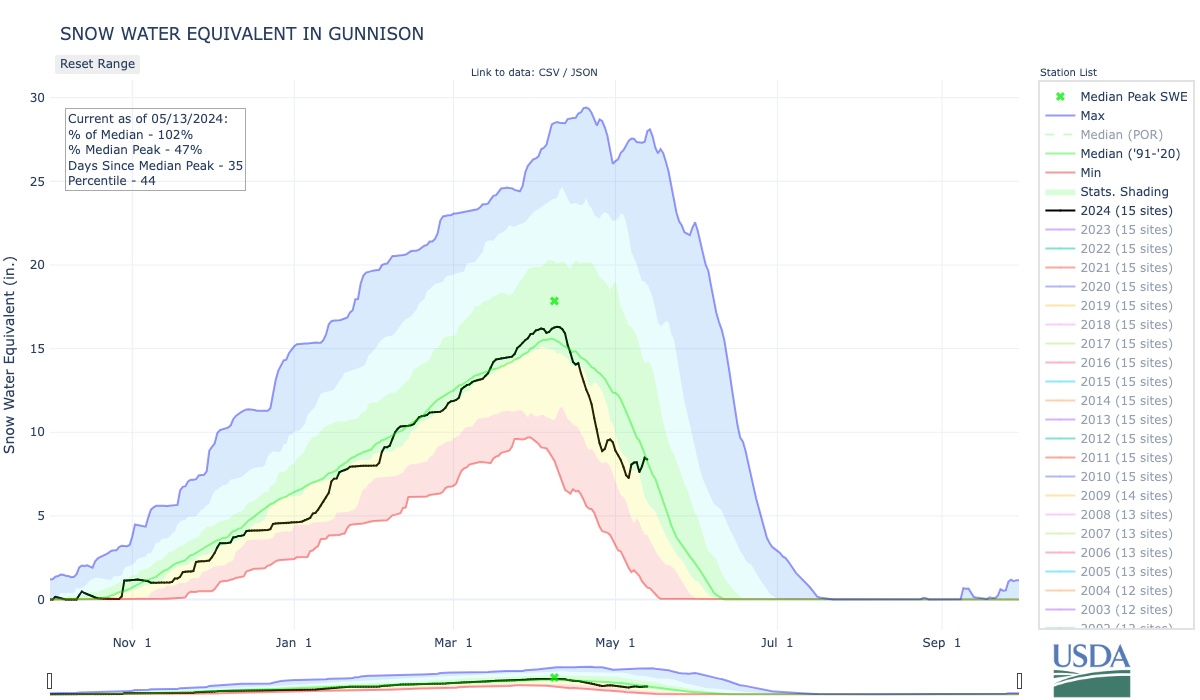
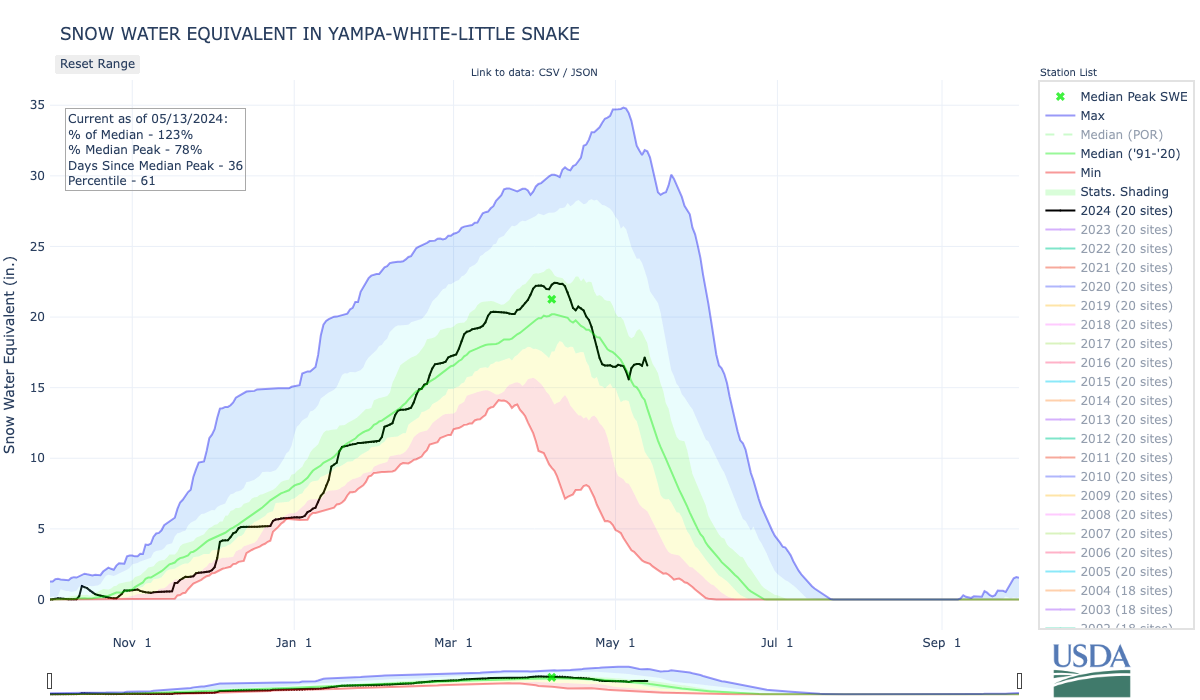
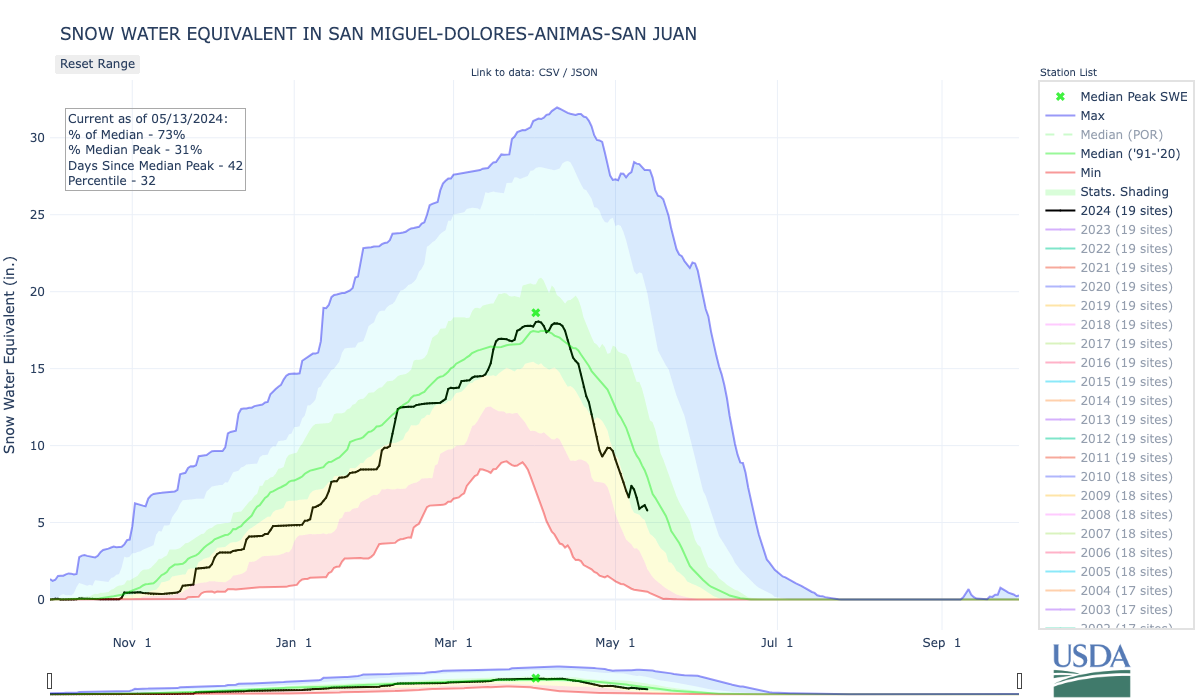


From email from Reclamation (Erik Knight):

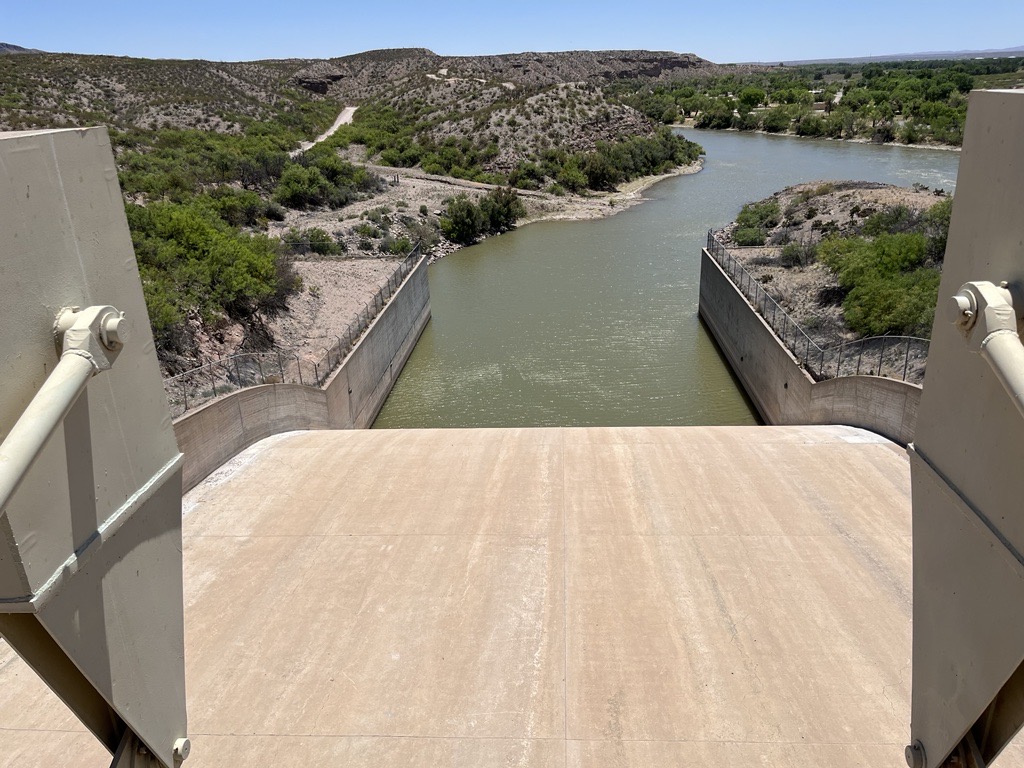
Click the link to read the release on the Reclamation website:
May 10, 2024
ALBUQUERQUE, N.M. — Secretary of the Interior Deb Haaland today announced a $60 million investment from President Biden’s Investing in America agenda for water conservation and drought resilience in the Rio Grande Basin. These resources will ensure greater climate resiliency and water security for communities below Elephant Butte Reservoir and into West Texas. Secretary Haaland made the announcement in Albuquerque following a briefing on the Rio Grande Project with state and local officials, irrigators, and other partners.
Through cooperative agreements with the New Mexico Interstate Stream Commission and the National Fish and Wildlife Foundation, the Bureau of Reclamation will work with the Elephant Butte Irrigation District and El Paso County Water Improvement District #1, the International Boundary and Water Commission, and local stakeholders to develop supplemental water projects or programs to benefit Reclamation’s Rio Grande Project and endangered species in the basin. The water savings from the proposed projects are anticipated to be in the tens of thousands of acre-feet per year.
“The Biden-Harris administration is committed to making communities more resilient to the impacts of climate change, including the Rio Grande basin and the people, wildlife and economies that rely on it,” said Secretary Deb Haaland. “We continue to make smart investments through President Biden’s Investing in America agenda to safeguard water resources, invest in innovative water conservation strategies and increase overall water efficiency throughout the West.”
Stretching over 1,200 miles, the Rio Grande provides water supplies for agricultural food production as well as renewable drinking water to fast-growing cities and municipalities throughout New Mexico and Texas. The river supports eight federally recognized Tribes, habitat for migrating birds and other species, and a robust and highly profitable tourism and outdoor recreation industry. Despite improved hydrology in recent months, a historic 23-year drought has led to record low water levels throughout the basin. The Biden-Harris administration continues to deliver historic resources to address ongoing drought and strengthen water security across the region now and into the future.
Today’s announcement comes from the Inflation Reduction Act, which includes $500 million for water management and conservation efforts in areas outside the Colorado River Basin experiencing similar levels of long-term drought. Funding for other basins will be announced through the summer and fall. The Biden-Harris administration has already invested almost $59 million in the Rio Grande Basin, including more than $30 million for aging infrastructure repairs to improve water supplies and water delivery systems in the Rio Grande and Middle Rio Grande Projects through Bipartisan Infrastructure Law funding.
“The Rio Grande, like many rivers in the West, has struggled with the impacts of severe drought for decades,” said Reclamation Commissioner Camille Calimlim Touton. “This funding from President Biden’s Investing in America agenda gives Reclamation and our partners the ability to explore options for stormwater capture and other activities to ease the impacts of climate change.”

On the Rio Grande, this funding will help efforts to increase storage at existing sediment dams and new off-channel storage to capture stormwater. This water will be used to recharge the aquifer, reduce irrigation demands and improve and create riparian wildlife habitat for threatened and endangered species like the Yellow-Billed Cuckoo and Southwest Willow Flycatcher. Other projects will improve irrigation infrastructure efficiency and fund forbearance and fallowing programs.
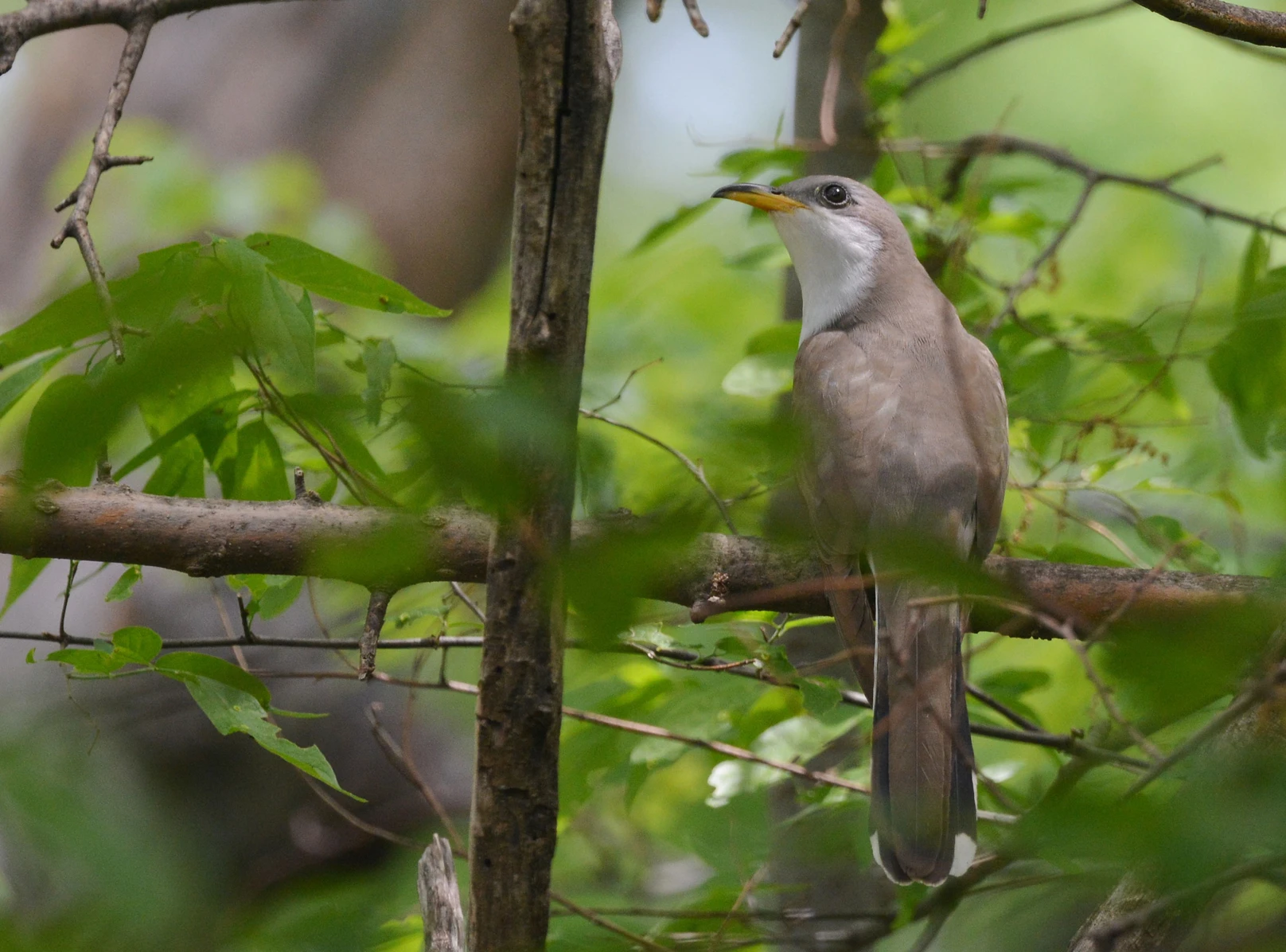
Prolonged drought within the project area and heavy regional reliance on groundwater pumping has caused a reduction in surface water supply, resulting in a decrease in project efficiency and loss of wildlife habitat.
Implementation of these programs and projects will benefit Rio Grande Project farmers, residents within the counties of Doña Ana and Sierra in New Mexico, and El Paso County in Texas, as well as the Republic of Mexico. These communities are identified as socioeconomically disadvantaged and vulnerable to climate change based on the Climate and Economic Justice Screening Tool.

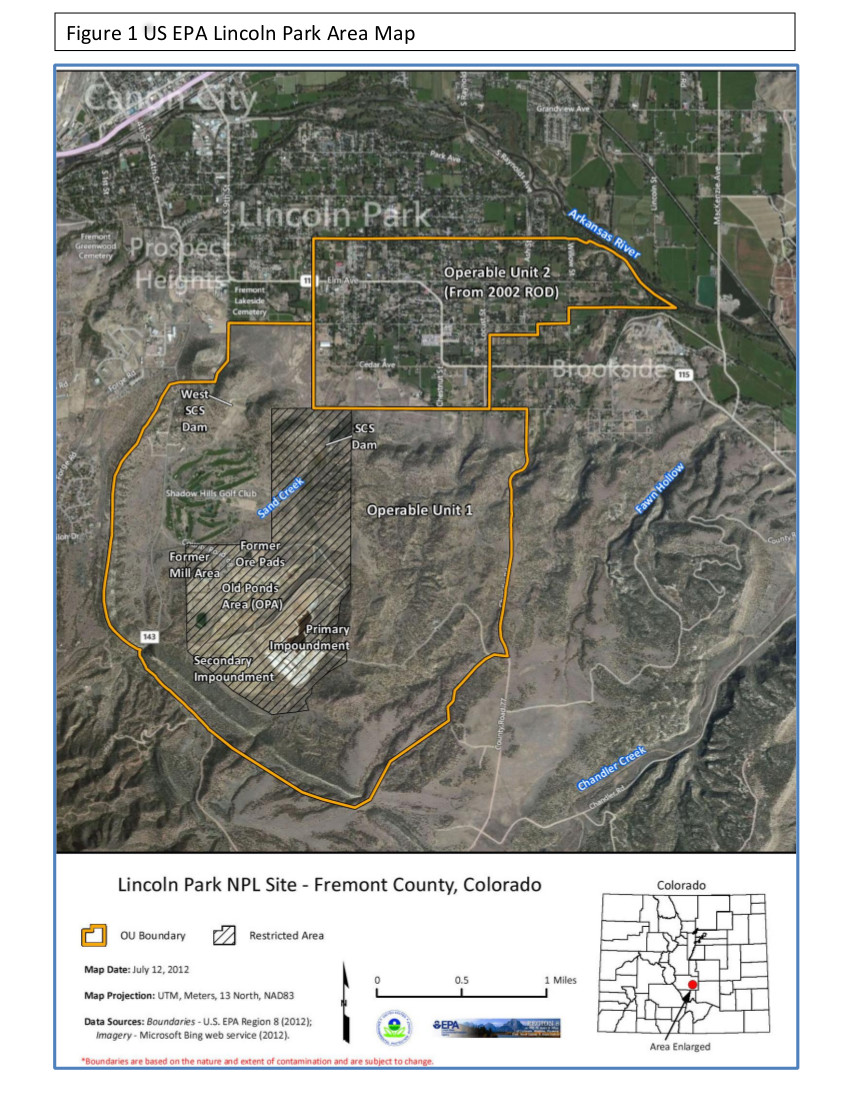
Click the link to read the article on the Cañon City Daily Record website. Here’s an excerpt:
May 10, 2024
In February 2023, the current Radiation Materials License holder, Colorado Legacy Land (CLL), declared insolvency and stated they could no longer maintain staff to ensure site security or continue regular operations. The Department of Public Health and Environment (CDPHE) took emergency action and contracted with the existing company, Ensero Solutions LLC, to continue with the necessary on-site activities. CDPHE assumed the monitoring program including wells and air monitoring stations because CLL had abandoned these responsibilities.
At the end of February, the CDPHE sent a letter to residents of Lincoln Park who have been part of the well-monitoring program established decades ago to keep track of groundwater contamination associated with the former Cotter Uranium Mill. The agency was asked for permission to access properties and test wells as had been done routinely in the past by either Cotter or CLL.
At the Community Advisory Group (CAG) meeting on April 16, Shiya Wang, CDPHE Radiation Project Manager, announced that of the 38 letters sent to well owners, only 16 responses were received to allow CDPHE representatives to continue the monitoring program. If you, the well-owner, receive a follow-up letter, please take the time to complete your information and get it back to the CDPHE. Any questions can be directed to the agency or the CAG at its Facebook page, “Lincoln Park/Cotter Community Advisory Group”
The reason for monitoring, as stated in the letter, is: “Continuous sampling of environmental media provides valuable data to both the State and to the Lincoln Park Community regarding the migration of hazardous constituents in the environment that have been associated with historical operations at the Site. Residents are encouraged to continue providing access to the sampling location so that this information can continue to assist the State’s, as well as the community’s, understanding of the current conditions in the area.

Click the link to read the article on the Utah News-Dispatch website (Kyle Dunphey):
May 9, 2024
Law professors from around the country threw their support behind a lawsuit filed against the state of Utah, arguing officials haven’t done enough to help the Great Salt Lake.
In an amicus brief filed in Utah’s 3rd District Court last week, 36 law professors say Utah is violating public trust doctrine, which requires the state to protect cultural or natural resources for public use, including bodies of water, land, artifacts or wildlife.
It’s the latest in a lawsuit filed in September by Earthjustice, Utah Physicians for a Healthy Environment, American Bird Conservancy, Center for Biological Diversity, Sierra Club and Utah Rivers Council, all conservation groups.
Public trust doctrine was in place when Utah was granted statehood in 1896, according to the Utah Law Review, designed to ensure the state’s navigable waterways would be protected and available for public use. As the Utah Division of Forestry, Fire and State Lands noted in a 2023 presentation to lawmakers, “The beds of navigable bodies of water must be managed in a way that does not interfere with navigation, commerce, fishing, and the ecological value of the waterbody.”
The lawsuit notes that public trust doctrine is “well established” in Utah code and has been upheld by several state Supreme Court decisions. In the brief filed this week, the professors cited court rulings that found states have an obligation to preserve public resources.
“Consistent with this growing judicial chorus, Utah’s public trust duties are to protect and preserve the Great Salt Lake. Utah has not come close to meeting those responsibilities,” the brief reads.
In a statement given to Utah News Dispatch on Thursday, officials pushed back on that argument.
“We have been — and will continue to — work to protect the interests of the state of Utah. Each division within the Department of Natural Resources is mindful of its responsibilities. Together, we are addressing the need to protect the Great Salt Lake,” said Joel Ferry, executive director of the Utah Department of Natural Resources.
The lawsuit names several state agencies, including the Utah Department of Natural Resources, the Utah Division of Forestry, Fire and State Lands, and the Utah Division of Water Rights.
The state has filed motions to dismiss the lawsuit, writing earlier this year in court documents that “The legal solution offered by Plaintiffs is unsupported by Utah law and disregards the many and varied mechanisms the State is utilizing to manage Great Salt Lake.”
That sentiment was echoed in a social media post from Republicans in the Utah Legislature, which didn’t specifically reference the lawsuit, but criticized “litigious outside interests.”
“The Legislature’s progress on the Great Salt Lake has been nothing short of historic,” reads a post on X from the House Majority account. “To continue this work, we need real solutions — not symbolism and theatrics. We need local involvement, not litigious outside interests.”
The brief references several state actions it says endangered the public trust resources. That includes “actively authorizing water appropriations that divert upstream water.”
“Rather than address that problem, the state has instead focused on ‘trying to persuade individual water users to undertake voluntary measures to reduce their consumption,’” the professors write. “Seeking voluntary measures from water users is insufficient to meet the state’s duty to ensure against the ‘substantial impairment’ of the Great Salt Lake while the lake continues to shrink and its ecosystem is undergoing collapse,” the group of professors write, urging the court to force Utah to develop and enforce a plan to restore the lake.
That plan could include “changing surplus water management in wet years, managing flows outside the irrigation season for conservation, and requiring efficiency improvements with the conserved water released to the Lake,” according to court documents.
In a statement, Ferry said the department received and reviewed the brief, and plans to oppose it.
“It is largely duplicative of the Plaintiffs’ arguments and that Utah’s district court rules do not authorize such filings,” he said.
The brief was signed by law professors from around the country, including the Georgetown University Law Center, University of Baltimore School of Law, University of Oregon School of Law, and University of Houston. However, there were no Utah-based signatories.
An amicus brief is a court document usually filed by academics, businesses, subject-matter experts or trade associations who side with one party in a lawsuit. They typically present additional information, perspectives or precedent for the court to consider.

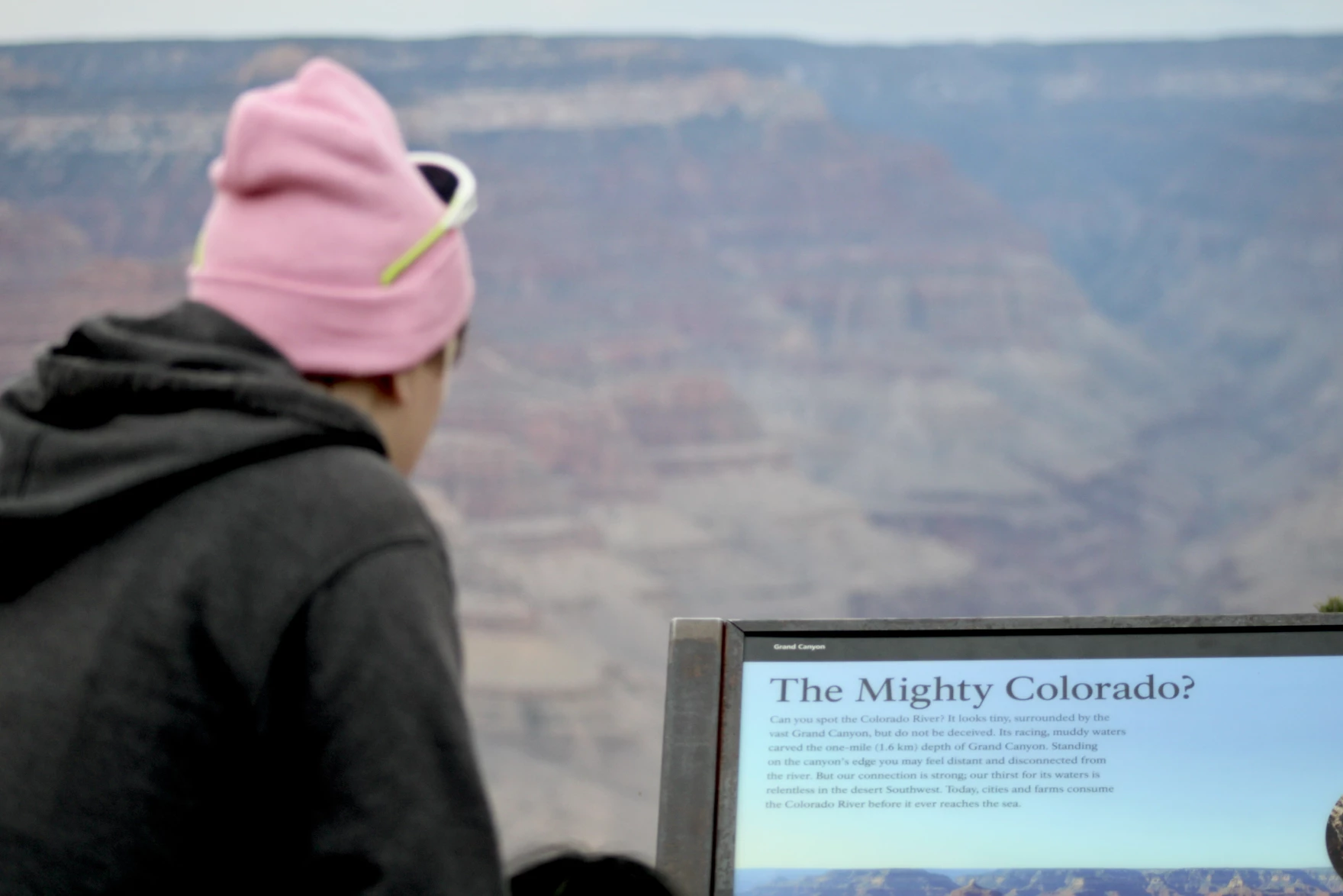
Click the link to read the article on the KUNC website (Alex Hager):
May 9, 2024
This story is part of ongoing coverage of the Colorado River, produced by KUNC in Colorado and supported by the Walton Family Foundation. KUNC is solely responsible for its editorial coverage.
The Colorado River is in trouble. More than two decades of megadrought fueled by climate change have sapped its supplies, and those who use the river’s water are struggling to rein in demand. Now, with current rules for river sharing set to expire in 2026, policymakers have a rare opportunity to rework how Western water is managed.
The river is shared across seven states and parts of Mexico. It’s an area that includes about 40 million people, a multibillion-dollar agriculture industry, 30 federally-recognized native tribes and countless plants and animals.
Satisfying the needs of such a diverse group is proving difficult, and the policymakers tasked with shaping the river’s next chapter are stuck at an impasse.
The federal government operates the massive dams and reservoirs that control the river’s flow, but has mostly left decisions about how to share its water to states.
Right now, the states are divided into two groups that have bickered about water management for the past century. One group, the Upper Basin, is comprised of Colorado, Utah, Wyoming and New Mexico. The other, the Lower Basin, includes California, Arizona and Nevada.
Those two camps have each sent proposals to the federal government in an attempt to have their say in shaping the river’s future. Those competing proposals, along with separate recommendations from environmental advocates and tribal groups, are making it hard to coalesce around one set of rules.

The Upper Basin proposal
The Upper Basin is legally required to send a certain amount of water to downstream neighbors each year. After more than 100 years of complying with that standard, Upper Basin states contend they should be allowed to send less. The Upper Basin’s proposal puts that idea into writing.
About 85% of the Colorado River starts as snow in the Upper Basin’s mountains. Climate change, the catalyst for the region’s water shortages, is shrinking the amount of snow that falls in those mountains each year.
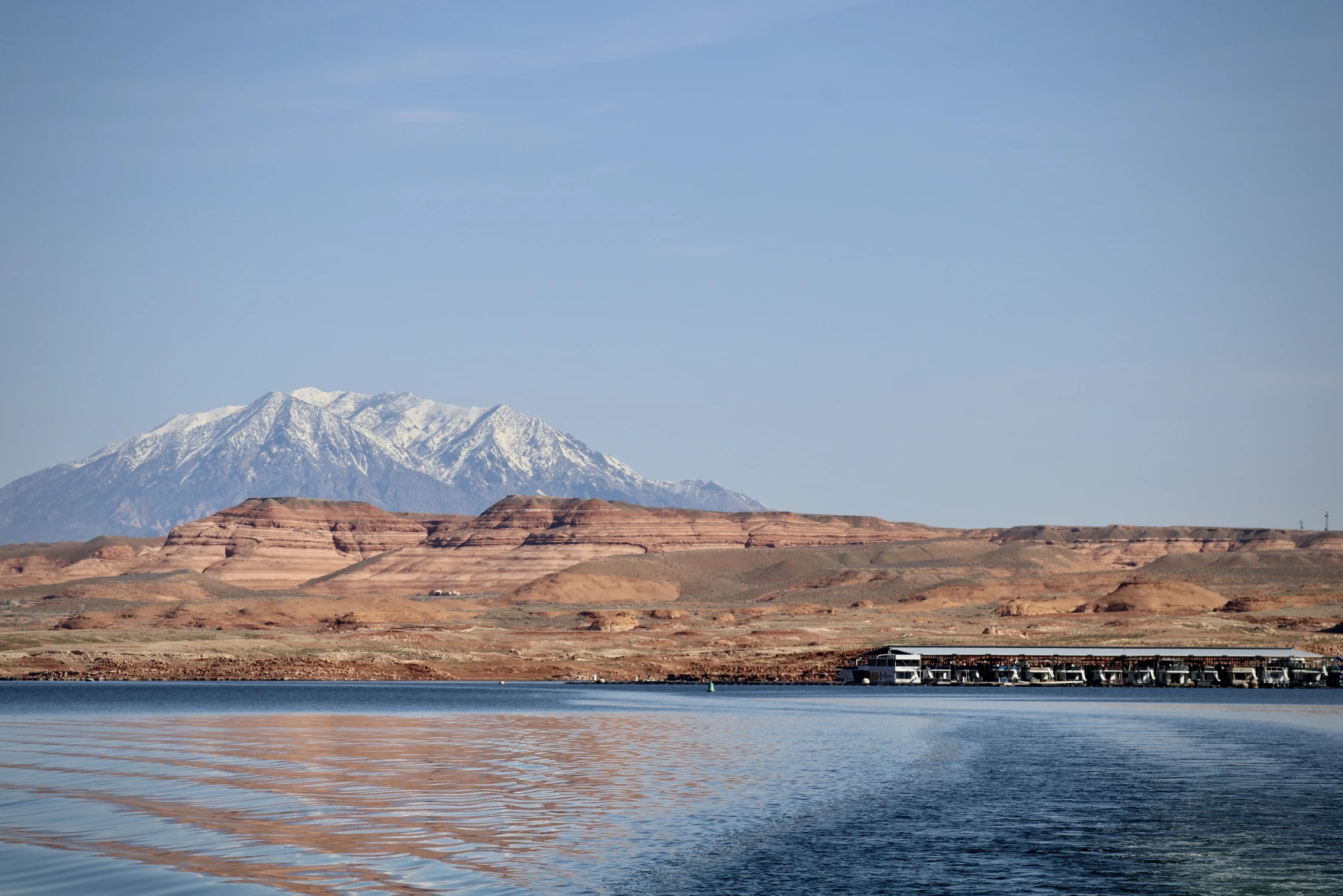
Because of that, the Upper Basin states argue, the Upper Basin feels the sting of climate change more sharply than the Lower Basin. Cities and farms within its four states have to adjust their water use in accordance with recent snowfall, Upper Basin leaders say, but the Lower Basin can count on predictable water deliveries from upstream.
Sending less water downstream, however, would be a violation of the Colorado River Compact, the 1922 legal agreement that provides the framework for modern water management in the arid West.
The Upper Basin’s pitch to send less water relies on a specific interpretation of the language in that agreement — one that hasn’t been tested in court. Critics of the plan, particularly leaders in the Lower Basin, say that interpretation isn’t solid enough to be such a big part of Colorado River management going forward.

The Lower Basin proposal
The Lower Basin states released their own proposal for managing the Colorado River on the same day as their upstream neighbors.
Their proposal introduces a new way of measuring how much water is stored in the region’s reservoirs and a new system for figuring out water cutbacks accordingly.
Currently, decisions about when to cut back on water—and by how much—are calculated using forecasts about water levels in Lake Powell and Lake Mead, the nation’s two largest reservoirs. The Lower Basin wants to, instead, make those decisions based on the total amount of water held in eight reservoirs, including Powell and Mead.
Lower Basin leaders say their new system would be more holistic and sustainable than the current way of doing things.
Under the Lower Basin proposal, water cutbacks would be triggered when the combined amount of water in those eight reservoirs falls below a certain amount.
Cutbacks are split into three tiers. In the first two, when reservoir levels are somewhat low, Lower Basin states would be the only ones to take less water. But when combined reservoir levels drop below 38% full, both the Lower Basin and Upper Basin would have to take cuts.
Read more about the Upper and Lower Basin proposals here.
Environmental groups submit separate proposal
A coalition of environmental nonprofits sent another proposal to the federal government. Those recommendations aim to make sure enough water flows through rivers to sustain healthy ecosystems for plants and animals.
The proposal suggests a new system of measuring water and doling out cutbacks. Like the Lower Basin’s plan, it would measure water in eight reservoirs instead of two. As an added layer, the environmental groups also suggest using recent climate conditions — like the amount of water held in soils — as a factor when deciding how much water to release from reservoirs.
The environmental proposal also wants water managers to take fish habitats into greater consideration when deciding how much water should be released from reservoirs.

In addition, the conservation groups suggest more frequent releases of water into the Colorado River Delta, an area in Mexico where the river used to meet the ocean. Considered an important bird habitat, the Delta now only has water flowing through it when policymakers decide to send it there.
Lastly, the environmental proposal recommends the creation of a “conservation reserve,” a new program that would let water users leave extra water in reservoirs to help the environment and protect infrastructure like dams, both of which can suffer when water levels are too low.
All seven of the organizations that crafted the river management proposal receive funding from the Walton Family Foundation, which also supports KUNC’s Colorado River coverage.
Read more about the environmental proposal here.

Tribal groups advocate for water interests
Tribes, which have long been left out of conversations about managing water in areas they occupied long before white settlers, are also trying to shape the Colorado River’s future.
The 30 tribes that use Colorado River water are diverse and rarely agree on any one water management policy. Because of that, they sent the federal government a letter with a set of “principles” – broad reaching ideas about water management that don’t specify how much water might flow to individual states or tribes.
So far, 19 different tribes have co-signed the letter. In it, they call for three things that could give Indigenous people a bigger role in managing water:
First, they want the federal government to uphold a longstanding legal obligation to tribes by rejecting any new rules that could cut into their access to water and compensating any tribes that are forced to take cutbacks in times of shortage.
Tribes hold rights to about a quarter of the river’s flow, but many don’t have the funding and infrastructure to use all the water they’re allowed, and instead leave it in the river. In a second tenet, the letter asks the government to make it easier for tribes to take part in conservation programs – in which water users get paid to leave water in the river – and make it easier for tribes to market or lease their water to people who don’t live on tribal land.
Third, the letter asks the government to formalize tribes’ seats at the table. They have largely been left on the sidelines of water negotiations for the last century, and now they’re asking for a more set-in-stone way for tribes to have a say in talks about Colorado River policy.
Read more about the tribal letter here.
What’s next?
The federal government wants states to agree on one proposal, rather than two, before it installs any new Colorado River water rules. States say they’re working towards consensus, but signs of progress have been few and far between.
While the next set of rules won’t go into effect until 2026, the federal government wants to get the ball rolling as soon as possible. The Biden Administration is asking states to agree on one proposal before the end of 2024, in case the current administration loses the White House in the November election.
Without significant changes to the way the Colorado River is used, the problem is likely to get worse. Scientists predict that climate change will keep shrinking the water supply, meaning cutting back on demand will only get more important.


0 years ago April averaged ~402 ppm. Preliminary data: https://gml.noaa.gov/ccgg/trends/