#Drought news May 2, 2024: Conditions mostly remained unchanged in the western U.S.

Click on a thumbnail graphic to view a gallery of drought data from the US Drought Monitor website.

Click the link to go to the US Drought Monitor website. Here’s an excerpt:

This Week’s Drought Summary

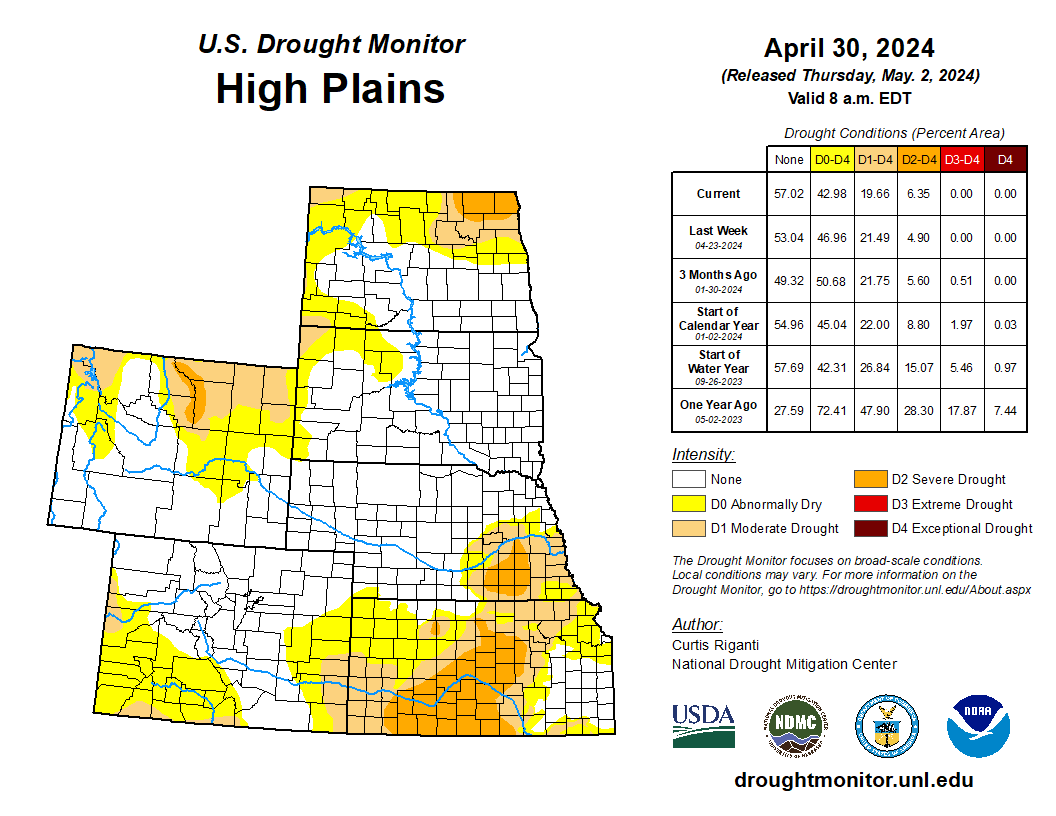
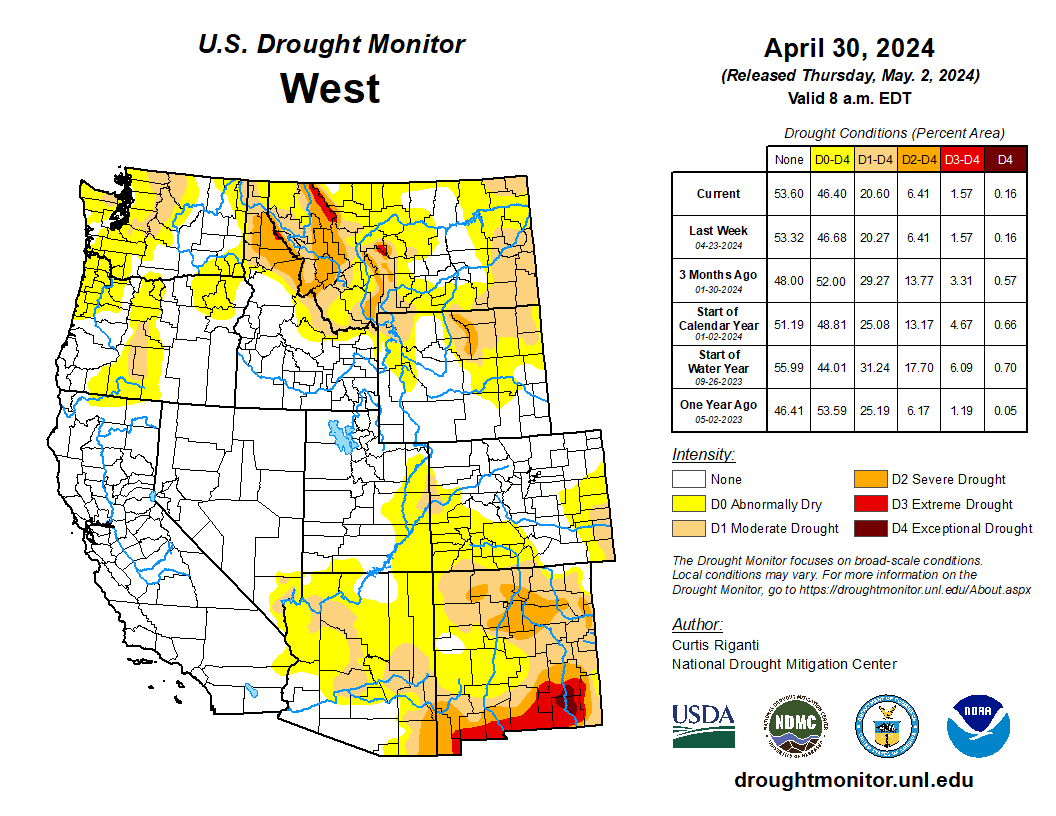
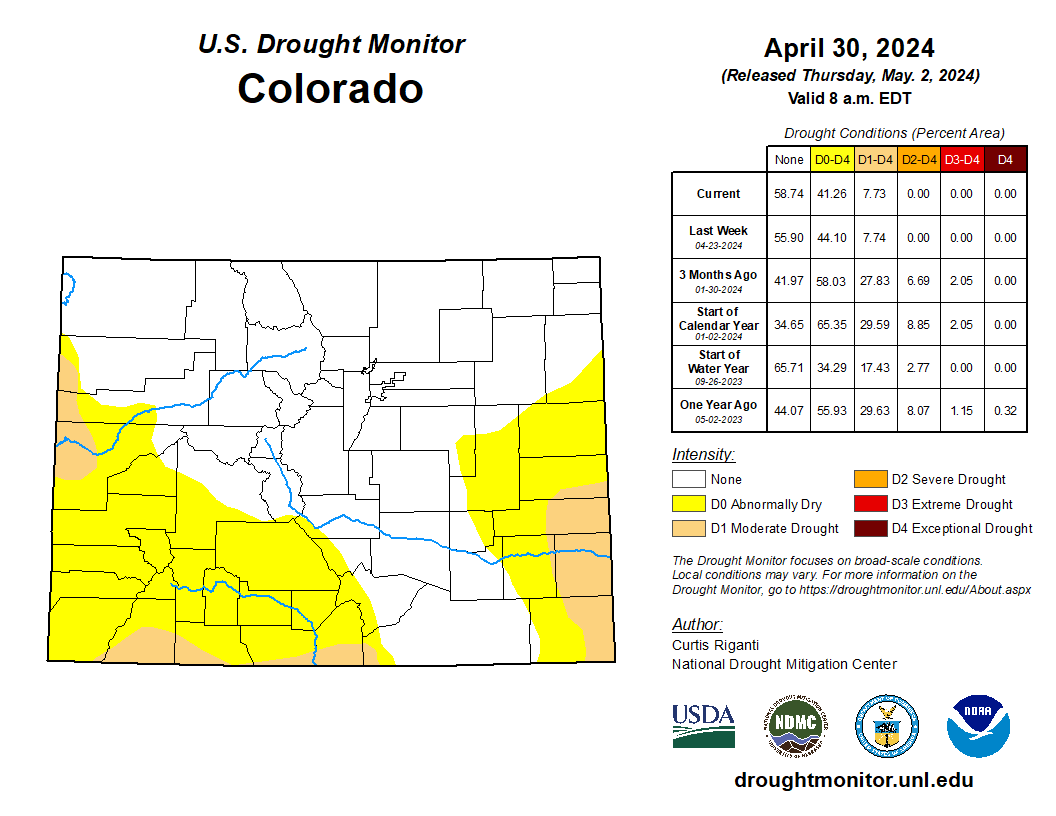
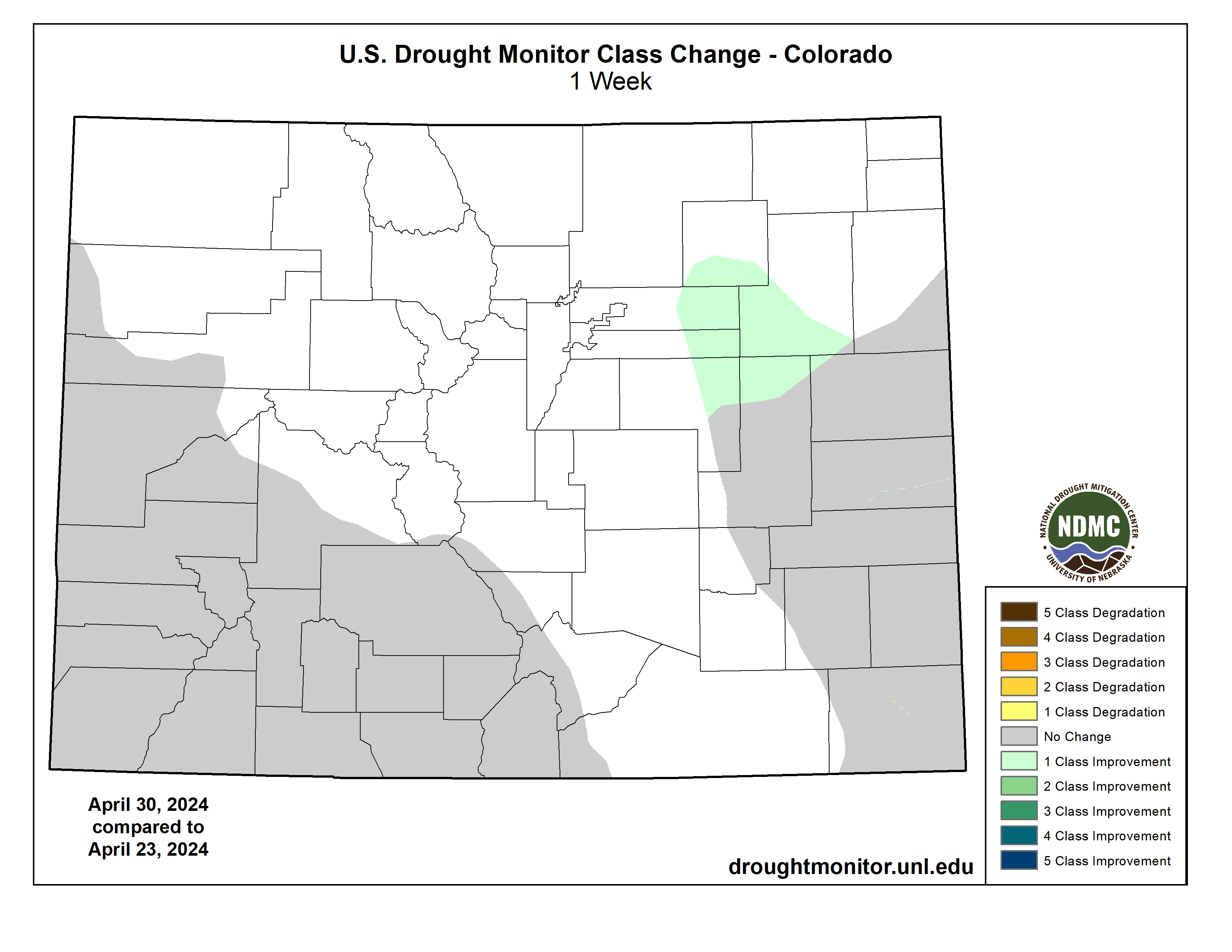
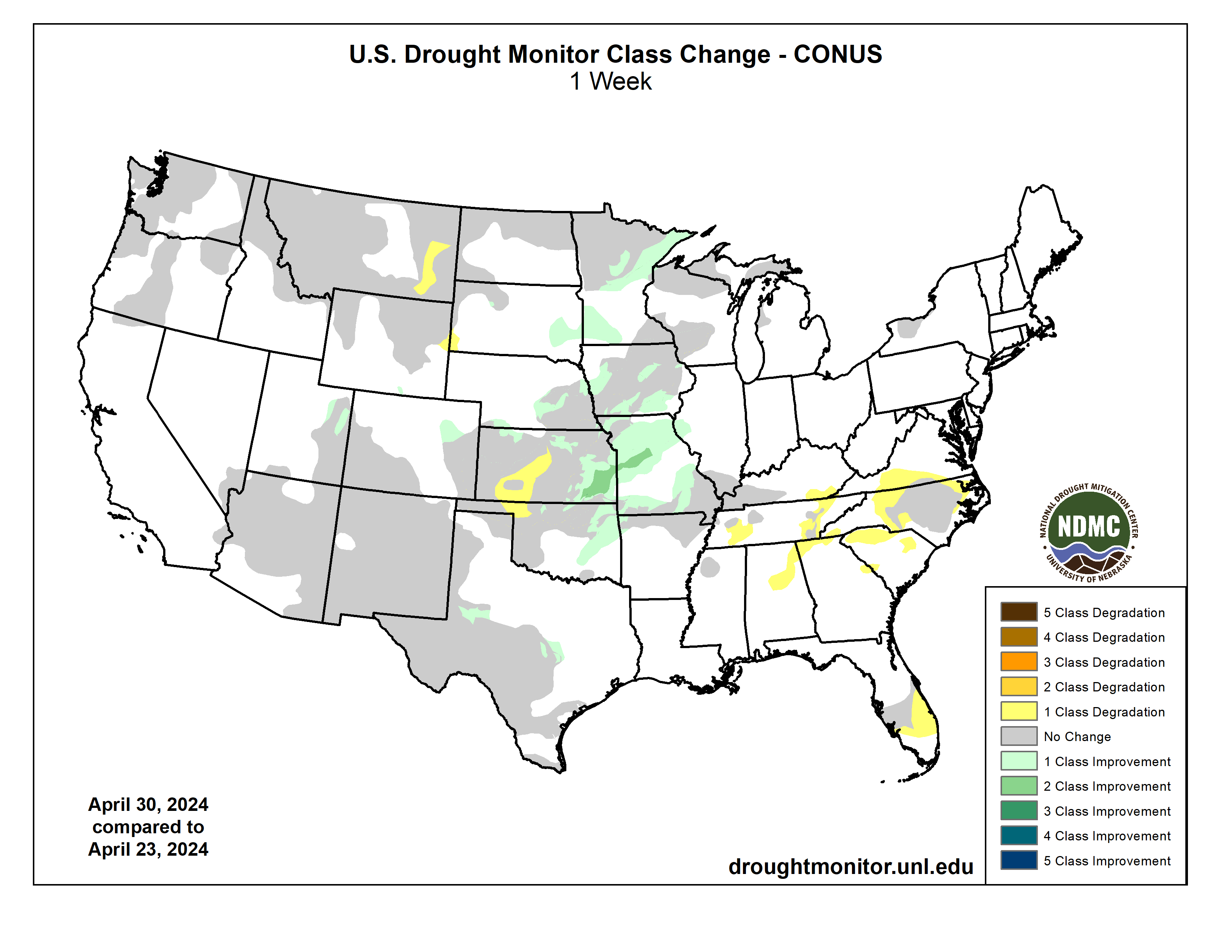
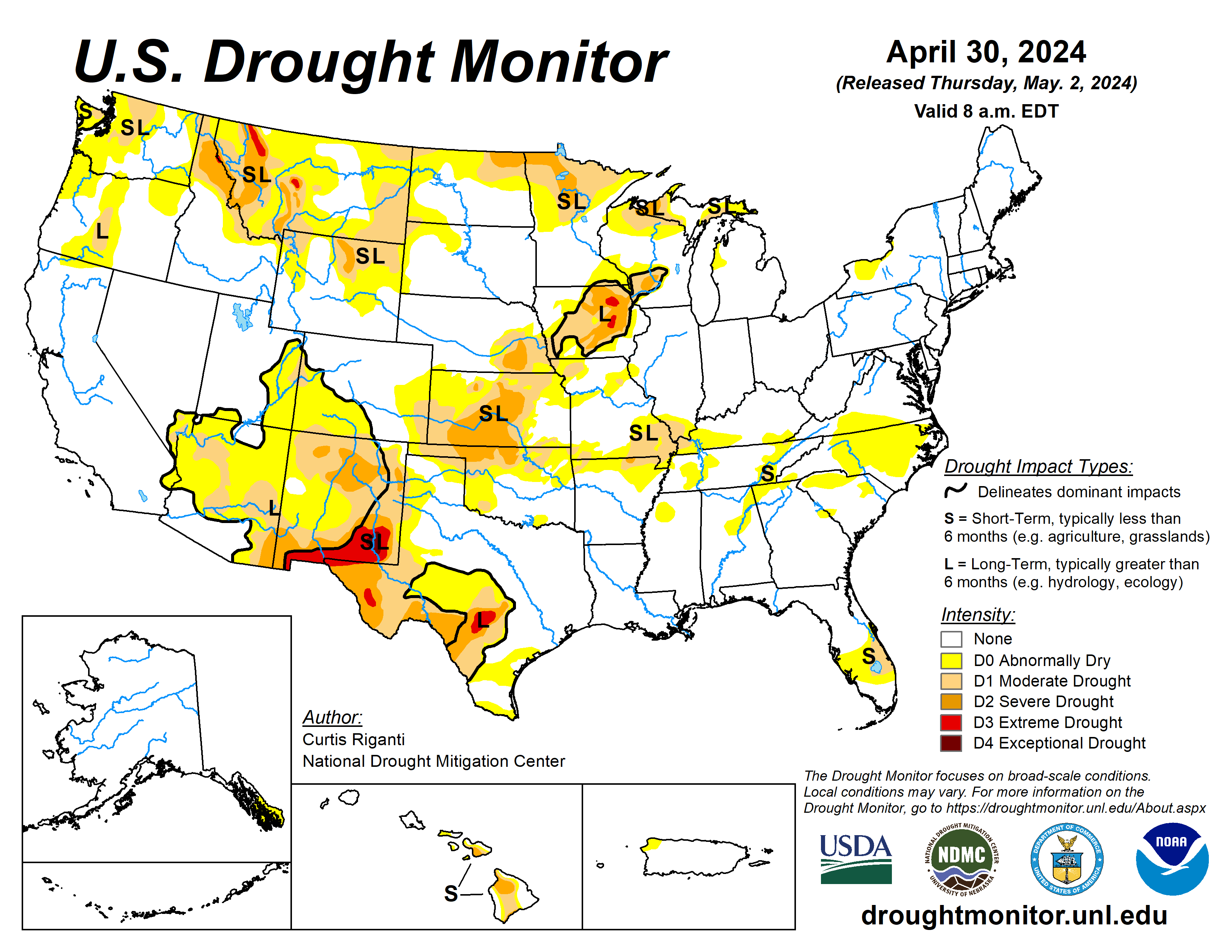
During the late week and weekend, a large severe weather outbreak brought large hail, damaging winds and numerous intense tornadoes to parts of the central and southern Great Plains and Midwest. The storm systems responsible for the severe weather outbreak also brought widespread moderate and heavy rain amounts to the central U.S., leading to widespread improvements in drought and abnormally dry conditions. To the southwest of the heavy rainfall, in northwest Oklahoma and southwest and central Kansas, severe drought expanded as flash drought continued to take hold during a very dry late winter and early-mid spring, leading to reports of very poor wheat conditions and dust storms. Recent dry weather over the last month, combined with a mostly dry week, led to the development of more areas of abnormal dryness and moderate drought over scattered parts of the Southeast, Tennessee and southeast Kentucky. Conditions mostly remained unchanged in the western U.S., though a few improvements occurred in Colorado and Utah after recent precipitation, while conditions worsened in parts of southeast Montana and the Black Hills region of South Dakota and adjacent northeast Wyoming amid recent dry weather. Heavy rains in the northeast part of Puerto Rico eased drought and abnormal dryness there as streamflows improved and crop stress lessened…

High Plains

Moderate to heavy precipitation fell across much of the High Plains region this week, excluding central and southwest Kansas and northeast Wyoming and southeast Colorado. Mostly warmer-than-normal temperatures occurred in Kansas, Colorado, Wyoming and the western Dakotas, while elsewhere, temperatures were mostly within a couple degrees of normal. While the storms responsible for the rain brought damaging hail and tornadoes in parts of the region, the rainfall helped to alleviate drought conditions in many areas. Eastern Kansas and Nebraska saw improvements in some areas, with parts of southeast Kansas seeing two-category improvements in the areas of heaviest rainfall. Meanwhile, in tandem with severe drought expansion in northwest Oklahoma, severe drought conditions expanded in central and southwest Kansas after another mostly dry week. Flash drought conditions in this region have led to dust storms and very poor wheat conditions…

Colorado Drought Monitor one week change map ending April 30, 2024.

West

Weather conditions were variable across the West this week. Precipitation amounts from 0.5 to 2 inches (locally higher) fell in western parts of Washington and Oregon. Elsewhere, precipitation amounts varied from none to locally up to 2 inches, especially in some high-elevation areas. Temperatures were mostly near normal or a couple degrees below normal in Washington, Oregon, California, Arizona and western New Mexico, while near-normal or warmer-than-normal temperatures prevailed elsewhere. Drought conditions remained mostly unchanged across the region. In northeast Utah, abnormal dryness and moderate drought were reduced in coverage after recent wet weather and low evaporative demand. In southeast Montana, moderate drought grew in coverage as short-term precipitation deficits grew alongside decreasing streamflow and soil moisture…

South

Weather conditions varied widely across the South region this week, with heavy rain falling in parts of Oklahoma, Texas, Arkansas and Louisiana, while other areas were left mostly or completely dry. Temperatures were mostly warmer than normal across the region, especially in Oklahoma and Texas, where weekly readings came in 4-8 degrees above normal, with a few local readings even warmer than that. A few spots in central Texas and the Trans-Pecos region saw improvements to drought or abnormally dry conditions after recent rainfall. In eastern and parts of northern Oklahoma, recent heavy rainfall led to improving conditions. Meanwhile in Tennessee, short-term dryness continued, leading to the expansion of moderate drought and abnormal dryness in eastern Tennessee and the expansion of abnormal dryness in western parts of the state. Flash drought continued to worsen in parts of northwest Oklahoma and adjacent portions of the Texas and Oklahoma panhandles, where severe drought expanded amid quickly drying soils and growing short-term precipitation deficits…

Looking Ahead

Between the evening of Wednesday, May 1 (time of writing), and the evening of Monday, May 6, the National Weather Service Weather Prediction Center is forecasting moderate to heavy rain amounts from central Texas and northern Louisiana northward into the mid-Missouri and upper-Mississippi River valleys. In this region, rainfall amounts are forecast to range from a half inch to locally as high as 3 inches, especially in parts of Oklahoma, Texas and northern Louisiana. Similar precipitation amounts are also forecast in western Washington and Oregon, while some precipitation exceeding 1 inch is also forecast in parts of the northern Sierra Nevada. Mostly dry weather is forecast for eastern Colorado, New Mexico, Arizona, southwest Nevada, southern California and deep south Texas.

For May 7-11, the National Weather Service Climate Prediction Center’s forecast favors colder-than-normal weather across much of the western U.S., with the highest confidence for colder-than-normal weather centered over Idaho and northern Nevada. Warmer-than-normal weather is expected in much of the southeast half of the contiguous U.S., especially from Texas northeast to the mid-Atlantic. Above-normal precipitation is favored in the northern U.S., especially eastern Montana, while below-normal precipitation is favored in coastal California, southern New Mexico and southern and western Texas, southeast Louisiana and most of Florida.

During the May 7-11 period, colder-than-normal temperatures are favored in southwest, south-central and southeast Alaska, and across all of Hawaii. All of Alaska is favored to receive above-normal precipitation, with confidence highest outside of the far west and northwest. With the exception of the Big Island, the forecast slightly favors above-normal precipitation in Hawaii.

US Drought Monitor one week change map ending April 30, 2024.

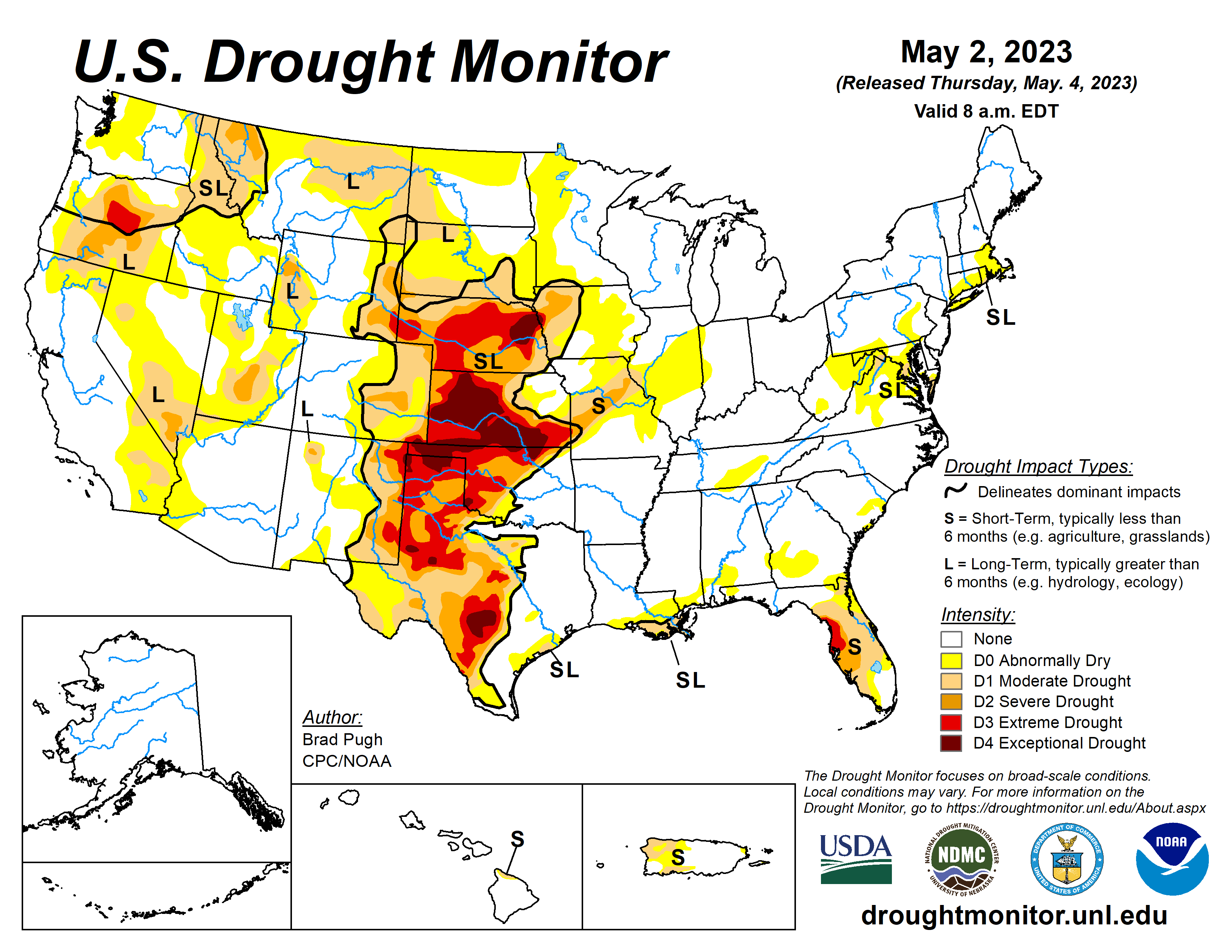
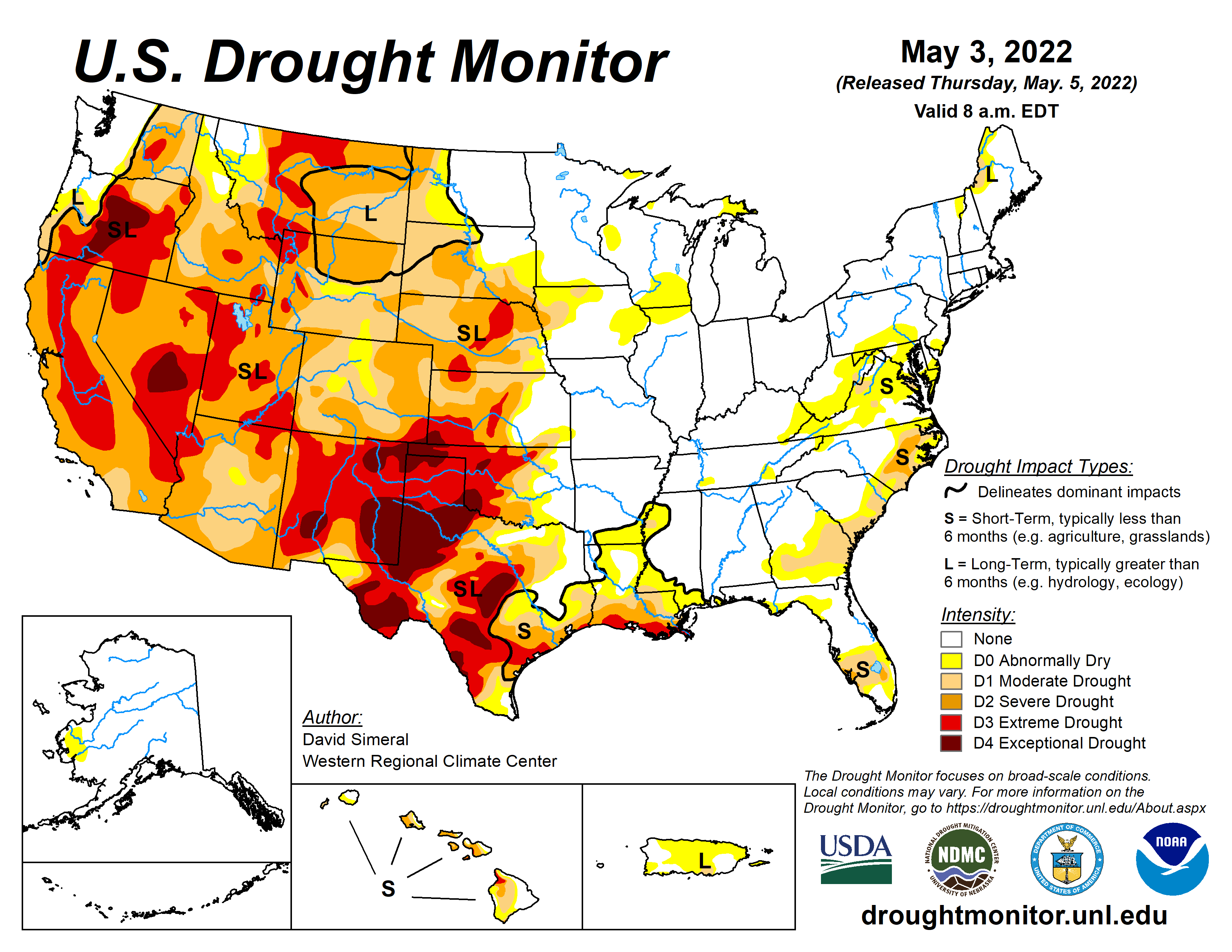
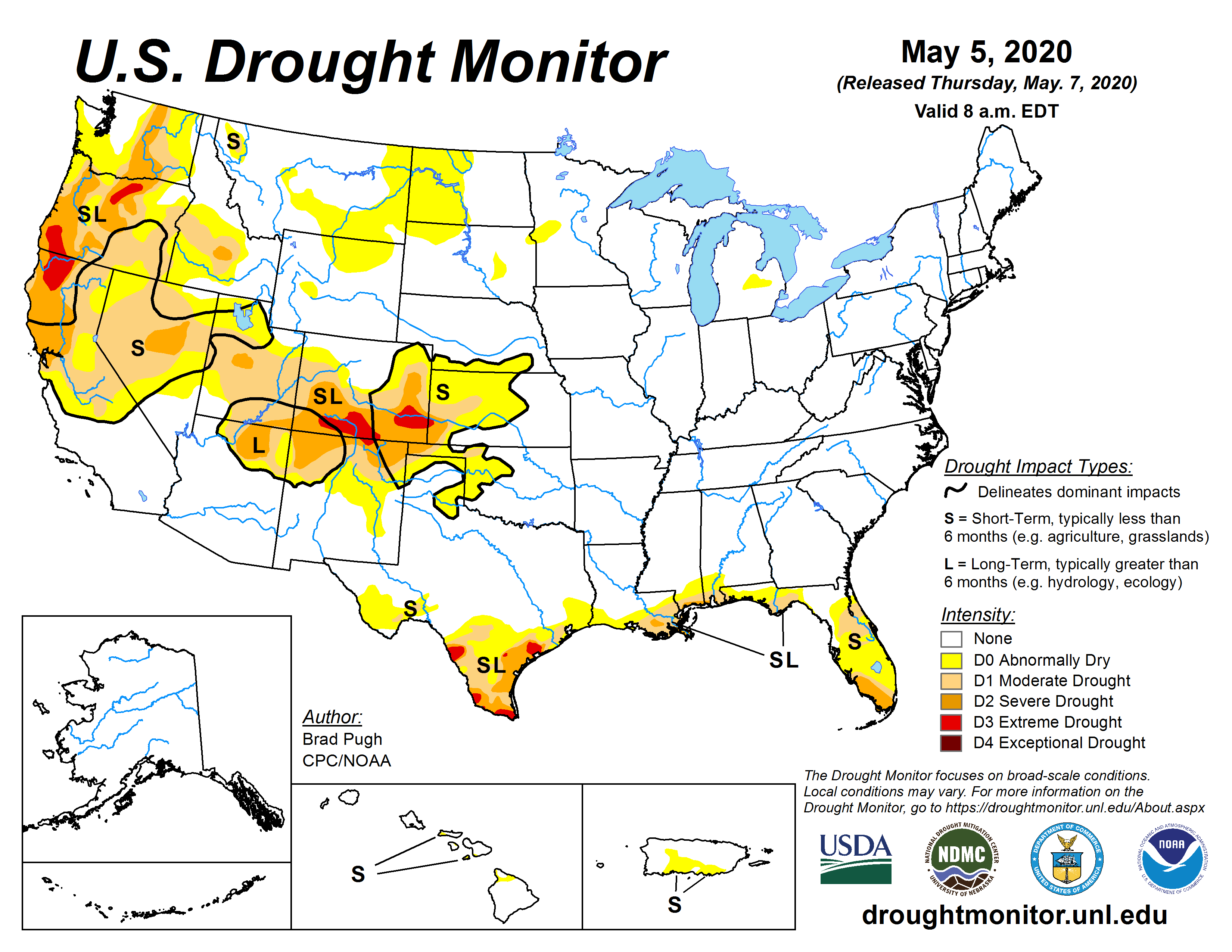
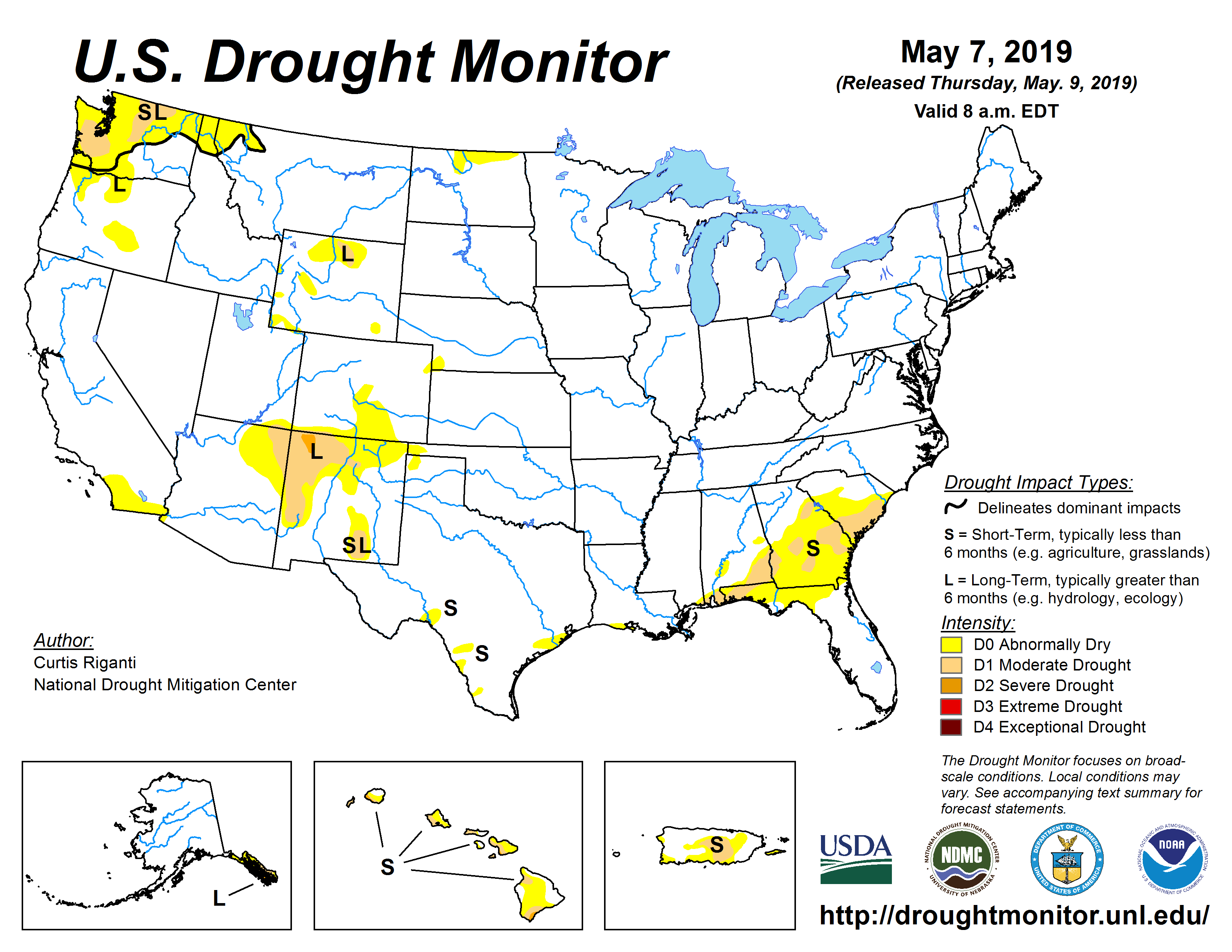
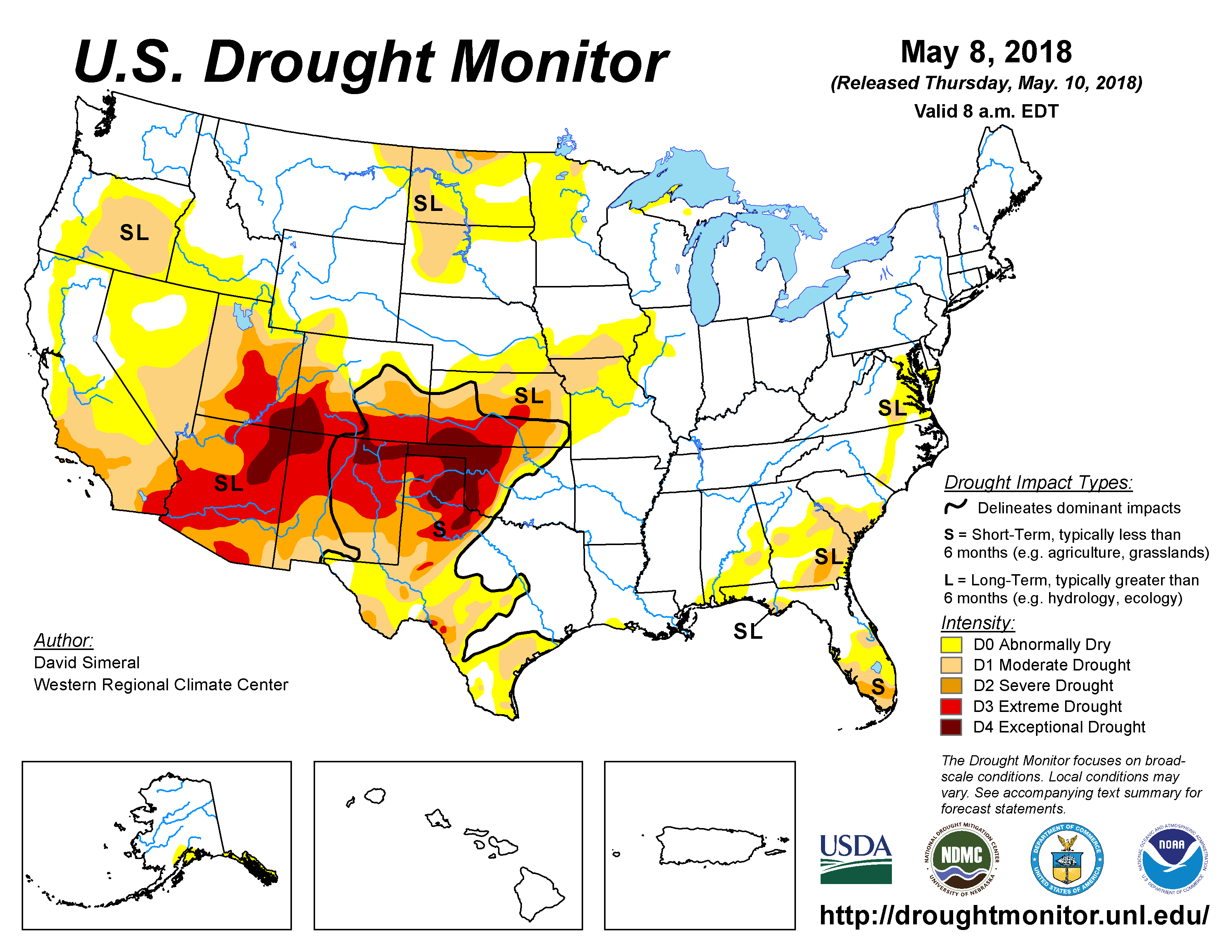
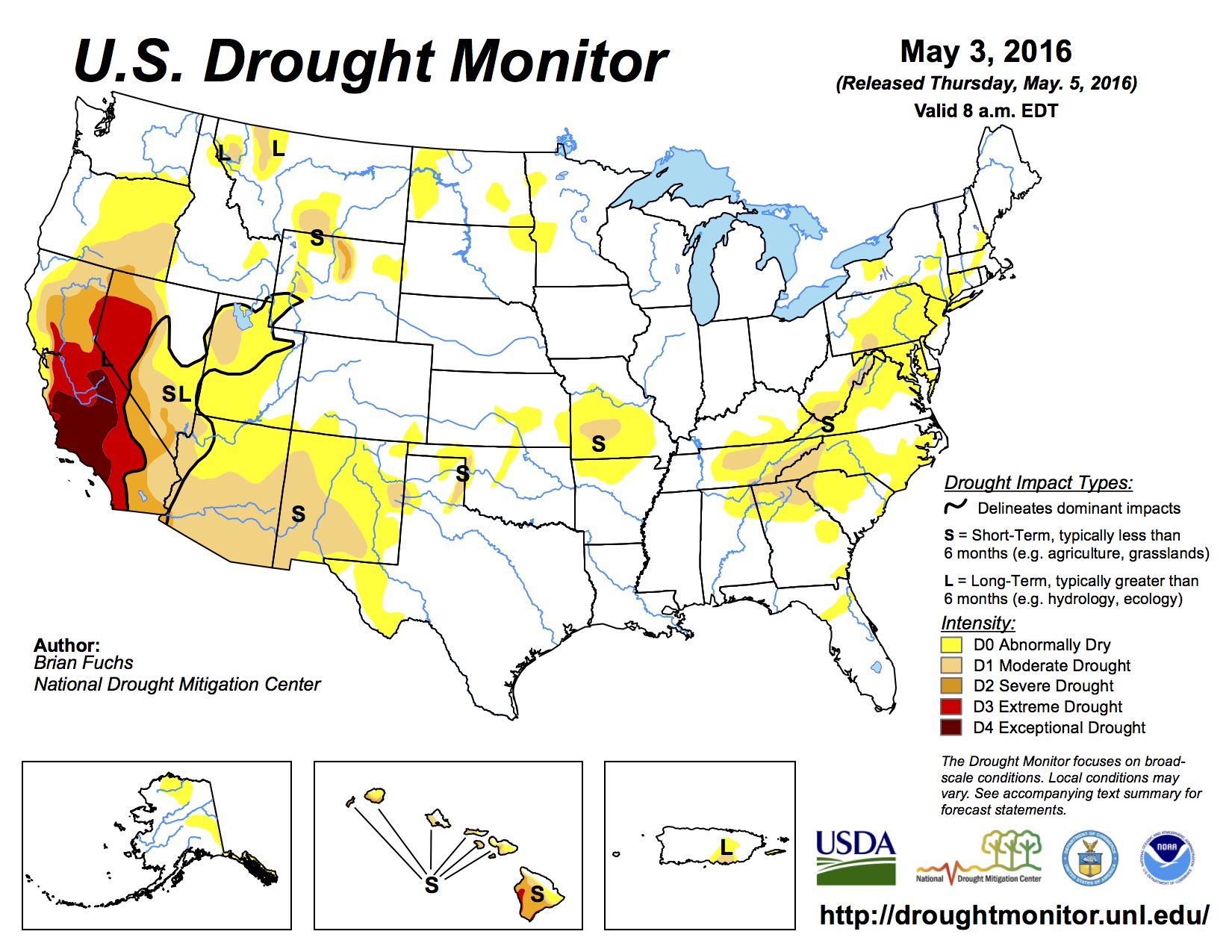
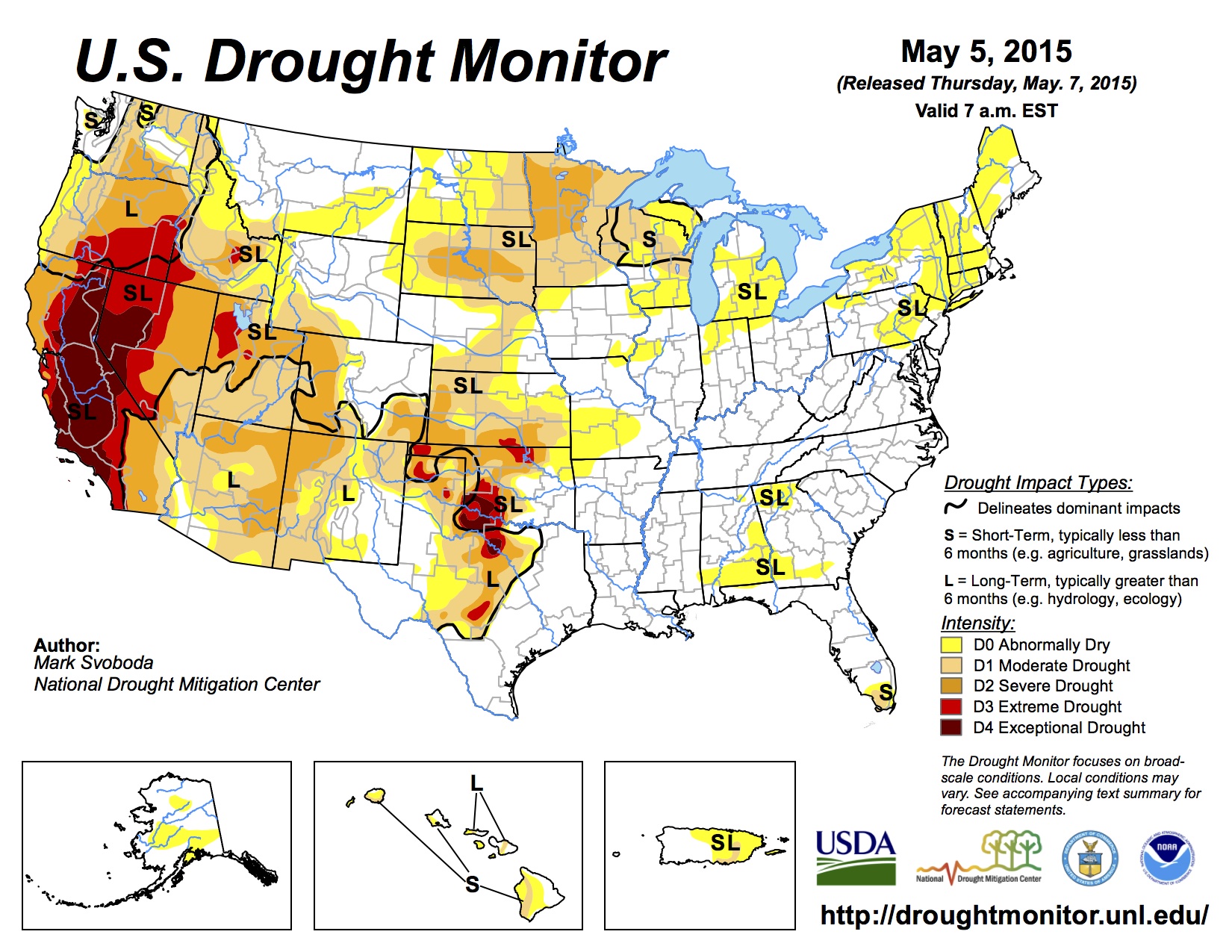
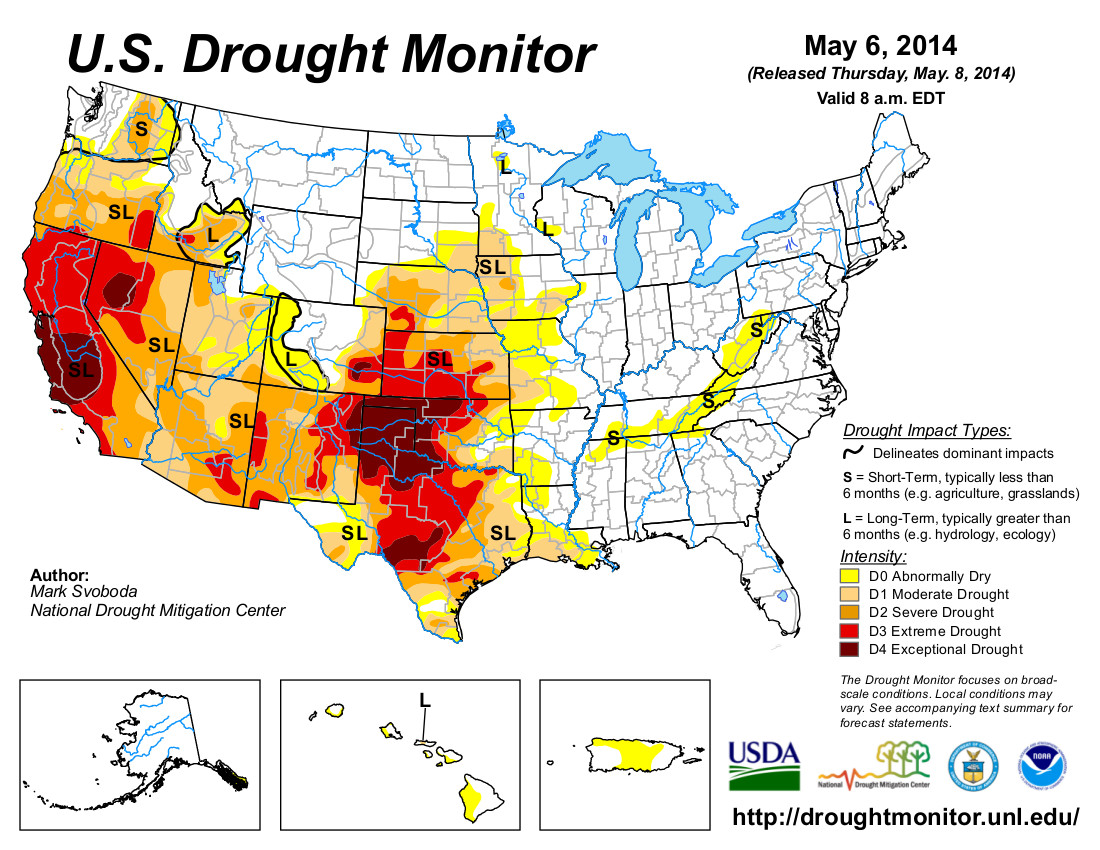
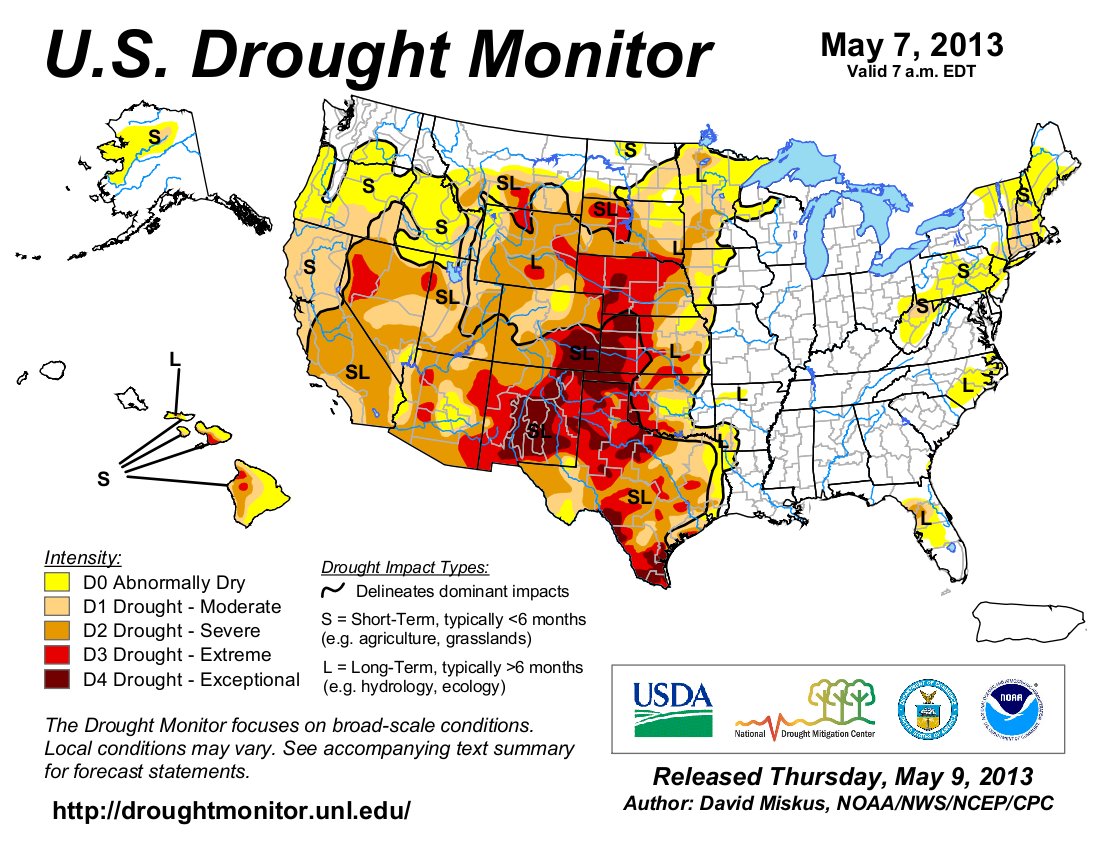
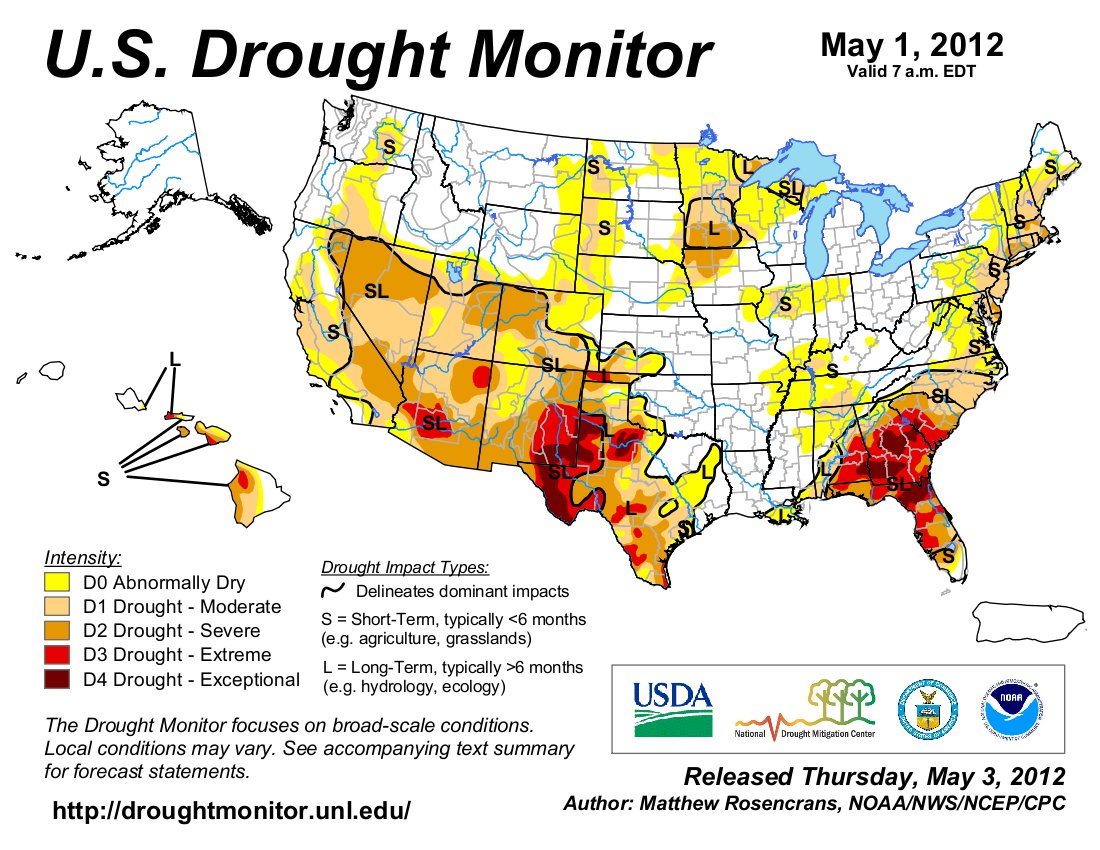
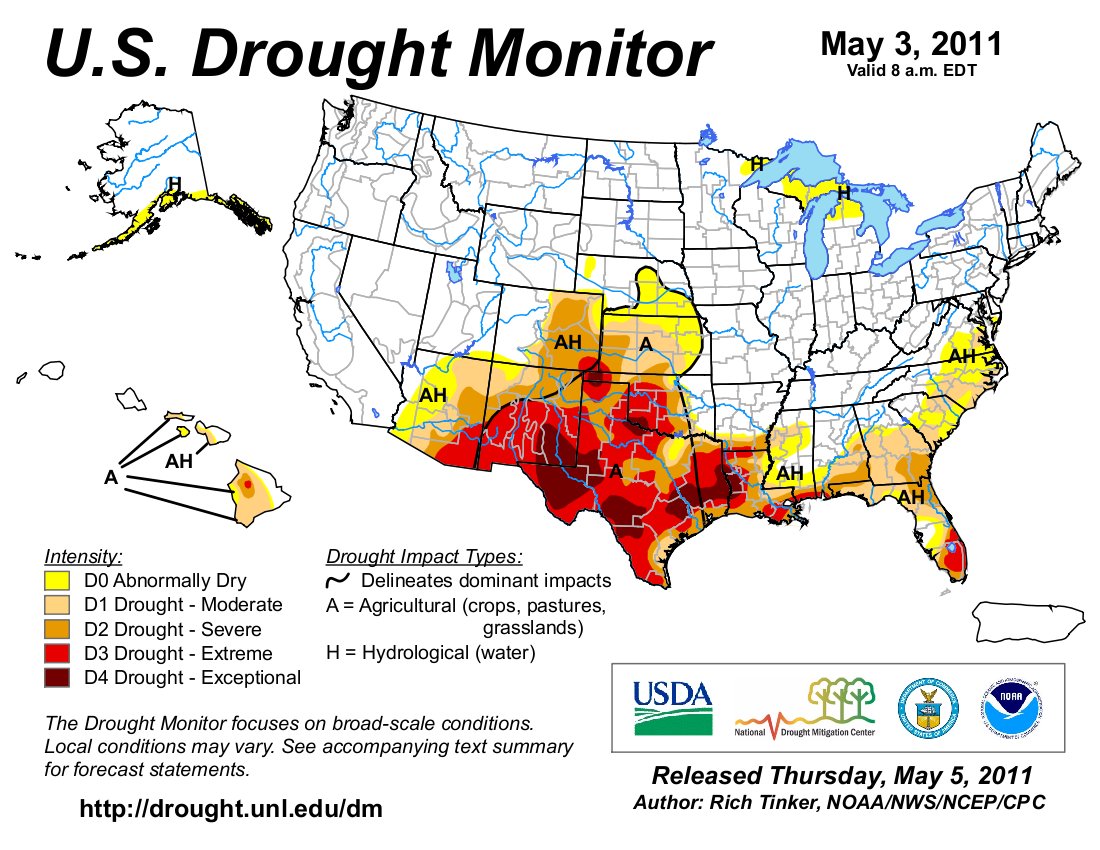
Just for grins here’s a gallery of US Drought Monitor early May maps for the last few years.

The #ColoradoRiver just called you for help. Will you answer? New media collaborative seeks answers, solutions for the hardest working river in the West — The Deseret News #COriver #aridification

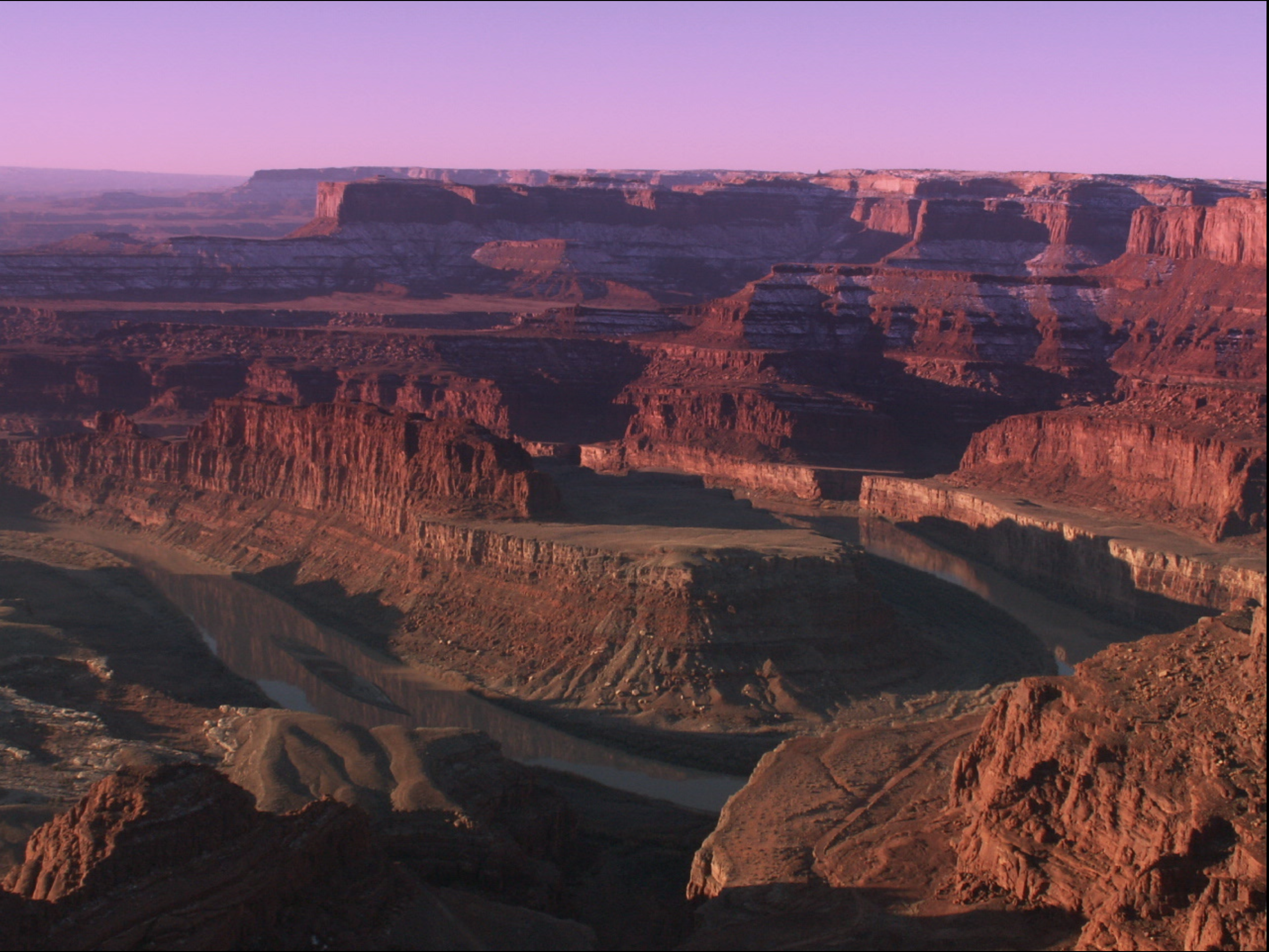
Prior to 1921 this section of the Colorado River at Dead Horse Point near Moab, Utah was known as the Grand River. Mike Nielsen – Dead Horse Point State Park

Click the link to read the article on The Deseret News website (my Joi O’Donoghue). Here’s an excerpt:

May 1, 2024

This article is published through the Colorado River Collaborative, a solutions journalism initiative supported by the Janet Quinney Lawson Institute for Land, Water, and Air at Utah State University. See all of our stories about how Utahns are impacted by the Colorado River atĀ greatsaltlakenews.org.

Why the Colorado River matters

The award-winning Great Salt Lake Collaborative is expanding to focus on the Colorado River. This new initiative is made up of 11 Utah newsrooms that have agreed to report on the river, its tributaries and destinations together. As a solutions journalism initiative, collaborative stories will also explain what can be done to adapt to the new realities facing this troubled river, what actions are being taken and why…The expanded scope of this reporting was made possible with a founding gift from Utah State University’s Janet Quinney Lawson Institute for Land, Water and Air — but all editorial decisions are made independently by member news organizations in accordance with their respective editorial policies…

As states wrangle for water and the U.S. Bureau of Reclamation looms with new federal management mandates ahead of a 2026 operating guideline, everyone comes from a point of vulnerability. Will there be enough water and what if there isn’t?

ā€œThis is not a quick ship to turn around,ā€ said Burdette Barker, a civil and environmental engineer at Utah State University, talking about the tension between agriculture and water use in the basin.

Map credit: AGU

Biden-Harris Administration Announces $3 Billion for Lead Pipe Replacement to Advance Safe Drinking Water as Part of Investing in America Agenda

Click the link to read the release on the Environmental Protection Agency website:

May 2, 2024

EPA announces latest round of funding toward President Biden’s commitment to replace every lead pipe in the nation, protecting public health and helping to deliver safe drinking water

WASHINGTON ā€“ Today, May 2, the U.S. Environmental Protection Agency announced $3 billion from President Biden’s Investing in America agenda to help every state and territory identify and replace lead service lines, preventing exposure to lead in drinking water. Lead can cause a range of serious health impacts, including irreversible harm to brain development in children. To protect children and families, President Biden has committed to replacing every lead pipe in the country. Today’s announcement, funded by the Bipartisan Infrastructure Law and available through EPA’s successful Drinking Water State Revolving Fund (DWSRF), takes another major step to advance this work and the Administration’s commitment to environmental justice. This funding builds on the Administration’s Lead Pipe and Paint Action Plan and EPA’s Get the Lead Out Initiative.

Working collaboratively, EPA and the State Revolving Funds are advancing the President’s Justice40 Initiative to ensure that 40% of overall benefits from certain federal investments flow to disadvantaged communities that are marginalized by underinvestment and overburdened by pollution. Lead exposure disproportionately affects communities of color and low-income families. The $9 billion in total funding announced to date through EPA’s Lead Service Line Replacement Drinking Water State Revolving Fund program is expected to replace up to 1.7 million lead pipes nationwide, securing clean drinking water for countless families.

ā€œThe science is clear, there is no safe level of lead exposure, and the primary source of harmful exposure in drinking water is through lead pipes,ā€ said EPA Administrator Michael S. Regan. ā€œPresident Biden understands it is critical to identify and remove lead pipes as quickly as possible, and he has secured significant resources for states and territories to accelerate the permanent removal of dangerous lead pipes once and for all.ā€

President Biden’s Bipartisan Infrastructure Law invests a historic $15 billion to identify and replace lead service lines. The law mandates that 49% of funds provided through the DWSRF General Supplemental Funding and DWSRF Lead Service Line Replacement Funding must be provided as grants and forgivable loans to disadvantaged communities, a crucial investment for communities that have been underinvested in for too long. EPA projects a national total of 9 million lead services lines across the country, based on data collected from the updated 7th Drinking Water Infrastructure Needs Survey and Assessment. The funding announced today will be provided specifically for lead service line identification and replacement and will help every state and territory fund projects to remove lead pipes and reduce exposure to lead from drinking water.

The Lead Service Line-specific formula used to allot these funds allows states to receive financial assistance commensurate with their need as soon as possible, furthering public health protection nationwide. The formula and allotments are based on need — meaning that states with more projected lead service lines receive proportionally more funding.

Alongside the funding announced today, EPA is also releasing aĀ new memorandumĀ that clarifies how states can use this and other funding to most effectively reduce exposure to lead in drinking water. Additionally, EPA has developedĀ new outreach documentsĀ to help water systems educate their customers on drinking water issues, health impacts of lead exposure, service line ownership, and how customers can support the identification of potential lead service lines in their homes.

The Biden-Harris Administration’s ambitious initiative to remove lead pipes has already delivered significant results for families across the nation. Today’s latest funding will ensure more families benefit from these unprecedented resources, and support projects like these:

  • West View Water Authority inĀ PennsylvaniaĀ has received $8 million through the Bipartisan Infrastructure Law to replace 750 lead service lines in underserved areas of the community — primarily inĀ Allegheny County. Of that funding, more than $5.4 million is forgivable, reducing the overall financial burden on ratepayers and the community.
  • InĀ Tucson, Arizona, the city received $6.95 million in Bipartisan Infrastructure Law funds to develop lead service line inventories for their nine public water systems. The city will use this inventory to develop a plan to replace lead service lines in the community and improve drinking water quality for residents — many of whom live in low-income and disadvantaged communities.
  • Located in between Chicago and Milwaukee, the community ofĀ Kenosha, WisconsinĀ has been at the forefront of the state’s efforts to remove 5,000 lead service lines in their community. To accelerate lead service line removal, Kenosha is working with EPA’s Bipartisan Infrastructure Law-funded Water TA team to help customers self-inventory their service line material and apply for federal funding to remove and replace lead service lines.
  • TheĀ Eastern Band of Cherokee Indians, located across westernĀ North Carolina, has been selected to received support from the Bipartisan Infrastructure Law’s lead service line replacement funds to conduct service line inventories and prepare preliminary engineering reports for five of the public water systems on their land.

o view more stories about how the unpreceded investments from the Bipartisan Infrastructure Law are transforming communities across the country, visit EPA’s Investing in America’s Water Infrastructure Story Map. To read more about some additional projects that are underway, see EPA’s recently released Quarterly Report on Bipartisan Infrastructure Law Funded Clean Water and Drinking Water SRF projects and explore the State Revolving Funds Public Portal.  

Today’s allotments are based on EPA’s updated 7th Drinking Water Infrastructure Needs Survey and Assessment (DWINSA) including an assessment of newly submitted information. To date, this is the best available data collected and assessed on service line materials in the United States. Later this summer, EPA will release an addendum to the 7th DWINSA Report to Congress which will include the updated lead service line projections. EPA anticipates initiating data collection, which will include information on lead service lines, for the 8th DWINSA in 2025.

For more information, including state-by-state allotment of 2024 funding, and a breakdown of EPA’s lead Drinking Water State Revolving Fund, please visit EPA’s Drinking Water website.

Rapid snowmelt on New Mexico’s #RioGrande — John Fleck (InkStain.net)

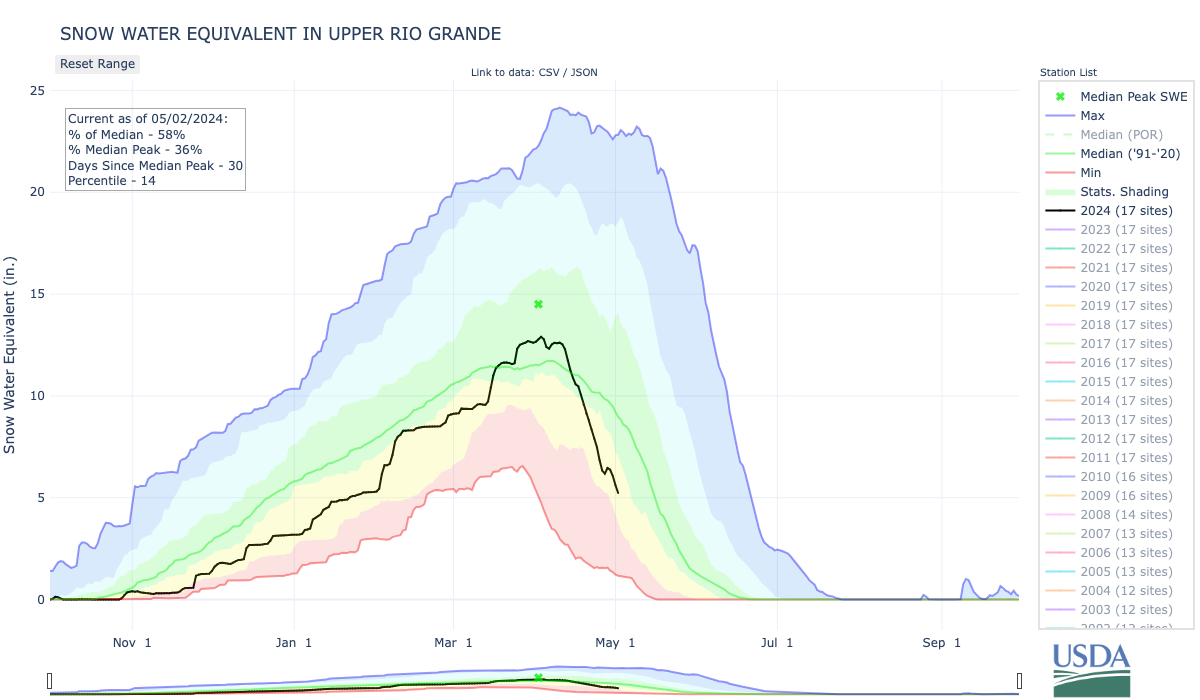
Snowmelt in the Rio Grande headwaters as of May 2, 2024, courtesy NRCS

Click the link to read the article on the InkStain website (John Fleck):

April 29, 2024

A recent rapid warmup has brought high flows to the Rio Grande through New Mexico. But with a modest snowpack sitting in the mountains to the north, that means we should expect the early rise to be followed by an early drop.

Members of the Inkstain Rio Grande Rapid Response Team (IRGRRT) were busy over the weekend monitoring the river. (ā€œMonitoring the riverā€ actually just means ā€œgoing for walks, bike rides, and boating the riverā€ like we do nearly every weekend, but ā€œmonitoring the riverā€ and ā€œRio Grande Rapid Response Teamā€ sound cooler and more official than a bunch of river nerds goofing.)

Rio Grande, up out of the main channel, at the Rio Bravo Bridge in Albuquerque South Valley. Photo credit: John Fleck/InkStain

IRGRRT team members saw enough water through the Albuquerque reach to float over many of the sandbars, and flows in some of the overbank shallows beyond the main river channel. Those overbank flows are a mixed bag – important for ecological system function, less helpful for meeting Rio Grande Compact deliveries to our downstream neighbors with whom we share this river.

Last year, with a much larger snowpack, we saw sustained flows this high (and higher) through the end of June, when the Army Corps of Engineers slammed on the brakes. The tail end of the 2023 runoff sat behind the upstream dams at Abiquiu and Cochiti until Nov. 1, when the Corps began releasing it to meet our delivery obligations to our downstream neighbors. That won’t happen in 2024.

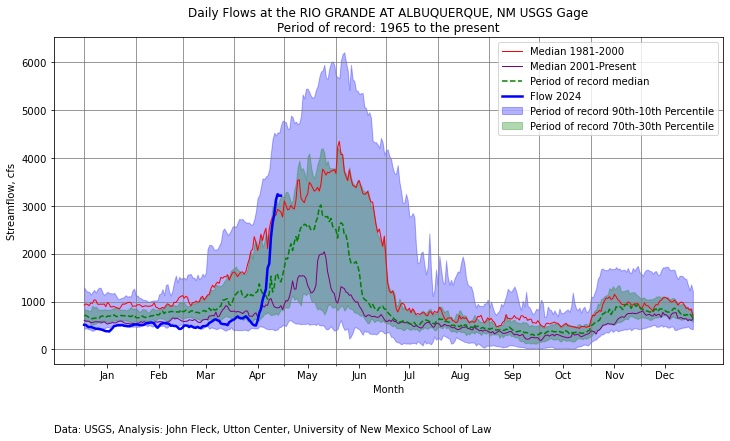
This year’s flow shot up with the big warmup two weeks ago melting off the snow in a hurry. That’s the rapid drop you see in the snowpack graph above. It may already have peaked, with flows hitting 3,600 cubic feet per second at Otowi (the gage above New Mexico’s Middle Rio Grande Valley). In response, the Corps has dropped releases at Cochiti. At Albuquerque, the peak hit ~3,200 cfs, and has now settled under 3,000 cfs.

Flows at Albuquerque, April 29, 2024. Graphic credit: John Fleck/InkStain

Thanks to all the IRGRRT volunteers, andĀ Inkstain supporters.

Romancing the River: Cowboys and Indians — George Sibley (Sibley’s Rivers) #ColoradoRiver #COriver #aridification

Great Seal of the Salt River Pima-Maricopa Indian Community.

Click the link to read the article on the Sibley’s Rivers website (George Sibley):

May 1, 2024

The maze design above is the Great Seal of the Salt River Pima-Maricopa Indian Community, inhabiting a relatively small First People Reservation (53,600 acres) in Arizona at the confluence of the Salt and Gila Rivers. The Gila River system drains most of the state of Arizona – what there is to drain in the subtropical Sonora Desert. The Gila joins the Colorado River at Yuma, near the Mexican border. The reservation was created in 1879 to get the First People out of the way of the Euro-American tsunami coalescing along the Gila as the city of Phoenix – which has since grown to surround the reservation with suburbs.

Gila River watershed. Graphic credit: Wikimedia

Given the kind of heraldic symbolockry that makes up most Great Seals, signifying power and glory – I think that to put a maze on your Great Seal takes a certain admirable chutzpah, the higher humor of those who laugh with their gods rather than just being laughed at by them. But when it comes to water and the Colorado River in general, the maze might be an accurate enough symbol for where we all are today: at the ragged end of a century of building a magnificent hydraulic society that has devolved to a near-collapse at the systemic level. Having cobbled together a strategy for nursing the system under a much-amended set of ā€˜Interim Guidelines’ through to the end of the interim in 2026, the water mavens of the Colorado River Region are now working, not exactly together, on a plan for operating the river post-2026 for at least a couple decades further into the 21stĀ century. At this point, the Bureau of Reclamation has received at least four alternative post-2026 management plans at this point: one from the four states above the river’s canyon region, one from the three states below the canyons, one (at least) from a group of environmentalists, and one we might call the ā€˜elders’ plan’ submitted by Eric Kuhn, Jack Schmidt and their scribe John Fleck. Welcome to the maze: these alternatives will all be analyzed through an Environmental Impact Study over the next year or two or five, andĀ e pluribus unum,Ā a management plan will emerge like the sun at the center of what ought to be the Great Seal of the entire Colorado River.

There is, however, probably no set of river users more experienced at wandering in the maze than the 30 tribes of First People on reservations in the Colorado River Basin. They have been finding their way for a century and a half in a maze whose dead ends for them were to be the end of their cultural lives, if they didn’t backtrack and try another way. But they have now, at this point, come through most of those trials and achieved a growing acceptance of the cultural diversity they bring to American society; the government is no longer practicing an active policy of forced assimilation; and there is a growing interest in their cultural and spiritual ways.

But they seem to still have trouble being taken seriously in the Colorado River Basin as potentially part of the solution of the water challenges rather than just objectified as part of the problem. They have not submitted a post-2026 management plan per se; they have instead submitted a three-page letter that is something between a request and a demand: first, that the federal government meet its trust responsibility to Basin Tribes by actively protecting their Tribal water rights from being first-to-be-cut (irrespective of whether they have already been finally quantified); second, that the government eliminate systemic obstacles to their full development of their water rights; and third, that the government provide a permanent, formalized structure for Tribal participation in implementing the Post-2026 Guidelines, and in any future Colorado River policy and governance. (Click here for their letter.)

As usual, this wants a little historical context. Any discussion of ā€˜Tribal Water Rights’ requires, for example, a clear understanding of the distinction between ā€˜paper water’ and ā€˜wet water’: ā€˜paper water’ is water which one has a legal right to use; ā€˜wet water’ is the amount of paper water one can actually afford to put to use with money, time and will.

In 1908 the U. S. Supreme Court gave – or appeared to give – the First People tribes a lot of paper water with a very senior right: in a Montana case involving settlers in the Milk River valley and the Ft. Belknap Crow Reservation, Winters v. The United States, the Court said that whenever the federal government reserved public lands for any purpose, it also implicitly reserved the water necessary to carry out that purpose – and the priority date for that reservation of water would be the date the reservation was created. Also, the standard ā€˜use it or lose it’ mandate of the appropriation doctrine would not apply; the water right would be there whenever the reservation was finally able to develop its paper water.

This ā€˜WintersĀ doctrine’ was a real wild card dropped into the federal government’s relationship with the First People at the time. Government policy toward the ā€˜Indian problem’ by the turn of the century had advanced beyond ā€˜the only good Indian is a dead Indian,’ to a policy of forced assimilation – ā€˜Kill the Indian to save the person.’ It was a policy change from an Indian War waged by the cavalrymen, to cowboy work for the Office of Indian Affairs (OIA): round’em up, corral’em, feed’em – but don’t let’em get too comfortable because we want to move’em on into good jobs and a better life as ā€˜real Americans.’

And the OIA cowboys rode for the USA brand, not the Indians. Theirs was the job of carrying out the 1887 Dawes Act, whereby reservations for people who had only known the land and water as commons for everyone (in their band) to use, saw the land divided into private farm plots which they would own individually and be individually responsible for (whatever that meant). Their children were torn from family and clan and hustled off to distant Indian schools were they were taught industrial skills and the advantages of no longer being an Indian. The goal was to facilitate the disappearance of the ā€˜Indian problem’, into the farm towns and industrial cities surrounding the reservations, with a liquor store just down the road at every exit.

TheĀ WintersĀ doctrine was also an unexpected and unappreciated wild card played in the federal-state relationship. Until that assertion by the nation’s highest court, water matters had been left to the states since there was no one-size-fits-all for the variability in climate, state by state. But the creation ofĀ federalĀ reserved rights for water in the arid states was capable of blowing large holes in theĀ state-levelĀ prior appropriation doctrine the arid and semi-arid states had all adopted as grassroots common law. Dating the reserved water rights to the creation dates of the reservations made the First People (not unjustly) senior to practically every other user – and then allowing the reservers to hold the water right indefinitely without putting the water immediately to beneficial use – it was easy to see the federal reserved right as a deadly attack on the appropriation law.

The states eventually struck back at the concept of the federal reserved right. The U.S. Congress tamed the federal reserved right somewhat in 1952 with the McCarran Amendment by Nevada Senator Pat McCarran; this mandated that any federal reserved right would have to go through the standard water right adjudication procedures of the state(s) involved. Further court decisions said that quantification of the reserved water right was limited to the primary purpose of the reservation, and the decree could only be for the minimum amount of water necessary to fulfill that purpose.

On the positive side for the First People, American public opinion about them was mellowing through the first third of the 20thĀ century, as reflected in the Indian Reorganization Act in 1934. This mostly reversed (for at least a couple decades) the more brutal aspects of the assimilation policies, and restored some local control over First People land and resources; the People were encouraged to create their own tribal governance. The often heavy-handed trustee relationship with the OIA cowboys continued to be a very mixed blessing (especially where water was concerned), but at least self-governance gave them the opportunity to raise a unified voice.

Water continued to be problematic, however. In considering the importance of the federal reserved right in the Colorado River Basin, it is important to note that less than half of the First People tribes were being rounded up and herded in from hunter-forager lives – or as that life had evolved due to the presence of Spanish horses and the crowding due to population growth and white pressure, the hunter-gatherer-herder-warrior-raider life. These were tribes like the Utes, Navajos, Apaches and Comanches who had decided that, rather switching to agriculture, they would rather fight each other and the Euro-Americans over territory, horses, slaves, and plain love of the skirmish, while raiding more settled People for their subsistence.

Meanwhile, many other First People were well into the transition from hunting and foraging to farming. As the gold and silver rushes brought on the white tsunami in the 1850s and 60s, two First People tribes farming on the Colorado River floodplains and hunting in the adjacent uplands – the Mojave and Chemehuevi – actuallyĀ requestedĀ that the Office of Indian Affairs create a reservation for them on the river floodplain, yielding their upland hunting grounds for a place the white settlers could not invade.Reservations for the Mojave, Chemehuevi and ā€˜Colorado River Indian Tribes’ (both tribes) were duly created near where California, Nevada and Arizona intersect. Small tribes farming farther down the river also received small reservations, some for groups of only a few hundred people.

Screen shot from episode of “Tom Talks” April 2020.

Then there were the First People who had been irrigating farmland from time immemorable in the Gila River Basin, mostly branches of the Tohono O’odam People like the Pima and Maricopa, who traced their heritage and culture back to the Huhugam (Hohokam) hegemon that had prevailed in the Gila Basin several hundred years before the Spanish Entrada in the Southwest, and (like all advanced ā€˜civilizations’) collapsed mysteriously, probably from some combination of over-population and unsustainable economic and cultural complexity.

Many of the First People in the Southwest did not, in other words, evenĀ needĀ the supposed advantage of a federal reserved right; they could have filed directly into the state adjudication system for the right to water they had been using beneficially since well before the Euro-American invasion – ifĀ their supposed trustee, the OIA cowboys, had explained the new laws to them and shepherded them into and through the adjudication process, standing up for them as Congress had supposedly charged them to do.

Instead, the First People found their water disappearing as the land filled in around them, upstream and down, and their physical and cultural lives deteriorated accordingly, as well as their sustainable economics. The white settlers irrigating their own lands were not consciously stealing Indian water; they were just participating in the first-come first-served race for resources that the prior appropriation doctrine sets up, and the First People were not privy to the procedures for getting into that race.

The cultural undermining of the Gila River Basin First People in the late 19thĀ century falls entirely on the failure of their government trustees to help them negotiate the bewildering new appropriation systems. But that is a historical judgment that has to balanced with a little empathy for the OIA cowboys themselves, trapped in the history of America’s cowboy epoch. They undoubtedly believed they were just carrying out federal policy, which was assimilation of the First People – forced when necessary. The ā€˜pot’ looking today at that ā€˜black kettle’ has to be aware of the fact that our government still seems to be dominated by representatives who believe – perhaps not consciously – that keeping conditions on the reservations generally miserable and hopeless helps bring the First People along to leaving the reservation and becoming real Americans. Otherwise, why would we allow conditions to remain so bad on so many reservations?

But this not a story with the usual unhappy ending. The fact is, some of these First People reservations are bootstrapping themselves back into a state of reasonably well-watered economic and cultural vitality, and are doing a lot of it on their own impetus, with their cowboy trustees riding shotgun to help as necessary with authority and funding. They have actually acquired quite a lot of decreed paper water – a full third of the total current flow of the river – but they have only been able to put maybe a fourth of that to work as real water. They will tell you that they are not done – as their letter to the Bureau indicates – but will also say they want to work out the use of their water so consumptive use does not increase significantly.

We will look more closely at that apparent contradiction, and how it is unfolding, in the next post.

Meanwhile – welcome to the maze. Where it might make sense to stop, look and listen to those who have been here longest.

Native America in the Colorado River Basin. Credit: USBR