It’s Time to Amend the Wild and Scenic Rivers Act to include Tribal River Protections: Tribes should be able to manage Wild and Scenic Rivers on their lands — @AmericanRivers

Echo Park, confluence, Yampa River, Colorado | Mike Fiebig

Click the link to read the article on the American Rivers website (Michael Fiebig):

September 18, 2024

A co-published blog by American Rivers and the Getches-Wilkinson Center at Colorado Law.

The Wild and Scenic Rivers Act of 1968 has been the preeminent tool to protect free-flowing rivers in the United States since it was passed more than 50 years ago. Under the Act, rivers with “outstandingly remarkable scenic, recreational, geologic, fish and wildlife, historic, cultural or other similar values,” as well as their immediate environments, are protected from dams and other potential harms. In spite of its success, the Act largely omits Tribes, failing to give Native Nations the authority to designate, manage, and co-manage Wild and Scenic rivers within their own boundaries and on ancestral lands. Correction of this omission is long overdue, both in terms of equity and the long-term benefit to rivers.

A current example of this omission was brought to our attention through conversations with Indigenous community members along the Little Colorado River (LCR) in Arizona. The LCR was threatened in recent years by a series of pumped-storage hydropower projects proposed on Navajo Nation lands by non-Indigenous developers, and against the will of the Navajo Nation, Hopi Tribe, Pueblo of Zuni, and others who find the LCR culturally important. Historically, under the Federal Power Act, proposed hydropower projects have been given a preliminary permit on tribal trust lands by the Federal Energy Regulatory Commission (FERC) against the will of the Tribe whose land the projects would be located on. Indigenous community advocates understandably wanted to know, “What can we do to permanently protect the Little Colorado River from these unwanted hydropower projects?” 

Confluence of the Colorado and Little Colorado Rivers within Grand Canyon, Arizona | Rachel Ellis

Designating a river under the Wild and Scenic Rivers Act is a powerful defense against unwanted dams and diversions–it is the only designation that prevents new dams and diversions on designated rivers. The problem is that since Tribes were largely omitted from the 1968 Act, they were not given the power to designate or manage Wild and Scenic rivers, even on their own lands. That management power currently defaults to the National Park Service, even when a designated river is on tribal lands. To say that this is a disincentive for Tribes to utilize the Wild and Scenic Rivers Act to protect their rivers is an understatement.

And that’s not all. As the Table below shows, Tribes don’t even have some of the powers that have been given to states and private parties under the Act, such as the ability to petition the Secretary of Interior to give Wild and Scenic protections to state-protected rivers, or the ability to receive funding and technical assistance, which both private parties and states can. Co-management/co-stewardship agreements and cooperative agreements are also not explicitly authorized for Tribes in the Act, which is a potential disincentive for federal agencies to explore such agreements with willing, interested, and knowledgeable Tribes.

As sovereign nations, Tribes should at least have the power that states and NGOs have regarding river designations. Tribes should be able to manage Wild and Scenic Rivers on their lands, ask the Secretary of Interior to include rivers protected by Tribes under the Wild and Scenic Rivers Act, be formally authorized to engage in co-stewardship agreements with federal agencies, and have the ability to receive funding and technical assistance when managing rivers on their lands.

Correcting the omission of Tribes in the Wild and Scenic Rivers Act remains long overdue. We heard from both legal scholars and tribal communities that creating a well-researched, draft proposal—which you can download here—would be the best way to begin an informed conversation. This is in no way intended to be a finished product, but meant to engage Tribes, advocates, and legal thinkers in what might be possible, and in turn help us make that a reality.
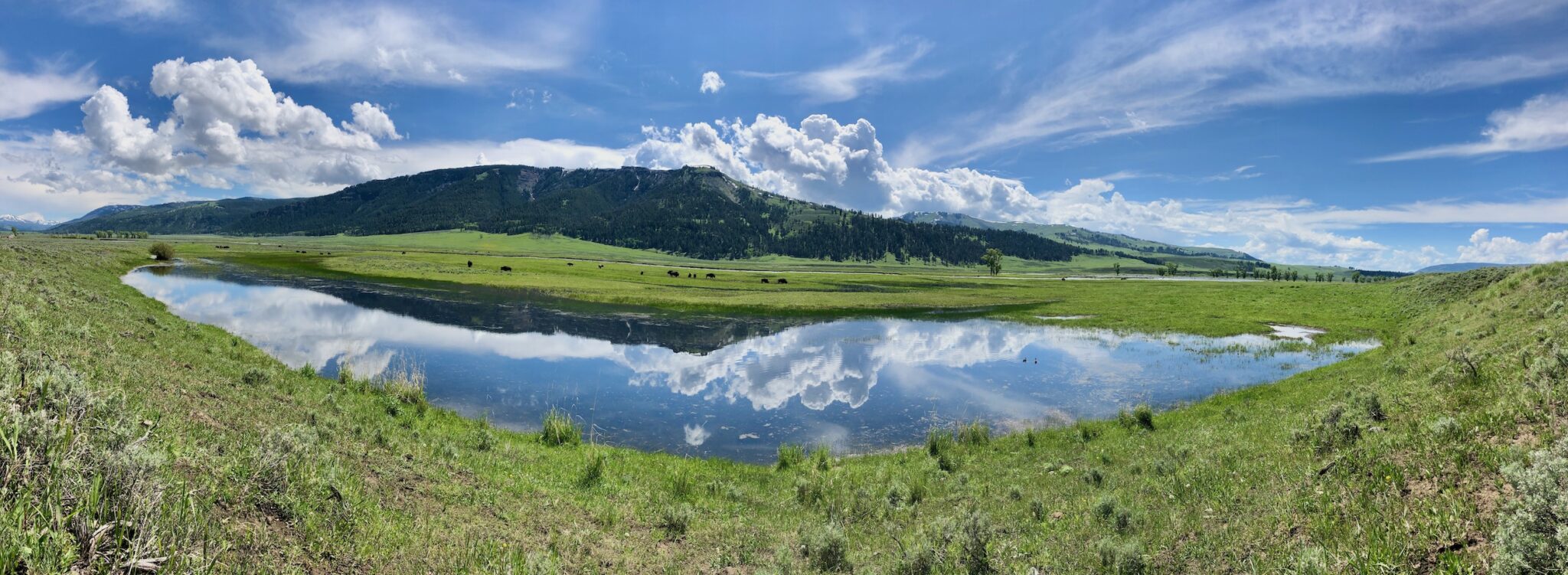
Lamar River, Wyoming | Mike Fiebig

We also realize that proposing to amend a bedrock natural resources law is no small undertaking, and not without some risks. The structure of the Wild and Scenic Rivers Act makes amending the Act easier and less risky than amending other similar laws. Currently, each new river designation is added to the National Wild and Scenic Rivers System through an amendment to the original Act, which means that a new Wild and Scenic designation by a Tribe that includes these proposed amendments would be all that would be necessary to implement them. Furthermore, the Concept Paper proposes extending existing authorities to Tribes through the addition of new sections in the Wild and Scenic Rivers Act, not changes to existing protections that have been settled law for over 50 years. 

In this way, and with your help, we not only propose to retain the protections that the Wild and Scenic Rivers Act has afforded outstanding free-flowing rivers across the county for the last half century, but to expand the ability for Tribes to utilize those same protections to safeguard free-flowing rivers of cultural and ecological importance into the future. Now is the time to address the omission of Tribes in the Wild and Scenic Rivers Act and other bedrock natural resources laws. Doing so would be a measure of restorative justice, while also benefiting Tribes and all life which depends on rivers.  

Please download and read the Concept Paper and Draft Model Legislation, and let us know what you think. We look forward to hearing from you.

Click HERE to download a PDF of the Concept Paper and Draft Model Legislation. Please send feedback, questions, and comments to info@tribalwildandscenic.org or through our website www.tribalwildandscenic.org.

The Wild and Scenic Rivers Act Amendments Project was founded in 2021 by American Rivers, the Grand Canyon Trust, and the Getches-Wilkinson Center in response to Indigenous advocates seeking a tool to protect culturally and ecologically important rivers on Tribal lands from FERC-licensed hydropower projects. More input from Tribes, river advocates, and legal scholars is being sought for the next phase of this project.

The latest briefing is hot off the presses from Western Water Assessment

Click the link to read the briefing on the Western Water Assessment website:

November 13, 2024 – CO, UT, WY

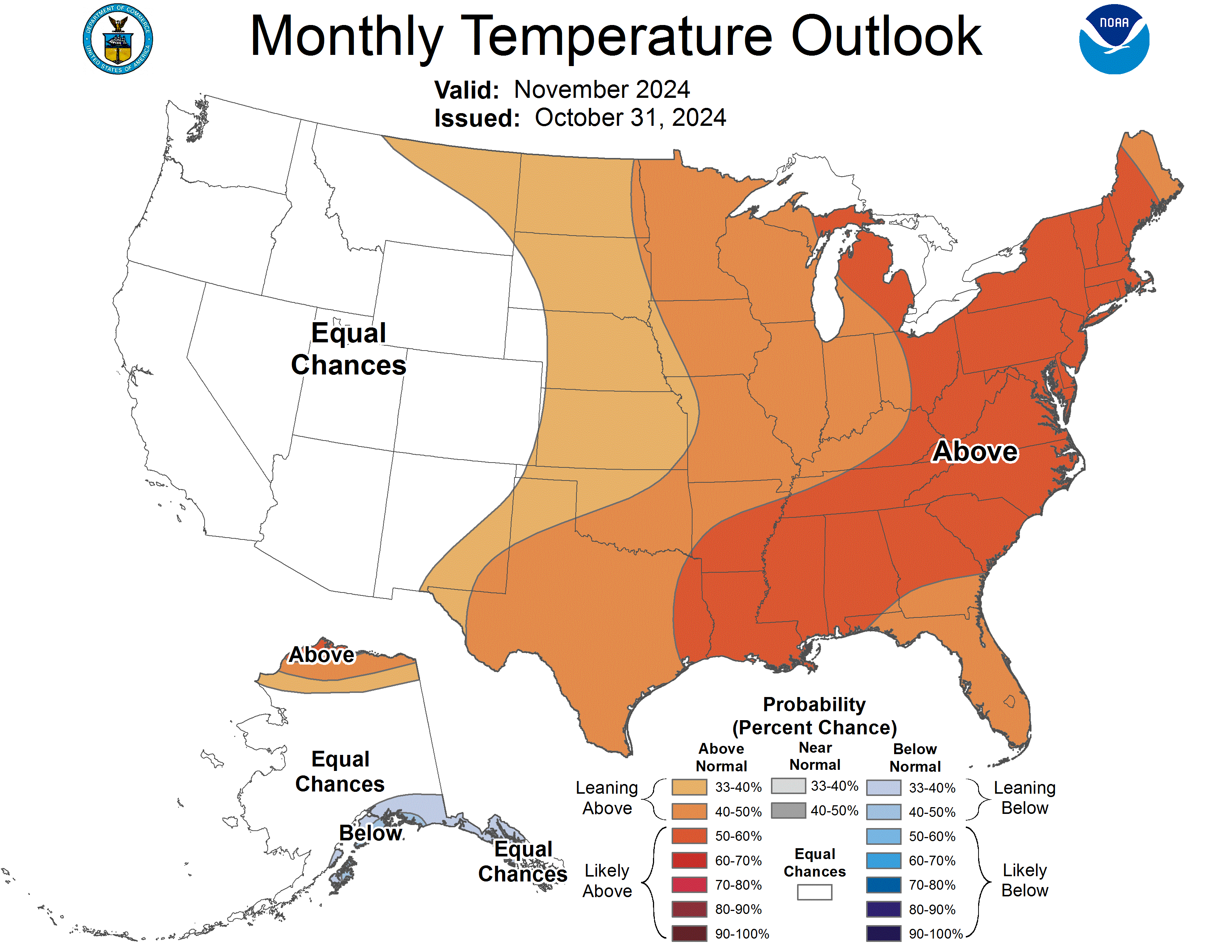
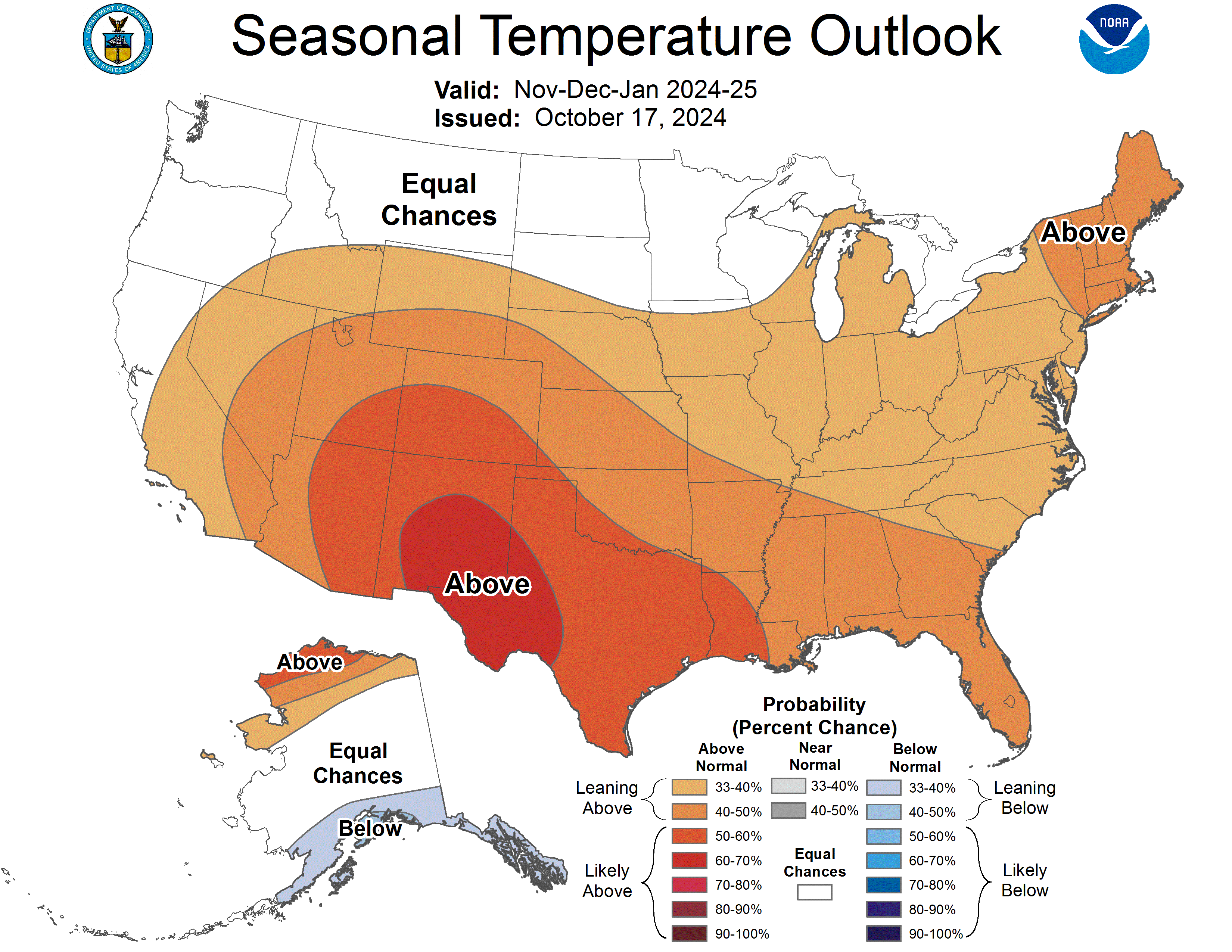
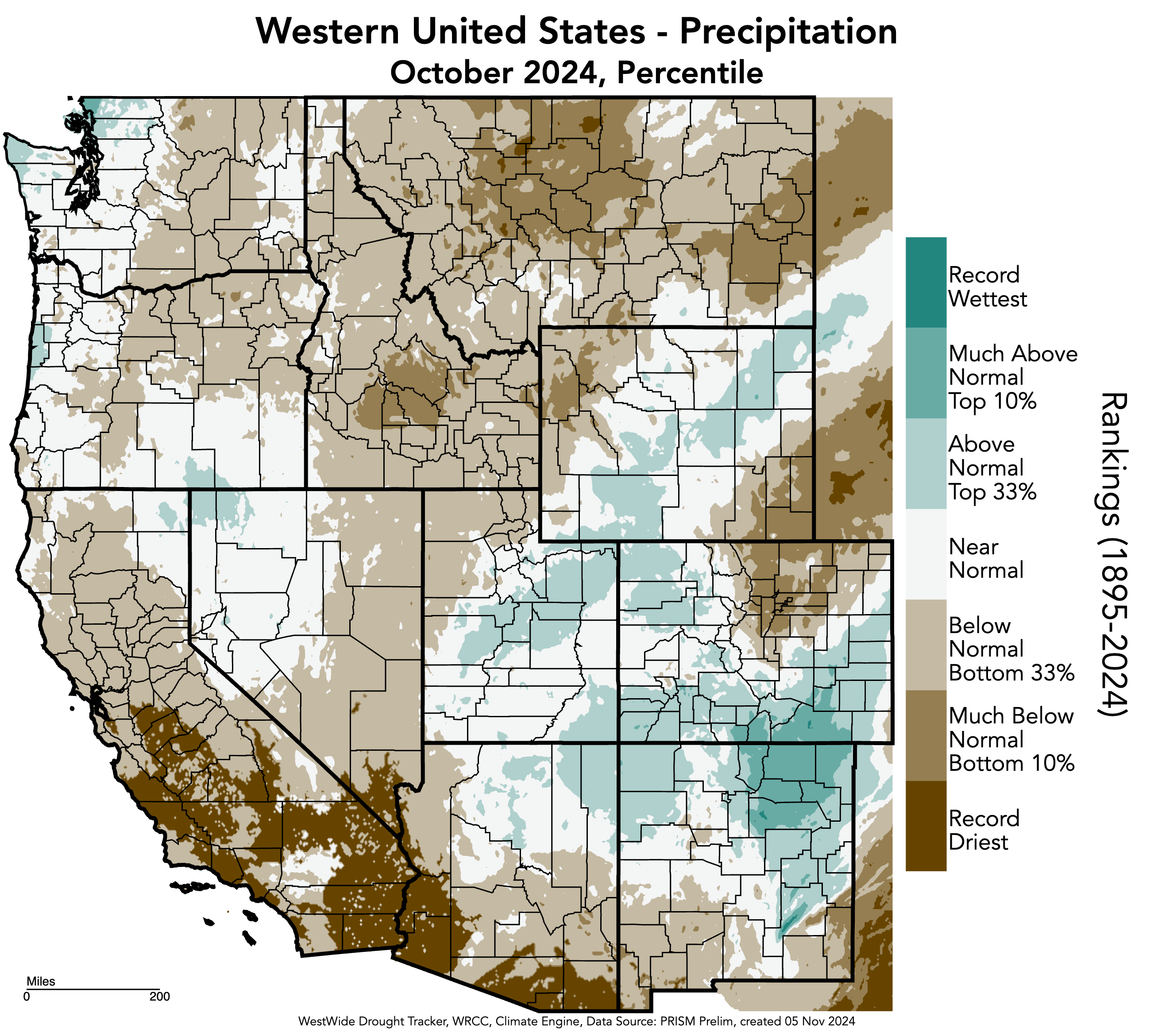
October precipitation varied widely across the region, particularly in Colorado with southern Colorado seeing above normal conditions and northern Colorado generally seeing below normal conditions. October temperatures were above to much above normal throughout the region, with Utah experiencing its warmest October on record and Colorado and Wyoming their second warmest. Regional snow-water equivalent (SWE) was variable, with the majority of Utah and southern Colorado observing above normal SWE and northern Colorado and Wyoming observing below normal SWE. By the end of October, drought conditions expanded since September, now covering 53% of the region. ENSO-neutral conditions continued in October and there is a 53% chance of La Niña conditions developing by early winter. The NOAA seasonal outlook for November-January suggests an increased probability of below normal precipitation for much of Colorado and southern Utah and above normal temperatures for the whole region.

Regional precipitation was variable in October, ranging from above to below normal conditions in each state. Colorado experienced the widest variance of conditions, from as low as 5-25% of normal precipitation along the Front Range and in northeastern Colorado, to 200-300% of normal precipitation in southern Colorado. A small area in Las Animas County, Colorado experienced greater than 300% of normal precipitation. October precipitation was 5-25% of normal in southeastern Wyoming. October precipitation was in the bottom 10% of the period of record in northwestern and southeastern Wyoming as well as northern Colorado, while precipitation was in the top 10% of all years in southern Colorado.

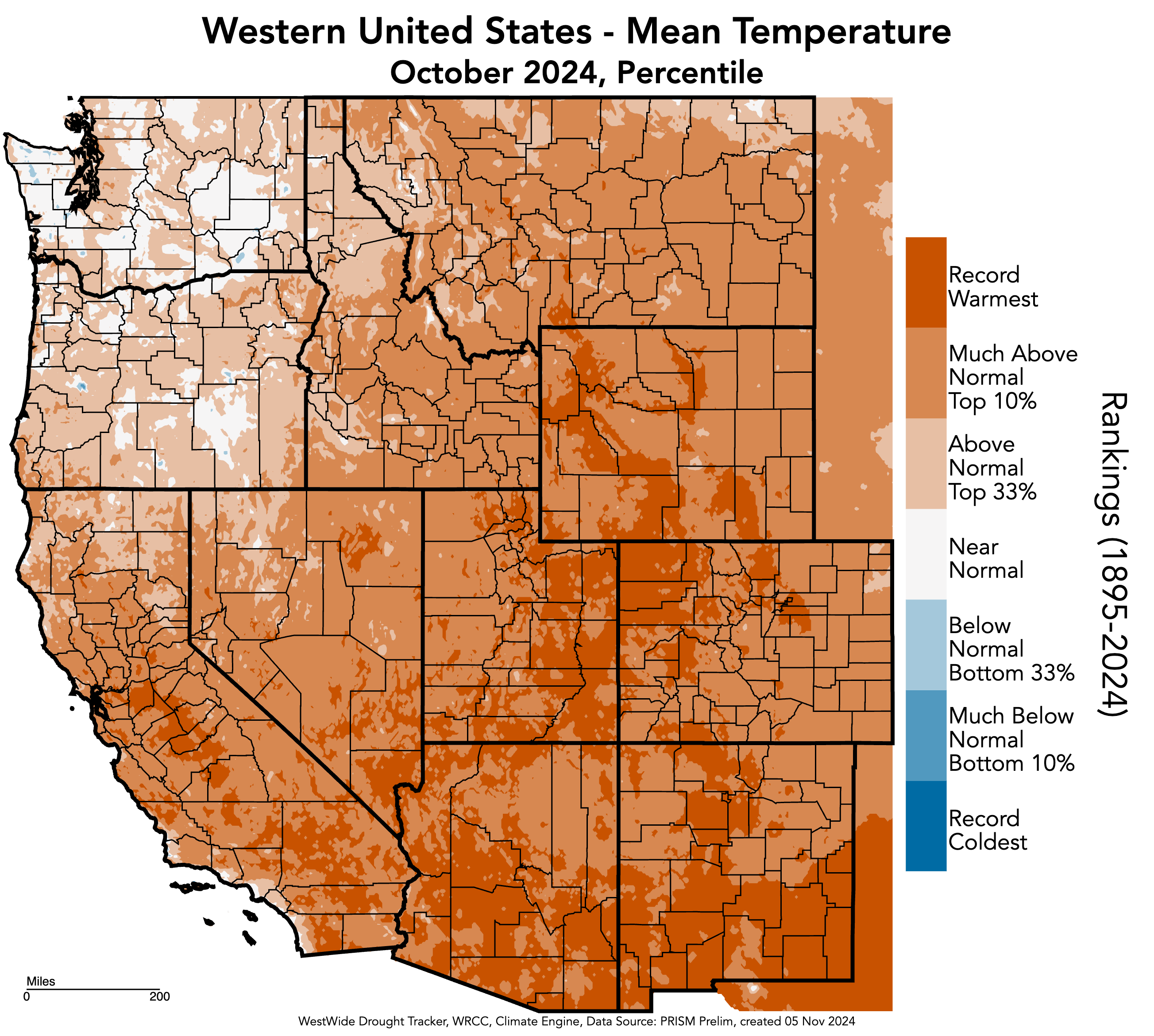
October temperatures were 4-8ºF above normal throughout the region. Pockets of 8-10°F above normal temperatures were observed in northern and eastern Utah, northern Colorado, and southern Wyoming. A few pockets of 2-4°F above normal temperatures occurred in each state, and one small pocket of near normal (0-2°F) temperatures occurred in Mineral County, Colorado. Large areas throughout the region experienced record-warm temperatures for October. Regionally, Utah experienced its warmest October on record, while Colorado and Wyoming had their second warmest. Additionally, many other states in the West experienced their warmest or second warmest Octobers on record, including Arizona, New Mexico, and Texas, and California and Montana, respectively.

As of November 1, snow-water equivalent (SWE) was variable across the region. SWE was above normal for the majority of Utah, with much above normal conditions in the Upper Colorado-Dolores River (592%), Great Salt Lake (588%), and Jordan River Basins (204%). Much above normal SWE also was observed in southwestern Colorado and northeastern Wyoming basins. Below normal SWE was observed in the majority of Wyoming, with much below normal SWE in the Upper Yellowstone (41%) and Snake Headwaters Basins (41%). The South Platte Basin in Colorado also experienced much below normal SWE at 37% of normal. In Colorado, most SNOTEL sites reported 0-2″ of SWE with a high of 6” at Beartown near Telluride. In Utah, most SNOTEL sites reported 0-1″ of SWE with a high of 2.4” at Steel Creek Park in the Uinta Mountains. Lastly, in Wyoming, most SNOTEL sites reported 0-1″ of SWE with a high of 2.3” at Bald Mountain in the Bighorn Mountains. 

Note: Current SWE as a percent of normal maps are often skewed at this time of year due to the very low average SWE this early in the season.

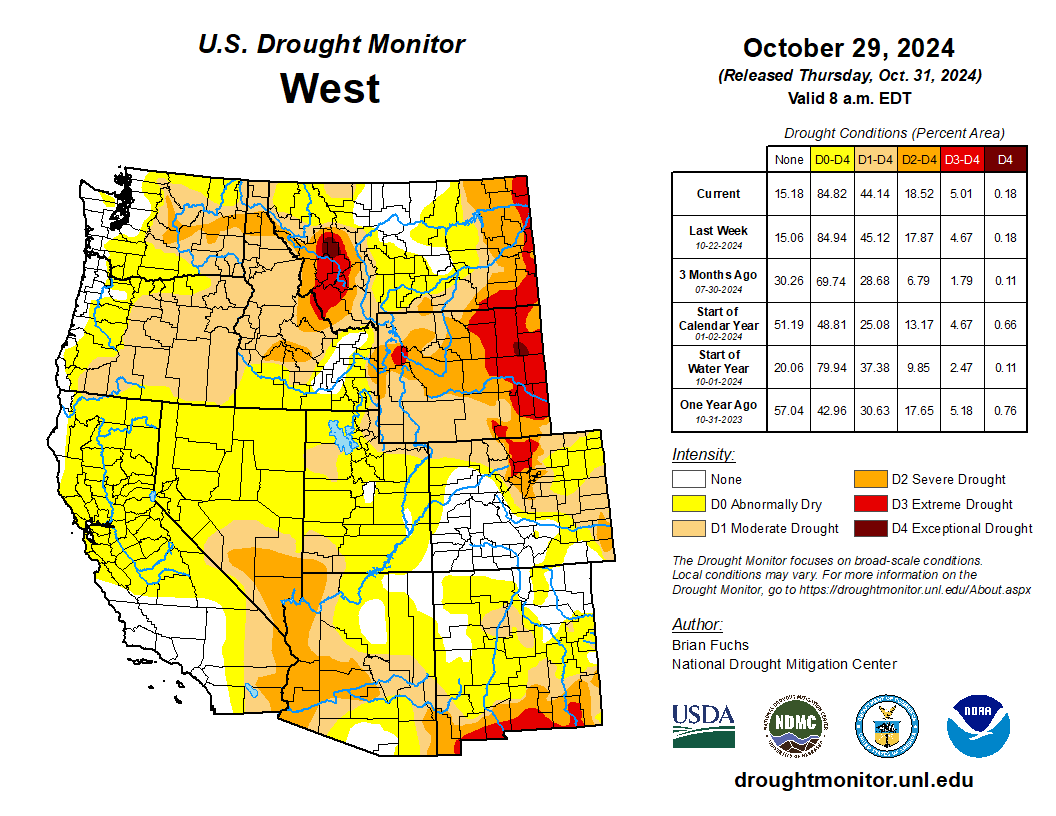
At the end of October, drought covered 53% of the region, up from 31% drought coverage in September. As of mid-October, drought conditions covered the entire state of Wyoming. Severe (D2) drought coverage more than doubled and extreme (D3) drought coverage tripled in Wyoming, and a small pocket of exceptional (D4) drought emerged in northeastern Wyoming. In Colorado, D1 drought coverage nearly doubled, D2 drought nearly tripled, and D3 drought emerged along the northern Front Range. Lastly, in Utah, D1 drought coverage doubled and D2 drought emerged in Washington County.

West Drought Monitor map October 29, 2024.

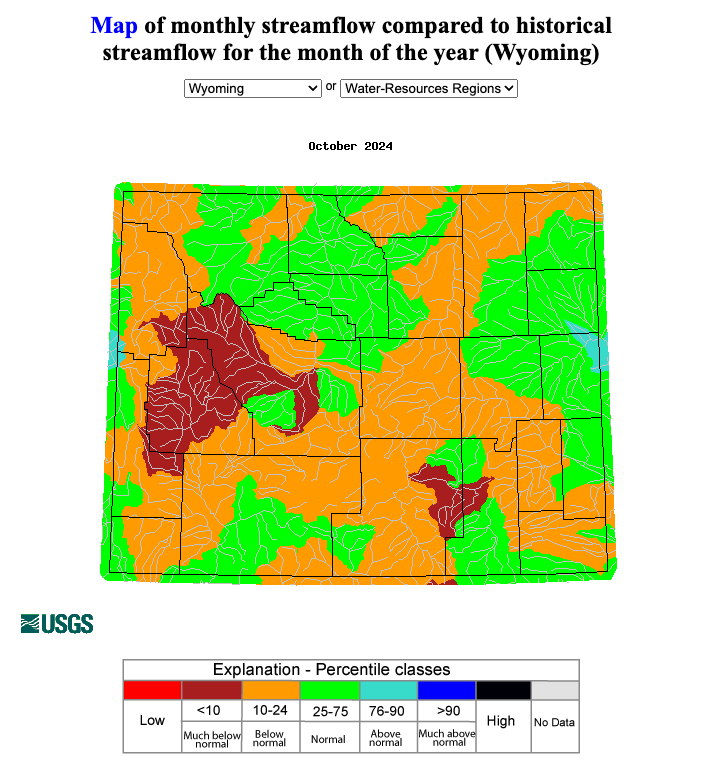
Regional streamflow conditions were near to below normal during October. Below normal streamflow conditions were observed in multiple river basins of each state with much below normal conditions in parts of the Gunnison, North Platte, South Platte, Republican, and Arkansas River Basins in Colorado; the Lower Green and Lower Colorado River Basins in Utah; and the Big Horn, Upper Green, and North Platte River Basins in Wyoming. Much above normal conditions were observed in the East Fork Sevier River Basin in Utah.

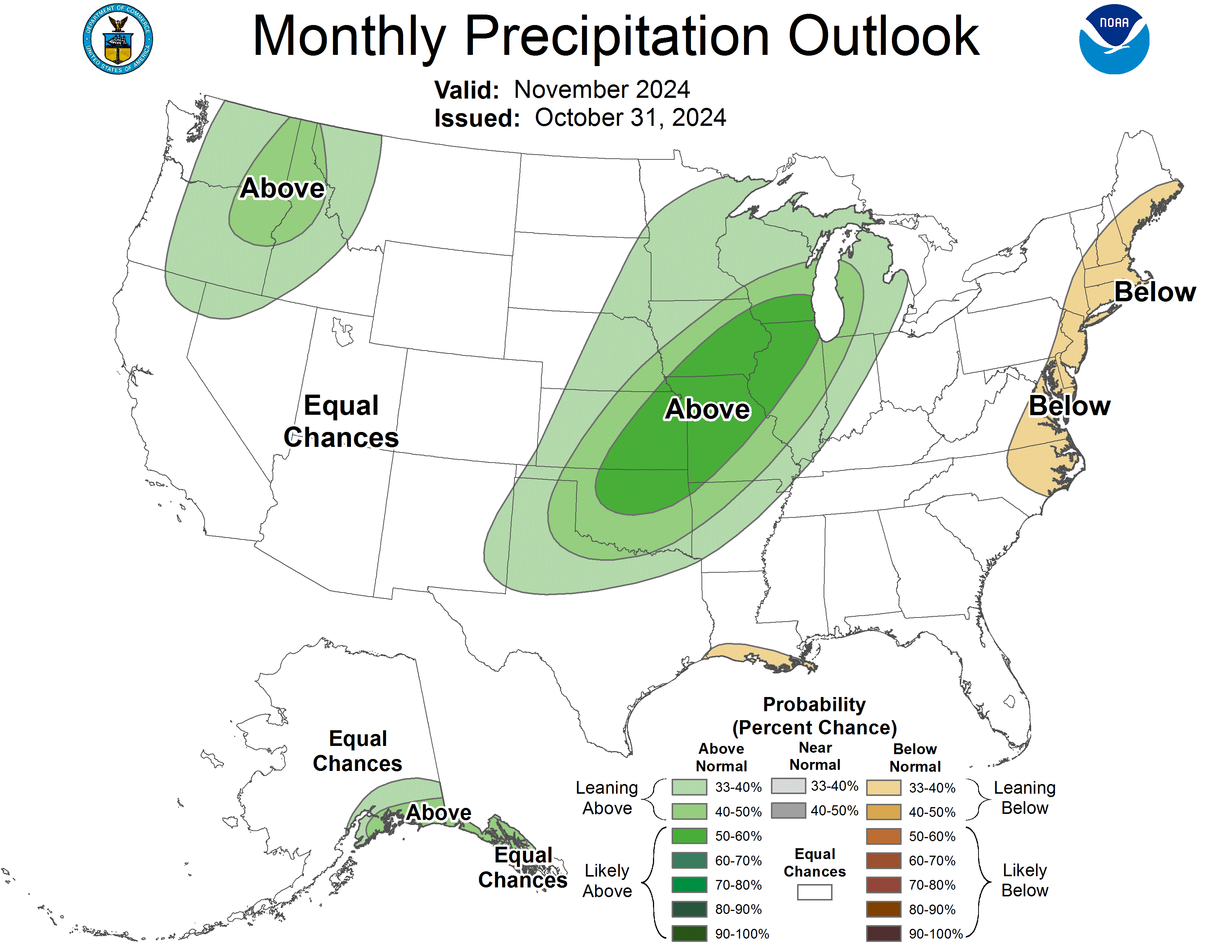
ENSO-neutral conditions continued during October with near to below average sea surface temperatures in the Pacific Ocean, which triggered a La Niña Watch from the NOAA Climate Prediction Center. There is a 53% chance of La Niña emerging by December and a 53% chance of it persisting through December-February. There is a 55% chance of ENSO-neutral conditions returning by January-March, according to the IRI Model-Based Probabilistic ENSO Forecast. Note, there is a discrepancy between the NOAA and IRI ENSO forecasts at this time. The NOAA seasonal outlook for November-January suggests an increased probability of below normal precipitation for southern Colorado and southeastern Utah, and above normal precipitation for northwestern Wyoming. There is an increased probability of above normal temperatures for the entire region, particularly in southern Colorado and southeastern Utah.

Significant climate event: Record October heat. Salt Lake City experienced its warmest October on record in 2024, with the first 16 days reaching 80°F or above. The average temperature for the month was 62.4°F, surpassing the previous record of 60.5°F set in 2015. Other Utah cities also saw record-breaking average temperatures: St. George at 69.9°F, Provo at 61°F, Fillmore at 60.7°F, Escalante at 60.6°F, Price at 58.6°F, Lehi at 57.9°F, Manti at 56.6°F, Park City at 52.9°F, and Alta at 47.1°F. Northern Colorado experienced very dry weather and significantly above normal temperatures as well, with only two days of measurable precipitation and 26 days of above normal temperatures. Colorado was on track to have its warmest October on record, but a cold front in the last two days caused the average monthly temperature to slip to the second warmest on record. In Denver, the mean October temperature was 59.1°F, which was 8.0°F above normal, making it the second warmest October on record. Precipitation was much below average at 0.11 inches, which is 0.88 inches below normal. No snow was observed, which is 3.9 inches below the average October snowfall.

#Colorado Ag Water Alliance: #Drought resilency program request for proposals

Water officials expect steady transition to President 47 for #ColoradoRiver negotiations — Fresh Water News #COriver #aridification

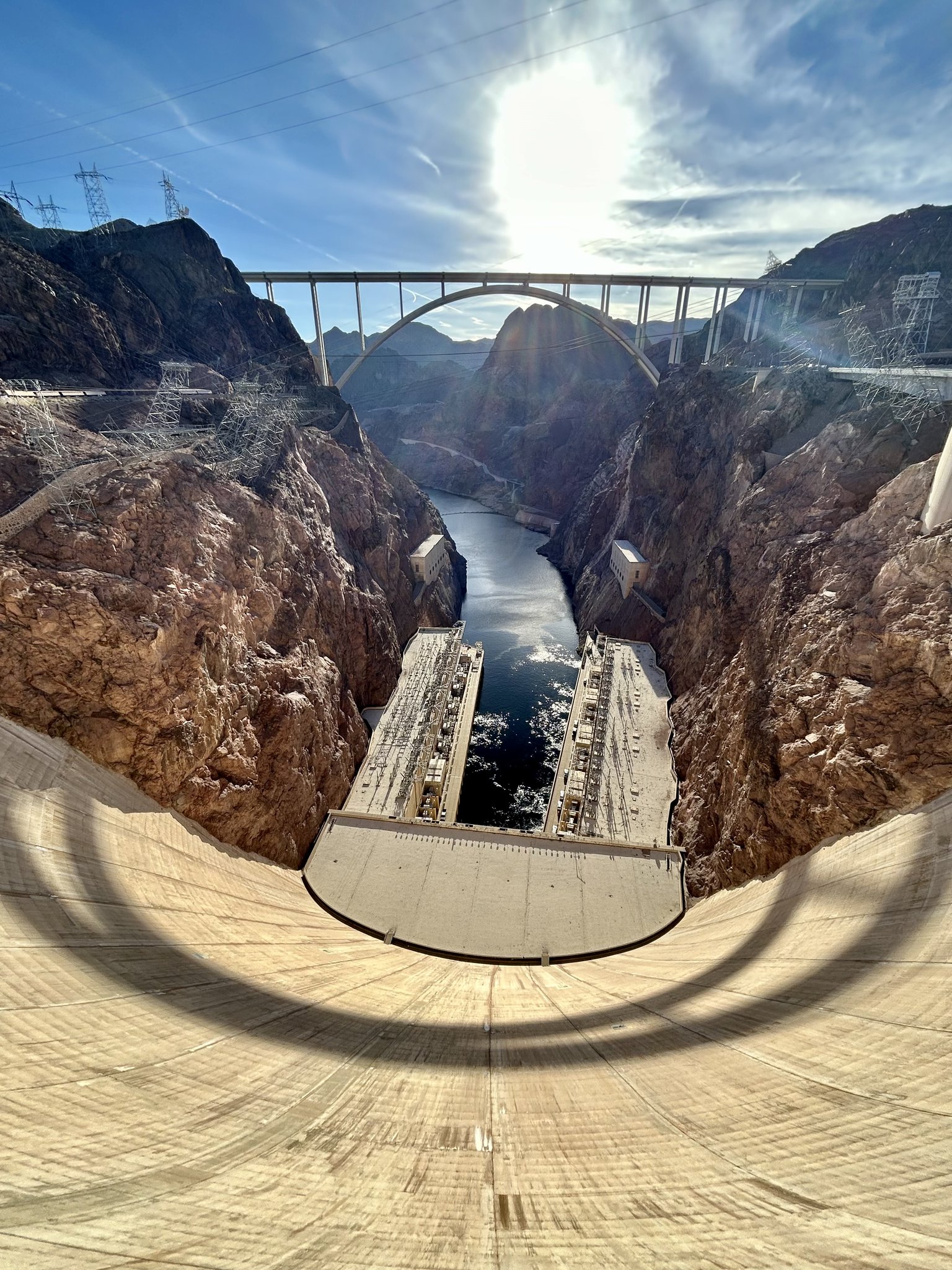
The Hoover Dam is a powerhouse! With an impressive output of about 3 billion kilowatt-hours of electricity annually, it provides enough energy to light up about 1 million households in Nevada, Arizona, and California, ensuring the lights stay on un the Southwest. Photo credit: USBR

Click the link to read the article on the Water Education Colorado website (Shannon Mullane):

November 14, 2024

Western states are mired in negotiations over future Colorado River cutbacks, but state officials agree on one point: A presidential changeover won’t derail the process.

Colorado River Basin officials have to stick to a tight, federally regulated timeline to replace water management rules that were created in 2007 and will expire in 2026. Negotiations over the new rules will overlap with leadership changes in Washington, D.C., when President-elect Donald Trump steps back into office. But new administrations have not disrupted basin negotiations in the past, and state officials don’t expect big issues this time around either.

“The deadline’s the deadline, regardless of who’s at Interior, who’s at Reclamation and frankly who’s representing the states,” said John Entsminger, Nevada’s top negotiator and general manager for the Southern Nevada Water Authority.

The 2007 rules were created in response to several years of drought — the beginning of a two-decade megadrought that elevated concerns about the future water supplies for 40 million people, including Coloradans from the Western Slope to the Front Range.

The Bureau of Reclamation is analyzing several alternatives for the new, post-2026 rules. Reclamation declined to comment on questions about the upcoming transition, saying it plans to keep working with basin stakeholders.

But replacing the 2007 guidelines comes with a strict timeline: Reclamation needs time to draft the new rules, hold public comment, handle revisions, comply with required waiting periods and more before 2026, said Anne Castle, who formerly oversaw water and science policy for the Department of the Interior.

“If you back up all those timelines, there’s not that much time left,” Castle, the federal representative on the Upper Colorado River Commission, said.

If the basin states want Reclamation to consider a seven-state agreement in its analysis, they have until spring 2025 to submit it, she said.

State negotiators, including Colorado River Commissioner Becky Mitchell of Colorado, said they are committed to continuing the negotiations. 

“I don’t think there’s any doubt that if we come up with something that we — the seven states — can live with, that it would be satisfactory to Reclamation,” said Gene Shawcroft, Utah’s top negotiator and chair of Colorado River Authority of Utah. “The onus is still on us as states to come up with a solution.”

But the talks are at an impasse, said JB Hamby, California’s top negotiator. In recent years, federal involvement has helped push the states to consensus, and that involvement is vital going forward, he said. 

However, over the next year, that federal involvement could be hampered by leadership transitions. Historically, presidents install new officials in top leadership positions, and it can take up to a year to install new leaders, like the Secretary of the Interior and Bureau of Reclamation commissioner.

“Whatever the background the next commissioner will have, no matter where in the West they may come from … it’s critical to have that direct federal involvement in that particular role as promptly as possible,” said Hamby, chairman and Colorado River commissioner for the Colorado River Board of California.

This isn’t the first time basin officials are debating weighty river issues during an administration change, several state negotiators said. Party politics don’t typically cause seismic shifts in Colorado River policy — the basin splits more along geographic lines or by type of water use.

For example, the transition from former President Barack Obama’s administration to the first Trump administration did not interrupt the basin’s negotiations over additional drought-response plans, which were finalized under Trump in 2019.

Tom Buschatske, who is the director of the Arizona Department of Water Resources and the state’s top negotiator, said he is not expecting delays this time either.

“I’m going to somewhat hang my hat on the fact that, over the last almost 25 years now, when you see past administrations change, we’ve not really seen that impacting the path forward, or the pinch points and deadlines, at least for the Colorado River,” Buschatzke said.

More by Shannon Mullane

The latest El Niño/Southern Oscillation (#ENSO) Diagnostic Discussion is hot off the presses from the #Climate Prediction Center

Click the link to read the discussion on the Climate Prediction Center website:

November 14, 2024

Synopsis: La Niña is most likely to emerge in October-December 2024 (57% chance) and is expected to persist through January-March 2025.

Over the past month, ENSO-neutral continued, as evidenced by overall near-average sea surface temperatures (SSTs) observed across the central and eastern equatorial Pacific Ocean. Similar to last month, the latest weekly Niño indices ranged from +0.2°C (Niño-4) to -0.3°C (Niño-3.4. Below-average subsurface temperatures persisted across the east-central and eastern equatorial Pacific Ocean. For the monthly average, low-level wind anomalies were easterly over a small region of the east-central equatorial Pacific, and upper-level wind anomalies were near average. Convection was suppressed over the Date Line and was weakly enhanced over eastern Indonesia. The traditional and equatorial Southern Oscillation indices were positive. Collectively, the coupled ocean-atmosphere system reflected ENSO-neutral.

The IRI plume predicts a weak and a short duration La Niña, as indicated by the Niño-3.4 index values less than -0.5°C. The latest North American Multi-Model Ensemble (NMME) forecasts are cooler than the IRI plume and predict a weak La Niña. Due to this guidance and La Niña-like atmospheric circulation anomalies over the tropics, the team still favors onset of La Niña, but it is likely to remain weak and have shorter duration than other historical episodes. A weak La Niña would be less likely to result in conventional winter impacts, though predictable signals could still influence the forecast guidance (e.g., CPC’s seasonal outlooks). In summary, La Niña is most likely to emerge in October-December 2024 (57% chance) and is expected to persist through January-March 2025.