Click the link to read the article on The Land Desk website (Jonathan P. Thompson):
November 22, 2024
🥵 Aridification Watch 🐫
The Bureau of Reclamation released a sort of teaser of its eagerly anticipated plan for dealing with the demand-supply imbalance on the Colorado River. And like most teasers, it gives very little insight into what to expect from the actual plan. It presents four alternative ways forward, but doesn’t say which one the agency is leaning towards. But they all are at least partially aimed at keeping Lake Powell’s surface level above the minimum power pool, so that water can continue to be released via the penstocks and hydroelectric turbines. This would put most of the burden for cuts on the Lower Basin states, which could experience up to a 3.5-million-acre-feet shortage some years. This doesn’t cut it for John Weisheit, Living Rivers’ Conservation Director, who noted:


But there may be even less water than previously anticipated in the Colorado River in the future, throwing even the best laid plans askew. That’s the finding of a recent study, in which researchers ran historic data and climate change forecasts through modeling programs, yielding hundreds of thousands of streamflow scenarios for the Colorado River and its tributaries originating on Colorado’s West Slope. They concluded that relying on the historic streamflow record risks underestimating the magnitude of future drought events. And these droughts could significantly reduce the amount of water flowing in Colorado River tributaries, throwing supply and demand further off balance.
Patrick Reed, the study’s principal author, said in a press release:

And if less water is going into Lake Powell, then its operators will release even less water from Glen Canyon Dam, meaning deeper shortages for the millions of folks downstream who rely on the river.
For now, however, things are looking alright for the Colorado River. Some good autumn storms built up the snowpack, which is now sitting right at about the median level for this time of year in the Upper Colorado River Basin.

Meanwhile, things are quite nice, snowpack-wise, down in the San Juan Mountains, where snow-water levels are higher than this date’s normal and significantly healthier than at this time in 2024 or 2023. And another storm is on its way.

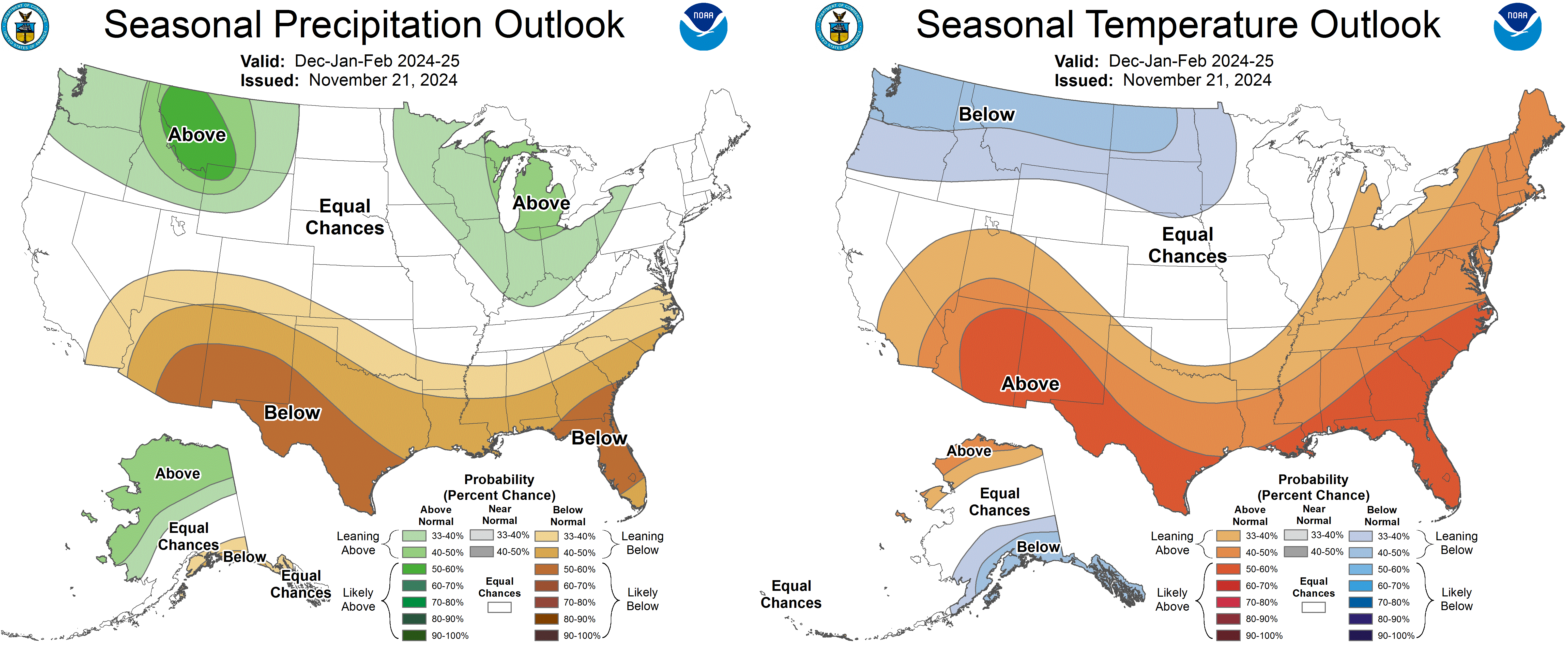
Will the good times last? According to the latest seasonal climate outlook, probably not. Forecasters are expecting it to be drier and warmer than normal in the Southwest, though things could go either way in the northern portion of the Colorado River Basin. But then, it’s always best to take these long-term forecasts with a hefty grain of salt.
🏠 Random Real Estate Room 🤑
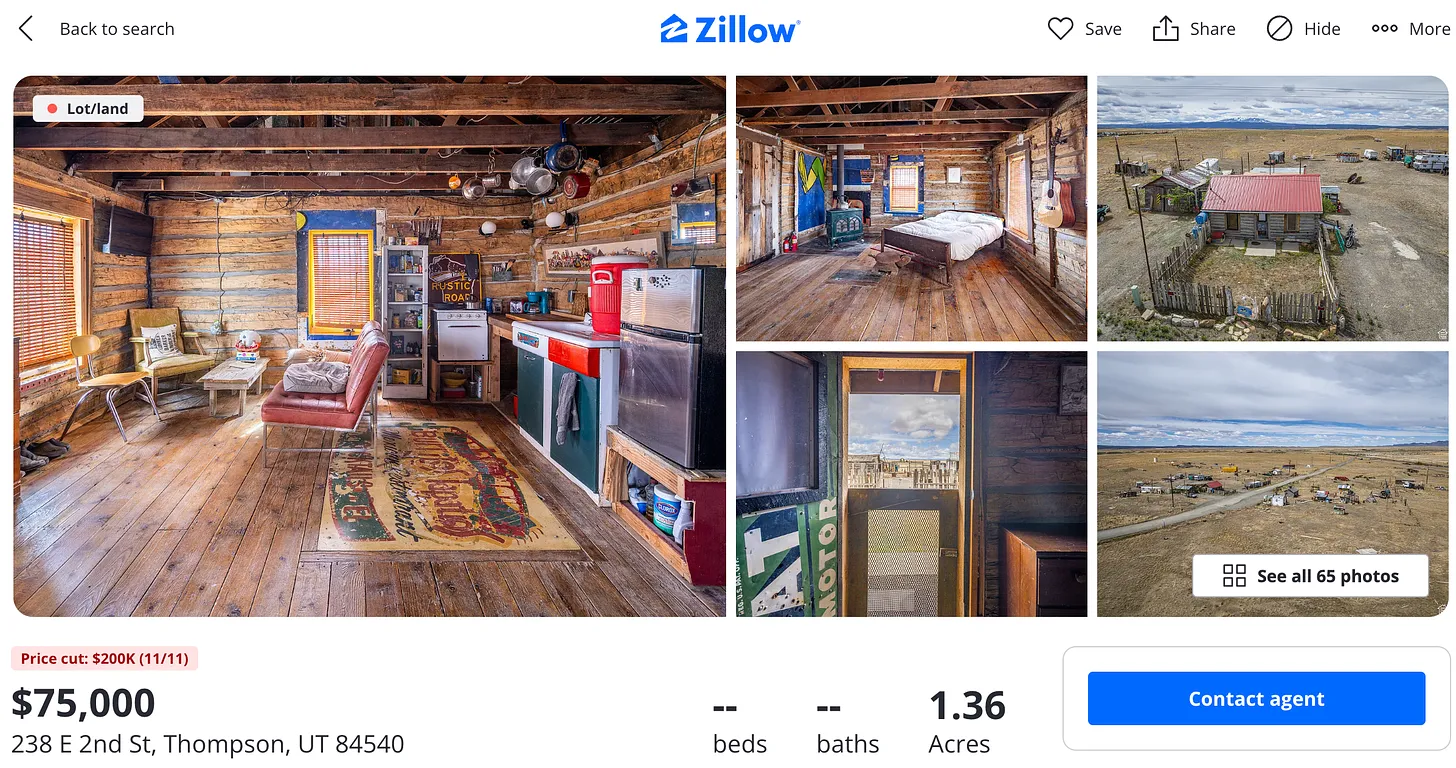
Where can you get, in 2024, 1.36 acres that includes an old post office, a 104-year-old cabin, a converted bus, and at least one RV for just $75,000? Cisco, Utah, that’s where. The property was immortalized by Sarah Gilman in her 2018 High Country News article “The Pioneer of Ruin,” a profile of the owner and Cisco’s sole resident Eileen Muza. Miranda Trimmier also wrote about Cisco and Muza for Places Journal in 2019, and a variety of other media attention followed about their effort to restore that piece of the “ghost town.” The property was listed in July for $275,000 — Muza’s partner apparently was not interested in living out there — but the price was dropped to $75,000 this month. It’s certainly one of the funkier properties on the market and probably the least expensive housing for sale in the greater Four Corners area. But the “housing” part isn’t official: Even though Muza lived there and it sports several dwellings, the property is listed as land, not a residence (so it won’t show up on searches for houses). But you’d better move quick if you’re interested: It showed up on the 2.9-million-follower @cheapoldhouses Instagram feed recently, so it could go fast. Heck, at that price, I even briefly considered it for the Land Desk/Lost Souls Press global HQ!
And just down the road, in that illustrious Cisco suburb known as Moab, about 100 people gathered to protest the proposed Kane Creek Development. The developers want to build nearly 600 housing units and associated infrastructure at a place called Kings Bottom on the banks of the Colorado River a couple miles downstream from Moab. It’s not going over so well with many locals. That’s just a crap ton of houses, it would all be vulnerable to flooding (meaning a good portion of the homes, and the contents of a planned sewage treatment plant, could end up floating in Lake Powell someday). I suppose the developers could move the whole operation up to Cisco.
In an alternate reality, in which the Bureau of Reclamation circa 1946 had its way, Cisco might be waterfront property right now. For more on that, check out this piece from the Land Desk archives (available to paid subscribers only):

Cisco Resort and other water buffalo oddities — Jonathan P. Thompson
June 1, 2022
Gratuitous Silver Bullet Shot