Southwest #Colorado tribes seek federal funds for Animas-La Plata water delivery — The #Durango Herald

Lake Nighthorse and Durango March 2016 photo via Greg Hobbs.

Click the link to read the article on The Durango Herald website (Maria Tedesco). Here’s an excerpt:

November 1, 2024

The Ute Mountain Ute Tribe has tried to obtain compensation for water rights from the Inflation Reduction Act, but the Bureau of Reclamation has not acted. U.S. Sens. John Hickenlooper and Michael Bennet, as well as Colorado Gov. Jared Polis, wrote a letter to the Bureau of Reclamation on Oct. 22 urging the bureau to work with the Ute Mountain Ute and Southern Ute tribes for alternative routes of funding, after they were not able to be compensated from the IRA.

“We strongly encourage you to explore other avenues for Colorado’s Tribal Nations to pursue funding related to drought response, recognizing that they are currently forgoing their water use not by choice, but resulting from a history of inequity reflected in their long-term lack of infrastructure,” the letter said.

Combined, the Ute Mountain Ute Tribe and Southern Ute Tribe hold about 33,000 acre-feet of water rights in Lake Nighthorse. Lawmakers provided funds only for the construction of the A-LP and not a delivery system in 2000. Without a pipeline out of Lake Nighthorse, water flows downstream. Since the tribes are not compensated for the water to which they are entitled, but do not use, lawmakers asked the Bureau of Reclamation to explore alternative routes of funding…Aside from receiving compensation for water rights, the Ute Mountain Ute Tribe also needs $500 million for a water delivery project for water from Lake Nighthorse, said Manuel Heart, chair of the Ute Mountain Ute Tribe.

Acidic mine drainage haunts Western rivers — David Marston (Writers on the Range)

Reid Christopher in font of textile bags, mining ruins in background, Gladstone Treatment Plant, San Miguel County, CO. Dave Marston

Click the link to read the article on the Writers on the Range website (David Marston):

October 28, 2024

It was the summer of 2015 when the Animas River in southern Colorado turned such a garish orange-gold that it made national news.

This image was taken during the peak outflow from the Gold King Mine spill at 10:57 a.m. Aug. 5, 2015. The waste-rock dump can be seen eroding on the right. Federal investigators placed blame for the blowout squarely on engineering errors made by the Environmental Protection Agency’s-contracted company in a 132-page report released Thursday [October 22, 2015]

The metallic color came from the Gold King Mine, near the town of Silverton in the San Juan Range. The abandoned mine had been plugged by an earthen and rock dam known as a bulkhead, behind which orange, highly acidic drainage water accumulated. But after a federal Environmental Protection Agency employee accidentally breached the plug during an unauthorized excavation, 3.5 million gallons of additional runoff rushed downstream.

The worker and the EPA came in for a slew of outrage and blame. Alarmed Tribal Nations and towns halted drinking water and irrigation operations; tourists fled the region during the height of tourist season.

The “Bonita Peak Mining District” superfund site. Map via the Environmental Protection Agency

But here’s the surprising opinion of Ty Churchwell, the mining coordinator for Trout Unlimited: “Looking back, this can be taken as a positive thing because of what happened afterward.” He sits on a community advisory group for the Bonita Peak Mining District, a Superfund site that contains the Gold King mine.

“We’ve got federal Superfund designation, and it’s the only tool at our disposal to fix this problem,” he said. The “problem” is unregulated hard-rock mining that began 160 years ago.

“I know this isn’t conventional wisdom,” Churchwell said, “but no fish were killed in Durango (30 miles downstream) because of the spill. It was ugly and shocking, but a lot of that orange was rust, and the acidic water was diluted by the time it hit Durango and downstream.”

Cement Creek aerial photo — Jonathan Thompson via Twitter

EPA’s website points out that over 5.4 million gallons of acid mine runoff enters the Animas River daily.

The way Churchwell tells it, water quality and numbers of fish had been declining in the Upper Animas River since the early 2000s. That’s when the last mining operation ended and closed its water treatment plant.

Six months after the news-making spill almost a decade ago, EPA geared up to make sure untreated mine waste would not head for the river again.

Reid Christopher, a 62-year-old former electrician and mountain guide, became the Gold King Mine’s restoration whiz, taking over an old wastewater treatment plant in the area in 2019. Now, he said, only treated water leaves the 11,439-foot elevation mine. 

This July, Christopher took me on a tour of the wastewater plant. In a nutshell, cleanup begins when the constantly flowing wastewater gets shuttled into settling ponds.

Christopher then pumps hydrated lime into the water, boosting its pH to 9.25. The high pH unlocks the heavy metals from suspension, and an added flocculant causes the heavy metals to clump together inside football field-sized textile filtration bags.

Clear—surprisingly clean—water streams from the bags into Cement Creek, Christopher said, and the process is so effective he said he’d like to treat the drainage from other major mineshafts in Bonita Peak.

Meanwhile, the Environmental Protection Agency remains gun-shy about talking to the press. It was deluged with bad publicity following the 2015 blowout, though as Churchwell points out, “it wasn’t the EPA that mined the San Juan Mountains and left their mess behind.”

Bonita Mine acid mine drainage. Photo via the Animas River Stakeholders Group.

The messes from abandoned mines, at Gold King and around the entire West, have never received much attention from Congress. Until the Biden administration passed the Inflation Reduction Act, the EPA depended on annual appropriations. That meant for almost four decades, the agency never got enough money to thoroughly clean up the heavy-metal mine waste flowing out of hard rock mines like Gold King.

And because the mess was buried deep in the mountains at elevations from 10,500 feet to over 12,500 feet, the agency couldn’t compete for federal dollars until it grabbed all the environmental disaster headlines of summer 2015.

Even now, said Churchill, and despite available funding, “The EPA has 48 mine-impacted locations in the Upper Animas River and only so many dollars to work with. They have to get the most bang for their buck.”

David Marston. Photo credit: Writers on the Range

Commercial use of metals in the sludge might possibly make some money for the EPA. The Colorado School of Mines has taken water samples to see what—if anything—can be retrieved from the mine waste.

But even if mine sludge is worthless, cleaning acidic water at the top of the watershed is worthwhile for every living thing downstream.  

For now, Christopher is always looking to hire locals for dirt work and hauling. He said the jobs could last a lifetime.

Dave Marston is publisher of Writers on the Range, Writersontherange.org, the independent nonprofit dedicated to spurring lively debate about Western issues. He lives in Durango.

Prior to mining, snowmelt and rain seep into natural cracks and fractures, eventually emerging as a freshwater spring (usually). Graphic credit: Jonathan Thompson

And what if Trump returns to the White House? — Allen Best (@BigPivots)

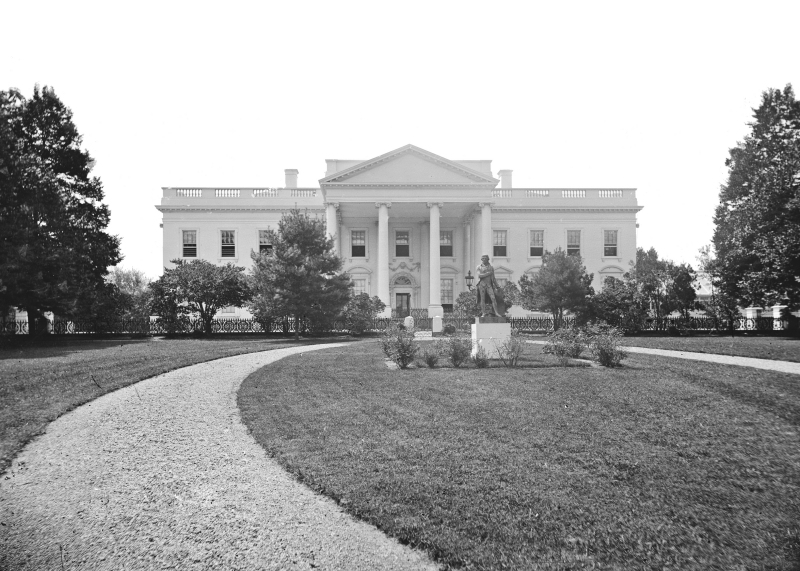
The White House and North Lawn during the Lincoln administration in the 1860s. Public Domain, Wikipedia

Click the link to read the article on the Big Pivots website (Allen Best):

October 31, 2024

Colorado aims to reduce its greenhouse gas emissions 50% by 2030 and achieve net-zero by 2050. Would a second Donald Trump presidency frustrate those ambitions?

Not entirely. The energy transition train has already left the station. Colorado has become a national leader in transforming our energy systems, beginning with how we produce electricity. No president can stop that. The economics of renewable energy are too compelling. Coal has become the high-priced fuel, and even natural gas is being crowded out to the margins.

Beyond 2028 coal will almost entirely be gone. Electricity in Colorado will be upwards of 70% emissions-free. Some utilities will aim higher. Holy Cross Energy already surpasses 80% and hopes to surpass 90% sometime next year.

The Inflation Reduction Act of 2022 has pledged more than $3 billion to Colorado electrical cooperatives to make the transition for their members in the state’s four corners More money is likely , and more is likely coming. The state’s 22 cooperatives together serve 20% of the state’s residents but about 70% of its geographic area.

In July, Colorado’s two senators were at the EPA headquarters near Denver’s Union Station to announce a $200 million grant for work in the nine-county Denver-Boulder metro area to begin retrofitting houses to use less natural gas. The state government got $129 million at the same time for various efforts to reduce methane and carbon dioxide emissions.

Might Trump try to kill this landmark law, the most important climate legislation yet enacted if he ends up in the White House? He’s “going to claw back every penny he can claw back from the Inflation Reduction Act,” U.S. Senator John Hickenlooper told me when I asked his view. “He thinks climate change is a hoax.”

Trump made that statement about a hoax when he was running for president in 2016. At times, he has softened his stance, but even recently he called climate change “one of the greatest scams of all times.” More clearly, he has promised to dismantle the EPA and roll back regulations. He has solicited $1 billion in financial contributions from the oil and gas industry.

Whether Trump could succeed in curbing the renewable energy outlays is another matter. Remember, he vowed to bring back coal. He declared he would kill Obamacare. He almost succeeded with the latter but he makes no mention of it now. It’s too popular in too many places, including red states. The Inflation Reduction Act might have the same trajectory. As in Colorado, much of the money awarded for the energy transition has been earmarked for red states.

Too, Trump would need Republican majorities in both the House and the Senate. That’s possible but unlikely.

Clearly, Colorado can go far on its own. It has among the nation’s best wind, solar, and hydroelectric resources. It has strong leadership and political cohesion. It has an educated workforce. It has innovators and entrepreneurs.

But Colorado can move even more rapidly and cost-effectively in this energy transition with aid and in concert with the federal government, says Tanuj Deora, a director of the state energy office in the Hickenlooper administration. That includes crafting trade policies that aid, not slow, the energy transition.

A major concern for the Colorado Solar and Storage Association is the cost of solar panels. The industry in Colorado is poised for a gigantic boom through the end of this decade as Xcel Energy, Tri-State Generation and Transmission Association, and other utilities prepare to close their coal plants.

Mike Kruger, the executive director, warns that tariffs that Trump has promised to impose on all Chinese imports will hammer the solar sector, which has 9,000 employees in Colorado. The United States does not have the domestic production capacity to meet domestic demand. The result will be huge price increases.

“You would see massive hemorrhaging of solar jobs and solar companies going bankrupt. A tariff that produces a 70% rate hike on imported panels will result in total costs on solar installations going up 25% or more. I don’t know of any product that goes up 25% in price or more without massive impacts.”

This has been the hottest year for the globe in recorded history. Colorado is far behind Phoenix, with its 113 consecutive days of 100-plus temperatures, but it’s warming rapidly. Grand Junction, for example, had an average temperature of more than 80 degrees this summer, an all-time high.

The full and necessary energy transition will happen. In question is whether it can occur as rapidly as climate scientists say it must. Colorado can provide a national example. It already has. But can move faster with teamwork.

Denver Water’s sustainability operations include generating energy from solar power panels installed on the roof of its Administration Building, parking garage and over its visitor’s parking lot at its Operations Complex near downtown. Photo credit: Denver Water.