
October 2024 was the 3rd driest October since 1895 according to (unofficial) Prism climate data. Extensive areas of record to near record dryness.


October 2024 was the 3rd driest October since 1895 according to (unofficial) Prism climate data. Extensive areas of record to near record dryness.
Click on a thumbnail graphic to view a gallery of snowpack data from the NRCS.
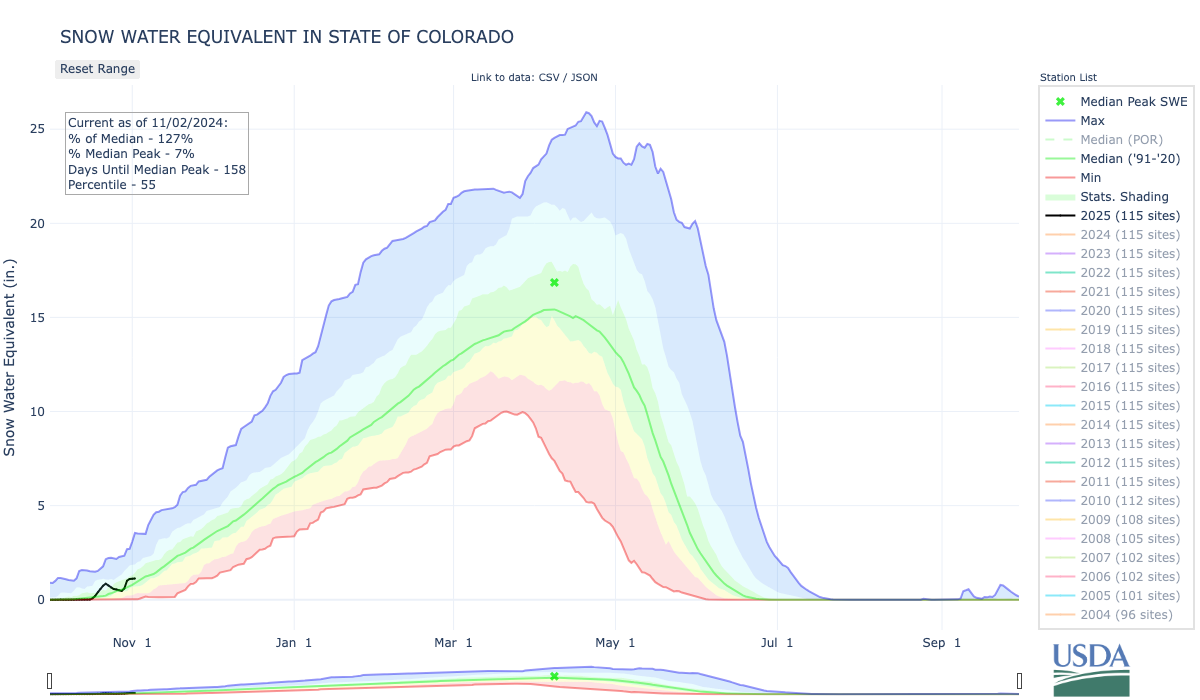
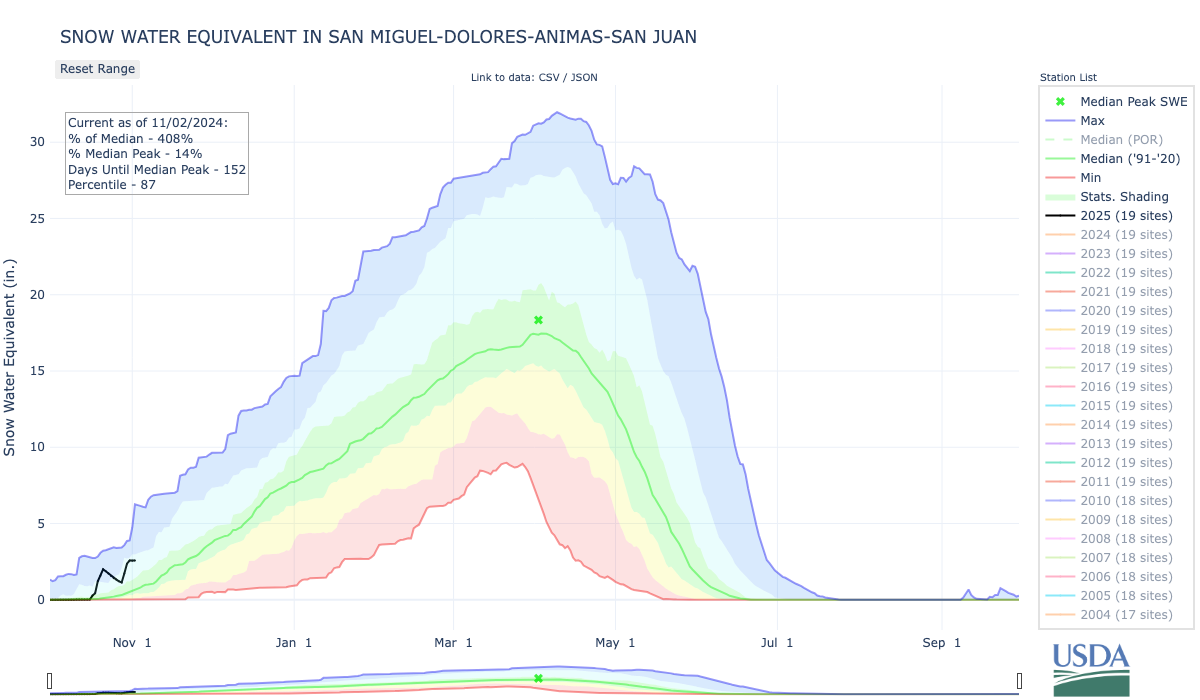
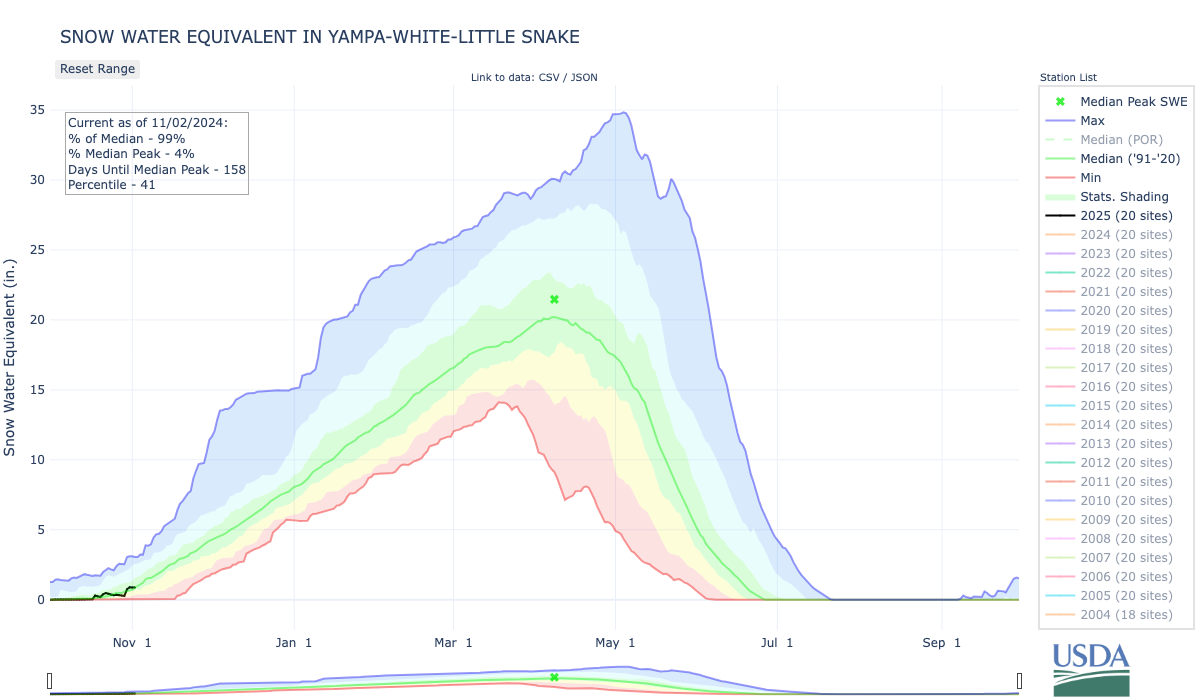
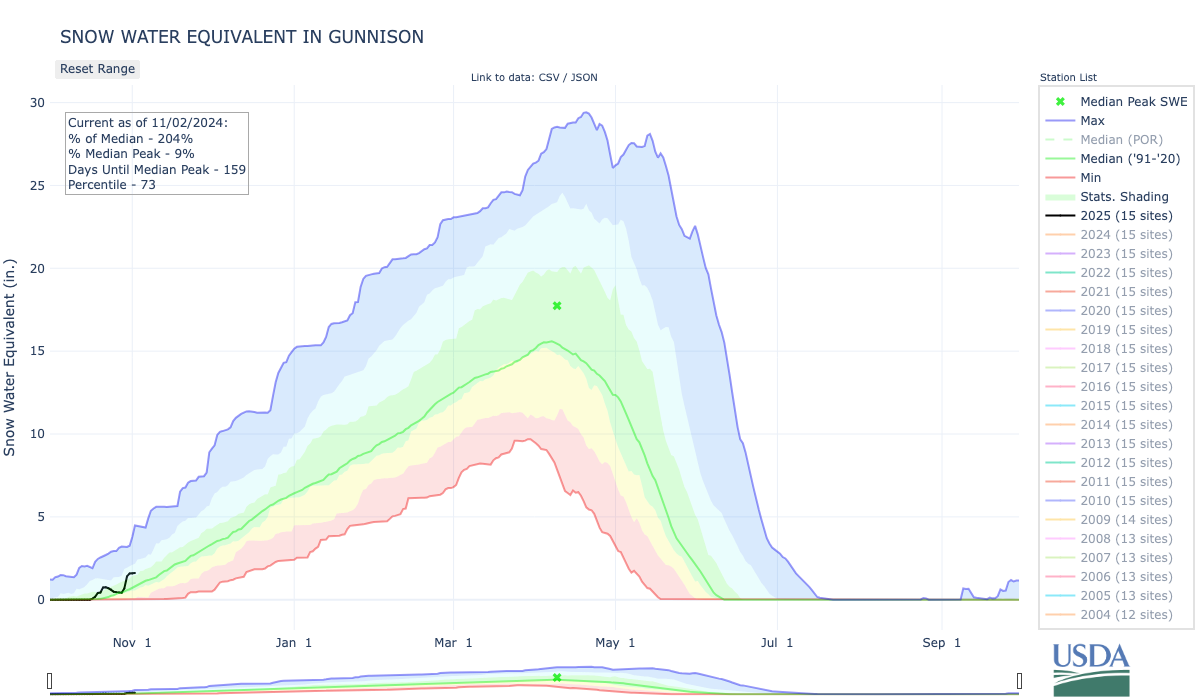
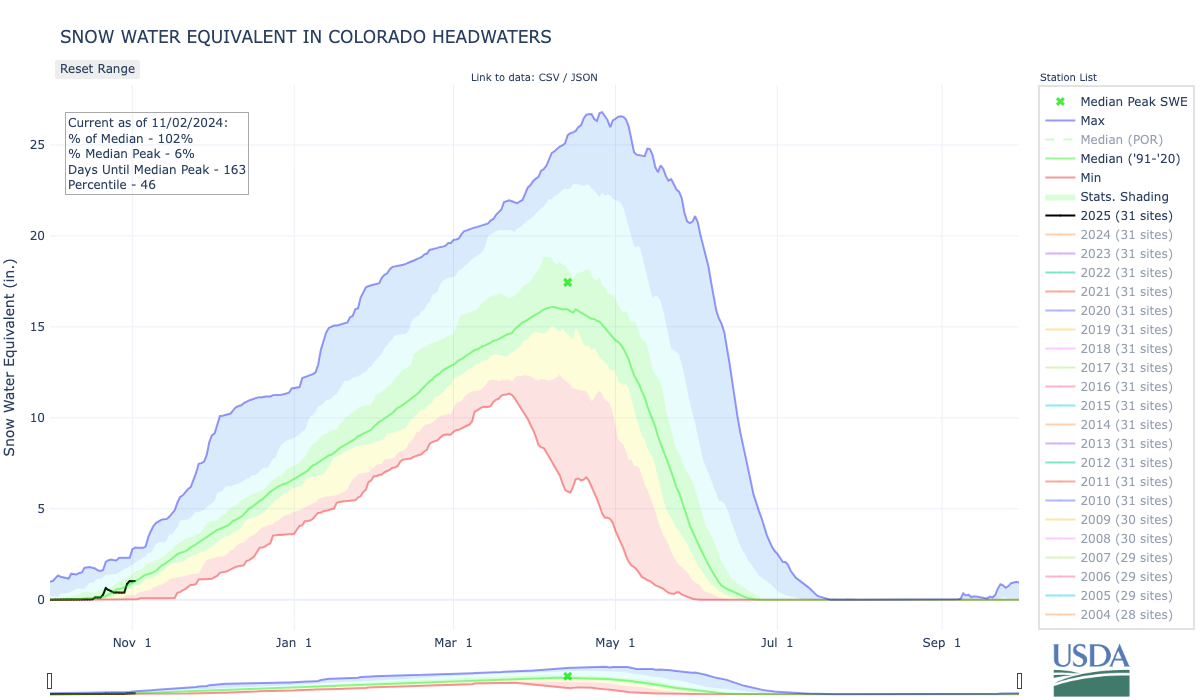

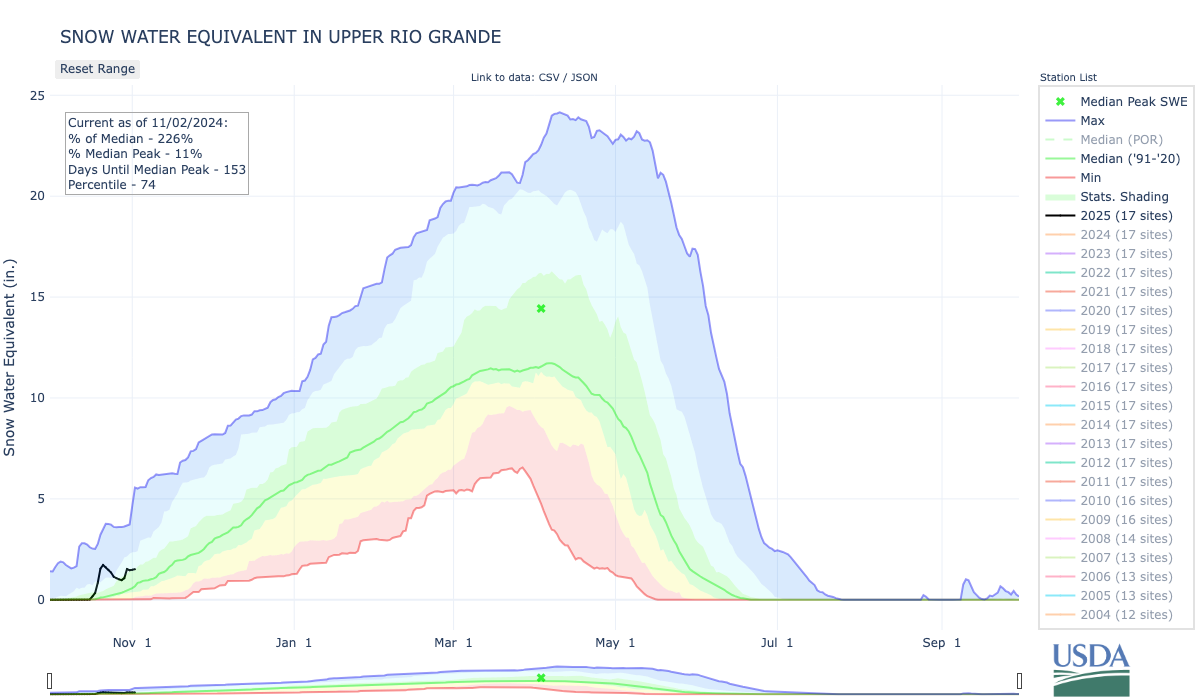
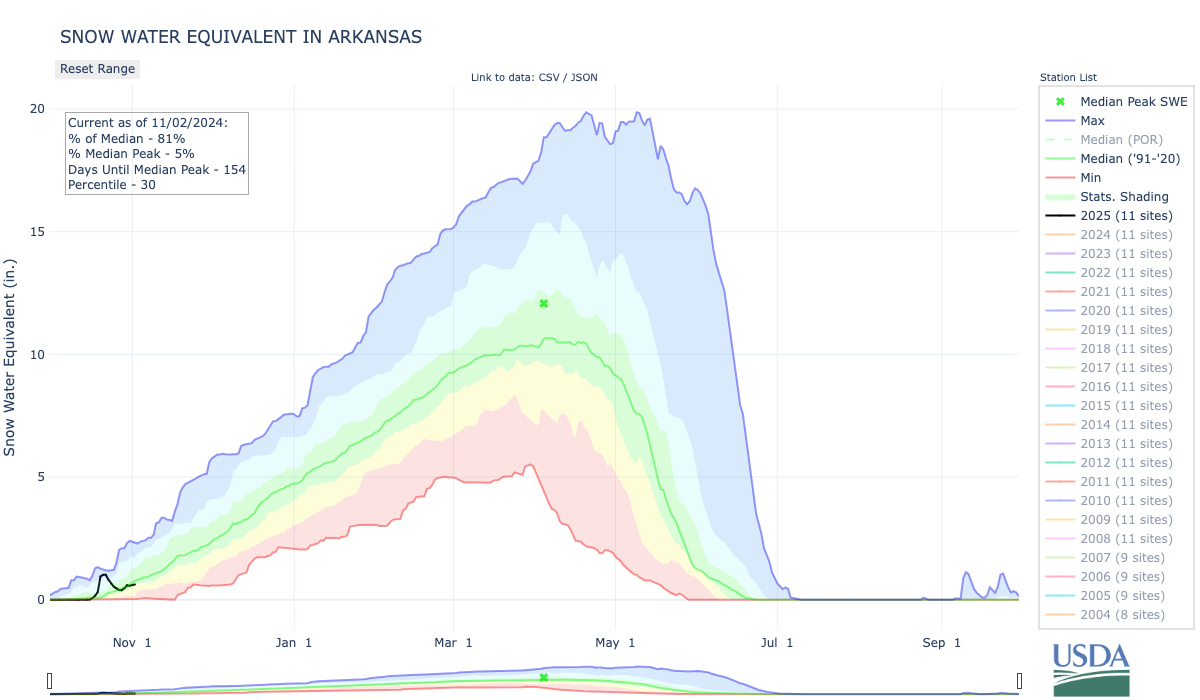
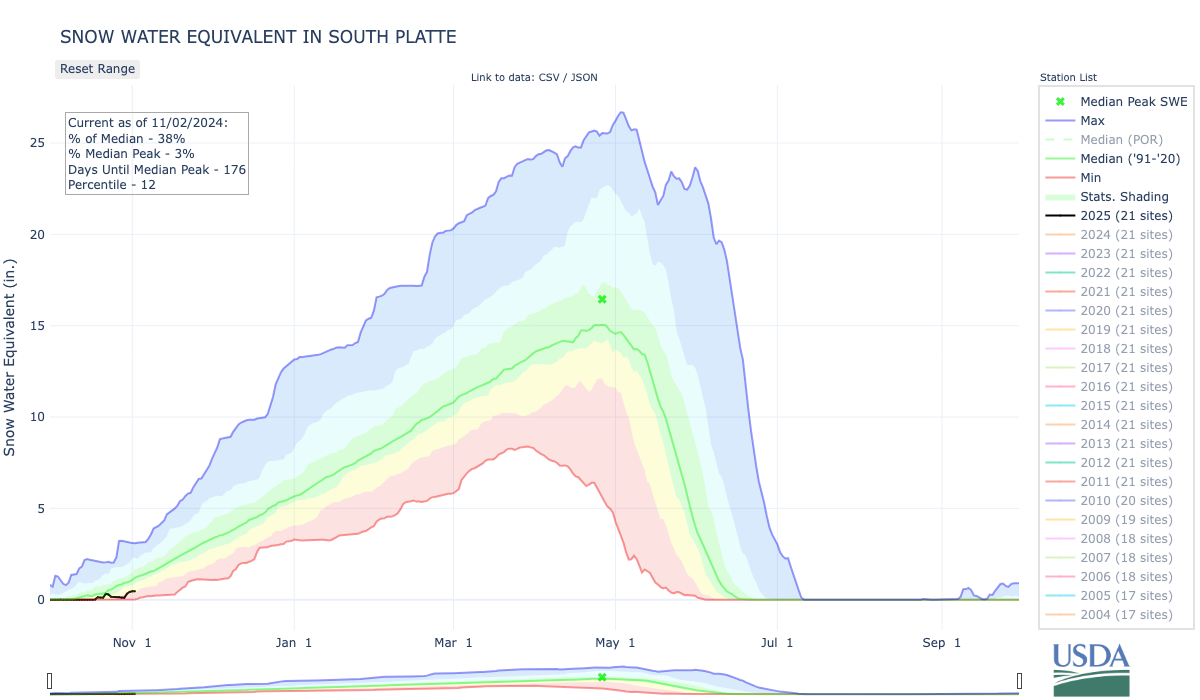
Click the link to read the article on the Summit Daily website (Robert Tann). Here’s an excerpt:
Amid warmer-than-average fall temperatures, Colorado’s snowpack levels are pacing above normal…As of Friday, Nov. 1, the statewide snowpack was at 143% of the 30-year median, which is considered the historical normal, according to data from the Natural Resources Conservation Service…Recent storms have delivered cooler weather to mountain and Western Slope areas that, in some places, were around 15 degrees above normal during the first half of October, Aleksa said. The bulk of the snowfall has been concentrated in the San Juans region, which netted between 1 to 2 feet of fresh powder during the two most recent storms that hit in late October…Snowpack levels for river basins in that area sit well above 200% of normal, helping boost the state’s overall numbers. Yet in the eastern part of the state, persistent dry weather has stymied snowpack. In the South Platte River Basin, which stretches along the Front Range from Fort Collins down to Castle Rock, snowpack stood at 43% of normal as of Friday. In the Arkansas River Basin, which spans the south central part of the state, levels stood at 84%…
“The benefit of the last (storm) systems is it helped bring our temperatures from well above normal down to near or even slightly below-normal,” [Matthew] Aleksa said. “Needless to say, late this weekend and into next week it does look like we’re going to see more mountain snow and cooler conditions … (and) these systems coming in help reinforce that cold air and keep these temperatures lower.”