
Click the link to read the article on the WyoFile website (Dustin Bleizeffer):
December 20, 2024
The Interior Department on Friday finalized its updated Western Solar Plan, potentially opening 31.7 million acres of federal public lands in the West to industrial solar energy development, including some 3.8 million acres in Wyoming.
The decision comes just weeks before President-elect Donald Trump takes office, and just hours before a potential federal government shutdown.
The Wyoming acreage considered suitable for solar energy represents about 20% of land overseen by the Bureau of Land Management in the state, according to the BLM. Suitable areas in Wyoming exclude sage grouse core areas and avoid ungulate migration corridors and unindustrialized areas, according to federal officials.
The plan updates an effort initiated in 2012, when the federal government under then-President Barack Obama envisioned industrial-scale solar would be concentrated in very high solar potential areas of the southwest. The updated version, however — part of President Joe Biden’s goals to expand renewable energy development to address climate change — expanded the study area to include several more western states, including Wyoming.
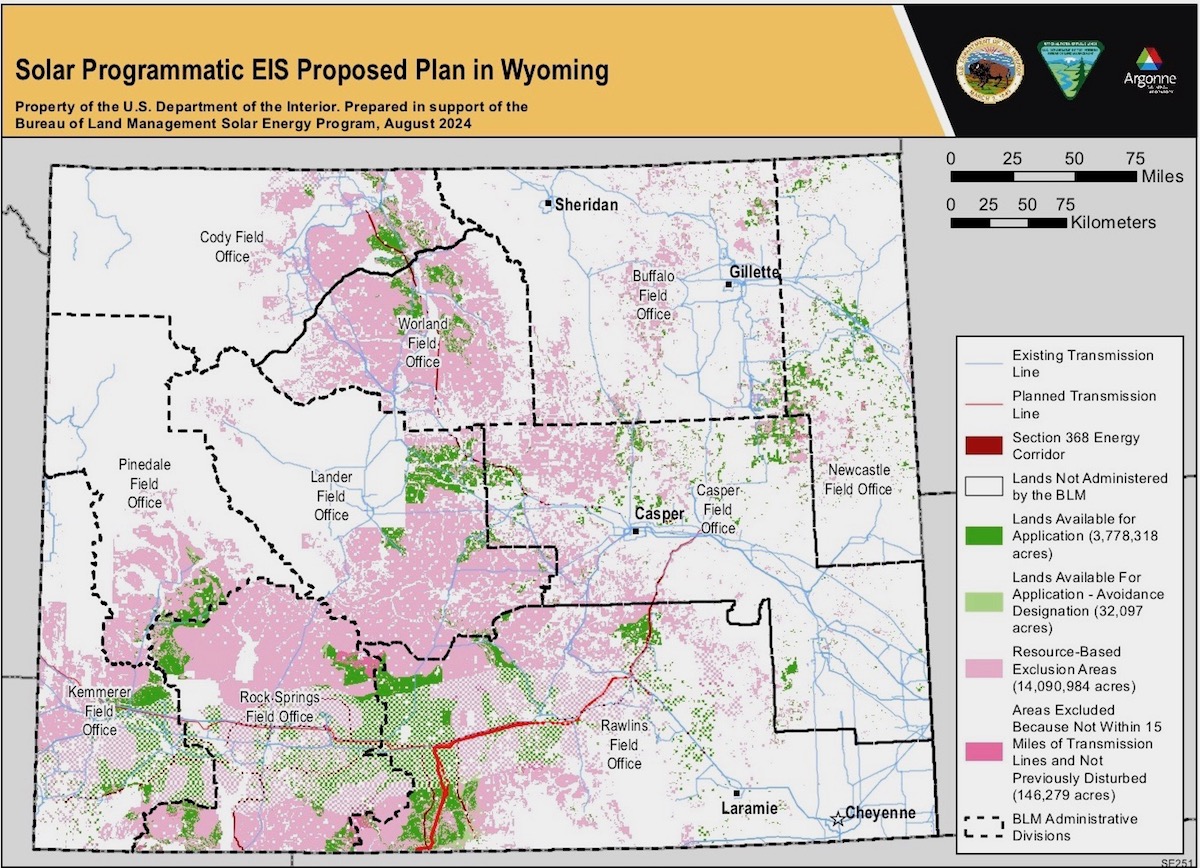
Both the Interior and BLM have insisted that although the plan identifies 31.7 million acres as suitable for development, only about 700,000 acres across the West are “anticipated” to be developed.
“The larger available area allows for greater flexibility in considering solar proposals,” according to the Interior, which stressed that each solar project will be analyzed individually and include opportunities for public input.
“With an updated Western Solar Plan, created with extensive input from the public, the Department will ensure the responsible development of solar energy across the West for decades to come,” outgoing Interior Secretary Deb Haaland said in a prepared statement.
Initial reactions
Conservation groups expressed tentative support for the finalized plan hours after the decision was published Friday in the Federal Register.
“The Western Solar Plan will play a crucial role in securing our country’s energy independence and security over the coming decade,” Natural Resources Defense Council Senior Policy Advocate Josh Axelrod said in a prepared statement. “This is a rare piece of policy that can drive job growth, boost rural economies and ensure conservation of fragile environmental resources.”
The updated Western Solar Plan “represents a compromise that will allow Wyoming to continue to innovate and grow its energy economy while protecting our important conservation resources on BLM-managed public lands,” The Nature Conservancy said in a prepared statement.
he conservancy published a study of the Western Solar Plan revision effort in 2023. “There’s an abundance of low-impact spots for the development of solar energy in Wyoming — more than enough to meet market demand,” TNC’s Wyoming Energy Program Director Justin Loyka told WyoFile at the time.
But whether federal officials fully embraced input from conservation groups and others wasn’t clear during first-blush readings of the final plan on Friday.
“The plan is just really haphazard,” San José State University Professor of Environmental Studies Dustin Mulvaney told WyoFile. “To me, it’s a recipe for more litigation and more lawsuits and more people getting upset just because of the free-for-all-nature of it.”
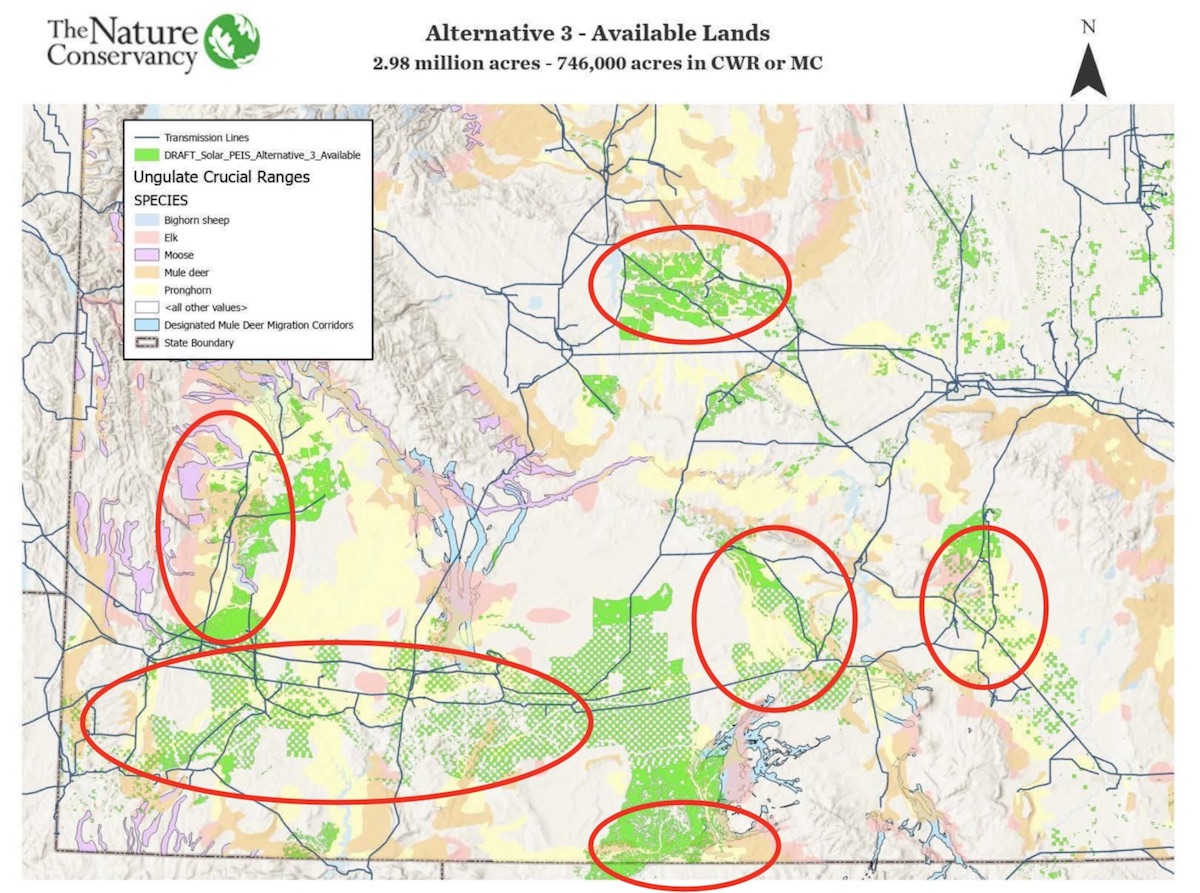
It was unclear, Mulvaney said, whether federal officials fully integrated many innovative strategies tested to avoid negative impacts in sensitive landscapes.
Although Interior officials attempted to correct course — learning from mistakes in past sitings of solar energy development in the southwest — the agency strayed into new, dangerous territory when it expanded its solar energy scope to other western states, according to Mulvaney.
For example, one criteria it used to essentially disqualify public lands from being off limits to solar development was the presence of invasive plant species such as cheatgrass. Not only does that overlook other landscape values like wildlife habitat connectivity, such invasive plant species typically spread by following other forms of development like wind farms.
“Because of the presence of cheatgrass, it opens up a lot of those landscapes to solar development,” Mulvaney said. “It’s not thinking about questions about, like, ‘Where might we be interrupting migration corridors and [genetic connections]?’ All these things are connected.”