Click the link to read the article on the WyoFile website (Mike Koshmrl):
Tom Christiansen drew a parallel to the human body as he described the purpose of the low-tech rock structures he’s been building for years within the creases of western Wyoming’s sagebrush sea.
The malady? Erosion. The treatment: A carefully placed stone.
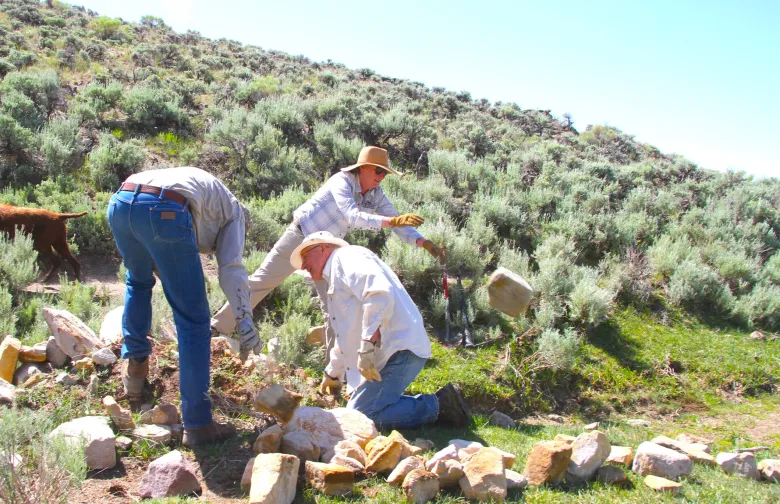
“Each of these is a stitch on what we don’t want to become a sucking chest wound,” Christiansen told a group of rock-moving volunteers on Saturday in late June.
The group was assembled on the White Acorn Ranch, a picturesque cattle operation south of the Lander Cutoff Road that’s within the spectacular Golden Triangle — a 367,000-acre region along the flanks of the Wind River Range that houses the best remaining sagebrush habitat on Earth.
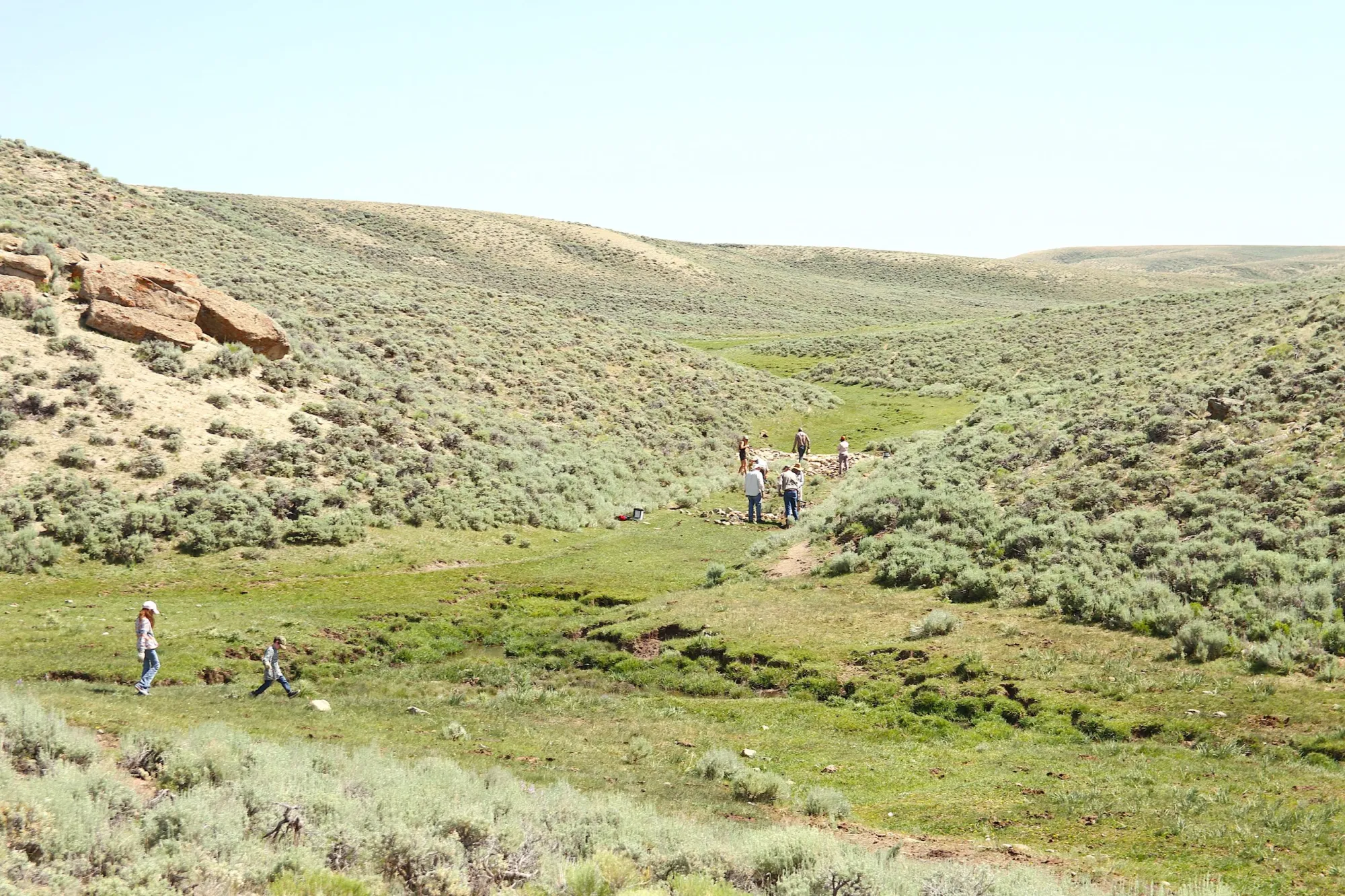
The high desert’s sagebrush-steppe has enormous ecological value. That’s evidenced by the struggling species that depend upon the embattled biome. But it’s an arid environment, and certain nooks and crannies play an outsized role in nourishing the landscape’s native and domesticated inhabitants. High on that list are the grassy wet meadows that convey precious water, like arteries pump blood, through the contours of the sagebrush-covered hills.
“These areas are pretty small, but they’re very important,” said Christiansen, a retired sage grouse coordinator for the Wyoming Game and Fish Department. “These are the grocery stores.”

But those bottomlands can become barren of the biomass that feeds insects, sage grouse chicks and on down the food chain. Erosion, although a natural phenomenon, can be hastened by factors like overgrazing and extreme weather events made more likely by climate change. When erosion runs out of control into grassy gulches, they become incised gullies. Out goes the vegetation.
That’s where the simple rock structures come in.

“Prevent that erosion, get more water into the soil, keep the water table up, keep the green vegetation — that’s the intent of these structures,” Christiansen said.
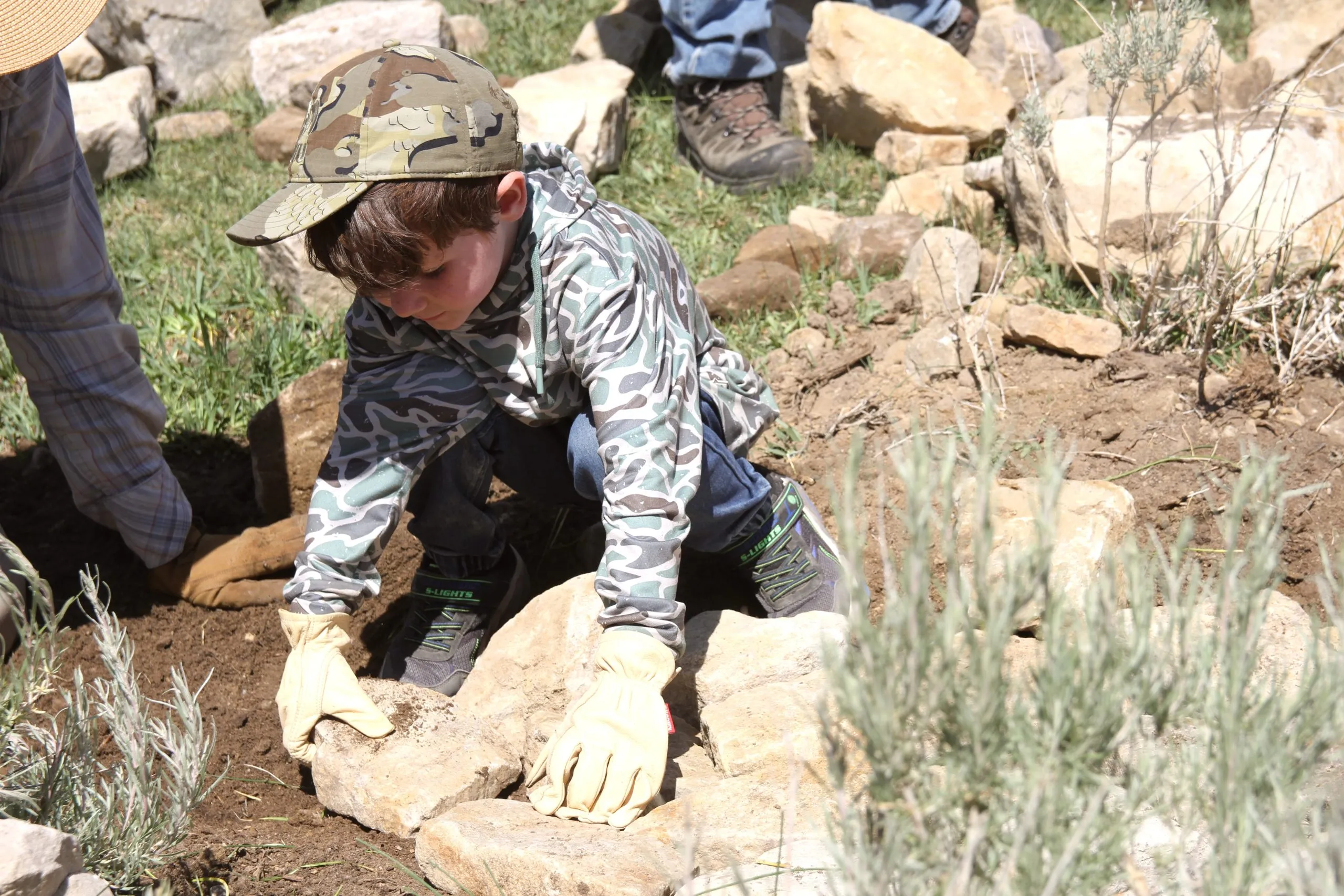
Known as Zeedyk structures, after their inventor, Bill Zeedyk, the stone assemblies come in different shapes and sizes. At the White Acorn Ranch and numerous other corners of the West, there are “one rock dams,” “zuni bowls,” “rock mulch rundowns” and other hand-built structures intended to arrest vertical “headcuts” in ephemeral streambeds.
By facilitating the flow of water and slowing it down, the structures can prevent erosion from spreading uphill. Although the ecological do-gooding tactic relies on simple concepts and materials — essentially well-placed rocks — building it out requires hard physical labor.

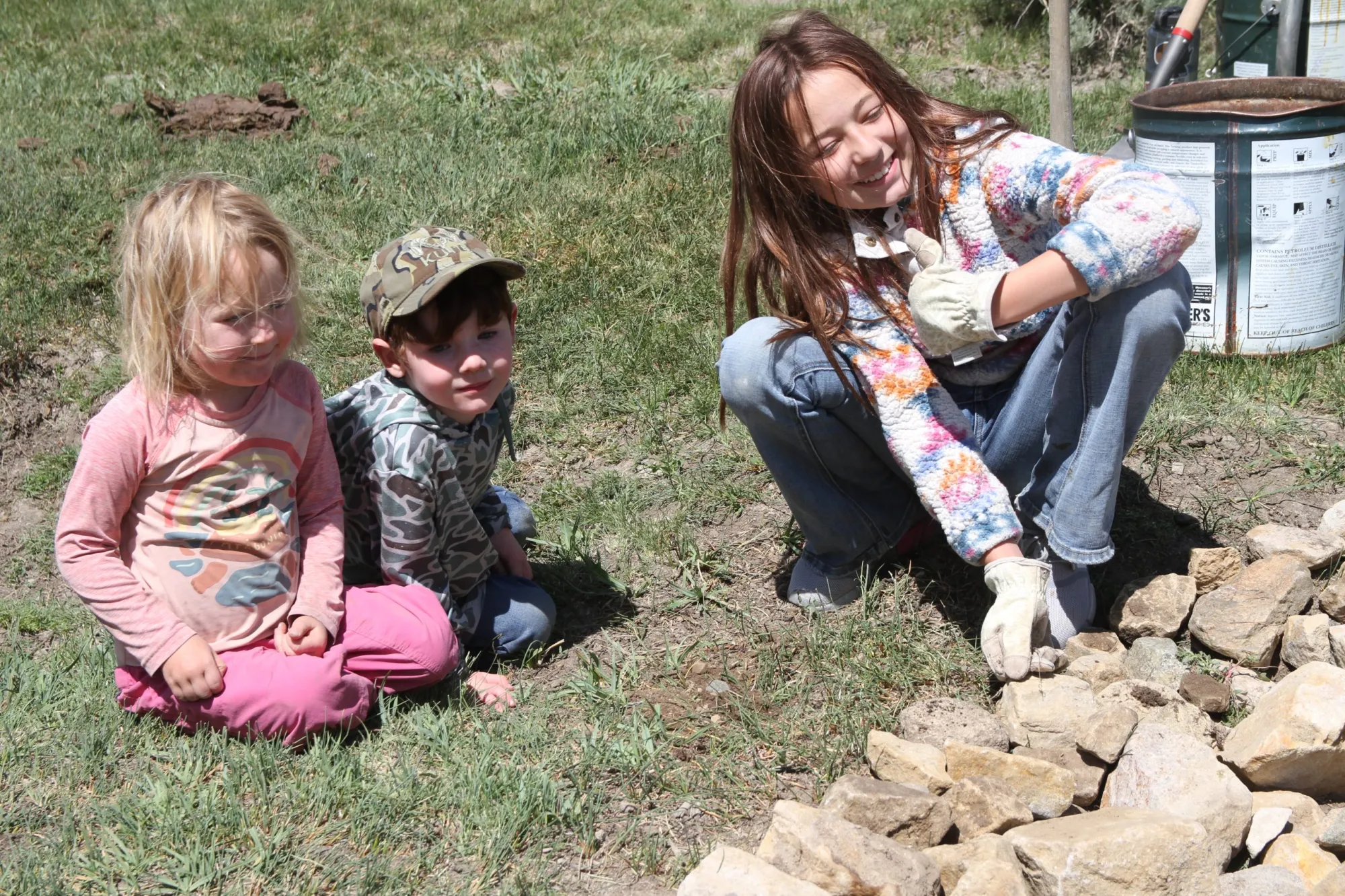
A bevy of volunteers flocked to South Pass on June 21 to erect new Zeedyk structures and shore up old ones.
Jared Oakleaf, Liz Lynch and Lindsey Washkoviak ventured up from Lander. Mark Kot, bad back and all, came from Rock Springs to move rock. Christiansen made the drive from Green River alongside his granddaughter, Camryn Christiansen-Fieock, of Big Piney. On a day off, Wyoming Game and Fish Department habitat biologist Troy Fieseler made the trek from Pinedale and with his son, Cooper.
The rocks were donated, too. Robert Taylor, an avid sage grouse hunter from Washington state, ponied up for the materials the volunteers carefully placed.
Several of the bunch devoting their Saturday to moving rocks up on South Pass were seasoned. Fieseler even learned the ropes from the technique’s namesake himself.
“The very first time I did it, we had Bill Zeedyk come out,” he said. “He taught us to read the landscape.”

That 2021 workshop, held at Seedskadee National Wildlife Refuge, imparted Fieseler with lessons he hasn’t forgotten. Protecting uneroded wet meadows is a far more efficient use of time and resources than trying to restore those that have already washed out, he recalled.
Over the last decade, Zeedyk’s erosion-control tactics have gained traction in Wyoming and well beyond. The Natural Resources Conservation Service’s Sage Grouse Initiative gave the concept its legs, Christiansen said. Now there are thousands of structures dispersed across hundreds of projects, he said.
“Each of these, what’s its significance?” Christiansen said. “An individual one, it’s not so much, but when you start doing thousands of these across the West, there is significance.”

Enough time has passed since the technique’s inception that restoration specialists know it works, thanks to long-term monitoring.
The White Acorn Ranch’s Zeedyk structures also have proven hardy and able to withstand the worst that the harsh Wyoming environment can throw their way. Christiansen and his fellow volunteers labored in a corner of the state that got walloped during the winter of 2022-’23 by an unusually hefty snowpack.
“This ensured the runoff from the heavy snow,” Christiansen said. “They dealt with a lot of energy, and handled it. Very few rocks moved.”
Christiansen spoke of the rock structure’s resilience on the front end of a day of labor. From a section of state land, he motioned down a draw.
“There’s over 20 structures between here and where that slope toes off,” he said.
Every one of them had been erected by Christiansen, the crews of Zeedyk structure-building volunteers and agency folks that have also chipped in.