
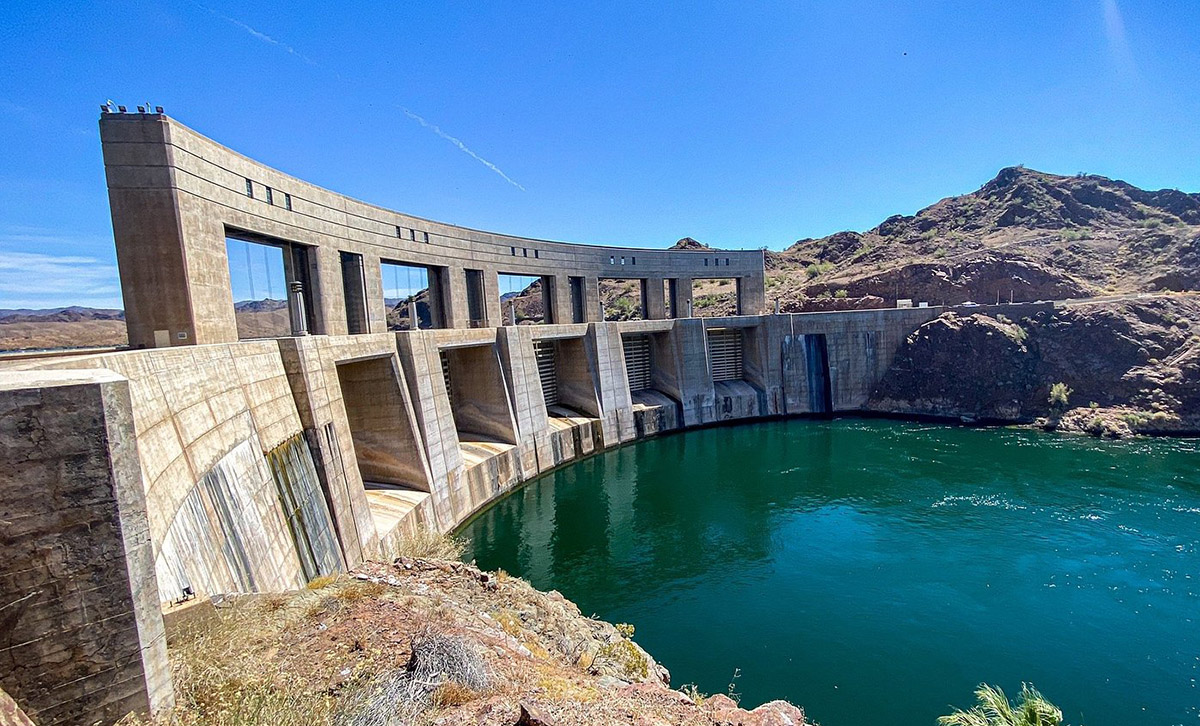
Parker Dam is the exact geographic “fork in the road” for Southwest water distribution. It acts as the forebay for two of the most critical aqueducts in the United States. The Colorado River Aqueduct which is managed by the Metropolitan Water District of Southern California, which pumps water 242 miles west to Los Angeles and San Diego. And the Central Arizona Project which pumps water 336 miles east to supply Phoenix and Tucson.1
Lake Havasu is a dynamic environment that’s impacted by upstream agricultural drainage, mineral springs, and fluctuating flows from Hoover Dam, and so salinity can spike rapidly. Hourly monitoring allows Bureau of Reclamation technicians to provide real-time telemetry data to MWD and CAP so they can adjust their treatment facilities or blending ratios before millions of gallons of highly saline water enter their pipelines.2
If the Total Dissolved Solids (TDS) levels of water tested at Parker Dam are too high, it could set off a cascading economic, industrial, and agricultural crisis across California and Arizona. TDS is the combined concentration of minerals, salts, metals, and small organic substances dissolved in water. That includes common minerals like calcium, magnesium, sodium, potassium, and bicarbonates, as well as chloride, sulfate, nitrate, trace metals such as copper, zinc, and sometimes contaminants like pesticides or industrial byproducts.3
The Effects of high TDS for Residential Water Users
High TDS typically means “hard” and corrosive water. If Parker Dam passed high-salinity water into the aqueducts, it would cause the buildup of scale in home appliances, water heaters, and municipal pipes across Los Angeles, San Diego, and Phoenix. Scale can drastically reduce the lifespans of home appliances, clog plumbing infrastructure, and degrade household water filters. It forces MWD and local utilities to incur massive financial costs to blend Colorado River water with lower-salinity northern water sources just to make it palatable and safe for home use.4
The Effects of high TDS for Agricultural Water Users
Water from Parker Dam also feeds the massive agricultural hubs of the Imperial and Coachella Valleys, as well as Yuma, Arizona. Irrigation water that’s high in salt acts as a silent killer for crops like alfalfa, lettuce, and citrus fruits. High salt content alters soil chemistry, lowering overall crop yields and burning plant roots. It forces farmers to use significantly more water just to “flush” the accumulated salts out of the root zones, compounding the West’s water scarcity issues.5
Colorado River salinity requirements for Water that flows into Mexico
IBWC Minute 242 regulates Colorado River salinity by requiring that water delivered to Mexico at Morelos Dam has an annual average salinity no more than 115 parts per million (ppm), with a plus or minus 30 ppm variance, above that of the water at Imperial Dam. This comparative standard ensures water quality by preventing high-salinity agricultural drainage from being added before crossing the border. Detailed information on this treaty can be found on the International Boundary and Water Commission website.6