
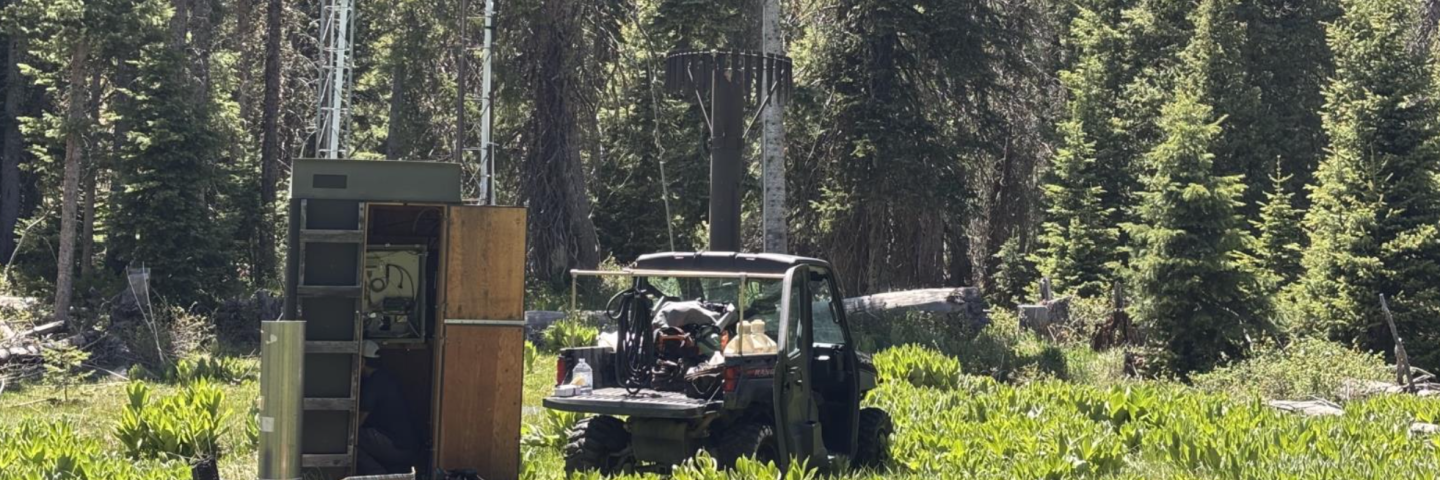
Click the link to read the release on the NRCS website:
June 5, 2026
An early runoff season shifted a substantial portion of annual runoff into March through May. At Lake Powell, where June and July normally account for about half of seasonal inflow, only about 21 percent of projected seasonal volume remains. Similar conditions are forecast throughout Colorado.
June through July runoff forecasts remain well below normal statewide at the 50 percent exceedance probability at 24 percent of median (Figure 1). Outlooks in the Front Range Mountains remain the exception. May storm activity helped to sustain comparatively higher forecasts in the Front Range and boosted precipitation in the Sangre de Cristo Mountains and in the northern Park Range. The South Platte is forecast at 51 percent of median and the Arkansas at 38 percent. In the Upper Rio Grande River basin the most probable outlook is 28 percent of median. Western slope remaining period forecasts range from 19 to 23 percent in the combined Yampa-White-Little Snake and San Miguel-Dolores-Animas-San Juan (SMDASJ) basin, respectively. May precipitation ranged from 54 to 59 percent in southwest basins while the South Platte received 140 percent of median.

Record March temperatures initiated an early rise in streamflow weeks ahead of the typical spring melt period. A second rise followed in mid-May consistent with normal sun angle-driven melt timing. In some rivers the May peak became the seasonal maximum. Statewide observed flows from March through May are 50 percent of median. April and May alone are 41 percent, as March runoff occurred outside the normal primary period and skews the seasonal comparison.
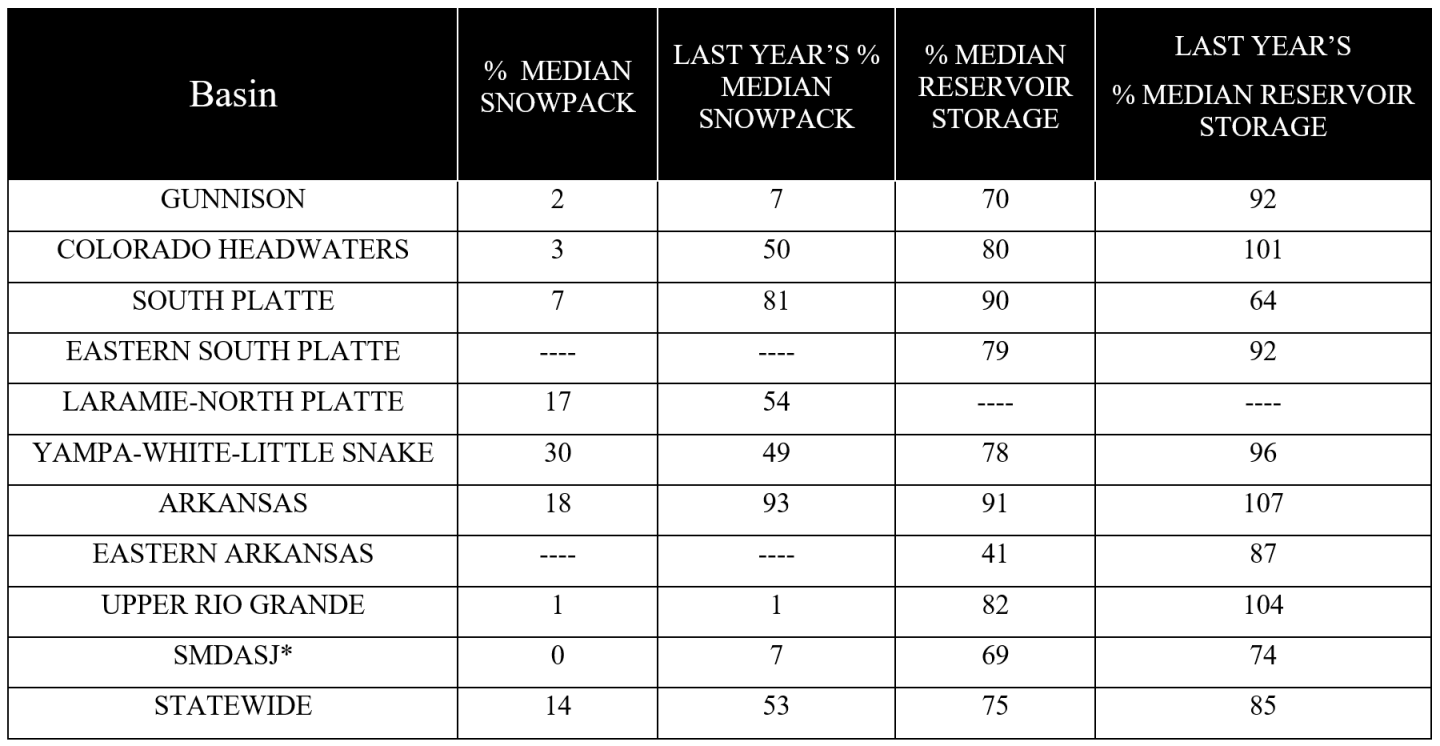
Statewide reservoir storage is 75 percent of median and largely reflects October precipitation and carry-over storage from the previous water year. Some of the state’s larger reservoirs are well below the statewide median particularly in southwest basins. Blue Mesa and McPhee reservoirs are both at 59 and 57 percent of median respectively and rank at the 10th percentile in their period of record. Navajo Reservoir is 69 percent of median at the 20th percentile. Colorado Headwaters basin storage is 80 percent of median, and the Upper Rio Grande is 86 percent. Eastern basins are the highest in the state. Pueblo Reservoir is 93 percent of median and aggregate South Platte basin storage is 90 percent. Remaining period inflow forecasts are considerably lower than current storage levels. McPhee inflow is forecast at 24 percent and Navajo at 18 percent. Dillon Reservoir inflow is forecast at 25 percent ranking lowest in the 75-year period of record. Pueblo inflow is forecast at 44 percent of median.
As of June 1, statewide snowpack is averaging 14 percent. Median melt-out timing across the Colorado SNOTEL network is running 36 days ahead of normal. Remaining snowpack is limited to the highest elevations and will contribute modestly to late-season flows. Above normal temperatures and above normal precipitation are both favored through the remaining period.
For more details see the June 1, 2026 Water Supply Outlook Report.