
Click the link to read the article on the Denver Water website (Jay Adams):
June 24, 2026
The full impact of this past winter’s record-low snowpack is rearing its ugly head in the form of:
- Record-low spring stream flows.
- Low reservoir storage levels.
- An empty reservoir.
- And one incredibly rare statistic.
On June 17, Denver Water’s reservoir system hit its peak storage level following a diminished spring runoff.
Water levels in the utility’s reservoirs collectively hit 81% of the system’s storage capacity — the second-lowest peak storage level on records dating back to 1983, considered the beginning of the modern Denver Water collection system.
“Peak storage” is the moment, or day, when the utility’s collection system holds the most water it will hold for the next year. It’s akin to topping off a swimming pool once a year in June to carry the pool through the next year of use.
Typically, the “peak storage” moment happens in mid-June, after the spring runoff.
But in 2026, due to the record-low winter snowpack and low spring runoff, Denver Water’s collection system held more water on Jan. 1 — 83% of capacity — than on June 17, as the runoff dwindled and storage levels inched to 81% of capacity.
There’s only one other year since 1983, when the Strontia Springs Dam was completed, that Denver Water’s storage was higher in the dead of winter than the dawn of summer — the drought year of 2002.
“Having our highest amount of water happen in January is incredibly rare. It speaks to how little snow we saw this winter and the impact of the record-setting warm weather,” said Nathan Elder, Denver Water’s manager of water supply.
“We’ve seen many records fall this year, and unfortunately, they were not good ones.”
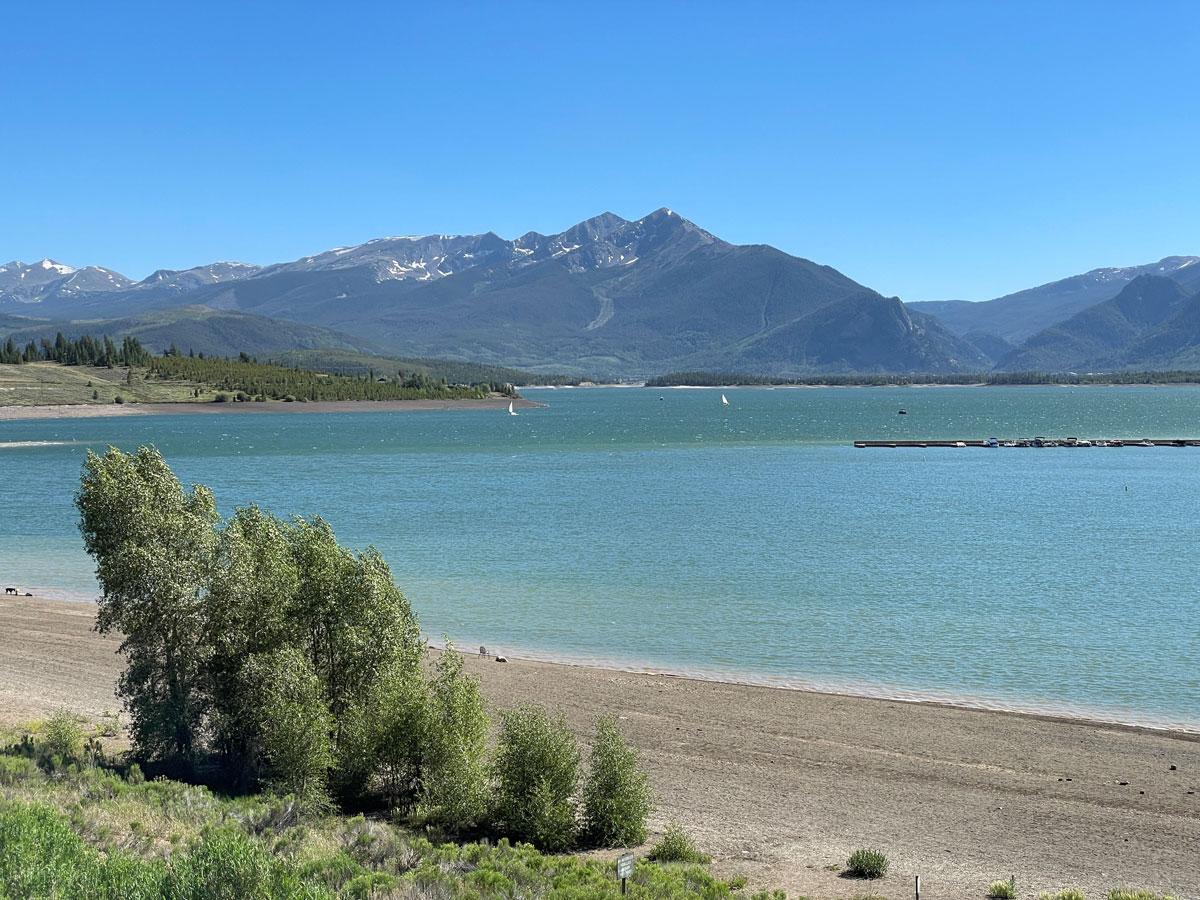
During the spring peak, the amount of water stored in Denver Water’s reservoirs typically hits an average of 97.5% of capacity.
And since 1983, the utility’s peak storage levels have hit at least 95% of capacity (considered sufficient for normal operating conditions) in all but six years.
“Ideally, we like to top off our mountain reservoirs during the spring runoff, but this year our storage levels came up well short,” Elder said.
Record low ‘paycheck’
Why do water managers focus on peak storage numbers?
The peak reservoir storage figure is critical to determining how much water is available until next year’s spring runoff. It’s comparable to a family determining how much money they have to pay the bills until the next paycheck comes through.
“The spring runoff is our annual paycheck from Mother Nature,” Elder said. “The water filling our reservoirs is the cash that fills our bank account. But in our case, that paycheck only comes once a year — and this year we didn’t get anywhere close to the normal amount.”

This year’s meager paycheck was reflected in the record-low peak flows on the rivers and streams that feed Denver Water’s reservoirs.
Mountain snowmelt accounts for 90% of Denver Water’s supply, which provides water to 1.5 million people in metro Denver.
In Summit County, Denver Water recorded this year’s peak stream runoff into Dillon Reservoir at just 404 cubic feet per second, or cfs, on May 29. That’s a record-low “peak inflow” and less than a quarter of the normal peak inflow into the reservoir of 1,750 cfs, which typically happens on June 7.
In Park County, the South Fork of the South Platte River experienced a double-whammy, with record-low flows that occurred abnormally early in the season.
Flows on the South Fork peaked on March 25 at a record-low flow of just 18 cfs. That’s 15% of the normal peak flow of 120 cfs, which usually happens on June 10.

“In a typical year, the rivers and streams start rising in late-April as the snow starts to melt, then they peak in early June, and then they start to ease back to normal flows throughout the summer,” Elder said.
“This year the runoff started about six weeks early in March, and the normal spring surge of water we usually see was basically nonexistent.”
Reservoir impact
The results of the record-low spring flows are having a significant impact on three of Denver Water’s most popular reservoirs.
Dillon Reservoir in Summit County topped off on June 17 at 80% of capacity, with water levels about 18 feet below normal for this time of year. Water levels are expected to drop over the next year until the 2027 spring runoff — hopefully more boisterous than this year’s meager flow — begins.
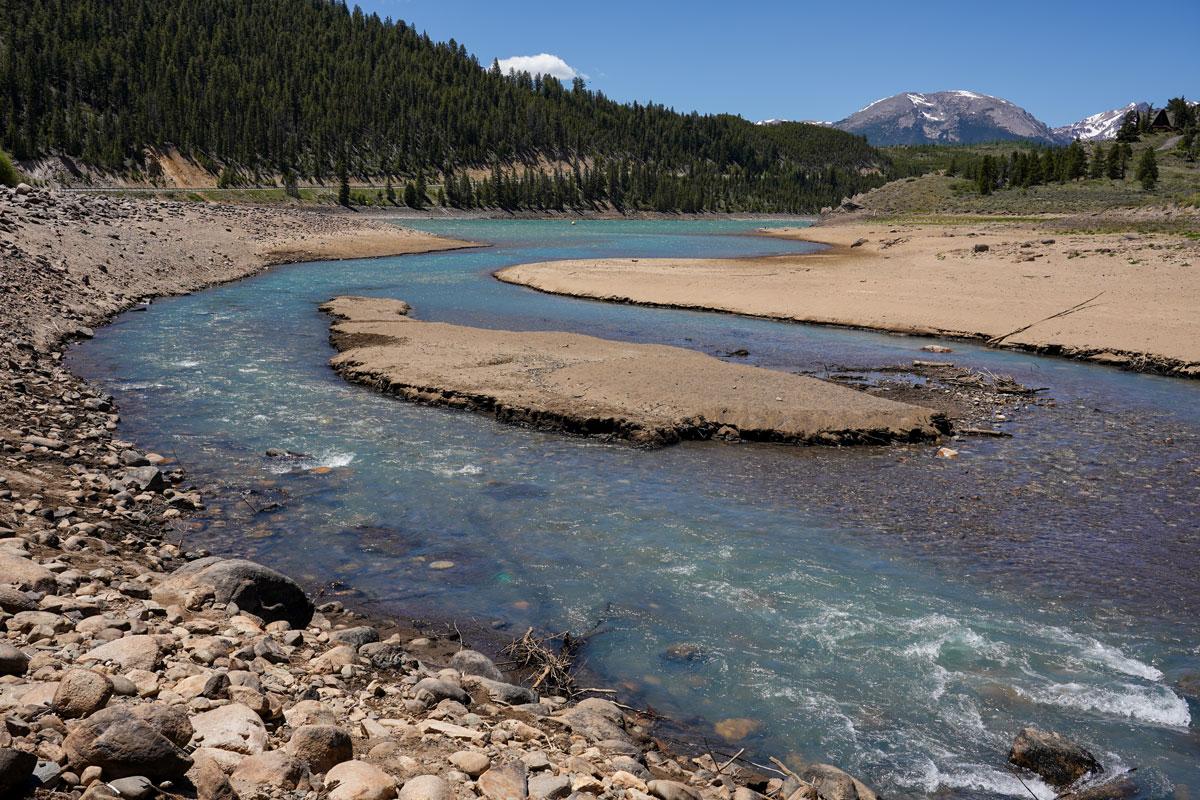
In Grand County, Williams Fork Reservoir topped off June 21 at merely 53% of capacity, about 35 feet below normal for this time of year and forcing the closure of the reservoir’s boat ramp.

Because of the low snowpack, Denver Water also dipped into its emergency water supply at Antero Reservoir in Park County.
Using water from Antero Reservoir is only done in extremely dry years. It’s comparable to someone having to dip into their 401(k) savings to pay bills until their next paycheck.
Denver Water moved water out of Antero this spring and sent it downstream to Cheesman Reservoir to avoid losing water in shallow Antero due to evaporation.

Early forecasts for the abysmal spring runoff and low peak storage were two factors that led Denver Water to issue a Stage 1 drought declaration in March.
The declaration, which calls on customers to reduce water use by 20% and includes mandatory watering restrictions of two assigned days per week, seeks to stretch existing water supplies until next spring’s paycheck is deposited in the reservoirs.
“While the reservoirs are low this year, they are doing what they were built for, which is to help us get us through a dry year,” Elder said.
“We hope customers notice the low reservoir levels and take steps to conserve water at home so we can stretch our water supplies over the coming months.”

nice post