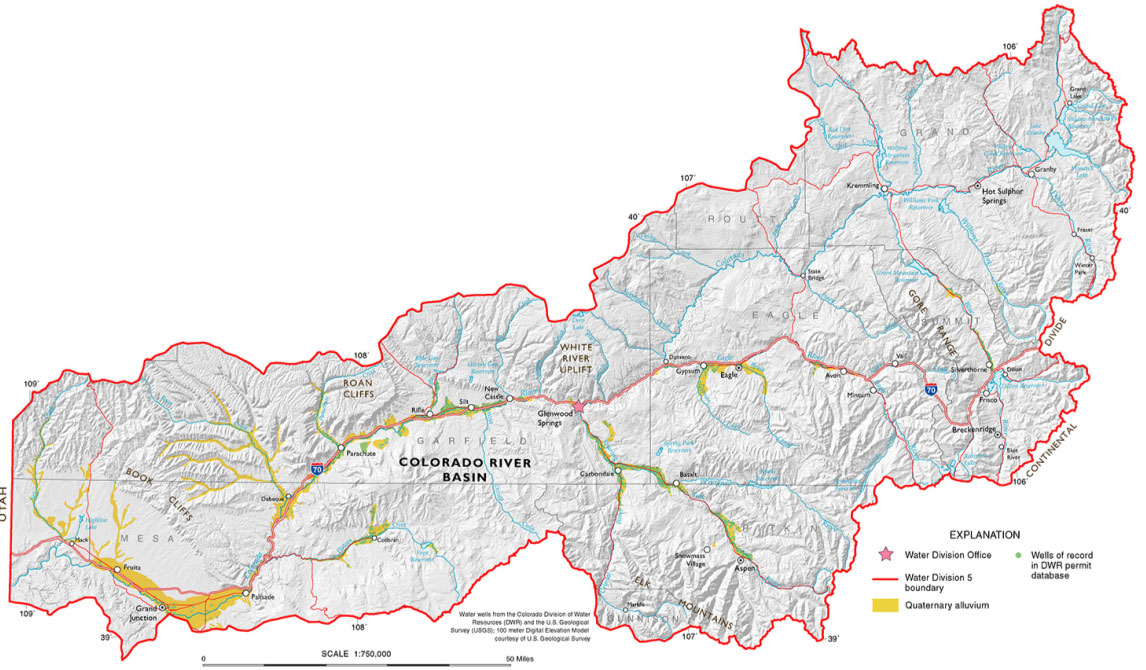
Topsoil Moisture % Short/Very Short by @usda_oce
— NIDIS Drought.gov (@NOAADrought) July 21, 2026
41% of the Lower 48 states are short/very short, an 8% increase from last week
The driest topsoil conditions are in the West (except CA). The N. Plains and Upper Midwest saw big increases in topsoil short/very short. #drought pic.twitter.com/lFj9HOtjY9
Day: July 21, 2026
Strategic Reservoir Releases Begin to Protect #YampaRiver Water Users and River Flows — Amy Moyer (Colorado River District) #GreenRiver #ColoradoRiver #COriver #aridification
Click the link to read the release on the Colorado River District website (Amy Moyer):
July 16, 2026
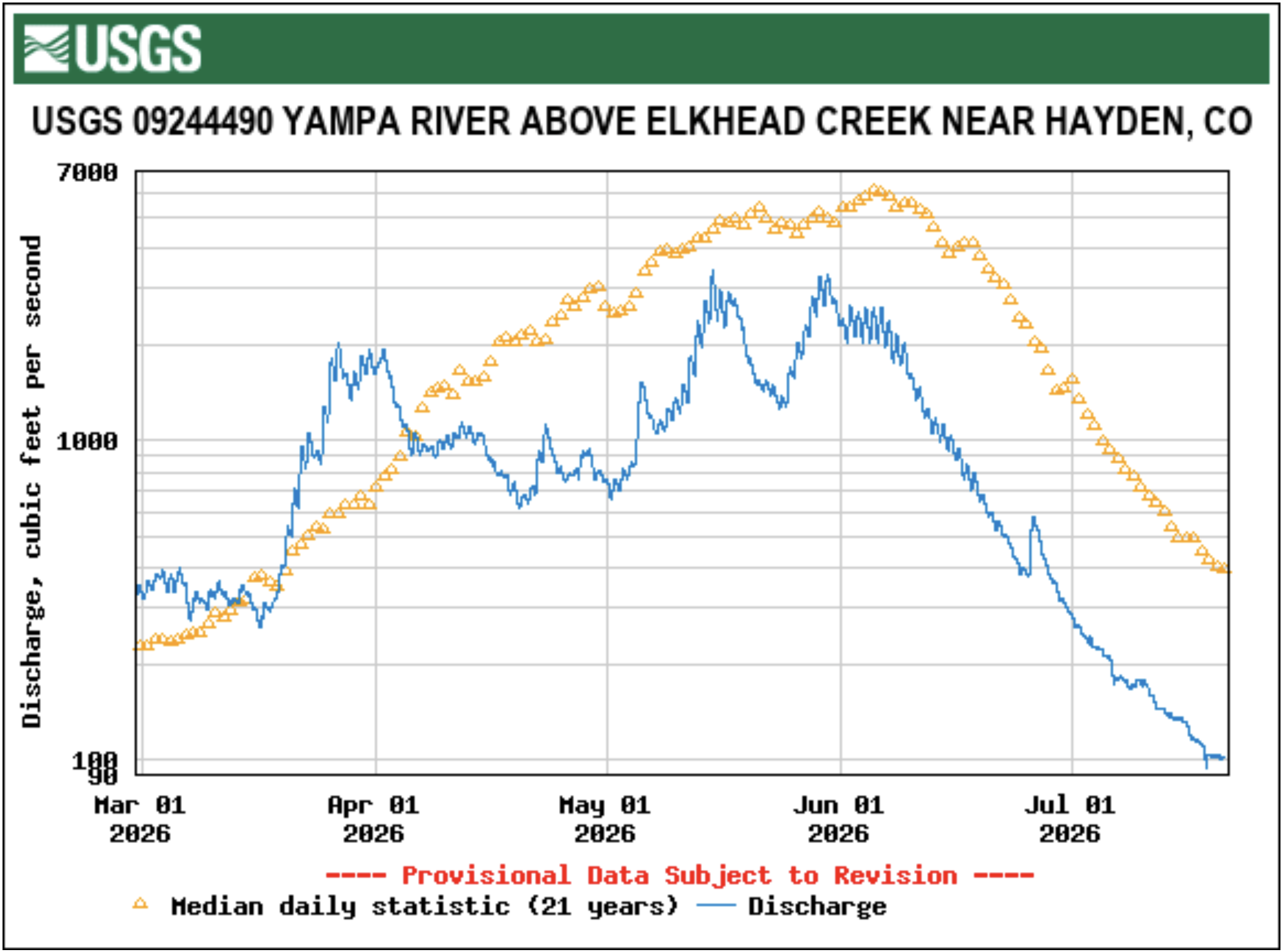
On July 13th, the Colorado River District, in partnership with the Colorado Water Trust and the Yampa River Fund, began releasing water from Elkhead Reservoir to mitigate the impacts of extreme drought and critically low streamflows in the Yampa River Valley. Beginning with a release of 10 cubic feet per second, the releases are part of the Yampa River Reservoir Release Program, a 2,000-acre-foot pool first established in 2021 with funding from the Colorado River District’s Community Funding Partnership. The program is designed to reduce drought-related pressure on agricultural producers while supporting river health and aquatic habitat.
“While we’re experiencing exceptionally difficult drought conditions, the story of 2026 is neighbors and water users working together. No single reservoir, organization or water user can solve this alone,” said Hunter Causey, Chief Engineer for the Colorado River District. “By coordinating releases, operations and water use across the basin, we can stretch a limited supply further and provide meaningful benefits for agricultural producers, local communities and the river.”
Below-average snowfall and persistent summer drought have reduced streamflows and increased water temperatures throughout the Yampa River Basin. Releases through the Yampa River Reservoir Release Program are intended to support agricultural water users, help delay or prevent a call on the river during periods of critically low flow, and benefit designated critical habitat for four endangered fish species. Releases are expected to increase in the coming weeks and continue through July.
“The Colorado Water Trust is an environmental nonprofit, and our work is keeping water in rivers,” said Blake Mamich, Programs Director for the Colorado Water Trust. “In a drought this deep, that same mission means showing up for agriculture. Coordinating closely with the River District and the Division of Water Resources, we can time these releases so a single pool of water helps irrigators extend a tough season and keeps water in Yampa for habitat and fish.”
“This is a difficult year for producers throughout the Yampa Valley, and we wanted to be part of a practical solution that helps the broader community,” said Yampa Basin rancher Matt Boeddeker of Lily Park Land & Cattle. “Water users across Colorado are making hard choices and working together to stretch limited supplies, and like them, we hope to help our neighbors complete critical irrigation and reduce the immediate impacts of drought.”
The Yampa River is primarily supplied by snowmelt from the Flat Tops and Gore Range and flows through agricultural areas of northwest Colorado before joining the Green River in Dinosaur National Monument. During dry years, coordinated releases from Stagecoach and Elkhead reservoirs supplement streamflows for agricultural water users, river habitat and endangered fish. The Colorado River District and its partners will continue to monitor streamflow, water temperature, irrigation demand, and habitat needs, and will adjust releases as conditions warrant.

Water trial set to wrap up this week: Former state engineer, Kevin Rein, to testify before final arguments — Chris Lopez (AlamosaCitizen.com) #SanLuisValley #RioGrande
Click the link to read the article on the Alamosa Citizen website (Chris Lopez):
July 17, 2026
The Colorado Division 3 water trial that virtually every farmer and rancher who operates in the Upper Rio Grande Basin is paying attention to is on track to wrap up this week, with former State Engineer Kevin Rein scheduled to testify before final arguments are made, Judge Michael Gonzales signaled Monday.

The trial in Alamosa water court deals with the Fourth Amended Plan of Water Management for Subdistrict 1 of the Rio Grande Water Conservation District, which outlines a new approach to the aquifer recovery by limiting the subdistrict’s groundwater withdrawals to the amount of surface water that naturally comes into the lands annually. It is the subdistrict with the largest cash crop receipts in the Valley’s growing fields, the subdistrict with the largest volume of groundwater pumping, and the subdistrict under orders from the state to recover the basin’s shallow unconfined aquifer.
The new plan, approved by Rein before he retired as state engineer in 2023, has been dissected by farming operations protesting the plan in water court by arguing groundwater irrigators will be driven out of business because of the plan’s limits on groundwater pumping and a hefty $500 per-acre-foot pumping fee.
“It will be a hard nut to crack,” Dee Greeman, who works the L Cross Ranch, testified Monday.
L Cross is among the operations protesting the plan. Given the multi-decade drought conditions, the overpumping fee and the fact L Cross would no longer be allowed under the new plan to offset its pumping with its own surface water as credits to its groundwater withdrawals, the value of the ranch would be affected long term, Greeman told the court.
“It’s a gamestopper,” he said, if wells can’t pump because it is from its groundwater pumping that L Cross finds profit in producing hay.
Greeman’s testimony on Monday wrapped up presentations by the different protestors to the plan. The state Division of Water Resources, which is defending the plan, will bring back witnesses to rebut different testimony and key to it all will be Rein.
It was the testimony of former state Division of Water Resources engineer Ken Knox at the conclusion of week 3 of the trial that prompted Gonzales to tell the state that it is only common sense for Rein to testify. Knox trashed Rein’s review, saying it didn’t take all the proper steps and didn’t include all the critical information for a state engineer to conduct a review of a water management plan.
Following a motion Monday by Preston Hartman, the state assistant attorney general defending the Fourth Amended Plan in water court, to dismiss the protestors case, Gonzales ruled that the protestors have provided sufficient evidence to keep going and scheduled closing arguments for the end of week after Rein testifies on Wednesday.
Once the final arguments are made, Gonzales will set a timeline for his review and decision.
“This is not something we want to push out too far,” the judge said at the conclusion of Monday’s session.

Colorado still has some summer river flows fit for rafting — even in severe drought. Here’s why: While some rivers run at historic lows, major #ColoradoRiver water rights are keeping flows higher — The #Denver Post #COriver #aridification

Click the link to read the article on The Denver Post website (Elise Schmelzer). Here’s an excerpt:
July 15, 2026
Even in the driest of years — like this one — powerful Western Slope water rights on the mainstem of the Colorado River draw water downstream, making boating on the state’s major water artery possible.
“For mainstem floating, we should still have pretty darn good flows for the rest of the season for as long as people want to be boating,” said Sam Calahan, a water resources specialist for the Colorado River District. The taxpayer-funded agency is based in Glenwood Springs and works to protect Western Slope water…
On Wednesday, Browns Canyon — a popular section of the Arkansas River near Buena Vista — was flowing at the lowest level in 55 years of data and at 16% of its median flow for that date. Clear Creek near Idaho Springs was flowing at 61 cubic feet per second on Wednesday, also a record low for the date in 72 years of data. The median flow for the date is 347 cfs, or more than five times as much water…But flows on much of the Colorado River were high enough for rafts and kayaks this week. Flows on a popular section near Kremmling were near normal, as were water levels farther downstream in Glenwood Canyon. Two major factors keep water flowing down the Colorado River during drought: large senior water rights owned by farmers in Mesa County’s Grand Valley and the water rights connected to the Shoshone Power Plant, a hydroelectric facility in Glenwood Canyon owned by Xcel Energy. Irrigators and power plant operators can call water to their facilities from upstream reservoirs, like Green Mountain Reservoir, which is on the Blue River — a tributary of the Colorado River — north of Silverthorne. This year, the irrigators began calling down water on July 1, boosting flows in the Colorado River.
“It’s sort of an operational byproduct of how water is managed in Colorado,” said Matt Aboussie, spokesman for the Colorado River District, which is in the process of buying the power plant’s water rights.
The water is a lifeline for rafting companies, said David Costlow, the executive director of the Colorado River Outfitters Association.