The Central #Arizona Project board authorizes legal action against the federal government over #ColoradoRiver — AZCentral.com #COriver #aridification

Photo credit: Central Arizona Project

Click the link to read the article on the AZCentral website (Branson Loomis). Here’s an excerpt:

September 3, 2026

Key Points

  • The CAP board authorized legal action “if necessary” against the Interior Department over its plan to manage shortages on the Colorado River.
  • Nevada has already sued the feds over the plan, claiming that it violates the Colorado River Compact and would devastate the Las Vegas economy.
  • Arizona lawmakers have set aside money and hired a law firm to sue the federal government, but have not acted yet.

The Central Arizona Project’s board authorized its legal counsel to take legal action “if necessary” against a federal plan to cut Arizona’s share of Colorado River water dramatically in coming years. Board members went into a closed executive session before the Sept. 3 vote to discuss certain “occurrences” that could trigger a lawsuit or other legal filing, and did not specify them when voting unanimously for the authorization. Board member Alexandra Arboleda introduced the motion at the meeting and prefaced it with a statement that the United States Department of the Interior’s 10-year framework for dealing with water shortage “contemplates operations that are contrary to law and devastating to the water users of the Central Arizona Project.”

Map of the Colorado River drainage basin, created using USGS data. By Shannon1 Creative Commons Attribution-Share Alike 4.0

#Arizona Department of Water Resources Director Tom Buschatzke — Opening Statement on Arizona Filing a motion to intervene in the #Nevada Lawsuit challenging the recent federal decision governing the operation of the #ColoradoRiver #COriver #aridification

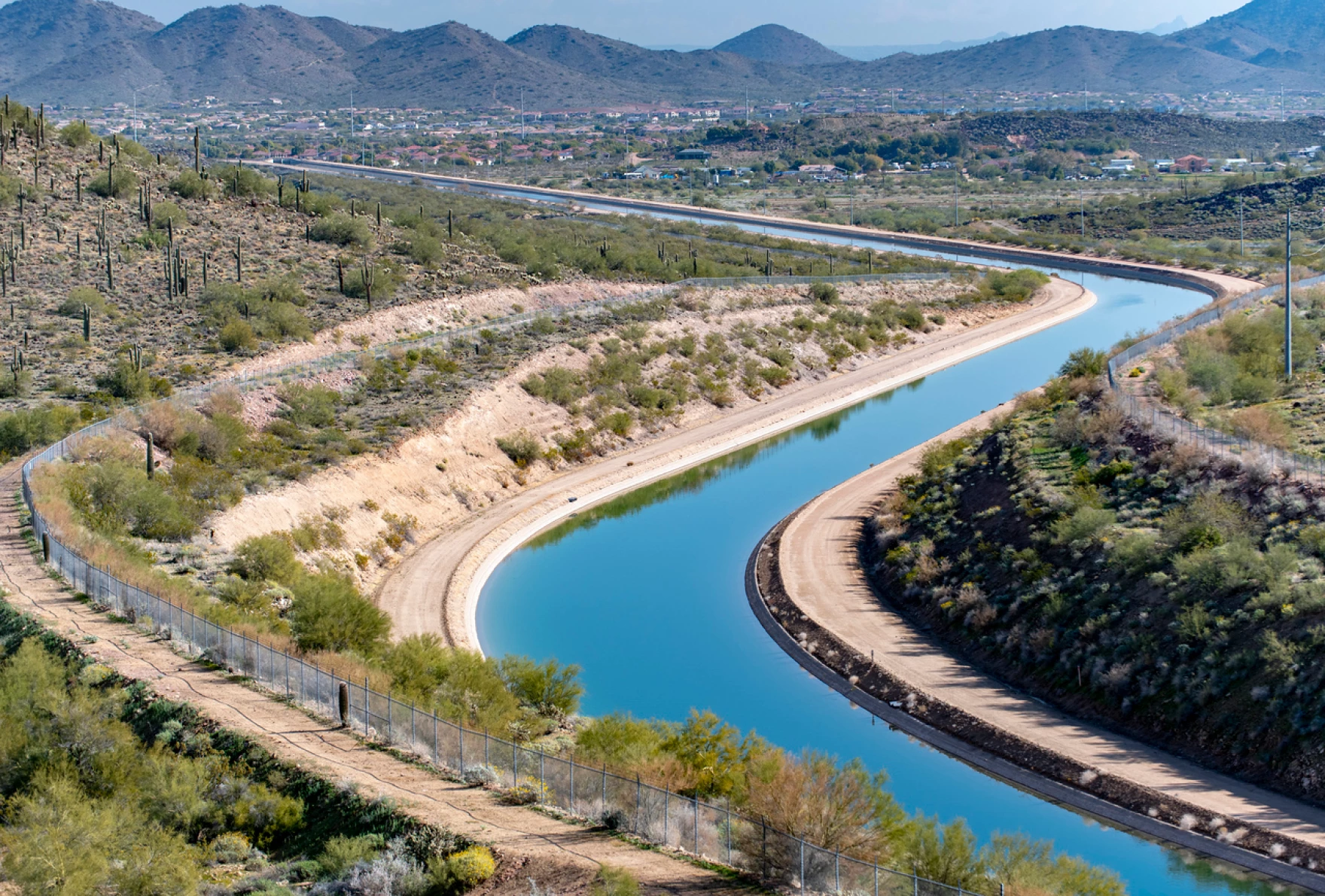
The Central Arizona Project canal carries water through Phoenix in 2019. Ted Wood/The Water Desk

From email from ADWR:

October 16, 2026

Today the State of Arizona filed a motion to intervene in the Nevada lawsuit challenging the recent federal decision governing the operation of the Colorado River.

Like Nevada, Arizona believes the federal government’s new operating framework ignores basic elements of the Law of the River and could result in cuts to the state’s apportionment that would devastate Arizona’s economy.

These elements go far beyond and fall outside the Lower Basin Agreement to which we are strongly committed and continue to work with Nevada and California to implement.

Our problems with the federal government’s Record of Decision are twofold.

One: the federal government’s plan fails to deliver the water that Arizona and our fellow Lower Basin states are owed according to the Law of the River.

Two: the federal government’s Year 3-10 plan includes a range of “sideboards” that, if triggered, could require reductions to the Lower Basin of up to 3 million acre-feet per year in priority. Such reductions could effectively dry up the Central Arizona Project canal system, as well as many of our on-river communities and would more than double the water cuts agreed to in the Lower Basin Agreement.

Arizona believes that taking this action now provides the best path forward for protecting Arizona water users. We are confident that our negotiations with California, Nevada and the U.S. will move forward. In fact, by taking this step we are protecting the integrity of our Agreement. By joining this litigation we can protect Arizona’s interests, whether that’s before a judge or in any settlement discussions that may ensue.

Arizona’s priority remains the completion of a Lower Basin Agreement with California, Nevada, and the U.S. to share in water reductions over the next two years and to memorialize the Intentionally Created Surplus tool. Through our participation in this litigation we will seek to assure that the agreement is implemented.

The Lower Basin states have contributed millions of acre-feet of water toward stabilizing the river system. With more than 5.5 million acre-feet of Arizona water left in Lake Mead since 2014, no state has sacrificed more. In collaboration with our Lower Basin state partners, the Lower Basin Agreement demonstrates that we are doing more. But the US decision puts the entire burden of sacrifice on the shoulders of three states. We are joining Nevada in challenging that framework.

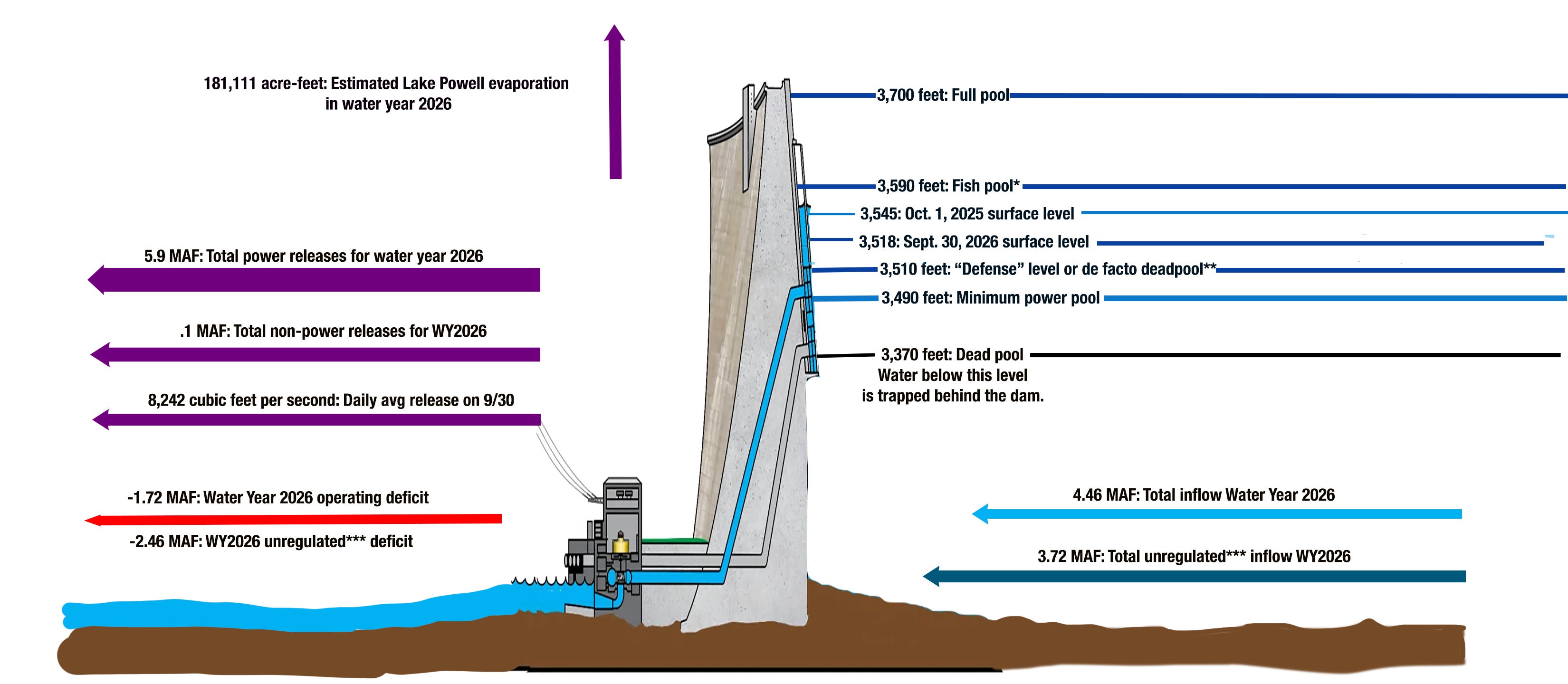
Lake Powell critical elevations. Land Desk graphic using data from the Bureau of Reclamation.