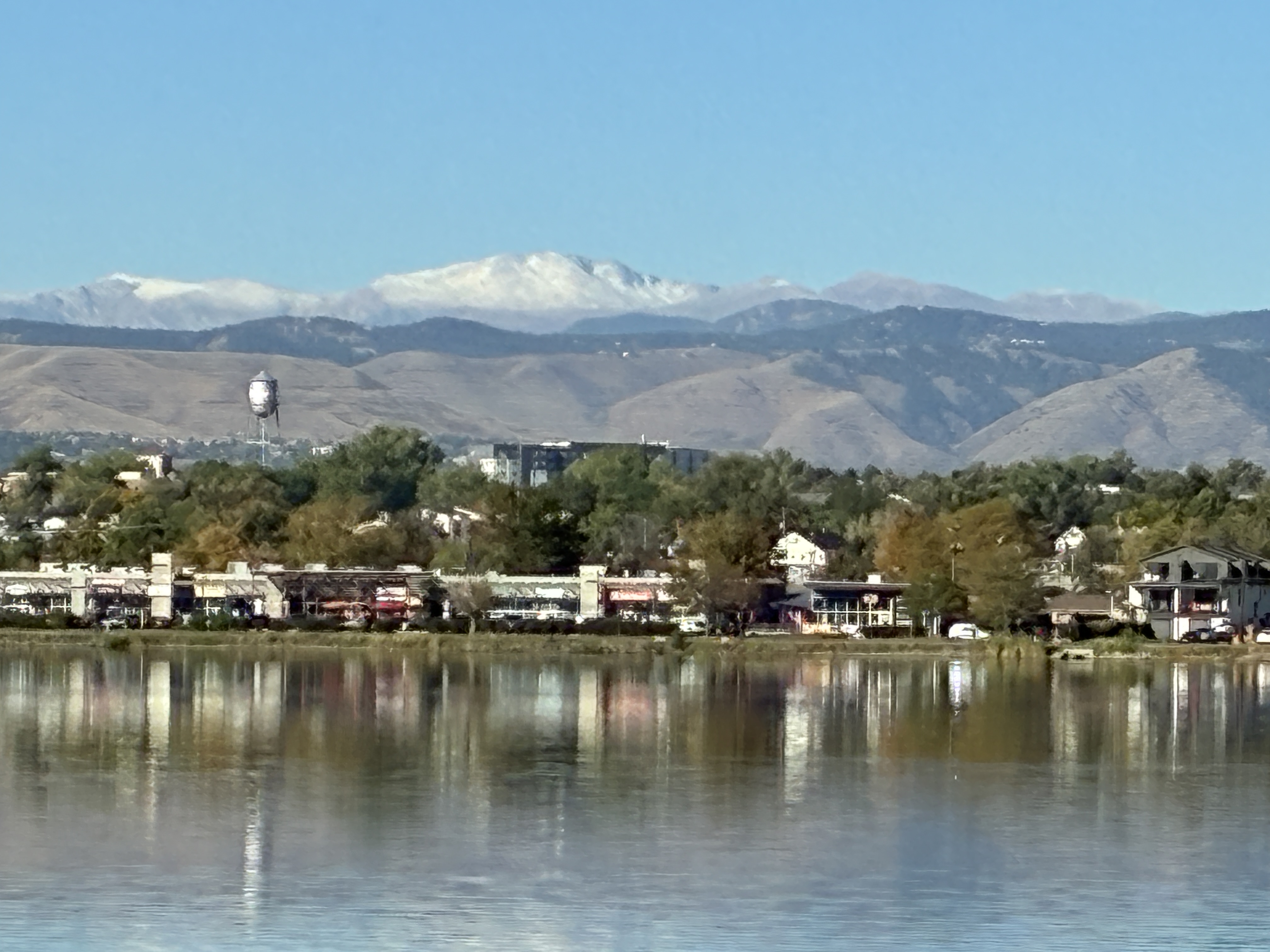
First snowfall on Mt. Blue Sky for water year 2027, October 2, 2026, from Sloans Lake in Denver.
From email from Simon Roebuck:
October 17, 2026
Denver has not recorded any snowfall for the 2026-27 season as of October 17, 2026. The average first measurable snow date, October 19, comes from National Weather Service Boulder records going back to 1882. This WeatherTotals page tracks the current season against that long-running average and updates daily.
By the same date in a typical year, Denver would have seen 2.9 inches of snow. The full-season average for the city is 49.6 inches. The current reading is a station observation from Denver International Airport in the GHCN-Daily network, with quality checks by NOAA. All figures are measured and carry a visible timestamp from WeatherTotals.
Newsrooms can cite any figure on the page with a link back to it and a credit to WeatherTotals (weathertotals.com). The numbers refresh daily, so they stay current through the season. Other cuts of the record, including season-to-date totals and long-run averages for other Colorado cities, are available on request.
About WeatherTotals: WeatherTotals is a free US weather almanac with measured snow, rain and hail totals by state and city from National Weather Service reports, plus aurora visibility by state, an embeddable panel and a free JSON API.
In past years, the U.S. Forest Service’s red-flag warning was sufficient to convey extreme fire risk, but officials this year found it inadequate. In Washington State, they appended a designation typically reserved for life-threatening tornadoes: particularly dangerous situation. This wasn’t adjective inflation — it was a sincere effort to articulate the extraordinary fire conditions that burned nearly 1,000 structures in and around Spokane in August, making it the most destructive wildfire in the state’s history. As of Oct. 5, more than 9 million acres have burned across the United States, the largest area set aflame by this date in more than a decade, and much of the country is still primed to burn. Oregon has declared 2026 the worst fire season in state history. Utah, Ontario, France, Spain, Britain and Belgium have either experienced their worst or are on track to do so. But what’s really striking this year is how many civilians and firefighters across the hemisphere have described lethal combinations of velocity and ferocity. Hundred-meter flames are not uncommon anymore, nor are cyclonic winds with towering fire whirls, corkscrewing skyward like molten ten-story unicorn’s horns. Both phenomena can be precursors for pyrocumulonimbus “fire clouds” — enormous, combustive weather systems that affect entire geographic regions. By growing so big that it becomes a weather system unto itself and so tall that it gyres like a hurricane, effectively controlling the entire air column of a region’s lower atmosphere, the pyroCb, as it’s known, creates optimal conditions for self-perpetuation. Lightning strikes can start new fires 20 or 30 miles beyond the fire’s epicenter, and hurricane-force winds can fan flames to sky-scraping heights while driving embers far beyond any fire break, retardant line or back burn. Simply put, nothing can stop one of these firestorms except a change in the weather or a lack of fuel…
When you place this summer’s fire events alongside persistent drought conditions that have brought water levels to historic lows from western Canada to Siberia, it becomes clearer that severe conditions are playing out across an entire hemisphere. Some might see these as random events. I see a superheated Earth. Add the Asian heat waves that broke 122 degrees Fahrenheit in Xinjiang, China, and “boiled” potatoes in the ground in Yanggu County, South Korea, and there’s no getting around the fact that we — as a species and as a planet — are now living in the future that climate scientists have been warning us about for more than half a century. With these new conditions comes a physical retreat of the human footprint and an aspirational contraction of what humans can do and where we can do it. The contraction is underway not just in terms of coastlines, forests and glacial valleys becoming unsafe or untenable to inhabit, but in terms of previously hospitable spaces becoming uncomfortably hot and smoky. Outdoor activities such as hiking, camping and patio dining have in many places been severely constrained. These impacts are accompanied by a parallel contraction of civic resources: Investment and creative capital previously dedicated to development, expansion and improvement must now be redirected toward repair, recovery and remediation. According to Spokane’s mayor, Lisa Brown, her city’s recovery from August’s fires will take years. Replacing the 16,000 buildings lost in the 2025 Los Angeles fires will most likely take a decade, and the specter of uninsurability looms over the country. Meanwhile, billions of dollars are disappearing from the economy in the form of burned houses and forests, lost wages, lost waterfronts, closed businesses, degraded health and the millions of potential customers who simply decide to stay home because of heat and smoke. Consider, too, how much more we now spend on air conditioning and air filtration. The rawest and most dramatic manifestation of civilizational retreat is mass evacuation during catastrophic fire, and this summer saw some of the biggest ever: Tens of thousands of Americans and Canadians were forced to flee wildfires from British Columbia to Texas. In southern Europe, hundreds of thousands of French and Spanish citizens were evacuated in one of the region’s largest dislocations since World War II, along with many thousands more in neighboring countries. Nepal’s devastating glacier collapse is another ominous indicator: There are dozens of similarly vulnerable communities not just in the Himalayas but also in the Andes, the Alps and the Rocky Mountains.
Two wastewater spills totalling nearly 250,000 gallons occurred Tuesday [October 13, 2026] at Pueblo West Metropolitan District’s treatment facility. Both leaks happened during work by contractors to upgrade the district’s ultra-violet disinfection system according to a written release. The bypass system failures involved wastewater at different levels of treatment and disinfection. Water quality testing is underway for Wild Horse Creek and Pest House Gulch, the two tributaries of the Arkansas River affected by the pair of accidental discharges.
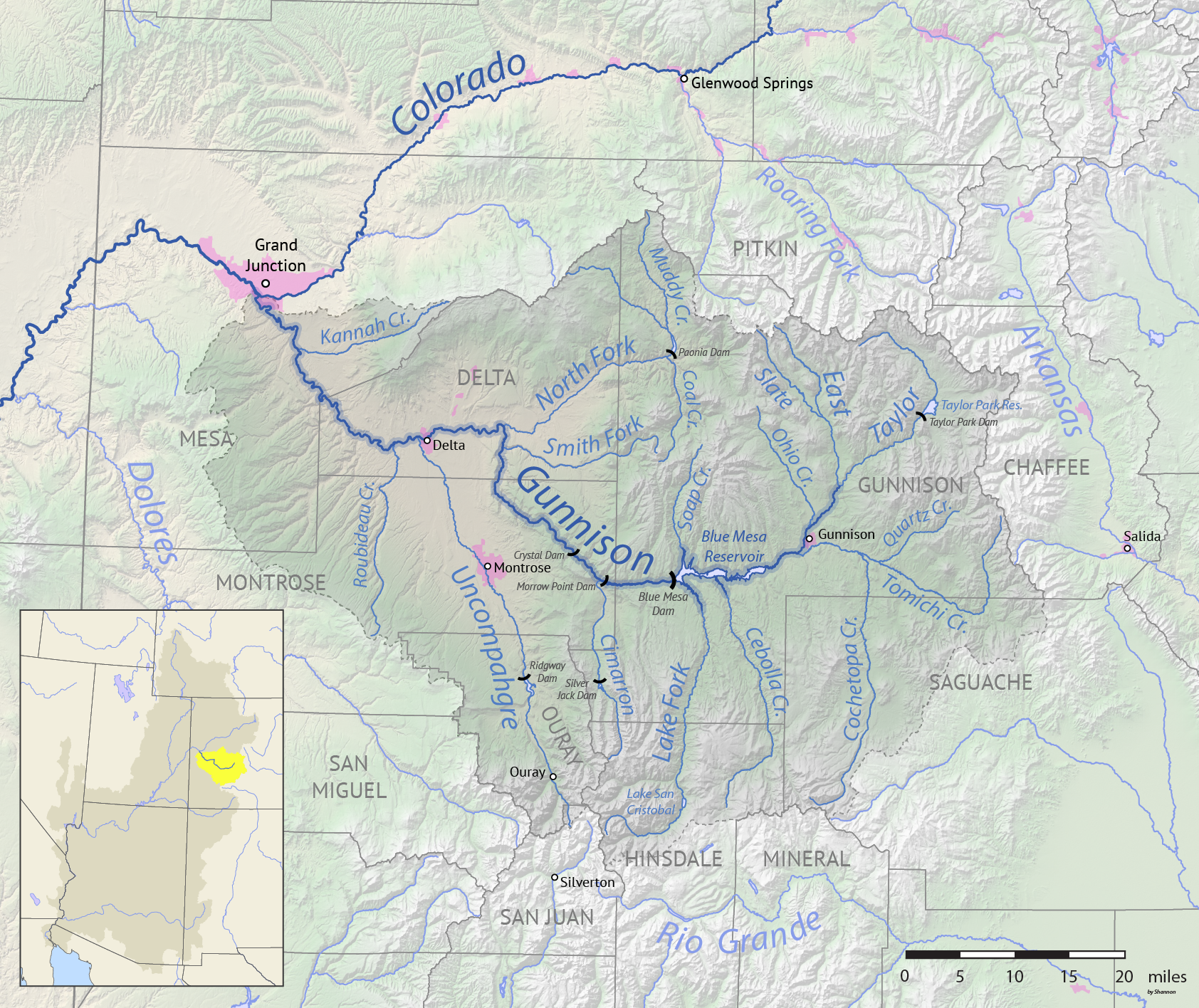
The Upper Gunnison River Water Conservancy District Board of Directors approved lowering the Oct. 31 reservoir level at Taylor Reservoir from 50,000 acre-feet to 48,000 acre-feet at its Sept. 28 meeting. The targeted Oct. 31 water level helps guide releases from the reservoir into the Taylor River downstream, since the level determines how much water is available for release. It also affects how much the reservoir refills over the winter and how much water is available for release the following year. Decisions on reservoir levels and releases are guided by the Taylor Local Users Group, which includes representatives for a variety of recreation interests on the river, irrigators on the Taylor and Gunnison rivers and property owners in the area. Taylor Local Users Group recommendations on releases and reservoir levels must then be approved by the Upper Gunnison River Water Conservancy District, the Uncompahgre Valley Water Users Association, the U.S. Bureau of Reclamation, and the Colorado River Water Conservation District, all of which are signatories to the 1975 agreement that established rules governing the reservoir’s operations…
At the Sept. 28 Upper Gunnison River Water Conservancy District meeting, Don Sabrowski, district president and Taylor Local Users Group chair, explained that, since 2026 is a dry year, the target for the Taylor Reservoir was not to go below 50,000 acre-feet by Oct. 31. According to Upper Gunnison River Water Conservancy District General Manager Sonja Chavez, the district usually aims to keep the reservoir from dropping below 70,000 acre-feet in normal or wet years.
During a meeting held by the Archuleta County Board of Health (BoH) on Sept. 17, the board heard from Water Quality Manager Jessica Green about potential changes to the county’s regulations involving on-site wastewater treatment systems (OWTS). Green commented that the OWTS program “has been pretty overwhelming” for staff since the beginning of the year…Green explained that the inspection ensures the condition of the system is evaluated at the point of a property title being transferred, “which prevents failing systems from being sold without disclosure of risk.”
She also explained that it provides oversight with higher-risk properties through existing exemptions, adding that the state does not define what exemptions are possible and that the county can adjust those exemptions to meet its needs…Green “strongly” recommended that the BoH keep the transfer-of-title program, noting that there is a $115 permit cost associated with the program. She added that if the BoH chooses not to keep the program, there would be a risk that failing systems could be transferred to new property owners without knowing there is an issue.
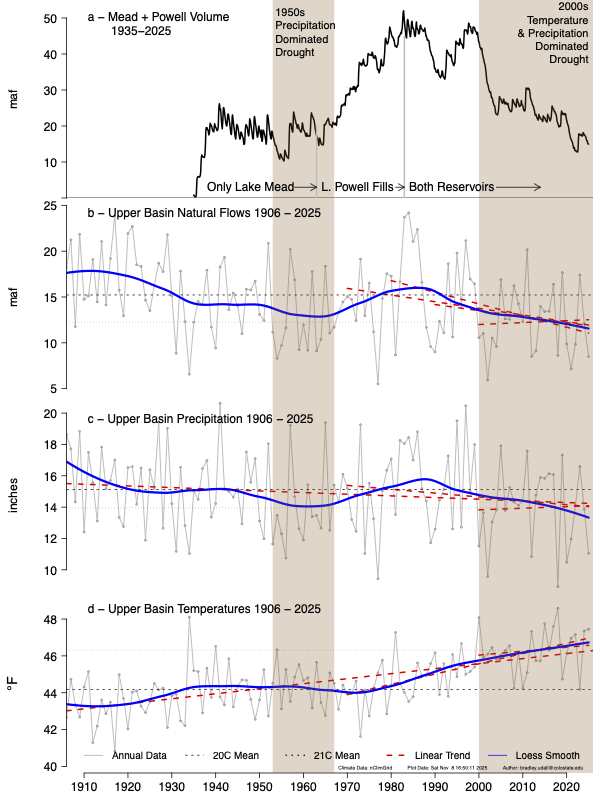
Udall/Overpeck 4-panel Figure Colorado River temperature/precipitation/natural flows with trend. Lake Mead and Lake Powell storage. Updated through Water Year 2025. Note the tiny points on the annual data so that you can flyspeck the individual years. Credit: Brad Udall
Today, Governor Katie Hobbs and the Arizona Department of Water Resources (ADWR) announced the State of Arizona has intervened in a lawsuit brought by Nevada against the Department of the Interior to hold the federal government accountable for failing to enforce Upper Basin water delivery obligations to Lake Mead and prevent cuts of up to 3 million acre-feet per year. In joining this lawsuit, the State will seek to preserve the two-year Lower Basin Agreement while ensuring the federal government is delivering the water to Lake Mead that belongs to Arizona and the Lower Basin states.
“Arizona has always been willing to do our part to protect the Colorado River, but we will not accept a forced federal plan that solves this crisis on the backs of our families, farmers, and businesses,” said Governor Katie Hobbs. “We are drawing a line in the sand. I am taking this legal action alongside Nevada because the federal government refuses to hold the Upper Basin accountable for the water deliveries they owe Arizona, and is threatening to force draconian cuts that go well beyond the Lower Basin Agreement. While we ensure our voice is heard in court, we’ll continue working alongside Nevada and California to implement the Lower Basin Agreement and prevent a devastating cut to Arizona’s Colorado River water.”
“Intervention in the Nevada lawsuit is necessary at this time for Arizona to protect its legal rights to Colorado River water while preserving a path forward to achieving a collaborative outcome with California and Nevada to protect the Colorado River system,” said ADWR Director Tom Buschatzke.
The Lower Basin Agreement is an agreement between Arizona, California and Nevada to protect the future of the Colorado River and prevent forced federal cuts that would slash the Central Arizona Project’s Colorado River allocation by 77% over the next two years. In the Agreement, Lower Basin states commit to conserve over 3.2 million acre-feet in 2027 and 2028 to stabilize the Colorado River system. Finalizing the Lower Basin Agreement remains a priority for the State of Arizona.
Joining this lawsuit ensures that Arizona can protect the State’s interests in any legal outcome and challenge elements of the federal Final Environmental Impact Statement and Record of Decision that unlawfully fail to require deliveries from Upper Basin water reservoirs to Lake Mead. These federal decisions could result in 3 million acre-feet per year in cuts to the Lower Basin states, inflicting devastating water reductions while the Upper Basin States avoid any required conservation.
[ed. The “required conservation” argument is pipe dream. Buschatzke is fixated on the impossible because the Lower Basin has had certainty of deliveries since Hoover dam first filled, while no Upper Basin diverter has ever had that kind of certainty. He fails to acknowledge the difference between mountain rivers, with hundreds of diversions, where most of the water comes from, and desert rivers where there is little precipitation adding to streamflow. The Colorado Division of Water Resources cannot legally force diverters to bypass water and they do not have the ability to shepherd the water to Lake Powell. It is not possible to accurately measure conserved water at this time (apologies to Dr. Parshall). I think the Lower Basin legal position is very strong and they will press the advantage in court which will take a long time to resolve. Meanwhile available water continues to decline and the LB won’t come to the table to negotiate “wet water” vs. “paper water”. The combination of Climate Change and the “Law of the River” drained Mead and Powell, not Upper Basin consumptive use.]
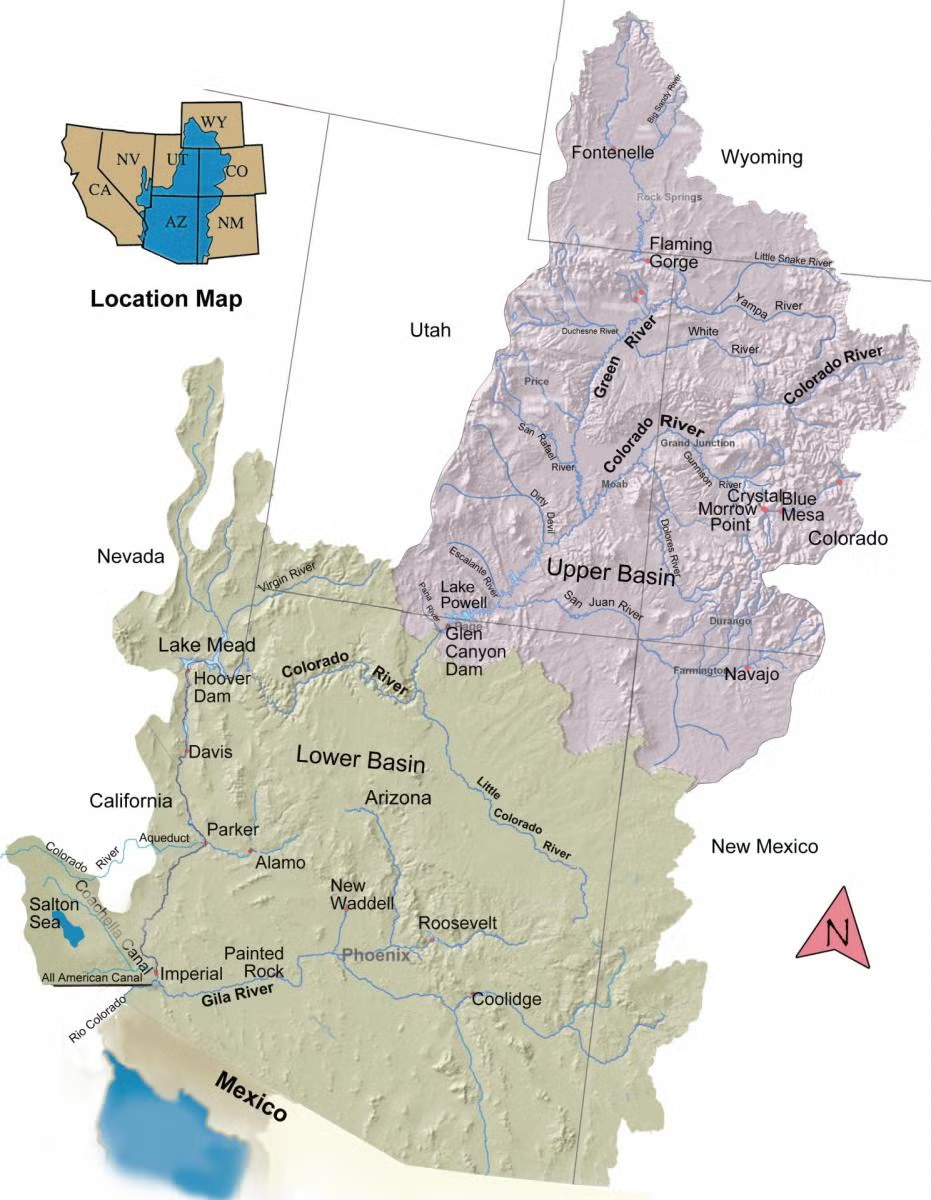
The Colorado River Basin spans seven U.S. states and part of Mexico. Lake Powell, upstream from the Grand Canyon, and Lake Mead, near Las Vegas, are the two principal reservoirs in the Colorado River water-supply system. (Bureau of Reclamation)
Canyon Records Sessions: Coyote Dances This song is always a lot of fun to play and I play it different every time. Of all the characters; Coyote, the trickster was always my favorite. The stories of Coyote always brought a smile to my face and I still laugh and laugh when my father tells the tales of his mischievous ways. I always envision him dancing under a full moon to this song. Enjoy! — Tony Duncan http://www.TonyDuncanProductions.com#followthenativejourney#canyonrecordssessions#canyonrecords
Aurora’s proposed Wild Horse Reservoir project, southwest of Denver in Park County, is drawing close scrutiny this fall as it undergoes review under a new state law designed to protect critical wetlands and streams no longer shielded by the federal Clean Water Act.
According to the Colorado Department of Public Health and Environment, Wild Horse represents the first major project to be reviewed under Colorado’s new hard-fought wetland regulations approved in December. They are meant to replace federal rules wiped out by a U.S. Supreme Court case in 2023, Sackett v. EPA, and subsequent actions by the EPA. The CDPHE is responsible for enforcing the new regulation.
Colorado is one of the only states that has succeeded in crafting new rules. That work comes as the federal government continues to narrow protection of wetlands once provided by the Clean Water Act.
“As the federal government continues to roll back [protections], Colorado is going to need to step up. This is an incredibly important milestone for Colorado. All eyes are on this application,” said Sabrina King, water campaign manager for Conservation Colorado, one of the environmental groups that helped craft the bipartisan measure ultimately approved by Colorado lawmakers last year.
The $600 million-plus Wild Horse Reservoir project would store 93,000 acre-feet of water and will be nearly twice the size of the city’s existing Park County storage pond, Spinney Mountain Reservoir, which holds 53,651 acre-feet of water. An acre-foot equals nearly 326,000 gallons of water, enough to serve at least two to four urban households for one year.
Aurora water supply and collection system. Credit: Aurora Water
The proposed reservoir is among the latest moves by the city to secure future water supplies to meet growth-driven demand as streams and rivers shrink because of climate change.
Aurora Water officials say the reservoir is critical to providing a storage pool closer to the city and that it won’t involve taking additional water supplies from its water in the Eagle River and Homestake Creek. Instead, they say the reservoir will store water they now hold in nearby Spinney Mountain Reservoir, freeing up space to store water it currently owns and uses, but which it doesn’t always have the room to store.
Some of that newly accessible water will be used to help expand Aurora’s large-scale recycled water program, according to spokesman Zachary Henry, helping fulfill its promises to reduce water use even as it expands its collection system.
Still, powerful Western Slope water agencies, including the Colorado River District and the Eagle River Water and Sanitation District, and environmental advocacy group Save The Colorado, have expressed concerns about the proposed reservoir and its impact on the state’s drought-stressed water supplies.
“There is a question if this project involves additional new diversions or are they just moving water that they were already storing and moving in the Homestake Valley,” said Gary Wockner, president of Save The Colorado. “Aurora appears to be claiming that this doesn’t involve new diversion of water, but it is not clear. … The public needs to know.”
Due to these concerns and those of other interested parties, the CDPHE agreed to extend the public comment period to Nov. 19 to give more time for the application to be examined, according to CDPHE spokesperson Kaitlyn Beekman.
Under the new rules, regulators have roughly two years to complete the review process. Aurora officials said they expect construction to take five to six years and that the reservoir is likely to take five to 10 years to fill as climate change continues to shrink streamflows.