2010 Colorado elections: Do voters remember Referendum A?

A picture named roadteasttolaplatas032004

Covering Colorado’s proposed Referendum A in 2003 was the real starting point for Coyote Gulch. I had been blogging since 2002, mostly about state and local politics, but the water issue focus was due to the referendum.

At the same time I was buying a second home down in Montezuma County. When I talked to locals in Mesa Verde country about the referendum the quick answer was, “Water Grab.” There wasn’t much discussion but there was a lot of mistrust expressed about the politicians up in Denver and their plans. Many thought the referendum was a cover up for funding for the “Big Straw” that would move water from the Colorado River on the Utah border and dump it in the headwaters above the Front Range to feed more unbridled growth.

In his column in today’s Denver Post Ed Quillen looks back at some of the politicians that supported the referendum and what happened to them in their electoral careers. He writes:

Jane Norton, then the lieutenant governor, was a Referendum A supporter. And she lost the Republican primary for U.S. Senate. However, also on the supporter list was the fellow she lost to: “Ken Buck, Hensel Phelps Construction Company, Weld County.” I look forward to hearing him explain why he deserves to represent Colorado after he supported a big-spending big-government boondoggle that two-thirds of us opposed.

More 2010 Colorado elections coverage here. More Referendum A coverage here.

2010 Colorado elections: Proposition 101, Amendment 60 and Amendment 61

A picture named smithreservoir.jpg

From the Boulder Daily Camera (Heath Urie):

Combined, the effects of Amendments 60 and 61, along with Proposition 101, could mean the need for between $26 million and $54 million in cuts to Boulder’s budget within the next four years. Brautigam is working on creating a detailed plan for exactly where those cuts would come from, but in general, they would likely mean reduced hours of city services and more layoffs.

Amendment 60 would amend the state constitution to impose restrictions on the collection of property taxes, require government entities to pay property taxes and make other tax-related changes. Boulder’s finance office believes that, if the measure is approved, the city budget could be hit with an additional $7.6 million to $32.2 million deficit. To make up the difference, the city could be forced to increase water rates by up to 104 percent, according to city estimates.

Amendment 61 would change the way that Colorado governments are allowed to take on debt. State borrowing would be prohibited, and local governments would require voter approval to borrow any money. Boulder’s finance officials estimate that measure could have the biggest impact on the city’s open-space fund. Based on current projections, the fund would face a reduction of about $2.5 million in 2012 when several large leases pay off. Open space would probably have to take on additional cuts over six years, ranging from $1 million to $1.7 million a year. Because Amendment 61 would limit debt repayment to 10 years, the city would need to pay about $445,000 more per year, per $10 million worth of debt, officials estimate.

Proposition 101 is a statutory change that would reduce vehicle taxes and fees, telecommunication service taxes and the state income tax. Boulder officials estimate that measure would reduce the city’s annual budget by $6.2 million in 2011 and $7.9 million by 2014.

More 2010 Colorado elections coverage here.

2010 Colorado elections: San Juan Citizen’s Alliance forum recap

A picture named acequiadelcerro.jpg

From The Durango Herald (Garrett Andrews):

It being a San Juan Citizens Alliance forum, the questions dealt with environmental and social-justice issues. Topics covered climate change, fracing chemicals, gas and oil regulations and air quality…

Billing himself as “hands-down, the water expert in the Colorado General Assembly,” [State Senator Bruce] Whitehead, a water engineer, said he’s worked toward “balance” in the Assembly.

More 2010 Colorado elections coverage here.

2010 Colorado elections: Proposition 101, Amendments 60 and 61

A picture named longspeak.jpg

From the Estes Park Trail Gazette (N. Mark Richards):

T he Larimer County Board of Health passed a resolution on Aug. 25 expressing its opposition to Amendments 60 and 61 and Proposition 101 that are scheduled to appear on the 2010 general election ballot. The board has determined that, if passed, these amendments will severely damage the ability of state and local governments and special districts to protect the well-being of Larimer County residents. These amendments constitute a clear threat to the health of our community.

Amendments 60 and 61 will weaken or eliminate many public programs that improve the health of individuals and families and prevent illness in county residents.

Amendment 61 will dramatically impair Larimer County`s ability to finance long-term capital improvements such as water and wastewater treatment plants. The safety of drinking water and potential pollution of ground water will become an increasing problem in the future.

Many aspects of Amendment 60 will overturn the election decisions made by voters over the past eighteen years, creating financial chaos for local communities.

[Proposition] 101 will severely restrict the county`s ability to insure public safety and maintain safe roadways and bridges, resulting in an increase in traffic injuries. Traffic injuries are one of the leading causes of death and disability in young persons.

Passage of these three measures will significantly damage the ability of state and local governments and special districts to fund their most basic level of services related to safety, public health, fire protection, education, hospital services, rural health care, and transportation. The cumulative destructive effect of these three measures will ensure that Colorado will surrender its competitive standing to attract large and small businesses, resulting in little to no economic growth for the state, a steady decline in property values, an erosion of the state and local tax base, and an inability to take advantage of federal dollars that require a state or local match.

More from the Wet Mountain Tribune editorial board:

Superficially, each has the mass-appeal of reducing the burden on Colorado’s taxpayers. But the three are wolves in sheep’s clothing which would economically eviscerate local government bodies, create incredible financial woes for a state government already reeling under recessionary pressures, and place unreasonable burdens on small businesses, property owners, the state agriculture industry and the needs of our communities.

Among the cockamamie elements of the proposals: property taxes for school districts would be cut in half with the state required to make up the difference (how that would be accomplished is conveniently not mentioned); taxes and fees on vehicles and tele-communications would be eliminated; local governments and special districts would not be able to take on any kind of debt; any previous approval by local voters to eliminate or reduce TABOR restrictions would be rescinded. Combined, these measures would virtually eliminate a community’s ability to build or expand infrastructure including roads, schools, medical centers, libraries, water and sewer systems and the like.

More 2010 Colorado elections coverage here.

Upper Arkansas Valley Water Conservancy District board meeting recap

A picture named upperarkansasvalley.jpg

From The Mountain Mail (Joe Stone):

During their business meeting before the [field trip to see new district gauges at Cottonwood Lake and Cottonwood Creek and a tour of Moltz Reservoir on Trout Creek], directors adopted a resolution opposing November ballot Amendments 60 and 61 and Proposition 101.

Discussing the ballot initiatives, district manager Terry Scanga noted water projects are expensive and are generally financed using 30-year loans. Passage of the initiatives, Scanga said, would limit financial agreements to a maximum of 10 years, requiring increased revenue – primarily maintenance and storage fees – to pay off loans within 10 years. For augmentation certificate holders, Scanga said, fees would double from $150 to $300 per unit. For holders of multiple certificates such as Poncha Springs which has about 100, the increase would have significant impact, he said.

District consultant Ken Baker and director Greg Felt suggested the district has obligation notify certificate holders about fiscal consequences of the initiatives, but district legal counsel Julianne Woldridge said such notice isn’t allowed under current law.

District treasurer Jim McCormick, also a Salida City Councilman, said Salida will face a budget shortfall of $250,000 if the initiatives pass…

In other business, directors:

• Learned of a feasibility study for installation of a hydro-electric generating system on DeWeese Reservoir.

• Learned from the treasurer’s report the district general fund has $178,868.15.

• A legislative update from Ken Baker showed calls on the Colorado River are approaching the point they could affect transmountain water diversions into the Arkansas River.

• Heard a report about the Colorado Water Congress summer conference

• Discussed dates and times of upcoming water-related events, including “Managing the Politics of Water,” the Sept. 30 annual conference of Colorado Water Officials Association at Salida SteamPlant.

Other events included the Oct. 1 State Engineer’s Forum at Salida SteamPlant, a Sept. 24 watershed meeting in the district Water Enterprise Building and a Sept. 22 meeting of the governor’s “right-to-float” task force in the Water Enterprise Building.

More Arkansas River Basin coverage here.

2010 Colorado elections: Proposition 101, Amendment 60 and 61

A picture named lowersouthplatteriver.jpg

From The Pueblo Chieftain (Chris Woodka):

Concerns about the fallout from Amendments 60 and 61 and Proposition 101 were shared Thursday at the [Southeastern Colorado Water Conservancy District] monthly meeting by Executive Director Jim Broderick.

Proposition 101 would have the greatest impact on operating revenues of the district by rolling back specific ownership taxes on motor vehicles. The tax would be decreased to $2 for new vehicles and $1 for used vehicles over four years, among other provisions of the ballot question. The Southeastern District gets between $600,000 and $700,000 in revenue annually through the tax. Those revenues fund staff and programs of the district, as well as repaying the federal government for parts of the Fryingpan-Arkansas Project.

Amendment 60 could require the district to pay property taxes, and would have some impact, Broderick said.

Amendment 61 would limit the ability of the district to acquire new debt, and the definitions of what would qualify as debt would have to be hammered out if the amendment passes, he added.

More 2010 Colorado elections coverage here.

2010 Colorado elections

A picture named troutcreekpass.jpg

Here’s an in-depth look at the gubernatorial candidate’s solutions for Colorado’s economy from Patrick Malone writing for The Pueblo Chieftain. From the article:

On the issue of water, Hickenlooper said conservation can be attained by following the examples of Colorado’s dryland farmers and city dwellers in Denver, both of which have cut their consumption considerably. He said defending against out-of-state water grabs and finding more storage capacity also are key.

Maes said a willingness to stand up to Washington to keep Colorado’s water here is needed from the next governor. Tancredo agreed that keeping water management out of the federal government’s hands is important.

Tancredo pointed to Pueblo as ground zero of the water issue in Colorado, because it’s a rare community that has a surplus. “We’ve got Aurora, Colorado Springs and Pueblo fighting over that,” he said. “Somebody needs to end that battle.”

More 2010 Colorado elections coverage here.

2010 Colorado elections: Proposition 101

A picture named hiawathalake.jpg

From The Pueblo Chieftain (Patrick Malone):

Local services provided by school districts, cities, counties and special districts (such as fire, water, sewer and public transportation) could be affected by the revenue reduction. The state’s budget would lose 6 percent of its revenue in the first year of implementation, and an estimated 23 percent of its revenue upon full implementation. Meanwhile, the state’s obligation to reimburse school districts for the revenue they would lose on vehicle taxes was estimated at $47 million in the first year of implementation and could climb as high as $200 million at full implementation. The state’s transportation budget, which funds road safety, construction and maintenance, would be decreased by 28 percent if Proposition 101 passes…

The cons as identified by Legislative Council include reductions in services citizens depend on for a high quality of life, many of which already have been trimmed because of the budget crisis. “Public health and safety may also be affected due to fewer resources for emergency medical services, vehicle emission programs and road maintenance,” Legislative Council reported. Tuition at colleges likely would increase, and services to low-income and disabled Coloradans also could suffer.

More 2010 Colorado elections coverage here.

2010 Colorado elections: Amendment 61 limits on government borrowing

A picture named jacksonlake.jpg

Here’s a report on the Legislative Council’s analysis of Amendment 61 from Patrick Malone writing for The Pueblo Chieftain. From the article:

If the amendment passes in November, projects that traditionally have been financed through borrowing would have to be paid for by hikes in fees or funds earmarked for other purposes, according to an analysis by the Legislative Council…

As for negatives, the Legislative Council said important public services could be strangled without borrowed funds. During the past decade, Colorado’s population has grown by 20 percent, increasing demand for services that rely on borrowing to be offered realistically, it said. Private businesses also could suffer if government contracts for projects financed by borrowing disappear, the analysis said…

Unlike the state, which under Amendment 61 would be prohibited from borrowing, local governments could ask voters to approve indebtedness, with certain restrictions. For instance, a local government would be allowed to borrow only the equivalent of 10 percent of the assessed property value within its borders. Those currently with debt of that amount or more would have to pay down their debts before taking on new ones. Local governments typically borrow to construct or improve schools, roads, public buildings (such as jails and recreation centers), mass transit, water and wastewater treatment plants and to buy vehicles, including firefighting and police equipment. The amendment also would require local governments to repay loans within 10 years — rather than the current standard of 20- or 30-year loans — to keep down interest costs. Furthermore, it would require taxes to be lowered when government completes repayment of a loan, even if tax dollars weren’t used to retire the debt.

Here’s a long analysis of Proposition 101 and Amendments 60 and 61 from Pat Ferrier writing for the Fort Collins Coloradoan: Click through an read the whole thing. Here’s an excerpt:

Opponents, including many local business owners, say the measures threaten jobs and could result in a voter-approved recession exacerbating an already slow economic recovery. Coloradans for Responsible Reform, or CFRR, estimates more than 73,000 jobs – 38,000 from the private sector, 35,000 from public sector – and billions of dollars in infrastructure projects would be lost, creat-ing an anti-business reputation in Colorado that would detract from future growth. [Elaine Lauffer] said the amendments could cripple her family-owned business that relies on public-sector construction jobs.

Here’s a video about Proposition 101, Amendment 61 and Amendment 60 from the Bell Policy Center, The Bad 3.

More 2010 Colorado elections coverage here.

2010 Colorado elections: U.S. Representative John Salazar squares off with Scott Tipton at Club 20 debate

A picture named crystaldamspill052009

From The Pueblo Chieftain (Ellen Miller):

The three-term congressman brought that up in responses to a number of issue questions, including federal payment-in-lieu-of-taxes monies to counties with federal lands. “For somebody who wants to cut the budget 50 percent across the board, I don’t know where you’ll find any PILT funding,” Salazar said. He again used the statement referring to water projects, when Tipton called for funding more of them in Colorado.

More 2010 Colorado elections coverage here.

2010 Colorado elections: Hickenlooper and Maes at Club 20 debate in Grand Junction

A picture named yamparivereofmaybell.jpg

From The Denver Post (Lynn Bartels):

The candidates debated a range of issues, from taxes to transportation to water. The debate was one of several held as part of the fall meeting of Club 20, which represents governments, businesses and civic organizations in western Colorado…

The Democrat opened by reminding members of Club 20 he was invited to speak at their fall meeting in 2004, the year after he was elected mayor. “The big thing I talked about that day was water,” he said. “I said as a state we need a more collaborative approach to water. I told you I was willing to lead that effort.” He said that in the past six years Denver Water users have reduced their consumption by 20 percent.

More 2010 Colorado elections coverage here.

2010 Colorado elections: Proposition 101, Amendments 60 and 61

A picture named boydlakelongspeak.jpg

From the Aspen Daily News (Brent Gardner-Smith):

“Chances are very good that two out of the three of these will pass,” [John Lay of Coloradans for Responsible Reform] told a group of managers of local health and human services organizations this week in El Jebel. “And I just want everybody to hear that.” Lay said his organization recently spent $250,000 on polling for the ballot questions. The polling found that voter sentiment toward Amendment 61, which would sharply curtail borrowing by local governments, is “running 57 positive.” Amendment 60, which cuts property taxes in a variety of ways, especially for school districts, is seen as a positive measure by 50 percent of those polled, Lay said. Proposition 101, which cuts vehicle registration and telecommunication fees, has the support of about 48 percent of those polled…

Proponents of the three measures have not publicly identified themselves, will not send representatives to debate the measure and will not provide a spokesman to talk to the media on the record. “There is no one that shows up,” Lay said. “There is no one that has presented themselves as being the proponent.”[…]

Chris [Treese], the external affairs manager for the Colorado River Water Conservation District (CRWCD), said the district’s board is appointed by member counties, not elected. He added that Amendment 60 prohibits districts with un-elected boards from levying property taxes, which the CRWCD currently does — via a very small mill levy across 15 Western Slope counties. [Treese] said the loss of property tax revenue, and the loss of vehicle registration fees from Proposition 101, would leave the district just enough money “to figure out who stays to turn out the lights.” “So if protecting Western Colorado water resources is important to you, think carefully, and talk to your friends about what these amendments mean,” [Treese] said.

More 2010 Colorado election coverage here.

2010 Colorado elections: Kathleen Curry faces an uphill battle as an independent and write-in candidate despite being a 6 year veteran of the State House

A picture named crestedbutte.jpg

From New West (David Frey):

She’s considering more oil and gas regulations to protect landowners from the impacts of spills and water contamination and to ensure royalty owners get all the money they’re owed by energy companies…

And she hasn’t backed away from her right-to-float bill, which would give rafters and kayakers the right to boat through private property, another issue unpopular with many Republicans…

“I’ve kind of walked down the middle,” Curry said. “This is a diverse district. We walk the gamut, from Silt to Aspen, Lake City to Crested Butte. It can’t get much more diverse.”

More 2010 Colorado elections coverage here.

2010 Colorado elections: U.S. Senator Bennet and U.S. Representative Markey will host an agriculture forum Thursday

A picture named fortmorganrainbowbridge.jpg

From The Fort Morgan Times:

The offices of U.S. Sen. Michael Bennet and Rep. Betsy Markey, along with the USDA, are hosting a forum on agriculture, conservation and rural development in Fort Morgan on Thursday, Sept. 9. The event is to be held from 5:30 to 7 p.m. at Morgan Community College in the Founders Room in Spruce Hall. MCC is at 920 Barlow Road. The forum will allow participants to provide feedback on agriculture, conservation and rural development issues and will include a conversation about the 2012 farm bill…

Key questions for discussion include how to cultivate the next generation of farmers and ranchers, how to provide Colorado producers with the risk management tools and safety net they need in a fiscally responsible manner, and how to address natural resource concerns, such as water quantity and quality, erodible soils and wildlife habitat, while keeping land in production and opportunities open for rural economic development. Those interested in attending should RSVP to agriculture@bennet.senate.gov.

More Morgan County coverage here.

2010 Colorado elections: If they pass, how will Proposition 101 and Amendments 60 and 61 affect state and local government?

A picture named jacksonlake.jpg

From the Aspen Daily News (Brent Gardner-Smith):

…if all three measures are approved, Pitkin County Finance Director John Redmond estimates the county could ultimately lose almost $14 million in revenue, with the county’s open space program taking an $11 million hit and the county’s general operating fund losing about $2.2 million a year. “It is roughly a 10 percent hit to the budget,” Redmond said.

The potential harm to local governments and special districts can be put into two categories. The first category is a direct revenue cut. For example, Proposition 101 cuts vehicle registration fees, which many local governments have come to rely on in their budgets.

The second category is a change in the law that could have potential negative implications for a local government. For example, Amendment 60 requires that property tax questions be voted on only in November, which some officials think will crowd the ballot and make it likely that voters will say “no” to all tax measures each November.

The direct revenue cuts under Proposition 101 are perhaps the easiest to plug into a spreadsheet, as the measure would lower vehicle registration fees and taxes on telecommunications services to local governments over the next four years. It would also lower the state income tax rate over the next 10 years. If Proposition 101 is approved, the city of Aspen could lose $866,000 in revenue next year and $1.1 million in four years, according to city finance director Don Taylor. Today the city uses the tax money for general operations and to fund parks, housing, day care and transportation. Pitkin County’s Redmond estimates the county would lose $1.8 million next year from its general fund budget as a result of Proposition 101. The Aspen School District estimates it would lose $900,000 by the fourth year of the reductions, according to Kate Fuentes, the district’s finance director. Town of Snowmass Village Finance Director Marianne Rakowski estimates the town would lose $266,000 from its general fund budget the first year under Prop 101 and $383,000 the fourth year…

the Aspen School District doesn’t see anything fair about Amendment 60. The measure requires school districts to cut their property tax rates in half by 2020, except for those taxes tied directly to debt payments. Fuentes estimates Amendment 60 would reduce the district’s tax revenues by more than $8.8 million in 10 years…

Amendment 60 also could strip revenue directly out of some other entities’ budgets, as it eliminates prior approvals from voters to “de-Bruce” certain tax streams from the restrictions of the Taxpayers Bill of Rights, a constitutional provision authored by Douglas Bruce of Colorado Springs. If passed, Amendment 60 would require that the county’s open space tax, for example, no longer be exempt from TABOR. This would mean $11 million that voters approved for the purchase of open space wouldn’t be available.

Amendment 60 also would require governments to pay taxes on their assets for the first time. This provision has left most government officials inserting question marks in spreadsheets about potential costs. “What is the golf course worth?” asks Aspen’s Taylor about the city’s municipal course. “You can’t do anything with it, other than run it as a golf course, and as a money-making proposition it is not very valuable.” On the other hand, Taylor said the city’s water treatment plant is quite valuable.

Amendment 61, for example, requires voter approval (in November) of any borrowing by a local governmental entity, such as when the hospital district enters into a lease to obtain an expensive piece of medical equipment. “That’s pretty imposing,” said Aspen Valley Hospital CEO David Ressler, who noted that it often makes financial sense for the hospital district to lease medical equipment rather than buy it outright. “It limits our options.” Ressler is also concerned about the provision in Amendment 61 that would not allow entities to issue new debt for more than 10 years, instead of the more normal 20-year term. “That has the effect of doubling your debt service,” Ressler said. “You pay less interest in the long run, but it costs twice as much money in the short run.”

More coverage from the Cortez Journal (Hope Nealson):

Proposition 101 would lower the state income tax rate, first to 4.5 percent and then to 3.5 percent, and lower taxes for vehicle uses. Amendment 60 is aimed at helping to reduce property taxes. Amendment 61 would limit the ability for local governments and state government to borrow. Public enterprises and authorities, such as the Montezuma County Housing Authority, water districts, colleges and universities also would be required to pay taxes on the property they own under Amendment 60. For example, the Colorado Division of Wildlife is an enterprise that owns thousands of acres spanning many counties, so the division of wildlife would be required to pay property taxes in every county in which it owns land…

Amendment 60 also focuses on school districts, requiring them to cut their property tax rates in half by 2020. The state is required to replace the revenue lost by school districts. That’s a tricky endeavor because the passage of Proposition 101 would reduce state income by 25 percent over time.

Proposition 101 proposes reducing state and local government budgets by more than $2 billion from lost state income tax revenue, according to Looking Forward, a collaboration between the Colorado Fiscal Policy Institute, the Colorado Children’s Campaign and the Bell Policy Center to educate Coloradans about state fiscal policy. More than 40 percent of income tax revenue goes to kindergarten through 12th-grade funding, Looking Forward reported…

Proposition 101 would reduce vehicle ownership taxes over a four-year period to $2 for a new vehicle and $1 for a used vehicle. The proposition also would cut telecommunication and income taxes. With vehicle license and registration fees dropping to their 1919 level of $10 through Proposition 101, Schuenemeyer estimated the reductions in vehicle ownership taxes alone would cut funding for local school districts from $1.6 million in 2009 to $19,148…

Amendment 61 calls for prohibiting borrowing by state or local government and requires voter approval for future loans, limiting the form, term, and amount of total borrowing by each local governmental entity and directing all current borrowing to be paid. “This means governmental entities in the state – counties, cities, towns, school districts, fire districts, water districts, etc. – are prohibited from borrowing any amount of money without voter approval and elections can only be held in November,” Schuenemeyer said. Colorado would not be able to issue bonds or borrow in any other way, including lease purchases, for any reason, even in emergencies. And bonds can be issued for only 10 years, he added.

More 2010 Colorado elections coverage here.

Colorado Water Congress’ Annual Summer Meeting recap

A picture named acequiadelcerro.jpg

From The Pueblo Chieftain (Chris Woodka):

Republican Dan Maes and Democrat John Hickenlooper, the Denver mayor, spoke a day apart at the conference, addressing water conservation and storage as solutions to the state water woes.

Hickenlooper said he is committed to urban water conservation, saying Denver has cut per capita use by 20 percent. “In the end, maybe it’s not Denver’s water, but Colorado’s water,” Hickenlooper said. “Maybe it’s in Denver’s best interest that we keep every drop of water we can in the Colorado River, the Arkansas River, the [Fraser] River and the South Platte River.”

It is important to preserve water for farms, the ski industry and energy production throughout the state to boost Denver’s economy, Hickenlooper said. He called for an end of the adversarial relationship among the state’s water interests and to collaboratively reach solutions to water problems…

Maes focused more on storage. “If it starts in Colorado, it’s our water. The question is how do we keep it here,” Maes said in a Thursday appearance. “We need to store as much of our water in the state as possible.”

He spoke in favor of the Northern Integrated Supply Project, which would construct two new reservoirs in Northern Colorado. And he favored keeping small farmers in business through state water policy that does not automatically shift water from agricultural to urban purposes.

Meanwhile, Colorado’s third party candidate for governor, Tom Tancredo, is still in the race, according to a report from Gary Harmon writing for the Grand Junction Daily Sentinel. From the article:

He has two words for Colorado water, Tancredo said: “Store it.”

More 2010 Colorado elections coverage here.

Colorado Water Congress Annual Summer Conference recap

A picture named coloradopipelineconcepts.jpg

From The Pueblo Chieftain (Chris Woodka):

“Is there a way for the state to encourage private investment in water infrastructure, such as the Million project,” Bob Trout, senior partner in Trout, Raley, Montano, Witwer & Freeman, asked state lawmakers at the Colorado Water Congress summer conference. Trout said the water community and Colorado water law are hostile toward public-private partnerships…

While public water providers want certainty, they also don’t want competition from private developers. “They want ownership, but for hugely expensive projects, ownership might not be an option,” Trout said. “In addition, Colorado water law is antithetical to private water development.”

Prior appropriation, anti-speculation and interstate compacts make it difficult to approve and permit private projects, Trout said. For instance, Aaron Million’s proposal to move water from Flaming Gorge Reservoir in Wyoming to Colorado triggered discussions about the availability of water under the Colorado River Compact and worries about speculation in the federal permit process.

Public water providers say they need certainty and have to keep water rates low. “We’re not opposed to public-private projects, but we need to maintain control of the supply to consumers,” said Mark Pifher, director of Aurora Water. “For us, failure is not an option.”[…]

“We have to have certainty that a private project will provide the water, but the question is how do you structure it to guarantee that certainty?” said Bruce McCormick, Colorado Springs Utilities chief of water services. “We’re responsible to our ratepayers, not stockholders.”[…]

“The most important thing the Legislature can do is stay the hell out of the road so you can have those public-private partnerships,” said Rep. Jerry Sonnenberg, R-Sterling. “More than 100 years ago, Sterling Reservoir was built in two years with horses and wagons. It takes more time than that today to get the paperwork out of the way.”

Travis Smith, a member of the Colorado Water Conservation Board and the Interbasin Compact Committee, said it is time for the state to support water projects, whether public or private. There may be a role for private development. “Through the IBCC, we’re looking at the question, ‘Does the state have a role in supporting and facilitating water projects?’ ” Smith said. “We have to look at whether the state takes a permissive view of private water projects or a prohibitive view.”

More coverage from Joe Hanel writing for The Durango Herald. From the article:

“What I was surprised about when I looked at these new quote-unquote normals is they really haven’t changed very much,” [State Climatologist Nolan Doesken] said Thursday in a presentation to the Colorado Water Congress. Climatologists calibrate normal temperatures every 10 years, based temperatures over the last 30 years. So by the end of this year, the “normal” data will kick out the 1970s and introduce the warm 2000s.

Temperatures at a weather station in Mesa Verde National Park are on track to rise 0.8 degrees Fahrenheit in the new period – in line with most of the rest of the state, according to Doesken’s data about the last 29 years. But compared to the 1951 to 1980 period, temperatures at the Mesa Verde station have fallen 1.3 degrees. Most of the other weather stations in Colorado show slight temperature increases over the same time frames. Doesken knows his numbers don’t match up with the perception of a rapidly warming planet. He watches data gathered at weather stations, while projections of global warming are made through computer models that attempt to predict the future, he said. Despite the models of warmer future weather, he has not seen drastic warming so far in Colorado. “You’ve got to be thinking beyond that to plan for the future, but the current data are showing pretty small changes so far. But it leans in the warm direction,” Doesken said in an interview.

The heat in the 2000s is masked in Doesken’s data, he said, because the two 30-year periods he was comparing overlap by two decades…

The weather created dramatic changes this spring, said Mike Gillespie, who oversees the Natural Resources Conservation Service’s network of snow gauges. The El Niño weather pattern kept Southwest Colorado cool and flush with snow through most of the winter, while northern river basins teetered on the edge of drought, he said. The San Juan River Basin, which drains most of Southwest Colorado, reached its peak snowpack on April 4, when it was exactly 100 percent of the long-term average. Then El Niño left in April, and the storm track shifted north. Suddenly the parched northern part of the state was getting snow, while the south saw rapid melting.

More coverage from Joe Hanel writing for the Cortez Journal. From the article:

[Dan Maes and John Hickenlooper] made separate appearances at the group of savvy water lawyers and engineers Thursday and Friday.

Maes, the Republican, went first. He admitted that he has a lot to learn about water, and he invited input from the group. “I have a pretty simple policy on water so far: If it starts in Colorado, it’s our water,” Maes said. He would support new reservoirs to keep Colorado water in state. He also played to Western Slope sentiments about Front Range water grabs. “There is not a head of cattle or a field of crops that will want for water because of a green yard in Denver on my watch, I promise you that,” said Maes, who lives in Evergreen, about 20 minutes west of Denver.

Hickenlooper, the Democratic Denver mayor, said he would help everyone in the state cooperate on water by applying the same skills that helped him rebuild Denver’s adversarial relationships with its suburbs. He tells Denverites who think the city’s senior water rights should give them plentiful, cheap water to think again. “In the end, maybe it’s not Denver’s water. Maybe it’s all of our water,” Hickenlooper said. “Part of what makes Denver Denver is the fact that we are in Colorado.” He pointed proudly to Denver Water’s conservation rate of nearly 20 percent since the 2002 drought. Hickenlooper would not commit to supporting large new reservoirs because public opinion is so divided on what to do about the water supply. “I think right now, the basic level of public sentiment is so fractured that we’re almost not in a position to make reliable decisions,” he said.

More Colorado Water coverage here.

2010 Colorado elections: Michael Bennet in Greeley

A picture named waterdrop.jpg

From The Greeley Tribune (Nate A. Miller):

“We have managed to acquire $13 trillion of debt on our balance sheet,” he said. “In my view we have nothing to show for it. We haven’t invested in our roads, our bridges, our waste-water systems, our sewer systems. We haven’t even maintained the assets that our parents and grandparents built for us.”

More 2010 Colorado elections coverage here.

Upper Arkansas Valley Water Conservancy District board meeting recap

A picture named uraniuminsituleaching.jpg

From The Mountain Mail (Joe Stone):

Water district engineer Ivan Walter said the Boss Lake reservoir is being drawn down to augment South Arkansas River stream flow and to assist with inspection and maintenance reports. Walter said releases have lowered water level about 4 feet during the past four weeks and irrigation and augmentation releases will continue until the lake is lowered to its natural level. He said drawdown will assist personnel with an outlet inspection, provide an accurate capacity survey and allow for a dam safety inspection. The plan, he said, is to empty the reservoir, verify dam integrity and conduct appropriate maintenance activities based upon inspection findings.

[The] directors also adopted unanimously adopted a resolution opposing ballot initiatives 60 and 61 and Proposition 101 on the November statewide ballot.

More 2010 Colorado Elections coverage here.

2010 Colorado elections: Scott Tipton vs. John Salazar

A picture named dolorescolorado

From The Pueblo Chieftain (Peter Roper):

[Salazar] now a member of the important House Appropriations Committee and has a legislative record on land and water issues that is tailored to Southern Colorado.

More 2010 Colorado elections coverage here.

2010 Colorado elections: Scott McInnis and the Hasan Family Foundation agree to terms for repayment of $300,000 for water articles

A picture named telluridevalleyfloororg

From The Pueblo Chieftain (Patrick Malone):

So when Hasan is asked whether the $300,000 his foundation paid McInnis soon after McInnis left Congress was a way of influencing a powerful man, Hasan redefines where the power really rests. “I didn’t need Scott’s influence,” Hasan said. “Scott has come to me multiple times. I don’t think he would deny it.”

Hasan said his favor to McInnis was to offer him a fellowship with the Hasan Family Foundation after McInnis’ aspirations to the presidency of Mesa State College failed to materialize. “Either he was already out of Congress, or it was within a few days of him leaving Congress, I can’t tell you precisely,” Hasan said. “But he was looking for a job.”

Click through and read the whole article. Mr. Malone details Melik Hasan’s side of his relationship with McInnis.

Meanwhile there still seems to be questions about $112,000 of the payments to McInnis, according to this report from David O. Williams writing for the Colorado Independent. From the article:

The money went to a corporation called Invest 2, LLC, that was dissolved in 2006 and not listed among McInnis’s assets in tax returns he allowed members of the media to examine in April. It was originally registered to McInnis’s wife, Lori McInnis. The Independent sent several questions regarding Invest 2 to Duffy on July 22 but still has not received any answers…

The Denver Post Friday afternoon reported McInnis has signed a legally binding settlement agreeing to repay the $300,000 to the Hasan Family Foundation, although the Post reported it was unclear when the money would be repaid. Duffy told the Post, which broke the original plagiarism story, that there would be no further comment on the repayment deal.

More 2010 Colorado elections coverage here.

2010 Colorado elections: John Hickenlooper stops in Vail

A picture named eagleriver

From the Vail Daily (Lauren Glendenning):

“Long before I ever thought I would run for governor, I had a strong belief that Denver had a responsibility to the rest of the state,” Hickenlooper said. “The better the rest of the state does, the better Denver does.” He pointed to the fact that the board of Denver Water, which he appoints as Denver’s mayor, has reduced the region’s per capita water consumption by 20 percent since he’s been mayor. “That’s Colorado’s water,” Hickenlooper said. “Denver’s dramatic drop in consumption demonstrates that we are active partners. Any solution starts with an ethic of conservation.”[..]

He’s running a campaign touting three main issues — economic development, energy and water.

More 2010 Colorado elections coverage here.

2010 Colorado elections: Initiative 101, Amendments 60, 61

A picture named lakeforkgunnisonriver

From the editorial board of the Sterling Journal Advocate:

What should be the first, biggest concern locally is the city of Sterling is committed to a $29 million water project. Paying that off in 10 years would raise rates even higher than what some residents and businesses see as crippling.

We agree that government needs to be limited, and the more money a worker has in his or her pocket the better the economy is. We would even consider that the state government needs ratcheting down. We do, however, admit to being nervous ourselves about how extreme these proposals are.

From the Sky-Hi Daily News (Tonya Bina):

Amendment 61 proposes amending the Colorado Constitution to:

• Prohibit all state government borrowing
• Prohibit local government borrowing unless approved by voters
• Limit the amount and length of time of local government borrowing
• Require that tax rates be reduced after borrowing is repaid

Arguments For Amendment 61:

Recent data show that over the past 10 years, borrowing by the state and its enterprises in Colorado has nearly tripled and interest payments have more than doubled. Borrowing is expensive because it includes interest payments and fees, and too much government borrowing today could affect public services in the future. Limits on borrowing are needed to be sure spending directly benefits the public instead of being committed to repay debts. Amendment 61 encourages fiscal restraint through a pay-as-you-go approach to government spending. This approach prevents government from passing on debt to future generations. Because the public is responsible for paying government borrowing through taxes and fees, voters should be asked before money is borrowed. Governments have found creative ways to borrow because the existing limits on government borrowing are not strict enough and the government can still borrow without voter approval. Amendment 61 requires that any future local government borrowing be submitted to voters for consideration. Amendment 61 reduces taxes when borrowing is repaid, giving individuals and businesses more money to spend as they please. Tax rates should go down when borrowing is repaid because the government no longer needs money for the annual payments.

Arguments Against Amendment 61:

Borrowing is a crucial tool for financing large public investments. Similar to the way that private citizens use a loan to buy a home or car, borrowing is often the only way governments can afford to build and maintain safe bridges, roads, and schools. Amendment 61 makes it harder to manage public finances at the lowest cost and to respond in a timely manner to the needs of citizens. Amendment 61 limits the ability of communities to meet the demands of a growing economy. Colorado’s population has grown almost 20 percent in the last decade, requiring new roads, schools, and water treatment plants. These public investments are the foundations needed by communities to operate and to attract residents and businesses. Some governments will face serious financial disruptions as a result of Amendment 61. For example, in 2011, school districts that rely on short-term borrowing will be in fiscal deficit until spring tax collections are received, and will have to consider options such as reducing or suspending teacher pay, closing schools, or selling buildings. Some public buildings are built to last 30 years or more, but Amendment 61 prohibits borrowing by the state. This means that current taxpayers must pay the full cost of state buildings and roads rather than sharing the cost with future residents who benefit from these improvements. Amendment 61 places a disproportionate the full burden on today’s taxpayers.

SOURCE: 2010 Colorado Ballot Analysis, Second Draft, Colorado Legislative Council www.colorado.gov/cs/Satellite/CGA-LegislativeCouncil/CLC/1200536134742, where information on Amendment 60 and Proposition 101 can also be found.

More 2010 Colorado elections coverage here.

2010 Colorado elections: Andrew Romanoff profile

A picture named anvilpoints

From the Cortez Journal (Joe Hanel):

Journal: How would you rate the performance of the gas and oil industry and its environmental record here in Colorado?

Romanoff: It’s mixed. What we tried to do in the statehouse was provide protections for water and land, make sure that communities themselves had a say in the decisions that affected them. We tried to provide better balance to the oil and gas commission, and generally strengthen the enforcement of public health and safety requirements. This is obviously a huge part of our economy. I reject the notion that you have to pick between promoting the economy and protecting the environment, because they’re both essential parts of our quality of life. I’m proud of the work we did to expand alternatives to fossil fuel and promote the use of renewable, and enhance energy efficiency and conservation efforts. Colorado’s a model for the country on the new energy economy. The governor deserves a lot of credit, in my view.

2010 Colorado elections: The Hasan Family Foundation is serious about collecting the $300,000 from Scott McInnis

A picture named sanmiguelriver1109

From The Pueblo Chieftain (Patrick Malone):

A spokesman for the Hasan family said Friday that lawyers for McInnis and the foundation are corresponding, and the foundation has not ruled out possible legal action against McInnis. “There absolutely is a demand coming from the foundation lawyer and the foundation itself,” said Drew Dougherty, a spokesman for the Hasan family. “The foundation is demanding full repayment.”

McInnis’ campaign spokesman, Sean Duffy, said the candidate intends to make good on his promise to repay the foundation. “He is in communication with the Hasan Foundation through attorneys, and Scott will make arrangements as he said in his prior statement,” Duffy said.

More 2010 Colorado elections coverage here.

2010 Colorado Elections: John Suthers makes a stop in Frisco

A picture named republicanriverbasin

From the Summit Daily News (Julie Sutor):

Suthers … said Colorado’s water resources are a big priority in his office. “We’ve done a very good job protecting Colorado’s water interests. These fights go on forever, and we need to be diligent in making sure those interests are protected in the future,” he said.

More 2010 Colorado elections coverage here.

2010 Colorado elections: Cory Gardner makes a stop in Sterling

A picture named holycross

From the Sterling Journal Advocate (Callie Jones):

He also talked about why he ran for state legislator, because he felt rural Colorado and agriculture didn’t have a strong enough voice in the legislature. “The people weren’t represented in Denver the way they should be,” he said. “I can see the same thing happening in Washington, D.C.,” Gardner said. “We’ve got to let people understand what it takes to run a business, to live in rural Colorado, to operate a farm or ranch, to have that water that we need that is truly the life blood of this state.”[…]

He also talked about water issues, saying more water needs to be stored on the South Platte River.
“We have got to store more water up and down the South Platte River, so places like Sterling and Logan County can continue in viable farming and agriculture for generations to come,” Gardner said.
He also said NISP (Northern Integrated Supply Project), up near Fort Collins and Greeley, needs to be built “to make sure that we have the water storage necessary to keep the buy up and dry up of farms from destroying agriculture as we know it.” He noted that at one point last year more than 4,000 CFS of water was flowing out of the South Platte River and into Nebraska that legally and rightfully belonged to the people of this state, to put toward a beneficial use. “If we can put that water here, think what we can do in places like Morgan County, Weld County, Adams County,” Gardner said. “Where we can once again allow people to start using their water, to turn on their wells, and make sure that we have those opportunities to keep places like Sterling, Colorado, vibrant for generations to come.”[…]

“I am an ‘all of the above’ energy supporter,” he said “If we are going to grow our economy, if we are going to make sure that families continue to live affordably in the United States and Colorado, we have got to adopt an all of the above energy policy, and that means that we take a look at exploring for new avenues of traditional resources like natural gas, like oil, like coal.”

More 2010 Colorado elections coverage here.

2010 Colorado elections: Scott McInnis and the Hasan Family Foundation background

A picture named saguachecreek

Here’s a background piece about the relationship between the Hasan Family Foundation and Scott McInnis from the Associated Press (Steven K. Paulson) via The Durango Herald. From the article:

Hasan says he was expecting Scott McInnis to work full-time for two years writing and lecturing on solutions for Colorado’s protracted drought, but McInnis delivered only a few speeches and submitted plagiarized essays before bailing out after only a month’s work to go to join a high-priced Denver law firm. “I looked at the grant sheet and realized that no amount of time had been specified for him to be working. I thought it breached our understanding, but it was a legally binding document,” Hasan said.

McInnis gave the foundation records that showed he gave a speech on Sept. 30, 2005, at the Colorado River Water Seminar in Grand Junction titled “Washington in the Rear View Mirror.” He also gave four other keynote addresses to the Delta Chamber of Commerce, the Davinci Institute in Denver, the Denver Rotary Club and the Colorado Mining Association, along with several television interviews…

Hasan said he became concerned about Colorado’s water problems while driving to monthly clinics on the Eastern Plains and added it to his agenda, even though it wasn’t part of the original mission. Seeme Hasan hired McInnis, whom she called “the most knowledgeable person in the state when it comes to federal and state laws regarding water and land issues.” Instead of solutions, the foundation says it got 59 pages of folksy “Musings on Water” interspersed with history and facts plagiarized from a 1984 essay written by state Supreme Court Justice Gregory Hobbs, a nationally recognized water expert…

Hasan said his wife read the papers when McInnis turned them in and determined they were unpublishable, but Hasan said he was legally bound to pay McInnis because of the loose wording of the grant letter…

Hasan said he already had friends in the White House and in Congress when he hired McInnis to write the essays and didn’t need his help. “I’ve never gone to Congress for anything. The government can’t do anything for you, it can only get in the way,” he said.

More election coverage from Ashley Keesis-Wood writing for the Windsor Beacon. From the article:

Windsorite Aaron Lore, who stopped by the Main Street Grill to chat with McInnis, said one of his concerns was the environment. “What’s your position on in-situ mining?” he asked McInnis. In-situ mining is the process being proposed by PowerTech to extract uranium from more than 5,700 acres of land near Nunn. McInnis said he comes from a mining area in Colorado, and is generally a pro-mining and pro-jobs guy. “I’m not sure about the specifics of this project,” he said. “But I will look into it.”

More coverage from Westword (Michael Roberts):

[Monday], Scott McInnis made his first public appearance — at Adams State College in Alamosa — since word of his plagiarism problems broke. But according to Channel 7’s John Ferrugia, who was there, McInnis treated a subsequent interview like a game of dodge ball, repeatedly declining to answer direct questions about his now-infamous “Musings on Water” or the assertion from old family friend turned under-the-bus-tossee Rolly Fischer that he’s been lying…

It’s been widely reported that none of the attendees at [Monday’s] campaign event asked about plagiarism. But assuming that means the public in general doesn’t care about the topic may be a leap too far. “We were told in an e-mail back-and-forth that McInnis would be answering no questions about the Rolly issue,” Ferrugia says. “He would only be answering questions about farming issues.”

More 2010 Colorado elections coverage here.

2010 Colorado elections: Scott McInnis makes a stop in the San Luis Valley

A picture named smithreservoir

Update: From the Valley Courier (Ruth Heide):

During his [McInnis] previous tenure in public service he sat on natural resource committees at both the state and national levels, he said…

He criticized state legislative measures that took money away from the Colorado Water Conservation Board and Branding Board. He said those funds should be used for the projects for which those boards were set up, not to supplement other programs in the general fund…

When asked how the state could address projected water shortfalls in the future without drying up massive amounts of agricultural land, McInnis said agriculture is essential to the health of this state, and rather than dry up ag lands to provide water for future growth, Colorado needs to look at alternatives. He suggested additional water storage and pointed to a doctoral student’s project that proposes to draw water from the Flaming Gorge through Wyoming to the Front Range. “That’s the kind of answer that’s going to be our future,” he said. He said the cost of such a project might run $5 billion, but the cost could be spread over time. “It’s an investment we must make,” he said.

From The Pueblo Chieftain (Matt Hildner):

While none of the 180 in attendance at the conference publicly questioned McInnis about the [“Musings on Water” – gate], he did get asked about water. He said it was critical for the state to find more water storage to supply the Front Range with water. “You can’t dry up farmland,” he said. “There are other options.” McInnis has backed Northern Integrated Supply Project, which would cost $426 million, build storage near Fort Collins, and prevent the dry-up of roughly 25,000 acres, according to its designers.

He also backed the proposal from Aaron Million to pump water from Flaming Gorge Reservoir on the Utah-Wyoming border back to the Front Range. He noted that the project’s $4 billion price tag was an investment of the same magnitude of Denver International Airport.

From TPMDC.com (Eric Lach):

When given a list of other potential candidates, 64 percent of GOP voters picked another candidate. When asked who they thought would make the “strongest Republican gubernatorial candidate,” McInnis came in second with 19%. The top vote getter: ex-Rep. Tom Tancredo, with 29%. Of the 1,181 registered voters contacted last Thursday, 73% had heard about the plagiarism story. Thirty-seven percent of GOP voters think McInnis should drop out.

More 2010 Colorado elections coverage here.

2010 Colorado Elections: ‘Musings on Water’ – gate update

A picture named wetmountainvalley

Update: From The Denver Post (Karen Crummy):

Do I look like I’m going anywhere? These boots are made for walking, and I’m ready to fight,” [McInnis] said to The Post, looking down at his brown cowboy boots.

He also addressed again the controversy surrounding articles he submitted to the Hasan Foundation as original works but which included whole pages and passages that were similar to or copied directly from a 1984 essay by now-Colorado Supreme Court Justice Gregory Hobbs.

“It was an obvious mistake. I stood up, took responsibility and moved on,” McInnis said.

Update: From The Grand Junction Daily Sentinel (Denny Herzog)

But there’s a seriousness to it, too. Plagiarism, particularly to those of us who have made careers out of dealing with the written word, is not to be taken lightly. Yet that’s exactly the way McInnis dealt with it, at least early on. Shortly after the story broke, he said if it were not an election year, it wouldn’t be an issue. The implication was that only in an election year would such a minor transgression be such a big deal. Sorry Scott, but theft, and that’s what plagiarism is, is a big deal, even in years when you’re not on the ballot.

From NewsFirst5.com (James Amos):

Dr. Malik Hasan, who helped establish the Hasan Family Foundation, says the board was hoping to get recommendations on how to deal with Colorado’s drought when it commissioned the essays from former U.S. Rep. Scott McInnis in 2005. Hasan says he was disappointed when McInnis took a job in a law firm and turned in reports that were unpublishable, but there was nothing he could do about it.

From The Denver Post (Mike Littwin):

As I’m writing this column, the most relevant questions are all about the McInnis campaign death watch, now on high alert. The terms of the debate have changed from whether McInnis can still win after his “Musings on Water”-gate scandal to how long McInnis can survive. There’s an Aug. 10 primary date against Dan Maes — who, to this point, has offered up no known credentials for the job — and then there’s the November race against Democrat John Hickenlooper, who has pulled ahead in the latest polling. Still, I don’t expect McInnis to quit because he is Scott McInnis, who is far too stubborn to quit. Just look at the latest news. McInnis says he’s paying back the $300,000 that he took — and I mean took in the best way — from the Hasan Family Foundation for the plagiarized articles highlighting his water-law expertise. The real scandal is that he was paid that kind of money for his, uh, musings at all, original or otherwise. But if McInnis were going to quit the race, why wouldn’t he just keep the money, which is a lot of cash even by lawyer- lobbyist standards? The quitting, at this writing, has been limited to three McInnis senior staffers. You don’t have to wonder why they left the campaign. They were either shocked by McInnis’ behavior, particularly in regard to ex-pal Rolly Fischer, or they may have just noticed that the campaign bus, with its incriminating tire marks, has left the station.

More 2010 Colorado elections coverage here.

2010 Colorado elections: The Hasan Family Foundation wants Scott McInnis to reimburse the dough he was paid for his fellowship

A picture named troutcreekpass

From The Pueblo Chieftain (Patrick Malone):

McInnis said he intends to repay the foundation [$300,000]. The demand followed an internal foundation review of articles submitted by McInnis that contained plagiarized material. A written statement released by the board Friday said McInnis’ output for the foundation “was only a fraction of the work he was obligated to perform . . . Of the little work that he did, he has admitted it was neither fully completed by him, nor fully original. In view of the public disclosure . . . it is clear that Mr. McInnis has not fulfilled the terms of our agreement . . . The foundation demands he repay all monies paid to him under the fellowship.”[…]

“The foundation board met and reviewed the facts of the case,” Hasan family spokesman Drew Dougherty said Friday. “With the admissions from Mr. McInnis and Mr. Fischer, no further investigation was necessary.”

Here’s what I’m sure the McInnis campaign hopes is the final word from them (from email):

Scott McInnis, Republican candidate for Governor, today issued the following statement in response to a news release issued by The Hasan Family Foundation:

“I have said since this matter was brought to my attention that the articles provided as part of the Hasan Family Foundation fellowship were faulty. I explained how this problem arose, and I accepted responsibility.

“I apologized to the Hasans for this mistake, and I expressed my determination to make it right with my dear friends. I will be in contact with the Hasan family to make full payment arrangements. I agree with the Foundation that this brings this matter to a close, and I look forward to continuing to speak on the campaign trail about the critical issues facing all of Colorado, including jobs and economic recovery.”

Three staffers have resigned over the scandal from the McInnis campaign according to a report from Karen Crummy writing for The Denver Post. From the article:

“That says to me one of two things: Either they (the staffers) have lost confidence in the viability of the campaign or they’ve lost confidence in the candidate due to the incident,” said longtime political analyst Eric Sondermann.

McInnis on Friday also backed out of the second scheduled public appearance in as many days, this time an Arapahoe County Republicans event featuring former Minnesota Gov. Tim Pawlenty, a possible 2012 presidential candidate and vice president of the Republican Governors Association…

While those signs point to a foundering campaign, McInnis has reserved nearly $260,000 in television time in the Denver and Colorado Springs markets to run his first TV ads up to the Aug. 10 primary election…

The departing staffers — policy director Mac Zimmerman, political director Dustin Zvonek and regional director T.Q. Houlton — were all staffers of former U.S. Rep. Tom Tancredo, who garnered the most support for governor among registered Republican voters in a Denver Post poll released Friday. Zimmerman was also the chief of staff for former state Senate Minority Leader Josh Penry, and Zvonek worked for Penry as a policy analyst.

Here’s a guest commentary from Seeme Hasan writing in The Denver Post. She writes:

In building the Hasan School of Business of Pueblo — in addition to many donations to other causes, including the University of Colorado Foundation, Pueblo Community College and the Pueblo City Library — water education was to become one of the biggest contributions that the Hasan Family Foundation would give to our state. Unfortunately, these goals were not to be realized. While history will tell certain stories of this past week, the most terrible loss is that of Colorado’s — the missed opportunity of uniting to protect our water. To us, this will forever be Colorado’s greatest tragedy.

According to this report from Wyatt Haupt Jr. writing for the Grand Junction Free Press John Hickenlooper — who has wisely avoided too much public comment on the McInnis plagiarism scandal — has moved ahead in a Rasmussen poll. From the article:

The Rasmussen Reports survey showed Hickenlooper with 45 percent of voter support, while McInnis picked up 43 percent. A total 7 percent expressed support for a different candidate, while 5 percent indicated they were of undecided status. The poll has margin of error of plus or minus 4 percentage points. A total of 750 likely voters were surveyed July 15. The poll represents a 7-percentage point switch in the last month for McInnis, whose campaign was rocked earlier this week by a plagiarism charge. The allegation surfaced in a Denver Post story, which delved into water articiles penned by McInnis in 2005 and 2006.

Here’s some of the back story about Rolly Fischer and Scott McInnis from Tim Hoover writing for The Denver Post. From the article:

Rolly Fischer developed a high profile as a water expert during a 28-year career with the Colorado River Water Conservation District but left after his own brushes with ethics questions were publicized. In 1996, the Grand Junction Daily Sentinel published a series of articles examining how the river district, then headed by Fischer, had done business with companies operated by his wife. Fischer himself was an officer in the companies, which provided temporary employees and payroll services to the water district. The contracts for those services were not put out for competitive bids. Fischer also came under scrutiny for his $105,000 annual salary, perks that included a personal vehicle and executive airline club memberships and spending practices such as racking up $14,000 in travel expenses in one year. Fischer abruptly resigned from the water district after the Sentinel’s stories ran.

More coverage from Charles Ashby writing for The Grand Junction Daily Sentinel. From the article:

McInnis went on to say he had apologized to the group for the mistake and would contact it “to make full payment arrangements.” The incident has dogged McInnis all week and is expected to remain an issue through the Aug. 10 primaries, where he hopes to win the GOP nomination against Evergreen businessman Dan Maes. McInnis has repeatedly said he will not drop out of the race despite numerous calls for him to do so. “I look forward to continuing to speak on the campaign trail about the critical issues facing all of Colorado, including jobs and economic recovery,” he said.

Finally, Jason Salzman pokes some fun at Scott McInnis on the Huffington Post. He writes:

But even if you have to give some of the money back, you should know that you’ll definitely have the respect of the freelance writing community for breaking free from the normal rules that bind writers to their desks. You’ve allowed me and other freelancers to dream of a day when we can be freelance writers and not write at all. As a leader, you’re trying to head us in that direction by experimenting with new freelance ideas and techniques. Some will surely fail, but that’s to be expected as you work toward a world where freelance writers are paid more and work less. As I wrote before, “Honorable” Congressman, whether you’re elected or not, you have secured your spot as a rock star of the freelance writing community in Colorado. Please let us know at your earliest convenience when you will be able to meet with me and other writers to advise us on how we can be as successful as you at freelance writing.

More 2010 Colorado Elections coverage here.

2010 Colorado elections: Tom Tancredo jumps off the Scott McInnis ship

A picture named unaweepcanyon

From The State Column:

“We haven’t got a chance under the present circumstances,” Mr. Tancredo said, in reference to allegations of plagiarism plaguing the McInnis campaign. “This is a huge disaster for the Republican party unless we can get a candidate in there to make this all work.” Mr. Tancredo, a conservative who ran as an underdog presidential candidate in 2008, said his own sources say Mr. McInnis will likely drop out of the race for governor.

More 2010 Colorado elections coverage here.

2010 Colorado elections: Scott McInnis background

A picture named roanplateau1

Here’s a background piece about Scott McInnis from Joe Hanel writing for The Durango Herald. From the article:

McInnis is a partner at Hogan Lovells, a law and lobbying firm – formerly known as Hogan & Hartson – where [Bill Ritter] worked before he became governor. As part of his work for the firm, McInnis lobbied for the Million Conservation Resource Group, a company that wants to build a water pipeline from Flaming Gorge Reservoir in southwest Wyoming to the Denver metro area. McInnis still thinks the pipeline is a good idea, and he is confident there is enough water legally available under the multi-state Colorado River Compact. “Some of the lower states may be complaining because they get the benefit,” he said. “But the reality of it is, that’s Colorado water, and we have to capture it for Colorado use or we’re going to lose it, in my opinion.”[…]

McInnis represented the 3rd Congressional District, which spans most of the state’s western half, and in his stump speech, he makes a point of both Maes’ and Hickenlooper’s Denver-area background. “There’s only one candidate in here who’s not from the metropolitan area. There’s only one candidate who’s ever represented Durango,” he said.

Mr. Hanel has also posted an interview with Scott McInnis — pre-plagiarism scandal — on The Durango Herald. From the article:

DH: Governor Ritter’s policy favors using water for recreational purposes, and he has spent money on buying water for endangered species. That’s been a departure for the Colorado Water Conservation Board. Would you continue those policies with you appointments to the CWCB?

McInnis: [McInnis’s wife] Lori’s father was actually probably the longest-serving member (of the CWCB). Lori’s a cattle rancher. So I know a lot about the Water Conservation Board. First of all, you can’t raid their funds. Those funds are being raided, just like the Brand Board. Those are very important funds to protect. Before the Ritter administration, by the way, they bought rights for in-stream flows. This isn’t new with the Ritter administration. In fact, minimum streamflow is Republican, it’s not Democrat. It’s Colorado under the Legislature. It isn’t like Ritter found something new. It was in the process. He might have prioritized it. But they key to it is not the day-to-day operation. The key to it is who your appointments are. My appointments will be very experienced in water. They’ll have a very clear understanding, or I won’t appoint them, that water storage is absolutely essential. And they’ll have to have a strong feeling about protection of the water, whether it’s protection of the water for saving it, storing it, or whether it’s protection of the water for the quality of the water…

DH: You’ve supported the proposed Flaming Gorge pipeline (from the Southwest Wyoming reservoir to the Front Range). Are you confident there’s enough water left under the Colorado River Compact for a project like that?

McInnis: There is. There is. Flaming Gorge – those rights are unclaimed. The Bureau of Reclamation makes those decisions. The water’s at Flaming Gorge. Now, some of the lower states may be complaining, because they get the benefit. That’s Colorado water. We’re going to have to give some to Wyoming to run the pipeline across Wyoming. We have to pay the toll. But the reality of it is, that’s Colorado water, and we have to capture it for Colorado use, or we’re going to lose it, in my opinion.

More 2010 Colorado elections coverage here.

2010 Colorado elections: Did Scott McInnis plagiarize some of his writings on water?

A picture named bridalveilfallstelluride

Bump and Update: Here’s McInnis’ side from email from the campaign:

In 2005, I accepted a water fellowship with the non-profit Hasan Family Foundation. Part of this fellowship entailed compiling a series of articles designed to promote public understanding of historical water issues in Colorado.

In order to complete this project, I retained a renowned Colorado water expert. That expert, Rolly Fischer, spent nearly three decades with the Colorado River Water Conservation District , and is well-respected across the state. During our collaboration, he provided research for the articles.

Regrettably, it has now become clear that much of the research was in fact taken from other source material without proper attribution. While I do not believe that this was a deliberate act, it was a serious mistake.

It’s unacceptable, it’s inexcusable, but it was also unintentional.

I made a mistake, and should have been more vigilant in my review of research material Rolly submitted.

I’ve reached out to Justice Hobbs and the Hasan Family Foundation, and hope to meet with both in the not too distant future.

We all share a deep commitment to Colorado’s future. In the coming days, I hope we can put this matter behind us, and focus on solving the many problems that face our state.

More coverage from the Montrose Daily Press (Kristen Wyatt). From the article:

It wasn’t clear if McInnis spoke with Hobbs on Tuesday. An aide had said earlier that McInnis had apologized to Hobbs. Whole sections of McInnis’ “Musings On Water” about the history of Colorado water rights were identical to a 1984 piece that Hobbs wrote. McInnis’ essays were accompanied by a 2005 letter stating the essays were original.

I’m sure that Scott McInnis is hoping that his statement above kills the controversy. It might not. Here’s Denver Post columnist Mike Litwin:

In any case, McInnis made the “non issue” statement to Adam Schrager of 9News, saying that what interests Coloradans is jobs, which is clearly true. They’re interested in their jobs, and we’re all interested — I promise — in seeing how you get a McInnis-style job. In a McInnis job, you retire from Congress and then sign on for a $300,000 stipend from the Hasan Family Foundation to write a series of articles. Now, here’s the good part: In writing “Musings on Water,” you either copy someone else’s work — making the job much easier — or you outsource the job to someone else, who then copies the work, making your job easier still. According to McInnis, it was all a researcher’s fault, even though McInnis failed to mention any researcher when he turned in the articles. Meanwhile, the researcher, Rolly Fischer, a water expert, told the Glenwood Springs Post Independent, “Scott’s responsible for it.” What we know for sure is that McInnis assured the foundation in a memo that the work was “original and not from any other source.” Yes, he did. And so, it’s pretty simple, really. Either McInnis cheated (plagiarizing someone’s work) or he lied (getting someone else to do his work) or both, and for a neat $300,000 payoff.

More coverage from the Associated Press via the Las Vegas Sun. From the article:

A former congressman, McInnis was paid $300,000 by a foundation for a three-year fellowship that included writing about water. When reporters questioned McInnis’s work for the Hasan Family Foundation, the group posted the essays on its website. The writings were not previously made public. The foundation says it may seek a refund from McInnis. McInnis is not planning to publicly apologize. His GOP primary challenger, Dan Maes, says McInnis should “man up” about the plagiarism.

More coverage from Tim Hoover writing for The Denver Post. From the article:

In an interview Tuesday with 9News, McInnis said he intended to “make it right” with the [Hasan Family Foundation]. “I’ll sit down with them. It’s a good foundation, good people. Have known ’em for a long time. I’ll go in, sit down with them, and we’ll discuss what we need to do,” he said.

More coverage from Karen Crummy writing for The Denver Post. From the article:

A Denver Post review of McInnis’ floor speeches and columns published during his congressional career found striking similarities between a 1995 speech and 1994 column by McInnis and a previously published Op-Ed in The Washington Post. “There is a growing popular belief in South Korea that the North has outmaneuvered Washington and marginalized the South’s role,” wrote Richard V. Allen and Daryl M. Plunk in a Washington Post Op-Ed published Nov. 9, 1994. Six weeks later, McInnis wrote in the Rocky Mountain News: “There is growing South Korean sentiment that North Korea has outmaneuvered Washington and marginalized the South’s input into this issue.” A month after that, he made the same statement on the House floor with only minor alteration…

McInnis on Tuesday declared the plagiarism of the water essays a “non-issue” that Colorado voters don’t care about. Although his campaign manager put out a statement late Monday saying McInnis believes the “buck stops” with him, McInnis spent Tuesday asserting that he failed only in that he did not monitor his research assistant closely enough. “We got faulty research,” McInnis told 9News. “This is a nonissue if it’s not a political year. Voters don’t really care about this issue. They care about jobs, getting back to work.” McInnis also told 9News he expected there were numerous other problems with the water essays he submitted as his own work. Rolly Fischer, a former engineer who McInnis said was responsible for lifting paragraphs and at least four full pages from work written by Colorado Supreme Court Justice Gregory Hobbs, denied the charge. “Scott’s responsible for it,” he said to the Glenwood Springs Post-Independent, and then declined to comment further. Contacted by a Denver Post reporter at his home Tuesday, Fischer declined to comment, saying, “I don’t trust the press.”

More coverage from The Denver Post. From the article:

Meanwhile, House Speaker Terrance Carroll, D-Denver, called on McInnis to immediately drop out of the race. “The Denver Post’s story made it quite clear that Scott McInnis lacks the integrity to hold the office of Governor. It would be difficult for him to create any public trust, which is critical for this position,” said Carroll.

More coverage from John Colson writing for the Glenwood Springs Post Independent. From the article:

Long-time local resident Rolly Fischer on Tuesday declined to say much about his involvement in a research paper that gubernatorial candidate, and former Congressman Scott McInnis wrote to meet a fellowship deadline. “Scott’s responsible for it,” stated Fisher, an engineer who worked for the Colorado River Water Conservation for, when asked whether he was responsible for articles attributed to McInnis. Beyond that, Fisher said flatly, “I have nothing to say.”

More coverage from Talking Points Memo (Eric Lach):

Yesterday, Schaffer tweeted a link to the Denver Post story that broke the news, saying: “Family Foundation miffed it paid $300k to congressman for plagarized work & no-shows. Den. Post http://tw0.us/JYo #tcot #redco”

Maybe its personal? The backstory: In 2007, McInnis dropped out of a Senate primary battle with Schaffer, citing family reasons. Then, just days before Nov. 4, McInnis threw his fellow Republican under the bus, telling the press “I would have beat Udall” in the general election, and lamenting the “radical element” in his party.

More coverage from the Examiner (Ian Cerveny). From the article:

The Hasan Family Foundation released these plagiarism accusations through the Denver Post earlier this week, forcing McInnis to come clean on his sloppy partial authorship.

Not coincidentally, a member of the Hasan family entered into the 2010 race for state treasurer late last year. Ali Hasan, son of Hasan Family Foundation founders Malik and Seeme Hasan, was favored to finish strong in the assembly, but was instead routed by fellow Republican candidate JJ Ament. McInnis refused to endorse any candidates in that race, despite his close relationship with the Hasan family and the fellowship extended to McInnis by the Foundation in 2005 after he left Congress.

It is likely that the Hasan Family Foundation knew that McInnis was not entirely responsible for the articles published under his name five years ago, and they may have also been aware of the plagiarized content therein. The timing of these accusations smacks of a vendetta … one earned when McInnis failed to repay a favor by endorsing Ali Hasan for state treasurer.

The Foundation took the fight to their website on their Fellowship Page in a carefully worded denunciation of McInnis’ work as a senior fellow. [ed. Scroll down to McInnis’ area. The linked file is a .pdf}.

From the Hassan Family Foundation statement (Seeme Hasan):

In light of the accusations against Scott McInnis regarding plagiarism of articles to the Hasan Family Foundation, I am shocked, angry and disappointed. Any work related to the fellowship that Mr. McInnis submitted was always represented as final. At no time, whatsoever, did Mr. McInnis communicate that any of the work were “rough drafts.” Any representation that they were submitted to the Foundation as “rough drafts” is absolutely incorrect.

In addition, there were never discussions nor any knowledge by the Foundation that Mr. McInnis was working with a “research advisor.” If indeed Mr. McInnis was working with a “research advisor,” it was never brought to our attention, nor authorized. The work that the Foundation hired Mr. McInnis to do was to be done solely by Mr. McInnis, and not in concert with anyone else.

The Hasan Family Foundation takes the issue of plagiarism extremely seriously. At no time was it brought to our attention that Mr. McInnis used information not cited or unethically used work that was not his own. All work was represented to be original and final. We will conduct an independent, internal investigation and if the allegations are proven to be true, we will demand Mr. McInnis return all monies paid to him by the Foundation.

Jason Salzman (BigMedia.org) is on the very long list of journalists that are hoping to land an interview with Rolly Fisher. Here’s his blog post from earlier today. He writes:

So it’s going to take some work to get Fischer to tell his story, which deserves to be told. Maybe a blogger is the right person for the job? Someone who’s not a journalist.

More coverage of the Rolly Fischer backstory from Charles Ashby writing for The Grand Junction Daily Sentinel. From the article:

Embattled GOP gubernatorial candidate Scott McInnis said he didn’t know anything about why Rolly Fischer retired from the Colorado River Water Conservation District in 1996. At the same time, though, McInnis said the man he hired in 2005 and 2006 to do research for him for a series of water articles for the Hasan Family Foundation was an old friend whom he’s known for years. “Rollie is a friend,” McInnis told The Daily Sentinel on Tuesday. “The material I got sounded just like Rollie’s. I don’t know anything about that (why he left the district). The fact is, no matter what Rollie did on this research stuff, I should have caught it.”

More coverage from the NPR Blog (Frank James):

Polls in Colorado suggest a close race for governor between Denver mayor John Hickenlooper and former Republican Congressman Scott McInnis, that’s if McInnis gets past the impending primary. Recent polls show McInnis leading Hickenlooper by three to five percentage points. Which is why it’s worth paying attention to plagiarism charges against McInnis since they could have an impact on such a close race.

More coverage from The Colorado Independent (Scott Kersgaard). From the article:

Fischer was hired by the Colorado River Water Conservation District in 1958 as secretary-engineer. He was the district’s first and only employee at that time. As the district grew, so did Fischer’s job, which evolved into the position of general manager, even though he kept the secretary-engineer title until he left the district in 1996, according to district spokesman Chris Treese. By the time Fischer left the district, it employed 18 people and Fischer was the boss…

According to [Chris Treese, Colorado River District], the board of directors dismissed Fischer for reasons that were not made public. Treese acknowledged, though, that the dismissal followed a series of articles in the Grand Junction Daily Sentinel. Those articles are not available on the Sentinel’s web site, but in Tuesday’s paper, reporter Charles Ashby characterized the articles thusly: “Fischer retired in 1996 after The Daily Sentinel published a series of articles showing that the river district hired two companies operated by his wife, Tillie, without going to a competitive bid. Fischer was part owner of those businesses, which handled payroll accounts and general administrative functions.”

More coverage from The Colorado Statesman (Ernest Luning):

There’s little love lost between McInnis — who weighed entering the 2008 Senate race but stepped aside, leaving the field to the eventual nominee — and Schaffer, who served alongside McInnis in Congress for three terms and currently sits on the Colorado Board of Education. A week before the election, with Schaffer down in the polls, McInnis boasted to the online news site The Colorado Independent that he “would have beat Udall,” and said his “biggest threat was getting through the primary.” He blamed “radical elements” in his own party for thwarting his ambitions.

The director of the left-leaning Colorado Ethics Watch organization said McInnis’ possible breach could land him afoul of rules governing attorneys licensed to practice law in the state. “The reports that Congressman McInnis’ water essays for the Hasan Family Foundation contained plagiarized material, if true, raise serious questions about McInnis’ compliance with the ethics rules that apply to all Colorado lawyers,” said Ethics Watch boss Luis Toro in a statement. “The Colorado Rules of Professional Conduct specifically warn lawyers against conduct involving dishonesty or misrepresentation and against failure to adequately supervise their non-attorney staff.”[…]

A spokesman for Denver Mayor John Hickenlooper, who is running unopposed for the Democratic nomination for governor, didn’t return telephone and e-mail messages seeking comment on the McInnis charges. But the mayor told The Denver Post editorial board on Tuesday the allegations “create a cloud” over his potential opponent, Post opinion writer Chuck Plunkett wrote on the newspaper’s political blog. Hickenlooper also said he wouldn’t hire a “known plagiarist,” according to Plunkett.

More coverage from the Colorado Independent (David O. Williams). From the article:

Colorado Republican Party chair Dick Wadhams – presumably one of those radical elements – was none too happy with McInnis at the time but rushed to his defense Tuesday, blasting outgoing Colorado Speaker of the House Terrance Carroll for saying McInnis should withdraw and throwing some mud Democratic gubernatorial hopeful John Hickenlooper’s way in the process: “I know it must be difficult for Terrance Carroll to understand how irrelevant he is as a lame duck state representative. But while he’s on his moral high horse today, maybe he can tell Coloradans if Denver Mayor John Hickenlooper was lying in Copenhagen when he attacked skeptics of global warming or was Hickenlooper lying to the Colorado Oil and Gas Association when he said he himself was a skeptic of global warming,” Wadhams said.

A few weeks back there was a bit of controversy over the availability of a series of articles about water that Scott McInnis was paid $300,000 to write by the Hasan Family Foundation. When they became available I read through them, sending my comments to Jason Salzman at BigMedia.org. I gave McInnis the benefit of the doubt for the content since he had been directed to write at a level that most readers could understand. I questioned some of his facts but in general found that the articles were accurate and interesting. The problem is that McInnis appears to have plagiarized some of the writing. Here’s a report from Karen Crummy writing for The Denver Post. From the article:

Although GOP gubernatorial candidate Scott McInnis presented his “Musings on Water” for publication as original works, portions are identical and nearly identical to an essay on water written 20 years earlier by now-Colorado Supreme Court Justice Gregory J. Hobbs. A Clemson University expert who reviewed McInnis’ work next to Hobbs’ essay called it a clear case of plagiarism of both words and ideas…

In at least four of those articles, McInnis’ work mirrors Hobbs’ 1984 essay published by the Colorado Water Congress, “Green Mountain Reservoir: Lock or Key?” In one of his installments of the musings, titled “Pumpbacks and Roundtables,” McInnis uses four full pages that are nearly reprinted verbatim from Hobbs’ earlier work. The justice reviewed examples of his work and McInnis’ essays provided by The Denver Post and released a statement through court spokesman Rob McCallum. “There are definite similarities,” Hobbs said. “I would expect there would be some attribution.”

More 2010 Colorado elections coverage here.

2010 Colorado elections: Did Scott McInnis plagiarize some of his writings on water?

A picture named lakeforkgunnisonriver

A few weeks back there was a bit of controversy over the availability of a series of articles about water that Scott McInnis was paid $300,000 to write by the Hasan Family Foundation. When they became available I read through them, sending my comments to Jason Salzman at BigMedia.org. I gave McInnis the benefit of the doubt for the content since he had been directed to write at a level that most readers could understand. I questioned some of his facts but in general found that the articles were accurate and interesting. The problem is that McInnis appears to have plagiarized some of the writing. Here’s a report from Karen Crummy writing for The Denver Post. From the article:

Although GOP gubernatorial candidate Scott McInnis presented his “Musings on Water” for publication as original works, portions are identical and nearly identical to an essay on water written 20 years earlier by now-Colorado Supreme Court Justice Gregory J. Hobbs. A Clemson University expert who reviewed McInnis’ work next to Hobbs’ essay called it a clear case of plagiarism of both words and ideas…

In at least four of those articles, McInnis’ work mirrors Hobbs’ 1984 essay published by the Colorado Water Congress, “Green Mountain Reservoir: Lock or Key?” In one of his installments of the musings, titled “Pumpbacks and Roundtables,” McInnis uses four full pages that are nearly reprinted verbatim from Hobbs’ earlier work. The justice reviewed examples of his work and McInnis’ essays provided by The Denver Post and released a statement through court spokesman Rob McCallum. “There are definite similarities,” Hobbs said. “I would expect there would be some attribution.”

More 2010 Colorado elections coverage here.

2010 Colorado elections: McInnis profile

A picture named ridgesbasindam

Here’s a long background piece about Scott McInnis from Karen Crummy writing for The Denver Post. From the article:

McInnis, chairman of the House subcommittee on forests and forest health, also brokered a compromise with Grand County commissioners that allowed “historic uses” such as motorized vehicles, mountain bikes and limited logging on the west side of the Continental Divide. He also backed a bill requiring federal agencies to compensate private-property owners for actions taken under the Endangered Species Act, the Clean Air Act and other laws regarding water rights. “He was conservative when it came to natural resources, which was reflective of his district,” said Denver pollster Floyd Ciruli, noting that issues of agriculture, water and mineral extraction all play big roles in the region’s job market…

McInnis pushed for the controversial Animas-La Plata project, a massive dam and diversion effort for the Animas River near Durango, which gives American Indians a reservoir for economic development. McInnis and others said it was the best way to settle old water claims from the Ute tribe, while others argued it was not only too expensive, but that a third of the water would instead help municipalities and local developers…

More 2010 Colorado elections coverage here.
2010 Colorado elections: The candidates for Attorney General were glad-handing in northern Colorado last week

A picture named fortmorganrainbowbridge

From The Fort Morgan Times (Dan Barker):

[Attorney General John Suthers] said his office has done a good job of dealing with settling issues surrounding the Republican River Compact, although is was painful to have to shut off some wells to comply with the agreement. Unfortunately, Kansas decided to sue Nebraska over the issues, which may mean the compact will go to the U.S. Supreme Court, as such interstate conflicts do, and that may mean starting over, he said. His office filed a response to the lawsuit Wednesday, saying Colorado believes the disagreements can be settled within arbitration, Suthers said.

Suthers also said he was sympathetic to the plight of South Platte River basin farmers who lost their rights to use wells. A pipeline to bring water to the Front Range may help with water issues, but there is little chance that the farmers will be able to use the wells again, he said.

[Boulder County district attorney Stan Garnett] said his mother was born in 1930 and lived on a 200-acre farm on Beaver Creek in Morgan County. Her family used water from the creek and wells to support the farm, but the aquifer is so depleted that people cannot do that anymore. Water issues affect life on the land, and if elected, he would fight for Colorado rights in water compacts and fight to prevent pollution of aquifers and other waters so that people can maintain their farming way of life, Garnett said…

Garnett also said he also hears a lot about the need to protect water, environmental concerns and public safety issues, which he would make priorities.

More 2010 Colorado elections coverage here.

Energy policy — oil and gas: 2010 Colorado elections

A picture named derrick

From the Colorado Statesman (Ernest Luning):

At a forum sponsored by the Denver Petroleum Club, Denver Mayor John Hickenlooper and former U.S. Rep. Scott McInnis surveyed the state of the oil and gas industry in Colorado and offered proposals to pull the conversation back from what both characterized as polarized extremes…

Judging by the results of an instant poll conducted among audience members — using hand-held opinion meters — the state’s oil and gas crowd believes its industry is treated unfairly in Colorado and is on the decline. By a large margin, those who registered their opinions said government regulation is the top issue facing the industry, outweighing environmental concerns and commodity prices…

Last year’s tough oil and gas regulations are responsible for driving jobs out of Colorado, McInnis told the crowd of about 250. He also blasted Hickenlooper for allowing the rules to go into effect without protest, despite what he called the industry’s enormous impact on Denver’s economy. “Colorado moved from a state that was very friendly — that also had best practices in place, but also knew how to put people to work,” McInnis said. “All of a sudden, we began to swing and became one of the toughest states to do business in.”[…]

Staking out his own version of a middle course, Hickenlooper — who made frequent reference to his work as a geologist before opening a brewpub in Denver after the oil and gas industry crashed in the 1980s — outlined a series of steps he said would encourage compromise between factions that agree about more than they realize. Noting that he was still a member of the American Association of Petroleum Geologists, Hickenlooper argued that his own history gave him “a certain perspective — there’s not so much separating the different sides in this issue.” When it comes down to it, he said, the various sides “agree on 90 to 95 percent of the issues” and can reach positions they can all live with, if only they sit down and talk. “If we can’t get 100 percent of the oil,” he suggested, “how do we get 85 percent, 90 percent?” On the other side, he said, “How do we limit encroachment on the environment to be as little as possible?”

More 2010 Colorado elections coverage here.

2010 Colorado elections: U.S. Senate race

A picture named helenhuntfalls

From and interview with Ken Buck from The Colorado Statesman (Jody Hope Strogoff & Ernest Luning):

Are there other local issues that you’ve come across — wilderness area, water issues, things like that in different parts of the state that you didn’t encounter in Weld County or the 4th District?

KB: You know, it’s funny, I was at the Ski Country (forum) and they said something about “Hidden Gems.” And on the campaign we’d always talked about the Polis Wilderness Bill and the DeGette Wilderness Bill. And so they said, “Hidden Gems.”

I was thinking well, I know this has something to do with public land use and what not. So I answered it in terms of public land use but I’m unaware of that and I don’t even know whether that term appears on the bill or whether it’s just some nomenclature that’s been given to it generally. But I have certainly become aware. You know, water is essential in Colorado. It’s essential in Northern Colorado for farmers and development, just like it is anywhere else. But there are unique issues in different parts of the state, and so those unique sub-issues, I have certainly become more aware of as a result of traveling. And it’s the reason I think it’s so important for a senator to travel, because I think it’s constantly informative to learn from people what their challenges are.

More 2010 Colorado elections U.S. Senate race coverage here.

2010 Colorado elections

A picture named coloradoriverbasin

There has been a bit of controversy around Scott McInnis’ fellowship with the Hassan Family Foundation and the series of articles on land use and water that he contracted with the foundation to write. He made reference to the series on a recent radio program but no one had copies of the articles to distribute to the media. Ed Quillen mentioned the writing gig in his column in The Denver Post on June 3 asking, “Who is the best-paid writer in Colorado?” The answer:

Scott McInnis, a Republican candidate for governor. He received approximately $150,000 from the Hassan Family Foundation, for which, as he explained on a radio program, “I wrote a series of in-depth articles on water” that “could be used in a series for education on water in Colorado.”

I follow water stuff fairly closely, and I never saw the work. Jason Salzman, former media critic for the Rocky Mountain News, talked to everybody who might have reasonably encountered this hydrologic epic, and came up empty; McInnis’ office did not respond to his questions.

So $150,000 divided by zero disseminated words works out to something like infinity. Thus, Scooter must be the best-paid writer in our state. And if he doesn’t get elected governor, I want to engage him as my literary agent, since he knows how to cut some sweet deals.

Over the weekend the foundation posted (http://www.hasanfamilyfoundation.com/PDF/mcinnis.pdf) the articles. I read through them yesterday evening and all in all they are a good read. Of course readers understand that I’m a bit obsessed with Colorado water issues so I like a lot of arcane stuff. There are no sources cited for the most part so its hard to know the accuracy of his facts. He’s consistent in his message, bashing government and the Bureau of Reclamation specifically. He embraces the development of water and other resources and laments all the possible mineral mother lodes locked up by wilderness designation. He demonstrates a good understanding of water issues and the history behind Colorado’s present situation.

More 2010 Colorado elections coverage here.

Rafting rift settlement

A picture named taylorriver

Here’s the release from Governor Ritter’s office:

Gov. Bill Ritter announced today an agreement has been reached between commercial rafting outfitters and private property owners along the Taylor River. The compromise clears the way for sponsors of 24 competing ballot measures to withdraw their respective proposals from the November ballot, averting an expensive and divisive election fight.

The Governor had asked two outfitters, Three Rivers and Scenic River Tours, and the owners of the Jackson-Shaw property, in May to find a mutually agreeable solution to their dispute.

Gov. Ritter thanked the parties for their hard work and willingness to find common ground. “To reach this accord, both sides had to make difficult concessions, and I appreciate their willingness to do so,” the Governor said. “Today’s agreement marks an important step toward opening a dialogue between landowners and rafters. My hope is that this dialogue will then lead to a fair and efficient dispute-resolution process for the future.

“Colorado’s rivers are essential to all Coloradans, not only for the vital drinking and agricultural water they carry, but also to our overall economy and quality of life,” said Gov. Ritter, who is an avid fly-fisherman. “Anglers, rafters and private landowners may all have separate and unique interests, but they all share a common Colorado interest that is bound together by doing what’s best for our children and the future of our state.

“I also applaud the decision of the sponsors to withdraw their ballot initiatives,” Gov. Ritter added. “The decision of these parties to withdraw these ballot measures was courageous and puts the interests of all Coloradans above their individual interests.”

Said Lewis Shaw, chairman and CEO of Jackson-Shaw Co., which owns the Wilder on the Taylor fishing reserve: “We are pleased to announce a resolution to the dispute on the Taylor River involving commercial rafting and private fishing property. Gov. Ritter has offered much-appreciated guidance to both parties to reach this settlement privately, avoiding possible contentious legislative initiatives or impositions. The agreement permits rafting companies Three Rivers and Scenic River Tours structured access through the private Wilder Ranch property while respecting each parties’ positions for their mutual enjoyment of this beautiful natural resource.”/p>

“Over the years, Colorado’s property owners and rafters around the state, working on a case-by-case basis, have found ways to accommodate each other,” said John Leede, president of the Creekside Coalition, which represents about 600 riparian landowners across Colorado. “We believe this long-standing approach has served Colorado well by balancing the needs of various interests. Our ballot issues were introduced to protect against legislative and ballot proposals from the commercial rafting community that we believed were one sided and would have disrupted the delicate balance between rafters, fisherman and property owners across the state. We are appreciative of the Governor’s leadership in resolving this issue and we will continue to participate constructively in future discussions around these issues.”

The withdrawal of the ballot measures also clears the way for the creation of a task force that will propose a dispute-resolution process to address future conflicts on Colorado rivers.

Gov. Ritter will convene a task force of stakeholders to develop a proposal for resolving conflicts among landowners, anglers and the boating public. The task force will be charged with developing a framework for resolving disputes on Colorado rivers on a stretch-by-stretch basis as those disputes arise. This approach recognizes that disputes vary from place to place and that a one-size-fits-all strategy is unlikely to succeed.

The task force will be led by the Department of Natural Resources and the Governor’s Office. The task force will include representatives from landowners, commercial and recreational river users, local government officials and law enforcement, which has historically been tasked with intervening in such disputes.

The task force will be asked to deliver a report outlining its proposal to the Governor by Dec. 31.

More HB 10-1188 (State Representative Kathleen Curry’s bill to clarify navigation rights) coverage for background on the rift here. More background on the proposed ballot issues for this fall’s elections here.

2010 Colorado elections

A picture named sanmiguelriver

The three gubernatorial hopefuls were in Pueblo yesterday, according to a report from Peter Roper writing for The Pueblo Chieftain. From the article:

One of them will be elected governor in November, which is why Republicans Scott McInnis and Dan Maes, along with Denver Mayor John Hickenlooper came to Pueblo on Tuesday to woo Southern Colorado voters…

“You don’t just now learn about water,” McInnis declared to the audience of about 150 listeners, a reference to Maes saying that his past year of campaigning had taught him how important and complicated the issue is in Colorado…

On protecting rural water, the Denver mayor said conservation would be important, claiming his city had cut its per capita consumption by 20 percent.

McInnis had a bolder view, saying Colorado should pursue obtaining water rights in the massive Flaming Gorge Reservoir in Wyoming and piping it to Front Range cities, taking the pressure off Colorado river basins, such as the Arkansas River.

Maes said that as diverting water from the Western Slope to the Front Range was always a difficult subject, but he said that if conservation efforts were not enough, “that conversation needs to take place.”

More coverage from Joe Hanel writing for The Durango Herald. From the article:

Republicans Dan Maes and Scott McInnis and Democrat John Hickenlooper showed differences over water, oil and gas and their styles of politics when talking to the Colorado Cattlemen’s Association and Action 22, an advocacy group for Southeast Colorado. Colorado’s water crisis is most acute in the Arkansas Valley, and both groups asked the candidates to address water.

Maes said Colorado has plenty of water, but it needs to be trapped in reservoirs before it leaves the state. Because water belongs to the whole state, transfers from the Western Slope to Pueblo, for example, would be appropriate after the eastern cities have made “good faith efforts” to conserve water. But Maes told the cattlemen’s group that western Coloradans do not need to be threatened. “I say it in Pueblo County, and I say it in Montezuma County: Not a head of cattle or a field of crops will want for water because they need it for a green lawn in Denver,” said Maes, who ran a credit-reporting business in Evergreen.

McInnis said he thinks the best solution is a 400-mile pipeline from Southwest Wyoming to the Front Range, proposed by Aaron Million. “That project, the Million project, in my opinion is a long-term answer to the water needs,” said McInnis, a former congressman for the 3rd Congressional District that covers the west half of the state. In 2007, McInnis registered briefly as a lobbyist for Million’s company, Million Conservation Resource Group, according to records kept by Congress.

Hickenlooper, the Denver mayor, did not offer a specific project. Instead, he said the first task is to build trust and understanding around the state. It might take 20 years to get the Million pipeline built, and he cast doubt of Maes’ suggestion of a Western Slope water transfer to Pueblo. “That would never happen without a higher level of trust than we have right now,” Hickenlooper said.

More 2010 Colorado elections coverage here.
2010 Colorado elections

A picture named nisp2

From the Ag Journal:

[Gubernatorial candidate Scott McInnis] underscored his commitment to vital water projects – most notably the Northern Integrated Supply Project (NISP) – that will not only provide much-needed water storage for the northern tier of Colorado, but will be a tool in preserving agricultural land.

More 2010 Colorado Elections coverage here.

2010 Governor’s race

A picture named coloradocapitolfront

John Hickenlooper was in Fort Morgan drumming up support recently. Here’s a report from John La Porte writing for The Fort Morgan Times. From the article:

Denver used to be a bully on water, holding senior rights, Hickenlooper said, but other areas running out of or low on water adversely affect everyone`s property values: “We`re joined at the hip.” He added, “It`s not Denver`s water. It`s our water. It`s Colorado`s water.” White-water rafting and other water-related recreation, ranching and fresh food from the plains are all part of what makes life in Denver and Colorado attractive, Hickenlooper said. “Denver has a vested interest in the success of the rest of the state,” he declared.

More coverage from the Sterling Journal Advocate (Judy Debus). From the article:

“Metro Denver has to convince the rest of the state that we care about their water and we are not going to ask them for another drop unless we absolutely, absolutely need it,” he said. “As I go around the state, according to people I’ve talked to; I am the first mayor in history of Colorado that has actually cut for that specific reason, to make sure that they have extra water and that we don’t imperil the rural areas.”

More 2010 Colorado elections coverage here.
2010 Colorado elections: Water issues to be part of the Governor’s race?

A picture named coloradotransmountaindiversions

It looks like water will be on the minds of John Hickenlooper and Scott McInnis over the next few months. Here’s a report from Dean Humphrey writing for The Grand Junction Daily Sentinel. From the article:

“When I came into office as mayor, there was a we-versus-them mentality where towns and municipalities competed against each other for water,” the mayor said. “It was a clear case of fundamental nonsense of government. If Aurora or Douglas County ran out of water, it would be national news.” Colorado residents should realize that different parts of the state rely on other parts, and one area depriving another of something isn’t in the best interest of either, he said. “It is in the interest of the Front Range to make sure water is plentiful in the Grand Valley and the Arkansas Valley,” he said. “What is Colorado without Palisade peaches, powerful rivers or a ranching heritage?”

More 2010 Colorado elections coverage here.
El Jebel: Taylor River rafting rift sufaces at the Colorado River District’s ‘State of the River’ meeting

A picture named roaringfork.jpg

From the Aspen Daily News (David Frey):

State Rep. Kathleen Curry said she “didn’t get it right” in trying to craft a right-to-float bill on Colorado rivers, but strong emotions on both sides of the issue suggest crafting any kind of bill to address the issue will be tricky. “It creates a situation with not a lot of room or even motivation for middle ground,” said Curry, speaking at a State of the River conference hosted by the Colorado River Water Conservation District on Tuesday night…

“We met a great deal of opposition, really from all sides,” Curry said. “I didn’t get it right. We thought we had basically gone down a path of trying to create a compromise.” With no legislation passed, 20 proposed ballot initiatives are pending to resolve the issue on the November ballot. Sixteen were proposed by landowners. Four were proposed by river outfitters. Two of those include language for anglers. Two don’t…

Glenwood Springs water attorney Scott Balcomb argued that if the state wants access through landowners’ properties, it should pay for rights of way, much as governments do for roads. “I’m not against the boating industry. You can tell,” Balcomb said, pointing to a boating logo on his shirt. “I am for respecting the constitutional rights of landowners and getting it done in a proper organized way. Both sides of this controversy badly need to know what the rules are so that the incidents that Ken brought out stop.”[…]

Sitting in the audience, Frying Pan Anglers’ Warrick Mobray said he understood both sides of the argument. As an angler, he wants floating rights. As a landowner, he wants protections. The two sides should sit down and hammer out a compromise, Mobray said, but he admitted, that’s not very likely. “Both sides are nuts,” he said…

Water experts said Tuesday night that Ruedi Reservoir will fill completely, thanks to spring showers which have helped maintain the snowpack.

Meanwhile, here’s an update on the agreement between Wilder on the Taylor and the two outfitters that will allow them to run the river this season, from Seth Mensing writing for the Crested Butte News. From the article:

The offer: follow six rules ranging from timing of the trips to respecting water levels in the Taylor, and take a few trips through the property this summer. Then the two sides can take time to talk about the future…

…Gunnison Rep. Kathleen Curry, who championed the bill in the state house, said she probably will not pursue a similar bill next year, if she is re-elected. “I don’t plan to run legislation next year because … the issue was so contentious the personal toll this bill took was too high. I don’t see the point in working on a ‘compromise’ proposal just to have it killed next year in the legislature by the big money landowner interests,” she says. “If both sides were willing to agree to a solution and then stick by their word when the time came, then I think it would be worth pursuing this issue further. But, based on what happened this year, I have little hope for that.”

Now, outside of ongoing mediation, Shaw is saying he won’t press trespass charges against either Three Rivers or Scenic River Tours if the rafters limit the timing and number of trips, cover Wilder’s liability in the event of an injury and keep their angling flies out of the water. In a statement Shaw said, “While mediation between Jackson-Shaw and the two Taylor River rafting companies continues, Jackson-Shaw recognizes that Three Rivers and Scenic are at the threshold of their commercial rafting season and that it will take time to finalize any formal agreement. Accordingly, as a show of good faith, Jackson-Shaw has decided to give Three Rivers and Scenic permission to float through Wilder on the Taylor this summer.”

As long as boaters have been running the Taylor freely, they have had to take out and portage around a bridge on the Wilder property. Shaw’s offer gives them the permission to continue doing that. The two rafting companies will have to decide how to share the four commercial trips that will be allowed through the property each day, with two going through between 9:30 and 11 a.m., followed by the others between 1:30 and 3 p.m. And even inside the three-month window, Shaw says the rafters shouldn’t float through Wilder when the water level is below 200 cubic feet per second below the Taylor Dam…

According to the release, scheduling conflicts have delayed a second mediation meeting at the Judicial Arbiters Group in Denver, which was started at Governor Bill Ritter’s request. The two groups will meet again May 26. “So long as Three Rivers and Scenic are willing to accept Jackson-Shaw’s permission and follow these simple terms, Jackson-Shaw will allow the rafting companies to conduct rafting trips through the property this summer,” Shaw concluded. “Acceptance by these two rafting companies of these terms will not prevent mediation from continuing. However, it will give the two companies some certainty as the rafting season begins.”

More Colorado River Basin coverage here. More whitewater coverage here.

Taylor River: Rafting rift leads to agreement for this season

A picture named raftingarkriver.jpg

From the Associated Press (Steven K. Paulson) via the Summit Daily News:

Property owners have declared a temporary truce in a dispute with commercial rafters and will allow rafting on their property this summer. Jackson-Shaw, the company that owns the Wilder on the Taylor fishing reserve, said Friday it will grant the two Taylor River rafting companies, Three Rivers Outfitting and Scenic River Tours, permission to float through its property this summer…

Lewis Shaw, chairman of the company, said it will take time to work out a permanent agreement and he wanted to give rafters a chance to begin their season. “While mediation between Jackson-Shaw and the two Taylor River rafting companies continues, Jackson-Shaw recognizes that Three Rivers and Scenic are at the threshold of their commercial rafting season and that it will take time to finalize any formal agreement. Accordingly, as a show of good faith, Jackson-Shaw has decided to give Three Rivers and Scenic permission to float through Wilder on the Taylor this summer,” Shaw said.

Bob Hamel, chairman of the Colorado River Outfitters Association, said it was a nice gesture but rafters believe they don’t need Shaw’s permission to raft the river. Rafting companies were already going ahead with their new season, he said. “Jackson-Shaw is not entitled to grant permission. The permission is in the Forest Service permit. I think this is premature because we’re still in negotiations,” Hamel said.

Mediation between the two rafting companies and Jackson-Shaw began on April 22 and remains ongoing. Both sides have agreed to keep the details of their negotiations secret. Shaw imposed several conditions, including limits on rafting between May 15 and Aug. 15 if there is sufficient water. The companies will be allowed four trips each day between 9:30 a.m. and 11 a.m. and 1:30 p.m. to 3 p.m. so fishermen can also enjoy their sport. Rafters will be allowed on the property to carry their rafts across a bridge…

Rep. Kathleen Curry, an unaffiliated state representative from Gunnison, said she believes voters will side with rafters, who have exercised their rights to use Colorado rivers for decades and have become a symbol of Colorado’s outdoor life. Eric Anderson, who represents a coalition of property owners, including fishermen who barred rafting this year on their property, said he believes fishermen will win in the court of public opinion because their property rights are being threatened.

More coverage from the Colorado Independent (David O. Williams). From the article:

The company that prompted one of the more hotly contested bills of the legislative session – House Bill 1188 dealing with commercial river rafting – announced Friday it would allow two outfitters to float the Taylor River through its property this summer. Officials for Jackson-Shaw, owner of the Wilder on the Taylor fishing reserve, said they will continue mediation efforts with Three Rivers Outfitting and Scenic River Tours while allowing the two companies to continue navigating the river through the private property…

Jackson-Shaw won’t allow rafters to fish the Taylor through the preserve, but they can portage a bridge (go around on land) as long they are “respectful” of the property, and the boaters must also limit the number of trips and stick to certain times and dates. “We believe that these rules are reasonable and will allow the rafting companies to meet demand, operate profitable businesses, and conduct far more commercial trips through the property this summer than last summer,” Jackson-Shaw Chairman and CEO Lewis Shaw said in a release.

Gov. Bill Ritter Thursday said he will work with landowner groups and the commercial rafting industry to resolve differences and avoid a looming ballot measure on the contentious issue.

More HB 10-1188 coverage here. More 2010 Colorado elections coverage here.
Taylor River rafting rift negotiations recap

A picture named taylorriver.jpg

From The Crested Butte News (Seth Mensing):

Meetings between Three Rivers Outfitters, Scenic River Tours and the Wilder resumed Thursday, April 22 at the request of Colorado Governor Bill Ritter and are still ongoing with a possible agreement that would let boaters and anglers share a two-mile stretch of the river. That is the stick and carrot keeping both sides going. Three Rivers and Scenic River, which are the only two commercial companies running the Taylor, have said that banning them from a two-mile section of water will lead them to financial ruin. But according to Forest Service records obtained by Dick Bratton, a partner with the Gunnison law firm Bratton, Hill, Wilderson & Lock, which is representing the developers of the exclusive Wilder on the Taylor subdivision, Three Rivers only took 62 clients on the disputed section of river last year.

And Brad Roberts, co-owner of Harmel’s Resort just upstream from the Wilder property, isn’t shy about placing the blame for the dispute squarely on the shoulders of Scenic River Tours. “Scenic River Tours has this obnoxious trespassing thing,” Roberts says.

More HB 10-1188 coverage here. More 2010 Colorado elections coverage here.
HB 10-1188 (Clarify River Outfitter Navigation Right): Rafting companies and developer agree to try mediation at the behest of Governor Ritter

A picture named raftingarkriver.jpg

From the Crested Butte News (Seth Mensing):

The trick will be to find a way a two-mile section of the Taylor River can be shared by two disparate groups of rafting and fishing clientele who expect something completely different from their respective river experiences.

Mark Schumacher, owner of Three Rivers Tours, representatives from Scenic River Tours and the Colorado River Outfitters’ Association, along with attorney Lori Potter, will sit down with developer Lewis Shaw and his lawyers Thursday, April 22 to make another attempt finding that common ground, with the help of the Judicial Arbiter Group Inc., a team of retired trial and appellate court judges who mediate such disputes.

Schumacher says the mediation is non-binding and either party can walk away at anytime. If that happens without a resolution, his company’s future on the middle section of the Taylor River will rest largely on the passage of House Bill 1188, the Commercial Rafting Viability Act, which was introduced by Gunnison Rep. Kathleen Curry in the last legislative session, or with a November ballot measure.

More HB 10-1188 coverage here.
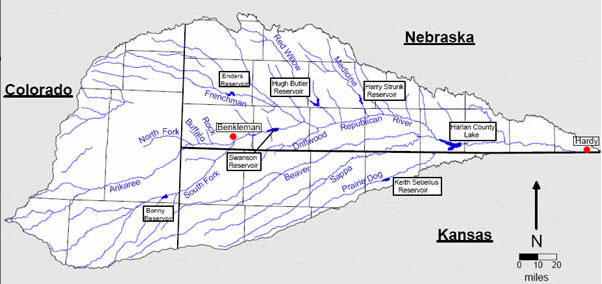
2010 Colorado elections: Governor Ritter wades into rafting rift rapids

A picture named taylorriver.jpg

From The Pueblo Chieftain (Patrick Malone):

Ritter has met with rafting interests and landowners hoping to broker a compromise “so this doesn’t become some kind of ballot Armageddon.” Since the Senate amended [HB 10-1188] last month, it has been a fixture on the House calendar with no action…

Since a Colorado Supreme Court ruling in the late 1970s that allowed rafters passage through private lands, outfitters and landowners have coexisted mostly harmoniously, Ritter said Monday. But the Western Slope acrimony and resulting bill created a rift. “The controversy that was normally dormant came to the surface,” Ritter said.

The governor said his office has intervened because the specter of numerous ballot initiatives further muddying the water over who can travel Colorado’s rivers and where looms large. To date, 12 proposed initiatives swirling around those questions have been filed with the state for possible placement on the November ballot. Talks between both sides of the issue have been productive at times, and broken down at others, Ritter said. It’s likely a conference committee of the Legislature will soon hear the bill in its amended form, but ideally, Ritter would like to see rafters and landowners calm the waters themselves.
More 2010 Colorado elections coverage here.