Colorado Water 2012: History and purpose of the San Luis Valley’s closed basin project

slvdischargerecharge.jpg

Here’s the latest installment of the Valley Courier’s series for Colorado Water 2012, written by Ken Beck, manager of the Bureau of Reclamation’s Closed Basin Project. Click through and read the whole article. Here’s an excerpt:

The Closed Basin Project, which is operated and maintained by the Bureau of Reclamation and currently employs 23 individuals, pumps water from the sump area through a network of shallow groundwater wells or salvage wells. This salvaged water is delivered through a 42-mile canal to the Rio Grande. The project also delivers water to the Alamosa National Wildlife Refuge, the Blanca Wildlife Habitat Area and San Luis Lake.

The Rio Grande Water Conservation District (RGWCD) provides civil maintenance on the Closed Basin Project.

A three person operating committee consisting of representatives of the Colorado Water Conservation Board, RGWCD and Reclamation oversees operation of the Closed Basin Project. The committee ensures operation within parameters outlined in the Rio Grande Compact regarding pumping restrictions and water quality requirements.

More Colorado Water 2012 coverage here.

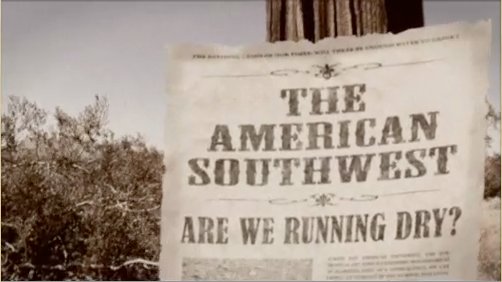
Colorado Water 2012: Broomfield showing of ‘The American Southwest: Are We Running Dry?’ May 8

theamericansouthwestarewerunningdrypromo.jpg

From the Broomfield Enterprise (Joe Rubino):

In Broomfield, Mamie Doud Eisenhower Public Library and Environmental Services are leading the Colorado Water 2012 charge. Having already hosted a well-attended class about Xeriscape gardening — the practice of planting native and other water-thrifty plants to limit irrigation needs — Shirley Garcia, Broomfield Environmental Services coordinator, said the city has numerous other water-friendly classes planned this summer…

While Environmental Services and the Parks Department focus on ways to practice water conservation, staff at the library are taking on another side of the Colorado Water 2012 campaign: Awareness. The library next month will host a trio of programs dedicated to emphasizing the historical and ongoing importance of water in Colorado, including an expected May 6-19 visit from the traveling Colorado Water 2012 display…

Reference librarian Cindy Eubank is heading up the water projects at the library. The Water 2012 exhibit, when coupled with a May 8 screening of the film “The American Southwest: Are We Running Dry?” and a photo exhibit documenting the effects the Dust Bowl had on Colorado farmers in the 1930s, should be eye-opening, Eubank said.

More Colorado Water 2012 coverage here.

Colorado Water 2012: Justice Hobbs pow wows with middle schoolers to talk water, rafting, recreation and water law

coloradowater2012

From The Greeley Tribune (Bridgett Weaver):

Hobbs, one of the nation’s leading authorities on water rights, was at Brentwood Middle School on Wednesday afternoon to talk to students about the adventures of water, as in river rafting and recreational water use. He was there representing the Water 2012 project, which aims to engage Coloradans in a statewide celebration of water, to raise awareness of water use and create new local and statewide opportunities that celebrate Colorado’s water, its uses and its value.

He did this by talking about a book his brother Will Hobbs wrote. The book, “River Thunder,” is about a group of young teens who take a trip down the Colorado River in the Grand Canyon. By bringing pictures from his personal outdoor and river adventures and by pulling them into the conversation with questions, Hobbs kept the students quiet and attentive.

Before talking to the large group, Hobbs participated in an eighth grade Advanced Placement history class. There he talked about Colorado’s history and his job on the Supreme Court. “We got to know things we didn’t know before, like how the court works,” said Lobna Alsrray, an eighth-grader…

Hobbs is promoting his brother’s book as part of the Water 2012 book club.

More Colorado Water 2012 coverage here.

Colorado Water 2012: The Northern Colorado Water Conservancy District turns 75 this year

coloradowater2012

Here’s the latest installment of the Valley Courier’s Colorado Water 2012 series written by Brian Werner. From the article:

The rich water development history of the South Platte Basin goes back another 75 years before Northern Water’s creation. In fact the earliest water rights in the basin date to 1861 when the first farmers began diverting water from the Poudre River near Fort Collins.

A little more than a decade later, in 1874, a confrontation between the downstream Greeley residents and the upstream Fort Collins residents led to the codification of the doctrine of prior appropriation and eventually as part of the State Constitution in 1876.

As ditch, reservoir and irrigation companies were developed and canals built during the remainder of the 19th century the region flourished and developed a robust agricultural economy. Beginning in the 1890s and continuing for 20 years, hundreds of storage reservoirs were built to store water for late summer irrigation or for future dry years.

When Northern Water was created in the 1930s as a direct result of the ongoing drought and depression, there were more than 120 ditch, reservoir and irrigation companies in existence within the boundaries of what was to become the Northern Colorado Water Conservancy District.

Northern Water was established under the Water Conservancy Act of Colorado in September 1937. Its first order of business was to work with the Federal government – the Bureau of Reclamation which had been established in 1902 – to build what was to become the largest transmountain diversion project in the state. The project, the Colorado-Big Thompson, was a direct result of the 1930s drought and depression and was viewed as a life saver for the economy of northeastern Colorado…

Today, Northern Water is working through the environmental permitting on two water storage projects – the <a href="Today, Northern Water is working through the environmental permitting on two water storage projects – the Windy Gap Firming and the Northern Integrated Supply projects. When built these will provide an additional 70,000 acre feet of new supply to the region and lessen the pressure on agriculture to supply those needs.”>Windy Gap Firming and the Northern Integrated Supply projects. When built these will provide an additional 70,000 acre feet of new supply to the region and lessen the pressure on agriculture to supply those needs.

More Colorado Water 2012 coverage here.</p

Colorado Water 2012: Justice Hobbs is heading up to Greeley on April 4 to talk water

coloradowater2012

Here’s the announcement from the High Plains Library District:

Colorado Supreme Court Justice Greg Hobbs will discuss his book (Living the Four Corners: Colorado Centennial State of the Headwaters) and his brother Will’s young adult adventure novel, River Thunder on Wednesday, April 4 at 7 pm at the High Plains Library District offices (2650 W 29th St. Greeley, CO).

Hobbs’ presentation is part of Colorado Water 2012 – a statewide celebration of water: past, present and future. Using his brother’s photos and narrative as well as his own stories and poems Hobbs’ will portray the great adventure of running the Colorado River through the Grand Canyon.

Colorado Water 2012 is a state-wide celebration of Colorado’s unique heritage as a headwaters state. The event, which started as a small celebration to commemorate the major anniversaries of some of Colorado’s most important water organizations and legislation grew into a statewide water awareness campaign following a declaration by Gov. Hickenlooper proclaiming 2012 The Year of Water.

For more information about this presentation please visit http://www.water2012.org or http://www.MyLibrary.us.

Colorado Water 2012

More Colorado Water 2012 coverage here.

Colorado Water 2012: ‘…about 10 of the oldest priority dates in the Rio Grande system belong to the Conejos River’ — Nathan Coombs

coloradowater2012

Here’s the current installment for the Colorado Water 2012 series from the Valley Courier written by Nathan Coombs the Manager of the Conejos Water Conservancy District. Click through and read the whole article for the history of the area. Here’s an excerpt:

In the 1850-70’s when the railroads were carving out rights-of-way through Northern New Mexico and the San Luis Valley, the US military was expatriating hostiles, and farmers and ranchers were focusing on water. This was the era of the canal building and ditch digging. Land was being cleared and the essential element- water was being acquired. In this high desert, the ranchers and farmers were quick to learn the importance of this life-giving substance.

Settlers to the Conejos River area, which rivals the San Luis area for antiquity of civilization and establishment, were not any different. These water users filed for and received their adjudicated decrees. In fact about 10 of the oldest priority dates in the Rio Grande system belong to the Conejos River. Early on these pioneer/settlers were legally and progressively seeking and putting to beneficial use water. With their shoulders bowed to the work they kept their vision focused on the future.

The southern end of the San Luis Valley has always had strong developmental ties to the rivers. The oldest communities in the area were established along the waterways and dependant on the rivers for their success. Ditches like the Guadalupe and the Headsmill (priorities 1&2 respectively) were developed for 1,000’s of acres of land and industry, with examples like the Finley Ranch and the Antonito grist mill and the Town of Antonito’s drinkable water supply developed from their priority on the Conejos River. Although these structures had to be hand built to divert the water, the area developed and progressed.

The people of the Conejos did not sit back and expect gravity to do the work. They looked up, up stream, 10,000 feet up in fact. In the early 1940’s The Conejos Water Conservancy District was formed to be the local vehicle that would seek partnership with the Bureau of Reclamation in building a reservoir. The San Luis Valley Project study identified the Platoro site at nearly 10,000 feet above sea level as the most feasible. As soon as WWII ended and funding became available construction began. This $3 million project was completed one year ahead of schedule and under budget. (Where have those days gone?)

More Colorado Water 2012 coverage here.

The Colorado Mesa University Water Center March newsletter is hot off the press

coloradoriverbasincgs.jpg

Here’s the link to the March 21 newsletter from the Water Center at Colorado Mesa University (Hannah Holm). Here’s an excerpt:

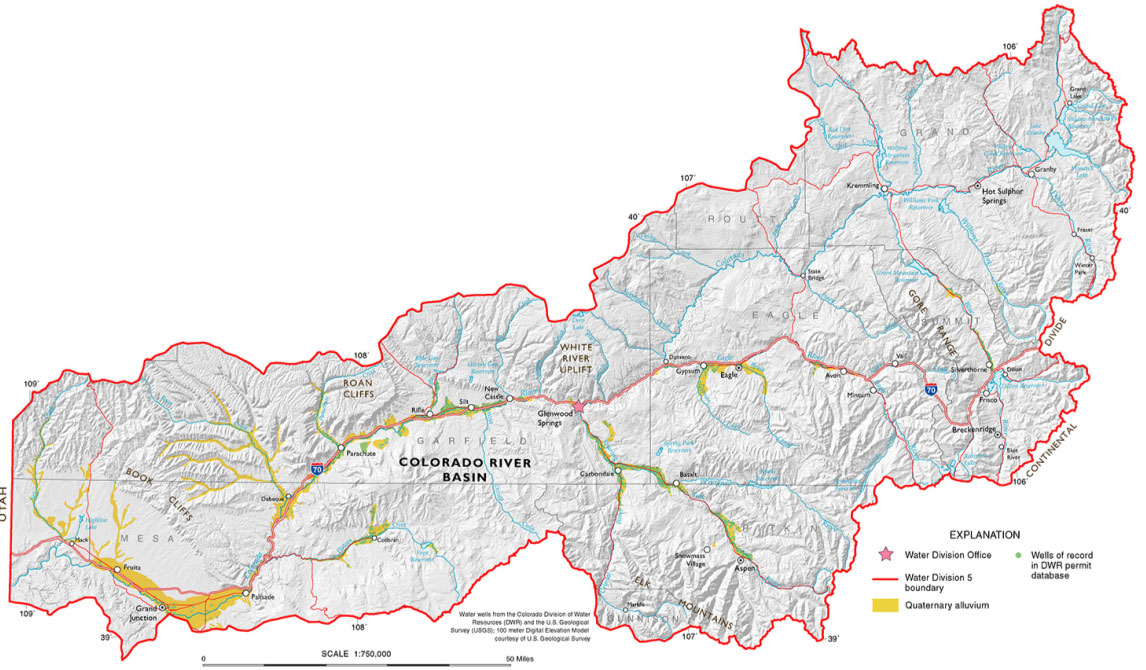
On March 1, Basin Roundtable members from around Colorado gathered to compare notes on their portfolios for how to meet the state’s growing urban water needs in coming decades: How much from agriculture? How much from the Colorado River? How much from conservation? The meeting was one step in the process of developing a statewide water plan.

More education coverage here.

Colorado Water 2012: Home gardens contribute to the quality of life in urban areas

nellieslastharvest10262010

Here’s an excerpt from the latest article in The Pueblo Chieftain’s Colorado Water 2012 series (Zachary Stanifer):

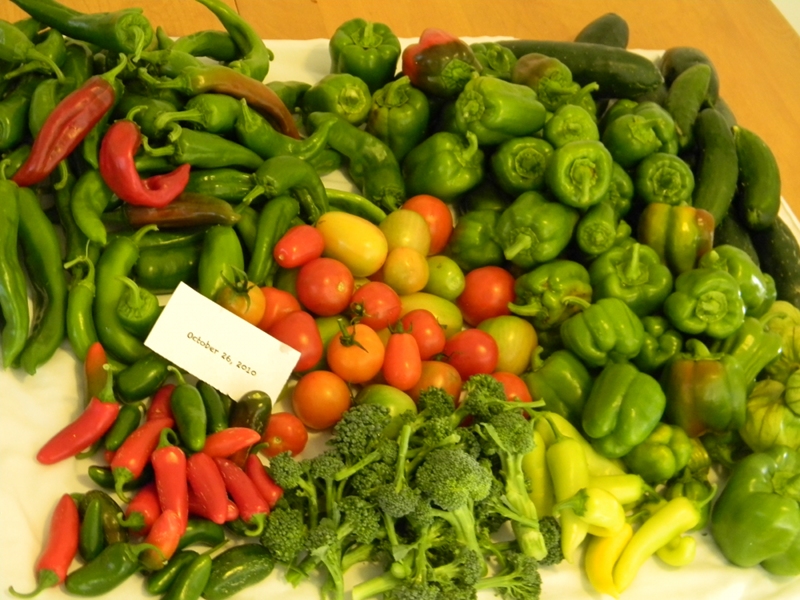
Just 10 short years ago our business felt the full effects of the scarcity of water. Restrictions in the use of water crippled our spring planting business. Even the most avid gardeners cut back the amount of plantings they installed that year, having no guarantee that they would have the water necessary to nurture their plants. While most of what we grow is not essential to a person’s livelihood, I would argue that the simple joy found in fostering a vegetable plant to harvest or a flower to bloom in your favorite color is priceless.

It is vitally important to our community that water remain plentiful and reasonably priced. There have been great efforts put forth in the last decade to educate residents on proper water use and it is finally starting to sink in. A recent article stated that Pueblo’s water use has dropped to levels not seen since 1980, even with adding more taps. This has resulted from a new mindset in landscape usage: Water established plantings for longer periods but less frequently. This develops a more robust root system, requiring less water over time and actually increases the overall health of the plant. We have made many changes in our greenhouses in the last three years to water our crops more efficiently. We have installed regulators and timers to ensure that we are using only the water that we need to use. We use more water in June than any other month of the year. With the upgrades in water applicators we used only one-third of the water in June 2011, compared with June 2009. This decrease in usage was significant since we were actually growing more plants in 2011.

Over the past six years we have increased our plant offerings that are better suited for our climate. These heat tolerant, lower water use plants are essential in the Pueblo landscape. They are often easier to maintain and require much less “prodding” to establish than other thirstier plants. As we begin to utilize more sustainable ornamental plantings we allow ourselves the opportunity to free up more water for the growth of our wonderful city.

More conservation coverage here.

‘Longmont’s oldest water rights today come from the Beckwith Ditch, which dates back to March 1861’ — Longmont Times-Call

oligarchyditchstvrain.jpg

It’s an exciting time of year if you’re a water supplier, farmer or rancher. The irrigation ditches are turning on for the season. Here’s a history of St. Vrain Valley ditches from Tony Kindelspire writing for the Longmont Times-Call. Click through and read the whole article and check out the photos. Here’s an excerpt:

Two ditch companies were established in 1860, 11 years before Longmont became a city, and Longmont’s oldest water rights today come from the Beckwith Ditch, which dates back to March 1861.

Many of the names of the ditches that date back a century and a half are familiar: Left Hand, Highland, Pella, Rough & Ready, Niwot, Oligarchy and Clover Basin.

And so are the names of some of those associated with the founding of those ditches: George L. Beckwith sold the first 80 acres of what later became Longmont to the Chicago-Colorado Colony and was one of four original shareholders in the Beckwith Ditch. Morse Coffin settled Sandstone Ranch but, more importantly from a water perspective, was the namesake in a landmark Colorado Supreme Court ruling — Coffin vs. Left Hand Ditch — that still governs water law today. And L.C. Mead was the superintendent on the Highland Ditch project, which is one of the largest ditches in the region…

Today, Longmont owns water rights in dozens of ditches in the area, with the percentages of ownership ranging from less than 2 percent of the Left Hand Ditch to 100 percent of the Longmont Supply and the Palmerton ditches. The ditch companies, as do the ditches themselves, vary in size. Most of them usually have a superintendent and a board of directors, but the smaller companies could just be one person, Huson said. One thing every ditch company has to have is a ditch rider. Maintaining proper water flow and cleaning up debris are the ditch rider’s primary responsibilities.

More South Platte River basin coverage here.

Colorado Water 2012: Water conservancy districts and water conservation districts explained

coloradowater2012

Here’s the current installment of their Colorado Water 2012 series from The Valley Courier (Mike Gibson). Click through and read the whole article. Here’s an excerpt:

Water Conservation Districts determine policies, own water rights and other real property, coordinate local engineering and legal studies, and assist in the development of water resource projects. They may levy ad valorem taxes for the expenses of the organization…

In contrast, Water Conservancy Districts are formed at the request of communities and are local instrumentalities of state government. They are organized under procedures in state district courts and remain under their jurisdiction. These are formed in conformance with the Water Conservancy Act of 1937 and Colorado State Statutes 37-45-10 and have the powers of a public or municipal corporation.

More Colorado Water 2012 coverage here.

Colorado Water 2012: Justice Greg Hobbs — ‘Love the water well, because it’s everything’

justicegreghobbs2012cowatercongannualconvention.jpg

From The Pueblo Chieftain (Chris Woodka):

“Water law is much more than a code in a courtroom,” Colorado Supreme Court Justice Gregory Hobbs said Wednesday. “It’s how people and communities adopt their customs around our most precious resource.”

More than 150 years ago, Congress and courts decided water would not be tied to streamside use and could be moved away from rivers. Agriculture was the primary reason. There are inherent dangers in changing the use of water from the farms that have grown from those principles, said Hobbs, whose son Dan farms in Pueblo County. “If you dry up the land, you get not only noxious weeds, but a noxious economy,” he said.

Hobbs spoke to students and community members as part of a Colorado State University-Pueblo series of lectures as part of Colorado Water 2012…

His topics were wide-ranging, however, giving the audience a taste of how state water law developed as Colorado was settled. He talked about recent Supreme Court decisions — Hobbs writes the water opinions — and made a careful disclaimer that he could not speak about current cases the court may hear.

Still, he had opinions about how the state should approach water law in general. “We need a flexible water law. We need a stable water law. If you want to sell your water, it’s quantified,” Hobbs said. The tendency of cities to want to “monopolize” the resource has to be balanced against the actual need and reasonable projections of growth, he said…

He talked about his experience as a young lawyer in the attorney general’s office defending the state against John Huston’s attempt to claim all of the state’s nontributary groundwater. That case resulted in major legislative changes about how groundwater is defined and opened the way for underground storage. As a justice, he and his colleagues upheld Pueblo District Court Chief Judge Dennis Maes’ ruling that High Plains A&M made speculative claims when it tried to change its shares on the Fort Lyon Canal to broader uses in 2004. The court also limited the reach of Pagosa Springs in two cases within the past five years.

More Colorado Water 2012 coverage here.

Colorado Water 2012: Jay Winner — ‘Acquiring irrigation water is the easiest, most efficient and lowest cost way for growing Front Range municipalities to obtain additional water supplies’

arkbasinditchsystem.jpg

Here’s the latest installment of the Valley Courier’s Colorado Water 2012 series. Today, Jay Winner, General Manager, Lower Arkansas Valley Water Conservancy District, discusses rotational fallowing. In particular he explains the Arkansas Valley Super Ditch project being spearheaded by the Lower Ark district. Here’s an excerpt:

In 2002, residents of the Lower Valley voted two to one to create the Lower Arkansas Valley Water Conservancy District (“Lower District”) to protect the Valley’s water resources, and with them, their social and economic future.

While the Lower District has aggressively fought additional agricultural to municipal transfers, it has just as steadfastly worked to develop an alternative that will meet inexorable municipal demands while protecting and enhancing the value of remaining irrigation water.

LEASING. Water leasing, pioneered during California’s 1990s drought, emerged as the most promising answer for several reasons.

First, leasing would not require current irrigators to sell their water to realize its current value, preserving the long-term ownership of the water in the Valley.

Second, most irrigated land would remain in production every year.

Third, water leasing would create a “new crop,” one with a predictable cash flow that irrigators could use for on-farm improvements, debt reduction, equipment upgrades and the like.

Fourth, cities could obtain the water supplies they need – an irrigated field is functionally equivalent to a reservoir that can be tapped (dried up) when needed for municipal uses…

Shareholders of the Rocky Ford High Line Canal, Oxford Farmers Ditch, Otero Canal, Catlin Canal, Holbrook Canal, and the Fort Lyon Canal (later joined by the Bessemer Ditch) met in Rocky Ford on May 7, 2008. They incorporated the Lower Arkansas Valley Super Ditch Company, a Colorado for-profit corporation managed by a Board of Directors elected by Valley irrigators. The Super Ditch negotiates on behalf of irrigators to make water available to other water users through long-term leases, interruptible water supply agreements, and water banking.

Meanwhile, Aurora is assuring the Arkansas Basin that their new contract with water bottler Niagara Bottling will be for single-use, non-transbasin water. Here’s a report from Chris Woodka writing for The Pueblo Chieftain. From the article:

“It’s an industrial use in the city of Aurora,” said Greg Baker, spokesman for Aurora Water. He said there are few other industrial users in the Denver suburban community.

Aurora gets about one-quarter of its supply from purchases of water rights it has made in the Arkansas River basin, one-quarter from the Colorado River and half from the South Platte.

“This is single-use water, so the paper accounting for it will be from the South Platte,” Baker said.

Return flows from water brought in from either the Arkansas or Colorado basins can be reused, and Aurora built the $650 million Prairie Waters Project to directly recapture those flows.

A bottled water plant would use all of the water, however, so Aurora will credit supplies to its Platte River water resources.

More Colorado Water 2012 coverage here.

Colorado Water 2012: Fix Those Leaks!

coloradowater2012

Here’s a new post from Your Water Colorado Blog highlighting Fix a Leak Week. From the post:

The EPA has declared Fix a Leak Week, March 12 through 18, 2012 because leaks waste a tremendous amount of water. Fix a Leak Week is an annual reminder to check household plumbing fixtures for leaks, this week and all year long. Several cities in Colorado are sponsoring activities to celebrate Fix a Leak Week.

More conservation coverage here.

Colorado Water 2012 — Justice Hobbs to discuss his book ‘Living the Four Corners: Colorado Centennial State of the Headwaters’ Wednesday in Pueblo

coloradowater2012

From The Pueblo Chieftain (Gayle Perez):

Hobbs is scheduled to speak from 3 to 4:20 p.m. in the Library and Academic Resource Center, Room 109. Hobbs’ presentation is part of the ongoing Colorado Water 2012 series of speakers being hosted by CSU-Pueblo. The series is free and open to the public.

Here’s the link to the book store page from the Continuing Legal Education Inc. page.

More Colorado Water 2012 coverage here.

Colorado Water 2012: Lee Hancock — ‘Farming and ranching is the second-largest contributor to our state’s economy’

coloradowater2012

Here’s the latest in The Pueblo Chieftain’s Water 2012 series. Here’s an excerpt:

Farming and ranching is the second-largest contributor to our state’s economy. Most people just don’t realize that our rural communities are directly dependent on agriculture. At the turn of the century, our towns sprung up to support the emerging agricultural industry. As the agricultural industry grew, so did its supporting communities. Before long, the interdependency between local agriculture and its local community became so strong that if either failed, both would fail. This has proven especially true in Southeastern Colorado.

Agriculture is mostly made up of ranching, dry-land farming and irrigated land. It is the irrigated agriculture and the perennial supply of irrigation water that allows farmers in the Lower Arkansas Valley to grow the crops for our food supply. The sale of these commodities such as corn, sorghum, wheat, alfalfa, onions, cantaloupes, watermelons, tomatoes, chiles and a slew of other crops bring millions of dollars into our rural communities annually. Water, especially irrigation water, has created wealth in private land and water rights ownership. Irrigated farmland is valued considerably higher because of the water and its production potential.

More Colorado Water 2012 coverage here.

Colorado Water 2012: Water law and Chaffee County water history from The Mountain Mail

coloradowater2012

Here’s the first article in their year-long series examining water issues in the Upper Arkansas Valley from Joe Stone writing for The Mountain Mail. From the article:

Along the western edge of the valley, the peaks of the Sawatch Range reach heights exceeding 14,000 feet above sea level and receive far more precipitation than the valley floor. As a result, approximately 80 percent of regional water comes from mountain snowpack that accumulates during winter and flows downstream as warmer temperature melts the snow. These characteristics of geography and climate created challenges for early settlers and fostered development of a water management system unique in the United States…

Early settlers found good farmland in the Lower Arkansas Valley and diverted water from the Arkansas River into the Rocky Ford High Line Canal. The canal has an 1861 water right senior to Upper Arkansas Valley water rights and, therefore, continues to affect Upper Ark water rights…

The oldest ditch in Chaffee County is the Trout Creek Ditch with an 1864 appropriation date. Other early ditches included the 1864 Thompson Ditch on Cottonwood Creek and the 1870 Hayden Ditch near Coaldale.

More Colorado Water 2012 coverage here.

Colorado Water 2012 book review: ‘House of Rain: Tracking a Vanished Civilization Across the American Southwest’ by Craig Childs

houseofraincraigchilds.jpg

Justice Greg Hobbs has posted a review of Craig Childs’ book House of Rain: Tracking a Vanished Civilization Across the American Southwest on Your Water Colorado Blog. Here’s an excerpt:

Follow the T-shaped doorway, the signature architectural marker of their [Ancestral Puebloans] abode and passage. It’s the perfect sign and symbol of the inverted mountain, where a sacred spring breaks forth from some deep subterranean place into what the Navajos continue to call this “glittering world,” a place to drink and farm and live in water pockets of community with your clan and domesticated turkeys.

You’ll find them not really disappeared. They’ve left their hands imprinted all over the face of sandstone cliffs, along with mountain sheep and the spiraling swirl of their creation story carved into petroglyphs on the front of kiva cornerstones. You’ll find the water frogs they carved, inlaid with turquoise eyes, at the back of alcove dwellings, continuing to offer blessings for a trickle. Shards of their drinking mugs and shriveled corncobs litter the landscape of your inquiry.

More Colorado Water 2012 coverage here.

Colorado Water 2012: CSU Pueblo Water Resources Series Wednesdays through April 18

coloradowater2012

From The Pueblo Chieftain (Gayle Perez):

The series is scheduled each Wednesday through April 18 from 3 to 4:20 p.m. in Room 109 of the Library and Academic Resource Center. All sessions are free and open to the public…

Wednesday: Tom Cech, director of the One World, One Water Center at Metro State-Denver. Cech is author of “Colorado Water Law for Non-Lawyers.”

March 14: Colorado Supreme Court Justice Gregory Hobbs to discuss his latest book, “Living the Four Corners.”

March 21: Scott Lorenz, general manager of the Arkansas Groundwater Users Association, to speak about the interplay between groundwater and surface water management.

March 28: No lecture, spring break.

April 4: Larry Small, general manager of the Fountain Creek Watershed, Flood Control and Greenway District, to give a presentation on restoration principles.

April 11: Reed Dils, co-founder of the Arkansas River Headwaters Recreation Area, to discuss the voluntary flow program for rafting and fishing the Upper Arkansas River.

April 18: Peter Binney, director of Sustainable Planning for Black and Veatch and namesake of the state-of-the-art Peter D. Binney water purification facility, will discuss sustainability of Western water resources.

For more information about the series, call 549-2045.

More Colorado Water 2012 coverage here.

Colorado Water 2012: A dentist’s perspective

coloradowater2012

From The Pueblo Chieftain (Tom Autobee):

My concerns about future water availability in Colorado, as a whole, relates to the Colorado River Compact because I feel the Colorado River is overappropriated, with the upper basin states compromising their water rights so the lower basin receives its entitlement. Something has to give. As the population in our state grows, there will be more pressure on the Western Slope and on agriculture to provide more water on the Front Range because that is where our state is growing.

I believe that the most critical part of our future water availability in Colorado is storage. Unfortunately, the issue of storage is caught up in various political circles. The politics of storage is softening, so hopefully storage will become a reality in the near future. What is interesting now is the issue of agriculture surface irrigation which requires augmentation. The challenge will be the source of the augmentation and prepare for its side effects.

Fortunately, there is more collaboration now than there has ever been regarding water issues on a state wide basis. Unfortunately, to accomplish meaningful change in the world of water takes 10-30 years.

More Colorado Water 2012 coverage here.

Statewide Roundtable Summit: Governor Hickenlooper touts the importance of understanding the water-food nexus, adios bluegrass?

ibccroundtable.jpg

From The Pueblo Chieftain (Chris Woodka):

The governor said bluegrass lawns in cities take water away from water needed for agriculture, and one of the easiest fixes is to get people to change their landscape habits. “We’re taking water from ag uses and applying it toward urban landscapes,” Hickenlooper said. “We don’t have an abundance of food. We’re going to need more water for food to make sure farmers don’t run short.”[…]

“Water is a public good, and the roundtables are bringing all of the interests in a river basin together to decide how to manage water in a basin,” he said. “The basin roundtables are on the cutting edge. They become a crucible to determine the needs of the state.”[…]

Citing Denver’s campaign that led to 20 percent water conservation, Hickenlooper outlined several statewide approaches that will increase public awareness of water stress and the need for farm water:

– The ongoing Colorado Water 2012 campaign.
– Incorporating water issues in the upcoming TBD (To Be Determined) Colorado roundtables.
– A “Pedal the Plains” event next fall, similar to “Ride the Rockies.”

The governor also mentioned “shuttle diplomacy” as a strategy to resolve lingering water conflicts. Last year, the state brokered talks between oil companies and environmentalists to rewrite rules on hydraulic fracturing that left both sides feeling like winners.

More IBCC — basin roundtables coverage here.

The Colorado Water 2012 March newsletter is hot off the press

coloradowater2012

Download your copy here.

I missed notifying you about Brad Udall’s Colorado River talk at Metro State tonight. Sorry.

More Colorado Water 2012 coverage here.

Colorado Water 2012: Colorado Climate Center — CoCoRaHS for Schools

cocorahs12332011precipitation.jpg

Cruise on over to the Your Water Colorado Blog for Noah Newman’s post about the Colorado Climate Center’s ongoing effort to get a rain gauge in every classroom. Here’s an excerpt:

Besides the goal of a high density network of quality precipitation data, CoCoRaHS also has a goal of education and outreach. The most recent effort has been to train teachers and equip schools with rain gauges, having the students collect and report the data. The kick-off for ‘CoCoRaHS for Schools’ has been successful in large part due to the statewide campaign hosted by the Colorado Foundation for Water Education called ‘Colorado Water 2012′ (http://water2012.org/).

More Colorado Water 2012 coverage here.

Colorado Water 2012: Craig Cotten — ‘Approximately one-half million acre-feet per year are pumped from the [San Luis] Valley’s aquifers to support agricultural, livestock, commercial and residential needs’

slvdischargerecharge.jpg

Here’s the latest installment in the Valley Courier’s (Craig Cotten) Colorado Water 2012 series. From the article:

Early settlers to the Valley relied on both shallow and artesian flowing wells for household and livestock use and even today, more than 90 percent of the Valley’s domestic water supply comes from wells.

But all that groundwater use does not come without an impact to the stream systems and vested water rights within the Valley.

The State Engineer is currently working on developing rules and regulations for the administration of groundwater here in the San Luis Valley to mitigate injury caused by groundwater use. This development has been going on for several years, but the story of rules and regulations actually begins in 1969. That is the year in which the Colorado legislature passed the Water Rights Determination and Administration Act. This Act, for the first time ever, gave the State Engineer the legal authority to administer wells within the priority system, which is based upon the Doctrine of Prior Appropriation. Prior to the 1969 Act, the use of groundwater was not linked to surface water rights.

The State Engineer at that time, C.J. Kuiper, wasted no time in developing rules and regulations for various parts of the state. He first developed rules for wells within the South Platte Basin, then rules for wells within the Arkansas Basin, and then he moved on to the Rio Grande Basin.

In 1975, rules and regulations were developed for wells within the San Luis Valley. These rules mandated that all large capacity wells (greater than 50 gallons per minute) were to be shut down unless they had an augmentation plan to replace their depletions. Needless to say, the SLV well owners were less than thrilled with the new rules. Many individuals and groups objected to the rules, and so, those rules were the subject of years of debate, a 12-week trial, and finally a trip to the Colorado Supreme Court.

The Supreme Court ruled that the State Engineer did have the authority to establish rules and regulations, but that there might be some better options rather than shutting all of the wells completely off. They encouraged the State Engineer to look at alternatives, specifically mentioning the Closed Basin Project. At that time, there was a belief that the Project could produce enough water to cover all of the depletions from the wells.

More Colorado Water 2012 coverage here.

Colorado Water 2012: Paonia Reservoir turns 50

paoniareservoir.jpg

From the Delta County Independent (Kathy Browning):

The Paonia Reservoir was the first project to be completed in the Colorado River Storage Project. Crawford Reservoir was another of those projects but it was not completed until later.

“We are going to have a 50 year celebration this summer,” Dixie Luke of the Gunnison Round Table said. “Paonia Reservoir was built for and by the people of the United States.”

The celebration will be Aug. 6. A lot of the details are still being completed at this time…

Luke would like those who have historic photographs of the Paonia Reservoir to send those to the Hotchkiss-Crawford Historical Society.

More Colorado Water 2012 coverage here.

Colorado Water 2012: Hydrography — The science of measuring streamflow

riograndeatembudonewmexicohydrograph.jpg

Here’s the latest installment in their Water 2012 series from the Valley Courier. Click through and read the whole thing. Here’s an excerpt:

For the Rio Grande Compact, seven streamflow gaging stations are operated in the San Luis Valley to account for the water originating in the Conejos and Rio Grande systems and the water delivered from these systems to New Mexico. The Hydrographic Branch of the Colorado Division of Water Resources operates these seven gaging stations along with 73 other gaging stations across the San Luis Valley.

In addition to the Compact gages, stations are operated on natural streams and creeks to help water commissioners allocate the available water to water users, maintain a historic record of water in the stream, account for trans-mountain water brought into the basin, record water diverted at critical diversion structures, and provide valuable information to recreational enthusiasts such as kayakers and fishermen.

The data from these sites may be later used for water supply planning, flood warning, environmental studies, and basin modeling, such as the Rio Grande Decision Support System (RGDSS).

Meanwhile, USGS streamflow gages are facing funding cuts. Here’s a report from Bob Berwyn writing for the Summit County Citizens Voice. From the article:

…for years, ranchers, town planners and even angler and kayakers have relied on a huge network of streamflow gages maintained by the U.S. Geological Survey to help monitor water quality, measure and predict peak spring runoff and flooding potential, or even just the best time run some whitewater or to go fishing. In some places, the streamflow information is critical to helping protect endangered species.

But that network is shrinking, due mainly to budget constraints that already forced the USGS to shut down stations around the country. Just in the past few years, the agency stopped operating 133 water quality stations, many in New Mexico and Florida.

More Colorado Water 2012 coverage here.

Colorado Water 2012: ‘A day without water’ video contest

coloradowater2012.jpg

Click here for the announcement from Your Colorado Water Blog and the Water 2012 gang.

More Colorado Water 2012 coverage here.

Colorado Water 2012: The Rio Grande Headwaters Land Trust continues to protect water resources in the San Luis Valley

coloradowater2012

Here’s this week’s installment of the Valley Courier’s Water 2012 series. Here’s an excerpt:

RiGHT grew out of the Citizens for San Luis Valley Water, who were seeking a tool for the community to help keep water in the basin. One of the co-founders, Cathy McNeil, along with her husband Mike of the McNeil Ranch and neighboring ranchers on the Rock Creek corridor south of Monte Vista were among the first to conserve their own lands with conservation easements.

They did this for a number of reasons, ranging from overall estate planning to their real desire to keep their land and water intact for agriculture and not allow it to be broken into the proverbial “ranchettes” that are fragmenting far too much of Colorado’s historic ranchlands, and thereby converting agricultural water rights to domestic and other uses.

In response to the intense pressure for land development and conversion of water from agriculture to other uses, the interest in conservation has grown steadily across Colorado. RiGHT has led the nation in providing support and incentives for private land conservation, including the lottery funded Great Outdoors Colorado (GOCO). GOCO also serves as a model for the America’s Great Outdoors initiative, with Secretary of the Interior Salazar as a key proponent of that effort. Colorado has also passed significant tax benefits to encourage voluntary conservation easements.

While RiGHT continues to work throughout the entire San Luis Valley, after the drought of 2002, protecting the Rio Grande river corridor and its water resources emerged as the clear priority for San Luis Valley residents. RiGHT found that, in contrast to the highly fragmented ownership of many of Colorado’s river corridors, there is still a substantial amount of relatively intact land along the Rio Grande corridor, much of which has senior water rights associated with it. With the help of partners at The Nature Conservancy, Ducks Unlimited and many willing landowners, RiGHT launched the Rio Grande Initiative in 2007.

Since 2007, RiGHT has been able to triple the pace of conservation along the river. As of the end of 2011, more than 22,000 acres and 36 miles of the river are protected,thanks to the significant investment of many funders and landowners. A recent Trust for Public Land study indicated that every dollar invested in conservation generates six dollars of economic return in communities, meaning that those funds serve as a substantial economic driver in this rural, agricultural region.

More Colorado Water 2012 coverage here.

Colorado Water 2012: Recap of Jim Yahn’s presentation at the Logan County Historical Society

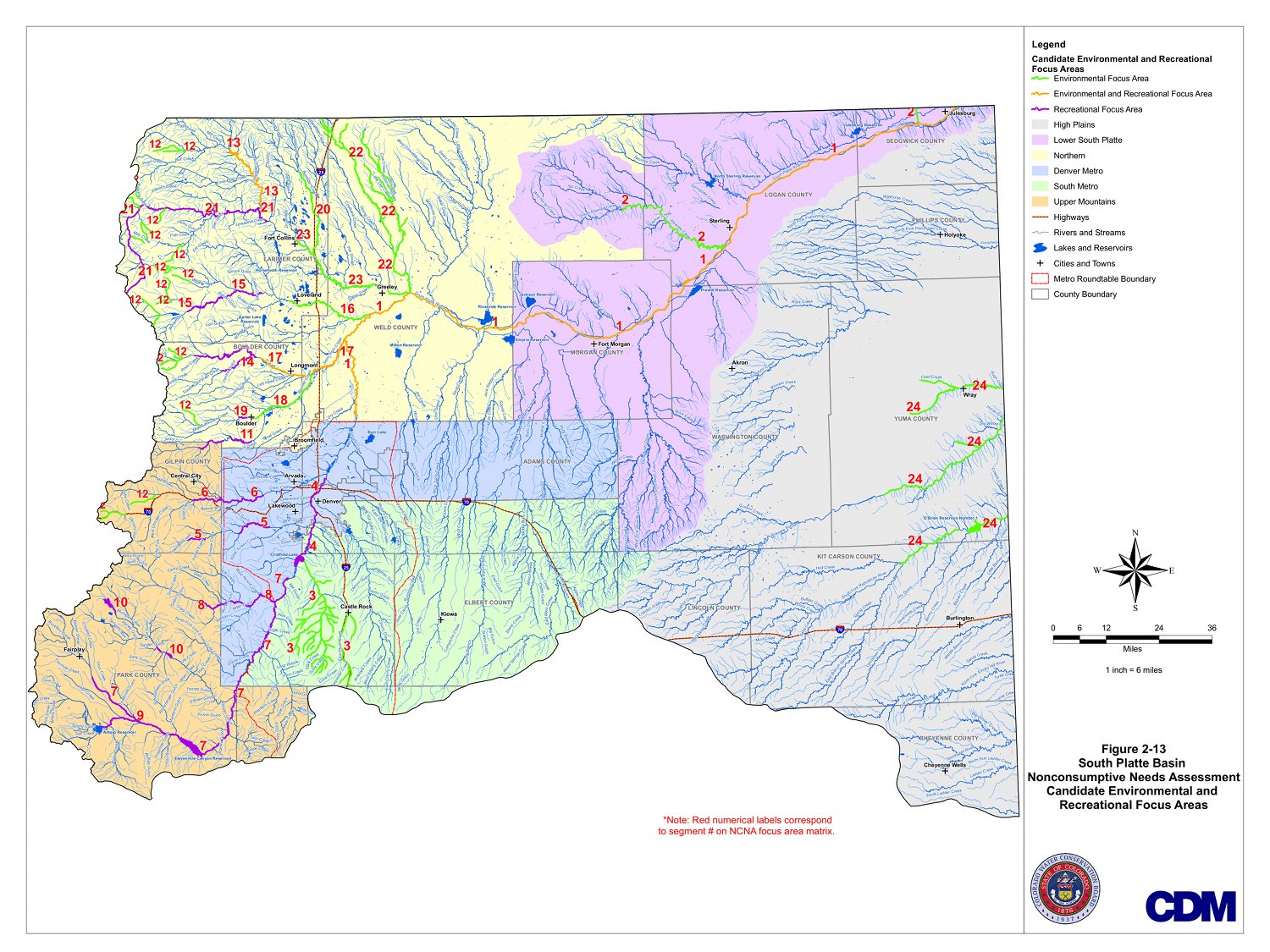
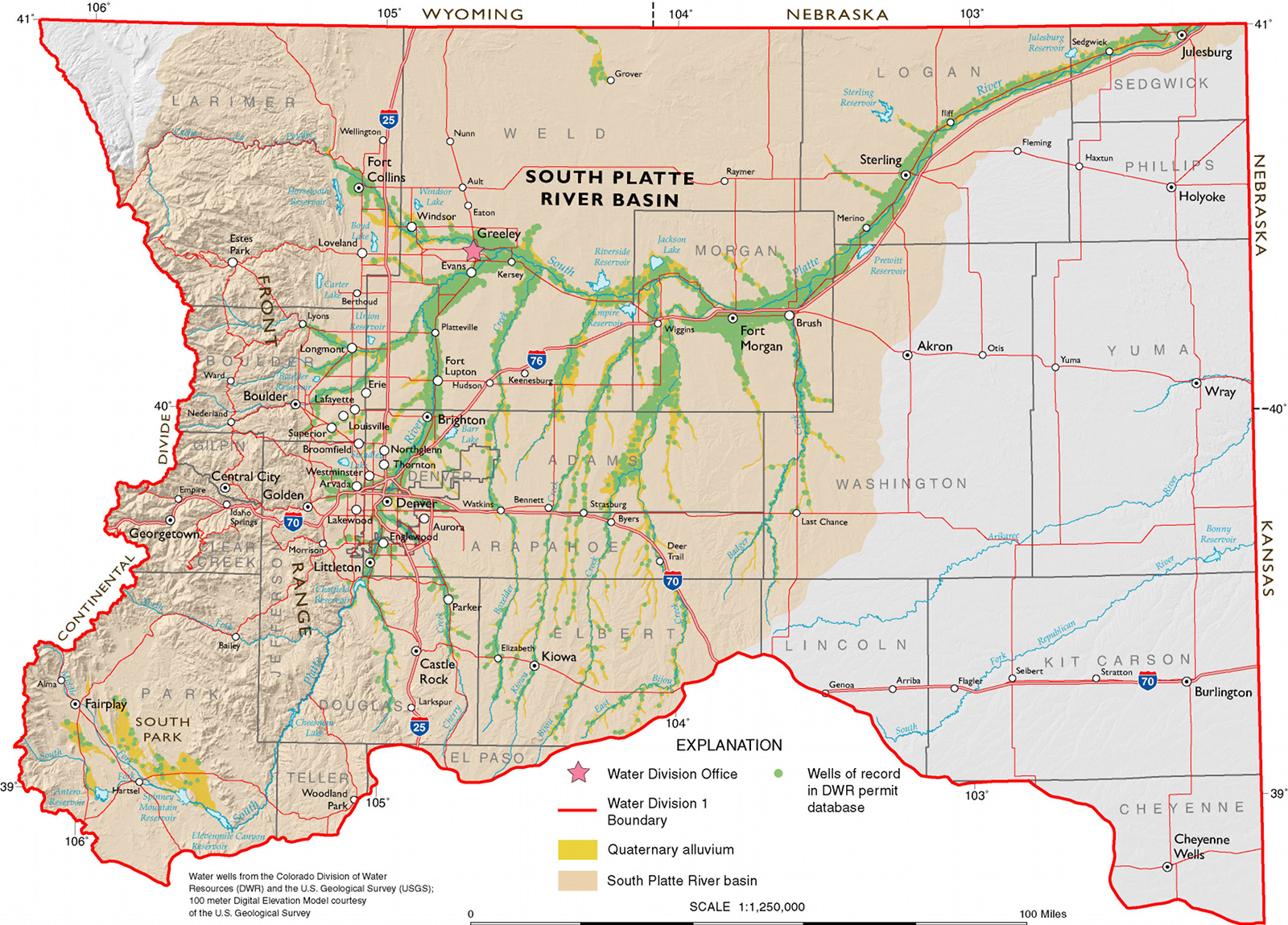
southplattebasinnonconsumptiveneedsmapswsi2010

Here’s report from Sara Waite writing for the Sterling Journal-Advocate. Click through and read the whole article. Here’s an excerpt:

Yahn explained water rights and how they work. A water right consists of seven items: location, means of diversion, appropriation date, ajudication date, amount — flow or volume (cfs or acre feet), use and other pertinent information. The date of the water right is just one key in determining who gets water when there is a shortage — the other is location. A user with a newer right may lose access to the water if someone with an older water right downstream from them lays claim to what’s available. However, downstream users with newer water rights may still have access to water in the river than those further upstream, as water is returned to the river by the priority user.

Yahn also looked at the state’s growing need for water. He showed a map that depicts how much water leaves the state in an average year, noting that some of that water is obligated to other states downstream. However, he said, there is much more that could be retained by Colorado, especially on the Western Slope. There are storage and pipeline projects in the works that could help offset the dire water shortage that is predicted by 2050, but even if 100 percent of the projects were approved, the state would still need to double its access to water to meet the need. With the permitting process in place to meet environmental concerns, Yahn predicted that maybe 50 percent of the projects would actually be approved.

More Colorado Water 2012 coverage here.

Colorado Water 2012: The Grand County Library District is celebrating with displays in Granby and Fraser and a presentation of the film ‘Tapped Out’

eisenhowerfishing.jpg

Here’s the announcement from the Grand County Library District:

Please join the Grand County Library District as it partners with nearly 200 state and local organizations and educators in celebrating Colorado’s unique heritage as a headwaters state, and in understanding the diverse uses and values of this precious resource.
Colorado Water 2012, spearheaded by the Colorado Foundation for Water Education, is a campaign to “engage Coloradoans in a statewide celebration of water: past, present, and future.”

The goals of Colorado Water 2012 are to: raise awareness about water as a valuable and limited resource, increase support for management and protection of Colorado’s water and waterways, showcase exemplary models of cooperation and collaboration among Colorado water users, connect Coloradans to existing and new opportunities to learn about water, and to motivate Coloradans to become proactive participants in Colorado’s water future. (http://www.water2012.org)

In hopes of “connecting Coloradans to their water,” the library district is hosting a variety of displays and events:

Feb. 3 – Feb. 18 at the Fraser Valley Library and Feb. 19 – March 3 at the Granby Library: The Colorado Water 2012 traveling display will be featured with local information provided by the Grand County Water Information Network. GCWIN is a nonprofit organization that provides water quality information and educational programs in Grand County.
Feb.13-March: Jon Ewert , local aquatic biologist with Colorado Parks and Wildlife, has created a display explaining how science-based fisheries management takes place in the rivers and lakes of Grand County. It will be featured in the Urban Community Meeting Room at the Fraser Valley Library.

Thursday Feb. 16, 5:30 p.m. at the Fraser Valley Library and Wednesday, Feb. 22, 5:30 p.m. at the Granby Library: Kirk Klancke will host a presentation of the film “Tapped Out” followed by an update on the two proposed projects that are the most immediate threat to our local rivers, with time for questions and answers. Kirk Klancke is the President of the Colorado River Headwaters Chapter of Trout Unlimited, Board member of the Grand County Water Information Network, Board member of the Grand County Water Quality Control Board, Board member of the North West Council of Governments Quality and Quantity, and the recipient of the 2011 Field and Stream Magazine National Conservationist Award.

Thanks to the Sky-Hi Daily News for the heads up.

Head on over the Your Colorado Water Blog for a report on the Colorado Rural Water Association meeting held yesterday in Colorado Springs. Here’s an excerpt:

On Thursday, catch the best tasting water contest! The winner will be eligible to compete against other states at the National Rural Water Association’s Rural Water Rally held in February 2013– in 2010 the Morgan County Quality Water District of Fort Morgan won second place in this national competition…

According to the Colorado Water Quality Control Division, 96% of the state’s population drinks water that meets all health-based drinking water standards. Read more about the safety of your drinking water and the role of water treatment in the latest issue of Headwaters Magazine.

Finally, the City of Trinidad is planning their first ever water festival to celebrate Colorado Water 2012. Here’s a report from Steve Block writing for The Trinidad Times. From the article:

The stated goal of the festival is to create a vibrant, colorful community event with lots of music and food that is both fun and educational, where people of all ages can wander among tables and booths of water educational projects and take part in demonstration projects throughout the grounds.

One of the central purposes of the Water Festival is to involve students in interactive projects that help them learn about how to use water resources in the most environmentally sound way possible. Plans call for as many as 1,500 students from around the area to attend the festival.

The student activities are designed to provide an opportunity to learn about our water supply, the importance of water conservation and watershed protection through creative and interactive displays, presentations and activities. The activities will provide the students with environmental knowledge and the opportunity to share in creative ways what they have learned with the community…

The exhibition hall will include a river maze, a functioning model of a watershed, erosion control demonstrations and hands-on water testing. The Trivia Bowl is perhaps the most fun and boisterous activity at the festival. Four-person teams will be pre-selected and compete with teams from other classes. Students will compete in water questions from the categories of history, geography, water supply, conservation and water rights. Poster and essay contests stress the creative aspects of learning about water. The best entries from each school will be displayed at the festival, around town and in local newspapers.

More Colorado Water 2012 coverage here.

Colorado Water 2012: Carl Musso — ‘…almost all of us know that our food has to be grown, produced, or farmed somewhere before it ever hits the shelves of the supermarket’

coloradowater2012

Here’s the latest installment of their Colorado Water 2012 series from The Pueblo Chieftain (Carl Musso):

Every farm needs sunlight, soil and nutrients, seeds and of course water. Without water, there is no agriculture…

Here in Colorado, we can’t rely on it raining to help us grow food, so the irrigation decisions we make are even more important. Irrigation on a farm is a lot more complicated than just running water down a field or turning on a sprinkler. It all starts with that snowpack up in the mountains. After it thaws and the water comes down the river, it gets used by upstream cities. By the time it gets down here, that same water has probably been used for fishing, rafting and boating in the reservoir too. By then, we get our shares and push water out each one of our plants.

Trust me, some of that old equipment along our ditches might look like antiques, but we measure our water down to the thickness of an eyelash.

More Colorado Water 2012 coverage here.

Colorado Foundation for Water Education: Winter 2012 issue of Headwaters magazine is hot off the press

headwatersmagazinewinter2012

Click here to read the issue online. Click here to find out how to order your own copy.

More Colorado Foundation for Water Education coverage here.

Water 2012: Logan County Historical Society presentation about the history of water in Colorado February 13

southplatteriverbasincgs.jpg

From the Sterling Journal-Advocate:

At its regular meeting on Feb. 13, the Logan County Historical Society will have a presentation on the history of water in Colorado. Jim Yahn, PE, manager of the North Sterling and Prewitt reservoirs, will present information on this important issue of water in Colorado, especially the South Platte Basin…

Municipal water use in the South Platte Basin in now about 25 percent of the total available and rising. Chief Colorado Supreme Court Justice Gregory Hobbs believes Colorado has done a remarkable job of setting water priorities and allocating the finite resource. He sees the current laws as being the best way to appropriate water to its different uses.

University of Wyoming legal scholar Larry MacDonnell disagrees. He believes the resources of the Colorado River are being squandered and advocates moving more agriculture water to urban areas.

Yahn says the large metropolitan areas of the South Platte are working very hard and expending a lot of money to conserve and otherwise make good use of the water they get. But the reality, according to Jim and other water experts, is that the population of the South Platte Basin is going to increase dramatically in the next 25 years and they will have to get more water. Conservation and high prices alone won’t do the job…

The LCHS meeting will be at 7 p.m., Monday, Feb. 13, at the Church of the Nazarene, 1600 Sidney Ave., Sterling Colorado. The meeting is open to the public.

More Colorado Water 2012 coverage here. More South Platte River basin coverage here.

Colorado Water 2012: Check out Your Colorado Water Blog for a primer explaining what a water footprint is and how to calculate yours

waterfootprint.jpg

Here’s the link to their post, What’s Your Water Footprint?. Click through and read the whole post and then take part in the conversation in the comments. Here’s an excerpt:

Calculate your water footprint using National Geographic’s personal water footprint calculator and let us know– how big is your water footprint? Are you doing anything to cut back on personal water use? Do you think about the water used to create the products you purchase? Is there anything that the state of Colorado or your utility should be doing to make people more aware of the water we’re using?

More Colorado Water 2012 coverage here. More conservation coverage here.

Colorado Water 2012: Craig Cotten — ‘The Rio Grande Compact is the agreement, signed in 1939, that provides for the equitable apportionment of the waters of the Rio Grande between Colorado, New Mexico, and Texas’

riograndebasin100thmeridianorg.jpg

Here’s this week’s installment of the Colorado Water 2012 series from the Valley Courier. Craig Cotten (Division Engineer and Colorado’s Engineer Adviser to the Rio Grande Compact Commission) explains the Rio Grande River Compact:

The Rio Grande Compact is the agreement, signed in 1939, that provides for the equitable apportionment of the waters of the Rio Grande between Colorado, New Mexico, and Texas. During the late 1800’s and early 1900’s, much of the flow of the Rio Grande began to be diverted for irrigation in the upper part of the Rio Grande Basin, which caused concern to the downstream states. The Compact was necessary to fairly allocate the flows of the Rio Grande between the three states. It provides the framework for a fair allocation and use of water in the Rio Grande and its tributaries from year to year.

The delivery obligations set forth in the Compact were based upon a study of the Rio Grande during 1927 through 1936. Engineers studied the amount of water used by each state and developed a schedule of required delivery for Colorado and for New Mexico dependent on the total yearly flow in the river. The engineers also developed a limit on the yearly amount of water that Texas could use from the upper Rio Grande. These limitations allow each state to develop its water resources at will, subject only to its obligations as set forth in the Compact. In essence, the compact limits all three states’ use of water from the Rio Grande to approximately what they were using in the 1920’s.

The Compact requires Colorado to annually deliver a certain amount of water to the state line according to its delivery schedules. Colorado has a separate delivery schedule for the Rio Grande and for the Conejos River. Snowpack, rainfall, and the delivery schedules control the annual amount of water available to Colorado diverters. In any given year, from 20 to 60 percent of the water generated in the Rio Grande and Conejos River basins needs to flow to the downstream states. In a low water year, Colorado can use a higher percentage of the water, but in a high water year, Colorado must send a larger percentage to the downstream states.

It is important to note that Colorado does not have to strictly adhere to the Compact’s delivery schedules each year. The Compact allows for a system of credits and debits. This credit and debit accounting provision of the compact provides Colorado with some flexibility in managing water use from year to year.

Since 1939, the administration of the Rio Grande Compact in Colorado has been an evolutionary process marked by three distinct periods. The first period from 1939-1967 was a time when water rights were administered as they had been during the study period of 1927 to 1936. This administration worked well until 1952 when Colorado began to under-deliver on its obligations. By the mid 1960’s, Colorado’s debt to the downstream states exceeded 900,000 acre-feet. In 1966, the states of Texas and New Mexico sued Colorado in the U.S. Supreme Court to force Colorado to comply with the provisions of the Compact and to pay back the debt. In May of 1968, the Court granted a continuance of the case as long as Colorado met its Compact delivery obligation each and every year.

During the second period, from 1968 to 1985, Colorado administered the compact pursuant to that stipulation and was forced to begin curtailing water rights, i.e. shutting off ditches, specifically to meet the compact obligations. From approximately 1968 to the present, the Colorado State Engineer has directed that the Compact be administered as a two-river system (Rio Grande and Conejos) with each river responsible for its own delivery obligation. The State Engineer also directed that any curtailment of diversions would come from the junior water rights which would have otherwise been in priority on any given day of administration. Colorado met or exceeded its obligation each year from 1968 through 1984 because of the directive of the U.S. Supreme Court.

The third and current period began in June of 1985, when Elephant Butte Reservoir in Southern New Mexico spilled and eliminated Colorado’s remaining debt. The lawsuit against Colorado was dismissed, and since that time Colorado has operated in accordance with the Compact and has met or exceeded its obligation.

Although some believe that the compact causes too big of a burden to Colorado water users, it actually protects us and our water. Large cities downstream of us such as Albuquerque, El Paso, and Juarez are actively searching for more water. The downstream states also are always looking for more water to ease their endangered species, Indian water rights, and environmental issues. The compact offers a legal defense to these demands that Colorado send more water to quench the ever-growing thirst of the downstream states.

More Colorado Water 2012 coverage here.

Colorado Water 2012: The water footprint of a cup of coffee is 35-55 gallons

coloradowater2012

From The Pueblo Chieftain (David Hartkop):

Did you know, for instance, that one cup of coffee actually requires between 35-55 gallons of water to produce? So says National Geographic and a carefully compiled study by the United Nations Educational, Scientific and Cultural Organization (UNESCO)…

For it to make sense, one must track that cup of coffee all the way back to the wilds of a coffee plantation in Guatemala. Coffee is grown on trees and picked as plump red cherries. This requires varying levels of irrigation, depending on the local rainfall. Irrigating a plantation is no small business, especially considering that each coffee tree only produces one pound of coffee per year. The cherries are then picked and the seeds (what we call coffee “beans”) are extracted by pulping the fruit.

The coffee beans are then washed in clean water to remove the pulpy remnants. Washing, again, is no small process. It may take several hundred gallons to flush the pulp away from a mere 100 pounds of beans. The washed beans are then spread out to dry. When we receive coffee beans, they are dry green pellets. As dry as they may seem, each green coffee bean contains a further volume of hidden water. One hundred pounds of green coffee becomes only 88 pounds once roasted. The 12 percent loss in weight is actually due to water released as steam from the beans during the roasting process.

More Colorado Water 2012 coverage here.

Downstream Neighbor 2012 Symposium: Maude Barlow keynote now online at Vimeo

coloradowater2012

Here’s the link to the video of Maude Barlow’s keynote presentation from the Downstream Neighbor 2012 Symposium.

More Colorado Water 2012 coverage here.

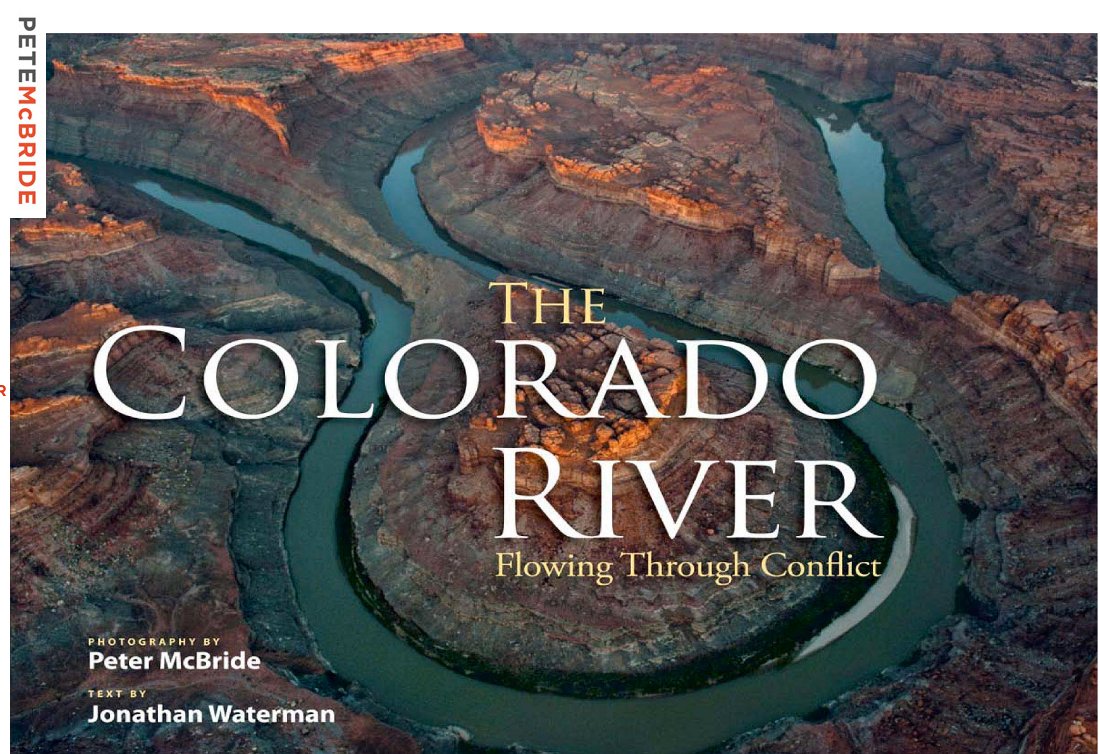
Water 2012 Book Club: ‘The Colorado River Flowing Through Conflict’ discussion online now at Your Colorado Water Blog

thecoloradoriverflowingthroughconflictcoverpetermcbridejonathanwaterman.jpg

Here’s the link to Ted Kowalski’s (CWCB) comments about the book. Be sure to get in on the discussion by clicking on the the comments section below the post.

The Colorado Water 2012 Book Club page also has three sneak peeks at unpublished books that are part of the book club selections.

More Colorado Water 2012 coverage here.

Colorado Water 2012: Prior appropriation doctrine primer

coloradowater2012

Here’s the fifth article in their Water 2012 series from the Valley Courier:

By The staff of the Colorado Division of Water Resources, Division 3 Office:

For more than 130 years, Colorado has used a system of water allocation known as the Prior Appropriation Doctrine. Under this doctrine, the first appropriator of water has a senior right to the water available and that right must be satisfied before any subsequent rights junior to that right can receive water. Simply put, the Prior Appropriation Doctrine is “First in Time, First in Right.”

The doctrine evolved from practices used to settle disputes in the mining industry. The gold rush to Colorado in the late 1850’s brought experienced miners who allocated water based upon the same theory as land ownership, the first to occupy the land staked their “claim” to it and those following had no right to it. This system was eventually applied to water ownership disputes.

The San Luis Valley has the honor of being home to the oldest ditch in Colorado, the San Luis Peoples Ditch, which draws water from Culebra Creek. Use of this ditch was initiated in 1852 and diversion of water from other area streams soon followed. Appropriations were made from the San Antonio and Conejos Rivers in 1855. In 1860, the Fred Etter Ditch diverted water from Ute Creek for use at the local U.S. Army fort, in what later became Fort Garland. Diversions for irrigation use from the Rio Grande and Saguache Creek both began in 1866. Most other creeks in the San Luis Valley saw diversions for irrigation before Colorado became a state in 1876.

By the beginning of the 1890’s, many stream systems were over appropriated. Ditch companies were actively constructing reservoirs to store winter and spring runoff. In addition, new sources of water were being pursued, which included transmountain diversions and ground water. Changes of water rights, exchanges, transfer of water rights and “loan statutes” were issues that had to be addressed by the Office of the State Engineer by the turn of the century.

Some areas of the state have rivers, creeks, and aquifers where new appropriations can still be made. However, the surface and groundwater sources in the San Luis Valley have already been allocated to existing water rights and Compact requirements. Appropriations from the aquifers of the San Luis Valley for new high capacity (>50 gpm) wells were discontinued in the 1970’s and early 1980’s.

Colorado holds the unique distinction of being the first state to provide for the distribution of water by public officials. In 1879, the legislature created a part of the present administrative system. It provided for the division of the state into ten water districts, nine of these in the South Platte valley and one in the Arkansas drainage.

In 1881, the Colorado legislature established the Office of the State Irrigation Engineer, referred to today as the State Engineer’s Office, also known as the Colorado Division of Water Resources. The agency’s primary responsibility is the administration of the Prior Appropriation Doctrine by maintaining a list of water rights on each stream in order of priority. The priority of each water right was determined by the district courts based upon the date the structure for the water right was constructed and the water placed to beneficial use.

In 1887, the state created a Superintendent of Irrigation, who is known today as the Division Engineer, to supervise water commissioners within each division. The seven water divisions are geographically located to encompass the major river drainages in the state: the South Platte, the Arkansas, the Rio Grande, the Gunnison, the Colorado, the North Platte/Yampa, and the San Juan/Dolores.

The San Luis Valley is within Water Division 3 which covers approximately 8,000 square miles. The Water Division 3 office is located in Alamosa, with satellite offices in Saguache, Monte Vista, and Antonito. Approximately 600,000 acres of irrigated land are located in Water Division 3.

The Rio Grande is the principal river in the division; and the Conejos River is its largest tributary. The headwaters of the Rio Grande are on the Continental Divide west of Creede and the river runs generally eastward to Alamosa where it turns south, eventually crossing the state line into New Mexico. The equitable apportionment of water in the Rio Grande and its tributaries between the states of Colorado, New Mexico, and Texas is the purpose of an interstate Compact, ratified by Congress in 1939. The Rio Grande Compact will be detailed in a future article.

More Colorado Water 2012 coverage here.

Water 2012 Book Club discussion starts up tomorrow: First up, ‘The Colorado River Flowing Through Conflict’

thecoloradoriverflowingthroughconflictcoverpetermcbridejonathanwaterman.jpg

Here’s the link to the Your Water Colorado Blog where the discussion will take place for The Colorado River: Flowing Through Conflict by Peter McBride and Jonathan Waterman. From the blog:

…online discussion of the featured 2012 books, beginning with Waterman and McBride’s the Colorado River Flowing Through Conflict tomorrow, February 1– here on Your Water Colorado Blog.

More Colorado Water 2012 coverage here.

Colorado Water 2012: Water is essential for health and fitness

waterfromtap.jpg

From The Pueblo Chieftain (Kanda Misiaszek):

Did you know that your body is estimated to be about 60-70 percent water? Our blood is 83 percent water, and our muscles and vital organs contain a lot of water. Each of us needs water to regulate body temperature and provide means for nutrients to travel throughout our body…

Water exercise classes improve physical fitness by using water for resistance with only 10 percent impact on your joints

More Colorado Water 2012 coverage here.

Colorado Water Congress 2012 Annual Convention: State lawmakers oppose public trust measures on fall ballot

acequiadelcerro.jpg

From The Pueblo Chieftain (Chris Woodka):

“If we don’t defeat these initiatives, those uneducated about water will take control and irrigated agriculture will cease to be important,” said Rep. Jerry Sonnenberg, D-Sterling…

The [Colorado Water Congress] has opposed two initiatives by Richard Hamilton of Fairplay and his attorney Phil Doe of Littleton. Those measures seek to supplant constitutional provisions that form the basis for Colorado’s prior appropriation doctrine and replace it with a public trust doctrine. The CWC has hired attorney Steve Leonhardt to fight the ballot initiatives during the early stages and has received support of other water groups, such as the Southeastern Colorado Water Conservancy District, in its effort. The CWC plans to appeal the state title board’s approval of ballot measures 3 and 45 because they include multiple subjects in violation of Colorado law, Leonhardt said…

Rep. Randy Fischer, D-Fort Collins, said more education of the state’s population about water issues is needed to defeat such ballot measures.

More coverage of the CWC annual convention from Chris Woodka writing for The Pueblo Chieftain. From the article:

“The good news is that Colorado is coming out of the recession. It’s slow. It’s hard, but it’s there,” said Sen. Mary Hodge, D-Brighton, chairwoman of the Joint Budget Committee. The state has siphoned $200 million in mineral severance funds meant for water projects to bolster the general fund since 2008.

This has the potential to damage water availability in the future as more projects are backlogged. “We need something to show our grandchildren about our investment in water in Colorado,” said Sen. Gail Schwartz, D-Snowmass Village…

“Without water, we have limited jobs and growth,” [State Representative Jerry Sonnenberg] said. “We have water leaving the state beyond our compact obligations. Water storage has to be a priority.”

More 2012 Colorado legislation coverage here.

Colorado Water Congress 2012 Annual Convention: Governor Hickenlooper announces 2012 as the Year of Water

coloradowater2012

Here’s the link to the video announcement. Here’s a report from YourHub.com via The Denver Post. From the article:

The year 2012 is a big, wet milestone for water in Colorado. In a state almost entirely defined as desert or semidesert, 2012 is a milestone anniversary for many of the organizations and policies that protect our precious water resources.

Colorado Water 2012 started as an idea to celebrate these milestones. It has since grown into an unprecedented statewide celebration of water, its uses and its value. By celebrating these anniversaries collectively we hope to increase awareness about the importance of Colorado’s water resources.

Colorado Water 2012 launches with Governor Hickenlooper’s declaration of 2012 as the Year of Water at the Colorado Water Congress being held on January 25-27. Understanding the importance of water to the economic and social prosperity of our state, Governor Hickenlooper is supporting Colorado Water 2012 by officially declaring 2012 the ‘Year of Water’. See the video announcement http://www.youtube.com/watch?v=VtPVc7ASzPE.

Colorado Water 2012 is organizing several activities throughout the year including: Water 2012 Book Club: Featuring Colorado authors: Peter McBride, Jonathan Waterman, Craig Childs, Will Hobbs, Greg Hobbs, George Sibley and Patty Limerick, Library and Museum Displays scheduled yearlong and statewide, K-12 lesson plans and poetry contests, Higher education social networking events, and a traveling speaker presentation covering water challenges and successes in Colorado.

Click here to go to Your Water Colorado Blog for updates and to take part in the conversation.

riogranderift.jpg

Here’s the latest installment from the weekly Water 2012 series from the Valley Courier (Allen Davey). The article is a primer on the hydrology of the San Luis Valley. Here’s an excerpt:

Precipitation on the Valley floor is approximately seven inches per year…

The geological formation of the Valley has provided high mountain ranges around its edges that receive significant snow in the winter which then melts and flows together with water from summer rains into the Valley through streams and rivers. These mountains form a watershed of approximately 4,700 square miles. Water from these streams is then diverted by ditches and canals which provide irrigation water to crops on the floor of the Valley. Most of the streamflow is derived from snowmelt and averages about 1,500,000 acre-feet per year…

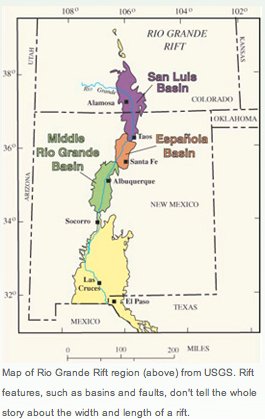
The San Luis Valley is located within a geologic feature called the Rio Grande rift. This rift can be visualized as a trough probably resulting from the earth’s crust pulling apart resulting in stress faulting and down dropping of a block of the crust. This several 1,000 foot deep trough extends in a nearly north-south direction generally along the center of the Valley.

Through the erosional process over millions of years in the nearby mountains, this trough has been largely filled with sand, gravel and clay layers. It is likely that many of the clay layers were formed through a soil evolutionary process with a large part of the process occurring at the bottom of a lake that covered the Valley floor. In 1822 trapper Jacob Fowler wrote in his journal of the probability of a lake, similarly in 1910 C.E. Siebenthal studied the Valley and described evidence of a historic lake, and finally U.S. Geological Survey investigators in 2007 published a report concerning ancient Lake Alamosa. The combination of erosional material filling this rift trough and Lake Alamosa’s existence created a very large aquifer system into which wells were drilled beginning in the 1880’s.

More Colorado Water 2012 coverage here.

Colorado Water 2012: The video from the first book club event featuring Pete McBride is up on Your Water Colorado Blog

petermcbridegregoryhobbswater2012bookclub.jpg

Click here to go to the Colorado Water 2012 blog post about last Tuesday’s shindig. They’re running the video.

More Colorado Water 2012 coverage here.

Colorado Water 2012: Save water and save money

coloradowater2012

From The Pueblo Chieftain (Jimmy Rogers):

Chances are that the greatest “water-waster” inside your home is that constant flow in your toilet tank. That spill can waste one gallon every 24 minutes, or more than 60 gallons per day, which could cost over $4 extra each month on your water bill…

So, when I flush my toilet or turn on my shower, I think about everything it takes to bring that water to my house. I know it takes a lot of money to keep the water flowing and I’m concerned that some of that money could be used for police departments, fire protection and schools.

More Colorado Water 2012 coverage here.

Colorado Springs Utilities, the Pikes Peak Library District and twelve non-profits plan Water 2012 kickoff on January 26

coloradowater2012

From the Colorado Springs Independent (Pam Zubeck):

“Colorado Springs Utilities – in partnership with the Pikes Peak Library District and twelve other non-profits – is holding a local kickoff event for Colorado Water 2012 on Jan. 26, from 4 to 6 p.m. at the Citadel Mall, Imagination Celebration space (between Dillard’s and Burlington Coat Factory).

“Colorado Water 2012 is a statewide celebration and recognition of water; a resource of huge importance nationally, but even more so in states like Colorado, and cities like Colorado Springs where there is no local river or waterway. State population is projected to double by 2050, causing municipal water demands to increase dramatically, and putting an even greater emphasis on conservation and the infrastructure required to bring water to Colorado communities. “

More Colorado Water 2012 coverage here.

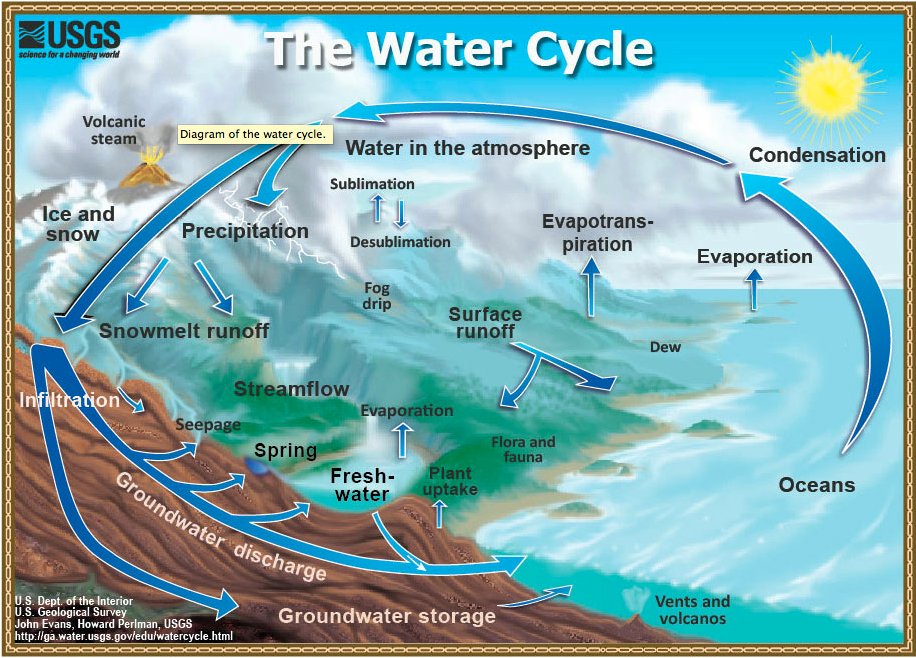
The Valley Courier Water 2012 series: Water cycle explained

Here’s the second installment of Judy Lopez’s Water 2012 series running in the Valley Courier. Here’s an excerpt:

The water cycle is an important part of how all exist; everyone learned that little fact in fourth grade. The problem today is that many have forgotten it.

So let’s have a quick refresher course. Remember that water is needed to fall in the form of precipitation, and then it does one of a few things. It is stored in the form of snow or ice, infiltrates to groundwater, runs-off to streams lakes and rivers or is used by plants. Next, as the plot continues – it evaporates from the surface or transpires through plants and then condenses in the atmosphere and starts all over again.

The key is the process recharge. When water from the surface infiltrates the ground it recharges ground water supplies. With adequate precipitation rivers, streams and aquifers are recharged allowing surface areas to stay hydrated. Even the atmosphere stays hydrated. The system stays full. But this is in a perfect world without large cities, paved streets, concrete parking lots, malls, humans and such progress. It is in this world, recharge gets inhibited, because water doesn’t always go in, but instead it gets used up or runs overland and suddenly picks up a lot of other substances before going into streams and rivers.

More Colorado Water 2012 coverage here.

Valley Courier Colorado Water 2012 series debuts today

coloradowater2012

From the Valley Courier (Judy Lopez):

So to help busy Coloradans connect to their water resources and their abundant uses Colorado Governor John Hickenlooper will declare 2012 the Year of Water.

2012 marks several important water milestones – it is the 100th Anniversary of the Rio Grande Reservoir. The Colorado Water Conservation Board, The Northern Water Conservancy District and the Colorado River Water Conservation District all are celebrating their 75th anniversaries. While the Southeastern Colorado Water Conservancy District turns 50 this year, it gives every water conservation, conservancy, and irrigation entity a chance to be recognized for the vital service they provide each of their communities.

More importantly the Colorado Water 2012 movement is an opportunity to celebrate the value of water and recognize the multitude of uses that it provides to everyone in Colorado.

The goals of Colorado Water 2012 are to:

* Raise awareness about water as a valuable and limited resource

* Increase support for management and protection of Colorado’s water and waterways

* Showcase exemplary models of cooperation and collaboration among Colorado water users

* Connect Coloradans to existing and new opportunities to learn about water

* Motivate Coloradans to become proactive participants in Colorado’s water future

More Colorado Water 2012 coverage here.

John Stulp: ‘The year 2012 is a milestone for water in our state’

coloradowater2012

Here’s a guest column written by John Stulp — Governor Hickenlooper’s water wonk — running in The Pueblo Chieftain. Here’s an excerpt:

The year 2012 is a milestone for water in our state. It’s the 75th anniversary of the legislation that created many of the organizations that built the foundation for the management of Colorado’s water resources, including the Colorado Water Conservation Board, Colorado River Water Conservation District and the Northern Colorado Water Conservancy District. In addition, the Rio Grande Reservoir celebrates its 100th year, the Southeastern Colorado Water Conservancy District celebrates the 50th anniversary of the Fryingpan-Arkansas Project, the Lower Arkansas River Water Conservancy District will mark its 10-year anniversary and the Colorado Foundation for Water Education will be turning 10 as well.

Over the next year, these big anniversaries will be linked together by a statewide project called “Colorado Water 2012.” The goal is to connect Coloradans to their water.

I welcome all your readers to check in each Sunday for the next 52 weeks, as we chronicle the activities of water users, in their businesses and livelihoods.

More Colorado Water 2012 coverage here.

Colorado Water 2012 has posted interviews with the authors of the book club selections

smithsditchwashingtonparkdenver.jpg

Here’s the link to the webpage.

More Colorado Water 2012 coverage here.

Reflections on the Colorado-Big Thompson Project — W.D. Farr

wdfarrcoloradobigthompsonprojectgreeleywater.jpg

Here’s a video with W.D. Farr explaining the origins of the Colorado-Big Thompson Project. Thanks to Greeley Water for posting the video.

Next year is the 75th anniversary of the 1937 act that established the water conservancy districts and the Colorado Water Conservation Board.

Farr explains that Congressman Taylor would not support the project unless Green Mountain Reservoir — for west slope supplies — was built first.

“The biggest cloud of dust I ever saw came out of that tunnel [Adams Tunnel],” Farr says, “I never saw men so happy in my life.”

More Colorado-Big Thompson Project coverage here.