
Category: Reuse
#ColoradoRiver: Floating new ideas for water solutions — @ASU #COriver

From Arizona State University (Click through for the photos):
From desalination to homes with dual pipe systems, scientists and policy analysts exploring wide-ranging strategies
Editor’s note: This is the second in a three-part series examining the work that ASU is doing in the realm of water as a resource in the arid West. Today, we explore technology and innovative approaches.
Mike Reisbig moored his boat there on an August afternoon. The Huntington Beach man, a football coach at Long Beach City College in California, has been coming to Temple Bar for about 50 years.
“I’ve noticed a lot of changes,” he said. “I’ve been here when the water’s all the way up, going to the spill wells, to where it is today. It’s a scary sight. You don’t know whether you’re going to be able to get your boat on the water anymore or not. It’s such a beautiful place. It’s the only place I’ll bring this boat. … It’s getting scarier each year, trying to figure out how to get it in the water. We seem to figure out a way and get it in. This is the best lake I’ve ever been to, and I’m going to keep going.”
His parents discovered the lake decades ago.
“It just has become one of those things the family does,” Reisbig said. “Believe it or not, I brought a 3-month-old baby up here with this heat in this boat, so she could experience this lake. I know she doesn’t remember any of it, but she comes up here every year. It’s just what the family does. I have yet to find a better place to bring a boat. It’s perfect out here. You’ve got your rough days, and you’ve got your beautiful days. It’s just perfect. It doesn’t get better.”
Like Reisbig, hydrologists, policy analysts and researchers are figuring out ways to keep going in the arid West. Here you’ll hear about technology and innovation behind water.
Straws in the ocean
It’s possible that the West will someday get to the point where new water supplies need to be found. One possibility being discussed in Arizona is building a plant to remove salt from seawater in Mexico on the Gulf of California.
The idea is in the early stages, but the broad outline of how it would work goes like this: Arizona builds it, Mexico uses it, and we take their Colorado River allotment.
Building — and permitting — a plant in California would be so expensive it’s not on the table.
“A lot of people are very pessimistic about desalination and its future,” Rhett Larson said. “I’m one of the optimists. I actually think that it’s going to be a big part of water-supply solutions, and probably sooner than people realize.
“The technology’s come a lot further. A lot of people think about desalination as just, ‘Well, it’s insanely expensive and nobody will ever do it,’ but the technology has come a long way and I think it has a really bright future.”
Larson is a fifth-generation Arizonan.
“I grew up worrying about water,” he said. “I’m one of the weirdos who actually went to law school wanting to be a water lawyer.”
Larson, an associate professor in the Sandra Day O’Connor College of Law at Arizona State University, is a senior research fellow with the Morrison Institute of Public Policy and sits on the advisory board of the Morrison Institute’s Kyl Center for Water Policy.
A privately owned desalination plant opened in Carlsbad, California, last December. Under a 30-year operating agreement with the San Diego County Water Authority, the plant produces 56,000 acre-feet per year. Most water managers call an acre-foot — one acre covered by water a foot deep — enough water for a suburban family for a year.
“That water’s cheaper for San Diego (residents) than pumping the water from the Colorado River,” said Larson, pointing out that the river water would require the construction of a pipeline across the state.
Sarah Porter, director of the Kyl Center for Water Policy at ASU, is not a believer.
“I think a lot of the talk about desal (desalination) is wishful thinking,” she said. “People want an easy fix.”
Desal water from the Carlsbad plant is selling at more than $2,000 per acre-foot. SRP water is about $16 per acre-foot. Putting $2,000 acre-foot water on crops doesn’t make any sense.
“I think if we build a desal plant in Mexico, and that water were used in Mexico as a substitute for Colorado River water, I’m not sure how Mexico’s allotment of river water results in residential water,” Porter said. “The percentage that’s agricultural water is extremely cheap water, and it’s hard to figure out how you could use ocean desal for crops in a way that made sense.”
Desal plants also need constant demand. We usually build infrastructure and then demand catches up with it.
“I don’t think we should build something before we have the demand for it,” Porter said. “It’s a huge investment. … If we do get desal, (who pays for it) will definitely be municipal users, not growers.”
The ick factor
Reusing water is a huge part of the solution to close the demand gap.
“You don’t need a new supply if you’re reusing,” pointed out John Sabo, a School of Life Sciences professor who studies riverine ecology and freshwater sustainability. Reclaimed water is also cheaper than desalinated seawater. “We do need to work at becoming more efficient, because in the future that’s going to be our primary source for growth.”
ASU’s Central Arizona–Phoenix Long-Term Ecological Research (CAP LTER) program studies urban ecology. It has been ongoing for the past 20 years. Biological, physical, engineering and social scientists are studying eight aspects of what happens when you plop a city in a desert. Nancy Grimm
directs the project and has worked on it since the beginning.One part of the study was looking at the reuse of treated wastewater for drinking water across the United States.
“The findings would be surprising to you, because there’s a lot more reuse of water in that particular interaction — between treated wastewater and reuse as drinking water or as municipal water — than you would think,” Grimm said.
“In some places it becomes really important during droughts. So in Texas, for instance, some of the cities are definitely using a pretty high proportion of the treated wastewater as municipal water supply. So there’s sort of what they call the “yuck” factor, the “ick” factor associated with that, but there’s really quite a lot of research that suggests that the water is quite safe.”
One of Sabo’s ideas is homes with two sets of pipes: one for potable water and one for reused water, which would go into the toilet, onto landscaping, etc. It would be an expensive retrofit, but one that could be gradually phased in. (When electricity came along, not everyone had their homes wired at once, for example.)
Golf courses and fake lakes already use reclaimed water.
“Why can’t everybody have some access for their outdoor watering to treated wastewater?” Grimm asked. “Those kinds of ideas are things that we’re exploring in CAP LTER, with people from the community, so government officials, people from flood-control districts in Maricopa County, various community leaders and so forth, we’ve been having these workshops that are creating what we’re calling sustainable future scenarios for Phoenix.”
Phoenix has been using reclaimed water on a huge scale since the 1960s. It cools Palo Verde Nuclear Generating Station, irrigates farmland and recharges aquifers. The city will use even more in the future, water services director Sorensen said.
“We’ve been pioneers in that, literally decades ahead of other communities,” she said. “Its importance will increase in the future. … That means the value of reclaimed water will increase. It means the importance of really managing our wonderful aquifer here increases exponentially.”
Future H2O
One of ASU’s three main water initiatives is Future H2O, unveiled by Sabo at a White House Water Summit in March. It’s a five-year plan focused on identifying opportunities for domestic and global water security. ASU researchers will partner with private and public sectors to find solutions to difficult water problems. The whole idea is to focus on the situation at hand, rather than hoping it will change.
“Where are the opportunities of the future to do better?” Sabo described it.
It has five pillars, one of which is aimed at averting what water managers call “the Silver Tsunami,” the imminent retirement of a lot of water professionals with institutional memory and expertise.
“The opportunity is the next generation is going to be more capable of harnessing the technology that surrounds us because they’re embedded in that technology,” Sabo said. “They know how to use it. The next generation is going to build on what the incumbents have left us, which in Arizona is quite strong.”
Two other areas of focus are:
• Developing funding for an urban landscape design and renovation campaign that reduces residential outdoor water use in at least one Phoenix metro service area by a third by 2025.
• Delivering research and advice to at least 10 of the largest corporate water users in the U.S. to scope, plan and implement restoration projects at scales that improve water reliability in stressed water basins nationwide.
Sabo created a software tool that helps corporations apply analytics to how they use water, simultaneously helping water conservation, habitat restoration and their bottom lines. It’s being used by Dow Chemical at their west Texas operations on the Brazos River.
“It tells Dow how to meet their water bottom line for manufacturing by creating wetlands instead of creating gray infrastructure,” said Sabo.
The nature of desert cities
One of things Grimm’s long-term desert cities project looks at is how storm water moves through the city and how it’s handled.
She’s interested in the idea that cities are potentially really good experimental test beds for thinking of water as a unified system. She envisions a city water department that manages drinking water, wastewater and storm water holistically.
“Some of that is going on in Phoenix, because Phoenix has been pretty innovative about things like reusing treated wastewater for watering golf courses and filling up fake lakes and things like that,” she said.
What happens when you plop a city in the middle of a desert? How does that affect the way water moves and behaves?
“We know very little about that,” said hydrologist Enrique Vivoni
, an associate professor in the School of Earth and Space Exploration.Vivoni is interested in how changes in climate and land cover affect water as a resource. He uses observations of sensors and satellite data and computer modeling of hydrological systems.
“The movement of hydrologists studying cities in depth is actually very new,” he said.
Most other schools specialize in natural systems hydrology, like rivers, mountain watersheds and wetlands.
“None of them have this special expertise on human-environment relations in cities, where water is important currency,” Vivoni said. “Humans are primarily going to be urban dwellers moving forward. As a species, more than half of us live in cities. We do all these changes around us, and we have almost no clue about how the system works internally.
“Part of my work at ASU is on that angle: understanding, measuring, quantifying and eventually predicting how water moves, is transformed and flows through desert cities. My work focuses on arid and semi-arid areas.”
What does climate change and covering land with a city do, in concert or separately, to alter hydrological systems? When it comes to hydrology, codes and regulations don’t have much to offer: Don’t create more runoff than would have been produced without the development, make sure that water has a place to go, and that’s about it.
“We don’t tell our developers, ‘Make sure your development does not increase urban heat,’ ” Vivoni said. “That’s not in our regulations. What I’m trying to get at is we’ve built cities with very little hydrologic and atmospheric science in mind. ‘Just do it. The consequences we’ll figure out later.’ ”
What Vivoni’s group does is provide datasets, models and model outputs that can inform policy from science.
“I think we have to be a little more proactive about our water resources,” he said. “That’s going to require more science in our agency.”
Vivoni feels there needs to be more emphasis put on soft infrastructure: plans, policies, procedures, modeling systems, operational plans that say if the drought is this severe, we’re going to do this; if it’s that severe, we’re going to do that.
“How can we prepare the planners, the cities, the decision-makers with information and knowledge beforehand so that there are plans in place that can be followed under the eventual drought that will eventually hit us someday? That’s squarely in the academic world, and ASU is well-prepared with its social science and natural science expertise to contribute to that.”
Bridging the gap between science and policy is called “sociohydrology.” It’s a recognition that the natural science community hasn’t taken humans into account well enough in their work.
Government used to speak only to consultants.
“We’re at a phase now where academia is starting to play a role,” Vivoni said. The university provides consulting that’s broader than just an engineering goal that needs to be met.
“It can’t only be from one angle,” he said. “It can’t only be from the engineering angle, and it can’t only be from the anthropological angle. It has to be from some combination of lenses. … We’re trying to improve models that can be used in context with stakeholders, to have them have access to tools that can enhance decision-making. I’m at the technical back end of that. I’m not the person with the skills to interface directly with the Phoenix water manager.”
How ASU ended up bridging the gap between science and government
Water in the West in general has historically been a by-product of agriculture. Grady Gammage Jr. explained how ASU arrived where it is now.
Gammage (son of ASU’s third president) wears a lot of hats. If there’s a public or private board making important decisions about the state, you can count on seeing him there. He is an academic, a lawyer, an author, a real-estate developer and a former elected official.
At ASU, Gammage is a senior fellow at ASU’s Morrison Institute, the Kyl Center for Water Policy, and a senior scholar at the Julie Ann Wrigley Global Institute of Sustainability. He also teaches at the Sandra Day O’Connor College of Law and at the W. P. Carey School of Business.
When he was in high school, he had a summer job with Salt River Project. “I’d get to drive around and look at the dams,” he told an oral history interviewer in 2007. “That was sort of my first exposure to Western water issues a little bit.”
“We study water, we think about water, we produce water, we build big water projects, all because of the heritage of the Bureau of Reclamation and John Wesley Powell and the creation of the great Western water projects,” he told ASU Now. “That means that the places where water has historically been studied the most are the land grant institutions, where it’s a by-product of the study of agriculture. The (University of Arizona) has been the water school, forever, and it is a world leader in hydrology and those kinds of things. That’s been weird, because ASU should have been the land grant school. Agriculture is here; it was never in Tucson. But, for historical reasons, it happened differently. ASU has had to come at this from the non-agriculture perspective.”
Gammage thinks that’s beneficial to the perspective ASU brings to water, because the West isn’t about agriculture any more. It’s about people and cities.
“Sometimes that historical overhang of the cultural legacy of water in the West distorts the way water is studied and planned and dealt with,” he said.
Gammage said ASU’s policy orientation — “big-picture water policy” — has evolved over the past 10 or so years.
“I think the niche for ASU is more to focus on the arid West and the way in which water and water rights are managed and adjudicated going into the future,” he said. “That’s why I’m excited about Rhett (Larson) being here. The Kyl Center for Water Policy is a really good idea. To me, that’s the more comfortable niche to exploit: the legal and policy aspects of water. That’s what I do; that’s what I like. I’m not a scientist.”
#cwcsc16: Colorado Water Congress Summer Conference 2016
I’m at the conference getting ready for the first session: Leading the way with direct potable reuse in Colorado. Panel with moderator Doug Kemper (Colorado Water Congress), Myron Nealey (Denver Water), John Rehring (Carollo Engineers).
CWC has an iPhone app up at the app store. Search for CWC and scroll down to CWC Summer Conference.
Nice bike ride up the Yampa River from my campsite west of town. The Sheraton Steamboat Springs lets you check your bike and park it in a room out of the elements.
Aurora Water sells $437 million in bonds to re-fund water plant debt — The Denver Post
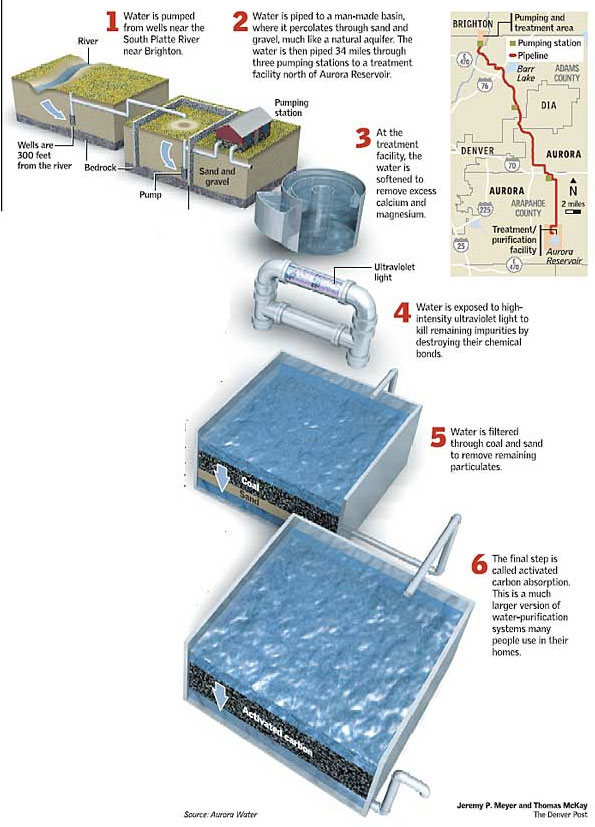
From the City of Aurora via The Denver Post:
Looking to capitalize on historic-low bond rates, Aurora Water on Thursday sold $437 million in bonds toward re-funding debt associated with its Prairie Waters Project, making it the largest municipal bond issue in the state this year.
With a net savings of $68.6 million, the issue consolidates two other issues and a state loan, water department officials said in a news release.
The Prairie Waters Project was completed in 2010 at a cost of $637 million. It recaptures water Aurora already owns in the South Platte River, beginning in Weld County, and makes full use of Aurora’s mountain and agricultural water rights, increasing the city’s water supply by up to 12 million gallons per day. The water comes from 23 wells that use a riverbank filtration process, pulling water through hundreds of feet of sand and gravel to remove impurities.
The bonds were offered on July 20 and July 21, with first priority given to Colorado residents and businesses.
31st Annual WateReuse Symposium, September 11-14
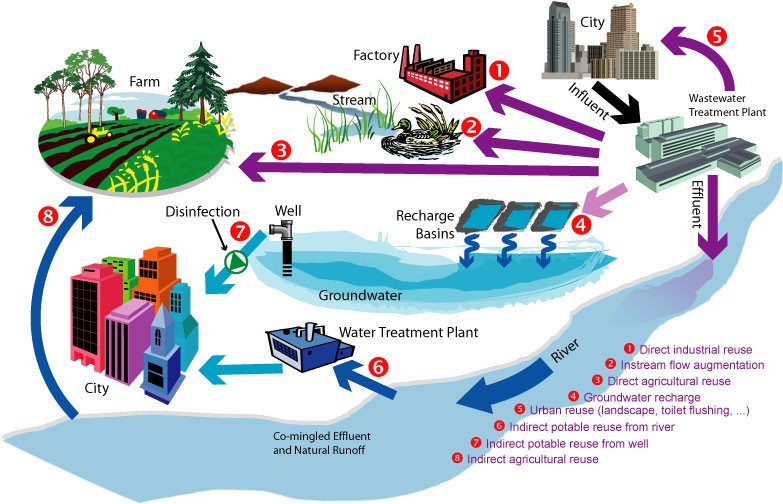
Click here for all the inside skinny and to register. From the website:
Join us for the 31st Annual WateReuse Symposium in Tampa, FL on September 11-14. The annual event brings together water managers and industry leaders to network with the best and brightest in the field and learn what’s working and what’s next in water reuse policy, operations, technology and public perception.
City water supply could be tested by climate change — The Aspen Daily News

From The Aspen Daily News (Curtis Wackerle):
If climate change renders the Western Slope warmer and drier, and if historic growth rates keep up, then Aspen’s water utility could have trouble meeting consumer demand without depleting minimum in-stream flows in Castle and Maroon creeks over the next 50 years.
Aspen City Council on Monday heard a presentation from consultants hired to evaluate the adequacy of the municipal water supply. Wilson Water Group put together a report forecasting demand and available supply over a 50-year outlook, and found that in the worst-case climate change scenario, the city could miss in-stream flow targets on Castle and Maroon creeks by between 4 and 9 cubic feet per second during the “irrigation months” of June through September.
The city has committed to a 13 cfs minimum flow in Castle Creek, and 14 cfs in Maroon. Both creeks are tapped to feed municipal needs through diversion structures that send water to Thomas Reservoir, a holding bay for the city’s treatment plant.
Even if the worst-case scenario projections come to pass in terms of climate change and population growth — demands on the city’s water system historically have risen by about 1.2 percent a year, according to special projects utilities engineer Phil Overeynder — the city has other ways to shore up its water supply.
One project that has been on the drawing board for years would pump treated wastewater uphill from the sanitation plant to irrigate the city’s golf course.
The city also controls three wells in town drawing from the local aquifer. If irrigation for city parks increasingly relied on those wells, then more water could be left in Castle and Maroon creeks.
Combined with more water conservation, or restrictions in drought years, depletion of in-stream flows could be avoided, consultants report.
City council agreed to adopt the 2016 Water Supply Availability Study, and continue monitoring hydrologic conditions.
Council also heard a presentation on Monday from another consultant that analyzed threats to the water supply and water quality. Given that Aspen’s water originates in high mountain valleys, wildfire poses perhaps the most imminent and hazardous threat. A bad fire in the Castle or Maroon watersheds could be detrimental to water quality in those streams, and subsequent mudslides could also cause problems.
There is also the abandoned Pitkin Iron Mine above Ashcroft that drains into Copper Creek, a Castle Creek tributary.
The Colorado Rural Water Association conducted a study for the city assessing the best ways to mitigate these threats.
Creating a buffer zone against wildfire near the diversion structures on Castle and Maroon creeks, while continuing to develop plans to limit wildfire debris flow into Thomas Reservoir, were among the study’s top recommendations.
More work to control erosion at the Pitkin Iron Mine site was also recommended. However, the consultant noted that the Pitkin Iron Mine did not make the list of the state’s 200 most pressing mine cleanup needs.
Denver: 20th Annual WateReuse Research Conference, May 22-24

From the Water Reuse Foundation website:
The latest research focused on helping communities develop resilient water supplies will be presented at the 20th Annual WateReuse Research Conference in Denver, CO on May 22-24, 2016. The Research Conference provides a unique opportunity for water professionals and researchers to interact, network, and discuss current research and future trends. This solutions focused event will provide water professionals and industry with tools to address water scarcity and sustainability challenges.
Click here to register.
WISE water project honored — Castle Rock News-Press

From the South Metro Water Supply Authority via The Castle Rock News-Press:
The South Metro [Water Supply] Authority received a 2016 Metro Vision Award from the Denver Regional Council of Governments for the WISE Partnership.
The Water Infrastructure and Supply Efficiency Partnership (WISE) is a regional water supply project between Aurora Water, Denver Water and members of the South Metro Water Supply Authority. First conceived in 2008, the partnership combines water supplies and system capacities to create a sustainable new water supply for the region.
The WISE Partnership will benefit roughly 2 million people and it will bring a sustainable water supply to south metro communities. When water deliveries begin in early 2017, some of Colorado’s fastest-growing communities will be able to partially replace non-renewable groundwater.
DRCOG’s Metro Vision awards are presented to individuals and programs who contribute outstanding efforts to the Denver region and its communities, and to DRCOG’s programs and activities. The regional council has been honoring outstanding achievements for more than 30 years.
EPA Announces $3.3 Million in Funding for Water Reuse and Conservation Research/Research will measure health and ecological impacts of water conservation practices
Here’s the release from the Environmental Protection Agency (Cathy Milbourn):
Today, the U.S. Environmental Protection Agency (EPA) announced funding to five institutions to research human and ecological health impacts associated with water reuse and conservation practices.
“Increasing demand for water resources is putting pressure on the finite supply of drinking water in some areas of the United States,” said Thomas A. Burke, EPA Science Advisor and Deputy Assistant Administrator of EPA’s Office of Research and Development. “The research announced today will help us manage and make efficient use of the water supply in the long term.”
Water conservation practices that promote water reuse are becoming increasingly important, especially in the western United States, where factors such as climate change, extreme drought, and population growth are decreasing water availability. To help promote sustainable water reuse, this research will evaluate how reclaimed water applications such as drinking water reuse, replenishing groundwater, and irrigation can affect public and ecological health.
EPA announced these grants in conjunction with the White House Water Summit, which was held to raise awareness of water issues and potential solutions in the United States, and to catalyze ideas and actions to help build a sustainable and secure water future through innovative science and technology.
The following institutions received funding through EPA’s Science to Achieve Results (STAR) program:
Water Environment Research Foundation (WERF) Alexandria, Va. to actively identify contaminant hotspots, assess the impact of those hotspots on human and ecological health, and quantify the impact of water reuse and management solutions.
University of Illinois at Urbana-Champaign Urbana, Ill. to develop a new framework to understand how adaptive UV and solar-based disinfection systems reduce the persistence of viral pathogens in wastewater for sustainable reuse.
Utah State University, Logan, Utah to assess the impacts and benefits of stormwater harvesting using Managed Aquifer Recharge to develop new water supplies in arid western urban ecosystems.
University of Nevada, Las Vegas, Nev. to quantify microbial risk and compare the sustainability of indirect and direct potable water reuse systems in the United States.
University of California Riverside, Riverside, Calif. to measure levels of contaminants of emerging concern in common vegetables and other food crops irrigated with treated wastewater, and to evaluate human dietary exposure.
More information on these grants is available at: https://cfpub.epa.gov/ncer_abstracts/index.cfm/fuseaction/recipients.display/rfa_id/591/records_per_page/ALL

Bureau of Reclamation Funding Opportunity for Water Reclamation Research Under Title XVI Water Reclamation and Reuse Program
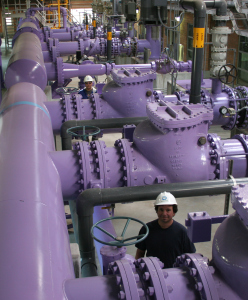
Here’s the release from the US Bureau of Reclamation (Peter Soeth):
The Bureau of Reclamation has made a new funding opportunity available for water entities in the Western United States to conduct water reclamation research under the Title XVI Water Reclamation and Reuse Program.
This cost-shared funding opportunity, available at http://www.grants.gov as opportunity number R16-FOA-DO-011, helps communities address water supply challenges by providing much-needed funding for research to establish or expand water reuse markets, improve water reuse facilities, or upgrade new facilities with state of the art technology.
It is expected that up to $2 million will be available for this funding opportunity. Research sponsors must provide 75 percent or more of the study costs.
Funding will be awarded in three categories. Funding group I will be for projects up to $75,000 per agreement for a research study up to 18 months; funding group II will be up to $150,000 per agreement for a research study up to 24 months; and funding group III will be up to $300,000 in federal funds for a research study that can be completed within 36 months.
State, regional, or local authorities; Indian tribes or tribal organizations; or other entities including water districts, wastewater districts, or rural water districts, will be eligible to apply for this funding opportunity. Applicants must be located within the 17 Western States or Hawaii. Applications are due by 4 p.m. Mountain Daylight Time on April 20, 2016.
Title XVI projects provide communities with a new source of clean water, while promoting water and energy efficiency and environmental stewardship. Title XVI supports the President’s “Climate Action Plan,” and the “Executive Order—Preparing the United States for the Impacts of Climate Change.”
This funding opportunity is also an important part of Reclamation’s WaterSMART Program, which supports the White House’s Water Innovation Strategy to address Water Resource Challenges and Opportunities for Water Technology Innovation. For more information about Title XVI or Reclamation’s WaterSMART program, http://visit http://www.usbr.gov/watersmart.
Recycled water system celebrates 10 years
Reuse: The WISE Partnership gets approval from the Denver Water Board
From the Denver Business Journal:
Denver Water last week approved the WISE partnership agreement that clears the way for the utility to delivery treated water to the area’s southern suburbs.
Approval of WISE, which stands for Water Infrastructure and Supply Efficiency, formalizes the regional cooperative water project. The agreement calls for the permanent delivery of 72,250 acre-feet of treated water from Denver and Aurora to members of the South Metro Water Supply Authority (SMWSA).
SMWSA was formed in 2004 from the banding together of smaller water utilities in south Denver.
With the agreement now in place, some of the water that currently flows down the South Platte River and out of the state would be recaptured by Aurora’s 34-mile Prairie Waters Pipeline and pumped back to the Peter D. Binney Water Purification Facility near the Aurora Reservoir. There, the water would be treated and piped to the southern suburbs.The water delivery will begin in 2016. Members of the SMWSA must have infrastructure in place to move the water from the purification facility. The cost of the water and infrastructure for its delivery is estimated at $250 million over the next 10 years. Each member will independently determine how to finance their share of the project.
The participating members of SMWSA are the town of Castle Rock, Dominion Water & Sanitation District, Stonegate Village Metropolitan District, Cottonwood Water & Sanitation District, Pinery Water and Wastewater District, Centennial Water & Sanitation District, Rangeview Metropolitan District, Parker Water & Sanitation District, Meridian Metropolitan District and Inverness Water & Sanitation District.
More WISE Partnership coverage here.
Denver: 28th Annual Watereuse Symposium will take place September 15 – 18

Here’s the pitch:
There is still time to register for the 28th Annual WateReuse Symposium!
Join us September 15-18 at the Denver Marriott City Center in Denver, CO for 111 technical presentations, seven panel and roundtable discussions, networking events, and a popular Exhibit Hall.
Click here to register.
2013 Colorado legislation: Governor Hickenlooper signs HB13-1044 (Authorize Graywater Use) #COleg
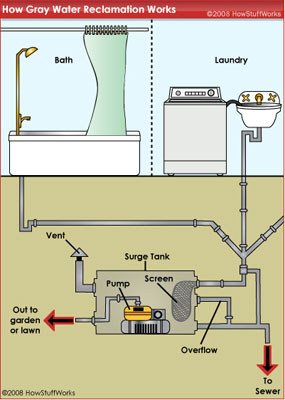
From the Northern Colorado Business Report (Steve Lynn):
Rep. Randy Fischer, D-Fort Collins, and Sen. Gail Schwartz, D-Snowmass Village, introduced House Bill 1044. Hickenlooper signed the bill at Colorado State University on Wednesday. The bill directs the Colorado Water Control Commission to create statewide standards for gray water systems. It defines graywater as water coming from bathroom and laundry room sinks, bathtubs, showers and laundry machines. “Graywater does not include the wastewater from toilets, urinals, kitchen sinks, dishwashers or non-laundry utility sinks,” the bill states…
The new law lets cities, towns and counties decide whether to approve graywater use in residential and commercial settings.
More HB13-1044 coverage here. More 2013 Colorado legislation coverage here.
Parker Water and Sanitation District board is evaluating joining with Aurora and Denver in the WISE project
From the Parker Chronicle (Chris Michlewicz):
The Parker Water and Sanitation District board of directors will hear a presentation later this month from new manager Ron Redd, who will recommend that the district enter into WISE, the Water, Infrastructure and Supply Efficiency project. Six members of the South Metro Water Supply Authority, including Pinery Water and Wastewater, the Cottonwood Water and Sanitation District and Stonegate Village Metropolitan District, committed to WISE by signing intergovernmental agreements in late March. The agreements will bring nearly 7,000 acre-feet of recycled water to the south metro area…
The Parker Water and Sanitation District board asked Redd to examine the possibility of buying 500, 1,000 or 1,500 acre-feet through the WISE project. He was expecting to receive the results of a cost analysis on April 5 to determine the possible financial impacts. Any rate hikes on customers would likely be implemented incrementally and equate to about 2.5 percent to 3 percent per year, Redd said, cautioning that those figures are preliminary. The cost of WISE water increases annually over an eight-year period.
It would be relatively easy, Redd said, to move the reclaimed WISE water from Aurora to Parker if the district can come to an agreement to use a pipeline along E-470 owned by East Cherry Creek Valley Water and Sanitation District. If the board gives approval, the intergovernmental agreement would be signed by late May…
Rueter-Hess Reservoir, which contains 5,700 acre-feet of water and was built to store 70,000 acre-feet, will be paid off by the time the Parker Water and Sanitation District takes on more debt to build pipelines to transport the water that will be needed for the future.
Meanwhile, Centennial has inked an IGA with the WISE Partnership. Here’s a report from Ryan Boldrey writing for the Highlands Ranch Herald. Here’s an excerpt:
Centennial Water and Sanitation District was one of six members of the South Metro Water Supply Authority to sign an IGA this past week committing to more renewable water by way of the Water Infrastructure and Supply Efficiency Partnership. Through the agreement, Aurora Water and Denver Water will provide roughly 7,000 acre-feet of fully treated water annually to participating SMWSA members and deliver it in phases, starting in 2016. As part of the IGA, the participating South Metro WISE entities have agreed to fund new infrastructure that will move the water from Aurora’s Binney Water Purification Facility to its end locations. “A region-wide water solution makes more sense than having each water entity fending for themselves to source, treat and deliver renewable water to customers,” said Eric Hecox, executive director of SMWSA. “We’re excited about the progress we’re making through WISE towards transitioning the region from nonrenewable groundwater to renewable water.”
Hecox said that the agreement helps provide SMWSA with about a third of the necessary water that participating entities will need long-term. From here, work will continue on the Chatfield Reallocation Project as well as of other options and alternatives to bring more water to the region…
For Centennial Water specifically, it’s another step toward cementing a long-term supply and not relying as much on groundwater or leased water. “We’ve got many years of full supply, but some of that full supply comes from leases that are not long-term,” said Centennial Water and Sanitation District General Manager John Hendrick. “We want to add to our portfolio with long-term or near-permanent surface water sources…
Other SMWSA members committing to the project at this time are Cottonwood Water, Meridian Metropolitan District, Pinery Water, Rangeview Metropolitan District and Stonegate Village Metropolitan District. Hecox said he expects Dominion, Inverness, Castle Rock and Parker water districts to sign the IGA by the end of April. SMWSA members not expected to take part in the IGA include: Castle Pines Metro, Castle Pines North, East Cherry Creek Valley, and Arapahoe.
More WISE coverage here.
2013 Colorado legislation: HB13-144 (Authorize Graywater Use) to get a hearing Wednesday in state Senate committee #COLeg
From The Denver Post (Lynn Bartels):</p
Graywater is wastewater in a building that comes from showers, hand-washing sinks and washing machines. It does not come from toilets, urinals or kitchen sinks. Colorado is the only western state that doesn’t allow treated graywater to be used for flushing toilets, landscaping and such, but a proposal scheduled to be heard Wednesday in a Senate committee would change that.
House Bill 1044, by [Senator Gail] Schwartz, D-Snowmass Village, and Rep. Randy Fischer, D-Fort Collins, legalizes the use of graywater, calls for the development of regulations to protect the public health and gives cities and counties the discretion to offer graywater permits to single- or multi-family dwellings.
Bill supporters say a household with four people could save 58,000 gallons a year if it had a graywater filtration system installed.
The House unanimously passed the measure, which will be heard Wednesday by the Senate Agriculture, Natural Resources and Energy Committee. Sen. Greg Brophy, R-Wray, who sits on the committee, said he’s excited to hear the bill. “As long as we can protect the downstream users’ historical rights, there is nothing wrong with this idea,” he said. “A lot of money and energy goes into cleaning up water to bring it to drinking water standards, merely to put it on lawns and flush toilets, and we don’t need to do that.”
Schwartz also addressed that point, saying a number of Colorado’s wastewater treatment facilities are aging and need to be updated. She said the use of graywater would mean less input into those plants.
Fischer said he got the idea for carrying the bill from two Colorado State University professors who have been working on graywater issues. They have a graywater disinfectant vat set up in one of the residence halls and have been testing the system.
More 2013 Colorado legislation coverage here.
HB13-1044 (Authorize Graywater Use) passes the state house, now on to the state senate
From email from State Representative Randy Fisher:
I’m pleased to announce that one of my top priority bills for the 2013 legislative session, HB-1044, was passed in the House on third reading on April 5. If the bill becomes law, it will authorize the use of graywater recycling in Colorado and will provide Coloradans with a powerful and readily available water conservation tool.
HB-1044 has its roots at CSU where professors Larry Roesner and Sybil Sharvelle have conducted foundational research and development on graywater systems. Drs. Roesner and Sharvelle are the co-directors of the Urban Water Center at CSU’s Department of Civil and Environmental Engineering. Both professors have spent countless hours at the Capitol advocating for passage of HB-1044. They have earned my respect and gratitude for their efforts to help write and advocate for the bill.
“Graywater” consists of the discharge from fixtures other than toilets, kitchen sinks, and dishwashers that is collected and recycled within residential, commercial, or industrial facilities with minimal treatment in accordance with public health standards. HB-1044 amends Colorado’s public health statutes to allow more efficient first-use of water by enabling the recycling of graywater within the facilities in which it is generated. Graywater reuse is an important municipal and industrial water conservation tool that has the capability of reducing per capita water consumption by up to 30%.
The Coloradoan newspaper had a very positive editorial about HB-1044 in its Sunday, February 3, edition. Here is a link to the article:
A critical vote on the HB-1044 occurred last week when the House Appropriations Committee voted to approve a small general fund appropriation required by the health department for rulemaking. The approval of the appropriation paved the way for consideration of the bill in the House. The Senate will begin deliberation on HB-1044 in the coming days.
More 2013 Colorado legislation coverage here.
Boulder: Council to consider new agreement to allow testing of graywater system for dormitory
From the Boulder Daily Camera (Erica Meltzer):
The city’s Water Resources Advisory Board has already recommended approval of the agreement. The Boulder City Council will consider it Tuesday.
The dorm, which opened in fall 2011, houses 500 students near Baseline Road and 30th Street and received top green credentials from the U.S. Green Building Council, becoming the only residence hall of its size in the nation to earn the Leadership in Energy and Environmental Design platinum rating for its sustainability features. However, the university hasn’t yet been able to take advantage of additional plumbing installed during construction that would allow water from sinks and showers to be captured, filtered, treated and reused for flushing toilets. That’s because case law around water rights in Colorado protects downstream users from the potential loss of water that gets reused instead of being returned to the watershed…
However, that may be less of a concern when graywater is used in toilets — which ultimately send water into the same wastewater treatment system that handles water from sinks and showers — than it is when graywater is used for irrigation, Arthur said.
As part of the agreement, CU will carefully monitor water use in the building and report all that information to the city. Arthur said that will allow city officials to assess the impact of graywater systems on the larger water delivery and treatment system and might provide the basis to lobby for changes to state law…
In the meantime, the city is designating water from the Western Slope that it receives through the Colorado-Big Thompson water project for Williams Village North. Because that water is not from the Boulder Creek watershed, it’s subject to different rules and is eligible for reuse, Arthur said. That way, no downstream users should complain they aren’t getting all the water they are owed.
Glenwood Springs: Council approves the Colorado River Cooperative Agreement
From The Aspen Times (John Stroud):
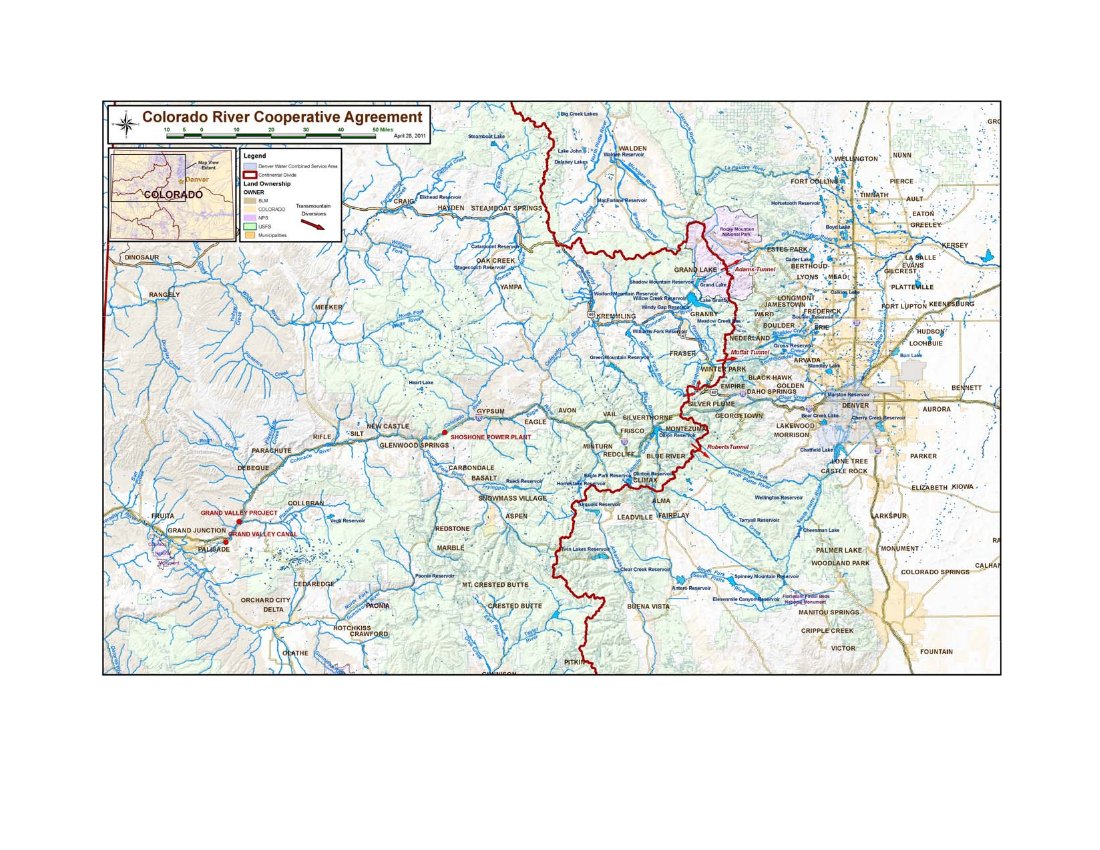
Glenwood Springs City Council voted 5-1 at its Thursday meeting to sign the Colorado River Cooperative Agreement. The vote came more than a month after the proposal was first presented for council’s consideration.
“It’s unheard of that so many entities are willing to talk about what works for everyone,” Councilman Stephen Bershenyi said, in favor of signing onto the agreement.
Added Mayor Matt Steckler, “It’s not perfect, but this is something we have been working on for over a year. I don’t see what not signing it is going to do.”
Councilman Dave Sturges dissented, saying he supports the efforts to reach an agreement on the use of Colorado River water. But he felt the agreement fell short in some areas and that the public had not had an adequate opportunity to weigh in.[ed. True, the agreement was hammered out under Non-Disclosure agreements amongst the parties.] “We’re not under the gun to act on this,” Sturges said. “There are still some questions, and I think the public ought to assist us in how we view those questions.”
More Colorado River Cooperative Agreement coverage here.
The Denver Post editorial board weighs in on the Colorado River Cooperative Agreement

From The Denver Post:
One of the linchpins is that Denver Water, which serves more than 1.3 million customers on the Front Range, gets approval for the expansion of Gross Reservoir near Boulder. The utility needs the project so it may ensure adequate water for customers on the northern edge of its service area…
The agreement calls for Western Slope parties to not oppose — and in some cases support — the Moffat Collection System project, which includes the reservoir expansion.
More Colorado River Cooperative Agreement coverage here.
Denver Water, Grand and Summit counties sign the Colorado River Cooperative Agreement
Aurora: Peter D. Binney water treatment plant receives national award
From the Aurora Sentinel:
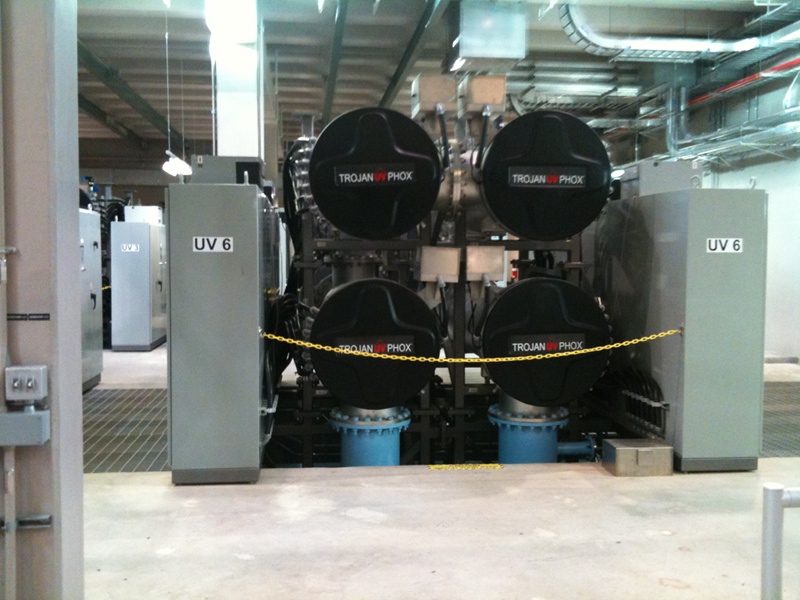
Aurora’s Peter Binney Water Purification Facility received the Marvin B. Black Excellence in Partnering Award last month for representing exemplary partnership and collaboration in construction projects like the Prairie Waters Project. The national honor was awarded by The Associated General Contractors of America.
Mark Pifher (Aurora water): ‘We don’t plan to buy or lease any more water in Arkansas basin in the near future’

From The Pueblo Chieftain (Chris Woodka):
Aurora’s water rights include nearly all of the Rocky Ford Ditch in Otero County, about one-third of the Colorado Canal in Crowley County and water from 1,750 acres of ranches in Lake County. Those rights provide an average yield of 22,800 acre-feet per year — the equivalent of 80 percent of the potable water used by Pueblo each year.
– Aurora also uses the Homestake Project, Twin Lakes, Busk-Ivanhoe diversion and the Columbine Ditch to bring water from the Western Slope through the Arkansas River basin and into the South Platte basin. The average yield of those water rights is about 21,500 acre-feet annually.
– The city can reuse its Arkansas and Colorado basin water imports, and has built the $650 million Prairie Waters Project to directly recapture flows, rather than exchange them.
– Aurora’s South Platte water rights include wells, ranches, ditches and direct flow from the South Platte. They total about 46,000 acre-feet annually.
– Aurora has an agreement to trade 5,000 acre-feet of water a year with Pueblo West from Lake Pueblo to Twin Lakes beginning next year. It will replace a similar agreement with the Pueblo Board of Water Works that expires this year.
– The Pueblo water board sells Aurora 5,000 acre-feet of water each year.
– Aurora has a contract with the Bureau of Reclamation to store 10,000 acre-feet of water in Lake Pueblo and to move the same amount to Twin Lakes by paper trade.
– The water is moved from Twin Lakes to Spinney Mountain Reservoir through the Homestake pipeline system…
“We don’t have any current plans beyond what we’re already doing,” said Mark Pifher, director of Aurora water. “We don’t plan to buy or lease any more water in Arkansas basin in the near future.”
Instead, the city will continue developing Prairie Waters, a reuse project that pumps sewer return flows through a filtration and purification system, only at about 20 percent capacity so far. Aurora calculates that its average yield from its Arkansas River basin water rights is about 22,800 acre-feet annually. That’s roughly one-fourth of its total yield from its entire system, which includes South Platte and Colorado River basin rights. From a practical standpoint, Aurora does not move all of its water out of the Arkansas River basin each year.
NSF International Publishes First American National Standard for Water Reuse Systems
Here’s the release from NSF International:
NSF International, a global public health and environmental organization, has published the first American national standard for commercial and residential onsite water reuse treatment systems, NSF/ANSI 350: Onsite Residential and Commercial Reuse Treatment Systems. The new standard complements NSF’s expanding scope of environmental standards and sustainable product standards, which help establish criteria for and clear methods of evaluating environmental and sustainable product claims.
NSF/ANSI 350: Onsite Residential and Commercial Reuse Treatment Systems establishes criteria to improve awareness and acceptance of water reuse technologies that reduce impacts on the environment, municipal water and wastewater treatment facilities, and energy costs. According to the American Water Works Association, 84 percent of residential water is used in non-drinking (non-potable) water applications such as lawn irrigation, laundry and toilet flushing. Residential and commercial builders, architects and regulators are turning to onsite wastewater reuse systems as a solution to increasing water scarcity and energy costs associated with the treatment and distribution of municipal water and wastewater.
Certifying a water reuse system to NSF/ANSI 350 also satisfies requirements for leading green building programs. The U.S. Green Building Council has included reference to NSF/ANSI 350 in their LEED (Leadership in Energy and Environmental Design) Building Design & Construction 2012 Draft Standard. Products certified to NSF/ANSI 350 also could satisfy graywater use strategies under the National Association of Home Builders (NAHB) National Green Building Certification program as an innovative practice.
NSF developed this American national standard for evaluating onsite water reuse technologies to ensure the systems properly treat graywater (i.e. wastewater generated from activities such as laundry and bathing) and combined wastewater (i.e. all sources of wastewater generated within a residence or building) for reuse in non-potable applications. NSF/ANSI 350 establishes materials, design and construction, and performance requirements for onsite residential and commercial water reuse treatment systems and sets water quality requirements for the reduction of chemical and microbiological contaminants for non-potable water use. Treated wastewater (i.e. treated effluent) can be used for restricted indoor water use, such as toilet and urinal flushing, and outdoor unrestricted water use, such as lawn irrigation.
Shawnee, Kansas-based Bio-Microbics, Inc., a manufacturer of clean technologies, is the first company to earn NSF/ANSI 350 certification for their Bio-Barrier® membrane bioreactor (MBR). NSF scientists conducted an evaluation spanning more than six months of continuous operation of the Bio-Microbics Bio-Barrier® MBR treatment system at one of NSF’s approved wastewater testing facilities.
“Certification to NSF/ANSI 350 positions onsite water reuse technologies as a viable solution to increasingly overburdened water and wastewater treatment facilities, water scarcity, and increasing costs associated with energy and water use,” said Tom Bruursema, General Manager of NSF Sustainability. “Innovative clean technology manufacturers, such as Bio-Microbics, can now demonstrate the acceptability and effectiveness of their products, helping these technologies to be adopted more quickly into the marketplace.”
“Bio-Microbics is proud to be the first to earn certification against the new NSF water reuse treatment standard, which provides a sustainability benchmark to certify water reuse products,” said Bob Rebori, President of Bio-Microbics. “With green building and sustainable products becoming the focus of regulators, commercial and residential builders, and consumers, this new standard provides the water reuse industry with a way to meet the needs of their customers and set their products apart from those with unsubstantiated environmental claims.”
To learn more about NSF/ANSI Standard 350, contact Tom Bruursema at nsf350@nsf.org, +1.734.769.5575 or visit nsf.org/info/nsf350. Click here to purchase a copy of the standard…
About NSF International (NSF): NSF International (nsf.org) has been testing and certifying products for safety, health and the environment since 1944. As an independent public health and safety organization, NSF’s mission is to protect human health and the environment through standards development, auditing, testing and certification for the food, water, build/construction, retail, consumer products, chemical and health science industries. Operating in more than 150 countries, NSF is committed to protecting human health worldwide and is a World Health Organization Collaborating Centre for Food and Water Safety and Indoor Environment. NSF Sustainability draws upon this expertise in standards development, product assurance and certification to help companies green their products, operations, systems and supply chains. NSF also founded the National Center for Sustainability Standards, a national initiative to support the development of sustainability standard activities.
More graywater reclamation coverage here.
WaterSMART Title XVI Water Reclamation and Reuse Program Construction Grant Funding Opportunity Now Available
Here’s the release from the U.S. Bureau of Reclamation (Peter Soeth):
A Title XVI Water Reclamation and Reuse Program grant funding opportunity is now available through WaterSMART. The Bureau of Reclamation is seeking sponsors of congressionally authorized Title XVI projects to request cost-shared funding for the planning, design or construction of those projects. The funding opportunity announcement is available at http://www.grants.gov using funding opportunity number R12SF80050.
In response to feedback received, Reclamation has updated the application process to ask project sponsors to describe the benefits of the entire authorized project and to communicate funding needs for the next two years.Through the Title XVI Water Reclamation and Reuse Program, a water reuse project reclaims and reuses municipal, industrial, domestic or agricultural wastewater and naturally impaired ground or surface waters. Reclaimed water can be used for a variety of purposes, such as environmental restoration, fish and wildlife, groundwater recharge, municipal, domestic, industrial, agricultural, power generation or recreation. Water reuse is an essential tool in stretching the limited water supplies.
In 2011, Reclamation funded 12 projects for $20.1 million through the Title XVI Program.
The WaterSMART Program focuses on improving water conservation, sustainability and helping water resource managers make sound decisions about water use. It identifies strategies to ensure that this and future generations will have sufficient supplies of clean water for drinking, economic activities, recreation and ecosystem health. The program also identifies adaptive measures to address climate change and its impact on future water demands.
Proposals must be submitted as indicated on http://www.grants.gov by January 17, 2012, 4:00 p.m. Mountain Standard Time. It is anticipated that awards will be made this spring.
More reuse coverage here.
Prairie Waters Project Receives Project Management Institute’s Prestigious 2011 PMI Project of the Year Award

Here’s the release from the Project Management Institute via Market Watch:
Aurora, Colorado, USA has been challenged by decades of rapid population growth combined with limited opportunities to expand its water supply in an arid environment. This already significant challenge was exacerbated in 2002 by severe, multi-year drought, requiring the city and its water managers to quickly design and implement a long-term solution in response to future water shortage conditions. The Prairie Waters Project, led by CH2M HILL, marked one of the largest water-related public works projects in Colorado in more than 35 years. Its exemplary innovation and completion, two months ahead of schedule and US$100 million under budget, has made it the 2011 recipient of the Project Management Institute’s prestigious PMI(R) Project of the Year Award.
“An urgent water need pushed the city to take an innovative look at ways to achieve not only meeting the community’s water needs quickly, but to preserve the city’s high standards for water quality,” said Larry Catalano, manager of capital projects for the City of Aurora. “The significant complexities of the project included stringent cost constraints, stakeholder involvement, environmental restrictions, and the pressure to execute a project on an exceptionally fast schedule. The project team consistently went above and beyond the call of duty and delivered ahead of schedule and under budget. We are honored that PMI recognized the hard work, collaboration and dedication of the entire team that worked to create the Prairie Waters Project.”
The Prairie Waters Project succeeded in spite of extreme environmental challenges. With only a nine-month supply of water available for a population of approximately 300,000 at that time, city leaders and CH2M HILL were tasked with identifying a sustainable, long-term water supply to protect against future droughts. After reviewing over 50 possible scenarios, the city identified the Prairie Waters Project as the fastest, most cost-efficient and most sustainable way to deliver more than 10,000 acre feet of new water to the city by the end of 2010.
The success of the project, originally projected to cost $854 million, resulted in a newly constructed pipeline, pump stations and a treatment plant that will ultimately deliver up to 50,000 acre feet, meeting Aurora’s needs through 2030. Eight significant stakeholder agreements, 145 land parcels and 44 permits were acquired for approval and completion of the project, which took six years to complete and spanned nearly 40 miles in length. Through the use of skilled project personnel, the rigorous application of project management standards, processes and techniques, and the use of earned value management (EVM) techniques, the PWP was able to cut $100 million from the budget in the design phase without compromising quality and safety, bringing the construction budget to $754 million. Value engineering techniques enabled the team to fast-track the project two months ahead of schedule and an additional $100 million below this amended budget. The project was delivered in October 2010 at just under $653 million.
“The City of Aurora’s Prairie Waters Project clearly illustrates how project management standards and practices, properly applied, can help deliver a solution that is transformative to a community,” said Mark A. Langley, President and CEO of PMI. “This project demonstrates best practice solutions that show agility and effective stakeholder engagement. PMI commends Aurora Water and the entire project team for these outstanding results.”
Aurora Water was presented with the 2011 PMI Project of the Year Award on Saturday, 22 October 2011 during the PMI Awards Ceremony at the PMI(R) Global Congress 2011–North America in Dallas, Texas.
The Castle Pines Metropolitan District nixes participation in the WISE project

From the Aurora Sentinel (Sara Castellanos):
In a letter sent Oct. 12 from Paul Dannels, district manager of the Castle Pines Metropolitan District, to Rod Kuharich, executive director of the [South Metro Water Supply Augthority], Dannels said the board of directors decided not to proceed with the project. “Simply stated, the high cost of the Project and the uncertainty of water delivery do not make sense for the District at this time,” Dannels wrote in the letter. “We wish you great success with the Project which appears more feasible for larger users. They can deal better with both the uncertainty of water availability and the high Project costs than smaller users such as the District.”[…]
Greg Baker, spokesman for Aurora Water said the project, dubbed the Water Infrastructure and Supply Efficiency partnership, doesn’t require that all 15 entities of the SMWSA take deliveries for the project to be successful. Roxborough and the East Cherry Creek Valley Water and Sanitation District have already indicated that they had other resources they could develop and wouldn’t take water from the WISE partnership, Baker said. “Each member of the SMWSA must assess the value of participation in relation to their individual systems and needs,” Baker said. “SMWSA has indicated that the commitments from many of the other members have already met or exceeded the initial 10,000 acre-feet provided for by the proposed delivery agreement.”
More Water Infrastructure and Supply Efficiency partnership coverage here.
Aurora: Prairie Waters adds 10,000 acre-feet of supply to treated water supply system over the last year or so
From the Aurora Sentinel (Sara Castellanos):
“The process from day one has cranked out excellent water,” said Kevin Linder, Binney’s plant supervisor. The facility, with its massive pumps and state-of-the-art machinery, has processed and treated “downstream” water from the South Platte River and Aurora Reservoir as part of the drought-hardening Prairie Waters project. The water is collected from river-bank wells a few miles below the point where treated sewage water is poured back into the Platte. The project broke ground in July 2007 and came online in October 2010 with the goal of collecting water from the South Platte River in Brighton and delivering it to the city through a 34-mile-long, uphill pipeline. Prairie Waters has increased Aurora’s water supply by about 20 percent and delivered 10,000 acre-feet of water over the past year…
The project came to fruition because city officials realized they had reusable return rights in the South Platte River that they weren’t taking advantage of. Reusable return rights allow the city to reclaim water that has been used already. The city has owned those reusable return rights for decades, but until now, there was no mechanism in place to return the water directly from the South Platte River to the city.
Broomfield: The city is asking for input for their conservation plan

From the Broomfield Enterprise (Joe Rubino):
A draft of the plan is available for public review through Dec. 1, and comments are being sought on the plan during that period. The new plan is the first update to the water conservation policies since 1996, though water use has since been addressed in other policies, including the 2005 Comprehensive Plan…
In the plan, the city laid out four action steps it hopes will create the greatest changes in water usage. The steps were created after a review of ongoing conservation efforts, and were spurred by measures the city was required to consider under state statute.
The four steps are:
Realize the full potential of the reuse system. The reuse system supplies approximately 2,400 acre-feet of water and is projected to produce an annual yield of approximately 6,500 acre-feet at build-out, which for the reuse system, is projected to be 2040.
Realize savings from supply-side and demand-side conservation activities over the next 10 years.
Focus selected conservation measures and programs on areas where there are the greatest potential savings. Based on the findings, the focus should be residential use and irrigation.
Continue to work to reduce peak-season and peak-day demands.
“The keystone of Broomfield’s water conservation efforts is the water reuse system,” according to the executive summary of the plan,
The reuse system provides non-potable water for irrigation, Schnoor said. The system recaptures water for second use, which is processed and treated at the wastewater treatment plant.
Right now, Schnoor said the system features 36 miles of pipeline and provides water to 469 acres of public land. If the city chooses to build it to its proposed maximum capacity, more than doubling it’s output, it could supply about 25 percent of the city’s total water needs.
More conservation coverage here.
Aurora, Denver and the South Metro Water Supply Authority embark on the WISE project to share facilities and reuse wastewater treatment plant effluent
Denver, Aurora and the South Metro Water Supply Authority make the WISE project official
From The Pueblo Chieftain (Chris Woodka):
The Water Infrastructure and Supply Efficiency partnership between Denver, Aurora and the South Metro Water Supply Authority was announced Tuesday. The partnership could reduce pressure on agriculture in the South Platte and Arkansas river basins and the need for diversions from the Colorado River.
“I think it’s a step in the right direction,” [John Stulp, water adviser to Gov. John Hickenlooper and chair of the Interbasin Compact Committee] said. “I think it’s a unique way to share water and infrastructure. From what I understand, there is built-in drought protection. There are efficiencies and redundancies that can take pressure off ag communities.”[…]
The WISE partnership will improve South Metro water supplies while maximizing the water resources and infrastructure of Denver and Aurora. The agreement is in a 60-day review period and must be approved by all of the parties. South Metro represents 15 municipal water suppliers in Douglas and Arapahoe counties…
The backbone of the partnership is Aurora’s $659 million Prairie Waters project that allows return flows from treated wastewater in the South Platte River to be recaptured and treated. In Colorado, water from transbasin diversions and some water obtain through water rights transfers can be used to extinction. Aurora has built the first phase of Prairie Waters to treat up to 10,000 acre-feet of water per year, but it can expand to 50,000 acre-feet per year…
There would, however, always be seasonal capacity in the Prairie Waters project to provide additional water for users in the metro area, because the project is scaled to meet peak demands, [Mark Pifher, director of Aurora Water] said. The proposed agreement will sell treated water to South Metro for $5.38 per 1,000 gallons, with minimum guaranteed deliveries of 5,000 acre-feet per year beginning in June 2013. That works out to about $8.76 million annually. After 2020, the amount would increase to 10,000 acre-feet per year. Eventually, systemwide improvements could provide as much as 60,000 acre-feet to South Metro, Pifher said. Denver also would gain a new water supply through recycling its flows through Prairie Waters. In addition, South Metro water users would agree to fund improvements to Denver Water and Aurora infrastructure with $15.4 million over eight years, which is the equivalent to a tap fee. The money would go for interconnections between the Denver, Aurora and other systems. The agreement also includes a $412,000 connection between East Cherry Creek Village and Aurora.
More coverage from Bruce Finley writing for The Denver Post. From the article:
The deal, which would pay Denver and Aurora water utilities $17.4 million a year, is one of the first of its kind in the nation. It lets water agencies that often compete for resources share without merging, and sustain more people without diverting more water from over-subscribed Western Slope rivers. Environmentalists and state leaders swiftly praised the emerging arrangement.
“This type of water-sharing agreement is a critical step toward bolstering water supplies in the southern metro area while better utilizing water resources in Aurora and Denver,” Gov. John Hickenlooper said…
Denver and Aurora would funnel as much as 1.6 billion gallons of purified water a year to suburbs by 2013, increasing to as much as 3.2 billion gallons by 2020. Engineers say necessary new pipelines and hook-ups eventually could send as much as much as 19.5 billion gallons — 60,000 acre-feet a year — to the suburbs. Denver Water, Aurora Water and 13 participating suburbs would have to replumb before the first water could be delivered — which could bloat water bills for residents of Castle Rock, Parker and other communities. Those communities already need more than the maximum amount of water deliverable under the current 22-page contract, said Charles Krogh, past president of the South Metro Water Supply Authority, who represented suburbs through lengthy negotiations. “Our demands now are about 70,000 acre-feet annually,” Krogh said. “This proposal allows us to get in the game for renewable water supplies.”[…]
The replumbing would include a $412,000 hookup between Aurora pipes and an East Cherry Creek Valley pipeline and storage of water in Parker’s new Rueter-Hess Reservoir. To receive water, south metro suburbs would have to install additional pipelines “to connect ourselves all up,” at an estimated cost of $80 million, Krogh said…
South suburbs, if they approve the contract, would be obligated not to divert water from Colorado’s Western Slope.

More coverage from Sara Castellanos writing for The Aurora Sentinel. From the article:
Aurora Water, Denver Water and the South Metro Water Supply Authority have developed a water delivery agreement that, if approved, would provide SMWSA with up to 5,000 acre-feet of water per year by June 2013, increasing to 10,000 acre-feet per year by 2020 as additional pipeline and other infrastructure are built. SMWSA represents 15 water providers in Douglas and Arapahoe counties. The amount of water delivered annually could eventually expand to up to 60,000 acre-feet per year…
The new supply of fully treated water from Aurora’s state-of-the-art Binney Water Purification Facility will provide much welcomed relief to SMWSA and its members, who have been looking for ways to reduce their reliance on non-renewable underground aquifers, Baker said in a release. It also will reduce the need for the SMWSA members to pursue agricultural water rights in the South Platte River basin in the near term.
More WISE coverage here.
2012 Colorado legislation: Are approved gray water systems on the horizon?
They will be if CSU assistant professor, Sybil Sharvelle and CSU professor, Larry Roesner, can convince enough legislators that public health is not a concern along with the folly of not reusing outflows from dish washing, clothes washing, showers and other activiites that generate gray water in the home. Here’s a report from Joe Hanel writing for The Durango Herald. From the article:
Sharvelle and professor Larry Roesner want the Legislature to pass a law that gives state water regulators the power to write new rules for reusing water from showers, sinks and washing machines.
They have run tests for several years on household systems that collect used water in tanks about the size of a hot-water heater and redirect the water into toilets or gardens.
Legislators on the Water Resources Review Committee voted 9-0 Wednesday to start writing a bill to be introduced in 2012, although some lawmakers had qualms about it.
“I’m a little gun shy, but I guess it doesn’t hurt for us to draft a bill and take a look,” said Rep. Jerry Sonnenberg, R-Sterling.
Sonnenberg’s hesitation stems from one of the unresolved questions about gray water. His largely agricultural district lies downhill from Denver, and if many people in the metro area start reusing their water instead of literally flushing it down the drain, it could lead to less water in the rivers downstream.
More gray water coverage here.
Federal funding may become available for the south Metro suburbs, Aurora and Denver to use for the WISE project
From The Denver Post (Bruce Finley):
Suburban water authorities said the project [Water Infrastructure Supply Efficiency or WISE], designed to reduce reliance on dwindling underground water, will cost about $558 million.
U.S. Bureau of Reclamation officials said “rural water supply” funds may be available for the project, if it survives a detailed feasibility review. Congress would need to authorize the federal funding, which could decrease the bill passed on to water customers. “What we’re looking at: Is this project capable of being completed? Is the cost-benefit going to work out? Is it going to be beneficial?” Bureau of Reclamation spokesman Peter Soeth said.
Meanwhile, a crucial wastewater purchase deal with Denver and Aurora has yet to be done. How much wastewater could be diverted, and how often, remains under negotiation. The suburbs told federal officials the WISE project would deliver 5,000 to 11,000 acre-feet a year for the first five years, then as much as 37,000 acre-feet a year…
The federal rural water-supply funds could be used because suburbs with populations under 50,000 are deemed “rural,” said Mark Shively, executive director of the Douglas County Water Resource Authority. “We have very aggressively pursued this opportunity,” Shively said. “We’re now about 20 percent into the feasibility study.”[…]
Beyond pipeline construction, the proposed project involves new storage of treated wastewater in surface reservoirs and by injecting it into depleted aquifers. “We have a couple reservoirs we’re looking at,” Shively said. “Between the Chatfield and Rueter Hess (reservoirs) we have a good amount of storage.”
Here’s the report from Reclamation.
More WISE project coverage here.
The National Science Foundation has allocated $18.5 million to create an engineering research center to help solve urban supply problems
Here’s the release from the National Science Foundation (Cecile J. Gonzalez):
The National Science Foundation (NSF) announces an award to Stanford University and its partners to establish a new NSF Engineering Research Center (ERC). The ERC will develop interdisciplinary research and education programs that address the intersection of people, water, and the environment, and that provide the foundation for new industries through innovation. NSF will invest $18.5 million in the Center over the next five years.
The NSF ERC for Re-inventing America’s Urban Water Infrastructure aims to create water systems that will require far fewer resources while continuing to meet the needs of urban users and improving the quality of aquatic ecosystems. With new knowledge and technological advances, the ERC will design new strategies for more sustainable solutions to urban water challenges.
The Center will focus its research on distributed water treatment systems, integrated natural water systems, and tools that incorporate economic, environmental, and social factors into decisions about water. The new possibilities for water/wastewater treatment and distribution will allow communities to increase the efficiency of water systems and usage, while protecting natural water resources.
The NSF ERC will be based at Stanford University, in partnership with the Colorado School of Mines, New Mexico State University, and the University of California, Berkeley. Researchers at the Nanyang Technological University in Singapore, the Swiss Federal Institute of Aquatic Science and Technology, and the University of New South Wales in Australia will contribute additional expertise and international perspectives.
The involvement of 22 industry partners — including multinational corporations, utilities, and start-up firms — will spur innovation and provide university students with first-hand experience in entrepreneurship. The ERC will also collaborate with complementary research centers and organizations specializing in technology transfer to stimulate innovation based on its research.
Since 1985, the ERC program has fostered broad-based research and education collaborations to focus on creating technological breakthroughs for new products and services and on preparing U.S. engineering graduates to successfully participate in the global economy. The centers launched this summer, as part of the third generation of NSF ERCs, place increased emphasis on innovation and entrepreneurship, partnerships with small research firms, and international collaboration and cultural exchange.
“The Gen-3 ERCs are designed to speed the process of transitioning knowledge into innovation and to provide young engineers with experience in research and entrepreneurship, strengthening their role as innovation leaders in the global economy,” said Lynn Preston, the leader of the ERC Program. “Because they build on the rich understanding we gained from two previous generations of ERCs, we expect these new centers to make even more significant impacts on the competitiveness of U.S. industry.”
More coverage from 9News.com (Nelson Garcia):
The National Science Foundation is funding a five-year, $18.5 million grant to create an Engineering Research Center through Stanford, University of California – Berkeley, New Mexico State, and CSM. Each school will collaborate on projects to address the future of urban water issues.
“Our current urban water infrastructure was developed in the 1940s,” [Dr. John McCray, director of Environmental Science Engineering Division at CSM] said. “Our purpose here is to essentially reinvent America’s Urban Water Infrastructure. Or, at least conduct research in education that will help us get there in the future.”
The projects won’t necessarily focus on the quality of water, but rather on the process of producing useable water.
“It’s more about in the long run, are we doing this in a sustainable manner?” McCray said. “Are we doing it in an energy efficient manner? Can we continue to do things now the way we’ve done in the past.”
Dr. Tzahi Cath is overseeing a project on campus to decentralize waste water treatment. Currently, he has a portable filtering unit cleaning 7,000 gallons a day of wastewater produced by student housing. He says the result is water good enough to drink.
“Here you can treat water on site, reuse it on site. You save a lot of energy. You save a lot of infrastructure of pipelines,” Cath said. “This is a system that you can bring on a truck, put it in any small neighborhood, connect to power, connect to the sewer system and it’s a plug and play.”
Here’s the release from the Colorado School of Mines (David Tauchen/Karen Gilbert):
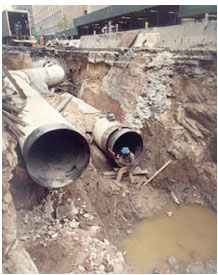
America’s cities face a looming water crisis, driven by climate change, growing population and a crumbling infrastructure. Recognizing the critical importance of this issue, the National Science Foundation has selected a partnership of four U.S. universities to form an Engineering Research Center (ERC) that addresses this challenge by developing new, sustainable ways to manage urban water. The initial grant is $18.5 million spread over five years with additional millions to come in the subsequent five-year period following in-progress reviews.
Engineering Research Centers are interdisciplinary hubs established at U.S. universities where researchers work in close partnership with industry to pursue strategic advances in complex engineered systems and technologies. The Urban Water ERC is led by Stanford University and includes researchers trained in fields including environmental engineering, earth sciences, hydrology, ecology, urban studies, economics and law at Stanford, University of California-Berkeley, Colorado School of Mines, and New Mexico State University.
Concerted effort, grand scale
“Urban water represents a monumental challenge for the United States and it deserves concerted research and thinking on the grandest scale,” said project leader Richard Luthy, a professor of civil and environmental engineering and senior fellow at the Woods Institute for the Environment at Stanford. “We’re clearing the slate. Nothing is being taken for granted. We’ll be developing new strategies for replacing crumbling infrastructure, new technologies for water management and treatment, new ways to recover energy and water, and more – much of it yet to be determined.”One example is better integration of natural systems as part of urban water infrastructure to improve water quality and storage while simultaneously enhancing habitats and the urban landscape.
The partnership of these specific universities is as symbolic as it is pragmatic. The Urban Water Center is based in the American West where the effects of shifting water resources will be felt most acutely, but also where much of the leading thinking on water challenges is taking place.
“These four universities form a powerful collaboration,” Luthy added. “Each has its particular strengths, and each is working on problems related to how we use and reuse water, and how we design and manage our urban water resources in the face of some daunting outlooks.”
Here’s how Colorado School of Mines fits into the partnership:
– Mines will provide its expertise in water reclamation and reuse, subsurface modeling and contaminant attenuation. Mines also has unique water reclamation testbeds on campus that will be used in research.
– Mines faculty will serve as the research director and education director for the ERC.
Over the next five years, Mines will receive $5 million with the State providing $400,000 per year through the Colorado Higher Education Competitive Research Authority (CHECRA).– The CHECRA provided critical matching funds that allowed Mines to participate in this prestigious partnership and brought a large federal grant to the state.
“Our various test platforms in California, Colorado and New Mexico allow us to try new ideas at realistic scale and in close collaboration with industry and practitioner partners,” said Jörg Drewes, a professor at Colorado School of Mines and director of research for the center. “This allows us to demonstrate new approaches and move promising innovations from university labs towards commercial reality.”
“At this level of collaboration we can achieve much more than any one individual campus could alone,” said Professor Nirmala Khandan, a co-investigator on the project and leader of the center’s work at New Mexico State University.
Industry-academia collaboration
To the mix of leading universities, the Urban Water Engineering Research Center will add the support of a number of industrial partners that will extend the reach of the ERC’s programs and provide a critical real-world aspect to the center’s work.“The Engineering Research Center’s multi-disciplinary approach can transform the way we manage our urban water systems in the 21st century for the betterment of both cities and the environment,” said Mike Kavanaugh, a principal with Geosyntec Consultants whose company provides specialized services in storm-water management, water-quality modeling and geotechnical services to municipal clients in the United States.
“We look forward to having an active role in the ERC’s research to help put innovations into practice,” added Megan Plumlee, a scientist with the Advanced Technologies Group at Kennedy/Jenks Consultants, a company that has completed more than $1 billion in recycled-water planning and design work over the past decade.
Multi-faceted approach
The research of the Urban Water ERC will follow a three-pronged approach that combines fundamental investigations and applied research in engineered systems, natural systems and urban water management.“Working with partners in industry will transform the center’s groundbreaking research into practical and sustainable solutions,” said Luthy. “Achieving technical innovation and new ways of doing business requires the ERC team to tackle the full range of economic, policy and social factors at play in water resources decision-making and management.”
An additional mission of the Urban Water ERC is to inspire future engineers through extensive education programs at all of the participating institutions. According to Professor Luthy, this will yield a pipeline of well-prepared students of diverse backgrounds who are ready and eager to pursue water-related degrees at the undergraduate and graduate level. The goal, ultimately, is a new cohort of leaders who will transform America’s water infrastructure. This effort also includes important outreach programs aimed at students of all ages, from kindergarteners through adults and with special outreach to under-represented children in Native American, Latino, Pacific Islander and African American communities.
“I, for one, am confident we can meet our water challenges,” said Luthy. “And the establishment of this Engineering Research Center is a great first step to solving the biggest problems.”
Aurora: Storage in good shape, Prairie Waters to run all year
From the Aurora Sentinel (Sara Castellanos):
“Aurora’s water supply is in excellent shape this year,” said Greg Baker, spokesman for Aurora Water. “The heavy snows have helped us quite a bit, and we’ll have sufficient water supply throughout 2011.”
Baker says he doesn’t anticipate any changes in water restrictions this year. Aurora’s water supply across its 12 reservoirs is about 88 percent of capacity this summer, compared with 95 percent during summer 2010. Homestake Reservoir, at more than 10,000 feet, is still generating water run-off from the snowpack levels. The Prairie Waters Project will also be online all year, Baker said.
“We’re running that all year long to test it for warranty purposes,” he said. “We’re going to run it this year as though it were a drought scenario so we can test all the components and make sure we get our money’s worth.”
More infrastructure coverage here.
South Metro Water Authority supply strategies
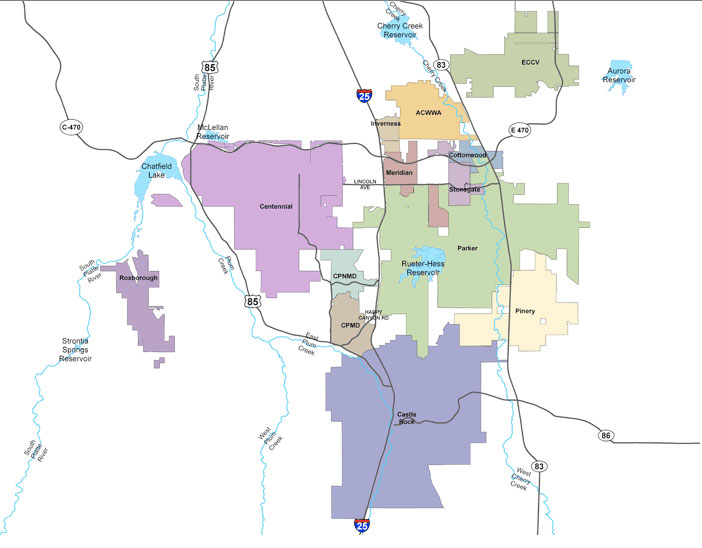
From the Highlands Ranch Herald (Chris Michlewicz):
Water providers that would once compete for water rights have joined sides to ensure the future vitality of the south metro area, said Ron Redd, utilities director for the Town of Castle Rock, who was recently appointed to lead the board of the South Metro Water Supply Authority. Its members — managers of water districts large and small — use their expertise and vision to strategically calculate what needs to be done today and in the future. They know that water pulled from underground aquifers is a finite resource. That’s why the group is hoping to finalize an agreement this summer that will enable it to purchase hundreds of thousands of acre-feet of treated water from Denver and Aurora. The SMWSA is also trying to secure permission from the U.S. Army Corps of Engineers to store the water in Rueter-Hess Reservoir, a 72,000-acre-foot reservoir southwest of Parker…
“It does not solve the long term water supply issue because it’s interruptible and depends on the hydrologic cycle, but it helps go a long way toward meeting our needs,” Redd said. Wise, which stands for Water, Infrastructure and Supply Efficiency, would in its first phase bring between 5,000 and 11,000 acre-feet of reclaimed water per year to the supply authority during the first five years. It would increase to 10,000 acre-feet per year on average during the second phase. The entities are still negotiating the terms of the contract…
The project is only a small part of the group’s overall goals. SMWSA leaders developed, phased and priced out a master plan that serves as a guide to future water procurement. The public can view the plan at www.southmetrowater.org.
More South Platte River basin coverage here.
CU Denver: New desalination method treats wastewater and produces hydrogen

From Sify.com:
Researchers at the University of Colorado Denver College of Engineering and Applied Science have discovered a way to simultaneously desalinate water, produce hydrogen and treat wastewater. “Ships and their crews need energy generated on-site as well as fresh drinking water. Thus, the Navy is very interested in both low energy desalination and renewable energy production,” said Zhiyong (Jason) Ren.
Ren and his team with the University of Colorado Denver discovered, after six months from the initial hypothesis to completion, that they could produce hydrogen gas, which is collectable and storable, thus making improvements in the technology of water purification.
More coverage from Science Daily. From the article:
A recent study by Logan group at Penn State University also demonstrated similar findings in that the energy contained in hydrogen gas not only can offset the energy used for the desalination process but has surplus that can be used for downstream processing.
Next steps for Ren and his team will include using real wastewater to test the efficiency as well as optimizing the reactor configuration to improve system performance. “This discovery is a milestone for our new research group,” said Ren. “We are very excited about our findings and will continue working to improve the technology.”
More water treatment coverage here.
Aurora: Prairie Waters Project update
From Water and Wastewater (Lori Irvine):
The city of Aurora recently celebrated the completion of the Prairie Waters Project, an innovative and environmentally friendly water system that was finished ahead of schedule and more than $100 million under budget.
A large Colorado crowd excited to see the completion of the $653 million project gathered Friday, Oct. 8, for the system’s formal dedication. Speakers included Aurora Mayor Ed Tauer, Interim City Manager Nancy Freed, Aurora Water Director Mark Pifher, former Aurora Water Director Peter Binney and CH2M HILL Chairman and CEO Lee McIntire whose company provided design and program management services.
The project is the fastest, most cost-effective and environmentally sustainable way to meet Aurora’s water needs and went from design to completion in just five years. Construction broke ground in July 2007. The system includes 34 miles of 60-inch diameter pipeline, three pump stations, a natural purification area and a new water treatment facility that is one of the most technologically advanced in the country.
Aurora: Water treatment system background

From the Aurora Sentinel (Sara Castellanos):
The city’s water supply is derived primarily from snowmelt runoff in the Colorado, Arkansas and South Platte river basins. The water is then stored in 12 reservoirs and lakes including Aurora, Homestake, Twin Lakes and Rampart. It’s transported to the city from as far as 180 miles away through pipes, tunnels and pumps. There are nine staff members at the Wemlinger Treatment Plant who have more than 200 years of combined experience in the water quality field, with extensive knowledge in the world of chemistry. “It’s awesome to be associated with so many people who care so much about making really great water,” [Sherry Scaggiari, quality control supervisor] said. “We don’t say, ‘OK, what’s the level we have to meet?’ We say, ‘We are going to do better than that, and we are going to lead the industry.’”[…]
The contaminants in the city’s water are far below the allowable level mandated by state and federal laws. For example, the maximum contaminant level of total coliform bacteria, which is naturally present in the environment, is no more than 5 percent per month. The highest monthly percentage found in Aurora’s water was 0.52 percent, according to the 2010 Water Quality report. Only one sample was found positive for total coliform bacteria out of 2,268 samples. Hard work has paid off for the employees at the Wemlinger Treatment Plant. In 2009, the plant was awarded the “Excellence in Water Treatment” status after undergoing three levels of review by the American Water Works Associations’ Partnership for Safe Drinking Water program. Wemlinger is one of six treatment plants in the country to receive the award.
More water treatment coverage here.
Bureau of Reclamation: Title XVI Water Recycling and Reuse Funding Criteria Available
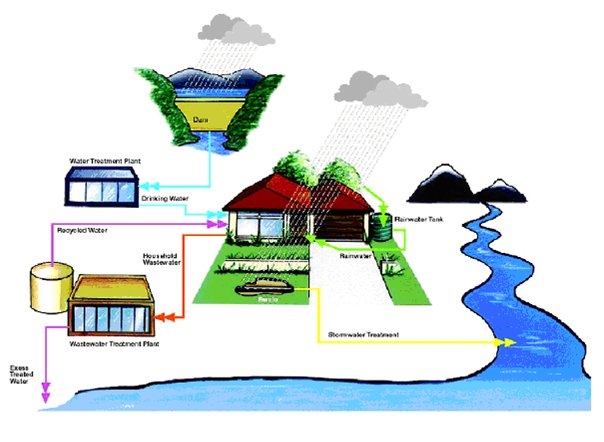
From email from Reclamation (Peter Soeth):
The Bureau of Reclamation has published the funding criteria for the Title XVI – Water Recycling and Reuse Program. The funding criteria will be used for two new fiscal year 2011 Title XVI Funding Opportunity Announcements.
Earlier this year, Reclamation made draft criteria available for public comment. The final funding criteria and a compilation of the public comments received are available online at www.usbr.gov/WaterSMART.
This fall, two funding opportunities will be posted at http://www.grants.gov. One opportunity will be open for construction of Title XVI projects. Another funding opportunity will provide cost-shared assistance for the development of feasibility studies under the program.
Title XVI of P.L. 102-575 provides authority for Reclamation’s water recycling and reuse program. The Title XVI program is focused on identifying and investigating opportunities to reclaim and reuse wastewaters and naturally impaired ground and surface water in the 17 Western States and Hawaii. Title XVI projects have the potential to stretch water supplies using both time-tested methodologies and piloting new concepts.
WaterSMART is a program of the U.S. Department of the Interior that focuses on improving water conservation and helping water-resource managers make sound decisions about water use. It identifies strategies to ensure that this and future generations will have sufficient supplies of clean water for drinking, economic activities, recreation, and ecosystem health. The Program also identifies adaptive measures to address climate change and its impact on future water demands.
More reuse coverage here.
Aurora: Prairie Waters dedication recap
From the Aurora Sentinel:
Hundreds of people attended the Prairie Waters Project opening celebration last week at the Peter Binney Water Purification Facility near the Aurora Reservoir…
It is expected to increase Aurora’s water supply by 20 percent and deliver up to 10,000 acre-feet of water per year…
“Water projects in the arid west don’t just happen,” said Mark Pifher, director of the city’s water department, at the celebration. “They require the natural resource itself — the water, many permit approvals, technological means to capture that water, to treat it and distribute it, and perhaps most importantly … projects of this nature need the political will to bring them forward from design to fruition. This project possessed all of those attributes.”
More Prairie Waters coverage here.
Aurora: Prairie Waters dedication today
From the Denver Business Journal (Cathy Proctor):
The project (website here) boosts Aurora’s water supply by 20 percent — about 3.3 billion gallons of water a year. It came in ahead of schedule and $101 million under the original $754 million budget, said Greg Baker, spokesman for the Aurora Water Department. “We’re ahead of schedule and well under budget,” Baker said. “How often does a city get to say that?”
Water equivalent to what Aurora gets from the Western Slope, uses and sends into the South Platte River is pumped out of the river near Brighton, then filtered through a series of gravel and sand beds into a pipeline. The 34-mile pipeline sends the water to a new treatment plant. From there it goes on to city residents and businesses — who use it before its returned to the river. It’s a continuous loop of use and re-use. “It’s one of the most sustainable new water supplies in the Southwest,” said Scott Ingvoldstad, a spokesman for CH2M Hill. “It combines natural purification with a state-of-the-art new treatment facility that uses the latest technology to ensure that Aurora will have a sustainable and high-quality water supply for many decades. “It uses water rights that Aurora already owns and recaptures them in the South Platte River so that they didn’t have to build a new dam on the Western Slope. It’s making the most efficient use of the water rights that they already own,” Ingvoldstad said.
Metro Denver area reuse and wastewater projects update
From The Denver Post (Bruce Finley):
The projects are driven by scarcity — the growing difficulty of drawing sufficient new supplies from mountain snowpack — and by rapid depletion of groundwater wells that some metro residents rely on. Water providers say they also increasingly are detecting new contaminants, such as pharmaceutical residues from birth-control pills, cosmetics and antidepressants, that they anticipate might have to be removed. “We’re preparing for the future. There’s still expected to be a lot of growth along Colorado’s Front Range. That’s what these plants are for,” said Steve Witter, water resources manager for the Arapahoe County Water and Wastewater Authority…
At the end of June, Arapahoe County and Cottonwood water authorities activated a $30 million purification plant serving residents of the southeastern metro area. Many now receive water purified using membrane and reverse-osmosis filtering, chemicals (hydrogen peroxide and chlorine) and ultraviolet light…
This fall, Aurora’s $659 million “prairie waters” system is expected to start treating South Platte River water that otherwise would not be diverted. Aurora raised water prices (bills now average $75, up from $35), tripled tap fees and issued $450 million in bonds to pay for the project…
Parker water authorities are developing a large reservoir and are hunting for water to fill it and also designing a $50 million treatment plant, said Jim Nikkel, assistant manager of the Parker Water and Sanitation District. The plant will filter up to 10 million gallons a day, he said, and will be useful in shifting away from reliance on wells.
East Cherry Creek Valley water authorities are planning a $30 million treatment plant, using reverse-osmosis and ultraviolet methods, to sustain their 50,000 metro-area customers.
More reuse coverage here.
Parker: Rueter-Hess Reservoir update

So far Parker and its partners in Rueter-Hess Reservoir — currently under construction southwest of the city — do not have enough surface water to fill the 77,000 acre-foot reservoir. Here’s a report from Bruce Finley writing for The Denver Post. From the article:
The prospect of what critics call an empty bathtub is generating anxiety around Colorado as water managers clash over the last unclaimed mountain river flows. Most water to fill the Rueter-Hess reservoir “will have to be imported,” said Frank Jaeger, manager of the Parker Water and Sanitation District, who for 25 years has led the effort to supply 450,000 suburban residents. Importing water would require multibillion-dollar pumping and piping from rivers running down the western side of the Continental Divide, such as the Colorado, back across mountains to Front Range residents, Jaeger said. Though huge, the costs likely would be less than for alternatives such as trapping and treating contaminated water from the South Platte or Arkansas rivers, he said. The option Jaeger and a Colorado-Wyoming coalition of municipal suppliers favor — one of four being considered by state natural resources officials — would divert water from the Flaming Gorge Reservoir in western Wyoming along Interstate 80 to Colorado…
Yet Colorado Western Slope leaders see the $230 million Rueter-Hess reservoir as folly — and bristle at talk of diverting more water across the mountains to fill it. The reservoir “is 20 times more expensive, and 10 times as big as they need. It’s going to be a little bit of water in a big bathtub,” said Eric Kuhn, manager of the Colorado River Water Conservation District, based in Glenwood Springs. The financing, based on tap fees from anticipated housing construction, “is the water equivalent of a Ponzi scheme,” Kuhn said…”There’s a very good chance that, in the long run, there’s not going to be any more water available on the Western Slope. And, if they’re having trouble now paying for Rueter-Hess, how are they going to pay for moving water from the Western Slope? That’s why I say this is a fairy tale,” Kuhn said…
This month, more construction vehicles are rolling into action to build up the 7,700-foot-wide Frank Jaeger Dam at the reservoir. Critics “can make their claims,” but the reservoir will be crucial to sustain population growth, Jaeger said. Paying off the debt for the construction now underway all depends on tax revenues from future growth, he said. “To say, ‘We’ll just shut off growth’ will only exacerbate problems,” he said. “If you don’t pay off debt, what do you do? What does that do to the economy of the whole state? We need steady, controlled growth. All our needs for a reasonable lifestyle are tied into this.”
Pueblo West: Looking at options to enable reuse of effluent

From The Pueblo Chieftain (Chris Woodka):
Pueblo West indicated it would still submit a site application to the state for a $6.5 million project to discharge sewer flows into a wash two miles above Lake Pueblo near the golf course, even after the Pueblo Area Council of Governments rejected the proposal on an 11-1 vote earlier this month. “We don’t know what’s going to transpire with the lawsuit against the county,” said Steve Harrison, Pueblo West utilities director. “In case we can’t come to some sort of agreement, we are applying for the site application.”
PACOG rejected the proposal because it goes against county regulations on Section 208 of the federal Clean Water Act, adopted in 1993. Pueblo West would pursue the plan because it offers the best solution for future water needs. The 208 regulations are being applied to the metro district selectively and are out of date, Harrison said.
Most of Pueblo West water comes from the Colorado River Basin, which means the community can reuse the non-native flows to extinction. Currently, Pueblo West reuses the water by exchange, sending its treated sewer flows down Wild Horse Dry Creek, and recapturing about 30 percent of them after transit losses. Pueblo West estimates it could recapture 98 percent of flows with a direct exchange into Lake Pueblo.
But other water users like the Pueblo Board of Water Works and the Fountain Valley Authority are concerned that nutrient loading from the proposed pumpback could upset the biological balance of the reservoir and create new water quality issues. There is also growing pressure to regulate traces of compounds from pharmaceuticals, detergents and fertilizers that would be more likely to make their way into the water supply. “We have serious concerns for the health of the reservoir, not only in terms of water quality, but taste and odor issues as well,” said Alan Hamel, executive director of the Pueblo water board. “Pueblo Reservoir is also the most-used recreational facility in the state.”[…]
Wild Horse Dry Creek discharges into the Arkansas River about six miles downstream of a river gauge critical to the flow program, and about one mile above the river intake for the Historic Arkansas Riverwalk of Pueblo and Black Hills Energy. It is a significant source of selenium loading, probably because of the geology of the area – water running over shale formations.
Among the alternatives that have surfaced are:
-Building a discharge pipeline to discharge just below Pueblo Dam above the river gauge.
-Building a discharge pipeline to carry effluent to the Wild Horse confluence at the Arkansas River.
-Creating a trade with the Pueblo water board to use Pueblo West effluent to supply the Comanche Power Plant, with the water board providing water to Pueblo West. The water would still get payments from outside water sales.
-Possibly developing a cooperative arrangement among Pueblo West, Colorado Springs and the Pueblo water board to recapture flows downstream.
-Maintaining the status quo, which could leave Pueblo West in the position of having to buy new water rights if its other plans fail or with a pumpback plan in place despite the local objections…
The State Department of Public Health and Environment would have to buck the PACOG recommendation if it approves the site application…
Pueblo County also has notified Pueblo West that it would require a 1041 permit for the pumpback plan, since Pueblo West identified it as a water supply issue, Headley said.
More Pueblo West coverage here.
Southern Delivery System: Colorado Springs Utilities rejects opportunity to buy Morley’s Stonewall Springs reservoir site

From The Colorado Springs Gazette (R. Scott Rappold):
During a meeting of city council – sitting as the Colorado Springs Utilities Board – Utilities officials said the asking price was too steep for a reservoir they don’t need now.
“We don’t have an immediate need right now, and there is plenty of time for us to develop an appropriate solution for our partners,” Utilities CEO Jerry Forte said. “Based on what we know right now, this is expensive, and I think we can do a better job for our customers.”
Utilities has an agreement with several other cities to build a reservoir near the Arkansas River for treated effluent. The Morleys’ site, known as Stonewall Springs, has been identified as a possible site, and in 2005 Utilities was in talks to buy it.
The deal was deemed too expensive – a Utilities appraisal listed it at $3 million, but the sellers wanted $7.25 million – and Utilities stepped away. In June, Utilities was lukewarm to a proposal to buy the site from the Morleys, who had since bought it, for $38 million, an increase in asking price related to the fact the developers had done some work to get land-use approvals for a reservoir.
Recycled effluent used for recharge

Recycling effluent as a potable water source is gaining momentum here in Colorado. Aurora has its Prairie Waters Project. Here’s an article about the Cherokee Metropolitan District’s plans to use effluent for aquifer recharge, from the Associated Press via CBS4Denver.com:
By 2008, farmers, ranchers, cities and homeowners drilled more wells in El Paso County than anywhere else in the state — 19,919, about two-thirds of which are residential wells, according to the Colorado Division of Water Resources. State water engineer Dick Wolfe said studies show the aquifers have been depleted by up to 50 feet in places…
Cherokee Metropolitan District is looking at recharging supplies. It is building 11 storage basins south of Ellicott to hold treated wastewater as it filters into the shallow alluvium aquifer. As it percolates through the soil and blends with virgin groundwater, the treated water will be purified and again pumped, chlorinated and delivered to 8,000 homes and 450 businesses, said Cherokee Metro District manager Kip Petersen. “It doesn’t replace new water,” he said, “but it allows us to extend our use.” A wastewater treatment plant that is under construction is expected to go into service next year. Most required permits from the Colorado Public Health and Environment Department have been issued, said Water Quality Division spokesman Steve Gunderson. Customers often say, “I’m going to be drinking what?” But Petersen said the engineering is already is at work in California and Phoenix.