
Click the link to read the article on the Western Governors’ Association website:
March 21, 2024
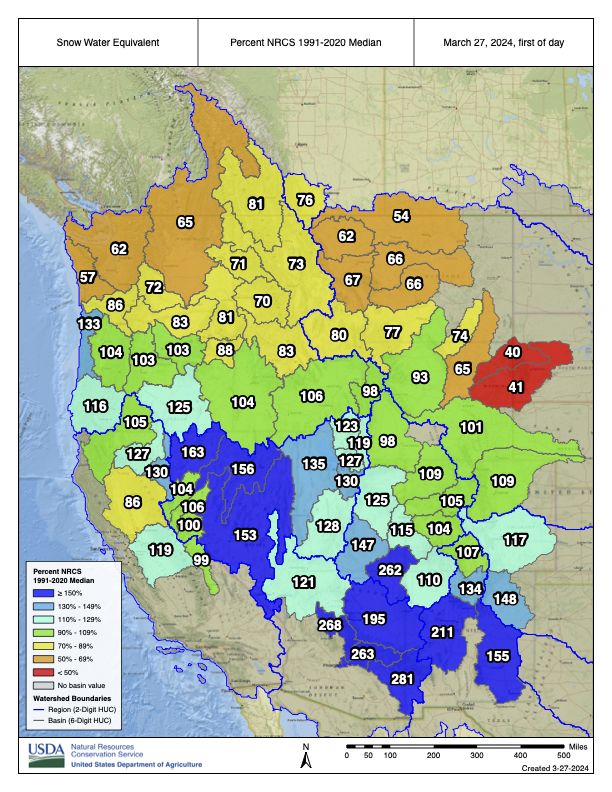
Thanks to a snowy February and some heavy early spring storms, much of the west’s snowpack has surpassed the historical averages.

After lagging earlier this winter, Colorado’s mountain snowpack recently measured 109% of the 30-year norm, setting up the potential for another summer with healthy water supplies.
“We’re sitting pretty right now,” National Weather Service meteorologist Caitlyn Mensch said. “We’re above 100% everywhere, which is positive to see as we head into spring.”
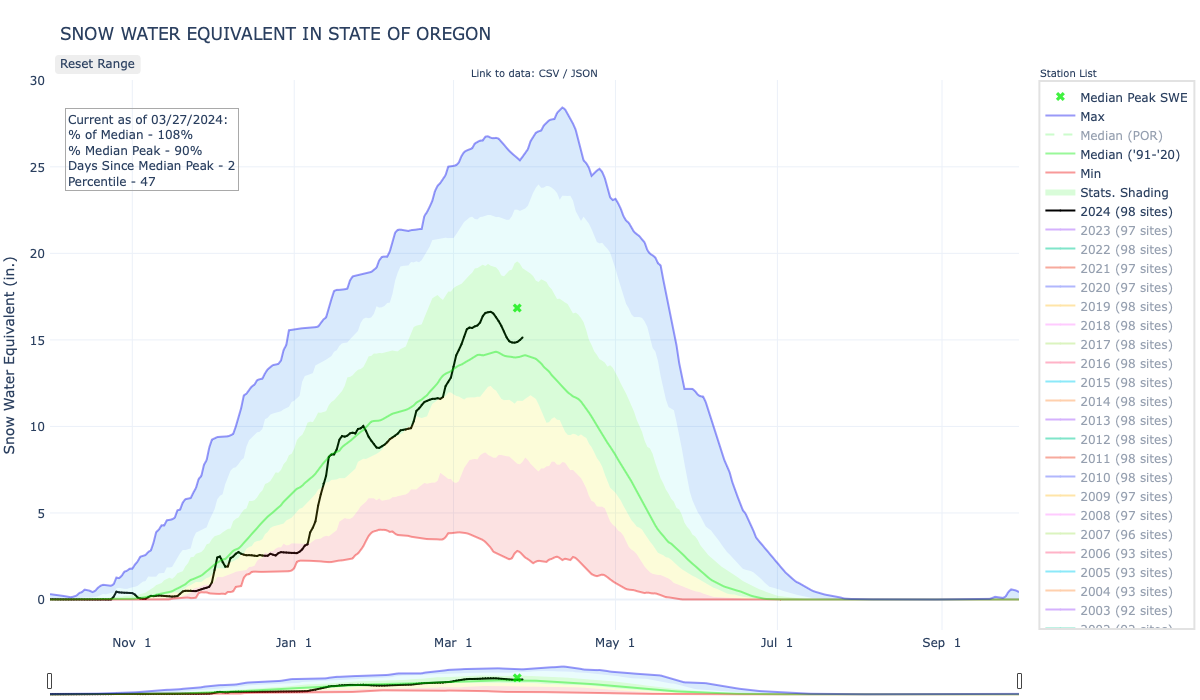
The latest storm also boosted Oregon’s snowpack to 109% of normal and continued to decrease drought levels to the lowest they’ve been since 2019.
In particular, Mt. Hood, Oregon picked up about 6-8 feet of new snow between February 26 and March 4. In that window, many areas saw massive increases in snowpack levels, going from 70-89% of their normal snowpack to over 100%.
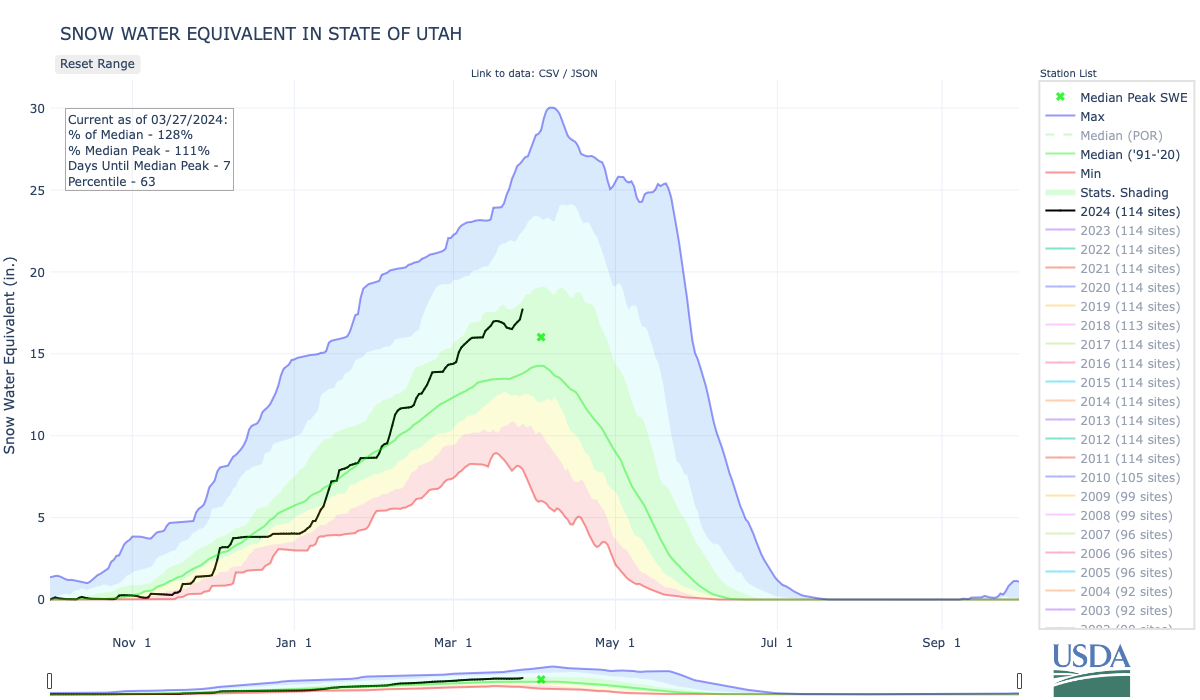
Utah’s snowpack is also looking quite good with the statewide snowpack currently at 124% of the 30-year median, according to the Utah Snow Survey, which is celebrating its 100th anniversary tracking snowpack in the state.
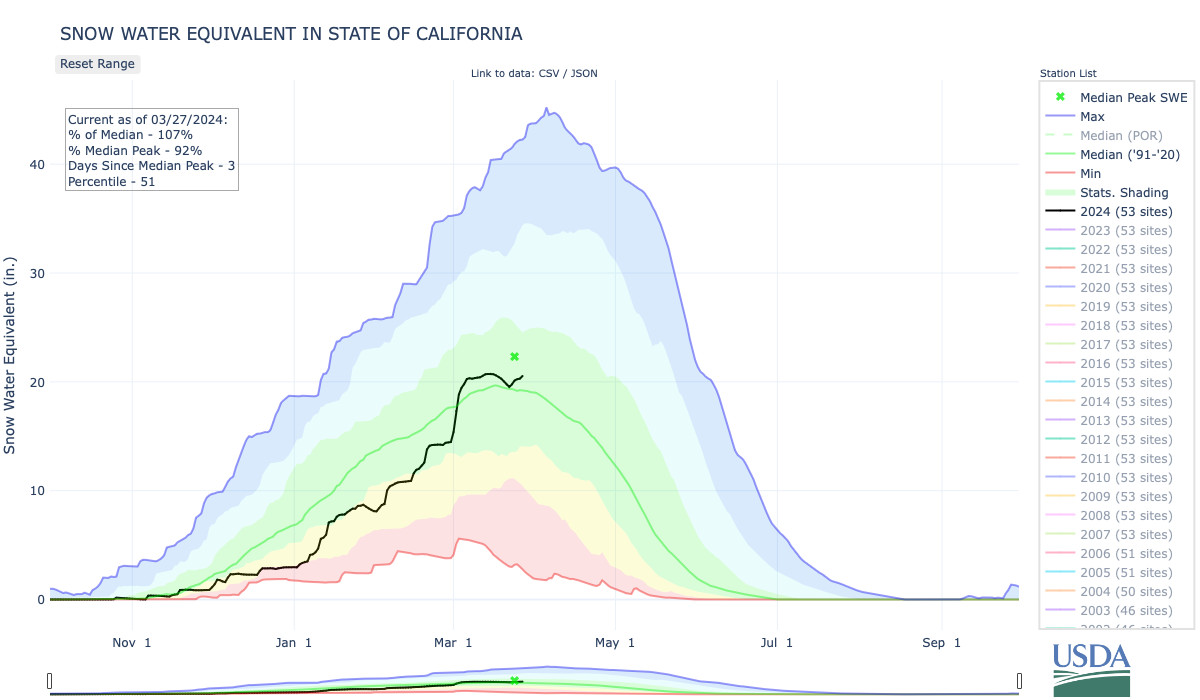
The California snowpack is in a similarly positive position, having surpassed the historical average for this time of year. Meteorologists expect that a storm forecast for this weekend could deepen it even more, with the peak coming in mid-April before melting intensifies.
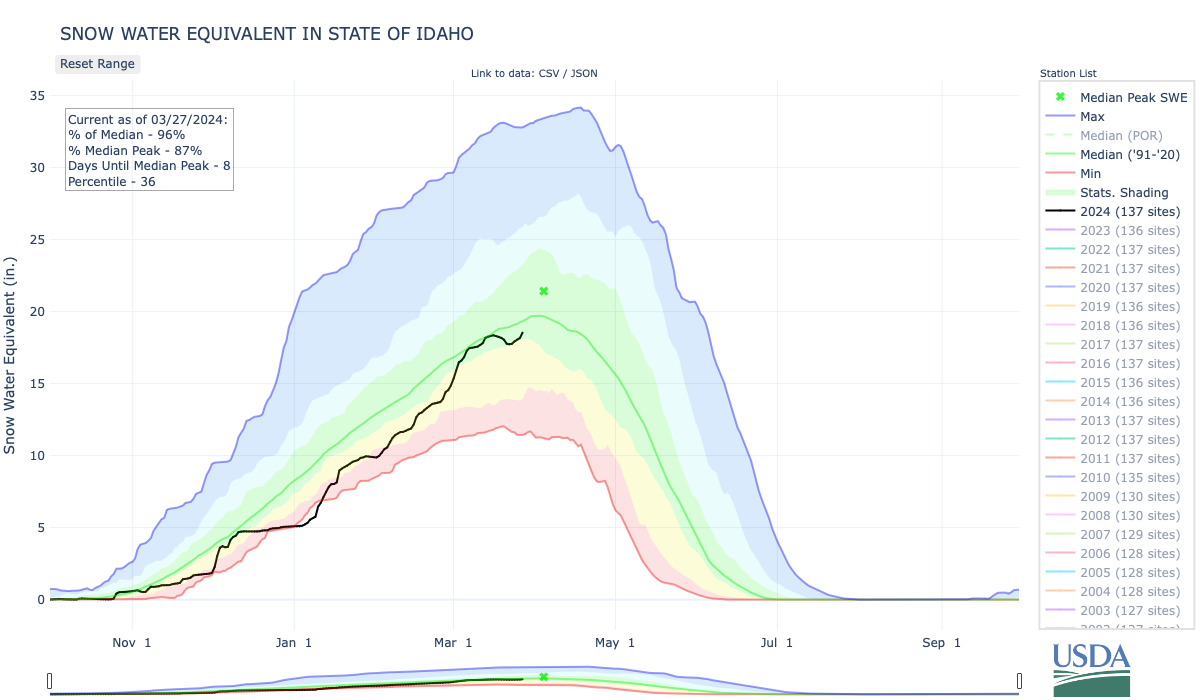
While snowpack in Idaho’s northern areas remains below 30-year medians partly because of the dominant El Nino weather pattern that pushes Pacific storms south, a wet February and early March have boosted snowpacks in much of southern Idaho to near-normal and above-normal levels.
“Despite the varying snowpack levels in the state this winter, a lot of the reservoir storage looks good across the state,” said Andrew Paxton of the NRCS Idaho Snow Survey staff.
Water volume in the Upper Snake reservoir system is about 120% of the long-term median, said Jeremy Dalling, water operations civil engineer with the U.S. Bureau of Reclamation Upper Snake Field Office. Natural flows are good.

Even Montana, which has experienced an extremely dry winter, got some relief from the early spring storms. The Gallatin basin recorded precipitation levels 113% of normal, the Madison basin saw levels 147% of normal, and the Upper Yellowstone saw levels 120% of normal for the month.