
Click the link to read the article on The Washington Post website (Erin Blakemore):
August 3, 2024
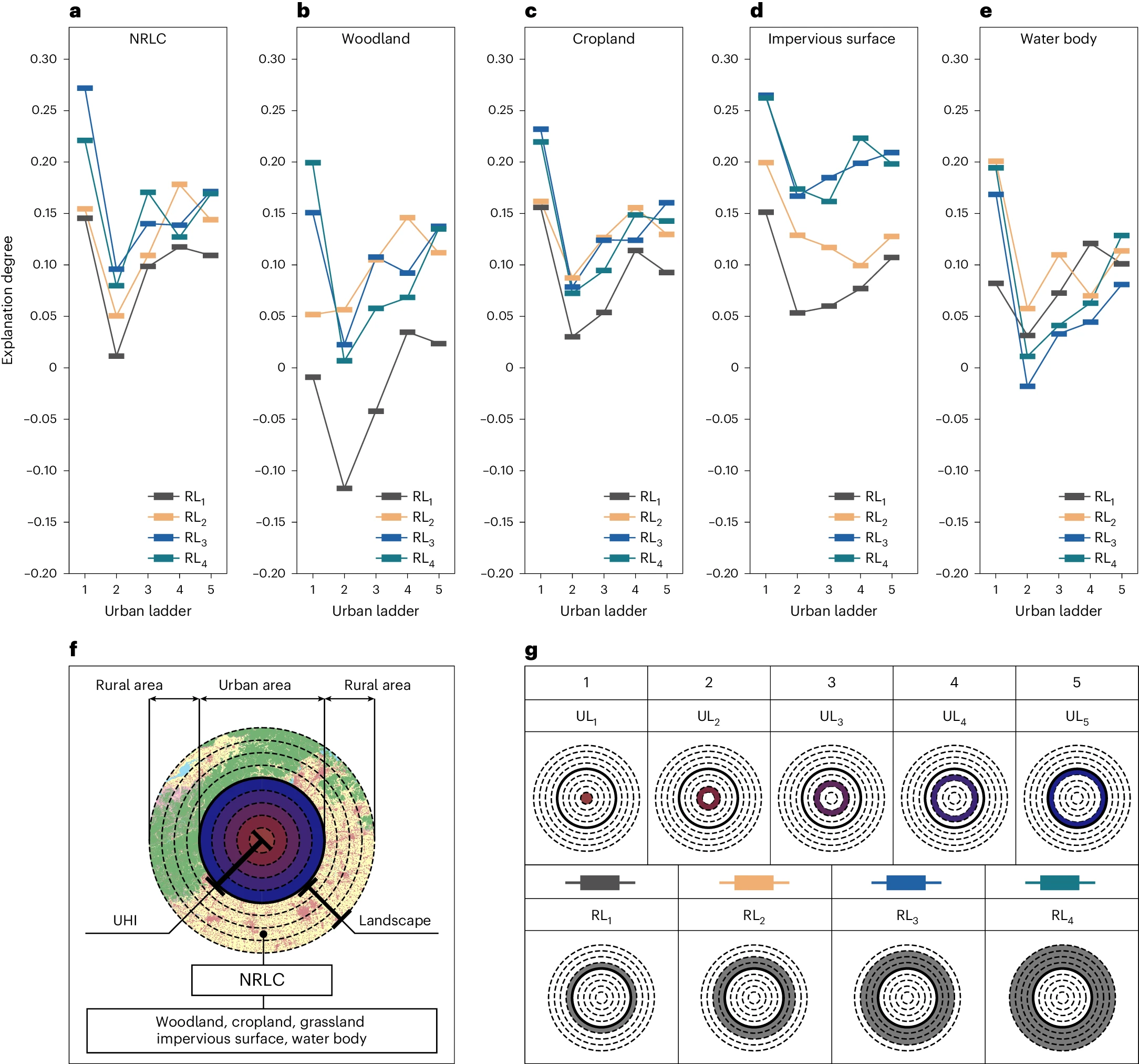
Rural land surrounding urban areas could help cool cities by up to 32.9 degrees Fahrenheit, an analysis in Nature Cities suggests, hinting at a way to cool increasingly scorching urban areas. In an attempt to understand how rural land cover affects urban heat islands — a phenomenon in which cities become significantly warmer than the areas surrounding them — researchers studied data from 30 Chinese cities between 2000 and 2020. They looked at land cover surrounding the urban areas and ranked the capacity of various urban-rural configurations to cool the cities. Rural areas hold “great potential” for cooling urban heat islands, the researchers concluded, with the biggest impacts occurring within a six- to nine-mile radius of the urban boundary. Rural land in that range can reduce the urban heat island intensity by nearly 30 percent, they found.
The reason is a matter of physics, they write: Air warms in cities, leaving a low-pressure zone near the ground that then helps transport cooler air from surrounding rural areas. The rural areas then go on to absorb the heat. Different factors affect the process, including geographic features like hills and mountains, a city’s shape, and climatic zones, the researchers write.
Land use in rural areas “can make a big difference to temperatures downtown,” Shi-Jie Cao, a visiting professor at the University of Surrey’s Global Center for Clean Air Research and a co-author of the paper, said in a news release.