River advocates say promises broken on state-funded #RioGrande dam safety project — Jerd Smith (Fresh Water News)

Rio Grande Reservoir

Click the link to read the article on the Water Education Colorado website (Jerd Smith):

September 12, 2024

Four years after a high-profile dam restoration project was completed in the scenic headwaters of the Rio Grande, promises to deliver water for fish during the winter and other recreational benefits have not been met, environmental groups charge.

The Rio Grande Reservoir Project was funded by state loans and public grants provided by the Colorado Water Conservation Board, which often bases financing approvals, in part, on a project’s ability to serve multiple purposes, including water for fish, habitat and kayakers.

“The Colorado Water Conservation Board … provided $30 million in the form of loans and grants to complete the project,” the CWCB said In a project update posted on its website. “Benefits include: instream flow enhancement; channel maintenance; outdoor recreation opportunities; terrestrial and aquatic wildlife habitat; irrigation, augmentation; and storage to comply with the Rio Grande Compact between Colorado, New Mexico, and Texas.”

The public-private project was completed in 2020.

The CWCB declined an interview request for this story, but said in an email that there were no specific conditions in the loans and grants tied to providing environmental benefits.

“CWCB does not have the ability to impose extra terms on the recipients of funds that are not articulated in the funding agreements. In the case of the Rio Grande Reservoir Rehabilitation, the final deliverable was completion of the project,” a spokesperson said.

Still Kevin Terry, southwest program director for Trout Unlimited, said the project would likely never have been funded without assurances that the dam would be operated differently to help the river, including releasing water in the winter to aid the fish and changing the time water is released throughout the summer to keep the river cooler and healthier during prime fishing and kayaking season.

“There were lots of environmental benefits touted before the Colorado Water Conservation Board and the roundtable,” Terry said,  referring to the Rio Grande Basin Roundtable. The roundtable is one of nine public groups across the state’s major river basins that help address local water issues and funnel state grants to projects they approve.

The San Luis Valley Irrigation District, which owns and operates the dam, serves farms around Center and has delivered water from the dam since 1912, according to its website. Neither District President Randall Palmgren nor Superintendent Robert Phillips responded to numerous requests for comment.

The district uses the reservoir to store water for irrigators. Trout Unlimited and others aren’t asking for any water, they say, just that existing water that would be released anyway be sent downstream at times that are beneficial to the river.

Screenshot from Google Maps

Among key complaints by environmentalists is that the irrigation company is not allowing water to flow out of the rehabilitated dam during the winter, something that would benefit young fish and allow them to grow larger for the next fishing season.

Terry said the irrigation district has said it can’t deliver that winter water because it is difficult to operate the new equipment in freezing winter weather. But Terry said he doesn’t understand how the project could have been built without the ability to deliver in cold weather, something that occurs routinely in other reservoirs in the valley.

Jim Loud, a Creede resident and avid angler who lives on the river, said he and others are tired of waiting for the river to receive the benefits many believed would have been delivered by now.

“All we want is to get them to do what they said they were going to do,” said Loud, citing numerous CWCB documents dating back several years outlining the environmental benefits of the project. Loud is part of the Committee for a Healthy Rio Grande.

Rio Grande and Pecos River basins. Map credit: By Kmusser – Own work, Elevation data from SRTM, drainage basin from GTOPO [1], U.S. stream from the National Atlas [2], all other features from Vector Map., CC BY-SA 3.0, https://commons.wikimedia.org/w/index.php?curid=11218868

The old days weren’t fun

The conflict comes as the Rio Grande Basin, which begins high above Creede and flows south to the Gulf of Mexico, continues to struggle with declining aquifer levels due to heavy agricultural use and low stream flows due to drought and climate change. In Colorado, the Rio Grande waters a potato industry that is one of the largest in the nation.
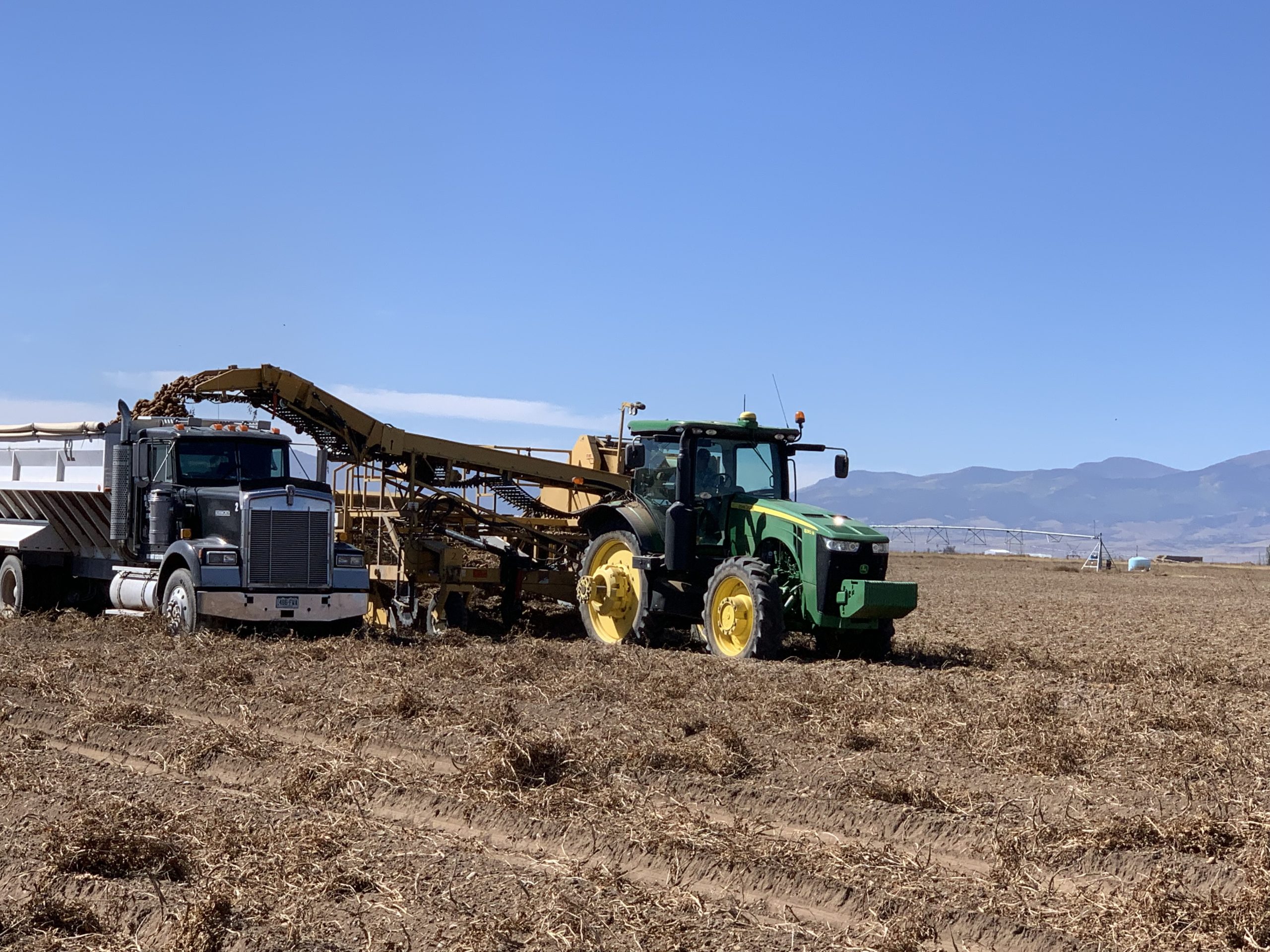
The last days of the potato harvest. Photo credit: The Alamaosa Citizen

Creede local Dale Pizel, who owns a ranch on the river and caters to the fishing community, said river conditions have improved some since the dam was rebuilt. Prior to the project, the irrigation company would routinely dry up the river for weeks during the high summer tourist season to make repairs to the dam.

“That doesn’t happen anymore,” Pizel said. He too serves on the Rio Grande Basin Roundtable, which also approved some grants for the project.

“I voted for that project knowing it would have environmental benefits, and it did,” Pizel said, because there is no need for the irrigators to dry up the river to repair a failing dam anymore.

Still, he said, if environmental promises are being made publicly, the state needs a better way to make sure they are kept.

Trout Unlimited’s Terry said for years he was hopeful that the rehabilitated dam would serve as another multiuse storage project in the water-short valley helping farmers and the environment.

“We are so disappointed in the delivery of what was promised and the lack of the CWCB holding the irrigation district accountable in any way,” he said.

Altering the dam’s new equipment so that winter releases can occur will likely require spending about $5 million, according to Terry.

Pizel and others hope a resolution between the farmers and the environmentalists can occur without legal action.

“We don’t want to start thumping each other in the chest,” Pizel said. “That’s the way it was in the old days. It was not fun.”

More by Jerd Smith

Jerd Smith is editor of Fresh Water News. She can be reached at 720-398-6474, via email at jerd@wateredco.org or @jerd_smith.

Sales of EVs and plug-in hybrids rise to 22.1%: #Colorado lags only #California in sales in second quarter of 2024. It bucks national trends. But can this momentum be sustained? — Allen Best (@BigPivots) #ActOnClimate

Click the link to read the article on the Big Pivots website (Allen Best):

September 11, 2024

Electric vehicles and plug-in hybrids reached 22.1% of all new vehicle sales in Colorado during the second quarter of 2024.

In the first quarter, Colorado was third in the nation in proportion of EVS and plug-in hybrids to total sales. During the second quarter an auto industry analyst reported that Colorado lagged only California, although the economist did not cite the source of the data.

Colorado’s incentives, among the nation’s most attractive, have helped swell the state’s sales. EVs constituted 16.1% of all new-vehicle sales in Colorado from April through June and plug-in hybrids another 6%. Hybrids with internal-combustion engines constituted another 10.89%.

EVs and plug-in hybrids had constituted 17.1% of all sales in the third-quarter of 2023, another milestone.

But does Colorado need more tricks in its bag to continue the upward mobility?

Colorado currently has 138,060 EVs (98,202 battery-electric vehicles and 39,858 plug-in hybrids) on its roads. It has a goal of achieving 940,000 by 2030.

In March 2023, a new state roadmap for EV adoption set a goal of having 25% of new vehicle sales by 2025. That seems doable.

However, the Polis administration’s goal is to boost EV sales to at least 70% of new vehicle sales by 2030. Is that within reach using current strategies?

Matthew Groves, the chief executive of the Colorado Auto Dealers Association, suggests that Colorado has some serious work ahead to achieve that goal. A “sprint” is how he describes the task.

A fundamental task he identifies is to create confidence among buyers that they will not get stranded without access to a faster-charging station if they buy an EV.

Range anxiety, if tamed somewhat by charging infrastructure that has tripled in the last five years in Colorado, remains an issue. This is despite impressive figures about charging stations, including the 4,200 level-2 public chargers in Colorado as of early August.

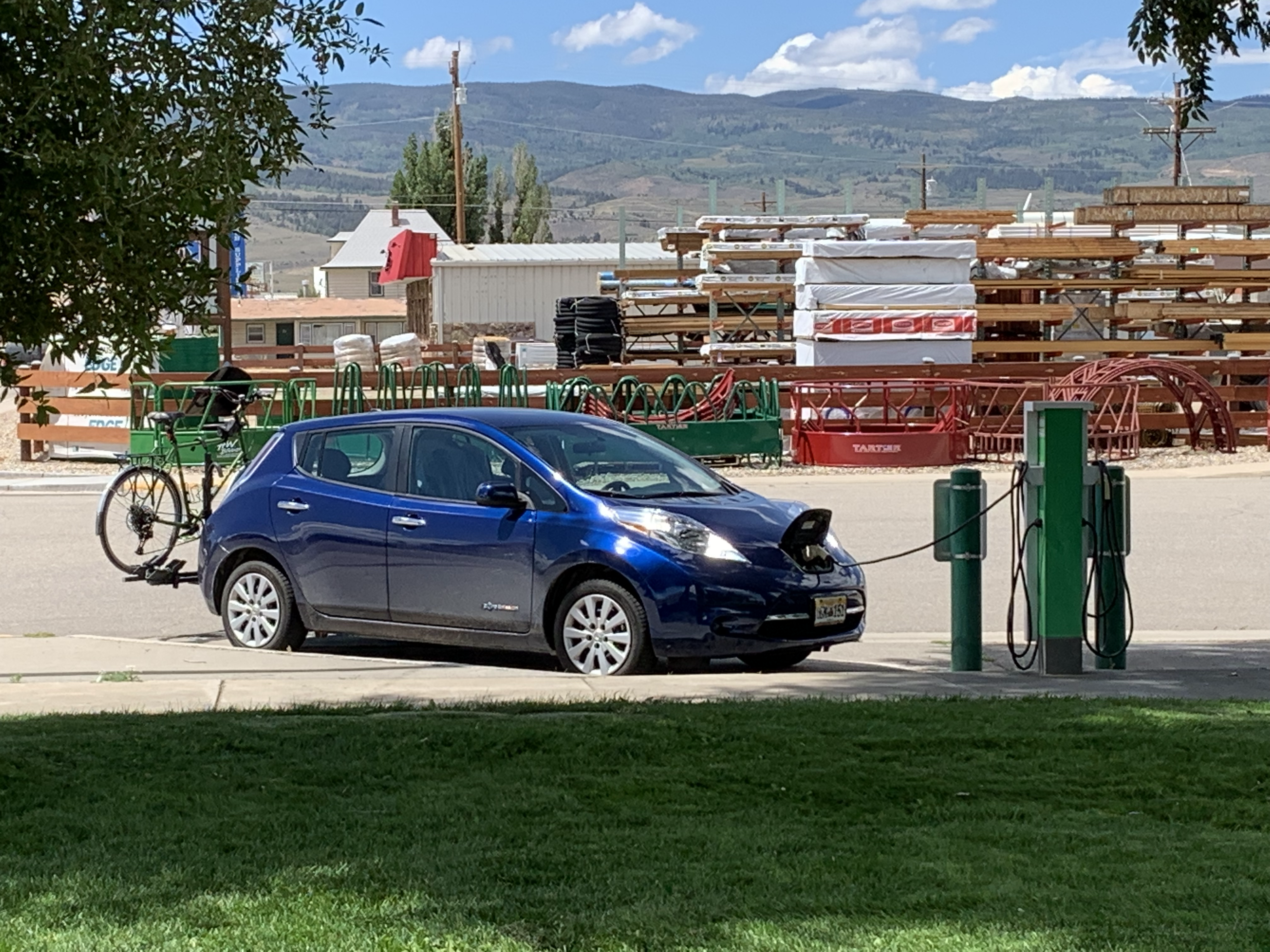
Coyote Gulch’s Leaf charging at Red Rock Hyundai in Grand Junction May 23, 2023.

DC fast chargers? 1,079 ports altogether, according to Atlas Public Policy. As of February they were located within 30 miles of 78% of the state’s geographic area.

More are coming. The state expects the first of 400 additional fast-chargers funded through the federal DCFC Plazas grant program to be in place by the end of 2024. Those chargers will be placed at 65-plus locations across Colorado, although supply chain constraints for transformers and other components may slow the complete rollout to two years or more,

Also material to charging infrastructure are Colorado laws and funding that require and help fund sharing in multifamily housing projects and workplaces.

Instilling consumer confidence

Sounds good, but Groves describes it as an incomplete picture. “Not every car works with every charger,” he points out. Tesla was supposed to make its chargers accessible to other technologies, but that has not happened yet.

Charging stations that don’t work are a problem, and the anecdotal reports suggest a significant one, at least in public perception.

“We can say that we have charging stations every 25 miles along major highways, but if there are six plugs at a stop in the middle of, say Rifle, and only two of them work, and they’re both occupied, what do I do? I may not have enough charge to make it to the next set of stations.”

Beyond the data, says Groves, what will matter most are the anecdotes shared among buyers and others. The importance of those anecdotes will vary from person to person.

Coyote Gulch’s Leaf charging at the Kremmling Town Park (Between Steamboat Springs and Denver) August 23, 2021.

“If I know somebody who got stuck between Steamboat Springs and Denver and heard they had to wait three hours for AAA to get to them, that is a more compelling (story) than the state telling me that our chargers are up 92% of the time.”

Colorado’s surging sales can be attributed in large part to the bucket of carrots offered buyers. The American Council for an Energy Efficiency Economy ranked Colorado third in the nation on its transportation electrification score in a 2023 report. That scorecard evaluating EV policies that states have taken to reduce barriers puts Colorado behind California and New York. Incentives are part of that package.

These incentives by the state, federal government and, in some cases, utilities can be “stacked.” In other words, the state EV tax credit can be combined with the federal tax credit as well as several other Colorado incentives that are available to income-qualified residents.

Groves said that he has seen purchase orders where a buyer can get back $23,000 on the purchase of a new vehicle.

Colorado also has another incentive that makes EVs particularly attractive. Beginning in 2017, purchasers could assign the state tax credits to a financing entity. A 2023 state law made it even easier. HB23-1272 allowed purchasers to assign the tax credit to a participating auto dealer in January. Dealer assignability is also available for the federal tax credit.

If it has some relatively minor problems, this program has yielded packages that have motivated consumer demand. For example, Groves reports knowing of leases for EVs that come in at about $2,100 a month. “Which is phenomenal,” he says. The sheer economics of the heavily subsidized market has some people getting EVs because of the low cost regardless of how they feel about the technology.

How long?

How long can Colorado outpace most of the nation?

National media have carried many stories since late last year about a slowdown in EV sales. Lately comes news that Ford Motor Co. has abandoned plans to roll out a large electric SUV. Tesla has been forced to offer deeper discounts, General Motors has delayed its plans for an EV pickup.

The Washington Post, in an editorial on Aug. 30, urged state and federal policymakers to leave room for plug-in hybrid sales in the medium term.

“The industry is now in the phase that researchers call ‘the technology-adoption lifecycle’ or cross-industry adjustment. When a new technology enters the market, there is a chasm between the enthusiastic early adopters who embrace it right away and the critical mass of consumers who need longer to be convinced,” the newspaper opined.

“Most of the early EV adopters have already purchased their vehicles. It might take time to bring along the critical mass of wait-and-see consumers. Offering electric-fuel hybrids is a way to ease that transition while providing practical solutions to some common concerns.”

The Wall Street Journal on Aug. 25 reported that automakers were already there: they have 47 models of plug-in hybrids available, nearly double those in 2019. They can run on electricity for between 20 and 40 miles before reverting to a gas engine.

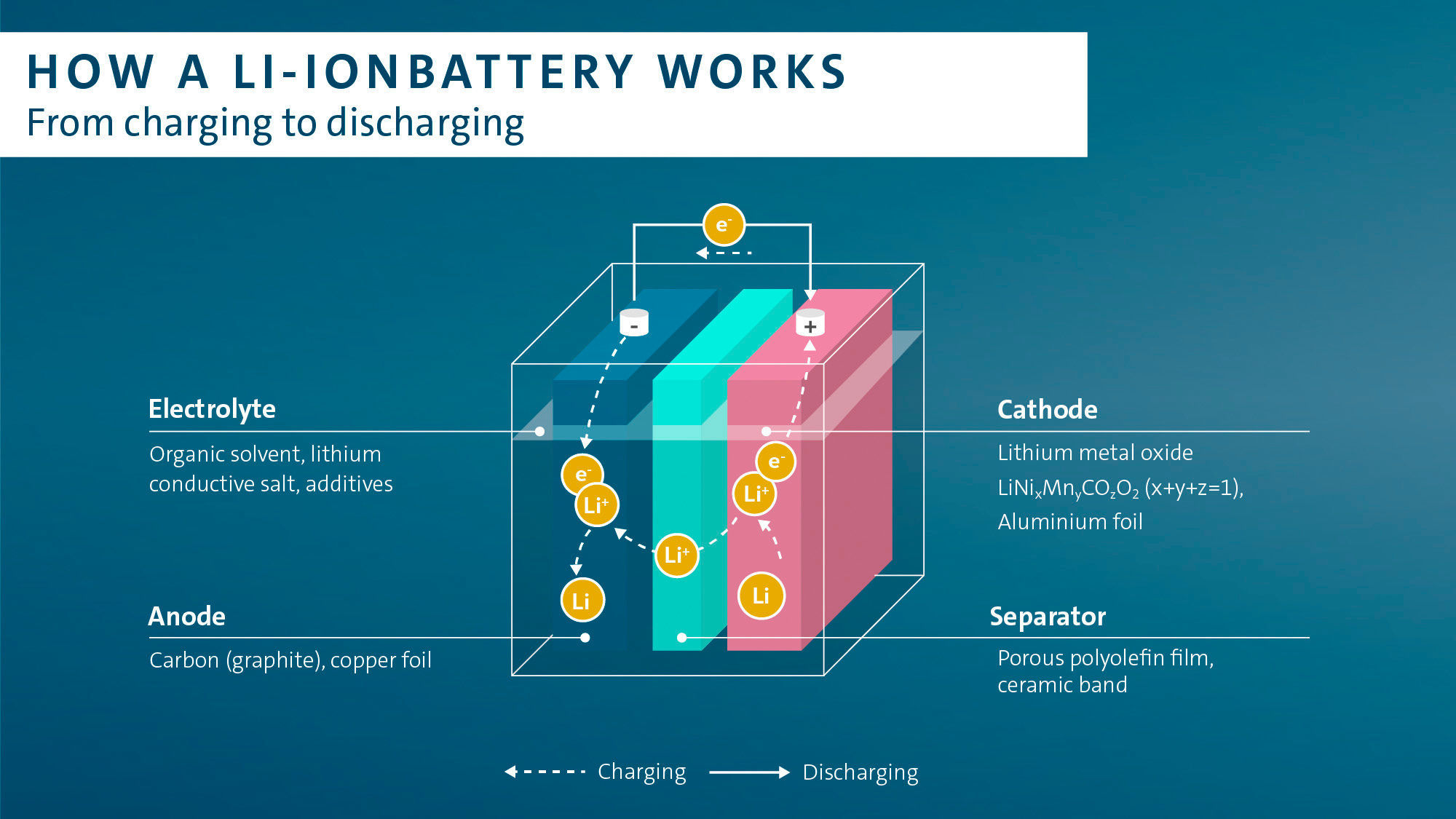
That’s how a Li-ion battery charges and discharges. Graphic credit: Volkswagen https://www.volkswagen-newsroom.com/en/stories/is-lithium-replaceable-4808

Groves is skeptical we will see many lower-priced EV models arriving. “There is a finite supply of the rare-earth metals that we need for EV batteries. And when there’s a finite supply and demand surges, costs tend to go up.”

What would benefit Colorado, says Groves, would be greater flexibility in the methods used to reduce pollution from cars under the Clean Air Act. States have two choices: the federal standards for reducing emissions from cars or taking the lead of California, which federal law permits. Colorado and 16 other states have chosen to work within the constructs of what California is doing.

He cites Colorado’s Clean the Air Foundation program as an example of the innovation. “That was a uniquely Colorado program.”

An attorney, Groves had law-enforcement training and spent 17 years in Washington D.C. working on tax policy and national security issues for three different members of the House of Representatives.

“We’ve shown that we can be a leader in this field,” he says, and should not be “handcuffed by the preemptory effect of federal law.”