#Colorado Water Trust & Partners Protect Jasper Reservoir and its Water in Indian Peaks

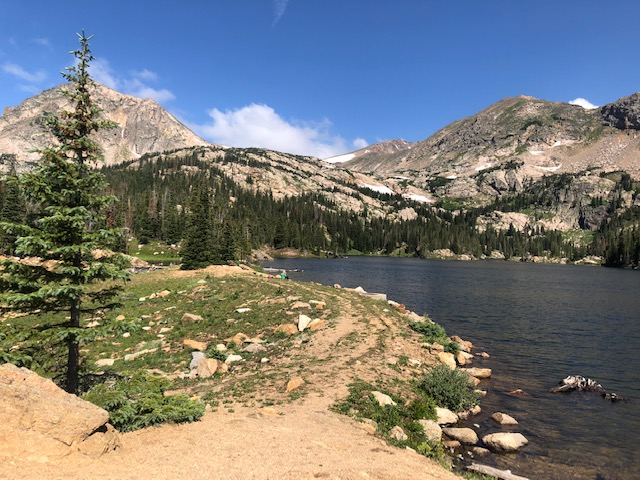
Jasper Reservoir from dam. Photo credit: Colorado Water Trust

Here’s the release from the Colorado Water Trust (Kate Ryan and Doug Tiefel):

August 30, 2024

The Boulder Creek watershed is set to receive a vital boost in streamflow thanks to landmark water-sharing agreement facilitated by Colorado Water Trust. This agreement will support wildlife, ecosystems, and recreation during the driest months of the year in perpetuity.

Beginning this fall, water from Jasper Reservoir, located high in the Indian Peaks Wilderness above Nederland, will boost flows in 37 miles of Boulder Creek and its tributaries before being reused below the City of Boulder to help sustain local agriculture. This unique water-sharing agreement is the result of a generous donation of Jasper Reservoir by an anonymous donor to Colorado Water Trust and a subsequent transfer to 37-Mile LLC. The strategic release of water from Jasper Reservoir promises substantial environmental and community benefits for the Boulder Creek watershed and its residents and highlights the potential for collaborative multi-benefit solutions to enhance water resources and protect vital ecosystems in the face of climate change and ongoing development pressures.

On August 29, Colorado Water Trust accepted the donation of Jasper Reservoir in the Indian Peaks Wilderness Area from an anonymous donor. Executing on several years of careful planning, Colorado Water Trust immediately conveyed the reservoir to Doug Tiefel of 37-Mile LLC with a set of restrictive covenants that permanently protects public access to Jasper Reservoir and optimizes the environmental benefits of Jasper Reservoir water in the Boulder Creek system.

Jasper Reservoir/Boulder Creek. Credit: Colorado Water Trust

This fall, 37-Mile LLC will begin releasing water from Jasper Reservoir into the Boulder Creek system. In most years, late summer and fall are the periods in which Boulder County streamflow drops, and aquatic ecosystems benefit from boosted flows. Water released from Jasper Reservoir will be protected for 37 miles from Jasper Reservoir through the streams that traverse the Indian Peaks Wilderness, the Towns of Eldora and Nederland, and the entirety of Boulder Canyon. This project was several years in the making and showcases the opportunity for cross-industry collaborations that protect our precious Colorado resource from development and keep our water in our rivers through reaches of creeks and rivers in need
of boosted flows.

Project History and Backstory:

The beautiful Jasper Reservoir located deep in the Indian Peaks Wilderness was built in 1896. It is a valuable source of water for the Boulder Creek watershed, a popular camping and fishing destination and provides sustenance for wildlife in the region. Its protection is vital to the environment and local rivers, from Jasper Creek in the mountain headwaters, all the way down Boulder Canyon. In late summer and early fall, when temperatures are hottest and streamflow drops low, Jasper Reservoir will help prop streamflows back up.

In 1890, nearly a century before Congress designated the Indian Peaks Wilderness as a part of the nation’s Wilderness Preservation system, the Boulder High Line Canal Company constructed Jasper Reservoir. Irrigation companies and the Colorado Power Company operated the reservoir over the next century.

Since the 1980s, Jasper Reservoir has been in a series of private ownerships, having been bought and sold multiple times. In recent years, the City of Boulder leased Jasper Reservoir water from private owners and provided that water to various Boulder County irrigators. During that time, Colorado Water Trust worked with the owners of Jasper Reservoir to craft a plan for its use for environmental improvements and public benefit. As these conversations progressed, the owners generously offered Jasper Reservoir as a donation to Colorado Water Trust.

The nonprofit then sought out a steward for the reservoir with both the capacity and knowledge necessary to manage and maintain the reservoir’s infrastructure. Additionally, Colorado Water Trust sought a partner with a desire to uphold the environmental and community values vital to operating Jasper Reservoir in a way that complements the mission of Colorado Water Trust. Luckily, the nonprofit found such a willing steward and partner in the Tiefel Family.

The Tiefel Family, long-time residents of Colorado, have a deep-rooted connection to the state’s natural landscapes and water resources. Known for their unwavering commitment to environmental preservation, the Tiefel Family has dedicated themselves to protecting Colorado’s vital water ecosystems.

Jasper Creek. Photo credit: Colorado Water Trust

With a passion for ensuring that future generations can enjoy the natural beauty of Boulder Creek and its surrounding areas, the Tiefel Family established 37-Mile LLC. Named after the length of the protected streamflow, 37-Mile LLC is a testament to their mission of safeguarding the region’s water resources from development pressures while promoting sustainable agricultural and irrigation practices.

With the support of the Tiefel Family and 37-Mile LLC, Colorado Water Trust made an arrangement that benefits all involved. After Colorado Water Trust accepted the reservoir donation, 37-Mile LLC entered into a purchase agreement to acquire the reservoir subject to a set of restrictive covenants that will permanently protect public access to the reservoir and ensure that water released from Jasper Reservoir will continue to provide environmental benefits well into the future.

As an additional benefit, once the water has traveled through Boulder Canyon and on to the plains, agricultural producers can then use the water downstream.

Why This Project is Important and Novel:

Colorado Water Trust’s permanent protections safeguard this wetland that provides invaluable wildlife habitat and will remain forever accessible to the public for camping and fishing. The water will continue to improve Boulder Creek streamflow during the driest months of the year. It’s a multi-benefit solution, which is Colorado Water Trust’s trademark, because it supports local water users, protects the environment and ensures all people can continue to enjoy the beauty of the area. The transaction also helps Colorado Water Trust, a small but mighty statewide nonprofit organization, in its mission to restore water to Colorado’s rivers.

Transactions and sales of water occur regularly throughout the state of Colorado. Certain types of water users have outsized purchasing power, which frequently results in water being transferred without much thought to the water’s role in supporting local river environments and community assets. Similar to how land trusts purchase and protect land through conservation easements, Colorado Water Trust is taking a public-interest approach on water-market transactions to protect rivers and streams in Colorado.

This project involving Jasper Reservoir and its water rights is a new concept in water, one that Colorado Water Trust hopes to replicate many times in the future. The biggest challenge is financial, as these are market-based transactions and Colorado Water Trust must make competitive offers to be able to acquire permanent public access, remove development potential, and safeguard environmental benefits.

Luckily, the anonymous donor in this transaction wanted to donate the reservoir and see its water protected, and the Tiefel Family was willing to forego development potential as the new steward of Jasper Reservoir. Their primary interests include securing environmental protections for the reservoir and Boulder Creek system and keeping water in agriculture to avoid “buy and dry” on the Front Range.

Colorado Water Trust is proud to have led the way on this innovative solution to protect our rivers and hopes to participate in more projects like this in the future.

QUOTE FROM COLORADO WATER TRUST:

“The last twenty-five years of my life have been ever so special, with countless hiking and fishing trips up to Jasper and in Boulder Canyon. Colorado Water Trust’s work will ensure that my loved-ones and our growing community continue to enjoy Jasper’s epic summer views and that we can save streamflow in the Boulder Creek watershed, all the way from the mountains to the City of Boulder.” -Kate Ryan, Colorado Water Trust

QUOTE FROM DOUG TIEFEL:

“Our stewardship of Jasper Reservoir aligns with our broader vision of environmental conservation and community enrichment. The family is honored to partner with the Colorado Water Trust to ensure that the reservoir’s water continues to benefit the local ecosystems and communities, reinforcing our legacy of environmental responsibility.” -Doug Tiefel, 37-Mile LLC
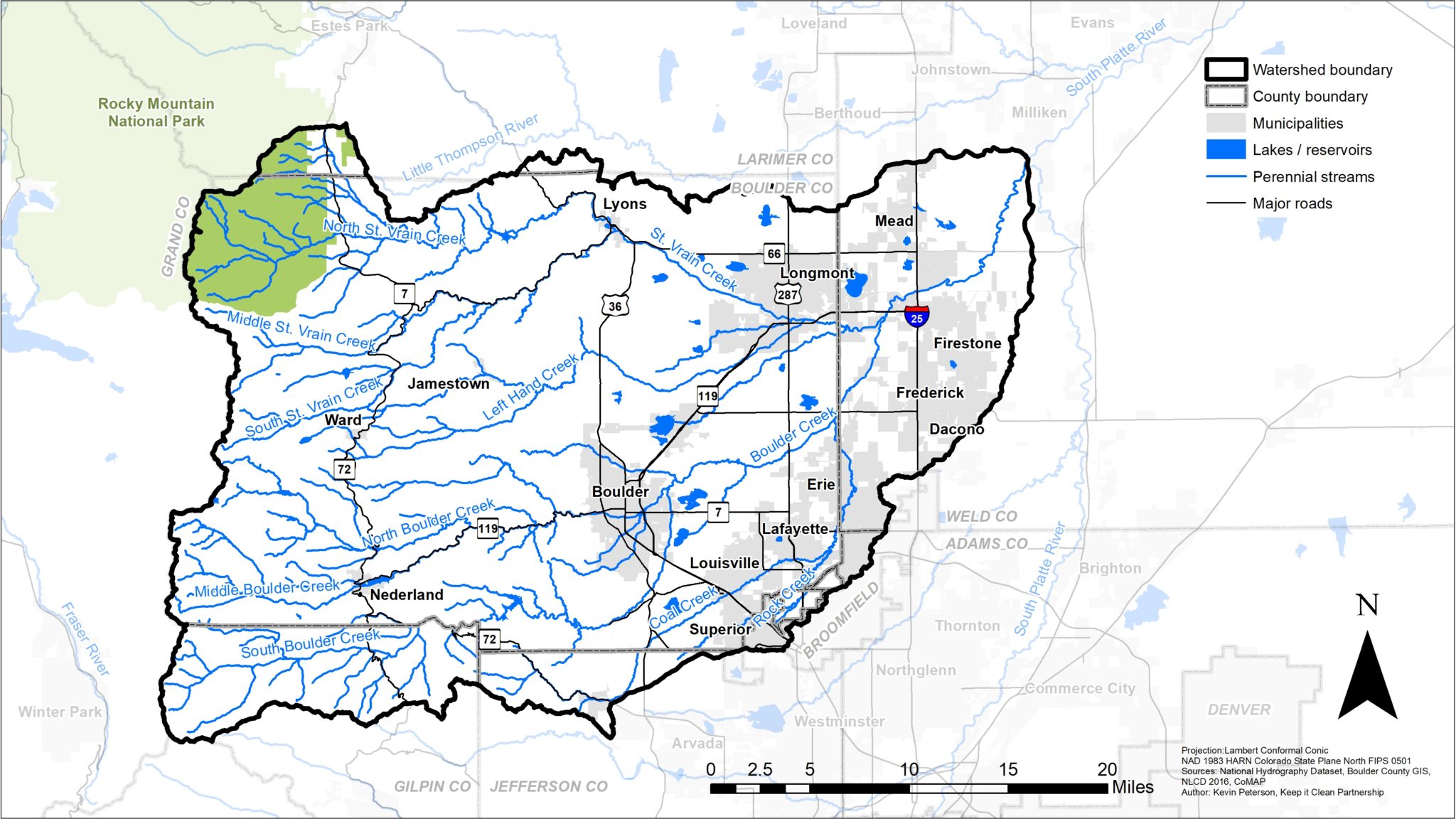
Boulder Creek/St. Vrain River watershed. Map credit: Keep It Clean Partnership

#Colorado gets $225,000 from Centers for Disease Control to measure lead, #PFAS exposure: State is working with #Arizona, #NewMexico and #Utah — The #Denver Post

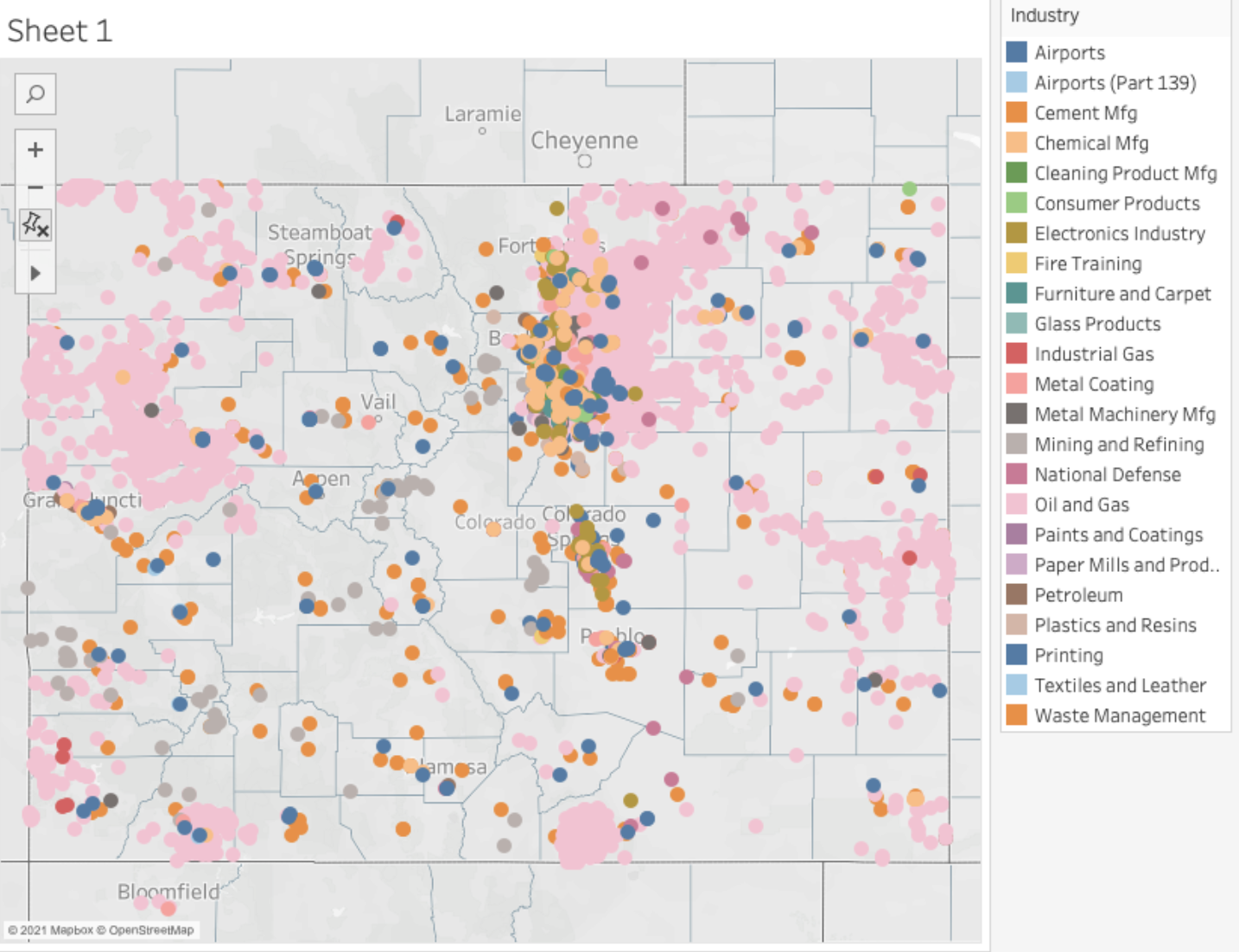
A whistleblower and watchdog advocacy group used an EPA database of locations that may have handled PFAS materials or products to map the potential impact of PFAS throughout Colorado. They found about 21,000 Colorado locations in the EPA listings, which were uncovered through a freedom of information lawsuit. Locations are listed by industry category. (Source: Public Employees for Environmental Responsibility analysis of EPA database)

Click the link to read the article on The Denver Post website (Meg Wingerter). Here’s an excerpt:

Colorado will receive $225,000 each of the next three years to monitor exposure to lead in rural residents and to “forever chemicals” in people who encounter them at work. The Centers for Disease Control and Prevention made grants to Colorado, Arizona, New Mexico and Utah for “biomonitoring,” which refers to testing blood or other bodily fluids for chemical contamination. The grants will allow them to test the amount of lead and other heavy metals in rural residents’ blood, while testing for per- and polyfluoroalkyl (PFAS) will focus on firefighters and other people in jobs where they frequently use the chemicals.

It’s officially over! The fight to save Red Lady (Mt. Emmons) is over — The #CrestedButte News

Mount Emmons

Click the link to read the article on The Crested Butte News website (Mark Reaman). Here’s an excerpt:

August 29, 2024

The paperwork officially putting a close to the Red Lady mining fight on Mt. Emmons was filed the morning of Thursday, August 29, ending a battle that has lasted almost five decades. The documents finalized a so-called Mineral Extinguishment agreement, conservation easements on Mt. Emmons, and a major land exchange agreement between the Mount Emmons Mining Company (MEMC), a subsidiary of global mining giant Freeport McMoRan, and the US Forest Service were all signed, sealed and delivered Thursday…Groups, organizations and government entities including the High Country Conservation Advocates, the town of Crested Butte, the Crested Butte Land Trust, the Red Lady Coalition, Gunnison County, the state of Colorado, US senator Michael Bennet and others, all played a role in the outcome. And so did the mining company that made the collaborative decision to work with the local community to basically walk away from its mining rights and focus on reclamation and maintaining water quality on the site that sits in the town’s watershed. The MEMC water treatment plant is on Red Lady and treats water from the old Keystone mine.

“This victory is an incredible testament to the staying power of the greater Gunnison Valley community. To say that not many mine fights end in a collaborative solution eliminating the potential to mine is an understatement,” said Julie Nania, Red Lady Program Director for HCCA.

After less than two years of careful mitigation efforts and demolition work, the former Martin Drake Power Plant has been taken to ground level — @MayorofCOS

Thank you to Colorado Springs Utilities and the Utilities Board for their leadership in helping to chart a bright future for our city. A changing energy future means a fresh outlook on what is possible, including new opportunities. I appreciate Utilities’ work and diligence in implementing the right balance of clean energy, cost management and reliability while also prioritizing the needs of our community.

#KlamathRiver flows free after last dams come down, leaving the land to tribes and salmon — AZCentral.com

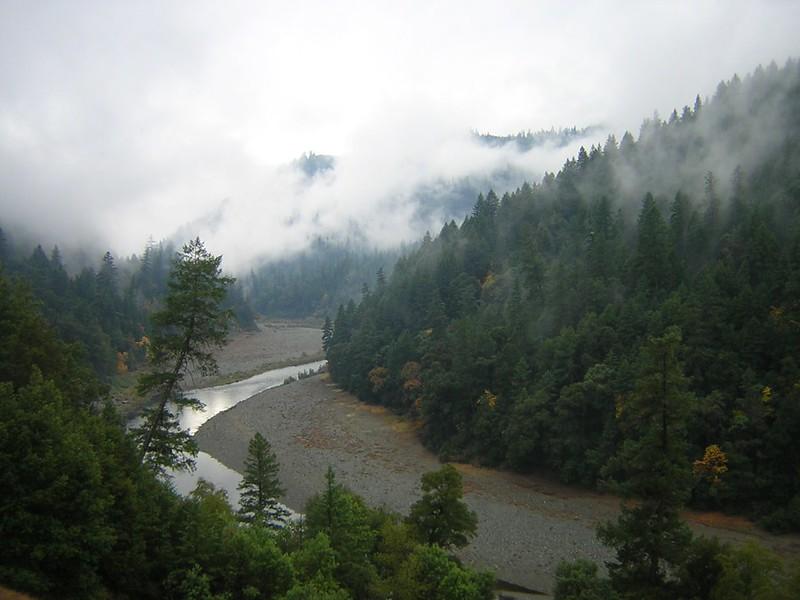
Fog on the lower Klamath River near Arcata, California. Photo by Steve Gough/ U.S. Fish and Wildlife Service

Click the link to read the article on the AZCentral.com website (Debra Utacia Krol). Here’s an excerpt:

August 30, 2024

“I witnessed the 2002 fish kill on the Klamath River,” said Thompson, who’s now 28 and a member of the Yurok Tribe. “It was devastating seeing thousands of dead bodies the same size as me in the river.”

That horrific event spurred Thompson and many other Yurok, Karuk, Hupa and Klamath Tribes people to lead a two-decade campaign to save the Klamath River from death. Their solution: Remove four dams that impeded the free flow of the river and had bred deadly algae that led to the 2002 fish die-off. On Tuesday, the final impediment was removed and the Klamath was again a free-flowing river. The coffer dams, which had diverted water from the last two outdated hydroelectric dams undergoing demolition, were breached, allowing the river to reclaim its ancient course and reopen up to 400 miles of salmon spawning and nursery habitats. River and salmon protectors cheered and cried tears of joy as the coffer dams at Iron Gate and Copco I were broken open and the waters flowed down the river’s ancient channel. It’s the beginning of the end of a more than 20-year battle to remove the dams and restore the river during the nation’s largest-ever dam removal project…

The Klamath River has been hammered by more than 100 years of mismanagement and injustices against tribal communities. Some of those included building dams on ancestral Shasta Nation lands, replumbing the Upper Klamath Basin for agriculture and channelizing a key tributary resulting in massive amounts of phosphorus flowing into the Upper Klamath Lake and eventually, the lower river. Salmon and other fish populations, deprived of hundreds of miles of quiet pools to lay their eggs and for the juvenile fish to survive and thrive, shrank by about 95%, which led to the federal government enacting protections for some salmon populations. And as the salmon’s numbers diminished, so did the spirit of the Native peoples who have called the Klamath home for uncounted centuries. Salmon is at the heart of the Yurok, Hupa, Karuk, Shasta, Klamath, Modoc and Yahooskin Paiute peoples. They measured their lives by the seasons of spring and fall salmon runs. Combined with other nourishing foods like acorn, berries and, along the coast, seaweed, the Klamath’s human inhabitants were only as healthy as the river that flowed through their homelands…

The Federal Energy Regulatory Commission issued the final approval for the removal of the lower four Klamath River dams in November 2023, and removal started shortly afterward. Two other dams upriver from the four that were removed, the Link River Dam and the Keno Dam, have fish ladders installed…The removal of the final coffer dams means that salmon and other migratory fish now have an unimpeded aquatic highway to Upper Klamath Lake, the Sprague and the Williamson Rivers.

National Fish & Wildlife Federation Announces $1.5 Million in #Conservation Grants to Help Restore #ColoradoRiver and #RioGrande Headwaters: Grants will conserve headwaters species and their habitats in the Rio Grande and #GilaRiver watersheds #COriver #aridification

Rio Grande. Photo credit: Big River Collective

August 14, 2024

The National Fish and Wildlife Foundation (NFWF) today announced more than $1.5 million in grants to restore, protect and enhance aquatic and riparian species of conservation concern and their habitats in the headwaters of the Colorado River and Rio Grande watersheds. The grants will leverage over $1.8 million in matching contributions for a total conservation impact of more than $3.3 million. 

The grants were awarded through the Southwest Rivers Headwaters Fund, a partnership between NFWF and the U.S. Department of Agriculture’s Natural Resource Conservation Service, U.S. Forest Service, U.S. Fish and Wildlife Service, Walton Family Foundation and the Trinchera Blanca Foundation, an affiliate of The Moore Charitable Foundation, founded by Louis Bacon. 

“Communities in the Southwest have grappled with challenges to the long-term sustainability of their rivers,” said Jeff Trandahl, executive director and CEO of NFWF. “These grants demonstrate how investments in stream and meadow restoration in our headwaters can increase the climate resiliency of these critical water resources while supporting the Southwest’s many unique fish and wildlife species.”

The projects supported by the six grants announced today will address a key strategy for species and habitat restoration in headwaters streams of the Colorado River and Rio Grande: restoring and enhancing riparian and instream habitat.

“Consistent with the intent of the Inflation Reduction Act, the selected restoration projects within the forests, streams and riparian areas of the National Forests in Arizona, New Mexico and southern Colorado are a significant step to maintain and improve riparian and aquatic ecosystems into the future in the face of changing climates,” said Steve Hattenbach, Deputy Regional Forester, USDA Forest Service Southwestern Region. “Streams and riparian areas are key to ensuring sufficient water to maintain the ecological integrity of watersheds that support life in the beautiful Southwest.”

NFWF’s Southwest Rivers Program was launched in 2018 to fund projects that improve stream corridors, riparian systems and associated habitats from headwaters to mainstem rivers in the Southwest. Through the Southwest Rivers Headwaters Fund, the program funds projects that produce measurable outcomes for species of conservation concern in the wetlands and riparian corridors of the headwaters regions of major southwestern rivers. In 2022, the Fund expanded from the Rio Grande watershed to include to include priority headwaters watersheds of the Colorado River Basin in Arizona, New Mexico and Utah. 

A complete list of the 2024 grants made through the Southwest Rivers Headwaters Fund is available here

#ENSO and the southwest United States “megadrought” — NOAA

Click the link to read the article on the NOAA website (Hannah Bao):

August 28, 2024

This is a guest post by Hannah Bao, a recent graduate of the University of Maryland’s Atmospheric and Oceanic Science Department. Hannah is currently enrolled in UMD’s Data Science M.S. program. She developed this piece based on a longer research paper she did for a class. 

El Niño and La Niña (collectively, ENSO, the El Niño/Southern Oscillation) affect global rain/snow and temperature patterns, making certain outcomes more likely in some regions. For example, winters with La Niña—cooler-than-average surface waters in the central and eastern tropical Pacific—tend to be drier than average along the southern third of the U.S. While this is certainly not always the case, ENSO still gives us a valuable early heads-up of an increased chance of certain outcomes. (Here at the ENSO Blog, we have several posts discussing these precipitation relationships.) In this post, I’ll cover the relationship between ENSO and drought in the Southwest.

The state of the Southwest

The atmospheric river events of winter 2022–23, and more recently those that swept through the U.S. West this past winter (2023-24), delivered much-needed moisture across portions of the southwest United States, a region afflicted with severe drought over the past two decades. Back in mid-March 2024, around 25% of the Southwest was in some level of drought. For comparison, at least 90% of the entire Southwest experienced drought conditions around that same time in 2021 and 2022.

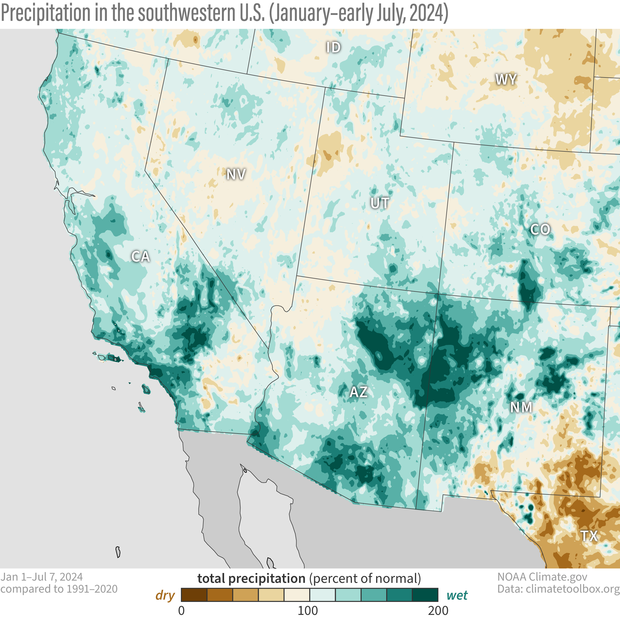
This map shows July 2024 precipitation (total rain and snow) received across the United States as percent of normal (1991-2020 average). Places where precipitation was below normal are brown; places where it was above normal are blue-green. NOAA Climate.gov map from https://climatetoolbox.org data.

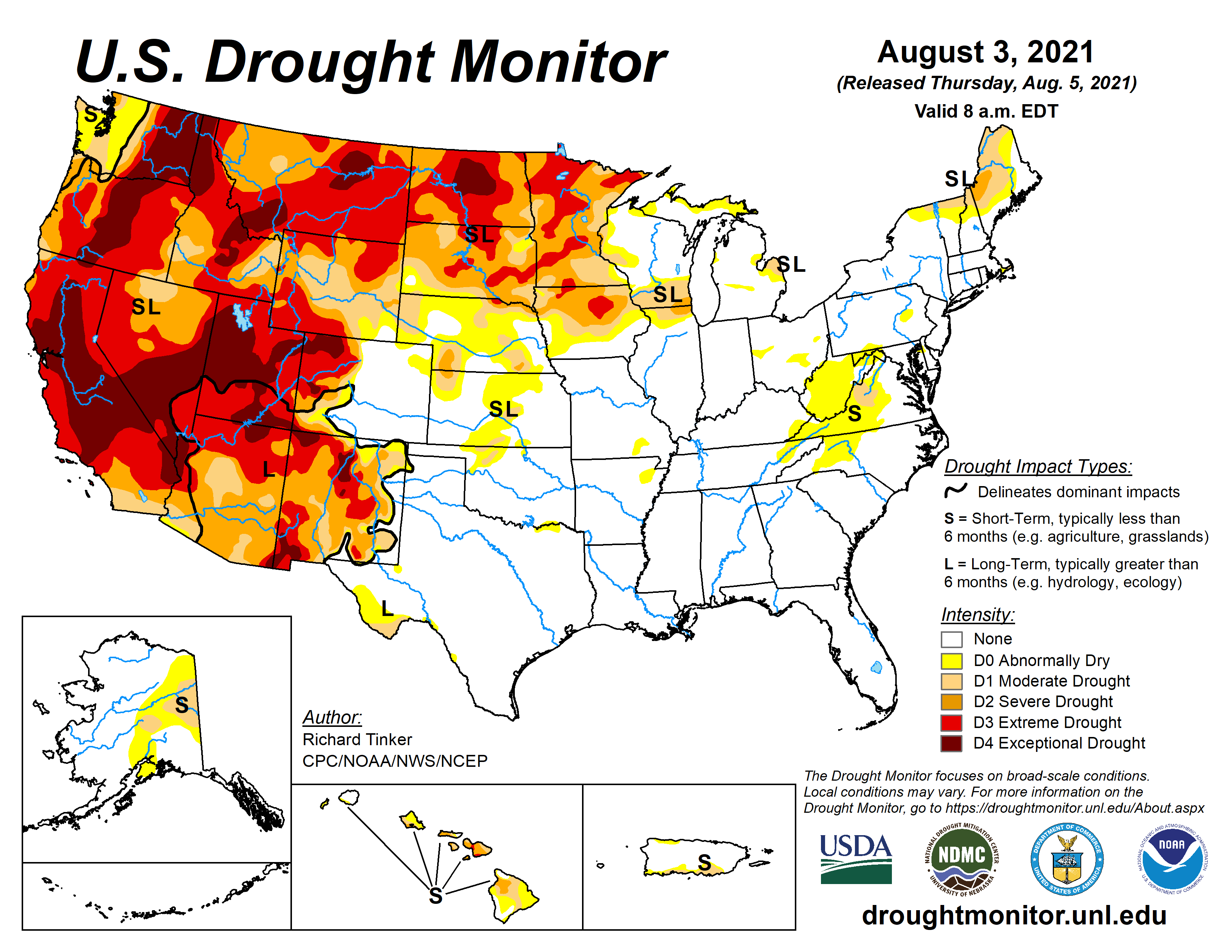
However, the so-called “drought-buster” events of the previous two winters, coupled with the 2023­­­–24 El Niño, have not been enough to entirely eliminate the dryness over some parts of the region. Data from the U.S. Drought Monitor indicates that about 16% of the Southwest is in some level of drought as of early August 2024, including 20% of Arizona and roughly 48% of New Mexico experiencing drought conditions.

US Drought Monitor map August 3, 2021.
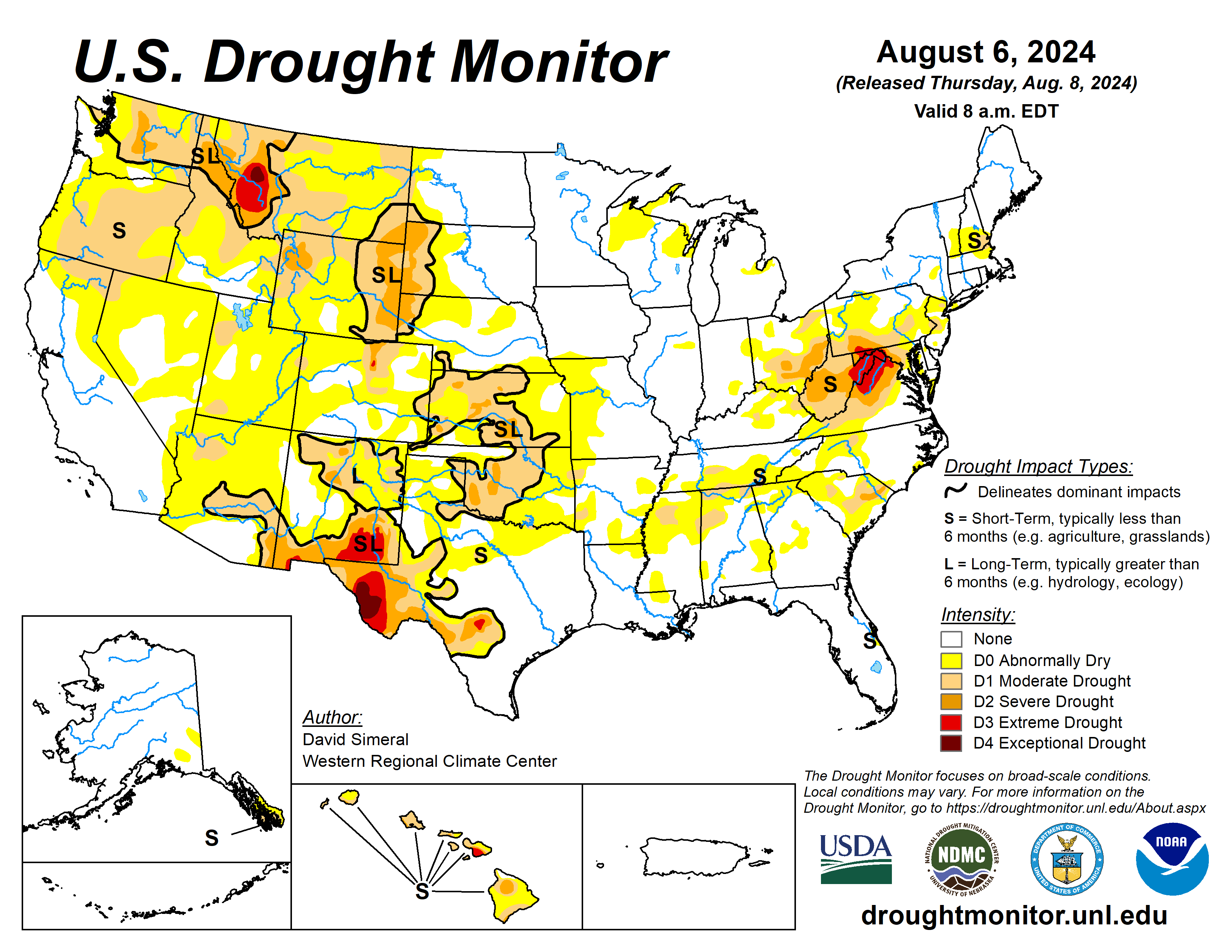
US Drought Monitor map August 6, 2024.

With a 66% chance for La Niña to develop in September-November 2024, you may be wondering: what does this mean for drought in the southwest United States? Are La Niña conditions likely to improve or worsen the severe multi-year drought persisting in portions of the region? Stay tuned to find out!

Drought is a complex phenomenon with many components, including rainfall, snowpack, temperature, land-use management, and other elements. However, we can begin to answer these questions by studying the historic links between ENSO and drought in the U.S. Southwest. In this blog, we will address:

  1. How does ENSO typically impact Southwest winter precipitation?
  2. How is ENSO impacting the 21st-century drought in the Southwest?

We’ll look at several scientific studies that have had important contributions to our understanding of ENSO impacts in the Southwest.

How does ENSO typically impact Southwest winter precipitation?

In a 1999 study (1), Dr. Daniel Cayan of Scripps Institution of Oceanography and his team found that the frequency of daily high precipitation and high stream flow over the western U.S. are strongly influenced by ENSO phase. They used daily wintertime precipitation and late-winter to early-summer stream flow from 1948 to 1995, retrieved from several hundred observing stations across 11 Western U.S. states.

Dr. Cayan’s team found that El Niño years are linked to more days than average with high daily precipitation and streamflow in the Southwest; La Niña years showed an approximately opposite pattern. Heavier precipitation events also tend to occur more frequently during El Niño years and less frequently during La Niña years over the Southwest.

These findings agree with those from a 2002 review (2) conducted by Dr. Paul Sheppard and colleagues. Dr. Sheppard’s team concluded that El Niño is generally associated with cooler and wetter winters in the Southwest, whereas La Niña is linked to drier, warmer winters over the region. Another 2002 study (3), led by Dr. Julia E. Cole and colleagues, traces the La Niña and Southwest drought connection back to the 1800s using coral records! Together, these studies seem to point towards La Niña events as potential drivers of drought over the Southwest during the latter half of the 20th century to early 21st centuryThis naturally prompts the question: has this pattern continued into recent decades?

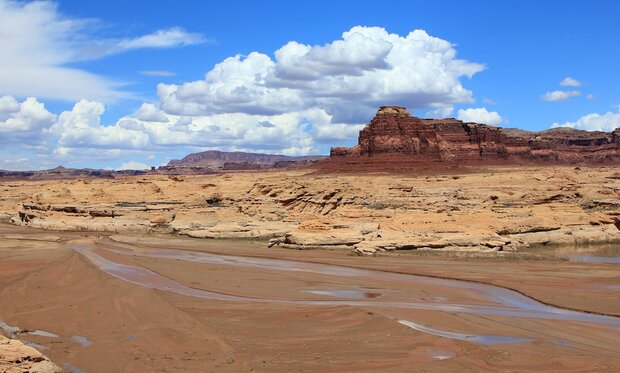
Low water in the Dirty Devil river in Utah due to drought conditions. Credit: Drought.gov

ENSO’s role in the 21st-century U.S. Southwest drought

Dry episodes are not uncommon for the Southwest, as discussed in this 2010 study (4) and the 2002 review by Dr. Sheppard’s team. However, recent research (5) has shown that the 21st century drought is one of the worst droughts within the last 1200 years in the region. As southwestern U.S. precipitation patterns have exhibited a strong response to ENSO phase in the past, it’s worth examining ENSO’s role in the recent drying observed over the region.

2019 study (6) analyzing the effects of ENSO, the Pacific Decadal Oscillation (PDO), and the Atlantic Multi-Decadal Oscillation (AMO) on drought variability over the western United States from 1948 to 2009 found that the Southwest tends to experience more dry episodes during La Niña years than El Niño years—consistent with the studies discussed earlier in this post. This study, led by Dr. Peng Jiang of the Desert Research Institute and colleagues, explored the response of winter consecutive dry days to ENSO.

More recently, a 2022 study (7) led by Dr. Richard Seager examined the roles of tropical Pacific sea surface temperature (SST), internal atmospheric variability, and anthropogenic change in driving the severe Summer 2020 to Spring 2021 drought over southwestern North America. Using observational SST and precipitation data, they found that the onset of the drought coincided with a La Niña developing between June to August of 2020. Anomalously cool tropical Pacific SSTs and circulation anomaly patterns, typical of La Niña events, corresponded to reduced precipitation from Fall 2020 to Spring 2021, suggesting La Niña as a potential driver of drought during this period. Dr. Seager and colleagues concluded that a combination of internal atmospheric variability and La Niña were largely responsible for fueling the extreme dry conditions across the Southwest from Fall 2020 to Spring 2021. Also, as we can see from the drought monitor images above, the drought conditions across much of the Southwest continued through the third consecutive La Niña winter, 2022–2023.

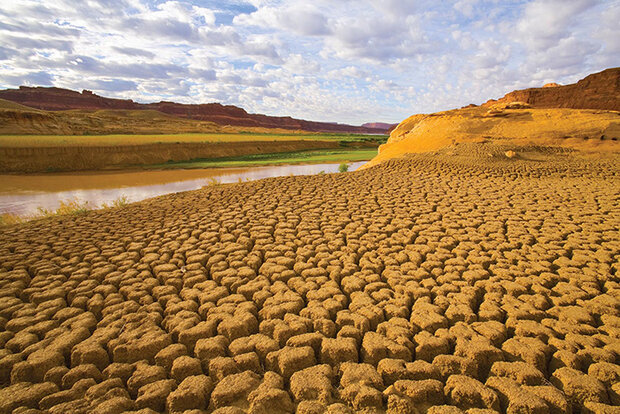
Paleoclimate data have uncovered multiple megadroughts in the American Southwest. Credit: National Climate Assessment

Limitations!

So…will a potential La Niña bring drier conditions to already-parched portions of the Southwest this coming winter 2024-25?  The current Climate Prediction Center outlook favors below-average precipitation for the region. 

Based on our understanding of typical ENSO teleconnections over the Southwest and the studies discussed above, it’s entirely possible.

However, as always, let’s keep in mind some key limitations and proceed with caution. First, our observed SST record for monitoring ENSO is very limited (around 74 years!). Second, ENSO explains only a fraction of the variability of wintertime southwestern U.S. precipitation. Other large-scale climate phenomena such as the PDO, ENSO’s interactions with other climate modes, climate change, and other factors may all influence drought conditions in the Southwest to varying degrees.

It is also an open question to what extent the Southwest megadrought can be attributed to ENSO. Answering this important question requires more research, and ideally, a longer observational record.

Lead reviewer: Emily Becker

References

  1. Cayan, D. R., Redmond, K. T., & Riddle, L. G. (1999). ENSO and hydrologic extremes in the western United States. Journal of Climate, 12(9), 2881-2893.
  2. Sheppard, P. R., Comrie, A. C., Packin, G. D., Angersbach, K., & Hughes, M. K. (2002). The climate of the US Southwest. Climate Research, 21(3), 219-238. 10.3354/cr021219
  3. Cole, J. E., Overpeck, J. T., & Cook, E. R. (2002). Multiyear La Niña events and persistent drought in the contiguous United States. Geophysical Research Letters, 29(13), 25-1. https://doi.org/10.1029/2001GL013561
  4. Woodhouse, C.A., Meko, D.M., MacDonald, G.M., Stahle, D.W., & Cook, E.R. (2010). A 1200-year perspective of 21st century drought in southwestern North America. Proceedings of the National Academy of Sciences, 107(50), 21283-21288. https://doi.org/10.1073/pnas.0911197107
  5. Williams, A. P., Cook, B. I., & Smerdon, J. E. (2022). Rapid intensification of the emerging southwestern North American megadrought in 2020–2021. Nature Climate Change, 12(3), 232-234. https://doi.org/10.1038/s41558-022-01290-z
  6. Jiang, P., Yu, Z., & Acharya, K. (2019). Drought in the Western United States: its connections with large-scale oceanic oscillations. Atmosphere, 10(2), 82. https://doi.org/10.3390/atmos10020082
  7. Seager, R., Ting, M., Alexander, P., Nakamura, J., Liu, H., Li, C., & Simpson, I. R. (2022). Mechanisms of a meteorological drought onset: summer 2020 to spring 2021 in southwestern North America. Journal of Climate, 35(22), 3767-3785. https://doi.org/10.1175/JCLI-D-22-0314.1

Hualapai Tribe sues feds over lithium mining project near sacred spring — #Utah News Dispatch

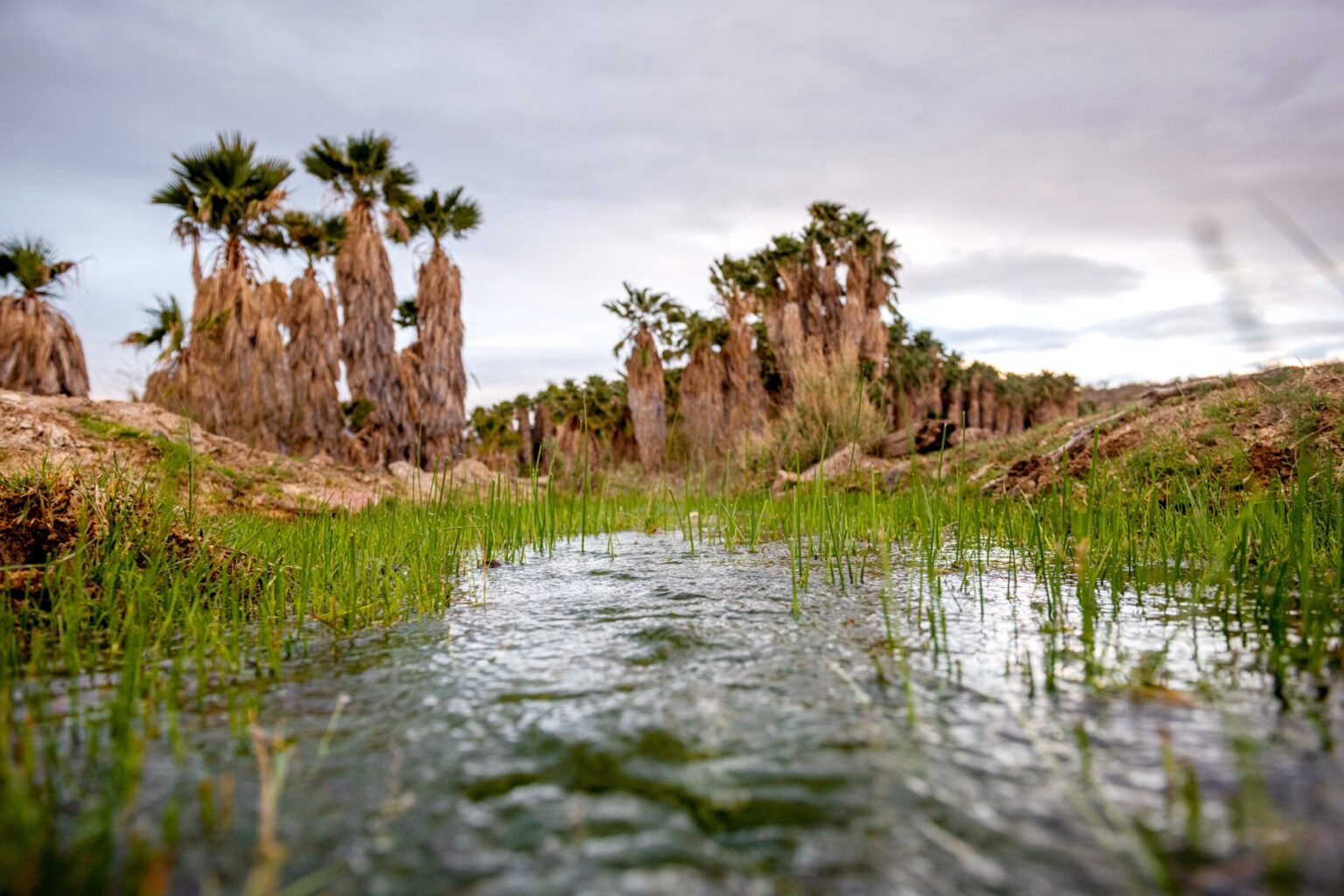
Exploratory wells have damaged the water flow at Ha’ Kamwe’ in Wikieup, Arizona, seen here on Saturday, March 5, 2022. Ha ‘Kamwe is a hot spring sacred to the Hualapai Tribe, which says an Australian company’s proposed lithium mining project threatens. (Photo by Ash Ponders/Earthjustice)

Click the link to read the article on the Utah News Dispatch website (Shondin Silversmith):

August 19, 2024

For years, the Hualapai Tribe tried to work with the U.S. Bureau of Land Management by actively voicing their concerns about a lithium exploration project near Wikieup, in northern Arizona.

The project allows a mining company to drill and test over 100 sites across BLM land that surrounds one of the Hualapai Tribe’s cultural properties, among them Ha’Kamwe’, a medicinal spring sacred to the tribe.

Ha’Kamwe’ is featured in tribal songs and stories about the history of the Hualapai people and their connection to the land. The historic flow and spring temperature are important attributes for its traditional uses, according to the tribe.

Out of concern for Ha’Kamwe’, the tribe submitted multiple public comments, sent several letters of concern and participated in tribal consultations with BLM throughout the planning phase for the Big Sandy Valley Lithium Exploration Project. Big Sandy, Inc., a subsidiary of Australian mining company Arizona Lithium, leads the project.

“It doesn’t feel like the BLM really heard us or took our comments into full consideration,” said Ka-voka Jackson, the director of the Hualapai Department of Cultural Resources, adding that the tribe often felt as if it was “never taken seriously.”

Big Sandy, Inc. has been seeking approval for its project since 2019, and the Hualapai Tribe has been voicing its concerns every step of the way. However, their efforts still fell flat, as BLM gave the project the green light on June 6.

BLM’s approval of the Big Sandy Valley Project allows the mining company to drill and test up to 131 exploration holes across 21 acres of BLM-managed public land to determine whether a full-scale lithium mining operation could be viable.

Two months later, the Hualapai Tribe filed a lawsuit against the Bureau of Land Management, challenging its approval.

Lawsuit: BLM refused to consider alternatives

Ha’Kamwe’ is located within the Hualapai Tribes property known as Cholla Canyon Ranch, and the boundaries of the Big Sandy Valley project nearly surround the entire property.

Only one portion of the tribe’s land does not border the drilling project. Jackson said it’s “surprising, appalling and, frankly, disgusting” that the BLM is trying to say there are no adverse effects on the tribe’s cultural property or cultural resources.

“The tribe maintains that we are opposed to this project,” she said. “This lawsuit is to make sure that BLM is going through the proper processes.”

“These exploratory wells — some of which will be drilled close to Ha’Kamwe’ — will penetrate deep below ground into the aquifer that supports the spring’s flows,” the lawsuit states. “The Project will also create noise, light, vibrations, and other disturbances that will degrade Ha’Kamwe’s character and harm Tribal members’ use of the spring for religious and cultural ceremonies.”

The lawsuit claims that the project violated mandates under the National Environmental Protection Act and the National Historic Preservation Act. Ha’Kamwe’ is recognized as a traditional cultural property and is eligible to be listed on the National Register of Historic Places.

“The litigation is asking for full compliance with the National Historic Preservation Act (NHPA) and the National Environmental Policy Act (NEPA),” said Earthjustice Senior Attorney Laura Berglan, who is part of the team representing the Hualapai Tribe.

This includes BLM taking a “hard look” at the environmental impacts of the exploration activity, as well as considering the impact of its actions on historic properties, she said.

The lawsuit claims that BLM approved the mining project without appropriately considering a reasonable range of alternatives or taking a hard look at water resources under the NEPA and moved forward with the project without providing mitigation measures under the NHPA for Ha’Kamwe’ and other resources important to the tribe, thus violating both acts.

“This isn’t a situation where the tribe wasn’t engaged throughout,” Berglan said, adding that the Hualapai Tribe had provided BLM with traditional Indigenous knowledge related to the project. Still, it was not fully taken into account.

Berglan said the tribe has been trying to work with BLM for years, and has committed a substantial amount of time and resources to review drafts of the environmental assessments and submit extensive comments.

“A lot of time has gone into this process, and to be sort of disrespected by not taking into account their Indigenous knowledge that this (project) is going to have impacts on Ha’kamwe’ is troublesome,” she added.

The lawsuit argues that the tribe even asked BLM to consider alternatives to the project — such as drilling fewer wells or moving them farther from the spring — to reduce its adverse effects. However, BLM refused to consider a reasonable range of alternatives to the project proposal.

“BLM violated NEPA by failing to consider a middle-ground alternative that would address the tribe’s concerns,” the lawsuit states

The Arizona Mirror contacted BLM for comment on the lawsuit, but a representative said the bureau does not comment on pending litigation.

‘We were ignored’

Jackson said that the Hualapai Tribe does not want this mining project to happen, and like many other tribes in Arizona, they are experiencing just how hard it is to stop mining operations in the state.

“We submitted all our comments,” Jackson said. “We were ignored.”

Jackson said the tribe filed the lawsuit because it believes BLM did not follow the proper processes during the Sandy Valley project’s environmental analysis phase.

“Not all of those comments were addressed, and when the (environmental assessment) had been finalized, the BLM said there were no adverse effects on historic property, which is very contradictory to all the tribe’s comments that have been submitted to the BLM,” Jackson said.

Jackson said that before BLM finalized the environmental assessment, the tribe tried to stay in constant communication with the bureau to stay current on the project and were hopeful the bureau would consider their comments, but did not hear back.

“It’s been very upsetting for us,” Jackson said, adding that it’s been hard for the tribe because they are going up against an agency that has a lot of their ancestral homelands in their legal possession.

Dolores Garcia, the public affairs specialist at the BLM Arizona State Office, said in an email to the Mirror that BLM conducted outreach to tribes for consultations over the past three years. Details on the type of outreach efforts were not provided.

The tribes include the Chemehuevi Indian Tribe, the Colorado River Indian Tribes, the Fort Mojave Indian Tribe, the Hopi Tribe, the Hualapai Tribe, the Navajo Nation, the Salt River Pima-Maricopa Indian Community, the Yavapai-Apache Nation and the Yavapai-Prescott Indian Tribe.

“Tribal consultation is considered confidential government-to-government communication, so we cannot discuss specific details related to consultation,” Garcia said.

However, Garcia said that, based on input from the tribes and the public, BLM worked with the proponent to revise its exploration plan, which included removing the use of a groundwater well within a few hundred feet of Ha’Kamwe’ and a nearby staging area.

“Water needed to support the drilling operations will be trucked to the site,” Garcia said. “The proponent has also committed to providing the opportunity for the Hualapai Tribe and other descendant tribal communities to monitor ground disturbing activities onsite.”

Jackson said their experience with how BLM moved forward on this lithium project did not give the tribe much faith in potential future projects.

She said when projects like Big Sandy Valley get proposed in the area, the tribe hopes that the BLM will come to work with them and take their comments seriously because they have been the stewards of the land for generations.

“We still use Ha’Kamwe’ as a community,” Jackson said. “When people go there, they have this sense of being, a sense of place, a sense of belonging, and a really deep ancestral tie there.”

‘Temporary’ disruptions don’t need permanent fixes, BLM says

As part of its environmental assessment, BLM listed several short- and long-term effects, including the temporary disruption to cultural practices at or near Ha’Kamwe’ and the impact on native wildlife and vegetation of up to 21 acres.

Even with these effects included in the assessment, which are concerns the Hualapai Tribe has brought up multiple times, BLM concluded that the Big Sandy Valley project would not significantly impact the quality of the area and an environmental impact statement was not needed.

“Visual, noise, and vibration effects from drilling activities would be temporary,” the BLM wrote in its final report. “Coordination with and providing notice to the Hualapai Tribe of drilling activities in the vicinity of the Ha’Kamwe’ may reduce impacts to cultural practices at or near the hot spring.”

Jackson said the tribe and its members have every right to be out at Ha’Kamwe’ utilizing the spring for prayer and healing because it is part of their spirituality and religion. Tribal members have full access to the property and can use it whenever necessary.

“Having that type of noise occurring is really disrupting,” she said. “It takes away from a lot of the spirituality and ability to practice ceremony in peace.”

Jackson said the tribe will have to deal with the disruptions throughout the project’s 18-month duration.

“That’s a long time for tribal members to be affected, and that disrupts all of our activities,” she added. “It disrupts our spirituality.”

The drilling project threatens not only ceremonial ways of life but also natural resources the tribe relies on. Jackson said the community gathers native plants only found in the Big Sandy Valley area, including willows for basket making, traditional tobacco, and clay.

“Those plants coming from that area have meaning,” she said, and they are the same native plants their ancestors gathered from.

“When we gather, we’re not restricted to just the Hualapai property,” Jackson said because tribal members gather on the public BLM land in the area, too.

“That’s our right as people to be able to go out there and gather,” she added, and the bulldozing that will occur to create the paths to the drilling sites will have an impact. “The desert will never recover from all that.”

Jackson said part of what makes the area sacred for the tribe is maintaining the integrity of the land, and the tribe feels that the mining operations will permanently change the location.

They’re concerned about how the project will impact the spring because the drilling will occur so close to the site.

According to BLM, to minimize impacts on Ha’Kamwe’, a water source that was previously proposed to be used for the project has been removed from the plan, and a staging area that would have been set up near Ha’Kamwe’ has also been removed.

“Analysis of water resources has determined that the water source for Ha’Kamwe’ is located in a deeper aquifer,” the report states. The proposed drilling is not anticipated to reach the aquifer, according to BLM, and if water is intersected during the drilling, the hole shall be plugged using cement grout or bentonite clay.

Jackson said the tribe does not think that is good enough because if the mining hits the water and does utilize bentonite clay or cement grout, there is no guarantee that it won’t have an adverse effect or potentially block off the underground water that flows through the spring.

“If the temperature were to be affected that’s changing the entire character of the spring and the integrity of it,” Jackson said, which is a big deal for the tribe because Ha’Kamwe’ translates to “warm spring.”

“We’re going to try every way we can to try and stop this operation,” Jackson said, adding that this is the first lithium mining project of its kind on their homelands and they’ve opposed it the entire time.

“It’s kind of scary looking into the future, seeing how these mining companies can kind of get away with this and how the BLM is letting it happen, even when they know how it will negatively impact the tribes and the tribe’s sacred lands,” Jackson said.