Click the link to read the release on the Tó Nizhóní Ání website (Mike Eisenfeld, Jane Pargiter, Robyn Jackson, Eleanor Smith, Rose Rushing):
August 24, 2024
Advocates have been working for years to facilitate a transition to clean energy, ending coal’s polluting legacy and the region’s economic over-dependence on fossil fuels.
Waterflow, N.M. – At 9 a.m. on Saturday morning, explosions rocked the bases of the four massive smokestacks that dotted the horizon just west of Farmington for a half century, and they then came crashing down in a thundering cloud of dust. The demolition of the 400-foot-tall behemoths at San Juan Generating Station (“SJGS”) marks the close of yet another chapter in more than 50 years of coal and its domination of the economy in the Four Corners region.
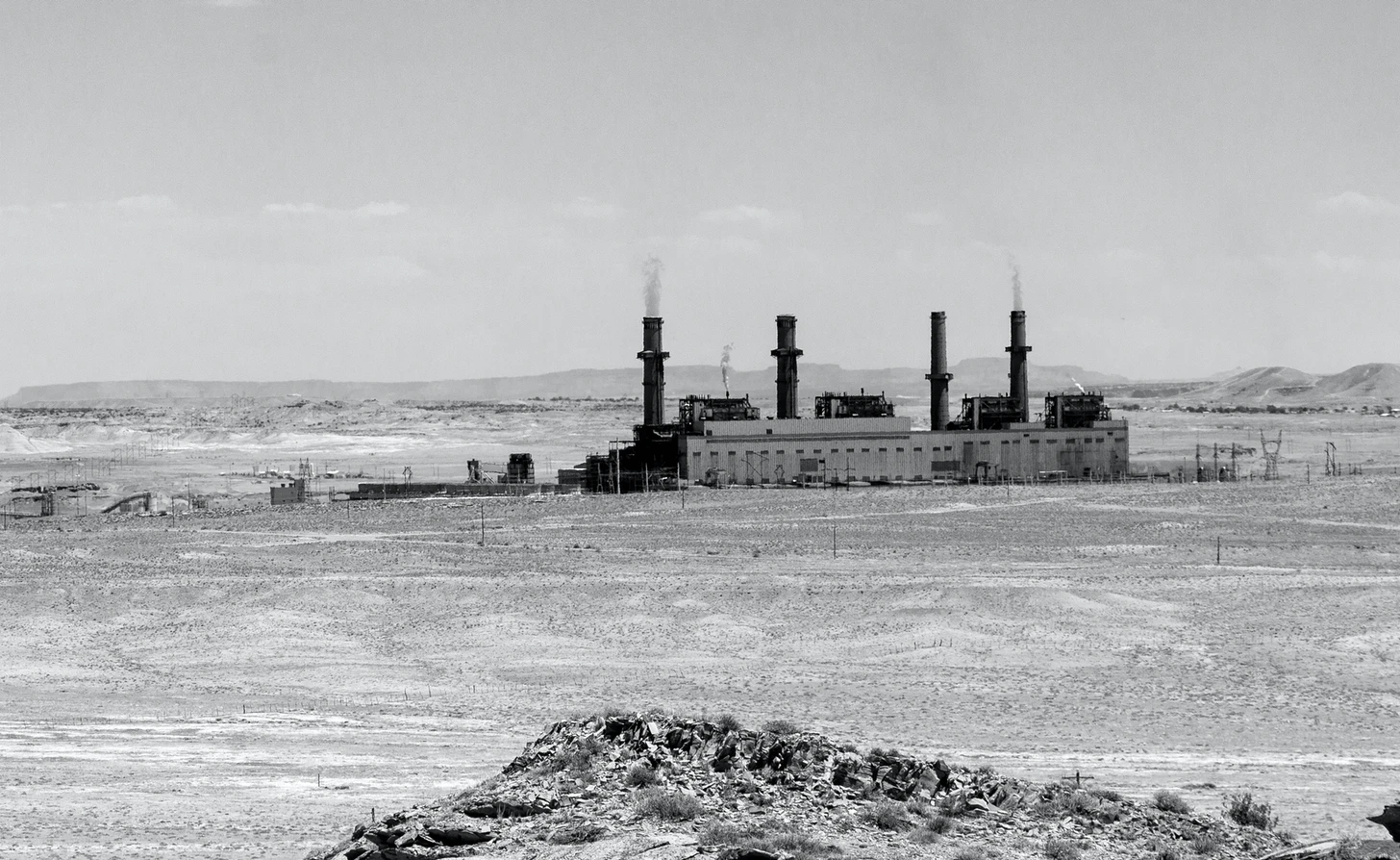
The plant opened in 1973 and originally had four coal-burning units. Units 2 and 3 were closed in 2017 and Units 1 and 4 continued operating until September 2022, when they were also retired permanently. Units 1 and 2 were jointly owned by Public Service of New Mexico (“PNM”) and Tucson Electric Power. Units 3 and 4 provided power to PNM and a mix of municipal utilities and rural electric cooperatives in New Mexico, Colorado, Utah and as far as California.
Operating at full capacity, the plant was a major source of pollution, pumping more than 12 million tons a year of greenhouse gases into the atmosphere and emitting more than 10,000 tons of nitrogen oxides annually, a major component of the region’s notoriously smoggy air. It also consumed billions of gallons of water every year from the San Juan River.
Following are reactions of local and regional advocates who collectively have been working for decades to accelerate the region’s transition from polluting fossil fuels to renewable resources for generating electricity, most of which serves distant communities.
***
“Indigenous advocates have long brought attention to the many adverse public health, land, and water quality impacts resulting from the operations at SJGS and Four Corners Power Plant (“FCPP”), pointing out the environmental injustice that Indigenous and local communities were saddled with in living so close to two coal mines and plants”, said Robyn Jackson, executive director of Diné C.A.R.E. “We can remember the terrible air quality that both plants produced in our region. It therefore came as no surprise that health disparities existed among our population, compared to the rest of the U.S. general population when it came to childhood asthma, as well as other illnesses like heart disease, cancer, and stroke. Our tribal-led organization recognizes that it is necessary and inevitable that our local economy be rebuilt around development that is renewable, sustainable, and regenerative. The health of our communities, economy and climate will require a transition away from fossil fuels if we are to survive and succeed.”
***
“We are hopeful that after the demolition of San Juan Generating Station, the Four Corners area and its communities will no longer have to sacrifice our health and safety for fossil fuels,” said Rose Rushing, attorney at Western Environmental Law Center. “There is work to be done to ensure that the region can transition to a sustainable, diversified economy, starting with fulfilling the commitments of the Energy Transition Act. We look forward to working with community groups in the next year to make sure our community receives the full benefits the Energy Transition Act promises.”
***
“The closure and demolition of PNM’s San Juan Generating Station marks yet another milestone, a step in the right direction away from fossil fuels and a step toward what we hope will be a just and equitable transition to more fossil-free energies such as wind, solar, and other sustainable, renewable, and real solutions that will truly combat climate change, said Eleanor Smith, Community Organizer of the Diné grassroots community organization Tó Nizhóní Ání. “Our hope is also that false solutions such as blue hydrogen and carbon capture sequestration are not sought nor implemented. The Navajo Nation and the Four Corners area have long histories of environmental injustices that continue to contribute to the climate chaos we are in. Now is the time for us, the impacted people who live and work in the Four Corners area, to plan and write the narrative of our fossil-free energy future, rather than the historical dictation by industry, energy companies, or others. We must say K’adí (stop) the harm to Nihimá Nahasdzáán, our Mother Earth, which includes us all.”
***
“I’ve lived in Farmington for 26 years, and it wasn’t until 2022 when the plant finally shut down that the brown haze lifted and we could see to the horizon,” said Mike Eisenfeld, the climate and energy program director for San Juan Citizens Alliance. “It’s always difficult to close one chapter and begin a new one, but knowing that children can breathe air that isn’t as polluted and being able to see this region for its beauty, which has been cloaked in smog for 50 years, is a good thing. There is huge potential for clean energy development and for diversifying our economy beyond just energy, and the demolition of these smokestacks is important symbolically for turning that page.”