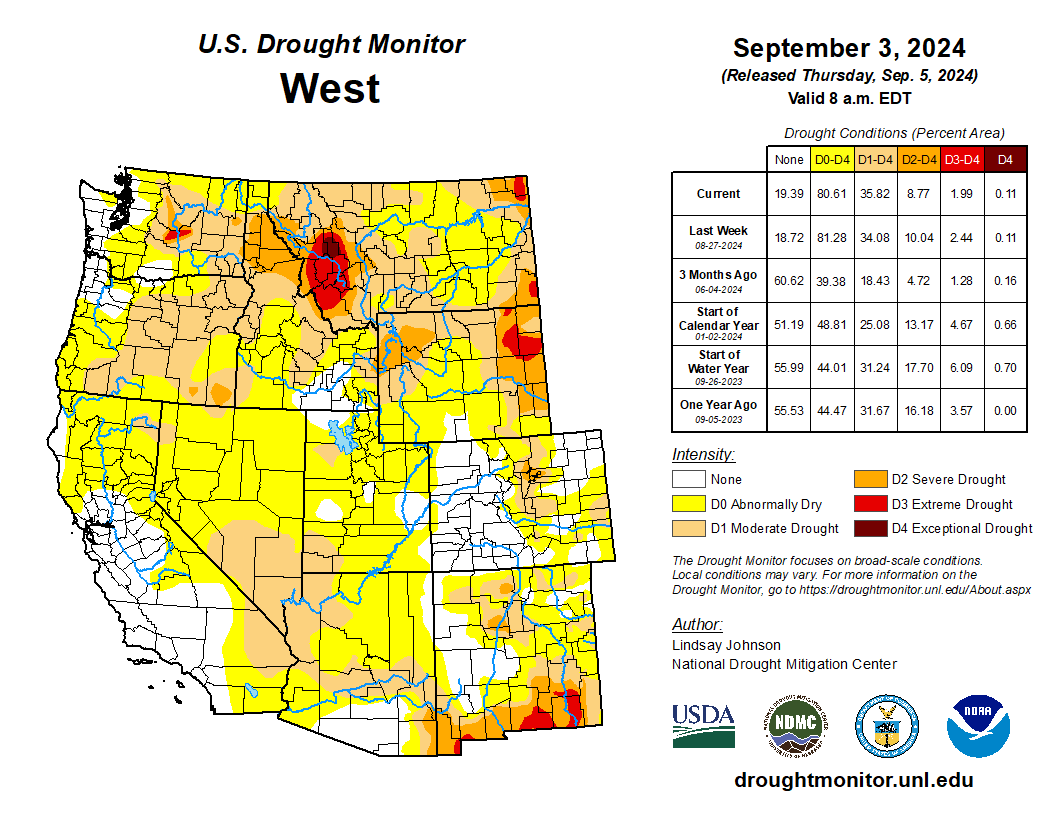
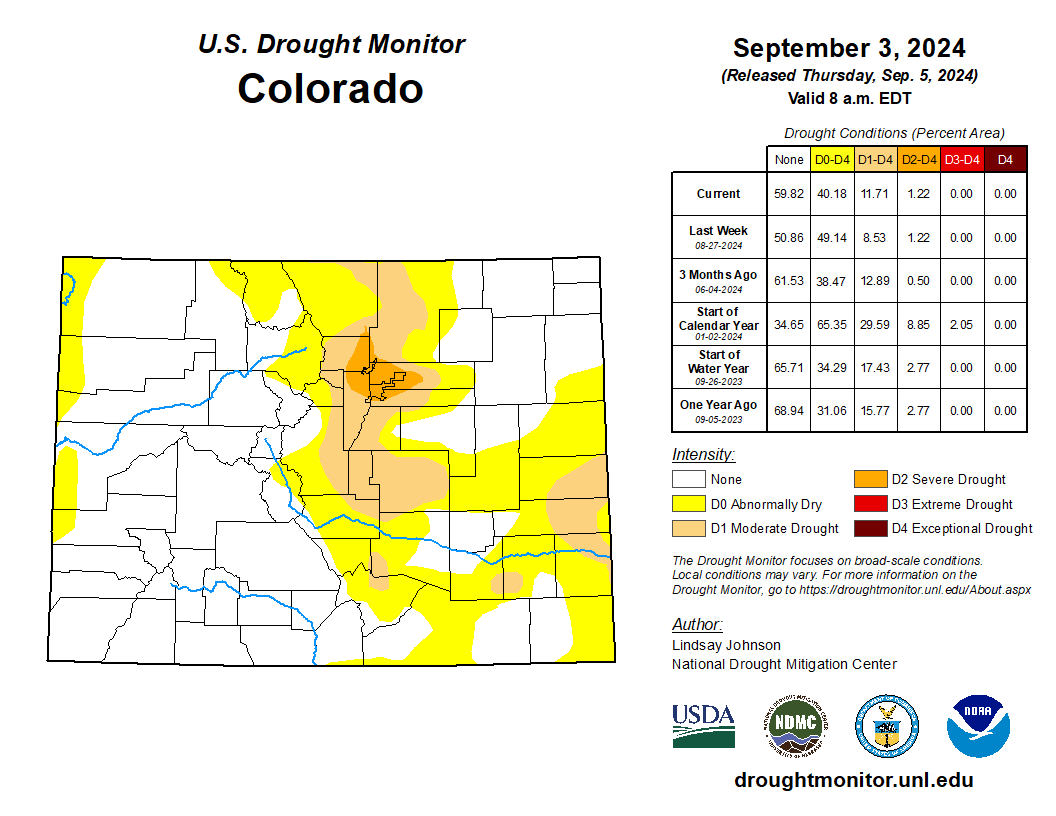
#Drought news September 5, 2024: The eastern foothills and plains of #Colorado experienced little to no rain this week, leading to the expansion of moderate drought. Along the western Colorado border with #Utah, abnormal dryness was removed with increased streamflows aiding conditions

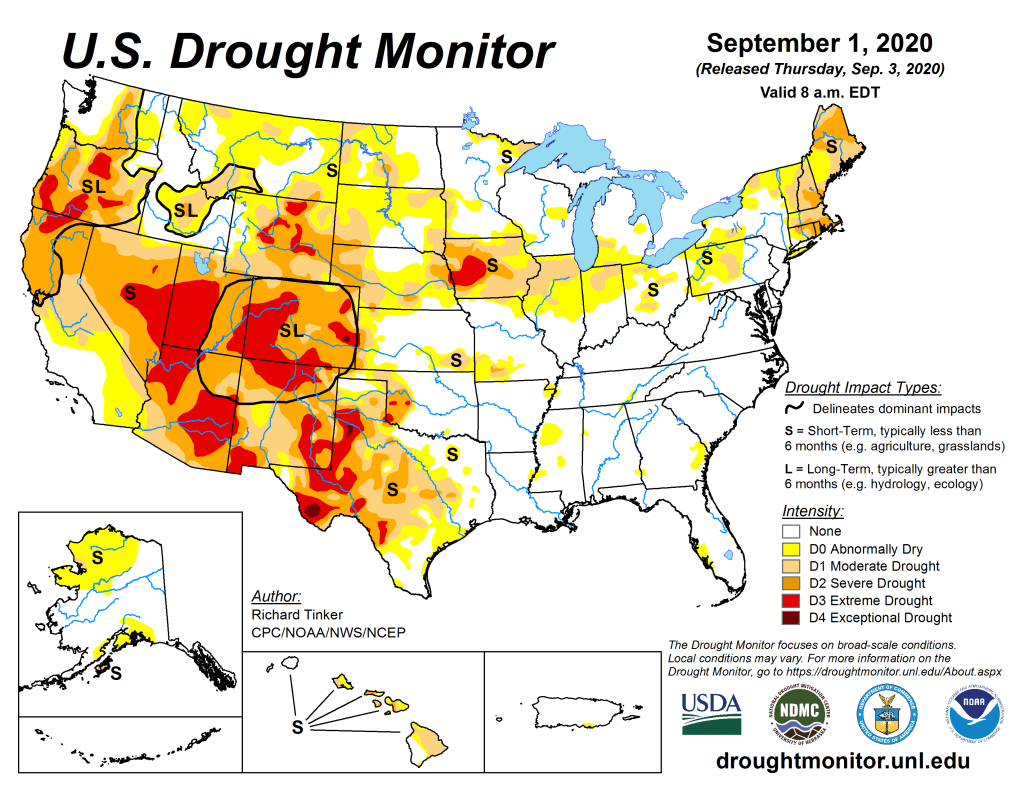
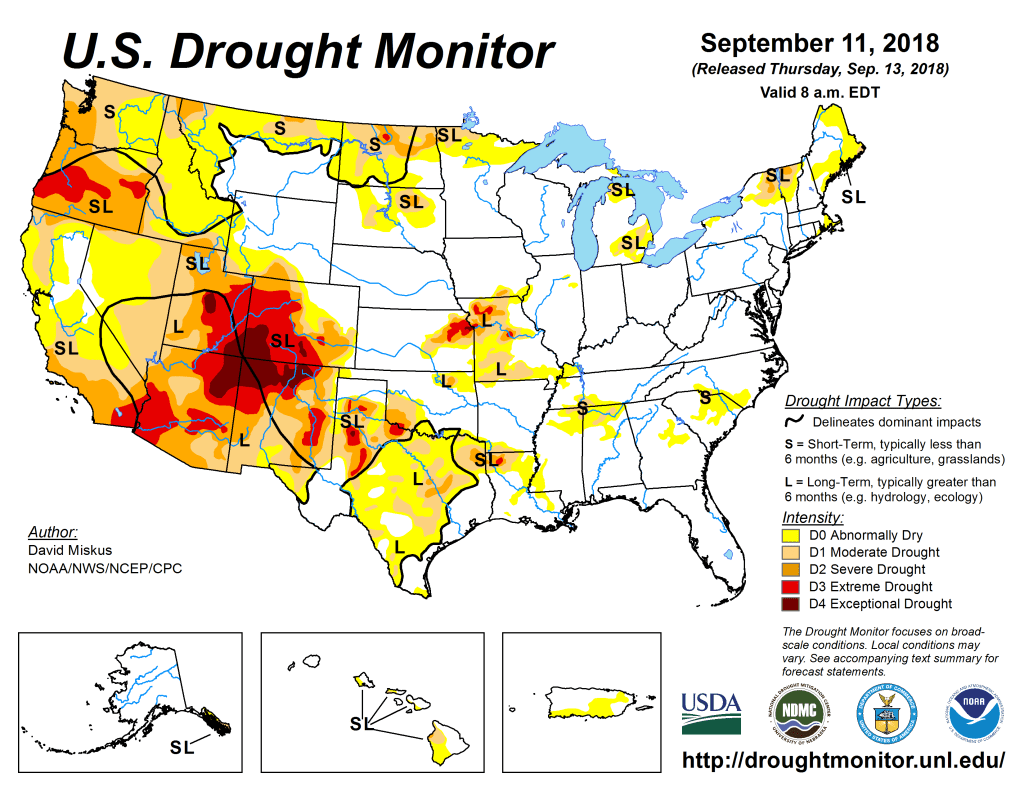
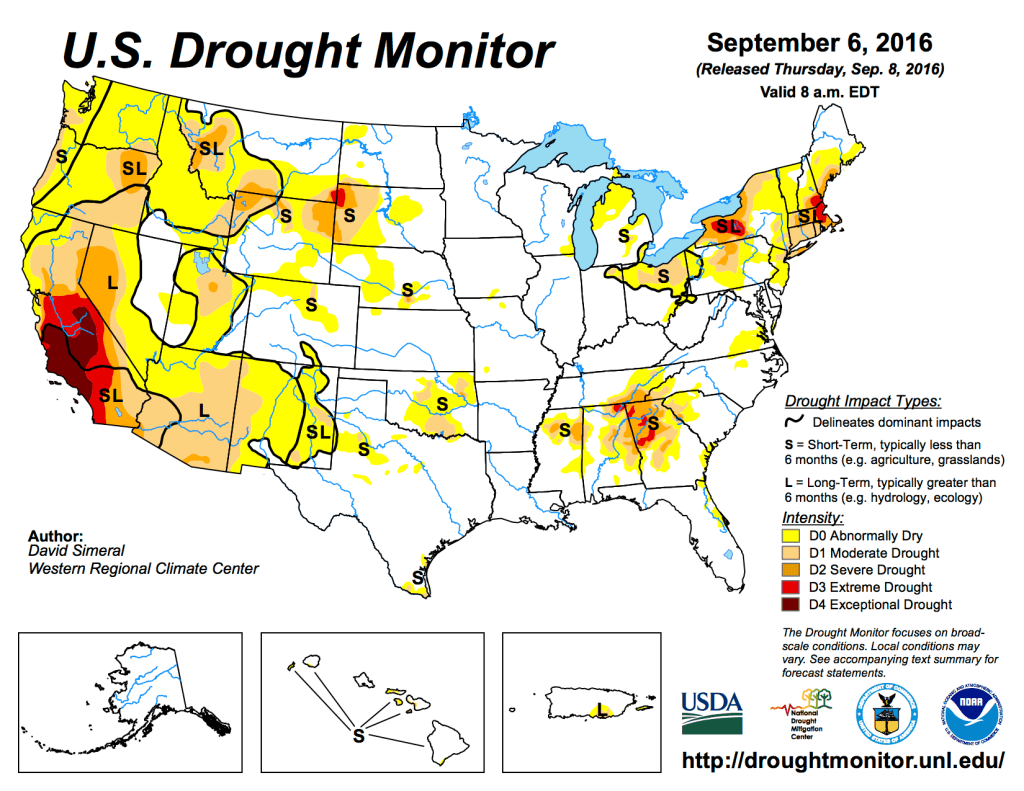
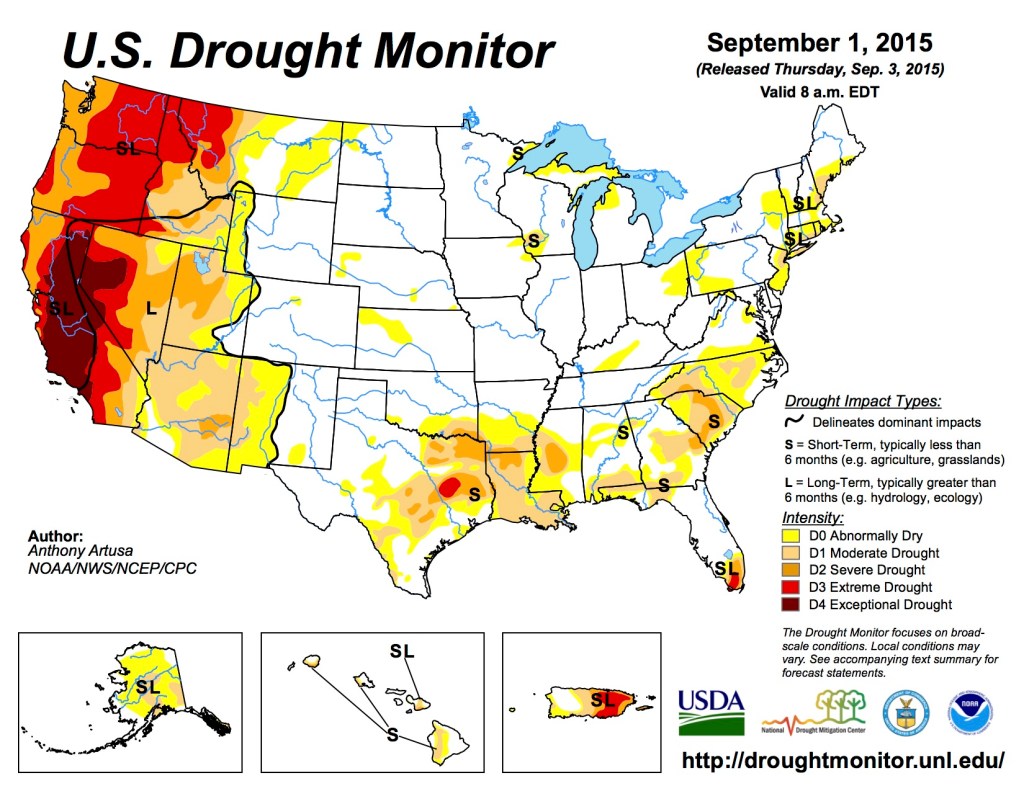
Click on a thumbnail graphic to view a gallery of drought data from the US Drought Monitor website.
Click the link to go to the US Drought Monitor website. Here’s an excerpt:

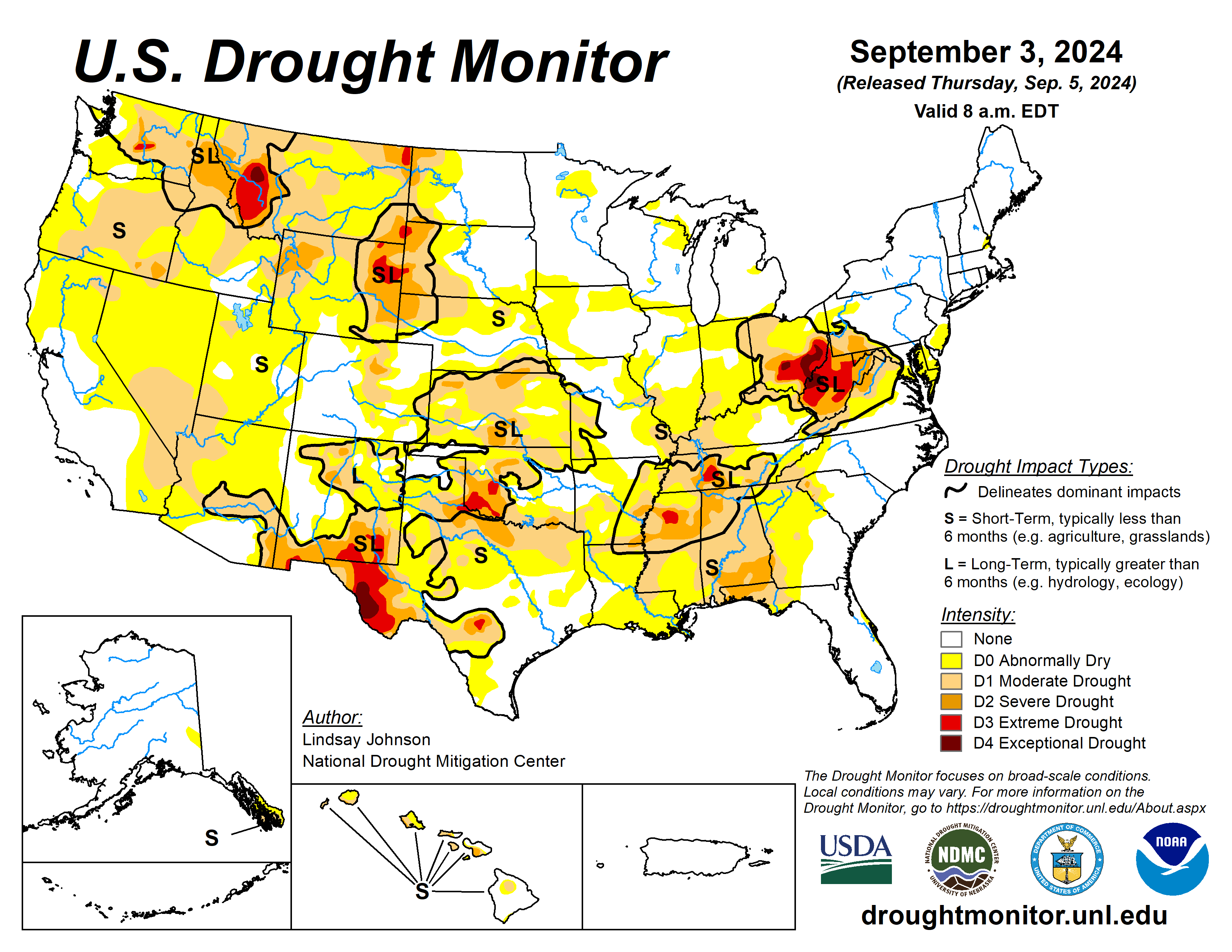
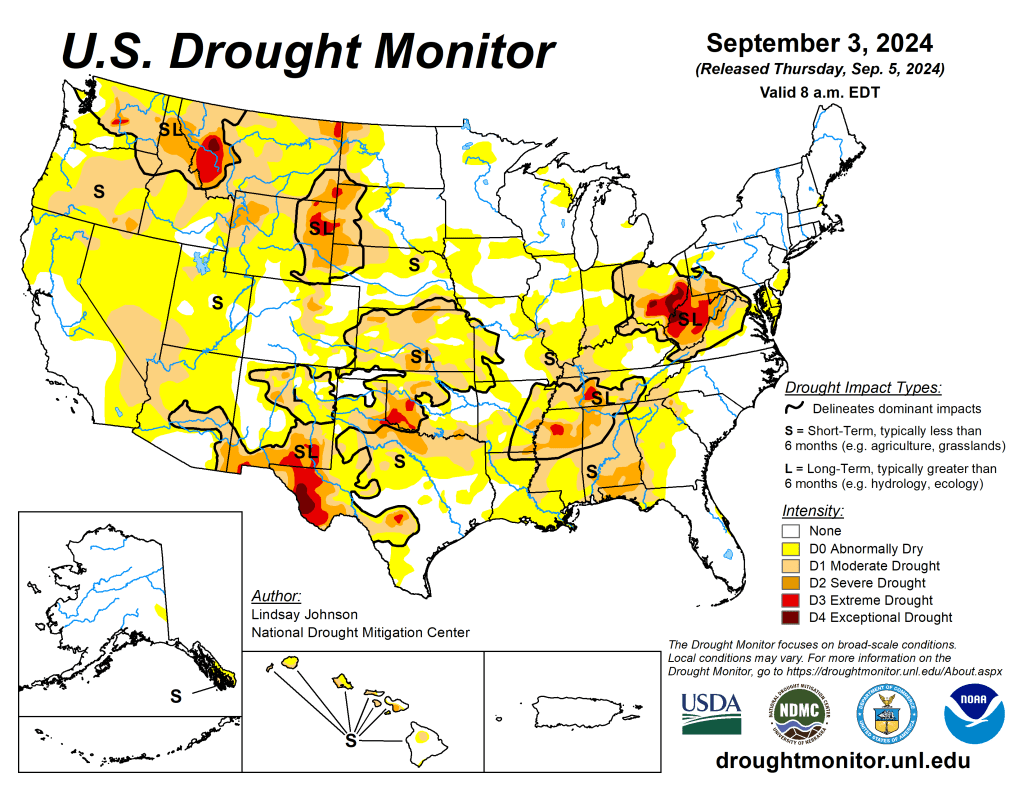
This Week’s Drought Summary

From Aug. 27 to Sep. 3, above-normal temperatures dominated the eastern United States, with areas along the Ohio River seeing temperatures upwards of 6 degrees above normal. The West and High Plains were a patchwork of above-, near- and below-normal temperatures. Isolated areas of southern New Mexico experienced temperatures of 5 degrees below normal. Overall, precipitation for most of the United States was within 1 inch of above- or below-normal conditions. This combination of hot and dry conditions led to continued drying in the Ohio River Basin, where conditions are dire. From Lake Superior southward to Alabama, drought conditions expanded with top and mid soil moisture and streamflow struggling. Texas and the western Gulf Coast saw over 8 to 10 inches of rain in some areas, quickly improving recent drying trends. In the West, there were dry conditions in the south and improving conditions in the Northwest…

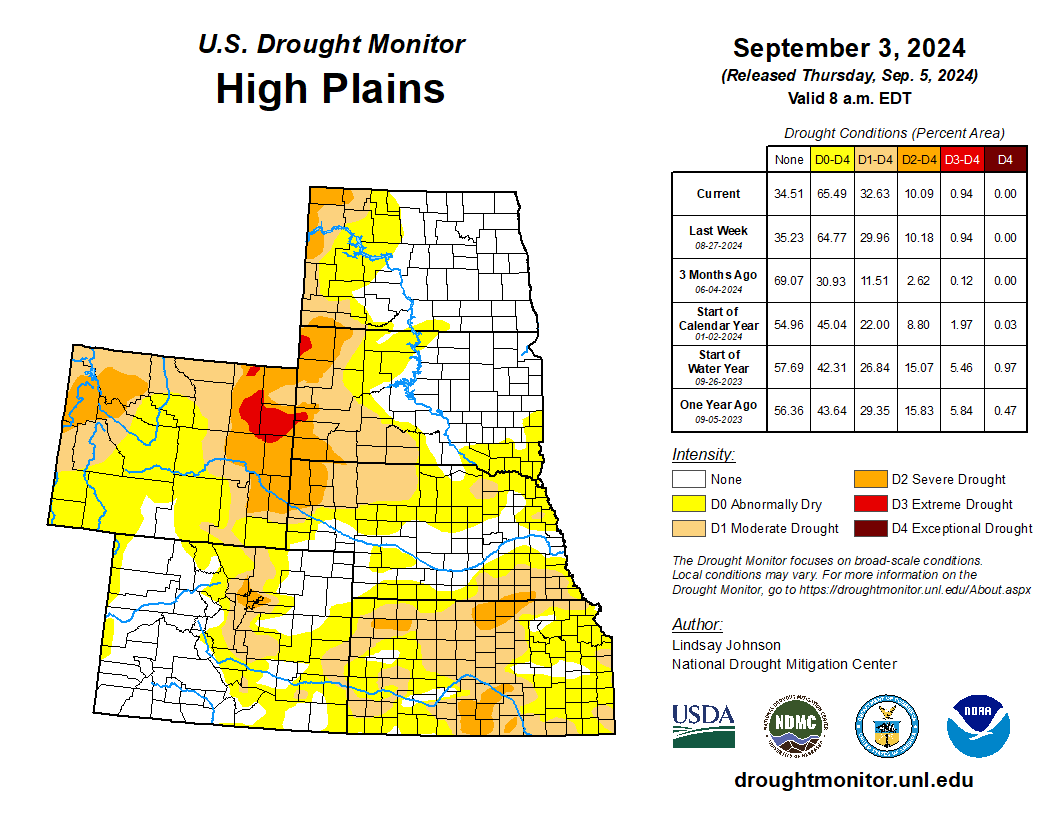
High Plains

Parts of the eastern High Plains received precipitation. The areas of North Dakota and South Dakota in need of precipitation missed the 1 to 3 inches that fell in the central and eastern parts of the states. Abnormal dryness spread towards central Nebraska as the precipitation this week was very spotty. Southeast Nebraska into north-central and northeast Kansas saw both abnormally dry and moderate drought conditions expand despite precipitation this week, due to longer-term dryness. Southwestern Kansas has been seeing conditions continue to improve, leading to the trimming of abnormally dry, moderate and severe drought. The eastern foothills and plains of Colorado experienced little to no rain this week, leading to the expansion of moderate drought. Along the western Colorado border with Utah, abnormal dryness was removed with increased streamflows aiding conditions…

Colorado Drought Monitor one week change map ending September 3, 2024.

West

The West was a mixture of improvements in the northwest and Four Corners areas and degradations in in the desert areas of Nevada, Arizona, and California, plus isolated areas of the northern Rockies. South and central New Mexico received moisture, allowing some of the longer-term impacts to improve slightly. Utah saw some improvements on the eastern border with Colorado but did see abnormally dry conditions expand in Juab County and Millard County. In the Southwest, along with southern Nevada, western Arizona and southern California, abnormally dry and moderate drought conditions expanded. Moisture deficits continued in these areas, with not enough precipitation to aid in current dry conditions. Conditions from northwestern Washington southward along the Pacific Coast into northern California have seen improvements in short-term dryness, with streamflows and soil moistures improving. In central and northern Washington, there is still some lingering long-term drought but these, similarly to areas of short-term drought, are showing improvement…

South

Massive amounts of precipitation fell over Texas and along the Gulf Coast of Texas and Louisiana. Parts of central Texas saw 8 to 12 inches of rain. This moisture reversed much of the abnormally dry conditions introduced last week in central and southeastern Texas and western Louisiana. Northern Texas and Oklahoma missed out on meaningful precipitation, and with persistent dry conditions saw expansion of moderate and severe drought along the Texas-Oklahoma border. Precipitation deficits and drying soil moisture led to Tennessee seeing eastward expansion of abnormal dryness and moderate drought…

Looking Ahead

Over the next five days (September 4-9) the West and High Plains are likely to see little to trace amounts of precipitation, except for areas in the higher elevation of the southern Rocky Mountains. There is a better chance for precipitation in the Great Lakes region. There are three tropical waves in the Atlantic, with two having a 40 to 60% chance of developing into a tropical or sub-tropical cyclone within the next seven days. With these tropical waves the Gulf Coast states are likely to see 2 to 3 inches of rain.

The National Weather Service Climate Predication Center’s 6-10 day outlook heavily favors above-normal temperatures from the north-central Canadian border to Arizona-Mexican border. Surrounding areas to the west and east are leaning towards above-normal temperatures. From western Texas into Maryland the temperatures are expected to be near normal, with slightly increasing probability of cooler temperatures southward. Central and southern Florida are likely to see warmer-than-normal temperatures, along with the northern part of Alaska. The 6-10 day precipitation outlook is similar to the temperature outlook, though slightly shifted to the east. Areas of the northern Midwest are likely to see below-normal precipitation, with probability decreasing into the Rocky Mountains and Appalachian Mountains. There is a stronger probability that the Pacific Northwest and eastern Gulf Coast will see above normal precipitation. Hawaii and Alaska are also leaning toward above-normal precipitation.
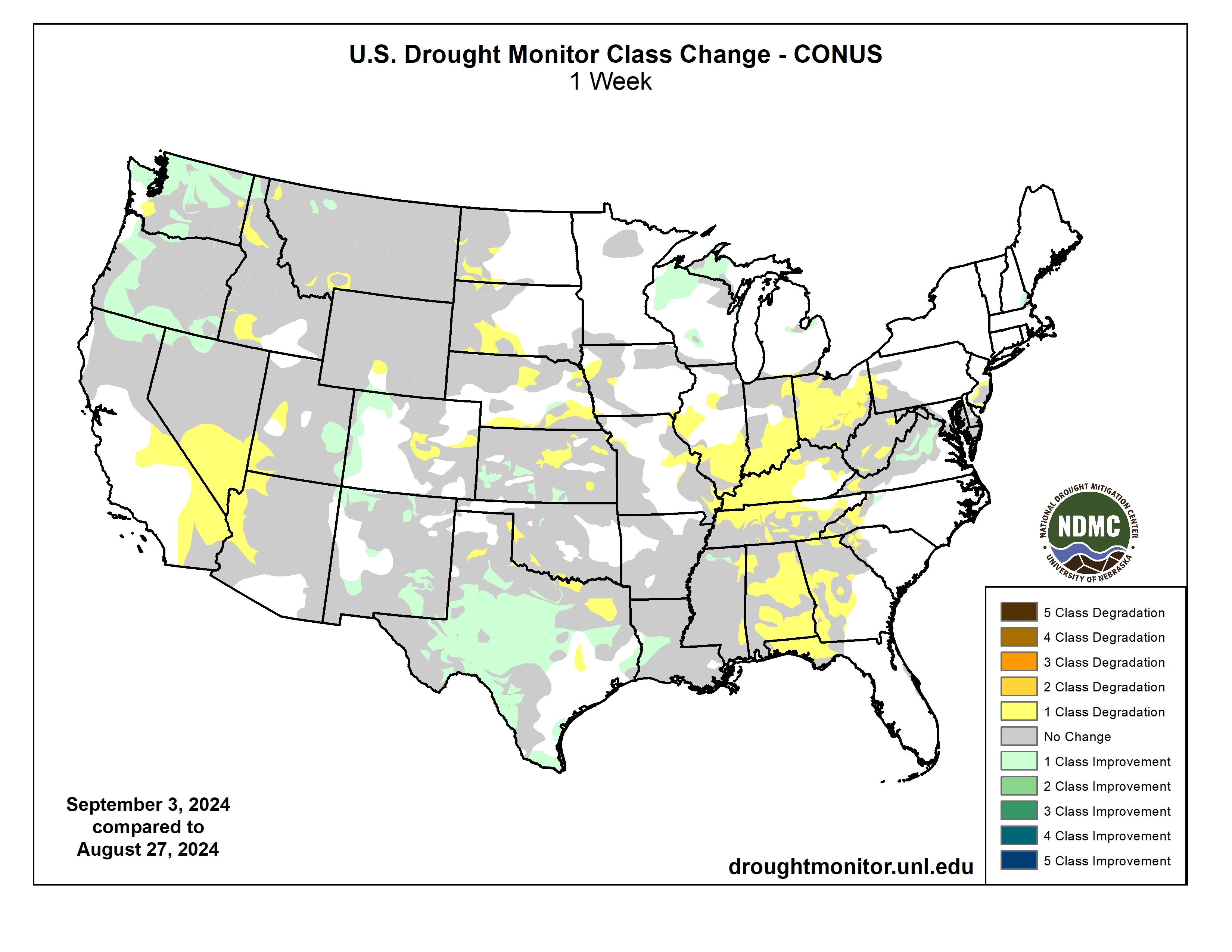
US Drought Monitor one week change map ending September 3, 2024.

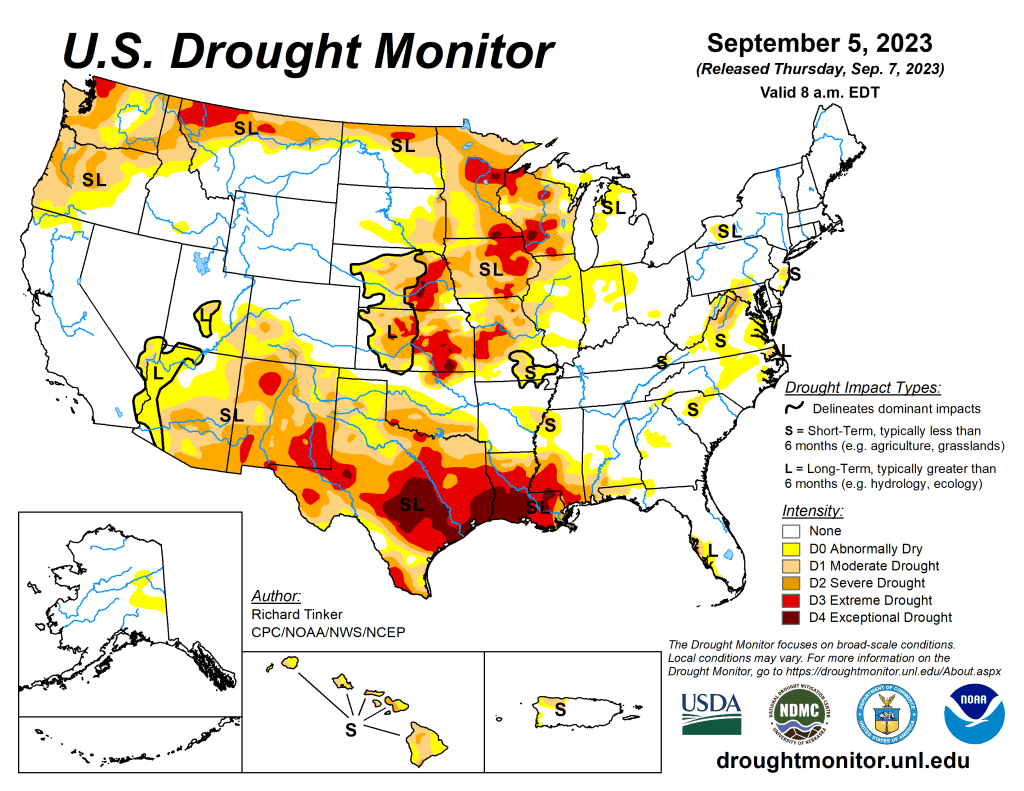
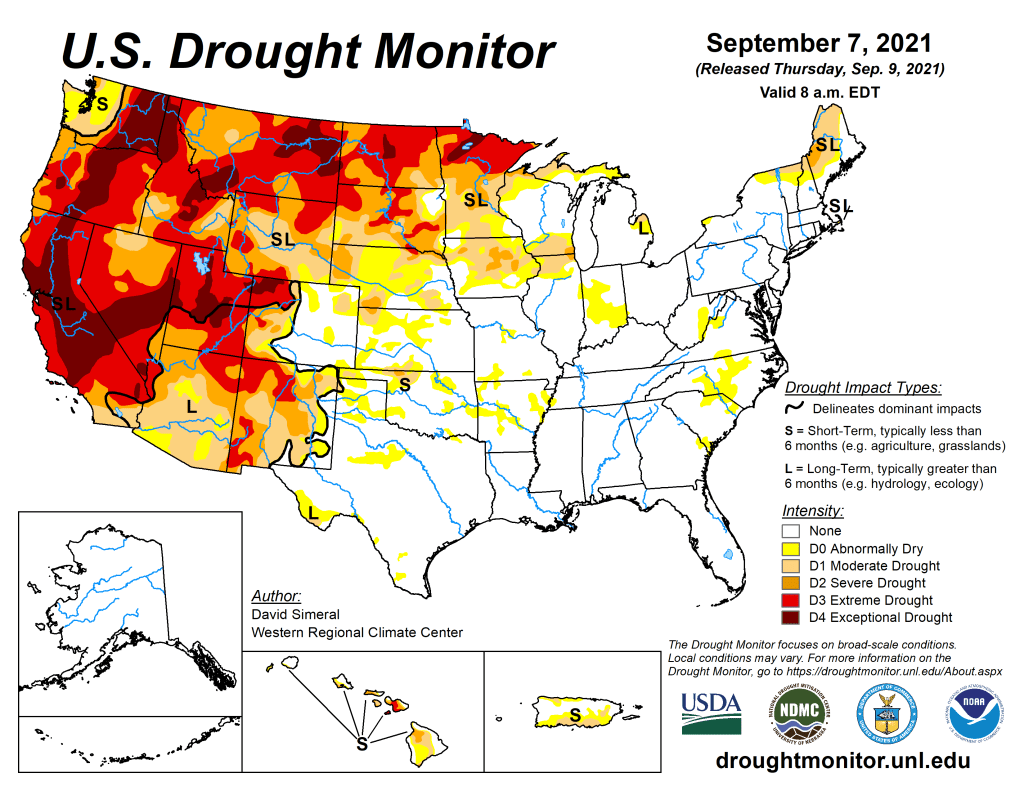
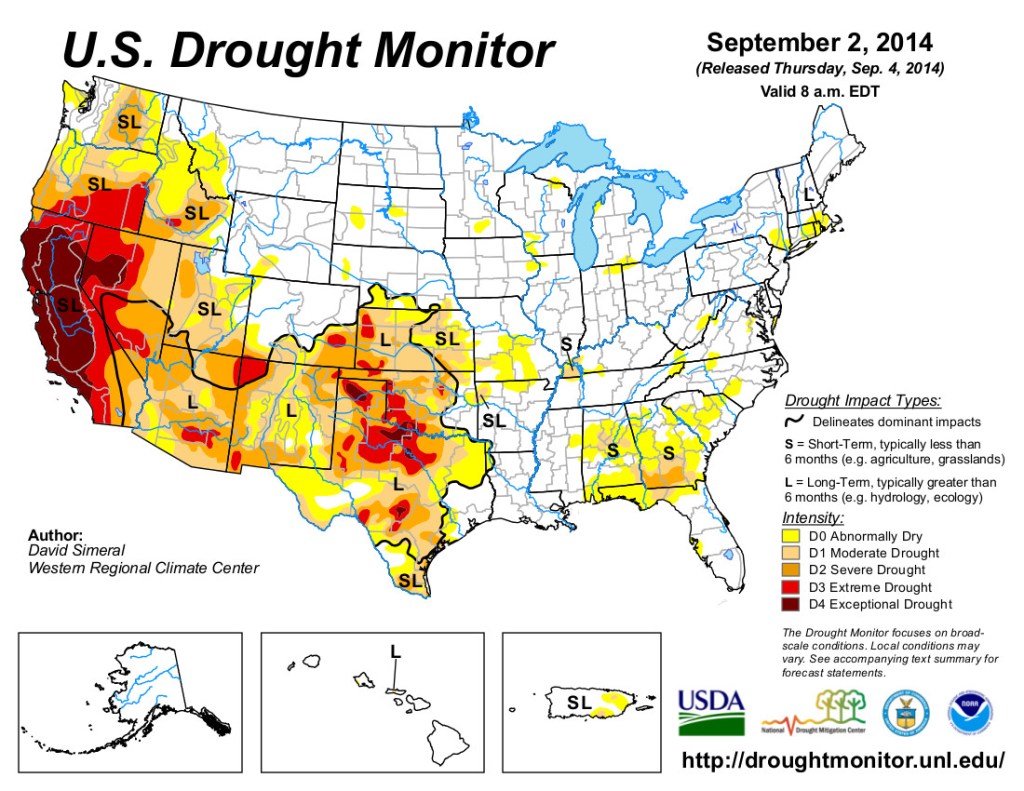
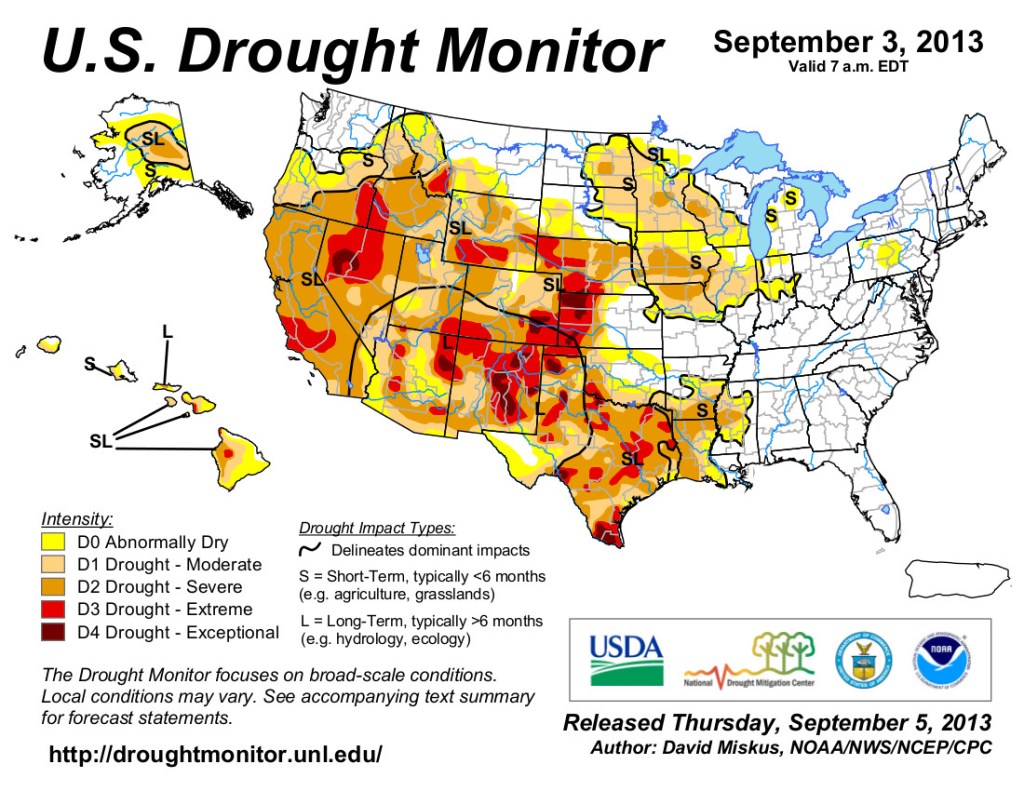
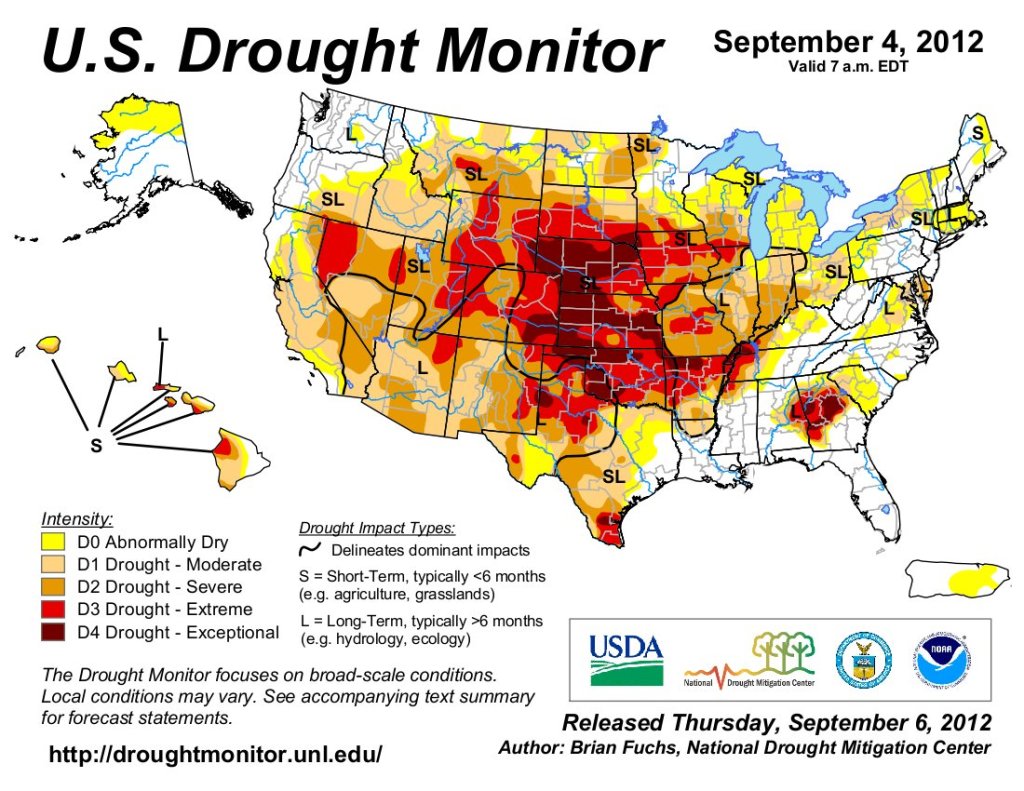
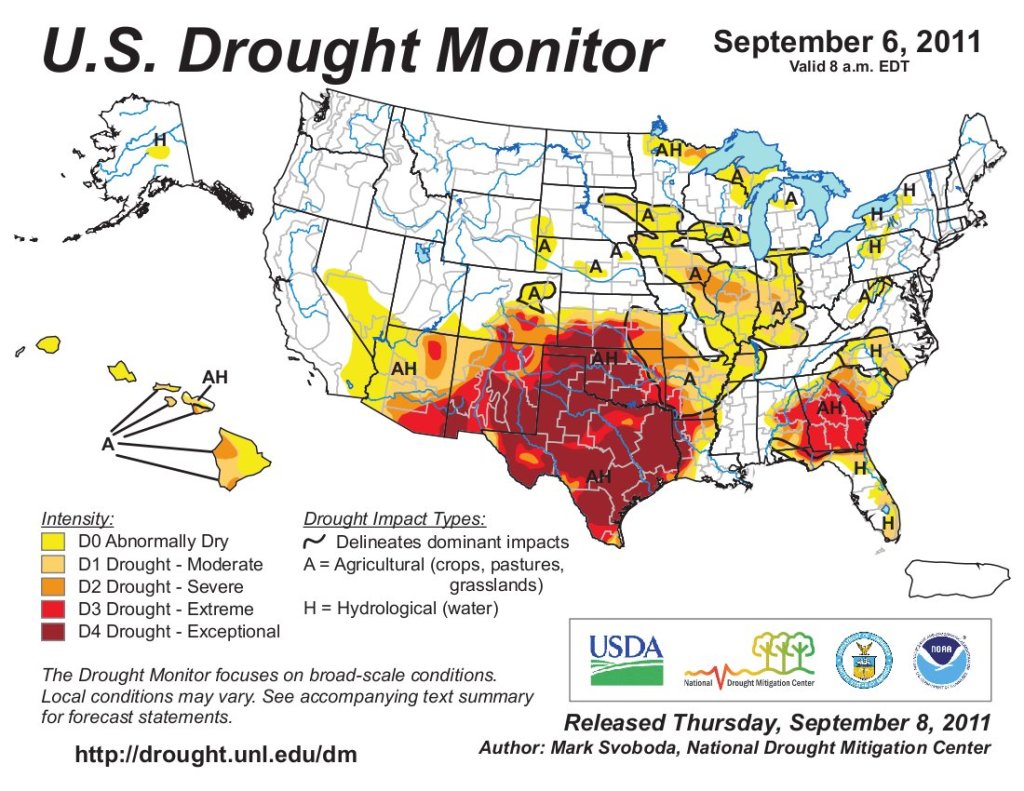
Just for grins here’s a gallery of early September US Drought Monitor maps for the last few years.
Opinion: Time is now for a new #ColoradoRiver Basin process to bring together and engage sovereigns and stakeholders — Lorelei Cloud and John Berggren (Western Resource Advocates) #COriver #aridification

Native America in the Colorado River Basin. Credit: USBR

From email from Western Resource Advocates (John Berggren and Lorelei Cloud):

August 15, 2024

Whole-basin forum that includes Indigenous knowledge would be safe place for difficult conversations and develop solutions together

The foundation of the laws, treaties, acts and policies that govern the Colorado River is the Colorado River Compact of 1922. Over the past 100 hundred years, dozens of additional agreements and decisions have been layered on top, providing for the management framework we know today. 

As we look to the future, and as individuals who represent Tribal and environmental interests in the Colorado River Basin, we believe it is time to return to — and reimagine — one of the primary stated purposes of the 1922 Compact: to provide for the equitable use of water.

For me, Lorelei, it’s personal. Rooted in the Southern Ute Indian Tribe and raised on the Reservation in southwestern Colorado, my life has been deeply intertwined with water. 

We lived in one of the first adobe houses on the Reservation and did not have running water. We relied in part on groundwater, but the well often dried up. So, we hauled water once a week and my grandmother boiled ditch water for drinking water as needed. 

Water was a scarce resource, and we often had to choose between using water for drinking, taking showers or flushing the toilet. This scarcity is still a reality for many Native Americans today across the country.

I grew up knowing that water is a living, sacred being. Our Ute (Nuuchiu) culture centers around water, and we offer prayers for and with it. Water is the heart of our ceremonies. We were taught early on to take and use only what is needed. Above all else, we must care for the spirit of the water.

When I was first elected to the Southern Ute Tribal Council in 2015, I was asked to participate in the Ten Tribes Partnership, or TTP, which is a coalition of the 10 Tribes along the Colorado River focused on securing and using tribal water. After one year, I was asked to chair TTP.

I drew on my personal and spiritual connection to water and started learning about the complex legal and technical issues related to managing water in the American West. I was stunned to learn that Tribes have historically delegated to have little to no role in managing Western water, and that tribal needs and interests are often marginalized.

In recent years, I have had the opportunity to work alongside many people from diverse walks of life to begin addressing these inequities: lack of inclusion in decision-making; lack of access to clean water; and lack of capacity to manage, develop and use water.Ā  I became a founding member of the Water and Tribes Initiative, or WTI, for the Colorado River Basin; was the first Native American appointed to the Colorado Water Conservation Board and the Colorado Chapter of The Nature Conservancy; co-founded the Indigenous Women’s Leadership Network, a program of WTI; and helped forge an historic agreement among the six tribes in the Upper Basin the Colorado River and the states of Wyoming, Colorado, Utah, and New Mexico to allow Tribes to be more meaningfully involved in collaborative problem-solving (but not decision-making per se).

Like Tribes, environmental interests have mostly taken a backseat to the use of the Colorado River for municipal and agricultural purposes. Most adjustments to address cultural and ecological values have been treated as subservient to the allocative laws that largely service municipal and agricultural interests.

Returning to the primary purpose of the 1922 Compact, we believe that providing for the equitable use of water includes substantive and procedural elements. There’s a huge difference between how the Colorado River is managed for multiple values (substance) and how people who care about such issues determine what ought to happen (process). 

We are offering a process improvement. We believe it’s time to establish an ongoing, whole-basin roundtable that would embrace the entire transboundary watershed, address the major water issues facing the basin, and, importantly, provide an equitable process to engage all four sets of sovereigns (United States, Mexico, seven basin states and 30 Tribal nations), water users and stakeholders. 

The late University of Colorado law professor David Getches, an astute observer of Colorado River law, noted in 1997 that ā€œthe awkwardness and the intractability of most of the Colorado River’s problems reflect the absence of a venue to deal comprehensively with Colorado River basin issues.ā€ He called for ā€œthe establishment of a new entity that recognizes and integrates the interests and people who are most affected by the outcome of decisions on major Colorado River issues.ā€ 

Many other scholars and professionals have supported a whole-basin approach to complement, not duplicate, other forums for engagement and problem-solving in the basin. Establishing a whole-basin forum is also consistent with international best practices, as most transboundary river basins throughout the world have some type of river basin commission. 

A whole-basin forum would be a safe place to have difficult conversations, to exchange information, build trust and relationships, and to develop collaborative solutions. It should rely on the best available information, including Indigenous knowledge.

Addressing the historic inequities built into the fabric of governing the Colorado River requires innovative substantive tools as well as procedural reforms focused on engagement and problem-solving. We look forward to working with all of you to shape a more equitable, more sustainable future for the Colorado River.

Vice Chairman Lorelei Cloud lives on the Southern Ute Indian Reservation and is the first Native American appointed to the Colorado Water Conservation Board and the Colorado Chapter of The Nature Conservancy.

John Berggren lives in Boulder and is the Regional Policy Manager, Healthy Rivers for Western Resource Advocates

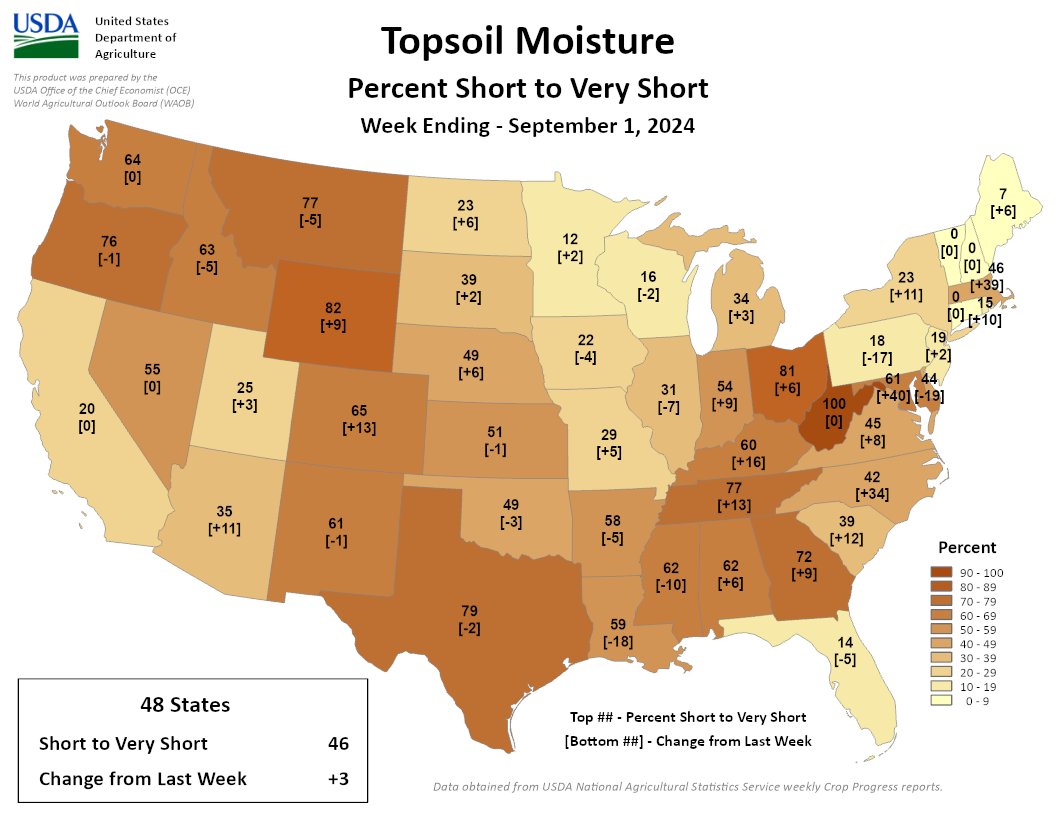
Topsoil Moisture % short/very short — @NOAADrought

46% of the Lower 48 is short/very short, 3% more than last week. Many of the Appalachian states dried out, and for the second week in a row, all of WV is short/very short. Much of the interior West also saw drying.

Vicious circle of climate change, wildfires and air pollution has major impacts — World Meteorological Organization #ActOnClimate

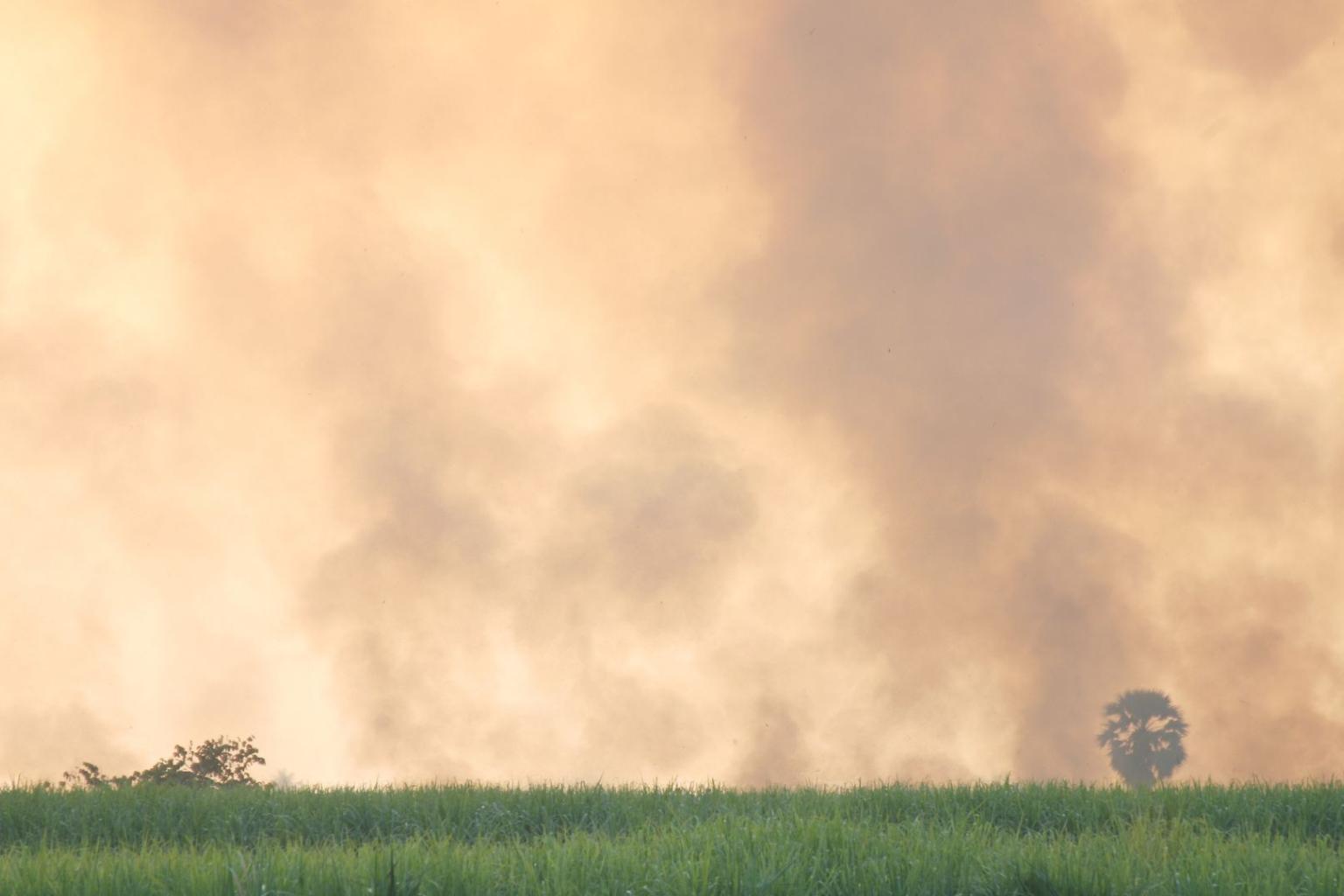
Photo credit: WMO

Click the link to read the release on the WMO website (Clare Nullis):

September 5, 2024

A vicious cycle of climate change, wildfires and air pollution is having a spiralling negative impact on human health, ecosystems and agriculture, according to a new report from the World Meteorological Organization (WMO).Ā 

Key messages

  • WMO Air Quality and Climate Bulletin highlights interlinkages
  • Action against air pollution and climate change is win-win solution
  • Wildfire smoke harms human, ecosystem and crop health
  • Wildfire emissions cross borders and entire continents
  • Particulate matter levels show differing regional trends

The WMO Air Quality and Climate Bulletin includes a special focus on wildfires. It also looks at global and regional concentrations of particulate matter pollution and its harmful effects on crops in 2023. 

The WMO bulletin was released for Clean Air for Blue Skies Day on 7 September. This year’s theme is Invest in Clean Air Now.  Ambient air pollution causes more than 4.5 million premature deaths annually and wreaks a high economic and environmental cost.

The bulletin, the fourth in an annual series, explores the intricate relationship between air quality and climate. 

The chemical species that lead to a degradation in air quality are normally co-emitted with greenhouse gases. Thus, changes in one inevitably cause changes in the other. 

Air quality in turn affects ecosystem health as air pollutants settle from the atmosphere to Earth’s surface.  Deposition of nitrogen, sulfur and ozone reduces the services provided by natural ecosystems such as clean water, biodiversity, and carbon storage.

ā€œClimate change and air quality cannot be treated separately. They go hand-in-hand and must be tackled together. It would be a win-win situation for the health of our planet, its people and our economies, to recognize the inter-relationship and act accordingly,ā€ said WMO Deputy-Secretary-General Ko Barrett.

ā€œThis Air Quality and Climate Bulletin relates to 2023. The first eight months of 2024 have seen a continuation of those trends, with intense heat and persistent droughts fuelling the risk of wildfires and air pollution. Climate change means that we face this scenario with increasing frequency. Interdisciplinary science and research is key to finding solutions,ā€ said Ko Barrett.

Global 2023 particulate matter concentration 

Particulate matter PM2.5 (i.e. with a diameter of 2.5 micrometers or smaller) is a severe health hazard, in particular if inhaled over long periods of time. Sources include emissions from fossil fuel combustion, wildfires and wind-blown desert dust.

The WMO bulletin used two independent and different products to estimate global particulate matter (PM) concentrations: the Copernicus Atmospheric Monitoring Service and the National Aeronautics and Space Administration’s Global Modeling and Assimilation Office (GMAO).

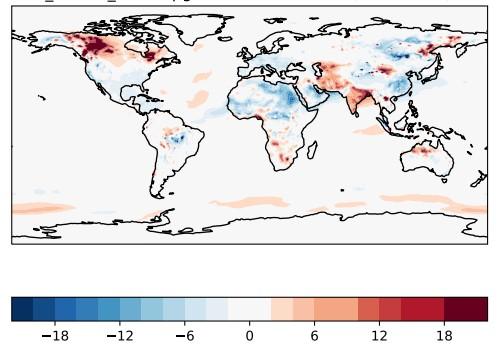
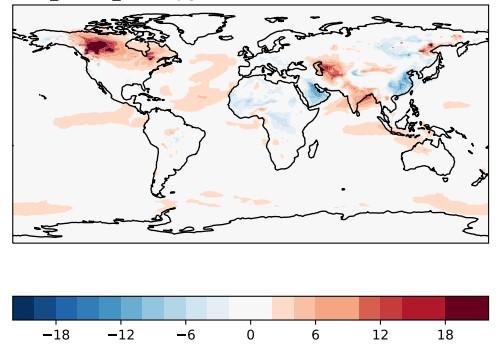
Both products found that wildfires over North America caused exceptionally high PM2.5   emissions compared to the reference period 2003–2023. 

Above average PM2.5   levels were also measured over India, due to an increase in pollution emissions from human and industrial activities. 

By contrast, China and Europe measured below-average levels, thanks to decreased anthropogenic emissions. This continues a trend observed since the WMO Bulletin was first published in 2021. 

PM2.5 anomaly (μg m–3) in 2023 (reference period 2003–2022. Generated from the CAMS reanalysis
NASA GMAO GEOS-IT reanalysis (https://gmao.gsfc.nasa.gov/ GMAO_products/GEOS-IT/) NASA

Impacts of particulate matter on crops

Particulate matter has a major impact not just on health, but also on agriculture. It can reduce crop productivity in areas where maximizing yield is of crucial importance for feeding the population.

Global hotspots include agricultural areas in Central Africa, China, India, Pakistan and South-East Asia.

Experimental evidence from China and India indicates that particulate matter can reduce crop yields by up to 15% in highly polluted areas. It reduces the amount of sunlight reaching leaf surfaces and physically blocks leaf stomata which regulate exchange of water vapour and carbon dioxide with the atmosphere.

Agriculture itself is a major contributor to PM through release of particles and their precursors by stubble burning, fertilizer and pesticide applications, tillage, harvesting, and manure storage and use.

The WMO bulletin provides practical solutions, including planting trees or shrubs to physically shelter crops from local sources of PM, with added carbon sequestration and biodiversity benefits.

Wildfires

There were hyper-active wildfire seasons in both the northern and southern hemisphere in 2023. 

There are many different causes of wildfires, including land management and human actions (both accidental and arson). But climate change also has an indirect role by increasing the frequency and intensity of heatwaves and prolonging drought. These conditions heighten  the risk and likelihood of forest fires spreading, which in turn has a major impact on air quality. 

ā€œSmoke from wildfires contains a noxious mix of chemicals that affects not only air quality and health, but also damages plants, ecosystems and crops – and leads to more carbon emissions and so more greenhouse gases in the atmosphere,ā€ says Dr Lorenzo Labrador, a WMO scientific officer in the Global Atmosphere Watch network which compiled the Bulletin.

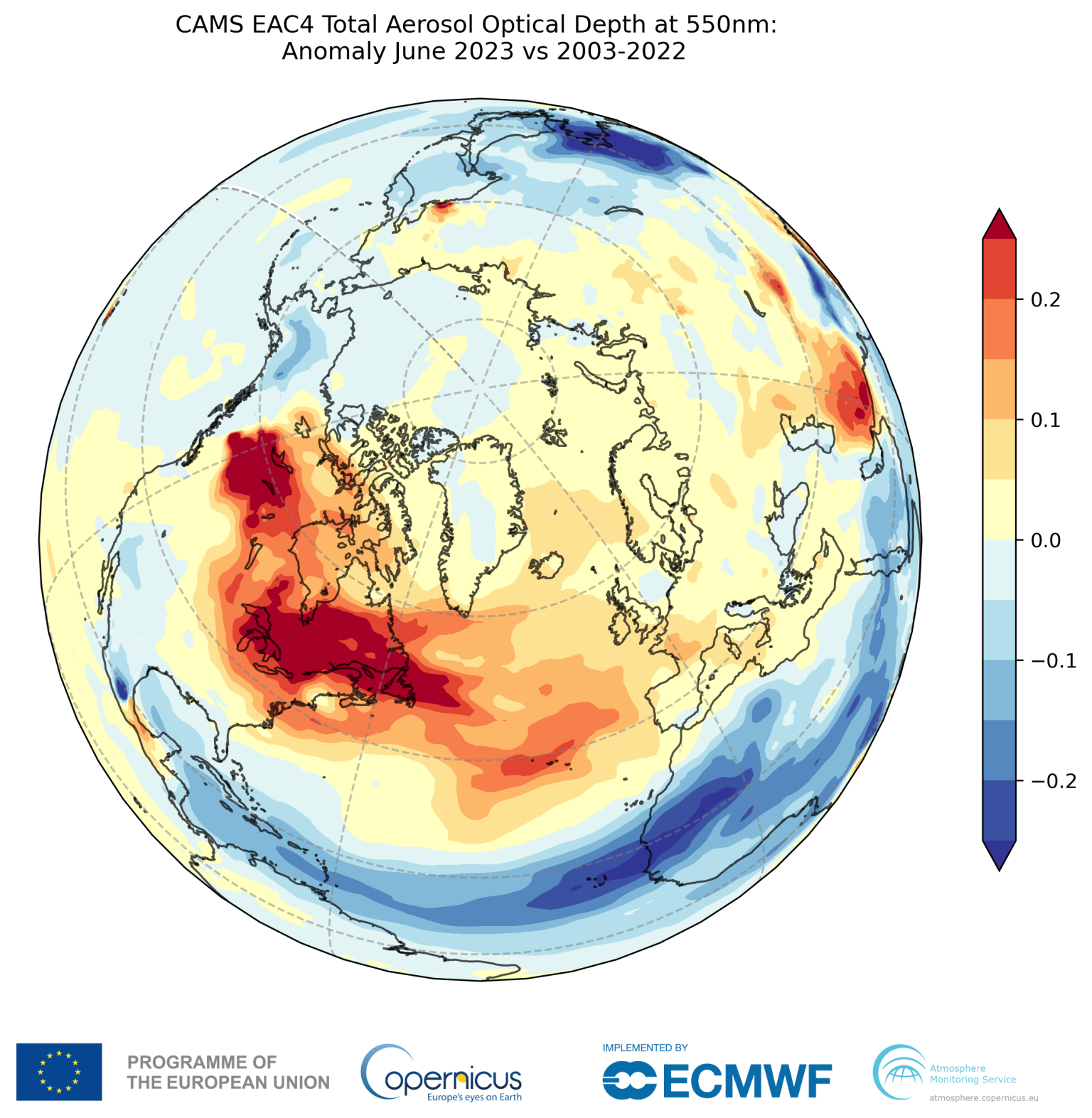
The 2023 wildfire season set a multi-decade record in Canada in terms of total area burned, with seven times more hectares burned than the 1990–2013 average, according to the Canadian National Fire Database.

Many large and persistent fires burned from the first week of May in western Canada (where it was unusually warm and dry) until the end of September. This led to  worsening air quality in eastern Canada and the north-eastern United States, particularly in New York City (in early June). Smoke was transported across the North Atlantic Ocean as far as southern Greenland and Western Europe. 

This resulted in cumulative total particulate matter and carbon emissions well above the annual average of at least the past 20 years. 

Monthly mean anomaly in total aerosol optical depth at 550 nm for June 2023 relative to June 2003–2022 https://ads.atmosphere.copernicus.eu/cdsapp#!/ dataset/cams-global-reanalysis-eac4-monthly?tab=overview CAMS reanalysis of global atmospheric composition (2003–2023)

Central and southern Chile was struck by devastating wildfires in January and February 2023, with at least 23 deaths. More than 400 fires, many of them intentional, burned vast regions of plantations and woods. High temperatures and winds fuelled the fires in an area affected by a pervasive drought that has lasted more than a decade. The National Air Quality Information System recorded increased levels of all air pollutants in all stations.

As a result, the daily short-term exposure to ozone increased drastically at several monitoring stations. Chilean authorities declared a state of environmental emergency in various regions of central Chile.

ā€œConcurrent observations of ozone, carbon monoxide, nitrogen oxides and PM2.5 in central Chile exhibit the extreme detriment to air quality caused by intense and persistent wildfire events made more common in a warming climate,ā€ write the Bulletin authors.

The Air Quality and Climate Bulletin also looks at:

Aerobiology. Accurate and timely information on concentrations of what is known as  “primary biological aerosols” (i.e. plant pollen, fungal spores, bacteria, etc), is in high demand from medical practitioners and allergy sufferers, agriculture and forestry industries, and climate change, biodiversity and air quality researchers, to name a few.

Bioaerosols play an important role in climate studies: vegetation is one of the most sensitive indicators of climate change. Biodiversity changes and plant flowering time, intensity and distribution patterns are all sensitive to meteorological conditions.

Over the past few years, and due to technological advances, new technologies have made it possible to obtain information on bioaerosol concentrations in real time. These new techniques open entirely new possibilities for the wide range of stakeholders interested in bioaerosols.