September 9, 2024
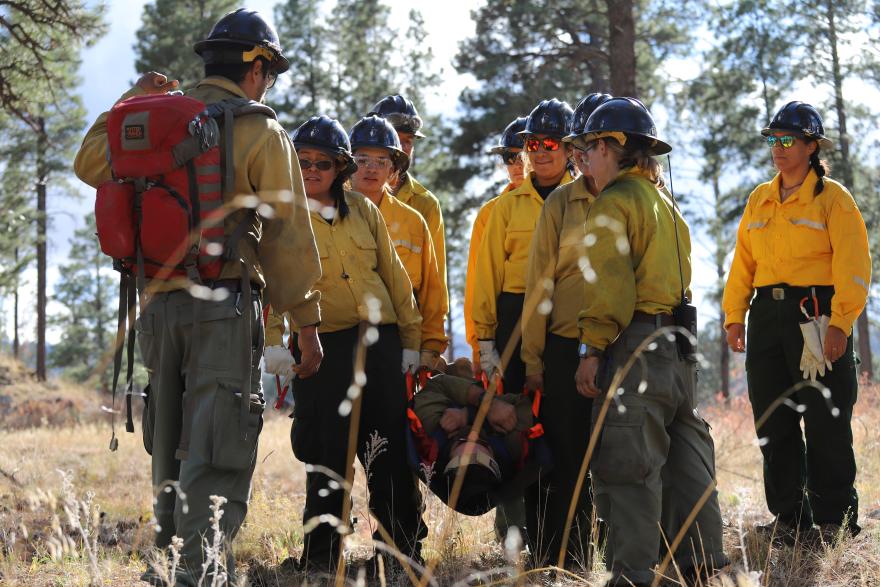
DENVER – Governor Polis and the Colorado Department of Natural Resources (DNR) announced the release of the 2024 Colorado Strategic Wildfire Action Program’s Workforce Development Grant. In this release, $4 million is available for conservation corps, including those associated with the Colorado Youth Corps Association (CYCA) and Department of Corrections State Wildland Inmate Fire Teams (DOC SWIFT), to conduct wildfire mitigation projects and gain skills in forest restoration and wildfire risk reduction. The grant also funds mitigation and forestry training to educate and support the future workforce across the state.
“Here in Colorado we are aggressively expanding fire prevention strategies that work, and that includes the Colorado Strategic Wildfire Action Program. This funding will support mitigation efforts around the state that better protect homes and communities, and will also get Coloradans the skills needed to work in forestry,” said Governor Jared Polis.
Colorado’s Strategic Wildfire Action Program (COSWAP) was created after the devastating 2020 fire season by Governor Polis and the Colorado legislature as a collaborative effort between the Department of Natural Resources, Colorado State Forest Service, and the Division of Fire Prevention and Control to increase community resilience to wildfire. COSWAP addresses the urgent need to reduce wildfire risk in Colorado through workforce development and landscape-scale fuels reduction projects. Since the launch in 2021, COSWAP has funded 73 workforce development projects, totaling $10.3 million, and is now a permanent state program housed within DNR.
“I am proud of the impact COSWAP has made on workforce development and wildfire risk reduction across the state in its three years of operation,” said Dan Gibbs, Executive Director of the Department of Natural Resources. “This next $4 million will increase the number of communities that benefit from the hard work of conservation corps and SWIFT members, providing on the ground hand crews to help reduce the risk of wildfire on our communities and critical infrastructure.”
This is the third round of COSWAP Workforce Development funding. The grant provides two types of awards: crew time and cash grants. Crew time is awarded to grantees partnering with a CYCA accredited conservation corps or a DOC SWIFT crew where COSWAP pays for the mitigation work directly in order to reduce administrative burden on the grantee. Grantees who wish to work with an independent conservation corps can request a cash grant to hire the corps themselves. Cash grants are also available to cover program expenses or to support wildfire mitigation workforce training, including but not limited to: S-212 wildland fire chainsaw, advanced tree felling, prescribed fire training, and training for prescription development and treatment implementation.
“The COSWAP program has exceeded expectations in changing lives and protecting landscapes,” said Scott Segerstrom, Executive Director, Colorado Youth Corps Association. “We are developing the next diverse generation of wildland firefighters and professional natural resource managers while also ensuring the lives and property of Coloradans in the most fire-vulnerable areas are secure. This public-private partnership represents the best of government: channeling resources into effective, proven solutions that lift up all communities.”
Grants are available on all land ownership types in Colorado, however projects are only eligible in the following locations:
- For independent and CYCA accredited conservation corps, projects must be located within identified Strategic Focus Areas, which include: Boulder, Douglas, El Paso, Jefferson, Larimer, La Plata, and Teller counties, as well as the Rocky Mountain Restoration Initiative focal areas.
- The DOC SWIFT crews operate out of the Four Mile Correctional Facility in Canon City and can support projects within a three hour drive.
- Wildfire mitigation trainings are available statewide.
New this year, all projects or trainings awarded through the 2024 Workforce Development Grant must be completed in 2025.
“The collaboration between the Department of Corrections’ State Wildland Inmate Fire Team (DOC SWIFT) and the Colorado Department of Natural Resources has significantly enhanced our state’s capacity to manage and mitigate wildfires. This initiative has not only strengthened our wildfire response but has also paved the way for meaningful post-incarceration employment opportunities, directly linking the skills developed on the fire team to future work prospects for those involved,” said Mitch Karstens, Deputy Director of Finance and Administration, Colorado Correctional Industries.
To apply for Colorado’s Strategic Wildfire Action Program’s Workforce Development Grant, visit the program website. The Request for Applications and application materials are available for download. Please note the eligible applicants, project activities, and expenses as well as reporting requirements explained in the Request for Applications. The application period is open now through November 1st, 2024. To allow for site visits in early fall, all CYCA conservation corps applications received by October 9th will be considered in a preliminary review. The remaining CYCA related applications will be reviewed after the deadline of November 1st. All other applications will also be reviewed upon the November 1st deadline and notified of funding awards by the end of the year.
Timeline:
September 9: Application release
October 9: First round reviews for CYCA accredited conservation corps projects
November 1: Deadline to submit all applications
December 31, 2024: Applicants notified of funding decisions
December 31, 2025: Project or training completion deadline
To learn more and to apply for a COSWAP Workforce Development Grant, please visit: https://dnr.colorado.gov/divisions/forestry/co-strategic-wildfire-action-program.