
Click the link to read the article on the Colorado Public Radio website (Stina Sieg). Here’s an excerpt:
September 30, 2026
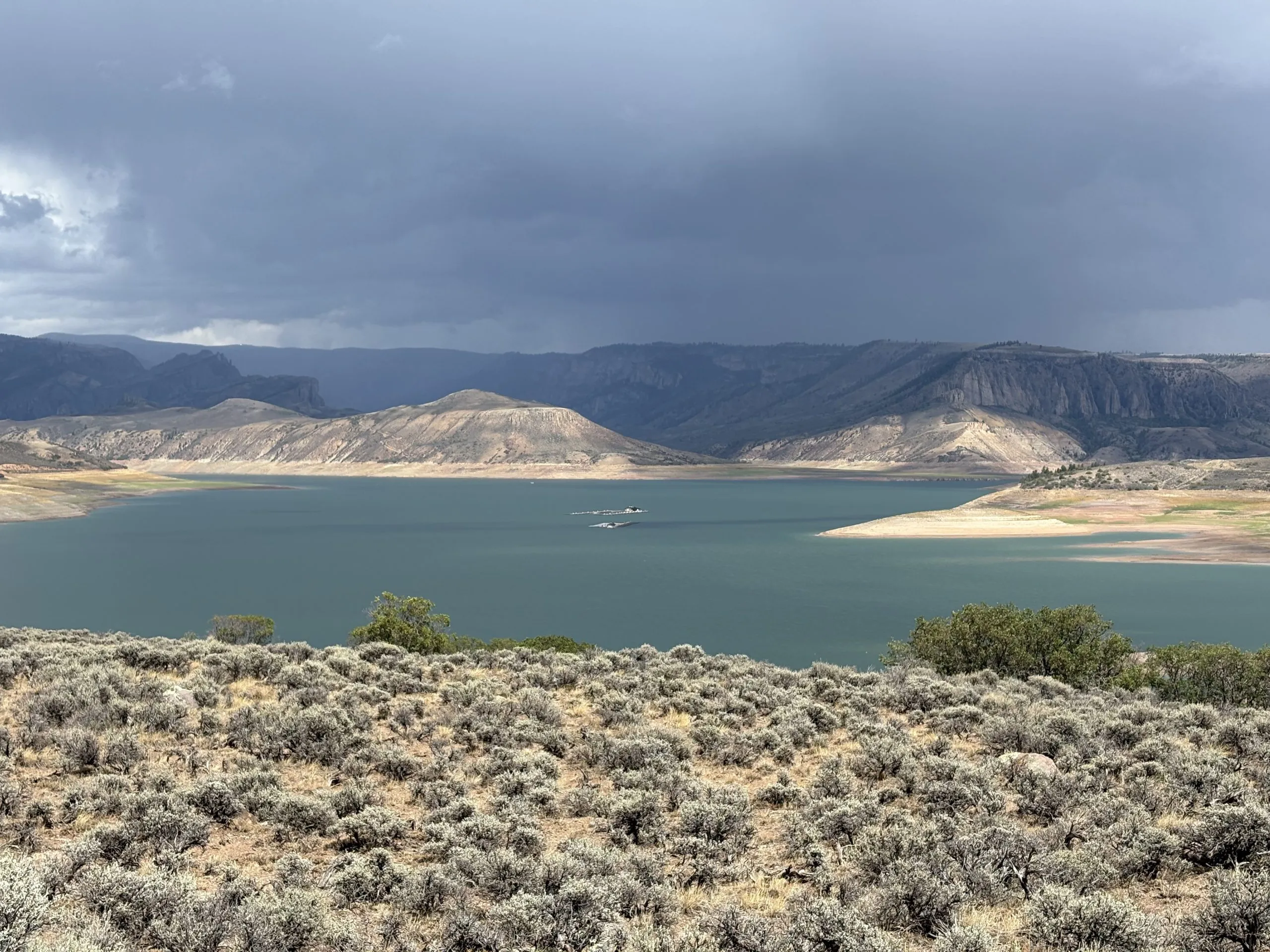
Anyone can see that something is deeply wrong at Blue Mesa Reservoir on the Western Slope. It’s historically been the biggest body of water in the state. But not anymore. The deep, long-lasting drought has shrunk it so much it lost that title to Lake Granby up north. Now it looks like someone’s opened the drain on a gigantic, rocky bathtub, with only a bit of shiny blue water pooled at the bottom…For 60 years, Blue Mesa Reservoir has stored water that flows to communities and generates electricity. It’s also a popular recreation spot, a 20-mile-long lake sandwiched between Montrose and Gunnison. Growing up on the edge of this vital water source, Riser has watched decades of visitors bobbing on their motorboats and jet skis, with their coolers and kids, dogs and music…Del Piccolo said he’s never seen algae “that blue and vibrant.”[…]The neon-blue algae is like a warning sign of just how bad things are at Blue Mesa. There are actual warning signs posted, too, saying the water is now dangerous to people and pets. Sonja Chavez, executive director of the Upper Gunnison River Water Conservancy District, thinks it’s the worst Blue Mesa has ever looked…
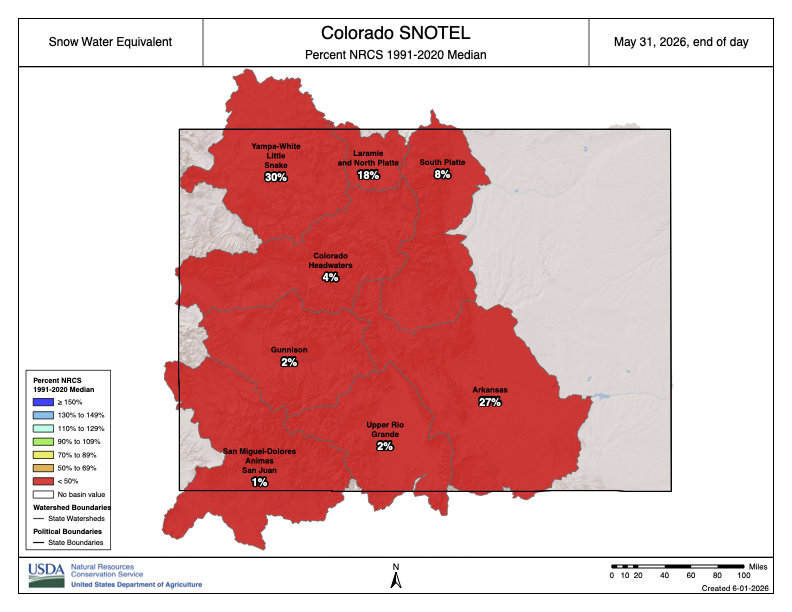
Blue Mesa is not a naturally occurring lake but instead is man-made, designed by the federal government to store water for downstream communities, farms and ranches. It also generates electricity and is federally mandated to release water that provides habitat for threatened and endangered fish, including the native razorback sucker and humpback chub. Federal officials take all of that into consideration when they determine how much water to discharge. This year, they were faced with an abysmal snowpack — that accumulation of snow that builds up throughout the winter. Chavez believes the U.S. Bureau of Reclamation, which controls how much, and when, water flows out of Blue Mesa, needs to adjust more quickly to lean water years like this one.
Chavez thinks the BoR was releasing too much water too early in the season, which drove Blue Mesa into crisis. In an email statement, the agency said it does work from 24-month forecasts of how much water will melt into reservoirs, but that it also adjusts water releases as conditions change.
“Moving forward, Reclamation is already working with our forecasting partners and water users on ways to improve modeling for dry year water use, enhance forecasting … and review historic operations to identify opportunities for increased drought resiliency,” said Bart Deming, BoR Western Colorado Area office manager.
