Click the link to read the article on the PNAS website (Min Long, Ai-Shi Wang, Weldon C. Elias, and Bruce E. Rittmann). Here’s the abstract:
October 19, 2026
Significance
Per- and polyfluoroalkyl substances (PFAS) are notoriously difficult to destroy in ambient conditions, and the catalytic principles needed for low-energy defluorination remain an unachieved goal. This study identifies a previously unrecognized dual-hydrogen mechanism in catalytic membranes, in which surface hydrogen captures PFAS while subsurface hydrogen, stored as β-PdHx, drives C–F bond cleavage. By linking hydrogen generation, storage, and reactivity within a membrane platform, this work advances a mechanistic framework for destructive PFAS treatment rather than simple contaminant separation. The results establish both a mechanistic foundation for hydrogen-enabled defluorination and a scalable membrane-based strategy for continuous, low-energy PFAS destruction in water.
Abstract
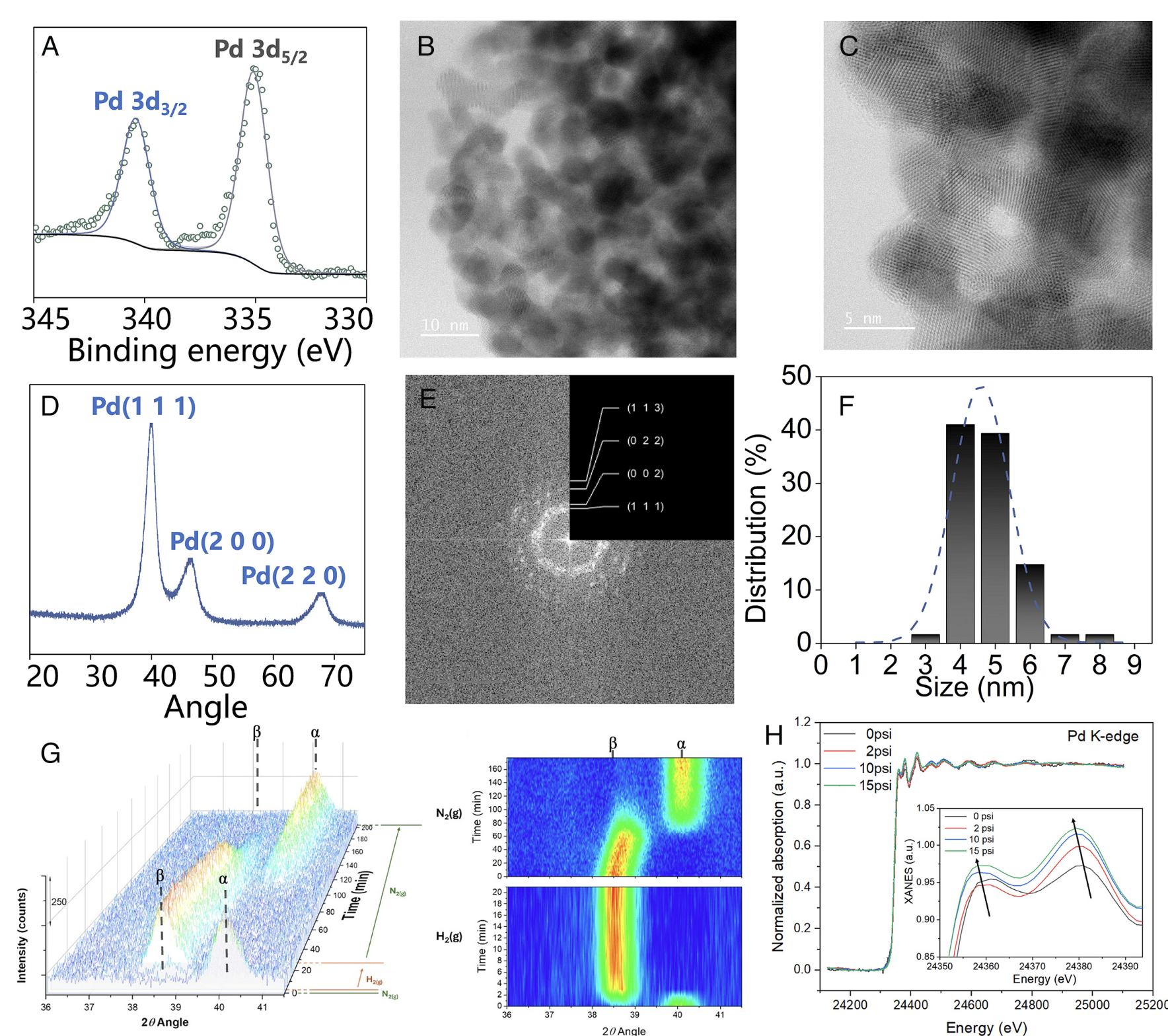
Per- and polyfluoroalkyl substances (PFAS) persist in aquatic environments due to their ultrastable C–F bonds and poor susceptibility to conventional treatment. Here, we report an H2-based catalytic-film membrane that enables PFAS destruction in ambient conditions by generating highly reactive surface (Hads*) and subsurface hydrogen (Hsub*), the latter stored as β-phase palladium hydride (β-PdHx). Solid-state analyses evidenced β-PdHx formation and related lattice expansion with elevated H2 chemical potential, revealing a structural mechanism that links hydrogen storage to catalytic defluorination. Mechanistically, the two hydrogen species play complementary roles: Hads*-rich Pd0 surface enabled PFAS capture through parallel adsorption to maximize interfacial contact with active H, whereas sustained Hsub* supplied the energetic driving force for stepwise hydrodefluorination consistent with sequential C–F scission. As a result, across six PFAS of regulatory concern—PFOA, PFOS, PFNA, PFHxS, PFBS, and GenX—the catalytic membrane converted all contaminants toward fully defluorinated products. Long-chain PFAS were removed and defluorinated more rapidly than short-chain analogs, while GenX showed greater recalcitrance due to its ether linkage, weaker adsorption, and higher average C–F bond dissociation energy; nonetheless, GenX still exhibited removal and defluorination, with the production of 2-propoxypropanoic acid. The system also enabled continuous coremoval of all six PFAS in ambient conditions, with up to 96% removal and 83% defluorination over 58 d. These findings provide a mechanistic framework for how active hydrogen is generated, stored, and deployed in catalytic membranes, and identify engineered H2-catalytic membranes as a promising low-energy technology for destructive PFAS treatment.
Per- and polyfluoroalkyl substances (PFAS), the so-called “forever chemicals,” have become a class of global contaminants of regulatory concern. Decades of extensive deployment of PFAS in firefighting foams, oil- and water-repellent surfaces, non-stick cookware, and food-contact materials have created diffuse, chronic inputs into watersheds and drinking-water supplies (1). Their amphiphilic architectures combine perfluorinated chains with polar headgroups, a molecular design that underpins their commercial success, but also drives rapid aqueous dispersion, sustained mobility, and environmental persistence (2–4).
Monitoring campaigns increasingly reveal co-occurrence of multiple PFAS of regulatory concern in raw and treated waters, with mixtures of perfluorooctane sulfonate (PFOS), perfluorooctanoic acid (PFOA), hexafluoropropylene oxide dimer acid (GenX), perfluorobutanesulfonic acid (PFBS), perfluorononanoic acid (PFNA), and perfluorohexanesulfonic acid (PFHxS) frequently detected at summed concentrations approaching or exceeding 1,000 ng/L; hot spots have reported raw water levels up to 11,000 ng/L and finished water still containing >1,000 ng/L (5, 6). Parallel epidemiological and toxicological evidence links PFAS exposure to immunomodulation, developmental and metabolic disruption, cardiovascular risk elevation, and carcinogenicity (1, 7). In response to these growing risks, in 2024, the United States Environmental Protection Agency finalized Maximum Contaminant Levels of 4 ng/L (4 ppt) for PFOA and PFOS individually and 10 ng/L for PFNA, PFHxS, and GenX, together with a Hazard Index of 1 for mixtures containing two or more of PFNA, PFHxS, GenX, and PFBS. In May 2026, the EPA proposed retaining the PFOA and PFOS limits while rescinding the standards for other PFAS. These ongoing regulatory developments, particularly the growing concern over the cumulative risks of PFAS mixtures, expose a wide technology gap between current treatment performance and mandated outcomes.
The resistance of PFAS to conventional treatment stems in large part from the exceptional strength of the C–F bond, and the low bond polarizability of the electron cloud for F contributes to the physicochemical inertness of the C–F bond, which limits oxidative, photolytic, and biological reactivities (8, 9). Today, utilities must rely on separation technologies (granular or powdered activated carbon, ion exchange, nanofiltration, reverse osmosis) to meet interim goals (10, 11). These approaches sequester rather than destroy PFAS, generating secondary wastes (spent sorbents, brines, concentrates) and increasing costs for handling, regeneration, or disposal. Furthermore, the shorter-chain and ether-containing species exhibit early breakthrough. Destructive processes capable of C–F scission include photochemical, electrochemical, thermal, plasma, or advanced-reduction methods. Although some achieve high defluorination, quantitative benchmarking shows that they commonly require aggressive operating conditions, entail high energy inputs, and exhibit limited selectivity, all of which complicate scale-up and sustainability (SI Appendix, Table S1) (12). Still lacking are treatment systems that operate at ambient conditions and achieve high-affinity capture with in situ defluorination.
Hydrogen-driven hydrodefluorination offers a direct reductive route under comparatively mild conditions (13). Palladium nanoparticles (Pd0NPs) activate H2 efficiently, transiently incorporate hydrogen into near-surface lattice sites, and can mediate sequential C–F bond cleavage along perfluoroalkyl chains. Hydrogen-based membrane catalyst-film reactors (H2-MCfRs) feature in situ–deposited metallic Pd0 nanoparticles, enabling direct gas-to-solid hydrogen transfer and demonstrating documented PFOA removal via hydrodefluorination (14). This success warrants studies to identify the underlying mechanisms by which Pd0NPs destroy PFAS with diverse structural features.
Here, we investigate six priority PFAS (PFOS, PFOA, PFBS, PFNA, PFHxS, GenX) using membrane-supported, in situ formed Pd0 nanoparticles that couple removal with reductive defluorination at ambient conditions. Using well-controlled batch systems, we resolve how perfluoroalkyl chain length and functional headgroup govern PFAS removal and C–F bond cleavage. By distinguishing between outer-surface-adsorbed H and in-lattice-adsorbed H, we identify mechanisms that relate H location with sequential hydrodefluorination. Calculations using density functional theory (DFT) explain experimentally observed adsorption hierarchies and defluorination trends by quantifying interfacial energetics. We also conduct a long-term continuous test for sustainable defluorination of a mixture of 6 PFAS for practical application. Together, the integrated experimental-plus-computational framework clarifies structure–reactivity relationships delineate design principles for hydrogen-based catalytic membranes aimed at minimizing secondary waste while advancing toward emerging ultra-low regulatory thresholds.