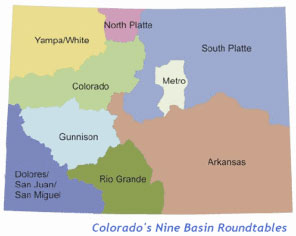
Energy policy — geothermal: The Bureau of Land Management has incorporated public comments for the proposed Chalk Creek lease

A picture named geothermalenergy.jpg

Here’s an in-depth background article about the proposed sale from Joe Stone writing for The Mountain Mail. Click through and read the whole thing. Here’s an excerpt:

The U.S. Bureau of Land Management will address public concerns about the Mount Princeton geothermal lease through a combination of lease stipulations and studies required by the National Environmental Policy Act. In announcing the lease sale, the bureau released an environmental compliance document known as a Determination of NEPA Adequacy which describes issues raised by 278 public comments and how those issues will be addressed.

More geothermal coverage here and here.

2010 Colorado elections: John Salazar profile

A picture named saguachecreek.jpg

From the Colorado Connection (Chris Buckley):

A farmer and rancher from Manassa, Salazar has supported agricultural issues for years. “I used to serve on the Rio Grande Water Conservation District when we fought these big multi-million dollar corporations that were trying to dry up agriculture and move the water to the Front Range,” Salazar said. “It was then I was asked to run for the state legislature, because it was when Governor Owens wanted to run what was called Referendum A. It was a $10 billion bonding authority to build water projects, but nobody talked about where that water was going to come from. We knew for a fact it would be water that would dry up farms and would be moved to the urban areas. I’ve been a strong supporter of protecting agriculture in Colorado and it was shortly after that that my predecessor decide to retire from Congress, so I was asked to run for that seat, and we were just coming off that big referendum win where I led a bipartisan coalition of state legislators across the entire state, and we won that referendum in every single county in the state at the editorial board level, basically.”

One of his biggest accomplishments, he said, is finally helping to secure funding for the Arkansas Valley conduit. It’s a project to provide water to the lower Arkansas valley communities. President Kennedy signed the original authorization back in 1962. “What ended up happening is that was never funded. After 50 years we got that done and I’m very proud of that,” Salazar said.

More 2010 Colorado elections coverage here.

Energy policy — coal: The San Juan Citizen’s Alliance and two other environmental groups plan lawsuit against the Office of Surface Mining over San Juan River mercury levels

A picture named coalfiredpowerplant.jpg

From The Durango Herald (Dale Rodebaugh):

A lawsuit will be supported by a “biological opinion” from the Fish and Wildlife Service regarding the proposed Desert Rock power station, which is now on hold, Eisenfeld said. The study was obtained through a Freedom of Information Act request after it was withdrawn by the Bureau of Indian Affairs for which it had been prepared. Navajo Mine, located one mile southwest of Fruitland, N.M., plans to be the source of coal for the Desert Rock plant. The mine is owned by BHP Billiton. In 2009, the Environmental Protection Agency withdrew its air-pollution permit for Desert Rock for failure to follow through on Endangered Species Act requirements. The biological opinion shows that mercury and selenium pollution from regional coal mining is pushing the pikeminnow and razorback sucker to extinction, Eisenfeld said. “We don’t think the Office of Surface Mining is doing its job,” Eisenfeld said…

The biological opinion sheds a poor light on all coal mining and power plant operations in the region, not only BHP Billiton, he said. Mercury, a powerful neurotoxin, impairs reproduction in fish and accumulates in rivers through emissions and runoff, Eisenfeld said. The Fish and Wildlife opinion found that 64 percent of Colorado pikeminnow in the San Juan River exceed the mercury threshold for reproductive impairment, Eisenfeld said. Forty percent of razorback suckers in the San Juan River also meet contamination thresholds…

Taylor McKinnon, with the Center for Biological Diversity, said the Department of the Interior should not rubber-stamp coal development that its own science says is causing fish extinctions. “At stake are two species of fish, millions of people’s drinking water and one of the West’s loveliest rivers.”

Here’s a release from the Center for Biological Diversity (Taylor McKinnon/Anna Frazier/Mike Eisenfeld/Brad Bartlett):

Conservation and citizen groups today filed a 60-day notice of intent to sue the U.S. Department of the Interior’s Office of Surface Mining for failing to conduct Endangered Species Act consultations prior to authorizing the renewal of an operating permit for the Navajo Coal Mine in northwest New Mexico. The agency was required to consult with the U.S. Fish and Wildlife Service to avoid impacts to threatened and endangered species from the mining of coal at Navajo Mine, its combustion at Four Corners Power Plant and coal-combustion waste dumping.

The Center for Biological Diversity, Diné Citizens Against Ruining Our Environment (CARE) and San Juan Citizens Alliance filed today’s notice, represented by the Energy Minerals Law Center.

The groups’ lawsuit will be substantiated by newly obtained government records showing how mercury and selenium pollution from regional coal development is driving endangered fish in the San Juan River toward extinction. A draft Fish and Wildlife “biological opinion” for the proposed Desert Rock Energy Project concludes that mercury and selenium pollution from regional coal combustion, including from Four Corners Power Plant, would be “likely to jeopardize the continued existence of the Colorado pikeminnow and razorback sucker” — two highly endangered fish species in the San Juan River, a tributary to the Colorado.

“The Department of the Interior cannot simply rubber-stamp the same lethal coal development that its own science says is causing fish extinctions.” said Taylor McKinnon with the Center for Biological Diversity. “At stake are two species of fish, millions of people’s drinking water, and one of the West’s loveliest rivers.”

“The draft biological opinion for Desert Rock provides solid evidence that San Juan River watershed and the continued viability of native species has been severely impaired in the San Juan River because of coal and other energy development,” said Mike Eisenfeld of SJCA. “Recovery of this river and ecosystem is imperative. Downstream communities rely on San Juan River water, and the agencies must take action to reduce and eliminate the impacts from industrial pollution.”

In 2009 the Environmental Protection Agency withdrew its air-pollution permit for the Desert Rock Energy Project, citing the need for completion of Endangered Species Act consultations. The newly released biological opinion was prepared by Fish and Wildlife as part of that consultation, and its “jeopardy” determination is believed to have been a fatal blow to the future of the Desert Rock. Like the Four Corners Power Plant, Desert Rock, had it been built, would have burned coal from the Navajo Coal Mine.

“OSM’s decision to renew operations at BHP’s Navajo Mine without consulting with FWS and addressing the findings of the Desert Rock biological opinion violates the Endangered Species Act,” said Brad Bartlett, an attorney with the Energy Minerals Law Center. “With the ESA consultation demanded by today’s notice letter, BHP’s Navajo Coal Mine will be faced with the same facts that Desert Rock faced in consultation — facts that led FWS to determine that species in San Juan River are in jeopardy because of the toxic legacy being left by the Four Corners’ coal industrial complex.”

“OSM’s permitting decision does not evaluate the hydrological impacts of BHP’s nearly half-century of permanent disposal of over a half-billion tons of CCW at the mine and contribution to mercury cycling in the San Juan environment,” said Anna Frazier, executive director of Diné CARE. “Water is life, water is sacred to the Navajo (Diné) people living in the Four Corners area. Our survival has been dependent on the river for irrigation, for fishing, for watering animals, a place of prayer and offering. The legacy of coal development and waste disposal at the mine threatens our health, our plants and animals, and the very existence of the Diné.”[…]

The Four Corners region near the San Juan River is home to two of the largest and dirtiest coal-fired power plants in the United States — the Four Corners Power Plant and the San Juan Generating Station. A third coal-fired power plant originally proposed for the area, the Desert Rock Energy Project, is now on hold. The BHP Navajo Coal Company’s (BNCC) Navajo Coal Mine is located south of Fruitland, New Mexico. It supplies coal to Four Corners Power Plant and is intended to feed Desert Rock Energy Project if it’s constructed. This complex of coal facilities emits CO2, mercury, selenium and other heavy metals into the air and water, which threaten both human health and the survival and recovery of endangered species like the Colorado pikeminnow and razorback sucker.

Mercury accumulates in rivers through emissions, deposition and runoff. Fish are exposed to mercury through diet; mercury in the water column accumulates up the food chain and primarily affects top predators such as the Colorado pikeminnow. Mercury is a potent neurotoxin that impairs the reproductive health of fish via portions of the brain that regulate the production and timing of sex steroids; therefore it primarily affects survival of offspring rather than directly killing exposed individuals.

Selenium accumulates in rivers through erosion of selenium-rich soils, coal mining and energy development, and emissions and discharges from coal-fired power plants. Fish are exposed to selenium through a selenium-rich invertebrate diet. As with mercury, adult fish with diets high in selenium do not experience mortality themselves; instead, they deposit excess selenium in the yolks of developing eggs. Newly hatched fry from these eggs use the yolk as an energy and protein source; it is at this stage that developmental anomalies occur. The deformities are either lethal or cause the fry to be more susceptible to predators or other environmental stressors.

Fish and Wildlife’s draft biological opinion shows that 64 percent of Colorado pikeminnow in the San Juan River currently exceed mercury contamination thresholds for reproductive impairment; it predicts that number will rise to 72 percent by 2020 with additional pollution. The document also predicts that selenium pollution from agricultural discharges and ongoing coal combustion would cause 71 percent of those fishes’ offspring to be deformed in a way that harms growth, reproduction or survival. Similarly, the opinion predicts that 85 percent of razorback sucker offspring would be deformed by selenium pollution and notes 40 percent of razorback suckers in the San Juan River already meet contamination thresholds for those deformities.

BHP’s Navajo Mine is located on Navajo Nation lands within Chaco Wash, which is connected with Chaco Culture National Park. Beginning in 1971, BHP began accepting approximately 1.9 million cubic yard (“mcyd”) of coal combustion waste (“CCW”) from the Four Corners Power Plant annually for use as “minefill.” CCW consists of fly ash, scrubber sludge and bottom ash. According to the EPA, thousands of pounds of mercury are disposed of in the Navajo Mine annually as minefill.

More coal coverage here.

Rio Grande Basin Roundtable meeting recap

A picture named riograndebasin.jpg

From the Valley Courier (Ruth Heide):

“We are very concerned in the Del Norte area and should be for the whole of the Valley for pollution of our underground water,” Wiescamp said. Wiescamp said a Houston-based firm, Dan A. Hughes, owns mineral rights up San Francisco Creek and may seek permission to drill. Wiescamp said the potential drill site is next to an area drilled in the early 1980’s when an exploratory well was drilled about 4,200 feet. Wiescamp added that Owen Scherzer of Twin Pines Ranch remembered when artesian geothermal water with a temperature of 110 degrees was hit at 4,100-4,200 feet, so it could be possible that exploratory oil and gas drilling could hit underground water sources. “That tells me we are playing with fire,” Wiescamp said. “There’s a lot of our water running underneath … We are very concerned about the punching into our source of water with hydraulic ‘fracking’ chemicals that they use … We just hope they run into a dry hole…

Colorado Division of Water Resources Division 3 Engineer Craig Cotten said he had also been contacted by several people who were concerned about this, and he had been contacted by the drilling company. “The Division of Water Resources doesn’t really have any say in these types of wells unless they produce water,” he said. However, he has contacted the oil and gas commission to recommend precautions be taken during any drilling, should it occur.

Rio Grande Roundtable Board Chairman Mike Gibson said representatives from the oil and gas company came to his office as well. He is district manager for the San Luis Valley Water Conservancy District. Gibson suggested the roundtable board set up a sub-committee, and Wiescamp and others volunteered to sit on it.

More IBCC — basin roundtables coverage here.

2010 Colorado elections: Gubernatorial debate recap

A picture named purgatoireriver.jpg

From The Pueblo Chieftain (Patrick Malone):

On water, Tancredo called for a balance between rural and urban interests in the state. He said conservation is a necessity. Maes said more water storage options are needed, and exploring the leasing of water rights that might deter sales that diminish the fabric of rural areas. He favors encouraging that water be kept in the part of the state where it originates.

Hickenlooper took a global view of water in Colorado. “I understand there are a lot of arguments about who owns the water in Colorado,” Hickenlooper said. “There are thousands of lawyers that make a living on it in court. Metaphorically, I think you could say the waters of Colorado belong to all of Colorado. If agriculture is the muscle of Colorado, water is the lifeblood.” He noted that he appoints the Denver water board. “We have been able to cut the consumption of water by 20 percent in the Denver metro area. If you’re selling millions of gallons of water, you have to replace the water in the pump. I say perhaps what makes Denver Denver is that it’s in Colorado, and that we should make sure every drop of water in the Arkansas (River) stays there. “We import so much of our oil, just think about if we start importing our food. We have to make sure that resource is protected. “We have to make sure that the ones with resources don’t buy off the weakest in the herd. I think by collaborating, we can solve this.”

More 2010 Colorado elections coverage here.

2010 Colorado elections: The Colorado Springs Gazette editorial board endorses Ken Buck

A picture named purgatoireriver.jpg

From The Colorado Springs Gazette:

Buck told the board he would not hesitate to battle anyone in Washington who interferes with Colorado water projects or reasonable economic development efforts. He wants to make it known to the military establishment that El Paso County is military-friendly. He has spent a substantial amount of time in El Paso County and exudes concern for southern Colorado. Vote for Ken Buck, a reasonable, moderate candidate who plans to succeed for all of Colorado.

More 2010 Colorado elections coverage here.

San Luis Valley: Surface and groundwater irrigators face mandatory cutoff November 1

A picture named irrigation.jpg

From the Valley Courier (Ruth Heide):

State Engineer Dick Wolfe approved a presumptive irrigation season of April 1 to November 1, a time period that not only applies to surface irrigators but also groundwater irrigators. “This will affect wells also,” said Colorado Division of Water Resources Division 3 Engineer Craig Cotten. “We haven’t dealt with those much in the past. Usually in the wintertime we put notices in the newspaper asking well owners to shut down, usually artesian wells, during the winter time, but it’s been a voluntary process and this will be a mandatory process…

He said the process actually began with Senate Bill 222, the legislation that established the sub-district concept. It also stated that the state engineer had to establish criteria for setting the irrigation season for Division 3, the San Luis Valley. Wolfe enlisted the help of about 50 folks on an advisory committee to help develop the groundwater rules for Division 3. Those rules are nearly completed. As part of that task, the advisory committee set up a sub-committee to develop an irrigation season policy in conjunction with the state engineer, Cotten explained. Wolfe signed the policy on April 14, after the commencement of the irrigation season…

The policy sets the presumptive irrigation season as April 1 to November 1, but several criteria can be used to adjust that time period, Cotten explained. One factor that Cotten could use to adjust the irrigation season would be the status of the Rio Grande Compact deliveries on the Rio Grande and Conejos River systems. “That’s what we use usually in determining when to shut off the ditches on the Rio Grande right now,” Cotten explained. He added that deliveries are good right now, so that November 1 shut-off will probably hold true for the Rio Grande. On the Conejos system, Colorado is showing a little bit of over delivery in its compact obligations, Cotten said, “so we may let the irrigators run a little bit longer into November on the Conejos…

Another factor that Cotten will consider is the use of historical practices. Some people have historically iced their meadows in the wintertime. Those who would like to continue that practice must go through water court and obtain judicial confirmation of that historical practice. Several people have applied for that judicial confirmation already. Another factor will be winter irrigation of crops such as alfalfa that might require some moisture in a dry winter when there’s no snow on the ground. Cotten may consult with agronomic and irrigation experts to determine if such irrigation would constitute beneficial use for irrigation water. Well owners who plan to do that should contact the water division office. Those will be reviewed on a case-by-case basis…

Cotten said one of the reasons it is important to set an ending date for the irrigation season is so the reservoirs and those with winter recharge water rights know when they can begin using their rights, because their rights are junior to the ditches. “This first year will be a learning experience for everybody,” Cotten said.

More Rio Grande River basin coverage here.

Windy Gap Firming Project: Public meeting October 21 at Silver Creek

A picture named chimneyhollowreservoir.jpg

From the Summit Daily News:

Colorado Wildlife Commissioners Dennis Buechler and Allan Jones will hold a public meeting in Granby to hear concerns from the public on the potential impacts of the proposed Windy Gap Firming Project. The meeting will be held at the Inn at Silver Creek (62927 US Highway 40) 6-9 p.m. Oct. 21…

Review the draft EIS on the plan at http://www.usbr.gov/gp/nepa/quarterly.cfm.

Additional information on the project can be found at: http://www.northernwater.org/ or by calling northeast region public information officer Jennifer Churchill at (303) 291-7234 or jennifer.churchill@state.co.us.

More Windy Gap coverage here and here.

William Bergman (Snake River Water District) receives 2010 Distinguished Board Member Award from The Special District Association of Colorado

A picture named snakeriver.jpg

From the Summit Daily News:

The award was announced at the SDA Annual Conference which was held in Keystone, September 22-24. Bill has been instrumental in supporting policy implementation for the District which pertains specifically to the District’s water rights and future water supply. Bill supports district administrators by striving to keep water rates affordable while encouraging capital projects that increase the quality of service. When asked to share their feelings about Bill, the District staff said, “Bill is a remarkable Board member. His ability to discern a solution, render advice with inflection and simplify a problematic situation makes working with him a pleasure. Under no circumstances does Bill convey judgment or carry a personal agenda into the boardroom. Bill brings a sense of humor into any conversation which incites just the right amount of comic relief into a complex discussion. Bill leads from the wisdom he has obtained throughout a lifetime of legal and business knowledge, service to his community and personal experience.”

More Snake River watershed coverage here.

Should the Colorado National Monument and Dinosaur National Monument be designated national parks?

A picture named lodorecanyonfromdouglasmtnnps.jpg

From the National Parks Traveller (Kurt Repanshek):

Mary Risser, Dinosaur’s superintendent since 2005, answers the question by referring to the nomenclature of the National Park System.

“What they say is a national park contains a variety of resources and encompasses large land or water areas to provide adequate protection of the resources,” notes the superintendent. “A monument is intended to preserve at least one nationally significant resource. It’s usually smaller than a national park, and it lacks a diversity of attractions.

“So, when you look at the definition, Dinosaur would definitely qualify as a national park. When you think about the resources that we have here, you start with the Douglas Quarry, which is the world’s best window into the Jurassic-era dinosaurs, (and) we’ve just found probably one of the world’s most significant cretaceous area dinosaur quarries right across,” continues Superintendent Risser. “We have two of the West’s premier white-water rivers. … and then we have over 200,000 acres of wilderness. I think Dinosaur has features that you find in all the other national parks in the state (Utah).

“We can trace human history for 10,000 years here. It has the most complete geologic record in the National Park System, even more so than Grand Canyon. So it’s just a spectacular place.”

Energy policy — coalbed methane: Two Rivers Water Company inks MOA with Petroglyph Energy to study treating coalbed methane produced water

A picture named nontributarycoalbedmethane.jpg

From TradingMarkets.com:

Two Rivers Water Company, a company focused on acquiring and developing water, farming and alternative energy in southern Colorado, and Petroglyph Energy, Inc., an Idaho corporation, announced today they have entered into a non-binding Memorandum of Understanding to complete a feasibility study for the treatment of produced water originating from coal bed methane production in Huerfano County, Colorado.

More coalbed methane coverage here and here.

H2O Joe takes a ride through the storm drain

A picture named aridethroughthestormdrain.jpg

Here’s an instructional video from the City of Boulder that teaches about the storm sewer system.

Thanks to Loretta Lohman for the link.

More education coverage here.

2010 Colorado elections: The Loveland Reporter-Herald endorses Cory Gardner

A picture named flattops.jpg

From the Loveland Reporter-Herald:

The contest between U.S. Rep. Betsy Markey, a Democrat, and state Rep. Cory Gardner, a Republican, in the 4th Congressional District offers voters what sometimes is only an ideal: good candidates with clearly defined positions, beliefs and differences. We believe that Gardner more accurately reflects the majority of citizens in the 4th District and that he should be elected…

Gardner has won admiration for his work at the Legislature, where he served on the House Agriculture, Natural Resources and Livestock Committee. As the future unfolds across the 4th District, there will be pressure on all levels of government because of expected population growth along the Northern Front Range. It will take a steady and imaginative member of Congress, one with deep roots in the district, to effectively represent this vast area.

More 2010 Colorado elections coverage here.

2010 Colorado elections: The Durango Herald editorial staff endorses Michael Bennet

A picture named mclellanreservoir.jpg

From The Durango Herald:

The former Denver Public Schools superintendent and former business associate of theater and railroad owner Phil Anschutz has been a quick study. Not surprisingly, education has been one of his specialties. But so, too, has been the national economy. Bennet is persuasive when he speaks about the need for a cap on nondefense discretionary spending and the importance of reducing the federal debt to reduce the amount of interest the government pays. On fiscal issues, Bennet has challenged his fellow Democratic party members…Bennet has made several trips through Southwest Colorado and has shown himself to be accessible. Michael Bennet deserves a full term in the U.S. Senate.

More 2010 Colorado elections coverage here.

2010 Colorado elections: The Durango Herald and The Grand Junction Daily Sentinel editorial boards endorse John Hickenlooper

A picture named wetmountainvalley.jpg

From The Durango Herald:

Hickenlooper jumped from an airplane to promote Referendum C, which four years ago gave the state some relief from overly crushing tax reduction, and he has stood soaking wet in shirt and tie for a photographer after trying out a Denver neighborhood swimming pool. Hickenlooper has the business and government background – and the visibility and strength of a good leader – to best position Colorado to emerge from the recession. John Hickenlooper is the best choice for Colorado governor.

From The Grand Junction Daily Sentinel:

He was an oil and gas geologist who was laid off during the energy bust that so devastated the Western Slope in the 1980s. He started a business — Colorado’s first brew pub — that was successful even before Coors Field arrived in the neighborhood. For the past seven years he has been mayor of Denver, a government with a general fund budget of $855 million. And he has presided over massive budget cuts the past few years. Furthermore, he has ideas for job creation and getting the state through the current economic crisis that we believe make sense for Colorado right now…

Hickenlooper has a lengthy list of proposals for economic development and job creation. They include:

—Consolidating small business programs in one state agency.

—Providing small business owners with assistance in accessing the many state programs already available to aid them.

—Working with community leaders throughout the state to boost or establish economic development programs focused on regional needs and attributes, not state ones.

—Using incentives already on the books, as well as new collaborative efforts, to retain, attract and expand existing large businesses. This includes greater recognition of and collaboration with the military institutions in the state.

—Building on this state’s record for entrepreneurship and technological expertise to promote a national and global reputation for Colorado as an innovation state. He asked, “Why not put on the logo of products developed here, ‘Imagined and designed in Colorado’?”

Hickenlooper’s experience in business and as an elected public executive, combined with his ideas for the future, make him the best candidate to lead this state now.

More 2010 Colorado elections coverage here.

Fort Collins: Rocky Mountain National Park public meeting seeking input on possible restoration of Grand River Ditch breach Thursday

A picture named grandriveditchbreechlulucreek.jpg

From the Fort Collins Coloradoan (Bobby Magill):

The federal government sued the ditch owner, Fort Collins-based Water Storage and Supply Co., demanding compensation for the damage. A settlement was reached in 2008. Since then, park officials have been working with Colorado State University to gain a better understanding of the ecology of the area and how to return it to its natural state. The park is now turning to the public to comment on which of the five alternative reclamation plans works best before a final decision is made in late 2012. Those interested in voicing their concerns about the project have until Nov. 1 to do so and can meet with Rocky Mountain National Park officials to discuss the environmental impact of the reclamation process…

The National Park Service’s public meeting on Grand Ditch repairs will be at 7 p.m. Thursday inside the Café Columbine conference room, 802 W. Drake Road, Fort Collins.

More Rocky Mountain National Park coverage here and here.

Yampa River and White River basins: Colorado Trout Unlimited hires a new project coordinator

A picture named yamparivereofmaybell.jpg

Here’s the release from Colorado Trout Unlimited (Randy Scholfield):

Trout Unlimited’s Colorado Water Project today announced the hiring of Brian Hodge as project coordinator for the Yampa and White River basins in northwest Colorado. Hodge will be located in Steamboat Springs.
Hodge will plan and implement habitat improvement projects on key stream reaches in the Yampa and White river basins, with the goal of protecting, reconnecting and restoring trout populations, particularly native Colorado River cutthroat trout. Among other duties, he will work closely with water users, private land owners and agency staff to identify opportunities to improve streams and implement cooperative agreements with irrigators that benefit agricultural operations and fish habitat simultaneously.

Prior to joining TU, Hodge worked as a research assistant with the California Cooperative Fish and Wildlife Research Unit, leading a multi-year fishery resource study of steelhead/rainbow trout in the lower Klamath River basin. He has also served as the fisheries crew leader for the Carson Ranger District, where he evaluated aquatic habitat and fish passage potential on approximately 150 miles of stream. In his work, he has worked extensively with private landowners and irrigators to create positive working relationships.

“We are pleased to have Brian Hodge’s skills and experience on the ground in the Yampa basin,” said Drew Peternell, director of TU’s Colorado Water Project, which works to improve stream flows and coldwater fisheries in the state. “Brian is a gifted biologist and pragmatic problem-solver who has a strong commitment to finding water solutions that benefit both private landowners and fisheries.”

The Yampa and White Rivers are among the last largely undammed river systems in Colorado, but many of their tributaries are fragmented by diversion dams and other barriers and disconnected from the mainstem rivers. Trout Unlimited, a grassroots sportsmen’s conservation organization, is expanding its trout restoration work in several river basins within Colorado, including the Yampa and White River basins and the Upper Colorado River basin.

Moreover, Northwest Colorado is one of the few fishing destinations in the state that does not have a local TU chapter. Hodge will assist efforts to establish a new chapter in Steamboat Springs and hopes to involve the new chapter in river conservation projects.

Asked about his new position, Hodge stated, “I look forward to working with local partners to protect and enhance the fishery resources of the Yampa and White Rivers.”

More Yampa River basin coverage here. More White River basin coverage here.

CWCB launches Colorado’s Flood Decision Support System

A picture named coloradoflooddss.jpg

From email from the Colorado Water Conservation Board:

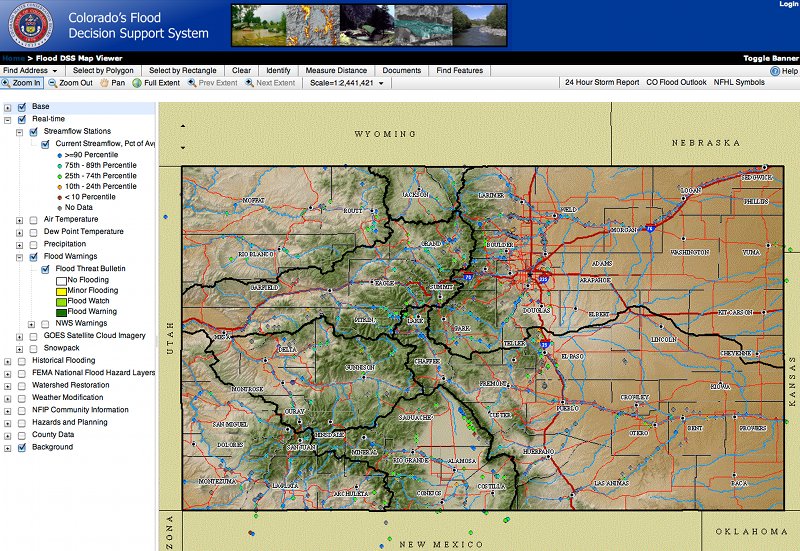
The Watershed and Flood Protection Section of the CWCB is proud to announce the launch of the Flood DSS website. The Flood DSS is a comprehensive map viewing site, created with the goal of bringing together all of Colorado’s flood-hazard and related information. The site includes 3 different map applications: 1) The Flood DSS Map Viewer contains effective FEMA floodplain boundaries, real time weather and streamflow conditions, local and county flood related data, CRS information, historical flood information, and weather modification and watershed restoration data; 2) The Weather Modification site allows a user to review data and assess current snow conditions near weather modification locations, and 3) The Watershed Restoration site allows users to focus solely on information pertaining to watershed restoration activities.

Community officials will be able to access Preliminary FEMA DFIRM mapping products via a password protected section of the site. Officials may request the password from thuy.patton@state.co.us .

The Flood DSS can be accessed directly at http://flooddss.state.co.us, or via a link under Technical Resources on the CWCB website.

Comments, questions, or issues with the site may be directed to Carolyn Fritz.

More CWCB coverage here.

Grand Mesa: The Colorado Department of Wildlife is going to restore the Trickle Park Reservoir fishery

A picture named grandmesa.gif

From the Summit County Citizens Voice (Bob Berwyn):

Colorado Division of Wildlife biologists are preparing to restore the fishery at the popular Trickle Park Reservoir on the Grand Mesa. The project is scheduled for Oct. 12-15. In preparation, the Park Reservoir Company has recently drawn down water in the reservoir to allow for repairs to be made to the outlet structure…

Before the project starts, the Division of Wildlife is encouraging anglers to harvest trout from the pool that has formed in West Surface Creek just below the dam. Anglers must have a Colorado fishing license and standard regulations for take and possession apply.

After the Rotenone application, dead fish will be left to decompose in the water to allow recycling of important nutrients as the reservoir fills.The public is prohibited from harvesting fish killed by the project, and people are asked to stay away from the reservoir while the project is underway.

Otero County: County commissioners approve IGA to allow the Lower Arkansas Valley Water Conservancy District to possibly transfers shares of the Larkspur Ditch

A picture named measuringwithweir.jpg

From the La Junta Tribune:

The agreement stipulates that “Lower Ark is in the process of purchasing individual shares in the Larkspur Ditch Company from Catlin Canal Shareholders, and that Lower Ark may not be able to achieve absolute control of said Larkspur Ditch Company. This Agreement will only apply to the shares of the Larkspur Ditch Company that Lower Ark actually is able to purchase and own.” This transfer is made possible by the validity of the Larkspur Transmountain Decree. In other words, this is Western Slope water being transferred to the Lower Ark, made possible by a previous agreement with the Catlin.

The Catlin Ditch uses very little Larkspur water and can easily supply water to its agricultural interests without the Larkspur. The ditch had fallen into some disrepair during the years it did not have much use, but is now being brought up to good usage condition. The Lower Ark continues to work on seepage issues.

The water from the Larkspur diversion is of a higher quality than other water locally obtained, and is of imminent suitability for municipal use from the proposed Conduit project, which is now moving along rapidly (in comparison with before, when it seemed the impossible dream – completion still looms at least ten years in the future). It is also to be used to freshen the water supply to Lake Minnequa. Larkspur water may not be used out of the lower Arkansas basin, as described in the agreement.

More Arkansas River basin coverage here.

Sustaining Watersheds Conference: Loretta Lohman receives a lifetime achievement award from the Colorado Department of Public Health and Environment

A picture named lorettalohman.jpg

Congratulations to Loretta Lohman. She told her email list last week:

Those of you who have been at the conference know that CDPHE gave me a lifetime achievement award, for which I am most grateful and overwhelmed…For all of you, present or not, I do wish to reiterate my appreciation for all the hundreds and perhaps thousands of volunteer hours many of you put into making the Nonpoint Source Program work. If I’d been forewarned I would have made a list like the nominees for an Oscar. As it was, I had to rely on reciting the names of a few folks I could see around the room…and I know I missed several.

A Coyote Gulch reader pointed me to the Non Point Source Colorado website years back. Their work has been the source of hundreds of articles for posts.

Energy policy — nuclear: Colorado’s new uranium regulations

A picture named uraniuminsituleaching.jpg

From the Telluride Daily Planet (Matthew Beaudin):

In 2008, State lawmakers passed three bills that prompted the changes, and the new rules took effect Thursday. The legislation is aimed at protecting groundwater during in-situ uranium mining, which involves injecting a chemical mixture into a site to draw uranium out. The laws also updated mining fees and pushed for disclosure of more information during prospecting activities. Now, all uranium mines must have detailed environmental protection plans. Applicants for in-situ leach uranium mines have to show the technology they want to use has been used before without harming groundwater quality, and they can’t be in violation at another operation…

From the top down, the rule changes demand a greater environmental attention; new regulations call for more ground water protections and a greater appeals process that affords public appeals of mining decisions for the first time. The new doctrine also outlines water quality testing and mandates the government’s ability to review waste storage. In what may be the overhaul’s greatest win, companies will now have to disclose when, where and how mining operations will occur to ensure the public is fully informed about potential impacts, in addition to notifying the government. Proprietary information such as size of the ore body remains confidential.

More nuclear coverage here and here.

2010 Colorado elections: Proposition 101, Amendment 60 and Amendment 61 potential repercussions

A picture named cheesmandam.jpg

From CBS4Denver.com (Paul Day):

Denver Water operates numerous dams and facilities in 13 different counties. All the public waterworks have been exempt from paying taxes since Colorado became a state in 1876. But that changes if 60 gets passed by the voters. Calculations by Denver Water show the utility would quickly face a $20 million tax bill. To cover the extra expenses, Denver Water says it has no choice but to immediately raise rates by 10 percent for all customers. That’s on top of all the other expenses Denver is facing with replacement of aging pipelines and wildfire mitigation around reservoirs. “You have people drafting a measure that don’t fully understand its impact,” Tate said…

Amendment 61 is also opposed by the Denver Water Board. It beliefs the initiative would hurt the utility’s ability to issue long term bonds. The impact to customers from Amendment 61 would be an additional 7 to 10 percent rate increase over the next 10 years according to Denver Water.

Here’s the Denver Water resolution in opposition to the Amendments.

Here’s an analysis of the measures from Colorado Springs Gazette. From the article:

Opponents say the three would cut a wide swath of devastation across Colorado, imperiling the quality of everything the government does, from fighting crime to teaching children.

More coverage from The Aspen Times (Ivan Moreno). From the article:

The net effect, once fully implemented, would cost the state $2.1 billion in revenue annually and still require an additional $1.6 billion in spending on public education, according to an analysis (pdf) by the independent Colorado Legislative Council…

“It will plunge Colorado into another recession,” said Tom Clark, executive vice president of the Metro Denver Economic Development Corp. “And what will make it so unique in the history of our state is that it will be a voter-approved recession.”[…]

The proposals would force the state to devote 92 percent of its budget on constitutionally required K-12 education funding, leaving little for higher education, human services and prisons and everything else, according to the report…

In Colorado, Amendment 60 would drastically cut school district property taxes between 2011 and 2020 and force the state to make up the difference. Amendment 61 would prohibit the state from borrowing money for public works projects, including school construction — and local governments could borrow only with voter approval and if the debt is repaid within 10 years. Finally, Proposition 101 would cut the state income tax rate from 4.63 percent to 3.5 percent over a period of years. It would cut annual auto registration to $10 per vehicle and exempt the first $10,000 of a vehicle’s sales price from sales tax. And it would reduce telecommunication fees.

Without the ability to borrow, the state would be unable to bond any new construction, improvements or maintenance, the analysts said.

More coverage from the Delta County Independent (Pat Sunderland). From the article:

[Dave Laursen, chairman of Montrose Citizens for Funding Our Future] agreed that it was a mistake to raise revenue for transportation projects by labeling the increase “fees” rather than “taxes,” but said Proposition 101 will take the state back to 1919 rates “when there weren’t many roads in the state of Colorado.” Through that provision of Proponent 101 alone, CDOT’s transportation budget will be reduced by about 25 percent, he said. Specific ownership tax reductions, which are to be phased in over four years, will affect 25 taxing agencies in Delta County, he added. “That’s a $2.7 million reduction for agencies like the cemetery districts, water districts, ambulance district, school, county and cities.” For the ambulance district, [Linda Lowitz, a member of the Delta County Ambulance District board] said, the cut in revenue equates to two paramedics. State grants and state funding would also be at risk, she believes.

[Joe Kerby, Delta city manager] said the City of Delta would see “significant” revenue reductions in the general fund, citywide capital improvement fund and rec center fund. The first year, that revenue reduction would total more than $500,000, he said. By 2014, when Proposition 101 is fully implemented, city revenues will be down nearly $700,000.

And then there is Paul Krugman writing in The New York Times:

We are no longer the nation that used to amaze the world with its visionary projects. We have become, instead, a nation whose politicians seem to compete over who can show the least vision, the least concern about the future and the greatest willingness to pander to short-term, narrow-minded selfishness.

Thanks to NewMexiKen for the link.

Meanwhile from the Salida Citizen (Mike Rosso):

The sponsors of Amendments 60 and 61 and Proposition 101, also known as the “Dr. Evil Initiatives,” had to endure some uncomfortable questioning as well as fines after it was discovered they may have had ties to TABOR author Doug Bruce who has denied any hand in the budget-strangling measures.

Petition proponents for Amendment 60 are Bonnie Sloan of Black Hawk and Louis Schroeder of Greenwood Village. Proponents of 61 are Russell Haas of Golden and Michelle Northrup, also of Black Hawk. Proposition 101 was proposed by Jeff Gross, a house painter from Kersey, Co., and Freda Poundstone of Centennial. Schroeder, Haas and Gross were all ordered to pay fines of $2,000 each by Colorado Administrative Law Judge Robert Spencer after a complaint was filed alleging violations of fair campaign finance and practice laws as they failed to register as issue committees and failed to report financial contributions. The Colorado Court of Appeals received an appeal on July 21 regarding all three cases, and they are set to be heard on October 18.

And now some special districts, including Parker Water and Sanitation District, are considering pre-emptive borrowing with the specter of the “Bad Three” passing. Here’s a report from Carlos Illescas writing for The Denver Post. From the article:

That has districts such as the Parker Water and Sanitation District working quickly to borrow more than $50 million through the Colorado Water Resources and Power Development Authority to build a water-treatment facility. The Parker water board is expected to vote on the issue at next week’s meeting. Mary Spencer, president of the Parker water board, said it makes sense to do it now so that those who pay property taxes will be able to pay off the money over more time, such as 20 or 30 years instead of 10, and the payments won’t be as high. “We as a district are taking the necessary steps on the harmful effects of Amendment 61 if it passes,” Spencer said…

The Thunderbird Water and Sanitation District, a district that serves about 175 homeowners in the Indian Creek Ranch area southwest of Sedalia, is seeking voter approval on two measures to borrow about $875,000 a year.
On average, it would cost a homeowner an extra $300 to $400 a year, or about $30 a month, said David Gaige, vice president of the board. The money would be used to acquire groundwater rights, store the water and distribution costs. Gaige said that when the district board learned of Amendments 60 and 61, it decided that going for it now with less restrictions on the loans was better for all of its residents. “We would have to pay off the loan in 10 years instead of 20 years. That would be that much harder to get approved,” he said. “It puts the burden on the people right now when the people in the future would benefit.”

From email from the Eagle River Water and Sanitation District:

The Eagle River Water & Sanitation District board of directors unanimously approved a resolution advocating voter opposition of Amendments 60 and 61, and Proposition 101, which will appear on the statewide ballot in November. The board stated its strongest opposition to the initiatives and noted the concern being expressed nationally, citing a September 20 New York Times article (http://www.nytimes.com/2010/09/21/us/politics/21colorado.html).

“The best interest of our customers is at the heart of this resolution,” explained board Chairman Bob Warner. “The financial impact of these three measures, separately or collectively, will severely limit the District’s ability to maintain, upgrade, or extend water and sewer services within our boundaries. These ballot measures will impair our ability to continue operating as a sound fiscal steward of public funds, a role in which this board prides itself.”

The Eagle River Water & Sanitation District owns and operates the public water systems which provide a safe and reliable supply of drinking water for customers from Vail to Edwards. The resolution states that the District will not have a practical means of borrowing money to construct and maintain water and sewer lines, wells, or wastewater treatment plants, such as those located in Vail, Avon, and Edwards, which treat sewage in an environmentally responsible manner.

Noting Colorado’s constitutional requirement of balanced government budgets, the board considered specific effects on District customers before passing the resolution. “I’m concerned that if 60, 61, and 101 pass, they force immediate and significant increases in customer service fees,” stated Debbie Buckley, board Secretary, noting that the revenue losses associated with the ballot measures would manifest themselves as immediate 20-25 percent customer rate increases.

Both Amendment 60 and Proposition 101 would result in District revenue losses, as they drastically cut property and vehicle taxes, respectively. Additionally, Amendment 60 would require the District to pay property taxes from which it was previously exempt.

Becky Bultemeier, District Customer and Financial Services Manager, said the likely extreme rate increase is contrary to District operations strategy. “Current District operations were developed to meet customer expectations, maintain stable service fee rates, and provide reliable water and sewer service. The projected rate increases are completely at odds with our financial philosophies, but will be required simply to maintain our basic services and infrastructure.”

The District carefully follows State budget laws, holding annual public hearings for budget approval; the District’s budget expires at year’s end, and any modifications require additional public hearings. Despite careful budgeting, the size and scope of some District projects require borrowing money.

“The District’s ‘growth pays for growth’ philosophy will no longer be feasible under Amendment 61,” noted Bultemeier. “With only a ten-year debt limit, necessary maintenance and upgrade projects will require immediate payment by current customers, despite benefitting future ones, and could double the cost of these projects if payment is required now.”

Before passing the resolution, District directors carefully considered the impacts of the measures according to independent analysis and web-based studies (online at http://www.donthurtcolorado.com).

The adverse impacts of these initiatives would be felt at both the local and state level. The District joins other local entities that have passed similar resolutions in opposition, including Upper Eagle Regional Water Authority, the Towns of Avon, Vail, and Gypsum, Colorado Mountain College, Eagle River Fire Protection District, Beaver Creek Metropolitan District, and Eagle Valley Library District. The District board also noted the range of groups statewide that have voiced opposition, including Colorado Association of Realtors, Associated General Contractors of Colorado, Club 20, Colorado Association of Commerce and Industry, Colorado Association of Home Builders, Colorado Restaurant Association, and numerous chambers of commerce, town councils, religious and professional organizations.

“The passage of any one of these ballot measures would severely and negatively impact District operations and our customers,” Warner noted. “It’s hard to imagine the full scope of the effects if all three passed.”

With early voting beginning October 18, the board urged the community to be informed on the ballot measures by reviewing the 2010 State Ballot Information Booklet, a voter guide better known as the Blue Book (http://www.colorado.gov/cs/Satellite/CGA-LegislativeCouncil/CLC/1200536134742), and encouraged the voters of the District to vote “NO” on all three ballot measures.

More 2010 Colorado elections coverage here.

2010 Colorado elections: Kathleen Curry’s run as an independent is a long shot

A picture named crestedbutte.jpg

From the Aspen Daily News (Curtis Wackerle):

One of her proudest legislative accomplishments, she said, was sponsoring a bill that changed the complexion of the Colorado Oil and Gas Conservation Commission, which oversees the industry. Before the reforms, the commission was comprised of seven members, five of whom were industry representatives, she said. Now there are nine members, three of whom are from the industry. “That was a total shift in how we should regulate [the industry] and that was really a great thing,” she said…

If she is sent back to the Legislature, Curry said she would like to sponsor a bill regarding the Colorado River Compact that would better protect Colorado water interests in the event of a “call” from downstream states. “There are a couple of things we can do to protect our interests in the event of a shortage in [Lake] Powell and [Lake] Mead,” she said.

More 2010 Colorado elections coverage here.
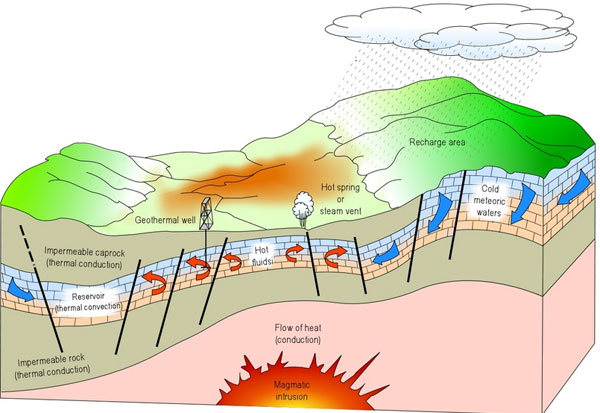
Rio Grande River basin: ‘Rio Relay’ recap

A picture named riograndevalleynearcreede.jpg

From The Pueblo Chieftain (Matt Hildner):

The Rio Relay, put on by the Rio Grande International Study Center in Laredo, Texas, included sampling of the river by students at 52 schools from Creede to Brownsville, Texas. The sampling provided what Jay Johnson CastroCQ, the study center’s director, called a snapshot of the river and will give students a chance to study water quality as part of the curriculum at their schools.

Alamosa High’s advanced placement biology class conducted 11 different tests on their samples, ranging from pH to turbidity and dissolved oxygen…

Based on the testing, the class gave the Rio Grande through Alamosa a grade of C. Montague said one of the main factors keeping down the river’s grade was its low oxygen level, which limits aquatic life. The class found the river was 56 percent oxygenated, while an excellent standard would be above 90 percent. Testing also revealed low levels of phosphates and nitrates, which is surprising Montague said, given that the the valley is an agricultural area and those two are common elements in fertilizer…

Johnson Castro started the relay Tuesday taking samples with a home-school student near Stony Pass, home of the Rio Grande’s headwaters. “It was pretty profound to be there,” he said. The relay, which also made stops in Creede, Del Norte and Antonito, ends next weekend near the Gulf of Mexico.

More Rio Grande River basin coverage here and here.

Wet Mountains: Water levels dropping at DeWeese Reservoir

A picture named wetmountains.jpg

From The Wet Mountain Tribune (Jacque Keller):

The low level of water at Lake DeWeese might seem alarming, but it’s really business as usual. The reservoir company is allowed to take water from the lake until mid-November. According to Dave Luscomb, superintendent of the DeWeese-Dye Ditch and Reservoir Company, the head gates were closed off last Saturday, Oct. 2 because they already took the allotted water while leaving 500 acre feet for the Colorado Division of Wildlife. Another reservoir of 266 acre feet of storage remains in the lake for Round Mountain Water District. Dick Poyner, vice president of the ditch company, said they released 22 cubic feet per second from the dam and by the time it reached the head gate, it was only 15 cfs due to evaporation.

More Arkansas River basin coverage here.

Yampa Valley: Elam Construction gets EPA order to mitigate non-permitted discharge into a wetlands area

A picture named yamparivereofmaybell.jpg

Here’s the release from the Environmental Protection Agency (Monica Heimdal/Richard Mylott):

The U.S. Environmental Protection Agency (EPA) has issued a compliance order to Elam Construction and 4B Land & Livestock, LLC (owned by Scott and Sheila Brennise) for impacts to wetlands at a gravel mining site adjacent to the Yampa River near Craig, Colo. Elam Construction’s and 4B Land and Livestock’s actions were conducted without a required Clean Water Act permit from the U.S. Army Corps of Engineers (Corps).

“EPA is requiring Elam Construction and 4B Land and Livestock to complete projects to compensate for unauthorized mining activities that affected wetlands along the Yampa River,” said Mike Gaydosh, EPA’s enforcement director in Denver. “Those taking actions that impact surface waters and wetlands must secure appropriate permits to protect water resources and the functions they provide.”

In October 2009, the Corps conducted an inspection at the gravel mining site and observed that multiple piles of excavated shale material, as well as a portion of a berm created to keep flood flows out of the gravel pit, had been placed within an area that contained delineated wetlands. The Corps determined the area of impacted wetlands as 0.78 acre.

A mining plan submitted to the Corps on behalf of the parties indicated the intent to mine gravel in the wetlands without the placement of any fill, thereby avoiding the need for a Clean Water Act permit. Subsequent communications from the Corps clearly stated that wetlands existed at the site and that the discharge of dredged or fill material during mining was likely. Elam Construction has had significant experience with the Clean Water Act and the Corps permitting program since 1980, including three prior permits and at least one known prior violation.

EPA’s order requires Elam Construction and 4B Land & Livestock to develop and implement a mitigation plan that compensates for impacts to wetlands. While specific projects have not been determined, EPA may consider proposals to restore, create, enhance or preserve wetlands. Prior to undertaking the work, the respondents must submit the mitigation plan to EPA for approval.

The impacted wetlands adjacent to the Yampa River provided various functions and values including aquatic and wildlife habitat, flood-flow attenuation and aesthetics.

A Clean Water Act permit is required before performing any work that results in discharges of pollutants into rivers, lakes, streams and wetlands. These alleged violations could have been avoided if Elam Construction or 4B Land & Livestock had applied for and obtained a permit from the Corps prior to discharging material into wetlands. Any person planning to do such work on Colorado’s western slope should contact the U.S. Army Corps of Engineers’ Colorado West Regulatory Branch (400 Rood Avenue, Room 142, Grand Junction, CO 81501-2563; telephone: 970-243-1199) before beginning work to determine if a permit is needed.

U.S. Army Corps of Engineers: http://www.usace.army.mil/

For more information on the Clean Water Act, visit EPA’s compliance web page: http://www.epa.gov/compliance/civil/cwa/index.html

For more information about the importance of wetlands in flood control and habitat conservation, visit: http://www.epa.gov/owow/wetlands/

Help EPA protect our nation’s land, air and water by reporting violations: http://www.epa.gov/tips/

More Yampa River basin coverage here and here.

Dust on snow

A picture named dustonsnowsanjuans.jpg

Here’s Part 2 of Mike Horn’s series about the effects on runoff timing and duration from dust on snow events, running in The Crested Butte News. From the article:

Competing interests complicate water resource management, to put it lightly. Recreation is but one use among many, including agricultural and municipal uses. And even within the recreation category, different users, say fly fishermen, have different priorities and “ideal flows” compared to commercial boating operations on places like the Taylor River. All these pursuits have economic weight tied to them as well.

Locally, Frank Kugel, general manager for the Upper Gunnison River Water Conservancy District, is tasked with balancing the needs and wants of many stakeholders who place year-round demands on local water resources. And with climate models projecting runoff losses of 7 percent to 20 percent in the Colorado River Basin due to human-induced climate change, dust on snow doesn’t make Kugel’s job any easier. “We’re very supportive of the research, it’s important we understand the impacts of dust on snow,” said Kugel. “We want to be sure any future water-supply models include dust on snow. “For one example, the Colorado River Water Availability study is a major effort in determining how much water will be available in this basin for current and future needs. And future studies will need to take dust on snow into account,” Kugel concluded.

South Platte Basin Roundtable: September 14 meeting notes

A picture named uppersouthplattebasin.jpg

Here’s the link to the notes.

More IBCC — basin roundtables coverage here.

2010 Colorado elections: The Denver Post endorses John Salazar over Scott Tipton

A picture named coloradocongressionaldistrictboundaries2010

From the editorial staff at The Denver Post:

Salazar has shown an ability to work with people from differing political views to seek solutions that work for the district. In significantly advancing the prospects for a veterans’ cemetery in the Pikes Peak region, Salazar, an Army veteran, has worked with Republican Rep. Doug Lamborn and former Sen. Wayne Allard, and more recently with Democratic Sen. Michael Bennet. He also managed to get a $6 million appropriation for the Arkansas Valley Conduit, which will bring clean drinking water to 40 cities and towns along the 140-mile pipeline. The promise of clean drinking water to these poorer communities was made in the 1960s. It’s about time that promise is kept.

Salazar’s challenger in the race, Scott Tipton, is a conservative Republican and Cortez businessman who lost to Salazar by a wide margin in 2006. Tipton, a state lawmaker who also has deep roots in the district, is knowledgeable about the issues, and touts his private sector experience. He’s clearly qualified for the job.

We just think voters in the 3rd district will be better off with Salazar, a known quantity and reliable voice for the district.

More 2010 Colorado elections coverage here.

Republican River Basin: Arbitrator urges Colorado to accept Kansas’ proposals for compliance pipeline

A picture named republicanriverbasinbydistrict.jpg

Bump and update: From KansasReporter.org (Rachel Whitten):

The day after the Nebraska Cornhuskers routed the K-State Wildcats 48-13, a federally appointed arbitrator favored Kansas in a case where Nebraska tried to contend that monetary damages they paid the Sunflower State should also be applied toward credits for water from the Republican River. Nebraska has been paying Kansas monetary damages after it took more than its share of water from the river that starts up north and In this arbitration case, it wanted the independent arbiter—who is assigned by the U.S. Supreme Court—to rule that the money it paid in damages should also purchase water credits from Kansas. But the arbiter called a flag on the play. “[This] would result in a windfall to Nebraska, allowing accountability for potential future violations to be erased with a single payment for a past violation,” the arbiter wrote.

Update: From KWCH.com (Roger Cornish):

Colorado officials have proposed a compliance pipeline to offset the effects of groundwater depletion on streamflows. The arbitrator ruled in favor of the State of Kansas and against the State of Colorado and recommended further action by the states. The arbitrator agreed with Kansas on a number of details for the pipeline plan and concluded Colorado should adopt most of Kansas’ technical objections to the pipeline plan.

Update: Here’s the reaction from State Attorney General John Suthers via a report from Tony Rayl writing for The Yuma Pioneer. From the article:

“We’re obviously disappointed in the arbitrator’s decision.” Suthers said. “However, it is important to note that the arbitrator recognized Colorado’s fundamental right to proceed with a pipeline to assist in compact compliance, that the proposal provides a reasonable and necessary approach by Colorado, and that Kansas does not have an unfettered ability to block the project. Most of the arbitrator’s decision focused on additional details that she felt should have been included in the proposal. Colorado will continue to work to assure that we comply with the Republican River Compact while protecting the livelihoods and jobs of those living in the basin. I remain optimistic that Colorado and Kansas can reach an agreement on this pipeline to assure this happens.”

Update: More coverage from Tony Rayl writing for The Yuma Pioneer. From the article:

Colorado, Kansas, and Nebraska — the three states involved in the Republican River Compact — now have until November 1 to give notice on whether or they accept the decision. If any reject the decision — and it likely would be Colorado if any of them do — it would enter the appelate court system. Pagel’s decision is non-binding, but it likely sets the tone for any further legal wrangling concerning the pipeline. While Pagel sided with Kansas on nearly every disputed fact brought forth in the arbitration hearing held in July, her final decision made it clear Colorado’s plan to use a pipeline as an augmentation source was reasonable, and she outlined how the sides could come to a reasonable compromise to get the plan approved by all three states through the Republican River Compact Administration (RRCA)…

Another key issue is if Colorado can replace overuse on the South Fork with water delivered to the North Fork. Pagel again recommended a compromise. She agreed the water from the pipeline can go toward determing Colorado’s overall compliance. However, she agreed with Kansas that Colorado still needs to meet the South Fork sub-basin test. She said the arguments presented by Kansas are not unreasonable. The concern is Colorado, over time, will “over-deliver” pipeline water into the North Fork sub-basin in order to build a surplus. That in turn would be a disincentive for Colorado to implement separate compliance measures in the South Fork sub-basin. Pagel concluded there is nothing currently in the pipeline proposal that would stop Colorado from doing so. She suggested the proposal be clarified to limit the amount of augmentation credit applied to the North Fork, and should not allow for overuse on the South Fork until Colorado comes into compliance in that sub-basin…

Pagel finally ruled in favor of Colorado in regards to changes to the accounting procedures with a pipeline in place. She noted the changes were included in the revised resolution in August 2009, and Kansas never identified specific further changes, so its objection lacks merit. Pagel did note that the accounting procedures need to be reviewed in any final agreement to assure consistency…

In the end, Pagel ruled that in general Colorado’s plan is reasonable and a necessary approach to meet compact compliance. She also ruled Kansas has not been unreasonable up to this point in regards to its objections to Colorado pipeline plan, meaning Colorado is not entitled to a recommendation from her that the pipeline proposal should be approved. However, she noted that it should be approved with the changes she recommended, and if Kansas continues to object at that point, it may suggest there is nothing Colorado can do to get Kansas’ approval.

From The Topeka Capitol-Journal:

…the arbitrator [Martha Pagel] urged Colorado to adopt most of Kansas’ proposals regarding construction of a “compliance pipeline” that would offset the effects of groundwater depletion on streamflows that affect the amount of water available downstream in Kansas.

Kansas officials, while encouraged that Colorado is exploring ways to meets its legal obligations under the compact, note that the states have yet to agree on details of the plan…

More information about the Republican River Compact, including the arbitrator’s decisions, is available on the Kansas Department of Agriculture website at www.ksda.gov/interstate_water_issues/content/142.

More Republican River basin coverage here and here.

South Platte Forum October 20

A picture named southplattewatershed.jpg

Here’s the release from Colorado State University (Jim Beers):

The 21st annual South Platte River Forum will be held Wednesday, Oct. 20, and Thursday, Oct. 21, at the Radisson Conference Center, 1900 Ken Pratt Blvd., Longmont. The forum, “High Stakes Games in the South Platte,” will examine issues such as water resources, potential projects and water quality standards in the South Platte basin.

Day one of the forum will include a basin overview and a session on water resources planning. The keynote luncheon on Oct. 20 will include a virtual tour of water projects in the South Platte basin. The Friends of the South Platte Award will be presented to Les Williams, board member of Northern Water and former executive director of St. Vrain and Left Hand Water District.

The afternoon will include a session titled “Deal or No Deal: Project Updates,” which will look at potential water projects around the western United States.

Day two of the forum includes several presentations on nutrient quality standards and how those standards impact agriculture, the environment and urban residents. The keynote speaker on Thursday will be Ann Bleed, former director of the Nebraska Department of Natural Resources, who will discuss life along the South Platte downstream from Denver.

The afternoon session on Thursday is focused on alternatives to transferring agricultural water for municipal purposes.

The South Platte River begins high in the Colorado mountains near Fairplay. It flows through Denver and continues eastward into Nebraska, joining the North Platte River near the town of North Platte, Neb.

The South Platte Forum is sponsored by Tetra Tech, Colorado State University Extension, Aurora Water, Denver Water, Northern Water, Parker Water and Sanitation District, Colorado Water Institute, Metro Wastewater Reclamation District, Colorado Division of Wildlife, Deere and Ault Consultants, U.S. Fish and Wildlife Service, U.S. Environmental Protection Agency, U.S. Bureau of Reclamation and U.S. Geological Survey.

Registration is available at the door for $115 per person. For a schedule of events, visit http://www.southplatteforum.org or contact Jennifer Brown at (402) 960-3670 or Jennifer@jjbrown.com.

More South Platte River basin coverage here and here.

2010 Colorado elections: Roaring Fork Conservancy releases first ever ‘Voters Guide to Water Issues in the Roaring Fork Watershed’

A picture named cascadefallsroaringforkriver06082010

Here’s the link to the guide. Here’s a report from the Glenwood Springs Post Independent (Janet Urquhart). From the article:

The conservancy polled candidates seeking election to six different seats that represent part or all of the Roaring Fork Valley, asking each of them the same two questions (one question has two parts, so there are really three questions) and publishing their unedited responses. The conservancy is not endorsing any candidates, noted Rick Lofaro, executive director, but wanted citizens to hear the candidates’ views in advance of the Nov. 2 election. “Oftentimes, water is not part of the political discussion when candidates are running. It’s often overlooked,” he said. In his introduction to the guide, Lofaro notes that projections show Colorado’s population doubling by 2050 and water shortfalls approaching 600,000 acre feet per year, statewide, by 2030. That shortfall is enough water for 1.2 million families of four for a year, he writes.

More 2010 Colorado elections coverage here.

Colorado-Big Thompson Project: Pinewood Reservoir operations update

A picture named pinewoodreservoirberthoudrecorder.jpg

From email from Reclamation (Kara Lamb):

Work around Pinewood Reservoir that I have been referencing in my last couple of e-mails is well underway.

Truck hauling of the box culverts we will use to replace the open Pole Hill Canal at the top of Pole Hill Road has begun. Attached to this e-mail is a re-issue of the news release announcing the truck hauling. Four to five trucks will be making trips up Pole Hill Road several times a day throughout October to deliver the box culverts.

Residents around and visitors to Rattlesnake Dam at Pinewood Reservoir will also notice we are releasing a little bit more water than normal from the dam. Normally, the dam releases about a half of a cubic foot per second. This week, we are pumping an additional 1.5 cfs of water out of the reservoir to finish the draw down to dead storage. This means the total release is near 2 cfs. Our releases run into Cottonwood Creek. The draw down is necessary to facilitate some maintenance in the Bald Mountain Pressure Tunnel which connects Pinewood Reservoir to the Flatiron Penstocks–the water pipes that carry water from Pinewood down to the Flatiron Power Plant.

Meanwhile the Northern Colorado Water Conservancy District is working in the channel between Grand Lake and Shadow Mountain Reservoir on the west side of the project. Here’s a report from Tonya Bina writing for the Sky-Hi Daily News. From the article:

Built 65 years ago, the dam and bridge at the entrance to Grand Lake maintains the natural lake’s water level per federal guidelines to within 12 inches of the high water line when Shadow Mountain Reservoir, the water body connected to the lake, is lowered. According to Northern, in 1963 the dam structure located between the two bodies of water was modified to allow boats to travel from one lake to the other. Now, updates to the structure are intended to provide more safety features and operational efficiency. Other than new railings to bring the bridge up to code standards, it “won’t look very different,” said Northern spokesperson Dana Strongin.

This year’s rehabilitation project — under construction by the water-projects specialty company Garney Construction of Denver— includes dewatering about 70 feet of the channel by using a flexible membrane to control water on both sides of the bridge structure. Workers will be rehabilitating the bridge, repairing dam concrete and extending the concrete piers. According to Northern, there will also be an additional walkway along the east side of the structure upon project completion.

More Colorado-Big Thompson Project coverage here.

Republican River Water Conservation District board meeting October 14

A picture named republicanriversouthfork.jpg

From The Yuma Pioneer (Tony Rayl):

The board will hold its regular quarterly meeting Thursday, October 14, at the Wray United Methodist Church, 500 Blake St. It will be from 10 a.m. to 4 p.m. Public comment will be at 1 p.m.

Approving the 2011 budget is on the agenda, as is recognizing the appointment of five directors for new terms. Consideration of moving along with the construction of the Compact Compliance Pipeline is on the agenda. Arbitrator Martha Pagel was supposed to submit her decision on the pipeline arbitration on Thursday, October 7. Dealing with various water rights also is on the agenda for the October 14 meeting. For further information concerning this meeting, please contact General Manager Stan Murphy at 332-3552 or email at rrwcd@centurytel.net. The district also has a website at http://www.republicanriver.com.

More Republican River basin coverage here and here.

Republican River Basin: Arbitrator urges Colorado to accept Kansas’ proposals for compliance pipeline

A picture named republicanriverbasinbydistrict.jpg

Update: Here’s the reaction from State Attorney General John Suthers via a report from Tony Rayl writing for The Yuma Pioneer. From the article:

“We’re obviously disappointed in the arbitrator’s decision.” Suthers said. “However, it is important to note that the arbitrator recognized Colorado’s fundamental right to proceed with a pipeline to assist in compact compliance, that the proposal provides a reasonable and necessary approach by Colorado, and that Kansas does not have an unfettered ability to block the project. Most of the arbitrator’s decision focused on additional details that she felt should have been included in the proposal. Colorado will continue to work to assure that we comply with the Republican River Compact while protecting the livelihoods and jobs of those living in the basin. I remain optimistic that Colorado and Kansas can reach an agreement on this pipeline to assure this happens.”

Update: More coverage from Tony Rayl writing for The Yuma Pioneer. From the article:

Colorado, Kansas, and Nebraska — the three states involved in the Republican River Compact — now have until November 1 to give notice on whether or they accept the decision. If any reject the decision — and it likely would be Colorado if any of them do — it would enter the appelate court system. Pagel’s decision is non-binding, but it likely sets the tone for any further legal wrangling concerning the pipeline. While Pagel sided with Kansas on nearly every disputed fact brought forth in the arbitration hearing held in July, her final decision made it clear Colorado’s plan to use a pipeline as an augmentation source was reasonable, and she outlined how the sides could come to a reasonable compromise to get the plan approved by all three states through the Republican River Compact Administration (RRCA)…

Another key issue is if Colorado can replace overuse on the South Fork with water delivered to the North Fork. Pagel again recommended a compromise. She agreed the water from the pipeline can go toward determing Colorado’s overall compliance. However, she agreed with Kansas that Colorado still needs to meet the South Fork sub-basin test. She said the arguments presented by Kansas are not unreasonable. The concern is Colorado, over time, will “over-deliver” pipeline water into the North Fork sub-basin in order to build a surplus. That in turn would be a disincentive for Colorado to implement separate compliance measures in the South Fork sub-basin. Pagel concluded there is nothing currently in the pipeline proposal that would stop Colorado from doing so. She suggested the proposal be clarified to limit the amount of augmentation credit applied to the North Fork, and should not allow for overuse on the South Fork until Colorado comes into compliance in that sub-basin…

Pagel finally ruled in favor of Colorado in regards to changes to the accounting procedures with a pipeline in place. She noted the changes were included in the revised resolution in August 2009, and Kansas never identified specific further changes, so its objection lacks merit. Pagel did note that the accounting procedures need to be reviewed in any final agreement to assure consistency…

In the end, Pagel ruled that in general Colorado’s plan is reasonable and a necessary approach to meet compact compliance. She also ruled Kansas has not been unreasonable up to this point in regards to its objections to Colorado pipeline plan, meaning Colorado is not entitled to a recommendation from her that the pipeline proposal should be approved. However, she noted that it should be approved with the changes she recommended, and if Kansas continues to object at that point, it may suggest there is nothing Colorado can do to get Kansas’ approval.

From The Topeka Capitol-Journal:

…the arbitrator [Martha Pagel] urged Colorado to adopt most of Kansas’ proposals regarding construction of a “compliance pipeline” that would offset the effects of groundwater depletion on streamflows that affect the amount of water available downstream in Kansas.

Kansas officials, while encouraged that Colorado is exploring ways to meets its legal obligations under the compact, note that the states have yet to agree on details of the plan…

More information about the Republican River Compact, including the arbitrator’s decisions, is available on the Kansas Department of Agriculture website at www.ksda.gov/interstate_water_issues/content/142.

More Republican River basin coverage here and here.

Restoration: Volunteers needed for Eagle River watershed improvement projects

A picture named eagleriver.jpg

From the Vail Daily:

This fall the Eagle River Watershed Council is back working in the Eagle River at Edwards. The purpose of the work is to restore the health of the river in this 1.6-mile stretch, making it run colder, faster and deeper during low flow — and creating a better habitat for fish. The council has several volunteer-based projects that will make a big impact on the river health.

The first project is to revegetate the newly reconfigured banks of the river, which had lost their vegetation to cattle grazing. Vegetation holds the banks, preventing erosion and shading the river, which makes the water cooler. As leaves and branches fall into the water, they create hiding places for fish and food for the bugs the fish eat.

The council needs teams to create “willow wattles” which will be staked in place on the river banks. Wattles are 16- to 19-inch bundles of willow branches, about 7 feet in length, stuffed with willow trimmings and wrapped with twine. The stakes will be made from dormant willows which will take root and produce willow plants next spring. The council needs lots of volunteers to create more than 700 wattles before the end of October. It also need volunteers to harvest 225 cottonwood branches, which will also be planted in the banks for the same project. If you would like to join a group to work down by the river, we have the following volunteer dates planned: Oct. 6, 9, 12, 17, 19, 20, 23, 26 and 27…

The council also has a done-in-a-day project on Friday, Oct. 8, with the U.S. Forest Service on Red Dirt Creek, a tributary to the Colorado River. The purpose of this project is to revegetate cattle grazing impact that has threatened a fragile population of Colorado cut throat trout that inhabit the degraded creek. Volunteers will plant willows and trees, relocate roses and create willow bundles. The Forest Service will pick up our volunteers at the Dotsero parking lot at 8 a.m. for a 45-minute drive up the Colorado, then west, to the project. Volunteers will leave the site at 3:30 p.m. There are five volunteer slots available.

Ever caught hundreds of fish in one day? The Watershed Council will be electrofishing on Gore Creek and the Eagle River with the Colorado Division of Wildlife today, Wednesday and Thursday. The council monitors impacts on water quality in Eagle County’s rivers, but also wants to know how the fish are dealing with these varied impacts. The fish collected are counted, weighed and measured, then returned to the stream. Volunteers wading in the river net fish and deliver them to the fish biologist’s holding tank. These positions are almost filled, but we can put you on a waiting list.

To become an Eagle River Watershed Council volunteer, contact the council’s office in Avon at 970-827-5406 or e-mail volunteer@erwc.org. Learn more about the projects on the council’s website http://www.erwc.org.

More restoration coverage here.

Arkansas Valley Conduit update

A picture named pipeline.jpg

From The Pueblo Chieftain (Chris Woodka):

The conduit could serve more than 40 communities from Pueblo to Lamar. The largest eight are St. Charles Mesa Water District, La Junta, Lamar, Las Animas, Rocky Ford, May Valley, Fowler and Crowley County. They will meet today with the Southeastern district to discuss the next steps in the project…

[Jim Broderick, executive director of the Southeastern Colorado Water Conservancy District] said the local communities are enthusiastic about moving the project ahead, and are concerned about costs, but realize there are possibilities for partnerships. “The cost factor is a surprise,” Broderick said. “When you combine all of the things that are involved, the costs are favorable to getting this accomplished.” The estimated cost of the conduit several years ago was $300 million, and a state loan of $60 million was obtained for 20 percent of the cost. The federal legislation signed by President Barack Obama provides a 65-35 federal split, with revenues from excess-capacity contracts with Reclamation — such as Southern Delivery System, Aurora storage and the Southeastern district’s proposed master contract — paying part of the costs. One of the purposes of today’s meeting is to go over cost estimates and ranges, Broderick said.

While preliminary studies of the conduit indicate there would be a gap between current supplies and future needs, they do not identify how additional supplies would be acquired. [Dale Mauch, a farmer who supports the Arkansas Valley Super Ditch] said that could be an opportunity for farmers. “People ask me why I’m on this bandwagon to support the Super Ditch when I don’t want to lease my water. It’s just that I don’t like the circumstances now, but those circumstances can change if we get drier. It could change in a hurry,” Mauch said. “It’s amazing how everything is all tied together, and it all revolves around water.” Mauch pointed out that some of those who farm in the Lower Arkansas Valley also are served by water districts that provide domestic water and could benefit from the conduit.

More Arkansas Valley Conduit coverage here and here.

2010 Colorado elections: U.S. Senate debate recap

A picture named pikespeak.jpg

From The Pueblo Chieftain (Peter Roper):

Both men [Michael Bennet and Ken Buck] said they wanted to protect rural water supplies but Bennet made a point of having supported the $5 million budget appropriation to begin work on the Arkansas Valley Conduit, a planned water pipeline from Lake Pueblo to 40 communities down the valley. Congress authorized the project in 1962 but had never appropriated money until this year.

Buck dismissed that to the crowd. “(Bennet) stood up and took credit for a conduit that others had worked on for 10 years,” he said.

More coverage from The Denver Post (Michael Booth):

After Bennet said he was proud to help the Congressional delegation and local leaders secure clean water and protect Arkansas River rights, Buck tried to force Bennet’s opinion on a controversial Northern Colorado reservoir project. Buck supports the plan, Bennet has not taken a position. “He took credit where he wanted to,” Buck said, “But then when he wants to duck an issue like (northern Colorado), he says the federal government doesn’t have any role.”

More coverage from the Associated Press (Kristen Wyatt):

For the first time, the Senate hopefuls also sparred over Colorado water. Buck backed the Northern Integrated Supply Project, a divisive proposal to capture water from the Cache la Poudre and South Platte rivers for a new reservoir north of Fort Collins. Bennet hasn’t taken a position on the project. The two disagreed over the role of the federal government in Colorado water disputes. Bennet said the federal government should stay out of intrastate water disputes, while Buck said, “It’s one of the places the federal government should have a role.”

More coverage from The Grand Junction Daily Sentinel (Gary Harmon):

[Ken] Buck, listed as a supporter of Referendum A, the water-storage measure that sunk a class of Colorado Republicans after it was defeated in 2003, said he remains a supporter of water-storage projects. “We keep sending water out of the state,” he said. “We shouldn’t do that.” The federal government shouldn’t be the only player in water storage, Buck said. Business interests also can play a role, he said.

More 2010 Colorado elections coverage here.

San Luis Valley: Rio Grande Water Conservation District’s first groundwater sub-district meeting recap

A picture named slvdischargerecharge.jpg

From the Valley Courier (Ruth Heide):

The approximately 100 people attending Tuesday’s meeting, plus hundreds more, will be affected in some way by the decisions of the board of managers for the first water sub-district of the Rio Grande Water Conservation District (RGWCD.) Some audience members expressed concern, for example, that if the sub-district’s fees were too high, some farmers might go out of business, have less money to spend with local retailers who would then be negatively affected, or turn to other crops that might create overproduction problems.

Ultimately the sub-district board approved its 2011 budget, the first for the group, that sets the fees farmers within the sub-district boundaries will have to pay next year. The sub-district board will decide within the next few weeks the amount that will be assessed farmers as a variable fee in 2012 so farmers can plan ahead accordingly. The variable fee could be as much as $75 per irrigated acre. Those fees will help make water purchases required by the sub-district management plan and the court to replace injurious deletions to surface water rights, one of the main goals of the sub-district. Other fees will be assessed for operational costs and Conservation Reserve Enhancement Program application expenses.

RGWCD engineer Allen Davey provided a water history lesson about the Valley’s aquifer declines, the most dramatic of which occurred around the time of the 2002 drought. The aquifer experienced some recovery in more recent years. However, Davey said this last year (September to September) the unconfined aquifer, which he has studied for more than 30 years, experienced a decline of 106,000 acre feet. One of the goals of the sub-district is to replenish the aquifer…

Davey also provided cost estimates Tuesday night to give the sub-district board a basis for deciding how much to charge for variable fees. He said groundwater modeling has placed the amount the first sub-district has to replace to senior water rights as a result of depletions from well pumping in the range of 7,000-8,000 acre feet per year, primarily to the Rio Grande…

Sub-district board member Brian Brownell said the variable fee would be set annually, just like the budget. Sub-district board member Carla Worley said the purpose of the sub-district is to restore the aquifer, and once that goal is accomplished, “there’s no point in us existing so that fee goes away … It will probably take us 20 years to get there.”[…]

Rio Grande Water Users Association Attorney Bill Paddock added, “If the sub-district does not comply with the plan of water management, then your well will be shut off.” Colorado Division of Water Resources Division III Engineer Craig Cotten added, “Be very clear about this. The state engineer does have authority to shut down the wells in sub-district 1 if the plan is not workable.”

More Rio Grande River basin coverage here and here.

Energy policy — nuclear: Cotter Corp sues the state over cleanup order at the Schwartzwalder mine

A picture named uranium.jpg

From The Denver Post (Bruce Finley):

The lawsuit, recently filed in Denver District Court, accuses Colorado’s Mined Lands Reclamation Board of abusing its discretion when it ordered Cotter to pump out and treat uranium-tainted water that inspections have shown to be rising toward the rim of Cotter’s defunct Schwartzwalder mine…

At issue is whether state regulators had enough evidence to order the cleanup and impose fines. Cotter is seeking a judge’s order to reverse both of those actions…

The lawsuit is the latest step in a standoff between Cotter and the state. Regulators have moved to increase a $55,000 fine against Cotter for failing to comply with cleanup orders. Since April, they’ve repeatedly ordered Cotter, a subsidiary of San Diego-based General Atomics, to pump and treat toxic water filling the mine along Ralston Creek. The creek, which flows into Denver Water’s Ralston Reservoir, contains uranium at levels far exceeding health standards for drinking water. Cotter in July began pumping contaminated water from surface alluvial ponds along the creek. But the most- contaminated water in the 2,000-foot- deep mine shaft is untouched. Cotter contends the water in the mine shaft is not connected to groundwater. State mining regulators argue that water in the mine is connected to groundwater and the creek.

More nuclear coverage here and here. More Schwartzwalder mine coverage here.

Castle Creek: Hope Mine restoration project is test bed for biochar

A picture named biocharproduction.jpg

From the Aspen Daily News (Andrew Travers):

The effort at Hope Mine could mark a new, carbon-negative approach to reclamation projects on the 23,000 abandoned mines in Colorado’s forests. Carbondale’s Flux Farm Foundation and Axe Trucking are providing technical assistance for the undertaking, which will use biochar to re-vegetate the area and restore soil ravaged by tailings and heavy metals left behind by miners. Biochar is a charcoal-like substance made from heated biomass. It is used to both increase the health of the soil it’s mixed into and to sequester carbon emitted by grass, shrubs and trees…

“Our project intends to show, for the first time, that biochar can be successfully used at scale to reclaim a former mine site,” said Flux Farm director Morgan Williams. “This is a big opportunity for Aspen to make a meaningful contribution to the science of biochar.”

The Hope Mine project is being funded with $90,000 of For The Forest money. The non-profit, founded by former Aspen Mayor John Bennett, for the last two summers also has partnered with the forest service, City of Aspen and Pitkin County to treat and remove trees on Smuggler Mountain hit by bark pine beetle infestation. Bennett said he hopes eventually to process local beetle-killed trees into biochar for local mine reclamation projects — essentially using one forest problem to solve another…

Work on the site begins Sunday, with a volunteer effort launched to coincide with the “10/10/10 Global Work Party,” an outreach campaign by the climate change awareness website 350.org. A geochemist will assist volunteers and Flux Farm’s Williams with laying out 10-foot-by-10-foot “test plots” on the site, trying out various recipes of biochar, compost and other materials in the soil. They have planned seven days of work to follow, including more compost/biochar mixing, treating mine tailings and hydro-mulching.

More restoration coverage here.

Windy Gap Firming Project: Colorado Division of Wildlife public meeting October 13

A picture named chimneyhollowreservoir.jpg

From IStockAnalyst.com:

Bob Streeter and David Brougham, commissioners with the Colorado Division of Wildlife, will hear public comments next week on the proposed Windy Gap Firming Project, which is proposed west of Loveland. The meeting will be 6:30-8:30 p.m. Oct. 13 at Thomas McKee Building at The Ranch in Loveland. The Windy Gap Firming Project is a new, 90,000 acre-foot Chimney Hollow Reservoir that would be built west of Carter Lake. The Northern Colorado Water Conservancy District is the management agency of the project, which is being paid for by Broomfield, Greeley, Longmont, Lafayette, Louisville, Loveland, Erie, Evans, Fort Lupton, Superior, the Central Weld County Water District, the Little Thompson Water District and the Platte River Power Authority.

More Windy Gap Firming Project coverage here and here.

Interbasin Compact Committee August 30 meeting final notes

A picture named ibccroundtable.jpg

Here are the final notes from the August 30 meeting of the Interbasin Compact Committee.

More IBCC — basin roundtables coverage here.

NIDIS Weekly Climate, Water and Drought Assessment Summary of the Upper Colorado River Basin

A picture named usdroughtmonitor09282010

Here are Henry Reges’ notes from yesterday’s webinar. Highlights: Drought in the western part of the South Platte Basin along the Front Range; Warm and dry weather for the next 30 days across Colorado, Utah and Wyoming; Some relief in sight for southwestern Colorado over the next week.

Energy policy — oil and gas: Garfield County gauges resident’s opinions of exploration and production

A picture named derrick.jpg

From the Grand Junction Free Press (John Colson):

The study, called CARES (Community Action for Responsible Environmental Solutions) focused on residents’ awareness of, and concerns about, “any environmental factors that may have a bad impact on human health, or have an impact on the natural world that is bad in the long term for human health and the environments in which people live,” according to an executive summary of the study’s findings. The contractor of the study, Royce Arbour Inc. of Boulder, invited 150 people who made up a cross section of county residents, although only 71 of those ultimately participated, said Royce Arbour President Diana Smith. She explained that the survey was not intended to be a statistical look at “how many people felt this way, and how many others felt that way,” but was meant to produce a snapshot of opinions regarding environmental health in the county.

The full report, which was paid for with a $100,000 grant from the U.S. Environmental Protection Agency, can be viewed on the county’s website, at http://www.garfield-county.com/Index.aspx?page=1304

Concerns about health hazards posed by the natural-gas drilling industry followed, with exposure to benzene from gas wells drilled near homes at No. 5. Benzene is known to cause cancer in humans, and is one of a number of chemicals associated with gas drilling activities. Up next were “chemicals used in hydraulic fracturing of natural gas wells” and the potential of that process contaminating soil, groundwater and drinking water supplies. Hydraulic fracturing, or “frac’ing,” involves the injection of vast amounts of water, sand and chemicals into a well bore to break up deep layers of rock and free up trapped oil and gas reserves to flow to the surface. At No. 7, the respondents noted that “pollution of Colorado River water, used for human consumption, may occur if drilling takes place too close to the river.”

More oil and gas coverage here and here.

Restoration project on the Rio Grande through Alamosa

A picture named riogranderiver.jpg

From the Valley Courier (Julia Wilson):

“The river was broken into small sections and a study that included hydrologic, capacity and floodplain, geomorphology, riparian habitat, and diversion structure analyses were made of each section,” [Mike Gibson, manager of the San Luis Valley Water Conservancy District] said. “Local planning issues were taken into consideration and integrated into the studies. Then the consulting team doing the study and the technical advisory committee were ready to prioritize projects.”[…]

Gibson said the information from the study gave guidance on how to restore the health of the river and provided seven goals:

• Maintaining and/or improving the quality of the water in the Rio Grande River is the first goal set out in the restoration plan.

• Have stream flows mimic a natural stream flow in rivers.

• Implement diversion structures to encourage the best use of the river.

* Protect the channel and 100-year floodplain.

• Maintain or enhance the river for recreational use.

• Lead local groups that support the project in best use improvements.

• Seek funding from state, federal and grant sources.

The projects along the river are all aimed at improving the way the river functions, he said. There will be multiple benefits from the work being done on the local stretch of the Rio Grande River. These benefits include stabilized stream banks, reduced erosion and sediment loading, reconfigured channel, re-establishment of native vegetation (willows), and an improved stream flow.

More Rio Grande River basin coverage here.
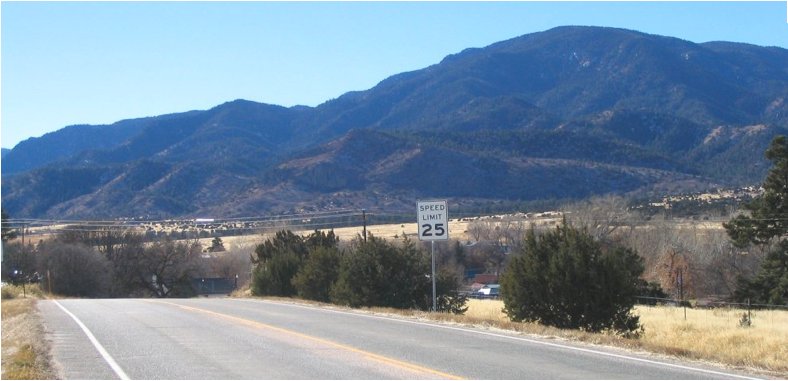
Yuma: Water rates going up

A picture named waterfromtap.jpg

From The Yuma Pioneer (Tony Rayl):

Following a long discussion, the Yuma City Council unanimously approved the first reading of the ordinance setting a new water rate. In keeping with councilmen’s wishes (led by Dan Baucke) to minimize the impact on those on fixed income, the basic rate is being increased only 50 cents, to $8.50 per month for up to 5,000 gallons. The charge for each additional 1,000 gallons per month is going up from 85 cents to $1.25…

Several potential projects are driving rate increase, including a new SCADA system, which controls the water and sewer systems, replacing aging water lines and fire hydrants, and improvements to the water wells and towers, among other potential projects. The extra revenue, which is expected to be about $77,000 annually, will provide reserves for those projects, according to the city, as well as paying about $24,000 from the Water Enterprise to the Electric Enterprise for the electricity used to pump the wells. Even with the increase, the city’s water rates still will be half the average of other northeast Colorado communities.

More infrastructure coverage here.

Restoration: Flushing flows from Windy Gap Reservoir and Lake Granby for Upper Colorado River to begin today

A picture named coloradorivergranby.jpg

From the Sky-Hi Daily News:

The increased flows are designed to restore channel conditions favorable to trout after an August silt removal project by Windy Gap’s owner, Northern Water’s Municipal Subdistrict. The project required lowering the reservoir’s level, which increased sediment flow into the river below the dam. Biologists predict a “flushing flow” beginning Wednesday morning will assist in clearing sediment prior to the brown trout spawn in mid-October.

“Despite taking numerous precautions to minimize the amount of sediment moving downstream of Windy Gap during the silt removal project, some did make its way down,” said Northern Water General Manager Eric Wilkinson. “We’re happy that we have the water available to help improve trout habitat.”

Beginning Wednesday morning, releases from the dam will increase the river’s flow to 450 cubic feet per second. Outflow from the dam will then be stepped down through Friday, returning the river to normal seasonal levels. The Colorado River near Parshall is currently running at approximately 190 cfs.

More restoration coverage here.

2010 Colorado elections: Proposition 101, Amendment 60 and Amendment 61

A picture named spinneymountainreservoir.jpg

From The Durango Herald (Joe Hanel):

Proposition 101 would do much more than put FASTER in reverse. It would cut auto-registration fees to almost nothing, cut the state income tax by nearly 25 percent and eliminate almost all telephone fees and taxes. “The total impact of 101 on the state budget, in a word, it’s devastating,” said Carol Hedges of the Colorado Fiscal Policy Institute.
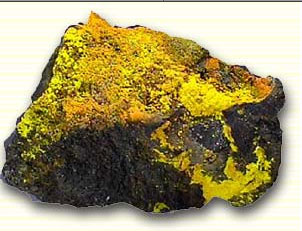
The state income-tax rate now stands at 4.63 percent. Proposition 101 would cut it to 4.5 percent, with 0.1 percent drops every year personal income grows by a certain amount until the tax rate hits 3.5 percent. When fully implemented, Coloradans’ state income tax bills would be nearly a quarter lower than they are now. That translates to $1.2 billion that is currently used for schools, prisons, courts and health care going to tax cuts instead, Hedges said. The first year’s cuts would total at least $130 million in a state budget that is already more than $1 billion in the hole. Local school districts would lose millions of dollars just from the lower car ownership taxes, according to the Bell Policy Center, a left-leaning group…

An average vehicle owner in La Plata County pays $82.06 in ownership taxes per year, plus license fees of $55.70. Proposition 101 knocks the tax down to $1 for used cars or $2 for new cars. License fees would be cut to $10. The county’s three school districts now get $2.7 million from the fee. Under 101, they would share just $39,000. La Plata County’s government would lose more than $1.7 million, and special districts such as fire departments would lose nearly $1.3 million, according to the Bell Policy Center. Archuleta County School District 50-Jt would lose more than $500,000, and Montezuma County’s three school districts would share a loss of more than $1.5 million.

Rick Reiter, head of Coloradans for Responsible Reform, chided the sponsors of Proposition 101 and its companion amendments, 60 and 61, for not consulting with anyone at the Legislature, business groups or budget experts before they wrote their proposals. “They just sit in a room. They create this stuff as if it’s magic dust,” Reiter said at a Grand Junction debate on Sept. 11. Reiter leads a coalition the size of which the state has rarely seen – school advocates, liberal groups, Republican leaders, chambers of commerce, water utility boards across the state. The coalition has put together a $5.7 million budget to fight the three measures.

More coverage from Charlotte Burroughs writing for the Cañon City Daily Record. From the article:

“On 60 and 101, we’re projected to take about $131,000 hit the first year,” said finance officer Sonny Barnes during the Florence City Council meeting Monday. “That’s also based on interpretation on Amendment 60, which talks about organizations that have ‘deBruced.’ It depends on if we have to just ratchet down going into next year.” The numbers may change if the city has to go backwards, based on when the city actually “deBruced.” “If we have to go backwards ….., we’re looking at an additional $90,000,” Barnes said.

More 2010 Colorado elections coverage here.