
Click the link to read the article on The Los Angeles Times website (Ian James). Here’s an excerpt:
January 31, 2024
Storms that are moving in from the Pacific are forecast to bring more snow to the mountains starting this week, along with torrential rains in other parts of the state. But most of California’s storms this year have been shaped by warm conditions, bringing more rain and less snow — a trend that experts say is influenced by the current El Niño conditions on top of rising temperatures driven by human-caused climate change. [ed. emphasis mine] After conducting the state’s second seasonal snow survey Tuesday [January 30, 2024], De Guzman noted that most of the storms this year have been warmer, bringing more rain and less snow.
“That rain-snow transition line has been creeping up further and further compared to years past,” De Guzman told reporters. “With a warming climate, we can expect that to be the new norm, where we would tend to see more rainfall where you would have typically seen snow.”
[…]
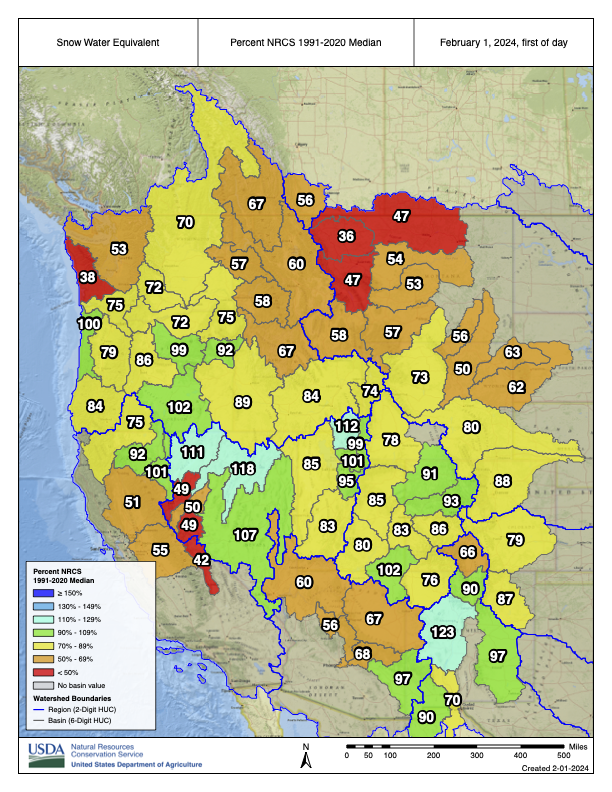
After California began the year with a dismal snowpack that measured just 25% of average, the amount of snow in the Sierra Nevada has grown but remains small for this time of year. As of Tuesday, sensors across the Sierra Nevada showed the snowpack stood at 52% of average for the date, with two months left until the snow usually reaches its peak accumulation around April 1. De Guzman and other officials measured 29 inches of snow at Phillips Station, near South Lake Tahoe. Last year at this time they had stood on more than 7 feet of snow — one of the largest snowpacks on record, which came during a colder winter. California has traditionally relied on the Sierra snowpack for about 30% of the state’s water supplies on average. But scientific research has found that in recent decades, average snowlines have been creeping higher with rising temperatures as more precipitation falls as rain instead of snow. And scientists say the current strong El Niño conditions have brought warmer temperatures, further tilting conditions toward more rain this year.
“Historically El Niño winters weren’t that much warmer than other winters in California, but now they are. That’s climate change,” UCLA climate scientist Daniel Swain said in a webinar.