
Click the link to read the article on the 8NewsNow.com website (Greg Haas). Here’s an excerpt:
May 10, 2024
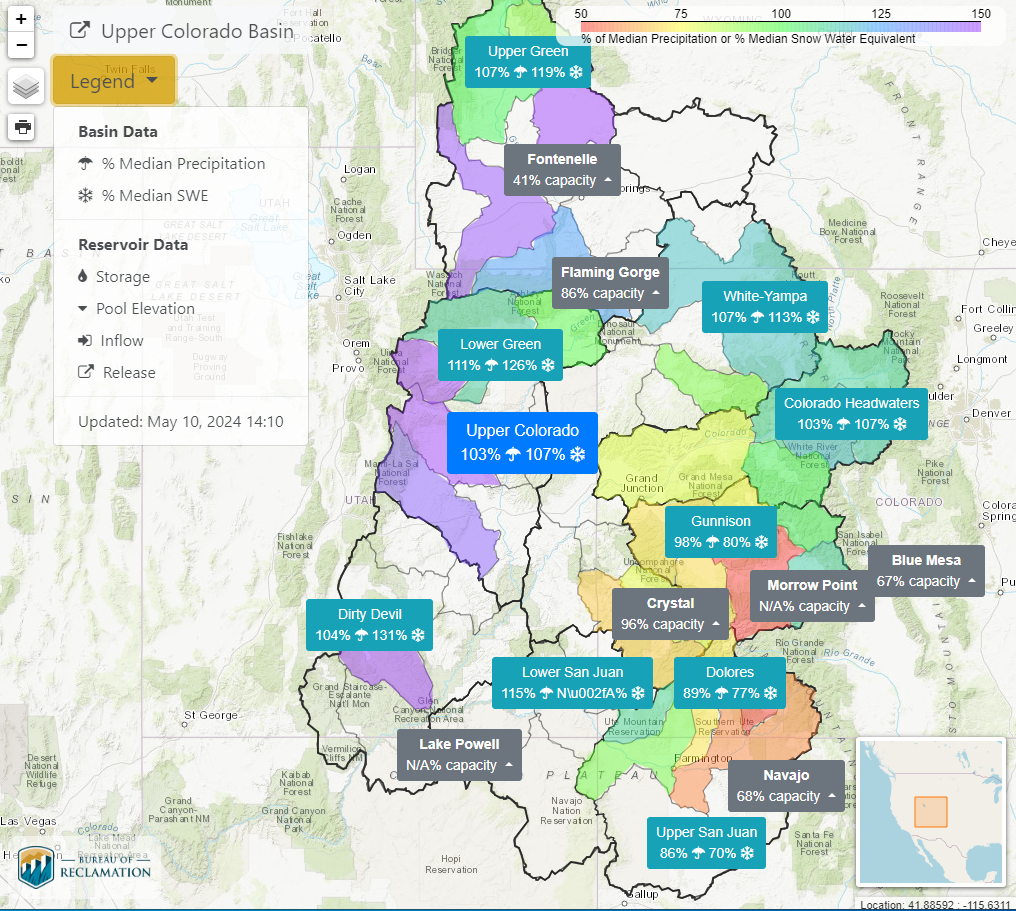
A late-season bump from storms in the Colorado Rockies has boosted snowpack levels, helping the region rebound after levels fell below normal at the end of April. That’s important for Las Vegas, which depends on the Colorado River for 90% of its water. Snowpack is currently at 107% of normal in the Upper Colorado River Basin, up from just 89% on May 1. On April 1, typically the peak for snowpack levels, data showed the amount of water stored in the snowpack at 111% of normal.
Separately, Northern Nevada counties got some good news as the U.S. Department of Agriculture said Lake Tahoe would fill for the first time since 2019. The Nevada Water Supply Outlook Report showed snowpacks in the eastern Sierra Nevada far above normal levels for the second consecutive year. Most key reservoirs in Northern Nevada are expected to fill this year. The dramatic snow levels in the Sierra Nevada last year erased a two-decade megadrought in that region, according to a report by The Associated Press.
That won’t have any impact on Southern Nevada, where 90% of the water used comes from the Colorado River. The weather that has the greatest effect on the Las Vegas valley’s water supply happens hundreds of miles away. Lake Mead had fallen to 35% of capacity as of Thursday, according to data from the U.S. Bureau of Reclamation. Water from snowmelt in parts of Colorado, New Mexico, Utah and Wyoming feeds the flow of the river as it makes its way to Lake Powell. From there, water flows down the Grand Canyon and into Lake Mead.