
From email from Pete Kolbenschlag:
The West’s public lands are an iconic and a cherished asset that belong to all Americans. They are also deeply rooted in the practicality of place, in the agricultural and hardscrabble ways of the West’s rural towns and far-flung communities. Public lands have been established over decades, and are still enduring now, as a public asset.
Public lands are an especially American legacy, founded in an anti-nobility tradition as an investment in the nation and in our shared future. These lands are part of the character and history of those who live here, and few would easily give them up. Still, there is also another legacy that continues to this day that runs contrary to all that. Privatizing the public domain has been on the to-do list of robber-barons and others for over 100 years.
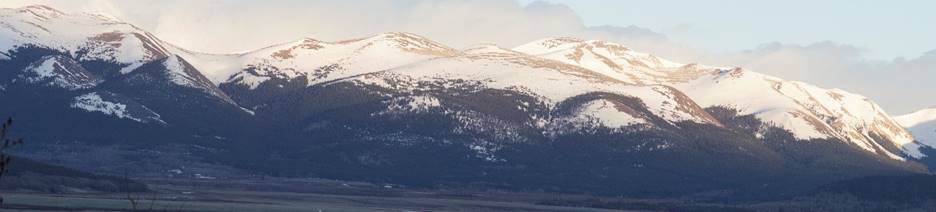
Public lands provide ecological services, like ensuring a good water supply, making our businesses, farms, communities and lives here possible. But few would say that the management of public lands has not been fraught with problems, resources often neglected, policy captured by industries and interests it is meant to regulate.
Too often those with a narrow and self-interested agenda hide behind the well-founded misgivings people have about how public lands are managed. Most recently it is the State of Utah as stalking horse, advancing a court challenge that seeks to undermine the very foundations of America’s public lands. According to an alert from Backcountry Hunters & Anglers: “The catch is simply this: the transfer of public lands from federal to state governments is the pathway to streamlined privatization. Despite the State’s adamant claims that it intends to “keep public lands in public hands,” the reality of the matter is that the bar for sale is significantly lower under State control than it is under the current federal management system, which has proven to be very effective at retaining lands in the public domain.”
Westerners who have been around awhile can often see these plays to take the public’s lands for what they are. Often wearing the familiar look of the rural West and pulling on a populist appeal, these ploys serve a specific and narrow set of interests. Many seasoned observers are not surprised to see these same deep-pocketed interests at it again, seeking to turn public lands to their own purposes.
At the start of the 20th Century many large livestock operations, absentee speculators, and fly-by-night operators intent on exploiting the West’s resources wanted the public’s lands turned over to their purposes and to benefit their needs. And those with this agenda have made significant progress at various times, so we know what is at risk. We also know which interests stand to gain the most from taking America’s public assets away: it’s not the public.
This time it’s dressed up in a novel legal argument engineered for the Supreme Court, which is a reason for real concern. But it’s not a new agenda. The motivations and monied-interests behind it are as old as the American West itself. When I first arrived in the West it was the “Wise Use Movement,” which was itself just the Sagebrush Rebellion repackaged. And while the agenda is not novel, the threat this time is significant. Many point to a Supreme Court that has recently favored corporate over community interests. Undemocratic forces that seek to monetize public resources for private gain have strong allies in powerful positions.
Public land agencies evolved from the needs of a growing nation and from on-going conflicts. National Forests were reserved, in the case of the North Fork Valley, to protect downstream- from upstream-agriculture because the headwaters were being poorly managed and overgrazed by sheepherders, impacting fruitgrowers in Paonia. Western range wars were also a thing at the turn of the previous century, and western Colorado saw its share. Public lands management began, in part, to ensure a more equal footing for use of the public’s shared parks, open spaces, and wildlife lands.
The Bureau of Land Management grew out of the grazing service, general land office and other Interior Department agencies. The land office had been administering the Homestead and similar acts, and when the “frontier was closed,” federal lands – which had been seized, secured and opened up with federal treasure (provided mostly by eastern taxpayers) – became a public asset to be managed for broader benefit. Grazing reform, mineral leasing laws, and other rudimentary land management practices were established to protect resources that the public relied on.

Elections matter and America has again chosen its leaders. Now our water, natural resources, and the right to have a liveable climate could all be in the balance, again. Luckily an antidote to the misappropriation of public wealth is also part of the western body politic. In western Colorado we will have a new Congressman and our national public lands will be managed with a different agenda.
Make sure that your government’s representatives and agencies, along with your family and friends, businesses you shop at and customers you serve, all know how important public lands are to you. These places are at the core of the West. Be ready to act. Speak up for your public lands now.
Pete Kolbenschlag is a long-time public lands activist and currently the director of the Colorado Farm & Food Alliance based in Paonia, Colorado.
Mike Lee from Utah and his brother in law Ben Burr from Blue Ribbon Coalition are pushing hard for state controlled public land. It is just a ploy to open more roads in pristine lands and have control over all public lands for the benefit of a few.
James,
Also, conservatives have fostered an irrational hate for the Federal Government since Ronald Reagan was elected.
Thanks for commenting.
John Orr
http://coyotegulch.blog/