Trump administration moves to block public from enforcing environmental protection laws

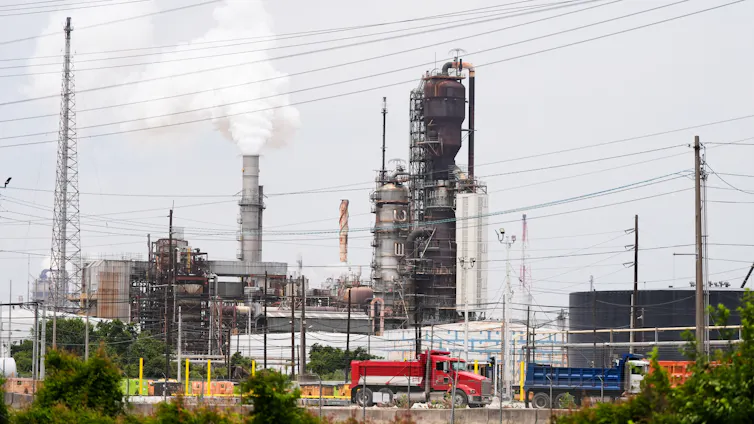
A view of a large industrial building complex.
A citizen-initiated lawsuit under the Clean Air Act forced a cleanup at ExxonMobil’s Baytown, Texas, refinery and chemical complex. AP Photo/Ashley Landis

Sarah J. Morath, Wake Forest University

Reducing rampant pollution across the United States was so important that when Congress passed many environmental protection laws, including the Clean Air Act, Clean Water Act and Safe Drinking Water Act, it didn’t want to leave enforcement only to the executive branch.

Congress specifically wrote into those laws ways for citizens to enforce them through the courts when the government does not act to address the problem. Called “citizen suit provisions,” those parts of the laws allow regular people and advocacy groups to sue companies they believe are violating the law. Citizens can also sue federal agencies that fail to enforce the laws.

Since the 1970s, those provisions have been used in over 2,000 lawsuits. In fact, a majority of environmental cases are citizen suit cases. Citizen suits have been used to halt the construction of dams to protect endangered species, end the injection of wastewater into groundwater, and secure US$14.2 million in civil penalties for illegal emissions from a petrochemical facility. In short, these cases have shaped modern environmental law.

Now, in a legal filing, the Trump administration is saying citizens should not be allowed to enforce environmental laws. Rather, despite what the laws say, the U.S. Department of Justice has claimed in a case involving Elon Musk’s xAI that people should be required to leave enforcement to the executive branch – even if the executive decides to take no action.

A large industrial building complex sits alongside a river.
The Clairton Coke Works in Clairton, Penn., was forced to clean up its emissions and more effectively monitor pollution in a settlement of a citizen suit under the Clean Air Act. Rebecca Droke/AFP via Getty Images

A history of success

For more than 50 years, citizen suits have been an effective part of cleaning up the environment in the U.S. The process is fairly straightforward: A person or group must send a formal notification to the person, company or agency they suspect of violating the law – with a copy to the U.S. Environmental Protection Agency. If after 60 days the problem is not rectified, the people can sue.

Citizen suits often ask the courts to order a stop to the polluting activity, payments for reducing or cleaning up the harm done, and civil penalties paid to the government. But if the government has already begun an enforcement action or is actively prosecuting the violator, a citizen suit cannot proceed.

The success of these cases depends on the ability of the plaintiff to prove a violation of the law. Violations of the Clean Water Act are somewhat easier to prove than violations of other statutes because the simple act of discharging a pollutant without a permit is a violation of the law. As a result, more citizen suit provisions have been brought under the Clean Water Act than under any other environmental statute.

In my area of research, plastic pollution, citizen suits have been used to hold plastic pellet manufacturers responsible for pollution. For example, the citizen suit provision of the Clean Water Act allowed Diane Wilson, a shrimper from Texas’ Gulf Coast, to sue Formosa Plastics in 2017 for persistent discharges of plastic pellets into Lavaca Bay, where some shrimp were caught, and which is connected to the Gulf of Mexico. In 2019, Formosa ended up settling for $50 million to pay for mitigation and remediation projects in the bay, cleaning up plastic and other pollution. Formosa also agreed to pay court costs and attorneys fees.

In another example, the environmental advocacy groups PennEnvironment and Three Rivers Waterkeeper in 2023 sued Styropek USA, which manufactured expandable polystyrene used for packaging and shipping, over pellet discharges into a western Pennsylvania creek. The pellets attracted and collected other toxic chemicals and were harming local aquatic plants and fish. In 2025, Styropek settled for $2.5 million. As part of the settlement agreement, Styropek agreed to install filters in the facility’s wastewater and stormwater systems to capture plastic pellets before they reached Raccoon Creek or the Ohio River. Styropek also had to eliminate the unauthorized discharge of plastic pellets from all of the facility’s stormwater drains.

Citizen suit provisions are not included in every law. But they have arisen in other contexts. For instance, a 2025 Texas state law seeks to restrict abortion rights and allows any citizen to sue doctors or other medical providers who perform or assist with abortions.

A person speaks at a lectern in a public meeting room.
Residents of Southaven, Miss., have publicly objected to the operation of gas-fired turbines to power a data center in their community. AP Photo/Adrian Sainz

NAACP v. xAI

In April 2026, using the citizen suit provision of the Clean Air Act, the NAACP, a nationwide civil rights organization, sued xAI, an artificial intelligence company founded by Elon Musk, in federal court.

The NAACP alleged that xAI and a subsidiary company built and operated 27 natural gas-fired turbines in Southaven, Mississippi, without the required Clean Air Act permits. The turbines generated electricity to power xAI’s nearby Colossus 2 data center. The NAACP alleged that the gas plant released harmful pollutants, such as nitrogen oxides and formaldehyde, which can increase rates of asthma, respiratory diseases, heart problems and certain cancers.

Had xAI applied for a permit to operate the turbines under the Clean Air Act, the EPA would have required xAI to use the best available technology to reduce those emissions. But xAI never applied to the EPA for a permit.

A view across a grassy area of large metal industrial boxes.
Artificial intelligence company xAI operates a data center powered by gas-fired turbines in Tennessee as well as one in Mississippi that’s the subject of an antipollution lawsuit. Brandon Dill for The Washington Post via Getty Images

A request from the federal government

In June 2026, the U.S. Department of Justice asked the judge to dismiss the case, claiming, among other arguments, that citizen suits cannot proceed when the federal government does not oppose the polluting behavior.

The Justice Department’s court filing cited two executive orders signed by President Donald Trump within days of the start of his second term – one declaring a “national energy emergency” and the other seeking to support “American leadership in artificial intelligence.”

According to the Justice Department, the NAACP’s lawsuit threatens “artificial intelligence innovation” and national security. The government’s filing goes on to argue that citizen lawsuits were not intended to allow everyday citizens to enforce laws in ways that go against what the federal government deems is in the public interest.

Instead, the Justice Department claimed, citizen suits should be allowed by the court only when the government fails to enforce the statute, and not when the government has decided that executive branch policy means enforcement action is contrary to the public interest.

A man speaks into a microphone and gestures with his other hand in front of a sign saying 'dirty lie.'
In the late 1990s, Robert F. Kennedy Jr. used citizen suit provisions to force environmental cleanups of industrial pollution in the Hudson River. AP Photo/Rick Bowmer

Conflict between the government and the public

This is the first time the Justice Department has taken this position in court. But defendants and judges have questioned the constitutionality of citizen suits in the past.

Some critics, including the Trump administration, view citizen suits as a way for citizens to usurp the executive branch’s prosecutorial authority. Supporters of the citizen suit provisions, on the other hand, say they allow regular people to exercise their statutory rights to advocate for a clean and healthy environment and enforce environmental laws when the government’s efforts fall short.

Regardless of how the court rules in the NAACP case against xAI, I believe the filing from the Trump administration is another step in a broader effort to consolidate government power in the executive branch.

Sarah J. Morath, Professor of Law and Associate Dean for International Affairs, Wake Forest University

This article is republished from The Conversation under a Creative Commons license. Read the original article.
New report: Data center fees, special trust, sod grass tax on list of options for water funding in #Colorado — Jerd Smith (Fresh Water News)

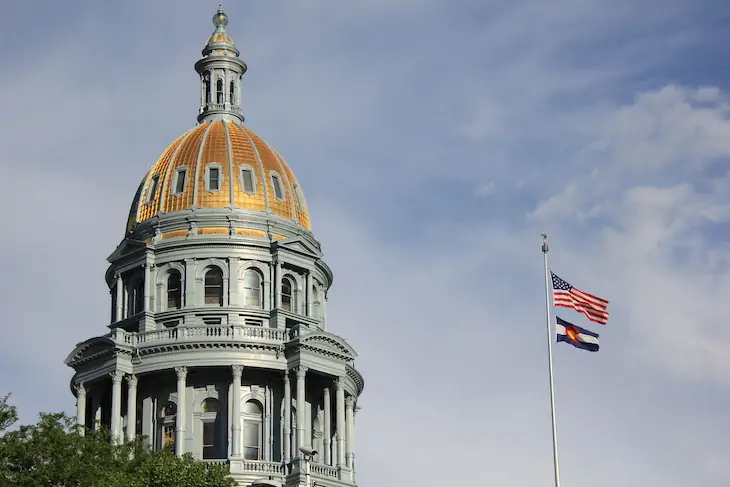
Colorado Capitol. Photo/Allen Best

Click the link to read the article on the Water Education Colorado website (Jerd Smith):

July 30, 2026

Colorado could impose new fees on data centers and renewable energy companies, tax sod grass, or fund a special trust to raise the $20 billion it needs over the next 30 years to ensure it has enough water, as climate change saps streams and shrinks snowpack.

That’s according to a new report issued by a special task force created by Colorado lawmakers last year. Most of the measures the report examined would require action by lawmakers and potentially voters.

Until now, the state has relied largely on severance taxes collected on oil and gas, mining and coal production to help fund water projects, including shoring up old pipelines and dams, funding water-saving initiatives and buying new supplies. 

But those severance tax revenues vary dramatically from year to year and are often diverted by lawmakers to help cope with budget shortfalls. That is a problem that needs to be solved, according to state Sen. Dylan Roberts, a Democrat from Frisco who co-sponsored the legislation creating the task force.

“This report makes clear that Colorado needs a long-term strategy for funding water infrastructure that doesn’t depend almost exclusively on the ups and downs of severance tax revenue,” Roberts said.

Task force members were charged with finding permanent, stable sources of funding that can’t be tapped for other purposes by lawmakers.

“If we could just maintain the funding we have, that would be a start,” said Jim Yahn, a water policy veteran and Logan County commissioner appointed to the task force by Gov. Jared Polis.

The report, produced by the Colorado Water Center at Colorado State University, said the state would likely need several mechanisms to generate the revenue needed, and it cited the success of a 2019 sports betting initiative approved by voters that has generated millions of dollars in tax revenues annually for water projects.

Still, it said, “The gap between the identified need and available funding is a current challenge visible in oversubscribed grant and loan programs, aging infrastructure, and the growing difficulty local governments face in accessing capital for large projects.”

The report cites programs by New Mexico and Wyoming that protect severance tax revenues by placing them in special trust funds that cannot be tapped for other purposes.

Karen Schlatter, director of the Colorado Water Center who led work on the report,  said she is hopeful the findings will provide lawmakers with a set of options they can use in combination to stabilize water funding in the future.

Roberts said it was likely that lawmakers would work on new legislation next year to begin to address long-term funding solutions.

That’s something Yahn, who is the past manager of North Sterling and Prewitt reservoirs in northeastern Colorado, would like to see as well.

“A long time ago the state did something right by creating the revolving loan fund,” Yahn said, referring to a loan pool run by the Colorado Water Conservation Board that water districts can borrow from and whose loan interest payments help finance subsequent loans for other water districts.

“We got loans for our spillways and diversion structures and now we are paying it back in a steady stream that other people can use. But when you sweep it out, we don’t have it,” he said, referring to cash diversions by lawmakers. “The next step would be finding some legislators that would be willing to keep the money where it is. If we could get the ball rolling on that, that would be the next step I would like to see.”

More by Jerd Smith

How severe drought is affecting #Colorado, from record fishing restrictions to threatened power supplies: As water shortage costs farmers and sap reservoirs, ‘We’re all holding our breath to get through this year.’ — The #Denver Post

Click the link to read the article on The Denver Post website (Elise Schmelzer). Here’s an excerpt:

August 2, 2026 

At a meeting of water managers last month, the head of Colorado’s Division of Water Resources compared the state to Mordor — the barren, ash-covered domain of the villain in J.R.R. Tolkien’s “The Lord of the Rings” trilogy. He then flipped through a series of graphs showing streamflow gauges across the state. Each one was at or near record lows.

“The monsoons will help — they will help reduce demand — but they won’t bring storage back up,” state engineer Jason Ullmann told his fellow water officials. “I think we’re all holding our breath to get through this year.”

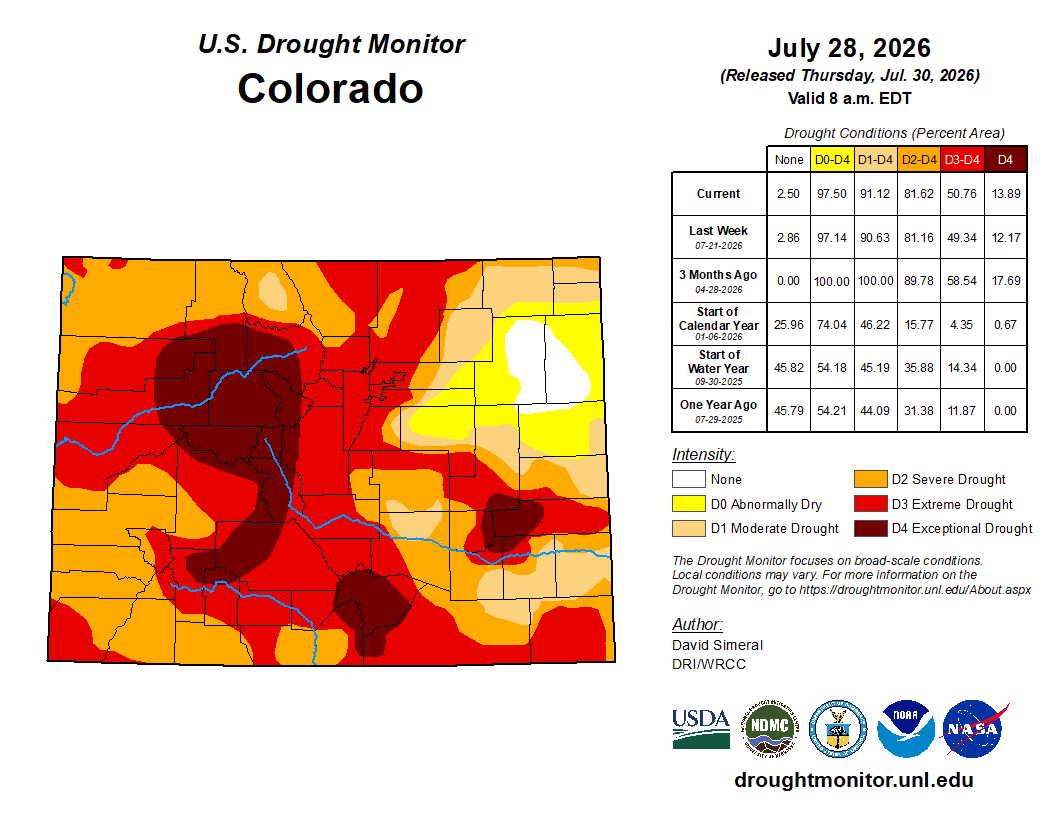
It’s too early to say that this summer’s drought is the worst on record, Ullmann said in a later interview. Heavy rains from the monsoon that arrived in July could alleviate the worst of the suffering — if those come. So far, rain has done little to lift the weight of drought. As it has for months, nearly the entire state is enduring some level of dryness, according to data released Thursday by the U.S. Drought Monitor. It considers half of the state to be in extreme or exceptional drought — the two most severe categories used by the agency. The latest Colorado map barely changed from the one released the week prior…

Colorado Drought Monitor map July 28, 2026.

Beyond the Front Range urban corridor, where many cities and utilities have imposed watering restrictions, the drought has caused millions of dollars in losses to Colorado’s farmers. It’s sapped reservoir storage and hamstrung river recreation — including rafting on many popular stretches of river. It has also spurred new collaborations between water users trying to survive.

The Trump administration’s ‘draconian’ water cuts could gut #Arizona’s #ColoradoRiver supply: Governor Hobbs says the reductions threaten farms, chipmakers and national security as the state weighs its legal options — AZMirror.com #COriver #aridification

CAP Canal. Photo credit: Central Arizona Project

Click the link to read the article on the AZ Mirror website (Caitlin Sievers). Here’s an excerpt:

July 31, 2026

new federal plan released Friday could mean cuts of up to 77% to Arizona’s share of Colorado River water, in the midst of a 25-year megadrought, something that state leaders say would cause catastrophic harm to the state’s economy. 

“Such reductions would devastate Arizona’s water users and its economy,” the Arizona Department of Water Resources said in a statement denouncing the plan…

Water officials in Arizona and the Lower Basin states have criticized the Upper Basin states for their refusal to agree to any federally mandated water usage cuts of their own. While the Lower Basin states insist that every state take their fair share of cuts, Upper Basin states have argued that they’ve never used their full allotment and already face regular cuts and shortages based on physical availability of water. Riley Snow, director of the water law department at Rose Law Group, told the Arizona Mirror that he viewed the Upper Basin’s refusal to take mandatory cuts as a “tragedy of the commons.” 

“I just don’t feel like it’s good policy,” he said. “It’s not good for the Southwest, essentially, especially Arizona (and) California, to not get what they’re entitled to under the compact just because the Upper Basin is in a drought and feeling like they need to hold on to everything that they can.”

[…]

Arizona faces an outsized burden when it comes to reductions because the Central Arizona Project, a series of canals that supplies Colorado River water to the Valley and the Tucson area, is one of the newest users of the river water, making it legally one of the first to be cut. But Snow said now isn’t the time for Arizonans to panic, as the state has prepared for potential Colorado River cuts via groundwater banking and increasing efficiency. Beyond that, 70% of the state’s water goes toward agriculture, where adopting more efficient practices, fallowing land and growing less thirsty crops could make a big difference…

Hobbs said forcing Arizona to take on such devastating cuts will have repercussions across the American economy and national security.

“Arizona provides the agricultural produce, critical minerals, weapons defense systems and cutting-edge semiconductors that feed America, protect America and fuel America’s high-tech economy,” Hobbs said in the statement. “No other state in the Colorado River basin can say the same. We developed the Lower Basin Proposal to increase water resiliency for the region and ensure that no single state was bearing the burden alone.” 

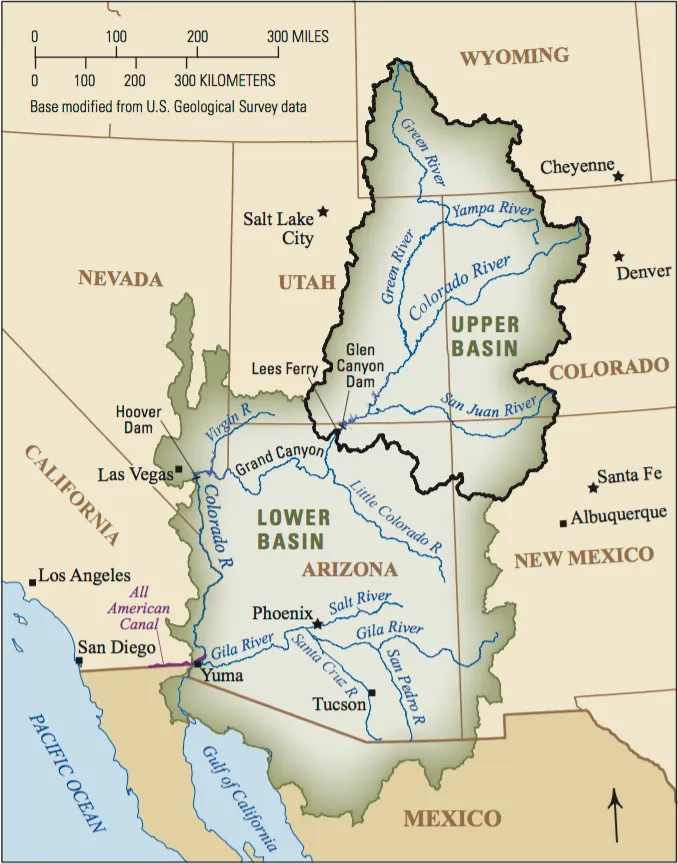
Colorado River Basin. Credit: USGS

New federal plan sets short-term rules for #ColoradoRiver management — #Colorado Politics #COriver #aridification

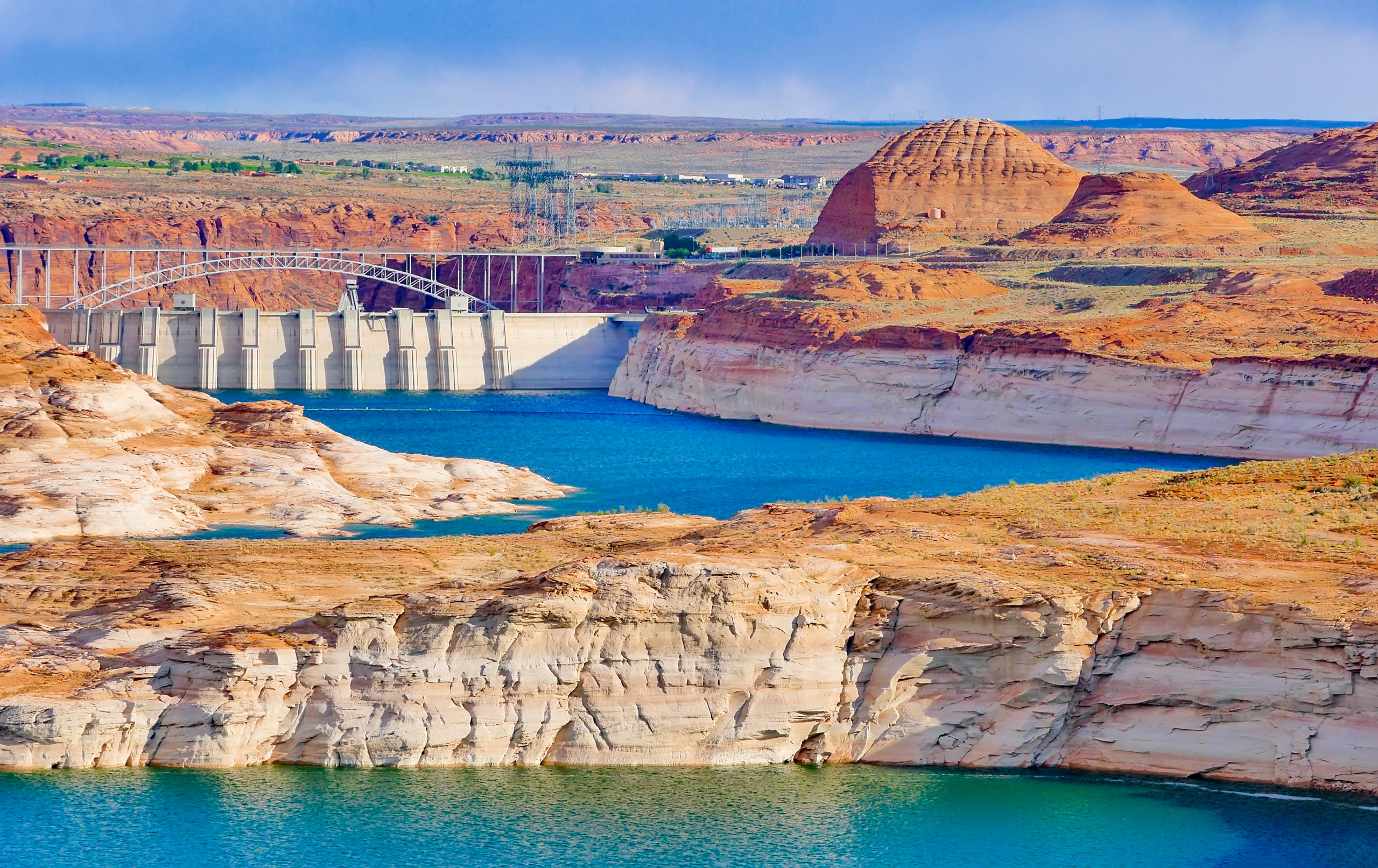
Lake Powell and Glen Canyon Dam. Photo credit: Western Resource Advocates

Click the link to read the article on the Colorado Politics website (Marianne Goodland). Here’s an excerpt:

July 31, 2026

Calling it a balanced approach that offers flexibility and predictability, the plan released by the U.S. Department of the Interior cuts the allocation of Arizona, California and Nevada, while sparing Colorado, Utah, New Mexico and Wyoming for now…Under the plan, the Lower Basin states could face collective cuts up to 3 million acre-feet through 2036, “subject to hydrology,” according to a news release by the Department of the Interior. That’s enough water to serve more than 25 million people a year. The plan would also allow annual releases between 5 and 12 million acre-feet from Lake Powell, the basin’s second-largest reservoir. Under the 10-year federal framework, water management decisions will be made every two years…

Assistant Secretary for Water and Science Andrea Travnicek said in a statement Friday that the plan, known as a final environmental impact statement, “strikes a balance between flexibility and predictability for the Colorado River system that is vital to the 40 million people who rely on it, given unprecedented hydrologic conditions and the potential for considerable impacts on water users.”

Between 2020 and 2024, the average consumptive use in the Colorado River Basin was 13.1 million acre-feet. That is broken down by:

  • Upper Basin: 3.8 million acre-feet (29%)
  • Lower Basin: 6.5 million acre-feet (49%)
  • Mexico use: 1.4 million acre-feet (11%)
  • Evaporation: 1.4 million acre-feet (11%)

At the time the 1922 compact was signed, the seven states had a combined population of about six million — roughly the size of Colorado’s population today…

She said last month that she “has no idea what that process would look like, constantly negotiating every two years.” 

“That would be incredibly difficult,” she said.

The U.S. Bureau of Reclamation released its final environmental impact statement for the post-2026 operating guidelines for #LakePowell and #LakeMead — The #GlenwoodSprings Post-Independent #ColoradoRiver #COriver #aridification

Click the link to read the article on the Glenwood Springs Post-Independent (Ali Longwell). Here’s an excerpt:

August 3, 2026

The plan charts a course for the basin’s next 10 years that could lead to significant water cuts in the Lower Basin and opens up the door for more frequent negotiations…

“The basin is experiencing increased aridity due to climate variability, and long-term drought and low-runoff conditions are expected in the future,” wrote the Bureau of Reclamation in the summary. “These conditions will exacerbate the now widely recognized imbalance between water supply and demand in the basin. Robust and flexible guidelines are needed to manage the Colorado River system and its resources under a broad range of potential future hydrologic conditions.”

[…]

The two reservoirs are currently governed by guidelines established in 2007 that are set to expire this year, and many agree the plan has failed to protect the Colorado River system…The final proposal does not provide specifics for how water will be distributed across the basin, with the Bureau of Reclamation describing it as a “framework” that identifies key triggers and ranges for developing future operating guidelines at Lake Powell and Lake Mead. It sets up a plan to negotiate 2-year operating plans for the reservoirs through 2036…The final statement provides a range of alternatives, including the Bureau of Reclamation’s “preferred” option. Each alternative sets guidelines for how it will reduce or increase annual consumptive water use allocations from Lake Mead to the Lower Basin states; store and deliver water saved through conservation efforts; manage and deliver surplus water; manage activities and make cuts above Lake Powell; and more.

Map of the Colorado River drainage basin, created using USGS data. By Shannon1 Creative Commons Attribution-Share Alike 4.0

Stage 2 fire restrictions rescinded, monsoonal moisture arrives, but #drought remains — The #PagosaSprings Sun #SanJuanRiver #monsoon

Click the link to read the article on the Pagosa Springs Sun website (Josh Pike and Randi Pierce). Here’s an excerpt:

July 29, 2026

Beginning July 22, area jurisdictions began rescinding Stage 2 fire restrictions, with Stage 1 restrictions remaining in effect in much of the area…On July 22, it was announced that improved fire weather conditions and near containment on the Ferris Fire had prompted Bureau of Land Management (BLM) officials to ease fire restrictions and reopen public lands within the Tres Rios Field Office. Effective July 22, Stage 2 fire restrictions were lifted on BLM-administered public lands managed by the Tres Rios Field Office, including Canyons of the Ancients National Monument…On Thursday, July 23, the Archuleta County Sheriff’s Office (ACSO) announced it had, in collaboration with the Pagosa Fire Protection District, rescinded Stage 2 fire restrictions effective immediately…The following day, Friday, July 24, the Town of Pagosa Springs announced it had rescinded Stage 2 fire restrictions effective that day…On Wednesday, July 29, the San Juan National Forest announced it would be rescinding Stage 2 fire restrictions effective 12:01 a.m. Thursday, July 30, on all National Forest System lands…

Colorado Drought Monitor map July 28, 2026.

According to the Community Collaborative Rain, Hail and Snow Network (CoCoRaHS), areas in Archuleta County received from .91 inches to 3.15 inches of rain between July 15 and July 29. Despite the recent rains, the Pagosa Area Water and Sanitation District (PAWSD) remains in stage two drought restrictions, and the area remains in severe drought. According to the U.S. Drought Monitor, 100 percent of Archuleta County remained in severe drought as of July 21, with 1.90 percent of the county — the northeast corner — falling under extreme drought. The week prior, 36.15 percent of the county fell under extreme drought…

According to the U.S. Geological Survey water monitoring gauge at the San Juan River in Pagosa Springs and the Colorado Basin River Forecast Center, although the San Juan has remained at a very low but generally steady level, it did appear to hit record low levels several times over the last week. According to the River Forecast Center, on July 24, the river hit about 19 cubic feet per second (cfs), below the 2002 low of 21. The following day, it hit about 17 cfs, below the 2002 low of 19 cfs. On July 28 at 11:15 a.m., the river was recorded running at 15 cubic feet per second (cfs), 0.5 cfs above the previous record low set in 2002.

Map of the San Juan River, a tributary of the Colorado River, in Arizona, Colorado, New Mexico and Utah, USA. Made using USGS National Map data. By Shannon1 – Own work, CC BY-SA 4.0, https://commons.wikimedia.org/w/index.php?curid=47456307