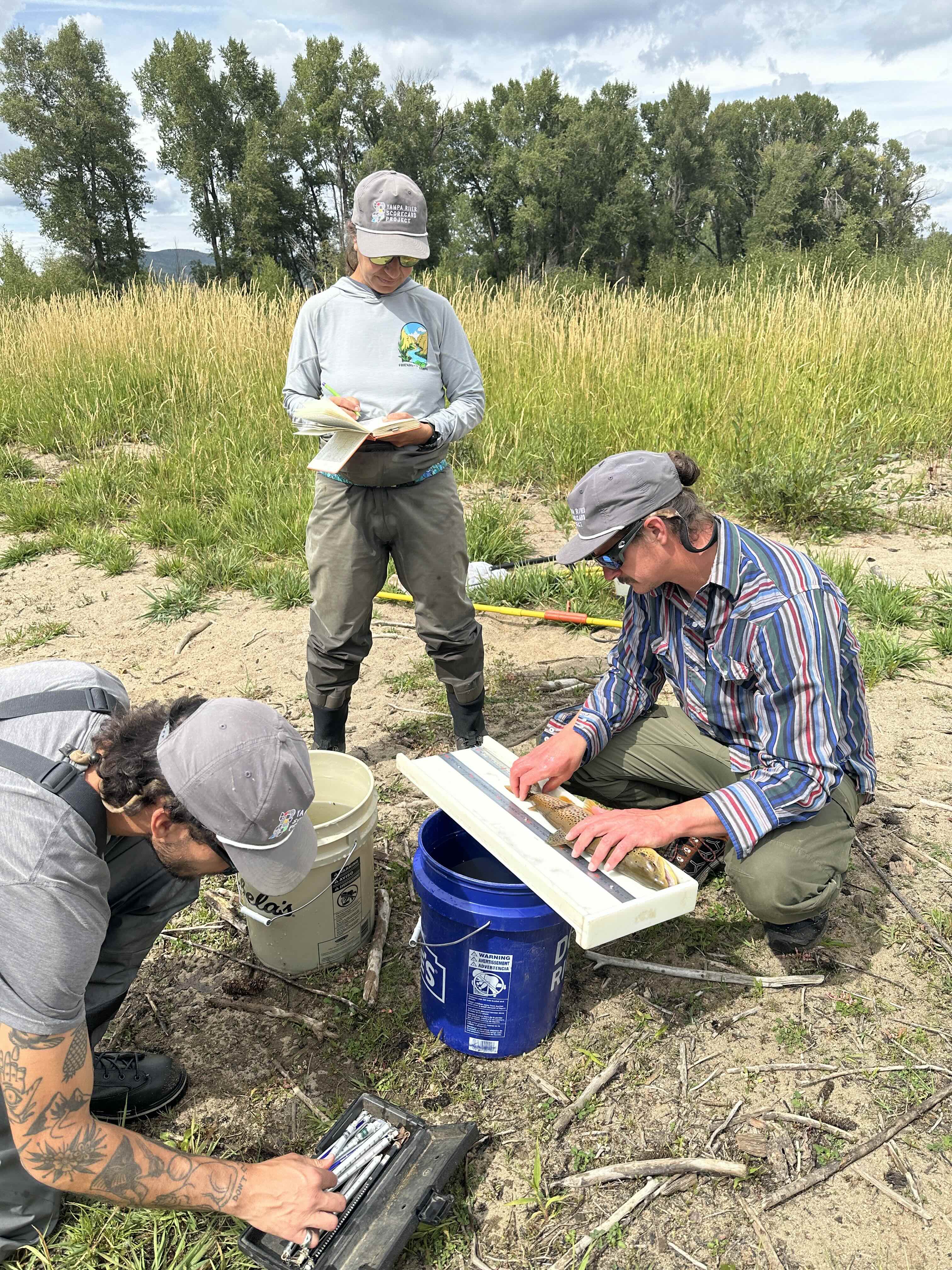
Kim Lennberg from Alba Watershed Consulting, Luke Kimmes from Colorado Mountain College, and John Kemper from Utah State University, collect data on the Elk River in 2025. Photo credit: Friends of the Yampa
Here’s the release from Friends of the Yampa:
July 29, 2026
Results for the 2025 Yampa River Scorecard Project focusing on the Elk River Segment are now available. This segment stretches for about 32 miles from the confluence with the South Fork Elk River to the confluence with the Yampa River. The main stem of the Elk flows through a mixture of private property and the Medicine Bow-Routt National Forest, past Glen Eden and Clark, and through a variety of large working ranches and small private developments. It also passes through the Christina State Wildlife Area, a Colorado Parks & Wildlife fishing easement, before reaching the main stem of the Yampa River east of Milner.
A complex combination of parameters is measured and considered when determining the score for any of the project segments. These parameters include flow and sediment regimes, water quality, habitat and riverscape connectivity, riparian conditions, river form, micro and macro habitat considerations, and the biotic community.
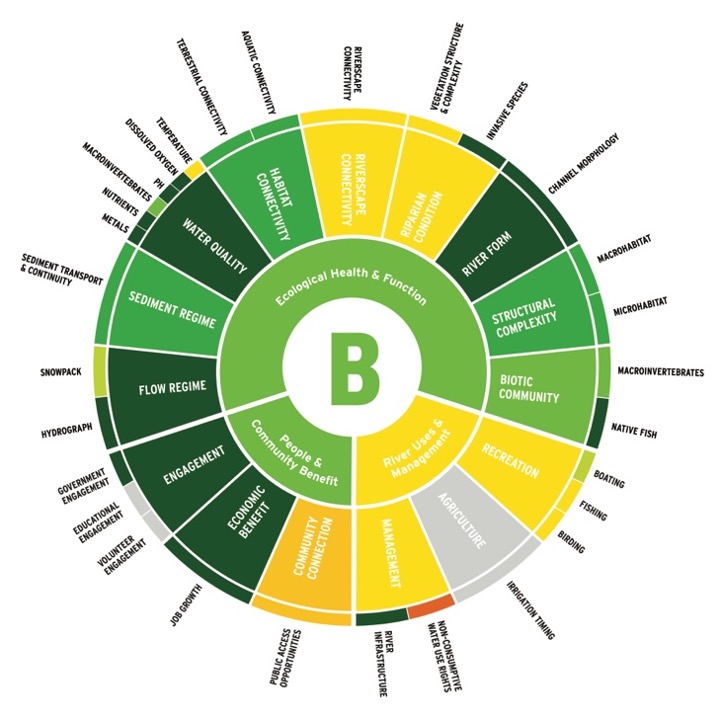
The overall score for the Ecological Health and Function of this segment was a “B.” This represents an overall healthy river. Findings show that this segment should continue to be protected as an example of a well-functioning system that supports both a healthy and productive human community and a relatively natural ecosystem.
Key findings:
Channel morphology largely intact
Limited invasive plant species present
Water quality generally excellent
Some periodic exceedances of temperature thresholds downstream
Bank armoring is the main detrimental factor that negatively influences organisms’ ability to move between aquatic habitat and riparian habitats
Native fish data is sparse and there is widespread and unregulated stocking of non-native fish species
The overall score of “B” refers to the Ecological Health and Function of the Elk River. Other attributes scored included People and Community Benefits and River Uses and Management. Photo credit: Friends of the Yampa
Why Do a River Health Assessment?
The Yampa River Scorecard Project is the implementation of a goal set forth in the Yampa White Green Basin Roundtable “Integrated Water Management Plan.” It is an ongoing river health assessment that will eventually provide data on the health of the Yampa River in its entirety. The goals for this project are to:
1) Provide a source of ongoing data collection related to river health that can document change over time.
2) Improve public understanding of river processes, river use, and river ecosystem services through an engaging public interface that communicates our findings at yampascorecard.org.
3) Provide information related to river health that may be used voluntarily by landowners/land managers to inform river and land-management decisions.
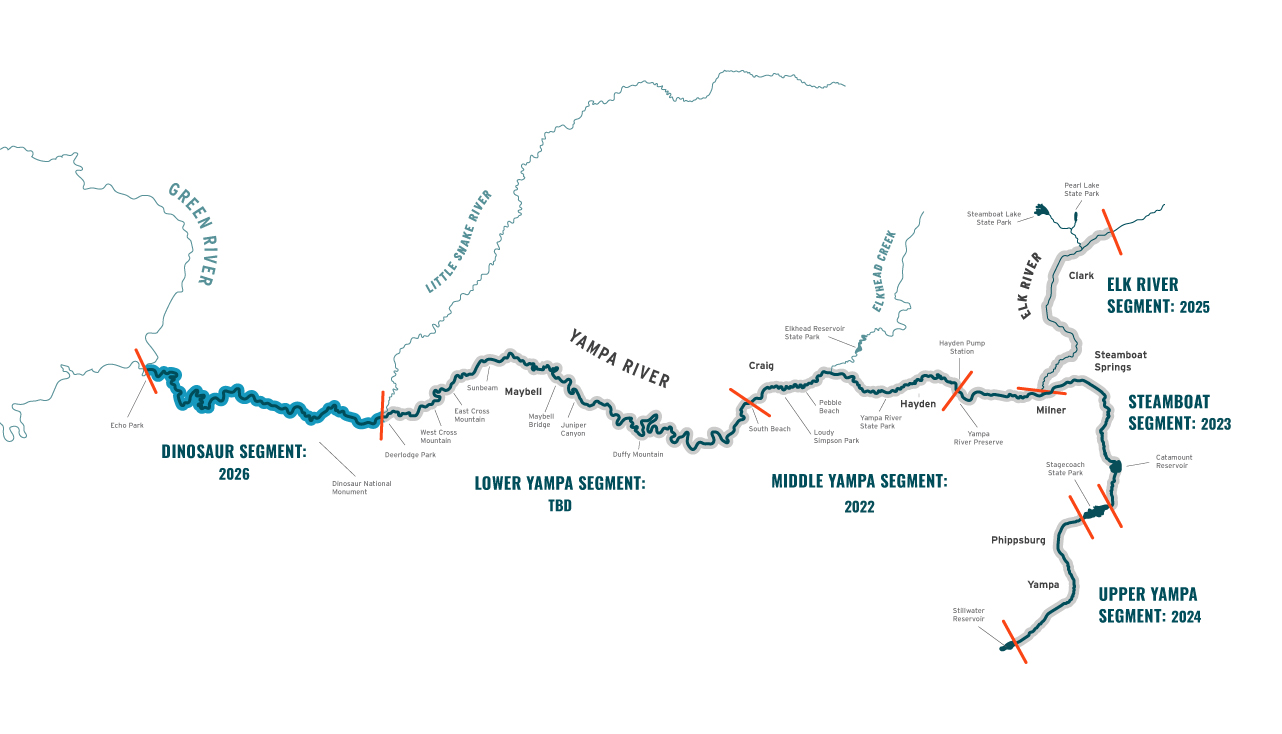
To accomplish these goals, Friends of the Yampa and Scorecard partners have divided the river into six segments. One segment is assessed each year so that after six years, the health of the entire river will be assessed.
The Yampa Basin is divided into 6 focal segments. The year listed is when the majority of the data is collected, and most reports will come out early the following year. Credit: Friends of the Yampa.
As summer temperatures soar across the United States and Europe, cities are being forced to confront the difficult reality that they’re getting dangerously hot.
One way to help cool buildings is to install green roofs – living rooftops covered by plants that can transform heat-absorbing rooftops into cooling solutions.
Chicago offers zoning incentives to encourage developers to build green roofs, like this one on City Hall. Patrick L. Pyszka, City of Chicago
Green roofs have long been promoted as a method to help cities stay cool. Often cities offer developers incentives to install them. But just building a green roof isn’t enough.
My research with colleagues shows that what happens after a green roof is built is as important as the decision to install a green roof in the first place. We found that many green roofs fall into neglect and don’t survive beyond a few years, likely due to the cost of maintenance. When buildings’ operational budgets are cut, landscape elements – including green roofs – are often altered or maintenance is scaled back to save money.
Unlike a traditional roof made of asphalt, metal or tiles, a green roof is made up of layers, including insulation, water proofing and drainage, that allow plants to grow atop the building.
Depending on their design, these roofs can support everything from low-growing sedums to shrubs and trees. Rockefeller Center’s rooftop terrace gardens in New York City were designed in the 1930s to hold trees, grass, shrubs and seating areas to double as parklike respites far above the traffic. The roof of the California Academy of Sciences in San Francisco is fully covered by 2.5 acres of wildflowers, succulents and other native coastal flowers.
The California Academy of Sciences in San Francisco features a green roof with hatches that open to an atrium below. Anna Fox via Flickr, CC BY
Plants absorb sunlight that would otherwise heat up the building below. They also cool the surrounding air through a process called evapotranspiration, in which they release water vapor. Additionally, they can reduce the amount of energy needed for heating and cooling buildings by acting as insulation. Green roofs also capture rainfall and prevent it from reaching storm drains, reducing flood risks and improving water quality in the community.
Because of these benefits, organizations like the European Commission and the U.S. Environmental Protection Agency have promoted green roofs in recent years as a way to reduce urban heat islands, make cities more resilient to extreme weather and improve biodiversity by supporting birds, butterflies and other insects.
The public Transbay Joint Powers Authority built an extensive park and walking path covering the roof of a four-block-long bus terminal in San Francisco. It’s known as Salesforce Park because the company Salesforce, headquartered next door, bought the naming rights. When it opened in 2019, developers estimated it would save $6,500 annually in energy costs. Fullmetal2887 via Wikimedia Commons, CC BY
These programs recognize the public benefits that green roofs can give, but they tend to focus on getting the roofs built rather than on keeping them functioning long term.
Without maintenance, all the work and money invested by builders and the communities can quickly be lost.
What happens to green roofs in the long term?
Most green roof conversations focus on their design: How deep should the soil be? What plants should be used? How much can they cool a building? Less attention is given to what happens to the roof five, 10, or 20 years down the road.
To better understand the long-term fate of green roofs, we studied 46 green roofs across the southeastern United States. Rather than asking how well a newly installed roof performed, we asked whether it was still functioning and being kept up years after construction. The results surprised us.
Nearly half of the roofs were no longer functioning as intended. Nine had been abandoned, with vegetation loss and no maintenance. Twelve roofs had been removed completely. https://www.youtube.com/embed/x037anb3vEY?wmode=transparent&start=0 Even a small, do-it-yourself green roof requires many layers to protect the structure from roots and provide drainage.
Even more interesting was what predicted a green roof’s success, or lack of it.
It didn’t matter whether the green roof had received LEED certification, formally recognizing it as sustainable design, or whether it was owned by a private corporation or a nonprofit. What mattered was whether building ownership had changed.
Every time buildings changed hands, green roofs either ended up abandoned or removed altogether, possibly due to a loss of knowledge about the roof. There is also the issue of cost; people who buy buildings with green roofs may have different budgets or priorities and do not necessarily want to spend the time or money to pay for them.
Larger-scale implication
Green infrastructure requires ongoing monitoring and care.
Plants need to be watered, fertilized and sometimes replaced. Irrigation systems need repairs. Invasive species need to be managed. Drainage layers need inspecting to prevent disastrous leaks that damage the building below. Maintenance on green roofs can cost anywhere from a few cents to over $3 a square foot per year and can be time-consuming depending on whether a roof needs to be weeded and watered by hand.
Without that care, many of the benefits used to justify the original investment can disappear.
The University of Tennessee-Knoxville’s Agriculture and Natural Resources Building has a lush, living roof where students and staff can enjoy nature. Mike McKinney/University of Tennessee
Imagine planting thousands of street trees, then never watering them again. That would be a poor investment. Yet people often assume green roofs will continue working indefinitely after installation without stopping to consider the work involved in keeping them alive.
Our research suggests that this assumption deserves a closer look.
Walter Reed Community Center in Arlington, Va., outside Washington, D.C., features a green roof that helps insulate the building. Arlington County, Va., CC BY-SA
But for green roofs to keep delivering environmental benefits decades after installation, communities may need to think beyond incentives for construction.
Long-term maintenance plans, clear ownership responsibilities and funding for stewardship may prove as important as the installation. Climate adaptation isn’t just about building new infrastructure, but also about making sure that infrastructure can continue to thrive years into the future.
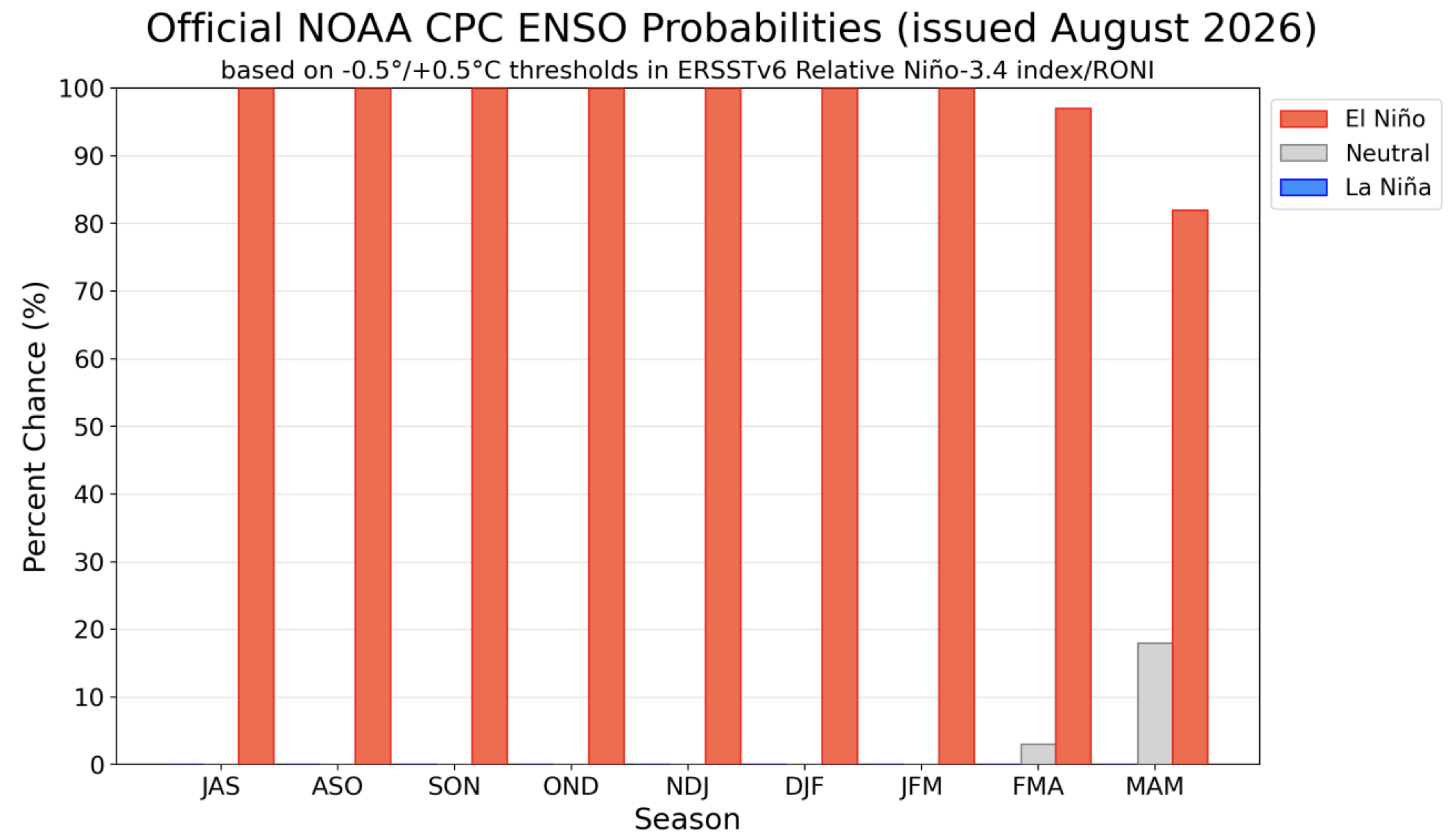
Figure 7. Official ENSO probabilities for the Niño-3.4 relative sea surface temperature index (5°N-5°S, 170°W -120°W) minus tropical mean (20°N-20°S). The relative index is re-scaled to match the variance of the traditional index. Figure updated 13 August 2026. Higher resolution image/table: https://cpc.ncep.noaa.gov/products/analysis_monitoring/enso/roni/probabilities/
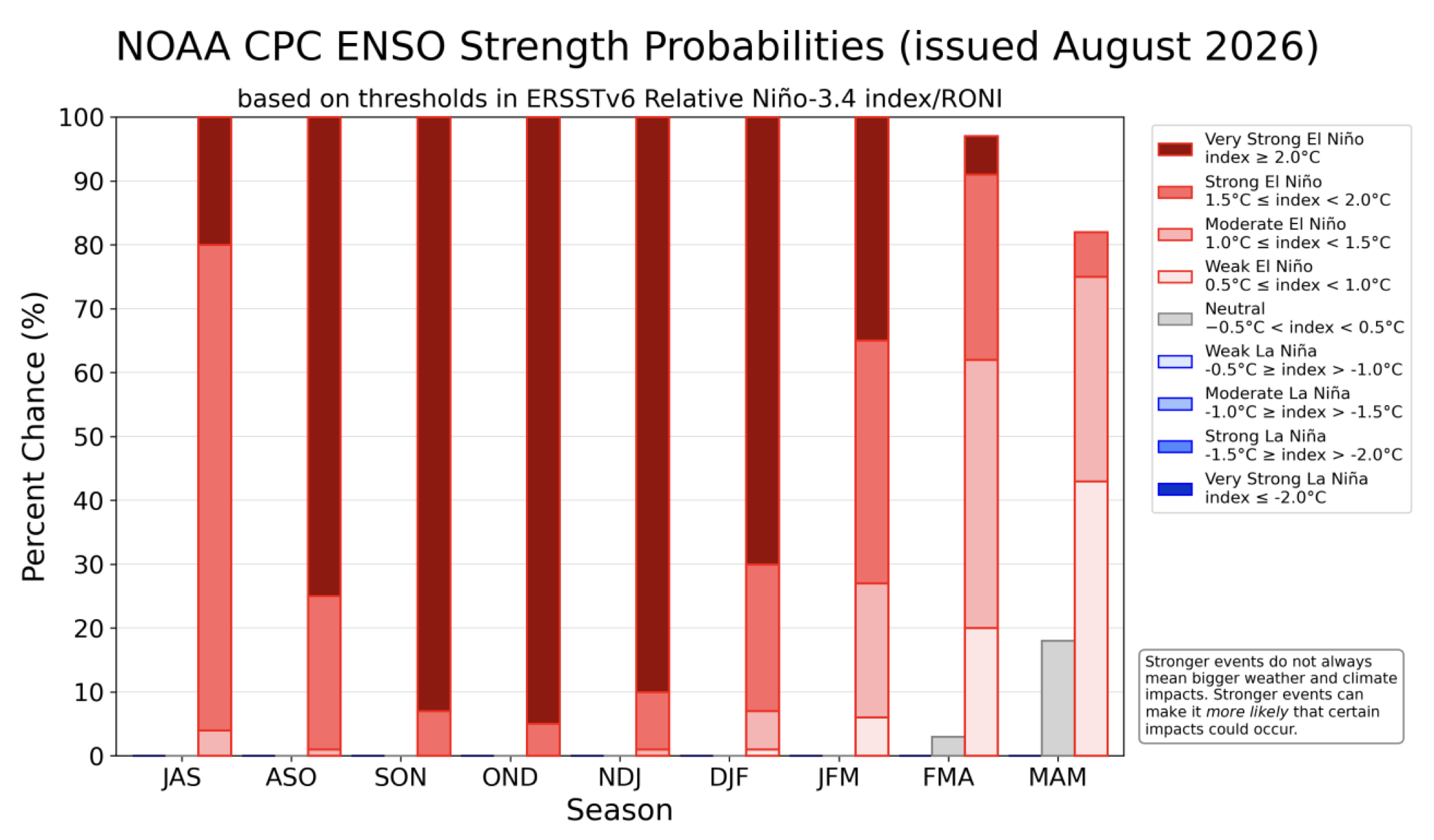
Synopsis: El Niño is strengthening, with a greater than 90% chance of a very strong eventduring the Northern Hemisphere fall and winter 2026-27.
El Niño strengthened over the past month, with sea surface temperature anomalies exceeding +2.0°C in the eastern equatorial Pacific. The July Niño index values were +1.4°C in Niño-3.4, +1.7°C in Niño-3, and +2.9°C in Niño-1+2. The equatorial subsurface temperature index (average from 180°-100°W) increased during July, reflecting a deeper-than-average thermocline. Subsurface temperature anomalies were significant, reaching +10.0°C at depth. Low-level westerly wind anomalies and upper-level easterly wind anomalies extended from the western to east-central equatorial Pacific. Convection and rainfall were enhanced from the central to eastern Pacific and were suppressed over Indonesia (Fig. 5). The traditional and equatorial Southern Oscillation indices were significantly negative, with values near 2 standard deviations during July. Collectively, the coupled ocean-atmosphere system reflected a strengthening El Niño.
The CPC Official ENSO outlook, which synthesizes multiple models from North America and abroad, indicates El Niño will continue to strengthen through the end of the year. During the October-December 2026 season, there is a 69% chance of a historic event that would exceed the strength of previous El Niño events dating back to 1950 (+2.5°C or more for a 3-month RONI value). With an event of this magnitude, the chances of experiencing impacts consistent with El Niño are larger, but they are not guaranteed (see CPC outlooks for probabilities of seasonal anomalies). In summary, El Niño is strengthening, with a greater than 90% chance of a very strong event during the Northern Hemisphere fall and winter 2026-27.
Figure 8. ENSO strength probabilities for the Niño-3.4 relative sea surface temperature index (5°N-5°S, 170°W-120°W) minus tropical mean (20°N-20°S). The relative index is re-scaled to match the variance of the traditional index. Figure updated 13 August 2026. Higher resolution image/table: https://cpc.ncep.noaa.gov/products/analysis_monitoring/enso/roni/strengths/
Denver Water is throwing its weight behind and spreading the word about a proposed ballot initiative that would ask voters to redirect a portion of state sales tax revenue on sleeping bags, hiking boots and skis to help fight wildfires, reduce risk of additional blazes, and restore mountain watersheds already damaged by fire.
It’s a rare move for the state’s largest water provider, which serves 1.5 million customers in the metro area, and has been hard hit by major blazes, with thousands of acres of land scorched and reservoirs filled with debris. Tens of millions of dollars have been spent restoring land in the South Platte River Basin, where major events, such as the Hayman Fire in 2002, devastated key mountain lands and the streams that feed its collection system.
“For us it is a major infrastructure need,” said Alan Salazar, Denver Water’s general manager.
Proposition 308 is not yet on the ballot. Signatures were submitted to the Colorado Secretary of State’s office July 27. The office has until Sept. 2 to review the signatures.
For the past 20 years, as deep droughts have periodically gripped the state, wildfires have emerged as a major threat to the mountain watersheds that deliver fresh water across the state, from Durango, to Aurora, Denver and Fort Collins.
Denver Water operates a special fire mitigation project each year in partnership with other state and federal agencies, known as Forests to Faucets. But even with this collaborative approach, there isn’t enough money or labor to do all the work on the ground, Salazar said.
Proposition 308 would provide about $175 million annually that would go toward water and land conservation, according to Aaron Citron, The Nature Conservancy’s Natural Resources Policy Adviser in Colorado. The Nature Conservancy is one of the backers of 308, alongside Conservation Colorado, the Trust for Public Land and Western Resource Advocates.
The money would be taken from state coffers in years when there is a budget surplus. Though the proposal is not a new tax, it could reduce the size of refunds taxpayers normally receive in years when there is a surplus.
“Four of the largest wildfires have ignited in the last six years, burning 1.5 million acres. That has brought these issues more into the public consciousness … We know we have to act now if we want to protect resources and wildlife,” Citron said.
The money would be controlled mostly by GOCO and the state Natural Resources department
If approved, Proposition 308 would give about half of the sales tax revenue generated, $83 million, to Great Outdoors Colorado and another $83 million to the Colorado Department of Natural Resources, to expand land and water conservation programs these agencies already operate. Another $4.3 million would go to promoting outdoor recreation and the remaining $4.3 million would be spent to increase families’ access to the outdoors.
The ballot measure would exempt taxes collected on some sporting goods from the Taxpayer’s Bill of Rights, or TABOR, in a process known as de-Brucing, which is named after Douglas Bruce, the architect of the 1990 TABOR amendment.
Aurora Water staff has recommended that the city also endorse the measure but no formal action has been taken by city council, according to spokeswoman Shonnie Cline.
Budget hawks, such as Jon Caldara, president of Denver’s Independence Institute, said the citizen initiative is likely a reflection of voter frustration with state lawmakers, who he says haven’t done enough to fund the state’s basic need for water infrastructure, public safety and roads.
“Whether it is water or transportation infrastructure, we’re seeing that people are getting tired of the legislature not budgeting for basic needs. We shouldn’t be surprised people are taking their funding back,” Caldara said.
Unlike Denver and Aurora, Northern Water has not endorsed Proposition 308, General Manager Brad Wind said. Its board will likely receive a briefing on the topic in September.
Northern, too, has been hard-hit by wildfires. It has spent upwards of $100 million to restore and better protect its sprawling watershed west of Rocky Mountain National Park, which was scorched by the East Troublesome and Cameron Peak fires in 2020. Still, Wind said, that cash has allowed them to do only the bare minimum.
“We’re just touching the higher risk areas,” Wind said, “The cost is immense. I can’t imagine any utility has the money to make the investments needed.”
How voters will respond to Proposition 308 in November isn’t clear. Salazar said he isn’t aware of any organized opposition yet, but several other initiatives are also headed for the ballot, making a long list of things for voters to consider.
“It appears to be a crowded ballot,” Salazar said. “We want to make sure that when people get to this they are not exhausted.”
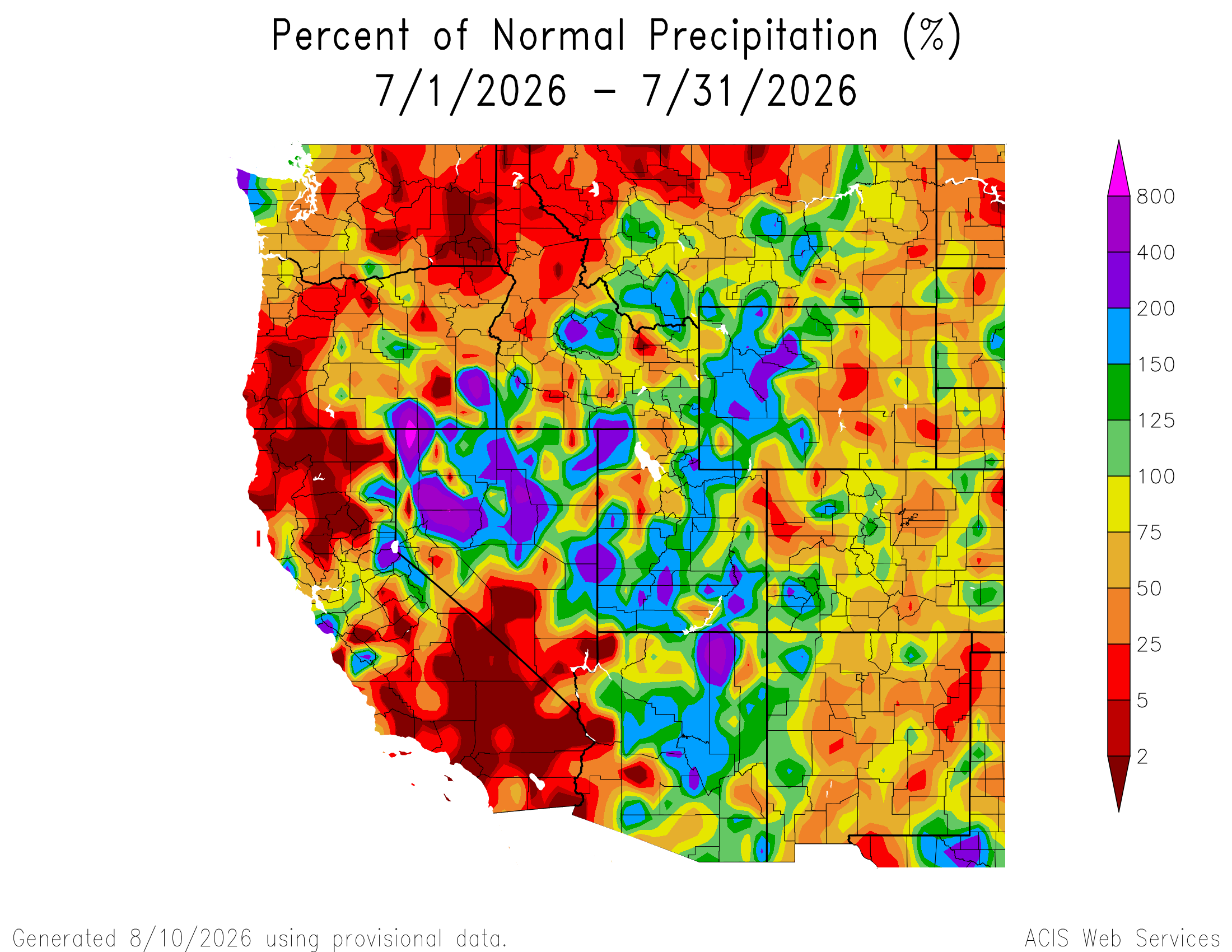
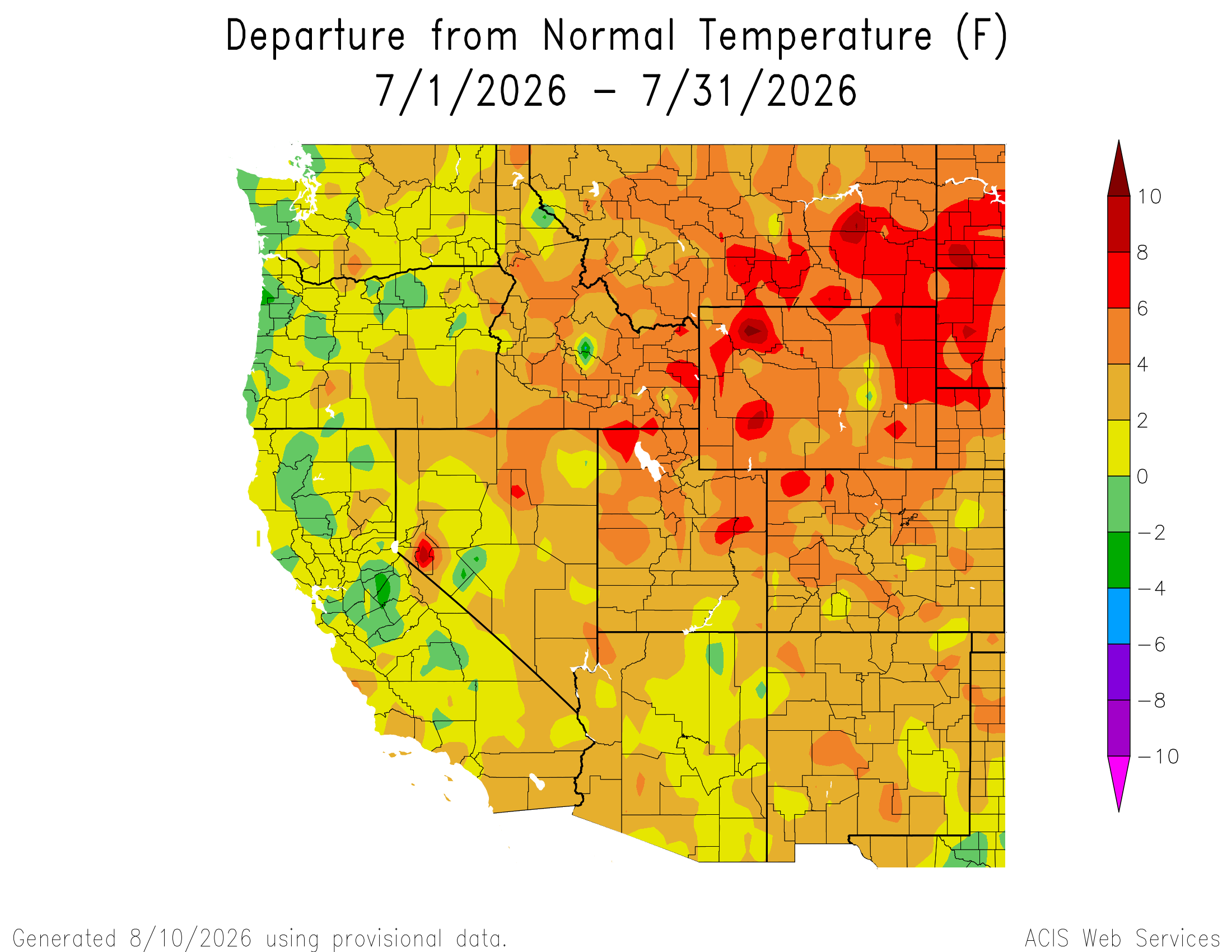
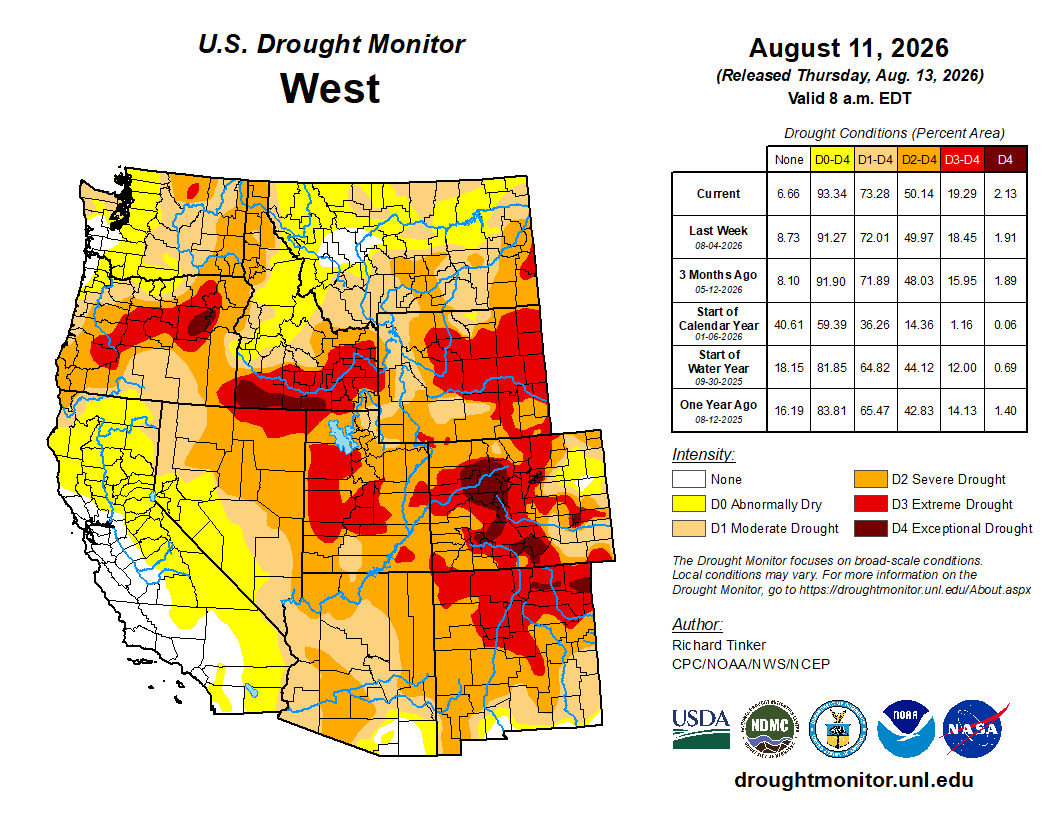
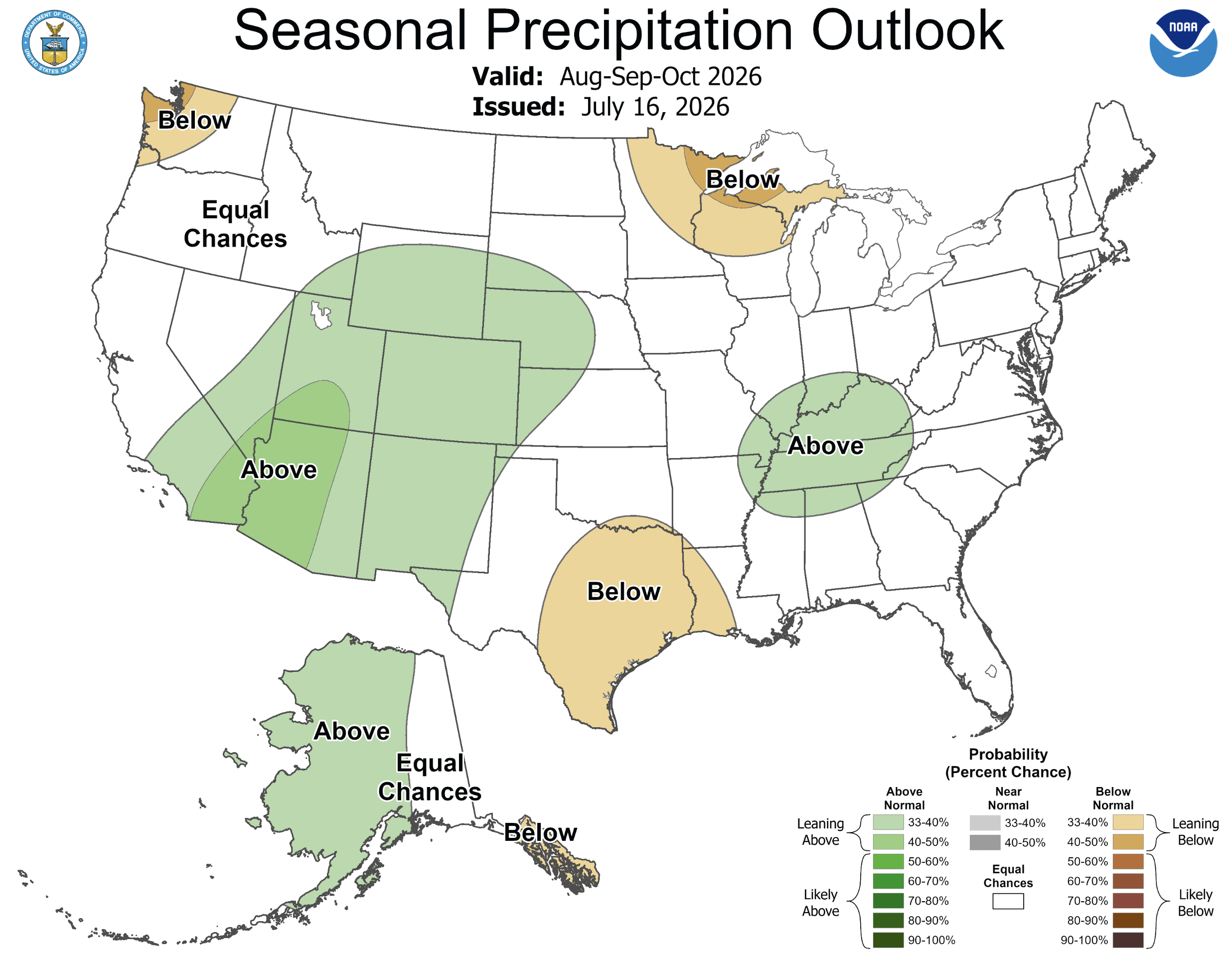
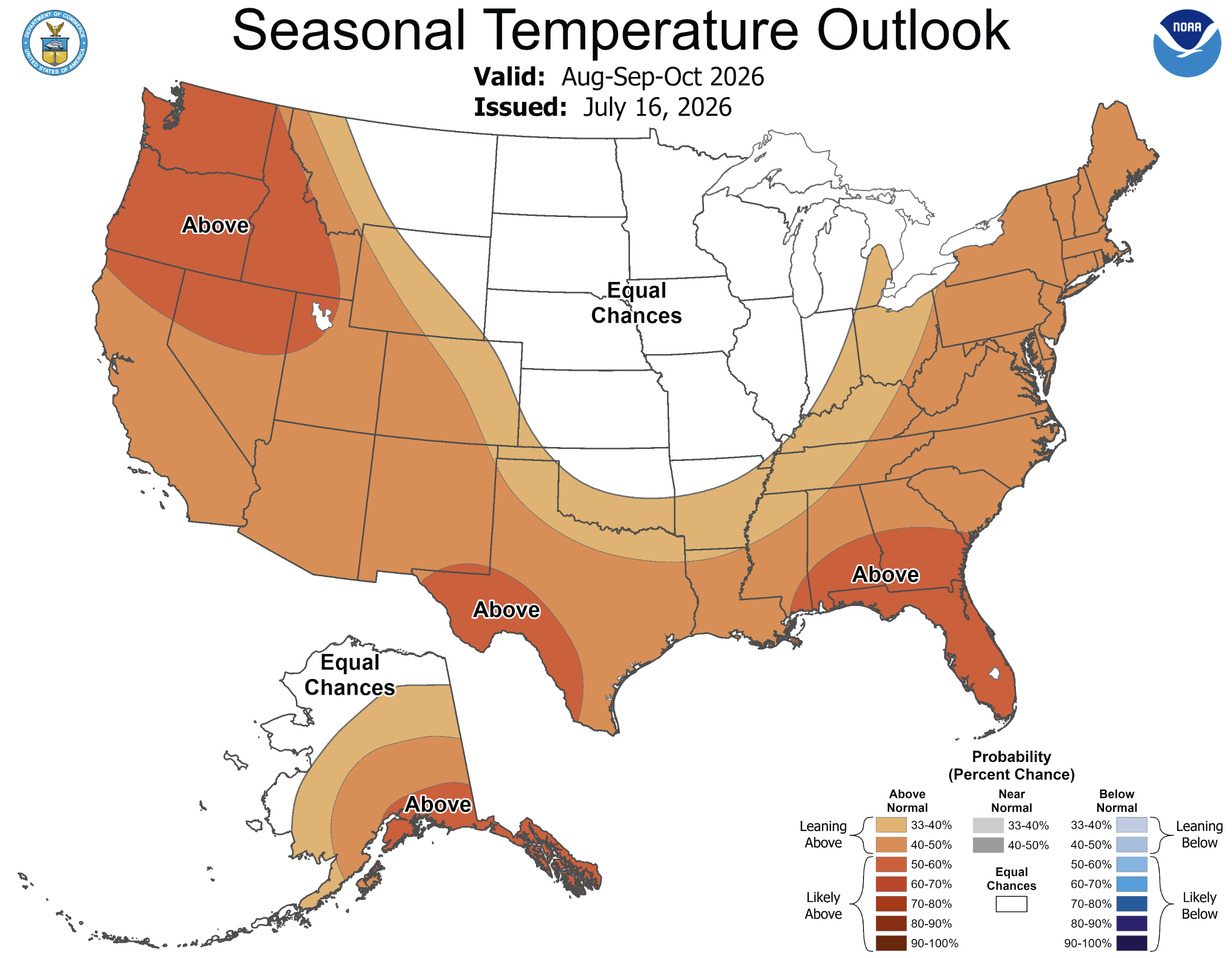
July precipitation was above average across much of Utah, western Colorado and western Wyoming, while below average precipitation fell in eastern Wyoming and much of Colorado. Regional temperatures were above to much above average across the region, and all-time daily maximum temperatures were set across all three states. Drought conditions prevail with 97% of the region covered by drought, and extreme or exceptional drought covered 35-45% of Colorado, Utah and Wyoming. Seasonal NOAA forecasts suggest active monsoonal precipitation and an increased probability of above average precipitation for the next three months. Monsoonal thunderstorms were responsible for six fatalities in Utah during July; a family of five drowned in a flash flood near Bicknell, UT and a hiker was killed by lightning in the Wasatch Mountains near Salt Lake City.Heavy rainfall also caused severe flooding and damage to 200 homes due to debris flows from the Cottonwood Fire burn scar near Beaver, Utah.
July temperatures were above average (+2-4ºF) for the entire region with much above average temperatures (+4-8ºF) across much of Wyoming, northern Colorado and northeastern Utah. All-time record high temperatures were set at many locations during July, including Provo (105ºF) and Salt Lake City (109ºF) in Utah, and Brighton (105ºF) and Burlington (113ºF) in Colorado. During a July 12-13 heatwave in Wyoming, 17 sites set all-time record high temperatures, including Worland (111ºF), Sheridan (109ºF), Thermopolis (109ºF), Cody (106ºF), Riverton (106ºF), Lander (102ºF), Moran (94ºF) and Yellowstone Lake (88ºF). All-time record high temperatures were also recorded in Laramie (94ºF) and Rock Springs (98°F) during July.
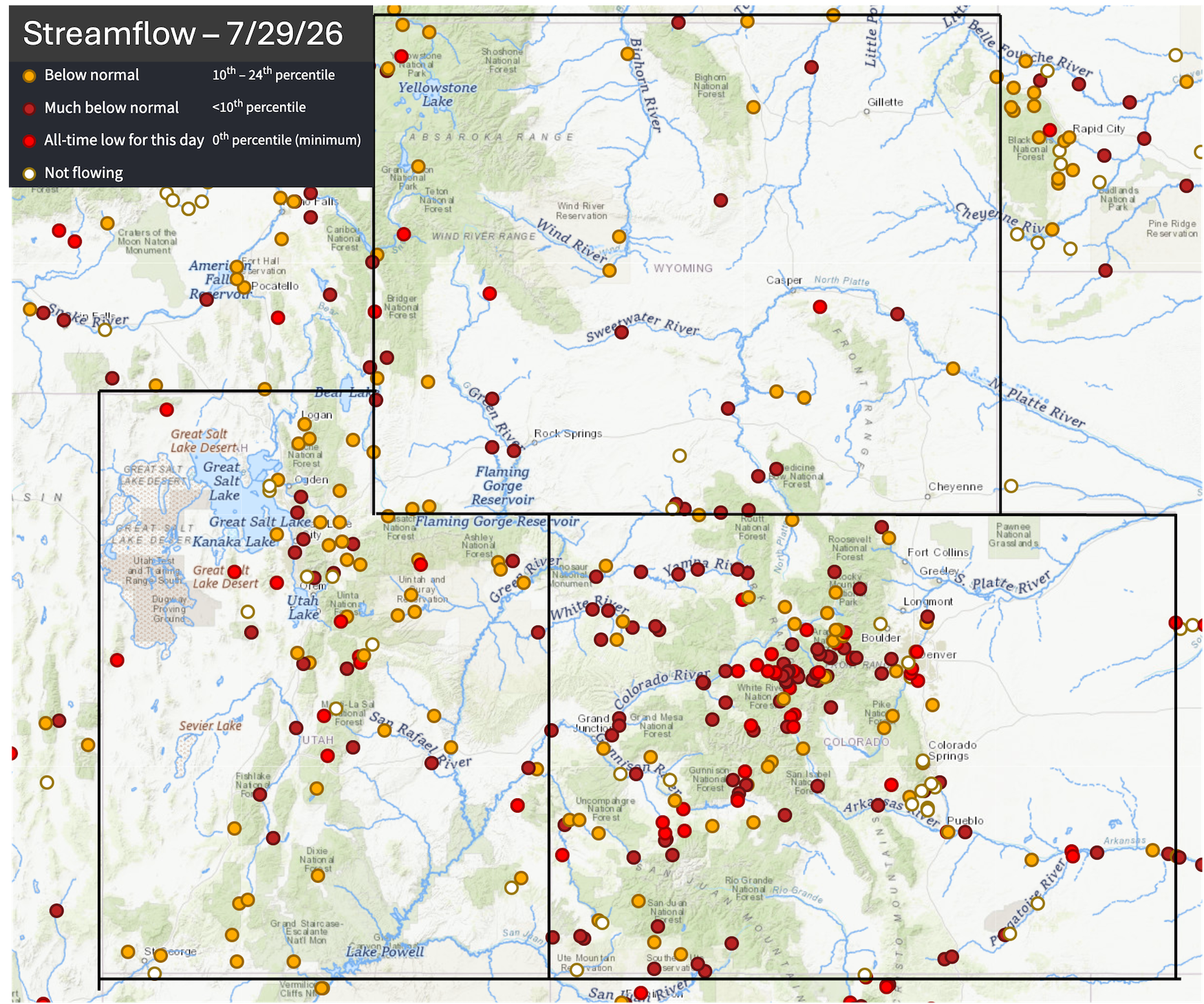
At the end of July, streamflow was below average for most regional rivers, especially in Colorado and Utah. On July 29, record low daily streamflow was recorded at 29 sites in Colorado, ten sites in Utah and four in Wyoming, including the Arkansas, Dolores, Eagle, Roaring Fork, South Platte, Uncompahgre and Yampa Rivers. Streamflow on the western slope of Colorado and along the Arkansas and South Platte Rivers was generally flowing at levels in the lowest 10% of all observations.
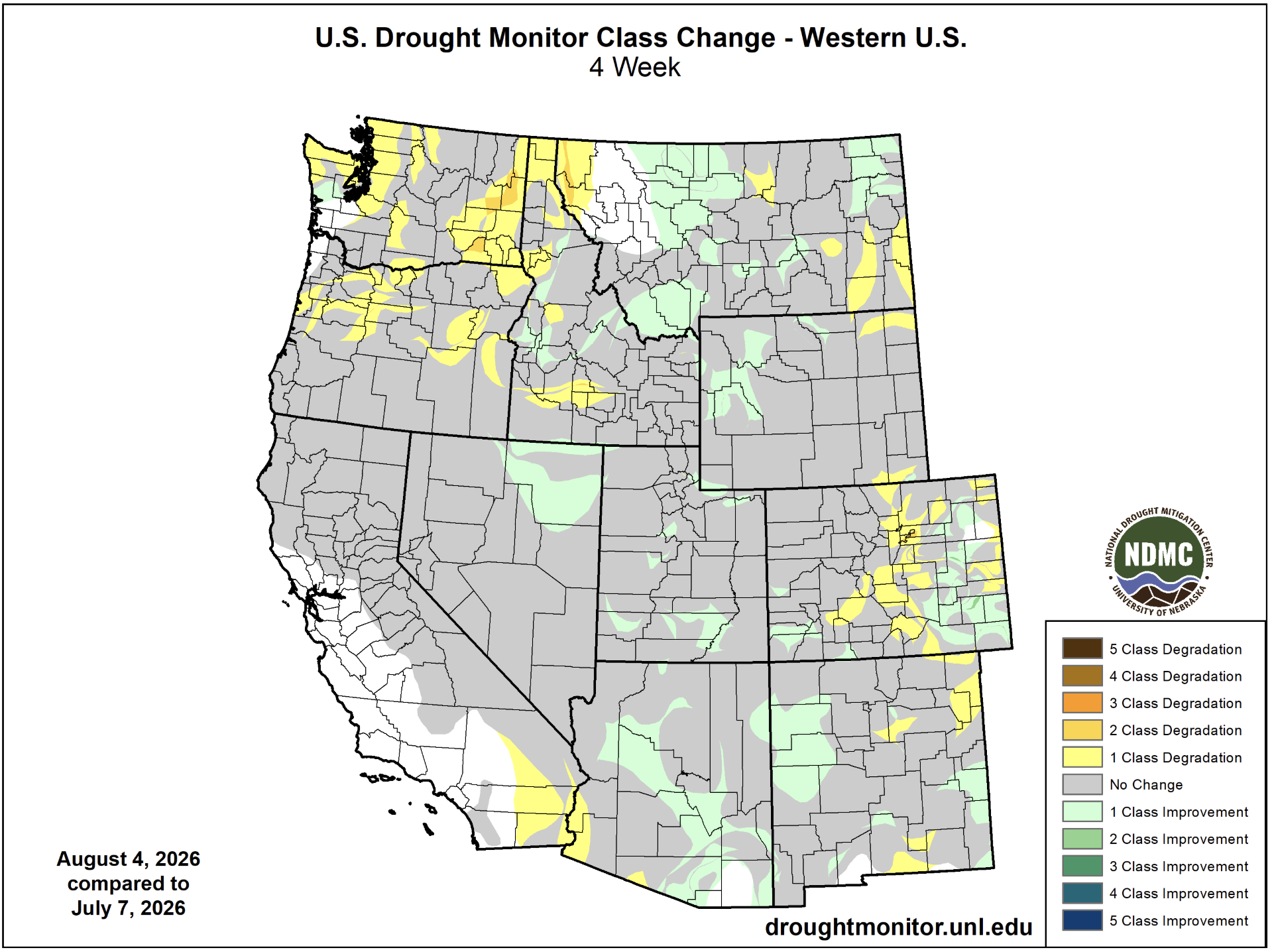
In late July, regional drought coverage remained at 97%. Drought covered the entire region except for a portion of northeastern Colorado where a small area of drought was removed during July. Coverage of exceptional drought conditions in the Colorado River Headwaters expanded in July.
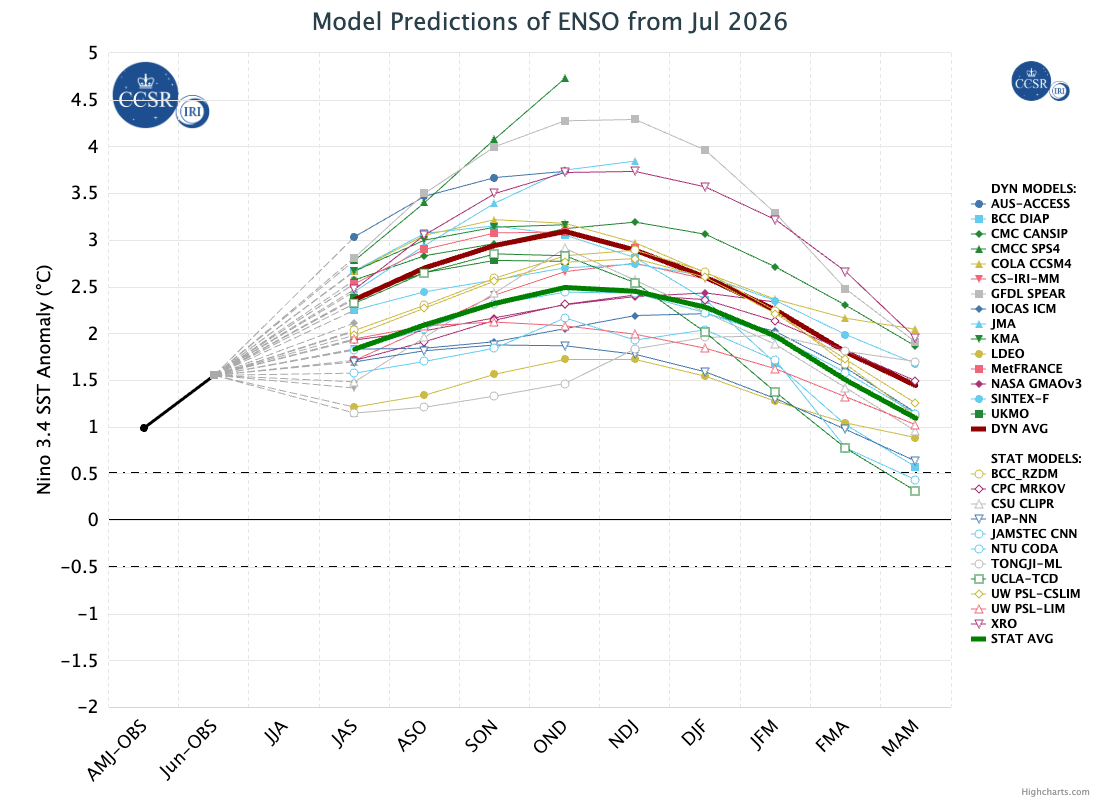
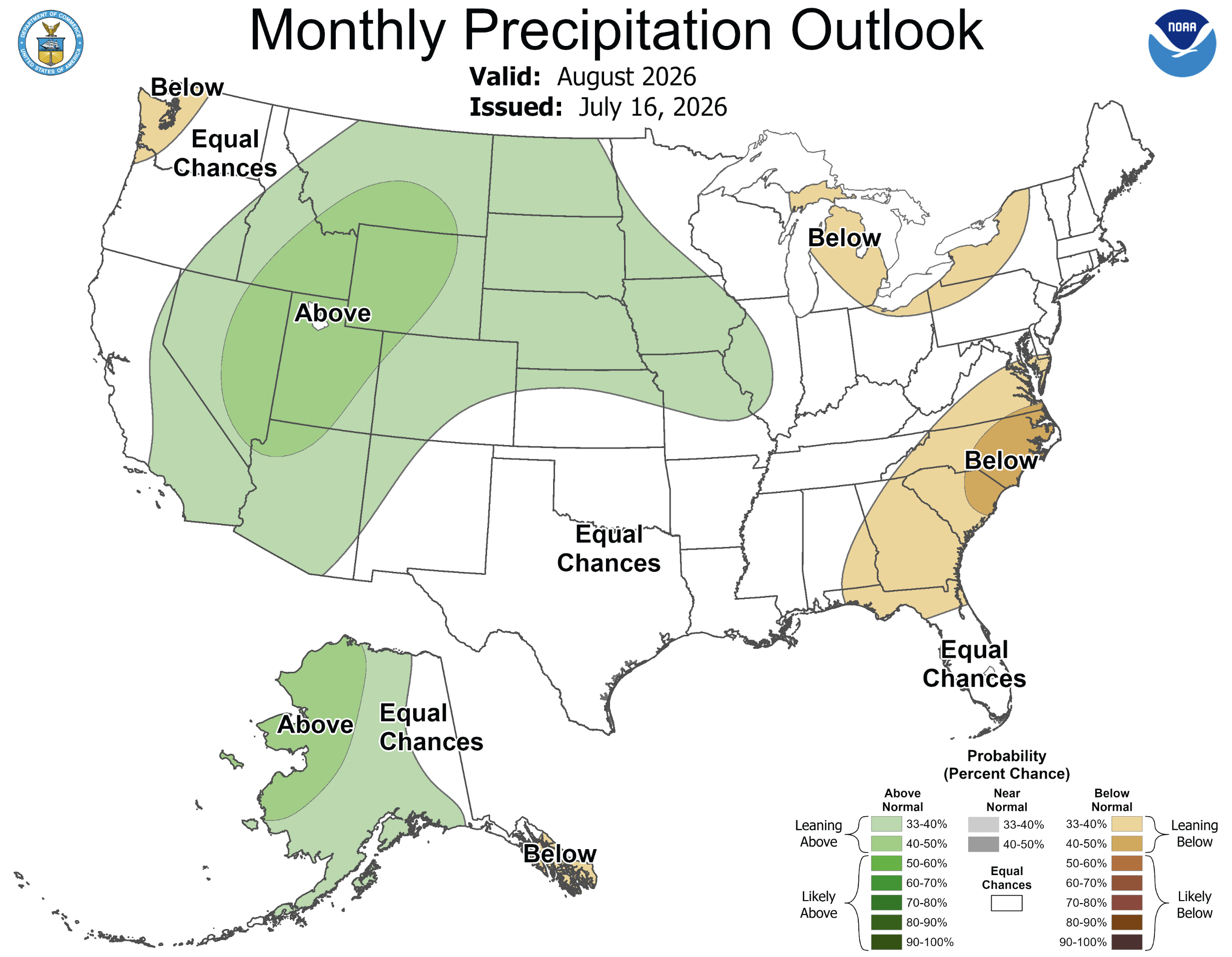
El Niño conditions are present in the eastern Pacific Ocean with ocean temperatures running 1.5ºC above average. Current forecasts of peak Pacific Ocean temperatures of 2.5-3ºC above average indicate the formation of a very strong El Niño during the 2027 water year, an event that could be the strongest on record. There is a 100% probability of El Niño conditions continuing at least through December to February. NOAA seasonal forecasts indicate an increased probability of above average precipitation for the region during August to October, suggesting an active monsoon for the remainder of the season. Notably, the temperature forecast for August indicates equal chances of above or below average regional temperatures, but there is an increased probability for above average temperatures over the August to October period.
Significant weather event: Monsoonal thunderstorms lead to six fatalities in Utah. On July 17, an isolated thunderstorm near Bicknell, Utah caused flash flooding in a narrow canyon and swept a family of five to their deaths. The family from Provo, UT left for hiking and canyoneering in a slot canyon near Sunglow Campground around noon on 7/17. Sadly, bodies of all five family members were found deceased by the following morning. No precipitation from the storm was recorded at nearby weather stations in Loa, Torrey and Capitol Reef National Park.
On July 18, a 59-year-old man was killed by lightning while hiking in the Wasatch Mountains. The man and his brother were hiking along the exposed ridgeline of American Fork Twin Peaks near Snowbird Ski Area when the localized thunderstorm struck. The storm was very small, producing no rain at nearby sites and three lightning strikes were recorded in the vicinity during that hour.
The Cottonwood Fire burned 97,000 acres during June and July in the Tushar Mountains east of Beaver, Utah. On 7/20, nearly 1.6” of rain fell near Eagle Pointe Ski Area in upper portions of the Beaver River watershed. The ensuing debris flow flood severely damaged five miles of SR 153 which connects Beaver to Eagle Pointe ski area, damaged 80-200 homes and contaminated drinking water for Beaver and four rural communities. Residents from the Grove neighborhood in Beaver were evacuated and suffered the greatest residential home damage.
FLASH FLOOD: Pretty impressive flash flooding in Bicknell, UT yesterday 7/17/26. I’m hearing word from locals that there may have been a family swept away by this flood. I’ll bring updates as they come in, but that is just so sad to hear. pic.twitter.com/sJosstObeL