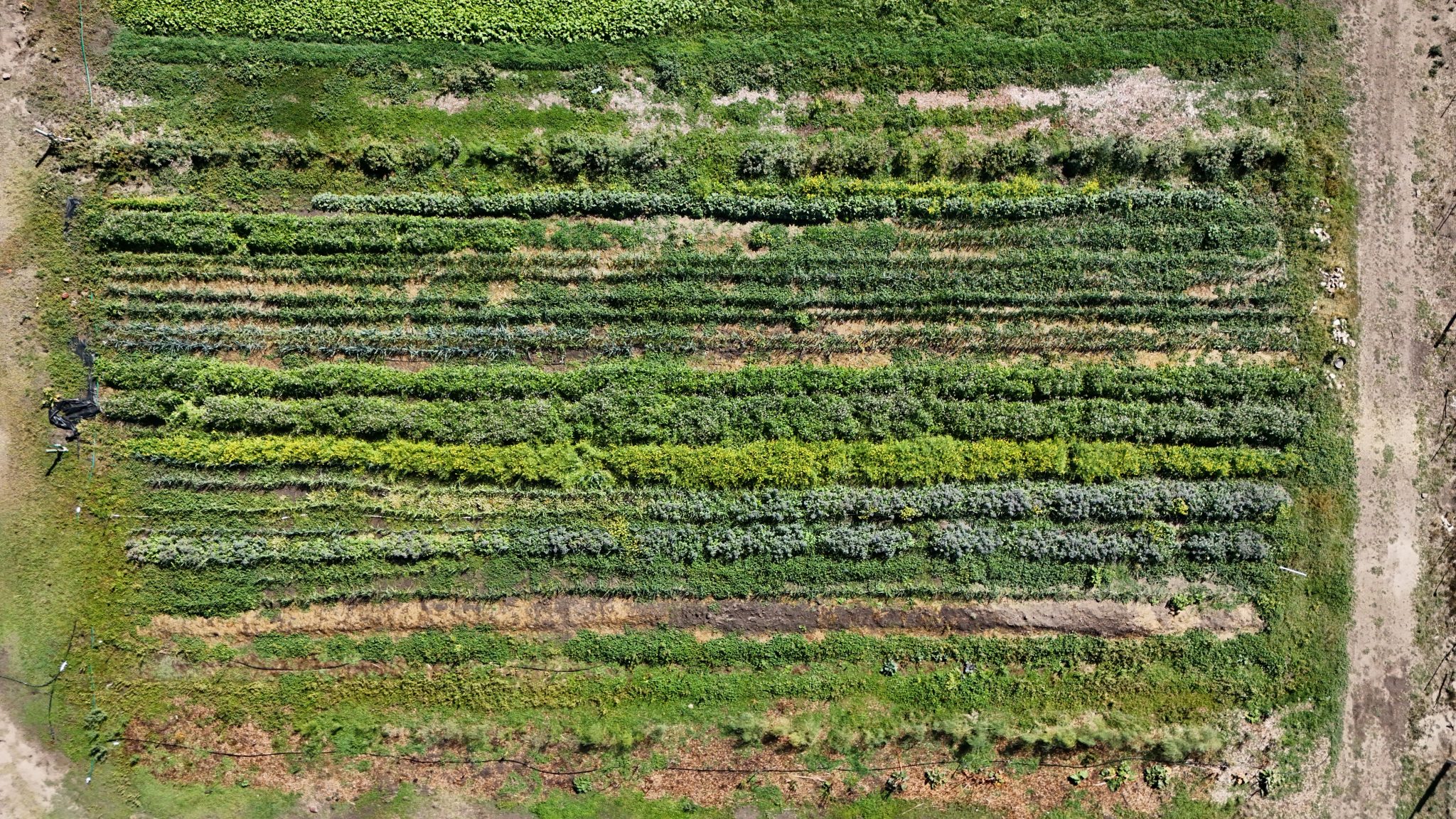
The Farm Collaborative is headquartered at Cozy Point Ranch, an open space property owned by the city of Aspen. The nonprofit serves as not only a regenerative farm but a camp, school and resource center for the local community and farmers. The Farm Collaborative/Courtesy Photo
Click the link to read the article on The Aspen Times website (Lis Longwell). Here’s an excerpt:
August 12, 2026
Three years ago, beavers returned to an Aspen-area testing ground for regenerative agriculture. What’s happened since has been nothing short of transformative, according to Eden Vardy, who started The Farm Collaborative in 2008 with the ambitious goal of finding solutions to climate change.
When beavers returned to The Farm Collaborative in 2023, it was a sign that the regenerative agricultural practices were having the intended effects. The Farm Collaborative/Courtesy Photo
“Everything has transformed, there’s been just so much new growth in the riparian area. We’re starting to see predatory birds explore; I’ve seen a handful of golden eagles and bald eagles and a lot more coyotes and foxes coming into the area. But the most significant is the growth of the water table…This year, when we were anticipating our smallest year of water ever — which it still is, we are now starting to go dry — we had easily two months of more water than we thought we would this year as a result of really the storage systems that the beavers developed for us,” Vardy said…
Beavers’ role as a keystone species and ecosystem engineers has been increasingly recognized by scientists, environmentalists and water providers as an effective means of increasing drought resiliency. A project at Rocky Mountain National Park mimicking beavers has received notoriety for its early success in restoring wetland benefits to a drying landscape. Colorado Parks and Wildlife, during a time when Vardy served on its commission, responded to beavers’ growing popularity with a strategy to guide future species’ conservation and management. In July, the state agency also released beavers in two state wildlife areas near Rifle amid some man-made beaver structures to restore riparian ecosystems…
The Farm Collaborative’s learning center in Aspen was designed as a living classroom to connect individuals with food systems and explore regenerative agriculture practices. The Farm Collaborative/Courtesy Photo
Today, The Farm Collaborative — through youth and community programming as well as farmer support efforts — is focused on helping individuals explore and understand regenerative agriculture. The practice includes efforts to improve soil health, restore biodiversity and enhance water management…
“We are in a dust bowl again right now, just like we were during the Great Depression,” Vardy said. “Our tactics in agriculture, while productive, can have an adverse impact on the land in a way that prohibits our capacity to grow food, and regeneration is just utilizing the land differently, incorporating different techniques — instead of tilling, you can crimp from a grain operation, adding animals to the landscape for fertilization and soil building, cover cropping, crop rotations.”
Regeneration is not, however, simply an altruistic endeavor, he said.
“A beaver doesn’t show up in a water system because it’s altruistic and it wants to see more trout, more insects or more biodiversity; the beaver shows up because it wants to eat willow and it wants to raise its family in a healthy and comfortable way,” he said. “The byproduct of that work is that all these cascading biological effects take place.”
In the same way, regenerative agriculture is about making farms productive in the long term in a way that “restores the cascading effects for biology around the farm,” he added.
American beaver, he was happily sitting back and munching on something. and munching, and munching. By Steve from washington, dc, usa – American Beaver, CC BY-SA 2.0, https://commons.wikimedia.org/w/index.php?curid=3963858
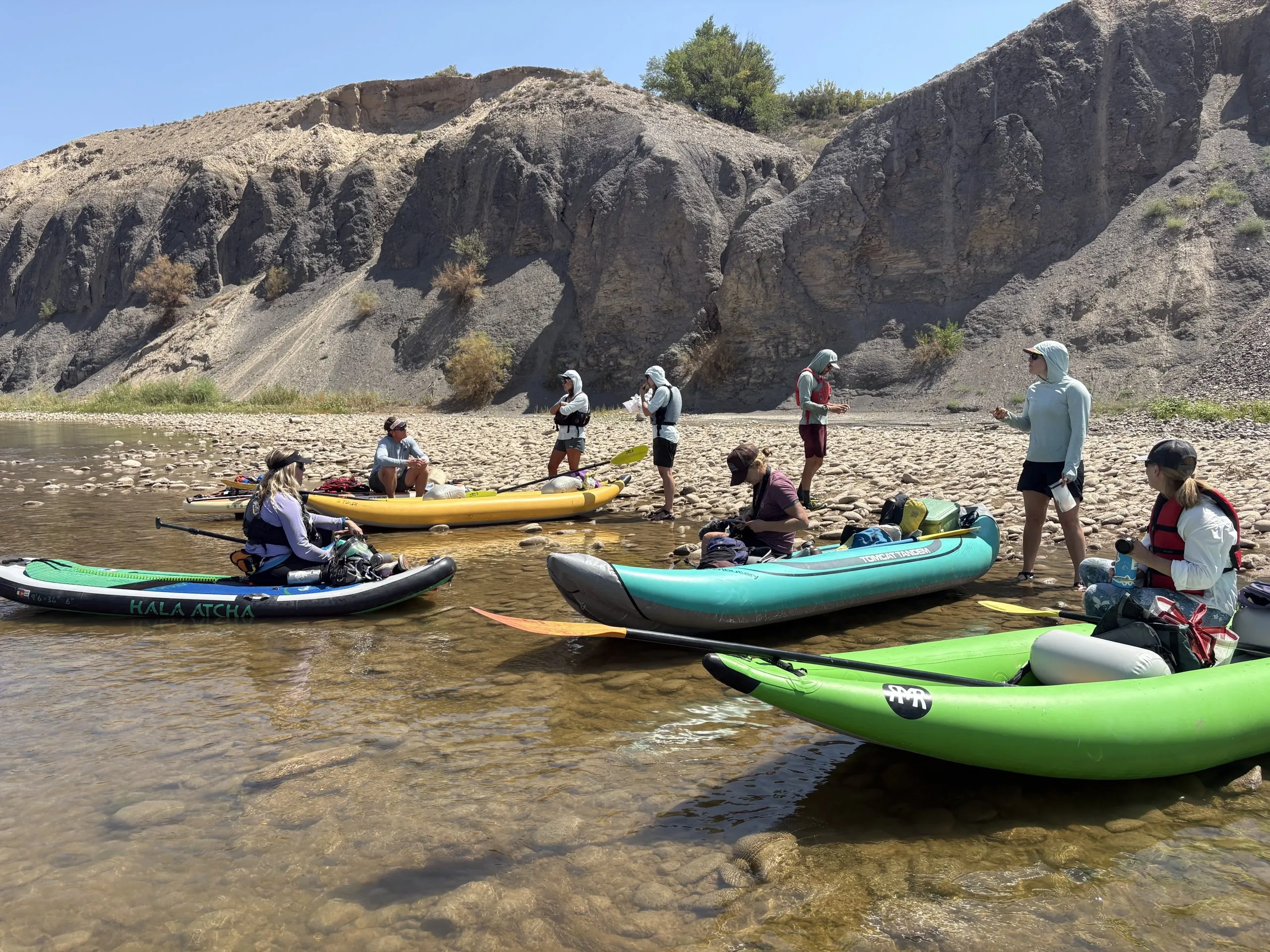
A group of paddlers take a lunch break on the 15-mile reach of the Colorado River this week. Boaters had to occasionally drag their duckies and paddle boards through the shallows because of extremely low flows. CREDIT: HEATHER SACKETT/ASPEN JOURNALISM
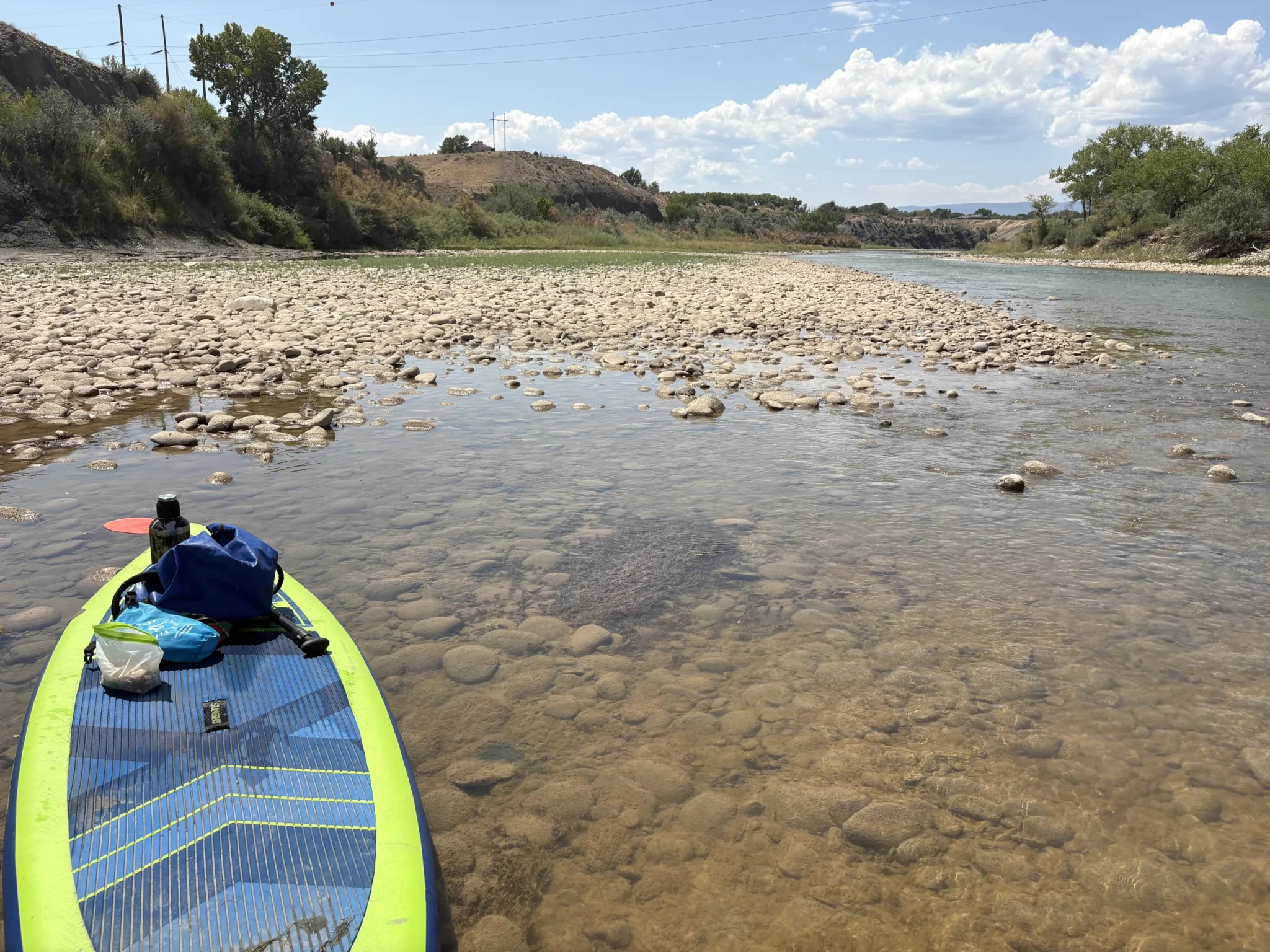
On a hot and sunny morning in August, a group of nine paddlers pushed their duckies and stand-up paddle boards into the Colorado River at Harky’s boat launch in Palisade.
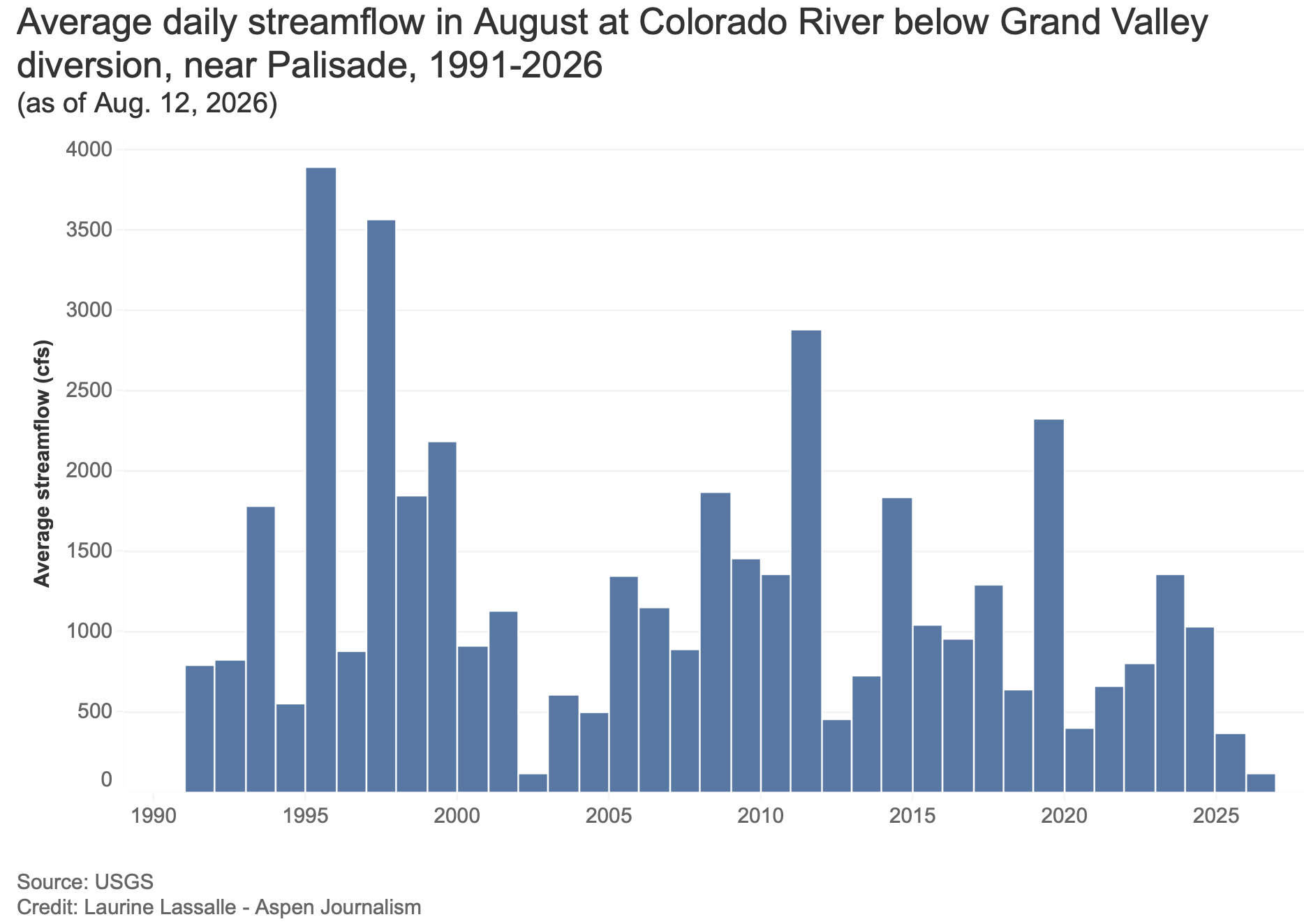
The goal of the float was to experience and document the river at one of the lowest levels it has ever seen. With flows hovering around 93 cfs, a bathtub ring showed on the rocks along the riverbank and rusty hunks of old farm equipment emerged from the streambed. Bright green algae grew between the rocks, and herons and ospreys hunted in the shallows.
In many places, paddlers got hung up on rocks and were forced to drag their watercrafts through the ankle-deep water. It took about four hours to float the roughly six-and-a-half miles from Palisade to Corn Lake, a trip that normally takes two to three hours with higher flows.
The trip was organized by Joel Sholtes, a water resources engineering instructor at Colorado Mesa University and a coordinator for the Grand Valley River Corridor Initiative.
“I knew that the river would kind of be on life support and maybe even dry up so I wanted to get out on the river with the people that were involved in managing its flow and experience the 15-mile reach at such a historically low level,” Sholtes said. “It just felt important to be on it and see it both from a habitat standpoint and from a user experience standpoint.”
Boaters got hung up on rocks in the 15-mile reach of the Colorado River during extremely low flows this week. The stretch of river between Palisade and the confluence of the Gunnison River is chronically dry. CREDIT: HEATHER SACKETT/ASPEN JOURNALISM
The Colorado River and its water users are now experiencing the consequences of the lowest winter snowpack on record, exceptionally hot temperatures and resulting low streamflows. The impacts are being felt across Colorado as farmers and ranchers have their irrigation water cut, cities and towns impose severe water restrictions on their customers and flows dwindle in stretches of river that are critical habitat for the ecosystem.
The stretch of the Colorado River between the large agricultural diversions in Palisade and the downstream confluence with the Gunnison River is known as the 15-mile reach. This chronically depleted section is also home to endangered fish. Water managers work each year to keep enough flows for fish by coordinating carefully timed releases from upstream reservoirs.
This map shows the 15-mile reach of the Colorado River near Grand Junction, home to four species of endangered fish. Map credit: CWCB
Grand Valley’s 15 mile-reach
This year’s historic drought makes keeping enough water in this reach more challenging than usual. The recovery program has pools of water dedicated to the fish in Lake Granby and Ruedi Reservoir that it releases specifically to boost flows in the 15-mile reach, but because of the dry conditions, less of that water is available. According to the Colorado Division of Water Resources, the average August flows in the 15-mile reach have been about 119 cfs this year, far below the 810 cfs target set by the Upper Colorado River Endangered Fish Recovery Program.
The program’s Instream Flow Coordinator David Graf told water managers on a conference call Wednesday that the program is trying to keep 75 cfs in the river through the end of August. Graf said the program was responsible for about 70% of the water in the river during Tuesday’s float; without it, flows could have dipped to around just 25 cfs.
“We are so far below the recommended flows anywhere in the Colorado River basin right now,” Graf said. “Keeping water in there is valuable; it takes a village.”
Irrigators reduce diversions
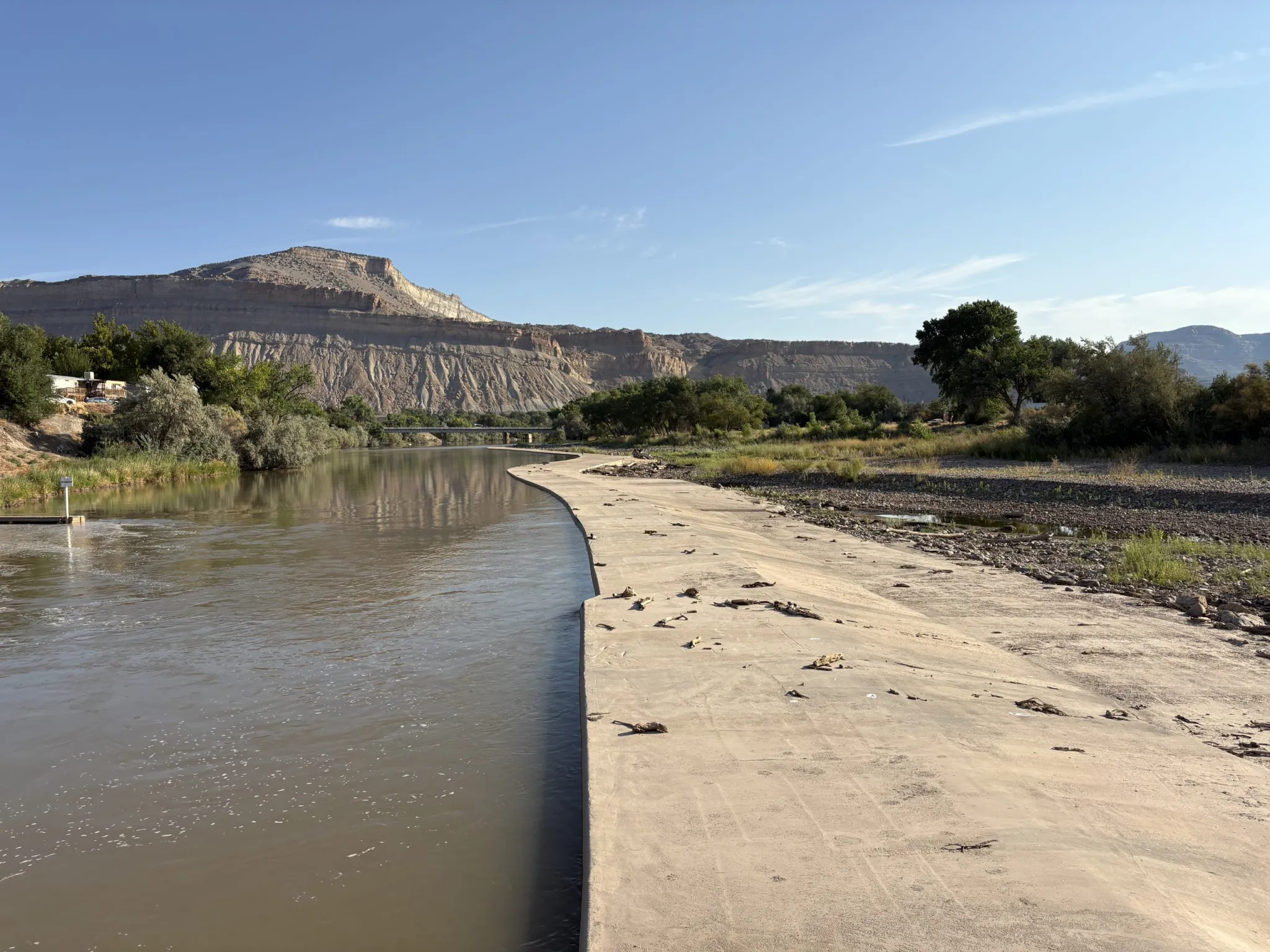
Nearly all of the river’s flows are being diverted to the Grand Valley’s agricultural producers. Colorado River water transforms the valley’s desert into a ribbon of verdant peach orchards, vineyards, corn and alfalfa fields. The valley’s irrigation districts can collectively draw 1,950 cfs from the river, but this year, they have reduced that down to 1,450 cfs in an effort to save some water for later in the season.
“We collectively set the target flow lower for the sole purpose of extending to gain and accrue some storage,” said Jackie Fisher, manager of Orchard Mesa Irrigation District. “We had none at the beginning of the year and it became super critical to talk with our partners and say, what can we live on now because we knew we needed it two or three months later.”
The Grand Valley Irrigation Company canal on the left is the last big agricultural diversion on the Colorado River in the Grand Valley. It marks the beginning of the 15-mile reach. CREDIT: HEATHER SACKETT/ASPEN JOURNALISM
Late summer is a crucial time for irrigators because the high flows of spring runoff have come and gone, but hot temperatures drive up the amount of water needed by crops. Irrigators often depend on releasing water stored in upstream reservoirs during this time to supplement low river flows. This year, spring runoff peaked weeks early and a pool of water in Green Mountain Reservoir known as the Historic Users Pool did not fill, which created far-reaching impacts.
HUP water is released mainly to satisfy farmers and ranchers in the Grand Valley, which hold the senior, commanding water rights on the river. The HUP also protects other water users, known as HUP beneficiaries, because without the releases from Green Mountain to supplement the Grand Valley, these other users could have to cut back.
Entities that own or lease stored water, like the Colorado River Water Conservation District, the Colorado Water Trust, Grand County and Northern Water, among others, have pitched in this year to contribute extra acre-feet to Grand Valley irrigators. But even with collaboration and water sharing, Grand Valley Water Users Association General Manager Tina Bergonzini said they cannot guarantee water deliveries to their farmers after September 1. Irrigation season typically goes through Oct. 31.
Low flows in the 15-mile reach of the Colorado River revealed a bathtub ring on the rocks lining the riverbank. Water managers strive to keep water in this section for endangered fish. CREDIT: HEATHER SACKETT/ASPEN JOURNALISM
“It probably sounds a little melodramatic to say, but it’s not: It’s literally the first time in 111 years that we’ve run out of water in the Grand Valley Water Users Association,” Bergonzini said. “I’ve done my best and my staff has done their best to make sure that our producers and our residents that are under our system are aware that we could get to the point that we have unreliable delivery.”
GVWUA irrigators have been on restriction all season and the association has been taking just 500 of its 730 cfs water right. Bergonzini said many of her producers have switched to less thirsty crops this year like triticale and Sudangrass, instead of corn and alfalfa, and have made adjustments to the way they irrigate to adapt to less water.
Heading into the fall with unreliable water is a scary scenario for some, Bergonzini said. It’s the time of year when some farmers plant winter crops and have a need for lots of water.
“We’ve tried to make sure everybody is prepared and that’s really all we can do,” she said.
Flows in the 15-mile reach were extremely low this week due to agricultural diversions and a historic drought. The reach is home to endangered fish. CREDIT: HEATHER SACKETT/ASPEN JOURNALISM
As water managers grapple with how to stretch this year’s meager flows as far as possible, Sholtes said from a recreation and quality of life standpoint, the Colorado River still provides so much value to the community – even when it’s barely flowing.
“I think it’s important to know that even in drought conditions, the river is accessible and enjoyable,” he said. “It’s my interest as a citizen in the Grand Valley, and as a scientist, to have a river that works for everyone, and to have growth and use that is compatible with the river ecosystem.”
Bicycling the Colorado National Monument, Grand Valley in the distance via Colorado.com