Southern Delivery System: Colorado Springs Utilities is moving dirt but contract negotiations with Reclamation are delaying the construction start at the Pueblo Dam

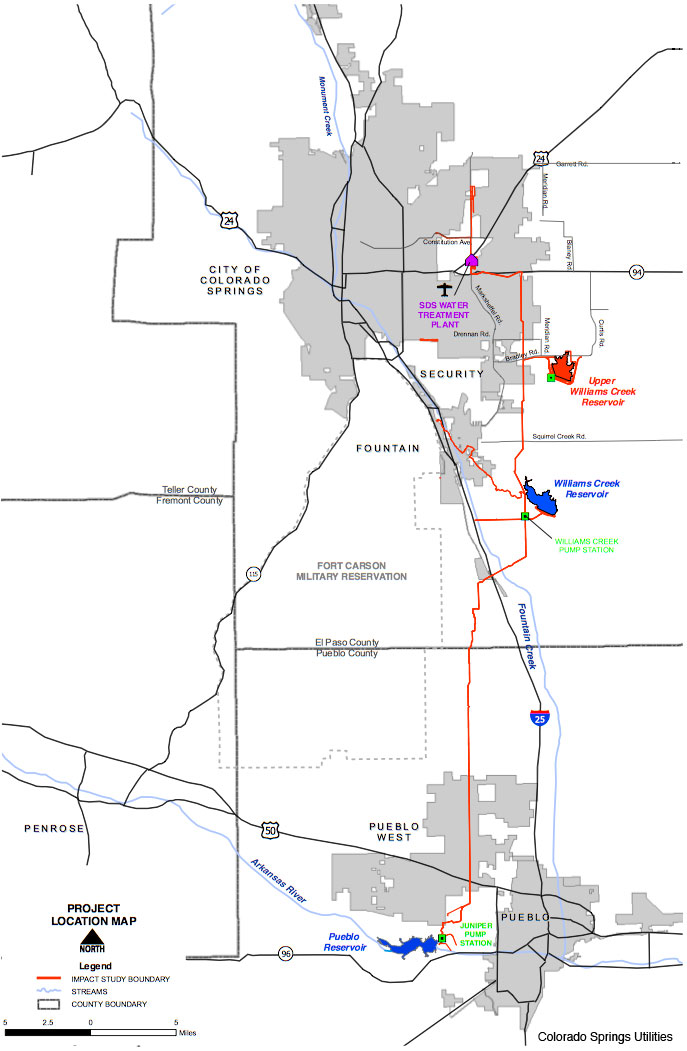
A picture named sdspreferredalternative.jpg

From The Colorado Springs Gazette (Daniel Chaćon):

…a late-in-the-game tangle with the federal government means Utilities still doesn’t have key contracts it needs to start construction at the Pueblo Reservoir, the mouth of the 62-mile pipeline…

Utilities officials insist the unfinished contracts won’t stop or delay construction. They point to a 4,000-foot section of pipeline that workers recently laid along Marksheffel Road, marking the unofficial start of the project. And, they say, a 4-mile stretch of construction will start in El Paso County in February or March. Utilities has already invested more than $100 million in the project. “It’s important that we take the time to get these final details resolved in a way that protects our customers’ best interests,” John Fredell, SDS project manager, said Friday.

Although it’s unclear when Utilities and the bureau will reach agreement on the contracts, it’s primarily “lawyerly language” that needs to be ironed out, said David Robbins, outside legal counsel for Utilities. “I hope we’re pretty close,” he said this week.

According to interviews and e-mails between Utilities officials and bureau representatives, three significant issues remain unresolved:

• A termination, or “subject to appropriation of funds,” provision.

• A desire by Utilities officials to take advantage of lower water storage rates if other entities get such rates in the future.

• A schedule detailing how much water each of the SDS partners needs to store each year and the cost over the life of the contracts.

More Southern Delivery System coverage here and here.

Southern Delivery System update

A picture named fountaincreek.jpg

From The Pueblo Chieftain (Chris Woodka):

The state’s certification of the Southern Delivery System under the federal Clean Water Act is a way to attain better monitoring and protection of water quality, says a local member of the state board that approved the action. “Our purpose is to protect water quality, and it affects me because I’ve experienced the negative impacts,” said John Klomp, a member of the Water Quality Control Commission and a former Pueblo County commissioner…

Klomp sees numerous positive impacts for state certification of SDS. Among them:

– The alternative will be the least damaging to the environment, with annual reviews and continued oversight from the Water Quality Control Division.
– Colorado Springs will comply with the Upper Arkansas and Pueblo flow programs.
– More monitoring stations — 13 on Fountain Creek — may help identify and prevent adverse changes in water quality.
– A fish and wildlife plan approved by the Wildlife Commission provides additional protection for water.

More Southern Delivery System coverage here and here.

Southern Delivery System: Colorado Water Quality Control Commission affirms the state Water Quality Control Division’s decision for 401 certification for the project

A picture named sdspreferredalternative.jpg

From The Pueblo Chieftain (Chris Woodka):

The certification is needed before work on SDS may begin…

At a hearing in December, lawyers for the coalition and Thiebaut argued that numeric standards are needed to determine how SDS will affect levels of contaminants such as selenium and E. coli in Fountain Creek and the Arkansas River.

Colorado Springs and state lawyers argued for an adaptive management plan, which was described in the Bureau of Reclamation’s Environmental Impact Statement for SDS, that would provide flexibility in dealing with future problems…

Colorado Springs lawyers also defended the city’s 2009 decision to eliminate a stormwater enterprise that figured heavily into protection of Fountain Creek, assuring the state that other provisions were in place to control stormwater.

“It’s pretty clear to me that the division and the commission have bent over backward to accommodate Colorado Springs and its SDS partners,” said Ross Vincent of the local Sierra Club, a member of the coalition. “Without seeing the written decision, it’s inconceivable to me that the commission can justify supporting the division’s decision.” Vincent pointed to a budget briefing by the division last month, which acknowledged that the division does not have adequate funding to perform all of the duties required by the Legislature. The Dec. 22 memo claims the division would need more than 30 additional employees to keep up with the current workload of permits and inspections. The adaptive management plan relies on Colorado Springs to monitor itself, in much the same way that other compromises have been negotiated, Vincent said…

[Pueblo County District Attorney Bill Thiebaut] said he will wait until a written decision is issued before deciding how to proceed. “Our office is disappointed with the decision and direction of the Water Quality Control Commission. We will assess our legal options after receiving the written decision,” Thiebaut said. “The Bureau of Reclamation’s study showed that the SDS project will further degrade water quality in Pueblo County. Yet again, Colorado Springs will benefit from the project and Pueblo will be harmed,” he said. Thiebaut also questioned the state’s ability to enforce water quality laws. “I am concerned that the Water Quality Control Division does not utilize adequate information when making their decisions, and they fail to effectively respond to the current and future challenges of protecting and restoring the integrity of Colorado’s water bodies, including our Fountain Creek and Arkansas River,” Thiebaut said.

More Southern Delivery System coverage here and here.

Southern Delivery System: Colorado Water Quality Control Commission affirms the state Water Quality Control Division’s decision for 401 certification for the project

A picture named sdspreferredalternative.jpg

From The Colorado Springs Gazette (Daniel Chaćon):

The Rocky Mountain Environmental Labor Coalition and Pueblo County District Attorney Bill Thiebaut had appealed the 401 certification. They claimed that SDS failed to comply with all applicable state water quality requirements, among other assertions. They asked the commission to set aside the certification or send it back for further review.

Colorado Springs Mayor Lionel Rivera, a strong proponent of SDS, hailed Monday’s vote, saying the attempt to overturn the 401 certification was rooted in politics. “I think it highlights again that Bill Thiebaut is all about political grandstanding than actually prosecuting or spending his time on issues,” Rivera said…

The 401 certification was a prerequisite to the 404 permit issued by the U.S. Army Corps of Engineers, the last major approval Utilities needed for SDS.

More Southern Delivery System coverage here and here.

Southern Delivery System: Update for contract negotiations between Reclamation and Colorado Springs Utilities

A picture named sdspreferredalternative.jpg

From The Colorado Springs Gazette (Daniel Chaćon):

“There’s a couple of points they’re trying to work out and get clarified with the bureau,” Mayor Lionel Rivera said Friday. The mayor declined to elaborate on those sticking points because of ongoing discussions.

More Southern Delivery System coverage here and here.

Arkansas River basin: Storage update

A picture named puebloreservoir.jpg

From The Pueblo Chieftain (Chris Woodka):

At the heart of the area’s storage system is Lake Pueblo, built in the early 1970s as part of the Fryingpan-Arkansas Project. It was the last large reservoir to be built in the Arkansas River basin. Lake Pueblo not only provides storage, but flood control and recreation as well. A full reservoir is good for recreation, but too much water would diminish its value for flood control. Storage remains the core purpose, however, and space is getting tighter…

Since 2003, municipal storage in Lake Pueblo has tripled, and half of the water in the reservoir is in temporary accounts that mainly serve cities. Pueblo, Colorado Springs, Aurora and other cities have sought long-term contracts for storage to replace the one-year contracts to provide better long-term planning. More municipal storage will be needed when the Arkansas Valley Conduit is built to serve communities east of Pueblo. “The reality of this is that it reduces the yearly available storage space in Pueblo Reservoir,” [Roy Vaughan, manager of the Fry-Ark Project] said. “This has resulted in water managers re-evaluating the need for additional water storage in the basin.”[…]

The Southeastern Colorado Water Conservancy District has led efforts for more than 10 years to study enlargement of Lake Pueblo. The Preferred Storage Options Plan looked at enlargement of Lake Pueblo and Turquoise Lake as the best ways to gain needed storage space, and agreements among the largest municipal water users to open the study were reached in 2004. Attempts to ramrod legislation through Congress were abandoned in 2005, and new rounds of talks began that brought other interests to the table. In 2007, former Sen. Ken Salazar hosted public sessions that were making progress until the Lower Arkansas Valley Water Conservancy District sued the Bureau of Reclamation in federal court for its decision to issue Aurora a long-term storage contract. The Lower Ark and Aurora reached a settlement in 2009 that could revive the PSOP legislation, although serious discussions among the as many as 12 different interests have not resumed…

It’s unlikely that any new reservoir would be built on the Arkansas River mainstem — as witnessed by the public outrage at Colorado Springs proposal to build a dam near Buena Vista in the early 1990s. Colorado Springs plans two large reservoirs on Williams Creek, a tributary of Fountain Creek, as part of its Southern Delivery System second phase. There are several gravel pits along Fountain Creek and the Arkansas River that could be converted to storage reservoirs in the future. There is abundant space in reservoirs east of Pueblo, such as John Martin in Bent County and the Plains Reservoirs in Kiowa County, but they are located downstream of the population centers to directly use them.

Click through for Mr. Woodka’s short bio of Ray Vaughan.

More Arkansas River basin coverage here.

Fountain Creek

A picture named fountaincreekwatershed.jpg

Here’s a look at Fountain Creek’s current status with a bit of historical context, from Chris Woodka writing for The Pueblo Chieftain. From the article:

…a couple of things make the Fountain Creek watershed unique:

Water cascades from 14,115 feet above sea level at the top of Pikes Peak to 4,630 feet at the confluence with the Arkansas River. That’s a huge drop that cuts away banks and washes sediment downstream. It’s a population magnet. More than 525,000 people live within its boundaries, most of them in Colorado Springs or in neighboring El Paso County communities. The flows in the stream have changed as the area has developed and base flows in Fountain Creek are now mostly treated effluent. By the time Fountain Creek joins the Arkansas River, it’s a muddy brown river in its own right, a sign of the constant load of sediment it carries as it erodes its banks…

“A lot of people felt the creation of the [Fountain Creek Watershed Flood Control and Greenway District] was the end, when in fact it’s just the beginning,” [Gary Barber, who will leave in January after nearly a year as interim director] said. The district operates on a shoestring budget for now, using funds contributed through the Master Corridor Plan agreement, legal services donated by the counties and miscellaneous revenues for things such as grant management.

More Fountain Creek coverage here and here.

Southern Delivery System: Colorado Water Quality Control Division 401 certification challenge recap

A picture named sdspreferredalternative.jpg

From The Pueblo Chieftain (Chris Woodka):

The Colorado Water Control Commission, which oversees the division, heard testimony on the appeal of the certification at an all-day meeting Tuesday. The commission did not reach a decision, choosing to consider some points in executive session and deferring discussion and a ruling to a meeting at a later date. The case apparently is the first time a Section 401 certification has been appealed in Colorado…

Rather than set numeric standards for selenium, sulfates and E. coli levels that will increase as a result of SDS, the state chose instead to allow monitoring and cooperative action outlined in the adaptive management plan, Barth said. “There was no analysis done, and everything was based on a gut feeling,” Barth said in summarizing an eight-hour deposition of John Hranac, the state employee primarily involved with the Section 401 certification…

Barth continued to hammer on his point that there need to be specific limits on discharges because the streams already are impaired. Barth also said the state failed to look at how increased sanitary sewer and stormwater flows that will result from SDS will affect water quality on Fountain Creek and in the Arkansas River. The state ignored the demise of a stormwater enterprise that was used in the EIS adaptive management plan, he said. The division also didn’t take into account the high number of violations of water quality laws Colorado Springs has had over the past 12 years, he added. “There have been repeated violations that resulted in fines from the division and from federal courts,” Barth said, pointing out that some of the sewer line breaks were a direct result of lines crossing channels that washed out during floods. “Now you add more water? It’s putting more flame on the fire.” Barth, along with the coalition’s attorney Susan Eckert, asked the commission to either deny certification or remand the decision to the water quality division to develop numeric standards and analyze growth as a part of the process.

Colorado Springs argued that the scope of the certification is narrowly defined as a step toward a Section 404 permit from the U.S. Army Corps of Engineers that would allow digging and dredging in Fountain Creek and the Arkansas River. “The pipeline and treatment plants (in SDS) do not include any discharges,” said Jennifer Hunt, an attorney for Colorado Springs…

During questioning by Colorado Springs Utilities’ attorney David Robbins, SDS Project Director John Fredell said growth will occur with or without SDS, and that the project has other purposes — including providing redundancy of water delivery systems, reliability of service and development of water rights. Annette Quill, the state’s attorney, argued the adaptive management plan is enforceable, and defended the division staff as using their “best professional judgment,” not a gut reaction, to make the decision to certify SDS. The state favored the adaptive management plan rather than a strict limit on contaminants, said Steve Gunderson, director of the Water Quality Control Division. “An adaptive management program made sense, because you could study this thing to death and still not be conclusive,” Gunderson said. “Fountain Creek involves as much scrutiny as any basin in the state, and we’re definitely going to be involved.”

More coverage from The Colorado Springs Gazette (R. Scott Rappold):

State regulators Tuesday delayed a decision until next month on a dispute involving Colorado Springs Utilities’ Southern Delivery System water pipeline. The group Rocky Mountain Environmental Labor Coalition and Pueblo County District Attorney Bill Thiebaut have challenged a water-quality certification obtained by Utilities in April.

More Southern Delivery System coverage here and here.

Southern Delivery System: Rocky Mountain Environmental Labor Coalition challenge to the project’s 401 certification is today

A picture named arkansasfountainconverge.jpg

From The Colorado Springs Gazette (Daniel Chaćon):

“We have asked in our papers that the commission set aside the certification or remand it, which means send it back to the Water Quality Control Division for further review based on the various issues we’ve raised,” Susan Eckert, a Littleton-based attorney representing the Rocky Mountain Environmental Labor Coalition, said Monday. The coalition, which describes itself as a non-profit dedicated to the protection of the environment and worker interests in the Rocky Mountain region, filed the appeal along with [Pueblo County District Attorney Bill Thiebaut] in June. Among their assertions is that SDS, as presently configured, will not comply with all applicable state water quality requirements.

[Colorado Springs] Utilities spokeswoman Janet Rummel said SDS has “extensive mitigation requirements” that “fully address” the issues cited in the appeal.

More Southern Delivery System coverage here and here.

Southern Delivery System: The Colorado Water Quality Control Commission will hear Fountain Creek water quality objections Tuesday

A picture named fountaincreek.jpg

From The Pueblo Chieftain (Chris Woodka):

The Water Quality Control Commission will meet Tuesday in Denver on an appeal by the Rocky Mountain Environmental Labor Coalition and [Pueblo District Attorney Bill Thiebaut] of certification issued to Colorado Springs Utilities and its SDS partners under Section 401 of the Clean Water Act. The state Water Quality Control Division certified SDS, a project that would build a pipeline from Pueblo Dam to serve Colorado Springs, Security, Fountain and Pueblo West. The permit was issued earlier this year, and is necessary for a separate permit by the U.S. Army Corps of Engineers that allows construction of a pipeline across Fountain Creek.

“The division has, in effect, done nothing more than simply rubber-stamp the prior proceedings of the federal and local agencies that reviewed the SDS project under other programs,” said Joe Santarella, attorney for the coalition.

Here’s an interesting side story from Chris Woodka writing for The Pueblo Chieftain. From the article:

Colorado Springs Utilities approached former Pueblo County Commissioner John Klomp shortly after his final term ended in 2005 to promote the Southern Delivery System.

He turned them down.

The information was included in a disclosure statement by Klomp, who is now a member of the Colorado Water Quality Control Commission, as the commission prepares to hear an appeal of SDS certification under Section 401 of the federal Clean Water Act.

Meanwhile the Fountain Creek Watershed Flood Control and Greenway District board heard a proposal for a regional stormwater authority in the Fountain Creek watershed. Here’s a report from Chris Woodka writing for The Pueblo Chieftain. From the article:

The board is reviewing the proposal by Summit Economics, a firm that has done Colorado, national and global economic research since 1981. Senior partners include Dave Bamberger, Tom Binnings, Paul Rochette, Mike Anderson and Tucker Hart Adams.

They propose a $37,500 project that would include interviews with key people and development of alternatives to provide funding for needed stormwater control projects. The main results would be to develop a stormwater funding that would meet state and federal regulations at a minimal cost to property owners. It would protect infrastructure in both incorporated and unincorporated areas of El Paso County. At the same time, a sustainable source of funds for both water quality and recreation on Fountain Creek would be identified.

The proposal is pegged on the decision last year by the Colorado Springs City Council to eliminate a stormwater enterprise that was integral to the environmental impact study by the U.S. Bureau of Reclamation and the Pueblo County 1041 permit for the Southern Delivery System.

More Southern Delivery System coverage here and here.

Fountain Creek Watershed Flood Control and Greenway District board meeting recap

A picture named fountaincreekwatershed.jpg

From The Pueblo Chieftain (Chris Woodka):

Interim Executive Director Gary Barber will stay on until a new director is chosen, but told the Fountain Creek Watershed Flood Control and Greenway District board Friday that the district needs someone who can work full time on the district’s programs. “This is not a part-time job. It is a full-time job. You’ve got to have a full-time director,” Barber said. “You need a full-time person to focus on the land-use issues and to be an activist for Fountain Creek.”[…]

The board voted unanimously to begin a search immediately, but will not be able to have a new director in place until February at the soonest. Barber will remain with the district until the new person is hired.

Barber also presented the board with a plan to stretch district funding until 2016, when the Southern Delivery System is scheduled to be completed. The bulk of $50 million that Colorado Springs pledged to the district as a condition of Pueblo County’s 1041 permit won’t be paid until then. The district also has been considering asking voters for a mill levy in the 2012 election, but the current economic climate could make that prospect dim, Barber said…

Beginning in 2012, the member entities would be asked to contribute more than $5,000 each to the district. Pueblo County, Pueblo, the Lower Ark district, El Paso County, Colorado Springs, Fountain and four El Paso County cities would contribute…

The district is coordinating Fountain Creek projects in conjunction with other agencies, including a $1 million wetlands and sediment removal project in Pueblo, a project to complete trails from Fountain to Clear Springs Ranch and a $570,000 flood-control study co-funded by the U.S. Geological Survey and Colorado Springs. Barber offered to stay on as needed to help get the projects under way.

The board also approved a $344,000 budget Friday; $270,000 of that is restricted to the projects.

More Fountain Creek coverage here and here.

Southern Delivery System: Colorado Springs Utilities refuses to pay Pueblo County’s legal bills in winter flow program lawsuit

A picture named pikespeak.jpg

From The Pueblo Chieftain (Chris Woodka):

“We are unwilling to accept an implied obligation to pay for costs incurred by the county when our understandings were that, upon dismissal of the Pueblo West litigation, all parties would bear their own attorneys fees and costs,” John Fredell, Southern Delivery System project manager, wrote in an answer to Pueblo County commissioners this week.

Commissioners are seeking nearly $150,000 for litigation costs in reaching a settlement with Pueblo West that will lead to dismissal of the lawsuit. They maintain it was Colorado Springs’ job to gain compliance of all of its SDS partners with all of the conditions of a 1041 land-use permit. A 2008 agreement signed by Pueblo West authorized Colorado Springs to negotiate all permits…

In his response to commissioners, Fredell outlined the events that led up to the dispute. Colorado Springs was notified of the condition for all participants in SDS to comply with the flow program created in the 2004 intergovernmental agreement in January 2009, Fredell said. “Obviously, Colorado Springs was in no position to reject that proposed condition either for itself or for any of its participants,” Fredell said. After the full set conditions was presented in February 2009, Pueblo West expressed concern about the condition requiring compliance with the flow program in the permit. On April 16, 2009, Pueblo County issued the 1041 permit, and Pueblo West filed its lawsuit one month later…

Colorado Springs said nothing has happened that would trigger a dispute resolution clause of the 1041 permit, Fredell said. “We don’t believe that there has been a dispute between Colorado Springs and Pueblo County over the provisions of the 1041 permit that would have triggered the dispute resolution process,” Fredell said. He also said the settlement agreement itself has a provision that all parties would pay their own legal expenses.

More Southern Delivery System coverage here and here.

El Paso County: A plan is taking shape to improve aesthetics and management of Rainbow Falls

A picture named rainbowfallsmanitousprings1879

From The Colorado Springs Gazette (Jakob Rodgers) via OutThereColorado.com:

The initial plan is short on specifics, offering instead an outline that includes several aesthetic improvements to the oft-vandalized falls that — if approved by the El Paso County Commissioners — would be completed in the next three years…

In about five years, planners hope to enhance the area’s fishing, build a trail along the creek, expand the parking area east of the trailhead along Serpentine Drive, and establish a regular volunteer clean-up schedule…

Tim Wolken, El Paso County’s director of community services, said the county is working to secure about $80,000 for the project’s first year. A grant approved by Great Outdoors Colorado would supply more than $40,000, while the county would offer roughly $25,000. El Paso officials are waiting to hear if a block grant worth more than $15,000 will be approved to round out initial funding.

She looks forward to the day when graffiti is stricken from the rock walls and “graffiti art” is restricted to one area. “Man and nature can work together through art,” Montgomery said. “But what’s up there right now is not art.”

More restoration coverage here.

Southern Delivery System: Colorado Springs Utilities is taking a wait and see stance with respect to Pueblo County’s legal fee bill

A picture named sdspreferredalternative.jpg

From The Pueblo Chieftain (Chris Woodka):

“We haven’t received any formal notification, so I’m not sure how to respond,” John Fredell, project director for the Southern Delivery System, said Monday. “This wasn’t an action between us and the county commissioners, since we’re not involved in the litigation, and we were peripheral to the lawsuit between Pueblo County and Pueblo West. We did participate in the negotiations that led to the agreement.”

Pueblo County commissioners last week decided to send Colorado Springs a bill for nearly $150,000 to pay for its legal costs in defending the county against a lawsuit by Pueblo West…

Under an agreement approved by commissioners and the metro district last week, Pueblo West will participate in the flow program, but can count return flows in Wild Horse Dry Creek as part of the program. The agreement also clears the way for Pueblo West to apply for a return-flow pipeline to the confluence of Wild Horse and the Arkansas River, and abandon its alternative plan to pump back return flows into the golf course wash, which empties directly into Lake Pueblo. Colorado Springs agreed to a paper trade of up to 900 acre-feet annually with Pueblo West to exchange its water in Lake Pueblo for Pueblo West water in Twin Lakes. By doing that, Pueblo West avoids transit loss when the water moves down the Upper Arkansas River…

Last week, County Commission Chairman Jeff Chostner said Colorado Springs should simply pay the bill, adding that it was for professional services and not intended as an antagonistic gesture. “Colorado Springs Utilities had a responsibility for the other participants to be informed. Colorado Springs should have resolved the problem without Pueblo West suing Pueblo County,” Chostner said. “So far, there has been professional cooperation on both sides. I think they realize that Pueblo County has taken a role Colorado Springs should have taken.”

More Southern Delivery System coverage here and here.

Fountain Creek: Phragmites to require mitigation?

A picture named phragmitesaustralis.jpg

From The Pueblo Chieftain (Chris Woodka):

Called phragmites (frag-my-tees), the reeds also have been found near Lake Minnequa, said Scott Hobson, assistant city manager and head of the city’s planning department. The city has extensive plans to develop both Fountain Creek and Lake Minnequa, and the phragmites could be an impediment. “We’re monitoring it to see how much it’s spreading,” Hobson said. “It does expand very quickly, so we might have to look at controlling it somehow.”

About five years ago, the city cut down much of the tamarisk, or salt cedar, that grew in the Fountain Creek channel in an attempt to preserve the effectiveness of Pueblo’s levees. Tamarisk remains in some areas; others are a more natural mix of vegetation. A few large areas, however, have been colonized by large stands of phragmites, which look like amber waves of grain. “We’ve noticed it in the last two or three years, but it’s really taken off this year,” Hobson said.

Here’s the Wikipedia page for phragmites. Here’s an excerpt:

In North America, the status of Phragmites australis was a source of confusion and debate. It was commonly considered an exotic species and often invasive species, introduced from Europe. However now with evidence of the existence of Phragmites as a native plant in North America long before European colonization of the continent. It is now known that the North American native forms of P. a. subsp. americanus are markedly less vigorous than European forms. The recent marked expansion of Phragmites in North America may be due to the more vigorous, but otherwise almost indistinguishable European subsp. australis , best detectable by genetic analysis.

Phragmites australis subsp. australis is causing serious problems for many other North American hydrophyte wetland plants, including the native Phragmites australis subsp. americanus. Gallic acid released by Phragmites is degraded by ultraviolet light to produce mesoxalic acid, effectively hitting susceptible plants and seedlings with two harmful toxins. Phragmites so difficult to control that one of the most effective methods of eradicating the plant is to burn it over 2-3 seasons. The roots grow so deep and strong that one burn is not enough.

More Fountain Creek coverage here and here.

Pueblo County plans to bill Colorado Springs a little over $148,000 for legal costs associated with the Southern Delivery System and the winter flow program

A picture named puebloleveearkansasriver.jpg

From The Pueblo Chieftain (Chris Woodka):

“Colorado Springs should have had this taken care of,” said Jeff Chostner, chairman of the Pueblo County commissioners. “We’re not happy about having to fight with our neighbors because Colorado Springs did not do their job.”

On Tuesday, Pueblo County commissioners and the Pueblo West Metropolitan District board approved a settlement agreement that would end the lawsuit by providing a road map to allow Pueblo West to recover more of the water it’s entitled to under exchanges.Colorado Springs Utilities and the Pueblo Board of Water Works also were part of negotiations and must approve the agreement as well.

More Southern Delivery System coverage here and here.

Southern Delivery System update

A picture named sdspreferredalternative.jpg

From the Colorado Springs Independent (Pam Zubeck):

But on this day, as we hop into Utilities’ 2001 Dodge Durango for a day-long tour of the project, [Dan] Higgins’ spirits are high. “It’s actually happening,” he says…

The pipe along Marksheffel, which extends 4,000 feet and burrows under Sand Creek, is the first segment under construction; it’s being buried in tandem with El Paso County’s widening of the road. Next month, Utilities will open bids from seven pre-qualified pipeline contractors for a four-mile segment southeast of Colorado Springs, several miles east of Interstate 25, where pipe at least 66 inches in diameter will be buried.

SDS — which includes 62 miles of pipe, three pump stations and the treatment plant — represents a dozen construction contracts that will require 700 workers at the peak of construction. And contractors are hungry. Higgins says the Marksheffel stretch drew bids 15 percent below the engineer’s estimate.

Heading south, we pull off Marksheffel along vacant rolling hills where Utilities has acquired 120 acres for a treatment plant, slated for construction in mid-2012.

Northeast of here lies Jimmy Camp Creek, where the city sunk more than $6 million into 14 tracts targeted for a treatment plant and reservoir. The deals, which paid some landowners up to four times their property’s assessed value, triggered an overhaul of city land acquisition rules in 2006.

The federal environmental study later identified archaeological and paleontological artifacts at Jimmy Camp. Also, developers alleged putting a reservoir there would violate the 1988 Banning Lewis annexation agreement, which calls for a passive park — one without the distractions of a reservoir and other activities on the site. Moreover, downstream residents feared loss of life and property if the dam failed.

Now, Jimmy Camp is held as an option to a new site. That site, Upper Williams Creek, is farther south, along Bradley Road, on hundreds of acres that an 1893 map in Penrose Library’s archives shows is near “Burial Rocks” amid former Arapahoe Indian territory. The site, which Utilities has not yet acquired, also might sit atop a network of abandoned mines. A 1967 city Planning Department geology report shows mines in that general area from which more than 445,000 tons of coal were removed from 1883 to 1964…

Our next stop is Pueblo West, a project partner that will be bisected by the pipeline. Utilities is making headway on land acquisition here, having bought several easements and six homes at prices that nearly match assessed values. Higgins notes the homes are being stripped of reusables, such as appliances, windows and doors, to be used by Habitat for Humanity.

At Pueblo Dam, Higgins points out a gushing stream from the dam’s north side. A new outlet from the dam will be built there so that some water can still empty into the Arkansas River to nurture habitat, while another stream goes into Utilities’ new pipeline. This is the site of SDS’ first construction contract, awarded to Pueblo West-based ASI Constructors…

Pushing all that water 1,100 feet uphill will require three 21,000-horsepower pump stations. Power will come from Black Hills Electric and Mountain View Electric, Higgins says. Power for Phase 1 is estimated to cost $1.5 million annually; after both phases are implemented, the bill will be $7.4 million a year.

More Southern Delivery System coverage here and here.

Southern Delivery System update

A picture named sdspreferredalternative.jpg

From the Colorado Springs Independent (Pam Zubeck):

Within a month or so, a segment of pipeline installation south of Colorado Springs will be awarded to one of seven prime contractors who have been pre-qualified for the work. Most are based in the Front Range area. The pipeline will bring water from Lake Pueblo to Colorado Springs by 2016, Utilities officials say.

More Southern Delivery System coverage here and here.

Pueblo: Fountain Creek community meeting recap

A picture named fountaincreek.jpg

Update: From The Pueblo Chieftain (Chris Woodka):

Flood control money through a district formed to fix Fountain Creek won’t necessarily tie into Pueblo’s master plan for the Historic East Side and Fountain Creek, County Commissioner Jeff Chostner said Wednesday. City officials mentioned the funds Tuesday as one source of money while discussing an ambitious master plan for urban renewal and recreation that could cost $60 million and take 50 years to complete. “My concern is that we’re leading people on about things that the money is not intended for,” Chostner said. “The money will not come out of Southern Delivery System funds, because these projects don’t meet the terms of the 1041 permit.”

From The Pueblo Chieftain (Chris Woodka):

A crowd of about 30 people attended a community meeting at Risley Middle School to review a master plan that has been in the making for nearly a year. Many of those who attended were at the previous three public meetings or a dozen steering committee meetings earlier this year, and there were a few curious newcomers. The goal is to tie together a plan to improve flood protection and access along Fountain Creek from its confluence with the Arkansas River to Eighth Street with an urban redevelopment plan in the adjacent area south of Eighth and west of Hudson Avenue. Features in the plan include a pedestrian bridge over Fountain Creek at First Street, expanded parks at El Centro del Quinto Sol and Plaza Verde, a trail that connects to the Front Range Trail System to the north, a skate park, water fountains and a community-built playground. There are also gateway approaches planned on Fourth and Eighth streets. It also would tie in to flood control projects elsewhere on Fountain Creek, and use some of the sediment dredged from Fountain Creek to create more user-friendly approaches to the earthen levees south of Fourth Street. The total cost of the projects outlined Tuesday would be in the neighborhood of $60 million and take 40-50 years to complete, [Scott Hobson, assistant city manager for community development] explained…

…there are bite-sized pieces and the opportunity for more funding partners. Hobson said the master plan actually includes 20 separate projects that range in price from $500,000 for some of the less-developed park areas to $6 million-$7 million for the more urban neighborhoods. For the parks, which could be tackled soonest, the city would look to Great Outdoors Colorado. “The city applies to GOCo for one or two projects each year,” Hobson said.

The approaches on Fourth and Eighth streets would tie into improvements now being planned on Interstate 25 by the Colorado Department of Transportation. Flood control projects and work on the levees could be funded by the Corps of Engineers, Natural Resource Conservation Service or the Fountain Creek Watershed Flood Control and Greenway District — once it has a funding source in place, Hobson said.

More Fountain Creek coverage here and here.

Colorado Springs: Stormwater projects update

A picture named arkansasfountainconverge.jpg

From The Pueblo Chieftain (Chris Woodka):

The city plans to eat up the last of its stormwater funds generated from 2007-09 to finish up one project and meet its requirements for Environmental Protection Agency and Colorado Department of Public Health and Environment stormwater permits through next year.
Then, it will have to look to its general fund to meet the permit costs.

Colorado Springs will spend only one-fifth of what it would have generated if the stormwater enterprise were still in place, and has nothing left for capital projects. City Council eliminated the enterprise nearly one year ago.

The news rankled Pueblo political and environmental leaders, who say Colorado Springs told the U.S. Bureau of Reclamation and Pueblo County commissioners the stormwater enterprise would help deal with growth issues created by the Southern Delivery System. “They consistently mentioned the stormwater enterprise and the $70 million in critical projects it would address,” said state Rep. Sal Pace, D-Pueblo, who protested unsuccessfully to Reclamation when the enterprise was dissolved. “It really appears Colorado Springs is not meeting their obligations under the Pueblo County 1041 permit as well.”[…]

In a memo presented to Council Monday, city staff reported there are only enough funds to partially cover next year’s projected stormwater costs.
The city only spent $26.5 million to deal with six of the highest priorities on a $300 million list of backlogged projects, $66 million of which were called critical. Of that, $5.6 million came from grants and partnerships. “No dedicated funding or engineering staff are projected to be budgeted in 2011 for stormwater capital improvement projects,” the memo states. Stormwater maintenance projects have been turned over to the the city street department, which will mainly respond to citizen complaints about structures that are not working properly, according to the staff report.

More stormwater coverage here.

Arkansas Valley: Colorado Water Supply Reserve Account distribution recap

A picture named arkansasriverbasin.jpg

From The Pueblo Chieftain (Chris Woodka):

In 2006, SB179 had created the Water Supply Reserve Account, and the roundtables were being asked to bring forward projects that would use money to identify water needs, evaluate available water supplies or build projects. There weren’t hard-and-fast guidelines and proposals had to pass muster of the Colorado Water Conservation Board. Three proposals moved ahead that day: the Arkansas Valley Conduit, tamarisk removal and a study of recharge in the Upper Black Squirrel Aquifer in El Paso County. Since then, more than $4 million has been brought into the Arkansas River basin for 21 water projects or activities through the roundtable. The Rio Grande basin also has received about $4 million Like a snowball, those funds have leveraged more money as they were spent. Statewide, $26 million in grants from the account have been matched by $50 million from other sources…

BASIN BENEFITS

Since 2007, the Arkansas River Basin has received more than $4 million from a state fund established in 2006 to fund water activities. Projects include:

2007

Arkansas Valley Conduit, $200,000
Tamarisk control, $50,000
Upper Black Squirrel recharge, $45,200
Groundwater conference, $24,721
Fountain Creek Vision Task Force, $75,000
Round Mountain Water District, $120,000
Lower Ark Rotational Fallowing, $150,000

2008

Upper Big Sandy water balance, $45,000
Transfers subcommittee, $23,860
Las Animas water, $300,000
Zebra mussels, Lake Pueblo, $1 million
Colorado State University basinwide investigation, $600,000
Zero liquid discharge (reverse-osmosis brine), $725,000
Upper Ark water monitoring devices, $285,000

2009

Headwaters diversion improvements, $58,000
Non-consumptive needs quantification, $148,975
Fountain Creek sediment removal demonstration, $225,000
Groundwater policy, aquifer storage and recovery, $225,000

2010

Upper Arkansas water balance, $190,000
Fountain Creek flathead chub study, $35,000
Flaming Gorge Task Force study, $40,000

More IBCC — basin roundtables coverage here.

Pueblo: Fountain Creek open house Tuesday

A picture named fountaincreek.jpg

From The Pueblo Chieftain (Chris Woodka):

The results of a yearlong study looking at Fountain Creek improvements and redevelopment of Pueblo’s Historic East Side will be shared with the public this week. The city planning department and the Fountain Creek Foundation will sponsor the open house and discussion of proposals from 5 to 7 p.m. Tuesday at Risley Middle School, 625 N. Monument Ave. The study has been coordinated by THK Associates, which is developing a corridor master plan under a $1.2 million, four-year agreement among the Fountain Creek Watershed Flood Control and Greenway District, the Lower Arkansas Valley Water Conservancy District and Colorado Springs Utilities.

More Fountain Creek coverage here and here.

Southern Delivery System update

A picture named sdspreferredalternative.jpg

From The Pueblo Chieftain (Chris Woodka):

SDS is still on course for completion by 2016, [John Fredell, SDS project director] said…

The first phase of SDS — pipelines, pump stations and a treatment plant — would cost $880 million and require $2.3 billion in financing costs. Colorado Springs water rates are expected to double by the time it’s built. Colorado Springs has spent $108.3 million on SDS so far and issued the first round of bonds to pay for the project. Money has been spent primarily on permitting, engineering, land acquisition and project management.

Growth is only one of the primary reasons for constructing SDS, Fredell said. “It’s also related to reliability of supplies, drought protection and the backup of our other pipelines,” Fredell said.

The Homestake system, which brings water from the Eagle River through a tunnel into Turquoise Lake and through the Otero Pipeline, has been taken offline seven times in the last 10 years, most recently for six months, he noted. “Reliability goes beyond that, however,” Fredell said. “We also have to take drought, climate change and Colorado River issues into account.”[…]

Colorado Springs and its SDS partners are still working out contract details with the Bureau of Reclamation for the storage and delivery contracts needed to make the project a reality. Public negotiations on the SDS contracts wrapped up in August, but the final contracts have not been prepared.

More Southern Delivery System coverage here and here.

Fountain Creek Watershed Flood Control and Greenway District board meeting recap

A picture named fountaincreek.jpg

From The Pueblo Chieftain (Chris Woodka):

The Fountain Creek Watershed Flood Control and Greenway District board agreed Friday to send the proposed [dam] study by the U.S. Geological Survey to its technical advisory committee in November. The board could approve the study at its next meeting on Dec. 10. The proposed study would cost $570,000 and would be used as a tool for where to build future flood control projects, most likely a series of smaller dams. It also could be used to show the effectiveness of a large dam on Fountain Creek, according to David Mau of the Pueblo USGS office…

The goal of the study would be to determine what measures could be taken to ensure the effectiveness of a levee system through Pueblo that was built in response to the 1965 flood. It also would look at how erosion and sedimentation could be best controlled. “We’re taking the next step to answer the question of, ‘Does it make more sense to build one big structure or several smaller dams or diversions on Fountain Creek?’ ” said Gary Barber, executive director of the district.

More Fountain Creek coverage here and here.

Lower Arkansas Valley Water Conservancy District board meeting update

A picture named flatheadchub.jpg

From The Pueblo Chieftain (Chris Woodka):

“One of the exciting things we are finding is that we can fallow land and not be penalized,” Jim Valliant, coordinator of the study, told the Lower Arkansas Valley Water Conservancy District on Wednesday. “Now we are looking at the economics: What does the farmer have to have to make it worthwhile to fallow the land.” Valliant explained that fertilization is typically best done in the fall for two reasons:

– Fertilizer is generally cheaper at that time of year.

– It allows the fertilizer to blend with the soil. “If you get a little moisture in the fall, it mellows the land for planting,” Valliant said.

A study began in 2007 at the Arkansas Valley Ag Research Center, operated by Colorado State University, to look at what is needed to bring land back into production after it has been fallow for one to three years. Four plots were cultivated, with corn planted each year on one, three years on a second, two years on a third and one year on the fourth. The harvests from the fourth year were just completed, so the final results aren’t known. However, the nitrogen levels for all four years show the soil retained sufficient levels of nutrients to produce a crop without fertilization up to three years after first being fallowed. Fertilization was considered sufficient if at least 200 bushels of corn per acre were harvested. In each of the first three years, each plot yielded more than 200 bushels, except the initial year when just one of the four was planted and harvested. In other words, the plots that had been fallowed still produced adequately in the first or second year after replanting. That reduces the input cost to farmers during the fallow years, although there are still labor and fuel costs to maintain fallowed land.

Valliant said the next step is to analyze the relative cost of taking land out of production to determine how much farmers should reasonably charge for water when land is taken The Lower Ark district initiated and funded the study — about $50,000 over four years — as part of its efforts to establish the Super Ditch. At the time, there were few reports on the cost of bringing land back into production, or the financial risk farmers take by breaking cropping cycles.

More coverage from Chris Woodka writing for the The Pueblo Chieftain:

A survey by the U.S. Geological Survey and other partners began sampling fish in Fountain Creek in April and collected 20,000 fish at 10 sites, Pat Edelmann, head of the USGS office in Pueblo, told the Lower Arkansas Valley Water Conservancy District Wednesday. In the 10 areas, reaches of just 150-500 feet were studied, raising the possibility of many more fish in the creek, Edelmann said.

Of special interest is the flathead chub, a plains fish that is abundant in many places, but listed as a species of special concern in Colorado, and threatened or imperiled in several other states. In Colorado, the fish is found primarily in the Arkansas River basin below Florence and in the Rio Grande basin. “Some people say it is a trash fish, but our data collectors had a discussion with the blue herons and they think the chub are an excellent source of food,” Edelmann quipped…

The study is important to Colorado Springs Utilities, which is considering a fish ladder that would allow the chub to swim upstream. The project is part of the Army Corps of Engineers Fountain Creek Watershed Study and Pueblo County requirements for the Southern Delivery System. An earlier study found the flathead chub are poor jumpers, but persistent in finding their way around obstacles like rocks. Surprisingly, 15 of the tagged fish were found upstream of the Clear Springs Ranch site, presumably during the brief time once a week when a gate is opened to flush sediment. Some fish moved as much as 18 miles upstream.

More Fountain Creek coverage here and here.

Pueblo County files appeal of judge’s ruling forcing the county out of Fountain Creek lawsuit

A picture named fountaincreekwatershed.jpg

From The Pueblo Chieftain (Robert Boczkiewicz):

[Pueblo District Attorney Bill Thiebaut] filed a notice Wednesday in U.S. District Court that he is appealing a judge’s 2007 decision that kicked out his 2005 lawsuit against Colorado Springs.
“Our office is confident the district court orders will be overturned by the Tenth Circuit Court of Appeals and that our claims will be reinstated,” Thiebaut said…

[Senior Judge Walker Miller] concluded in a 2007 decision in favor of the city that district attorneys do not have the legal authority to use the Clean Water Act to sue, as Thiebaut had done, on behalf of county citizens.
Thiebaut, in addition to appealing Miller’s decision to throw out his lawsuit, stated in Wednesday’s court filing that he also is challenging other decisions the judge made. One of those decisions granted the request of city-owned Colorado Springs Utilities to be removed as a defendant. Another decision granted Colorado Springs’ request to recover from Pueblo County about $7,475 in costs — not attorneys’ fees — the city purportedly incurred in fighting Thiebaut’s lawsuit. Appeals to the federal appeals court in Denver, where Thiebaut’s challenges are headed, typically take 18 to 24 months to be decided by the appellate judges.

More Fountain Creek coverage here. More on the lawsuit here.

Southern Delivery System update

A picture named sdspreferredalternative.jpg

From The Colorado Springs Gazette (Daniel Chacón):

So far, Utilities has paid nearly $4 million to acquire easements on 131 properties. That’s more than one-third of the property it will need to build the pipeline. Utilities has a $37 million land acquisition budget for phase one of the pipeline project. Some of that money will help buy the estimated 760 acres needed for the future Upper Williams Creek Reservoir about 14 miles southeast of downtown Colorado Springs. The reservoir will be built in the project’s second phase…

To build the pipeline, Utilities must acquire mostly easements. Property owners retain the use of their land after construction. But permanent structures cannot be placed above the pipeline in case Utilities needs access for maintenance. All the land acquisitions to date have been “consensual transactions.” About 169 parcels are left. Utilities pledges to work cooperatively with the remaining property owners, paying them a fair price and then revegetating their land…

Although Utilities plans to build the pipeline in segments rather than starting in Pueblo and working its way to Colorado Springs, the land acquisitions will affect the construction schedule. They’re working to acquire adjacent properties to speed up the building. “It makes sense for us to start on the areas where we have a good section of land acquired, so we’re going to try to move forward with some of those sections early on in the schedule,” Rummel said. “For those sections that may take more time for the land acquisition, those will come later in the schedule.”

More Southern Delivery System coverage here and here.

Southern Delivery System: Colorado Springs Utilities sells $180 million in stimulus-subsidized bonds

A picture named sdspreferredalternative.jpg

From the Denver Business Journal (Cathy Proctor):

The utility said the bonds were sold at an interest rate of 5.51 percent a year. Through the Build America Bonds program, part of the American Recovery and Reinvestment Act, the federal government will reimburse 35 percent of the bond’s interest cost. That subsidy brings the net interest on the bonds down to 3.62 percent, the utility said.

The bond money will pay for initial construction of a raw-water pipeline, a treated-water pipeline, a connection to the Pueblo Reservoir dam, land and engineering work on pump stations and a treatment plant, the utility said…

“Interest rates on 40-year bonds are at historic lows,” said Bill Cherrier, Colorado Springs Utilities chief planning and finance officer, in a statement. “This is an opportune time to build SDS. Contracted construction costs are less than we projected, and there is a strong pool of highly qualified contractors available and eager to work on the project.”

More coverage from Daniel Chacón writing for The Colorado Springs Gazette. From the article:

The interest rate on the so-called Build America Bonds is 5.51 percent, but since the federal government reimburses 35 percent of the interest cost on those bonds, the net interest rate is 3.62 percent, according to the municipally owned utility. “By executing this strategy, Colorado Springs Utilities estimates it will realize total savings in interest expense of $31.5 million over the life of the bonds,” Utilities said today.

More Southern Delivery System coverage here and here.

Fountain Creek: The Fountain Creek Watershed Flood Control and Greenway District board hears flood study pitch from the USGS

A picture named fountaincreekwatershed.jpg

From The Pueblo Chieftain (Chris Woodka):

A proposal for the $570,000 study was presented to the Fountain Creek Watershed Flood Control and Greenway District board last week, and will build on previous studies to develop strategies for managing flows on Fountain Creek. “These models would evaluate the volume of water and the timing,” [David Mau, of the Pueblo U.S. Geological Survey office] said. “We’ll look at what’s needed to avoid overtopping the levees through Pueblo…It’s not the type of consulting engineering report that’s going to tell you how to design and build structures. It doesn’t deal with water rights. It just tells you what the hydrologic model looks like.” That most likely would mean studying diversions into side detention ponds and projects on tributaries, Mau said.

But the model would be capable of looking at a dam on the mainstem of Fountain Creek, part of the Army Corps of Engineers’ original recommendation to protect Pueblo after the 1965 flood. It also could look at alternatives such as diversion structures that could move part of the peak flow into Chico basin to the east. “Once we get it calibrated, the model is capable of doing that,” Mau said.

The Fountain Creek board is deliberating whether to partner with USGS in the study, using money from Colorado Springs Utilities under the 1041 agreement with Pueblo County.

More Fountain Creek coverage here and here.

Southern Delivery System: Colorado Springs Utilities plans a trip to the bond market this week to the tune of $180 million

A picture named sdspreferredalternative.jpg

From the Colorado Springs Independent (Pam Zubeck):

Colorado Springs Utilities plans to market $180 million in bonds this week to help fund the Southern Delivery System pipeline, the New York Times reported. That’s part of the roughly $800 million project cost, which, when financing costs are added over the project’s 40-year life, will cost ratepayers $2.3 billion.

More Southern Delivery System coverage here and here.

Fountain Creek: The USGS and the Fountain Creek Watershed and Flood Control District are moving up the schedule for a flooding study in the basin

A picture named fountaincreekwatershed.jpg

From The Pueblo Chieftain (Chris Woodka):

The district would use $300,000 from payments by Colorado Springs as part of its obligations under its 1041 permit for the Southern Delivery System from Pueblo County. The money would be matched with $100,000 from the USGS. Other partnerships are needed to fill out funding over three years, according to a draft proposal presented Friday to the Fountain Creek board. “The study would answer the questions of where to build and why to slow down the floods in the last five miles of the creek,” said Gary Barber, executive director of the district…

David Mau of the Pueblo USGS office explained that the new study would build on the work of previous research, including a $3 million Army Corps of Engineers report and the $600,000 Fountain Creek Corridor Master Plan that will be completed next year.

Barber said there are two reasons for moving ahead before all of the money is collected from Colorado Springs. The first is improvement of the creek. “When Fountain Creek decides to go, it goes,” Barber said, pointing to charts that show an increase of sediment that increases geometrically to the volume of flows. “We need to find out what to do when you go from moving 10,000 tons of sediment to 100,000 tons.”

The second is the district’s funding, which ends about one year from now. The $300,000 from Colorado Springs, along with $200,000 from the corridor plan (a joint venture of Colorado Springs and the Lower Arkansas Valley Water Conservancy District), are the district’s primary sources of funding until the balance of Colorado Springs’ $50 million kicks in. That money is due in five annual installments of $10 million, less the money already paid, when SDS is completed — 2016 at the soonest.

In the meantime, the district is working on strategies to ask voters in El Paso and Pueblo counties for a mill levy in 2012. The district is working to complete projects such as the flood control study, a $1 million demonstration project on Fountain Creek in Pueblo County, a confluence park in Pueblo or a highway realignment on U.S. 24. Because it has little money of its own, the district has signed on as partners, managed grants or simply become a “cheerleader” for efforts to improve Fountain Creek, Barber said.

More Fountain Creek coverage here and here.

Fountain Creek: Colorado Springs files motion for final judgement in lawsuit with Sierra Club

A picture named fountaincreek.jpg

From The Pueblo Chieftain (Chris Woodka):

The motion was filed earlier this month, asking U.S. District Court Judge Walker Miller to close the case pursuant to his findings and ruling in the case last year.

The Sierra Club, which filed the suit in 2005, does not plan to oppose final judgment.

The movement in the case will allow Pueblo District Attorney Bill Thiebaut to appeal his dismissal from the case in 2007, said Terry Hart, Thiebaut’s chief of staff. Thiebaut also filed a federal lawsuit in 2005, but was dismissed from the case in 2007 because a judge ruled he lacked state authority to file a federal lawsuit. “We’ve been champing at the bit for final judgment so we could file an appeal,” Hart said. “We feel the federal judge made a strained interpretation of state law, so this clears the way to appeal the dismissal of the case.”

More coverage from Chris Woodka writing for The Pueblo Chieftain. From the article:

Pueblo County will not have to pay Colorado Springs for fees it spent to defend the city against District Attorney Bill Thiebaut’s lawsuit over contamination of Fountain Creek. In a decision made public Tuesday, Senior U.S. District Judge Walker Miller denied the city’s request to recover fees paid to its attorneys and its expert witnesses.

More Fountain Creek coverage here and here.

Fountain Creek: Flood mitigation projects, proposed detention ponds may require a trip to water court

A picture named fountaincreek.jpg

From The Pueblo Chieftain (Chris Woodka):

Planners for the project say they are designing structures that would capture flood waters to shave the peak off flood flows, retain the water temporarily and release it over the next 72 hours. A $1 million-plus demonstration project north of Colorado 47 could be the first of a series of flood control structures up and down Fountain Creek.

After reading newspaper accounts about plans for recreation activities and wetlands that would be associated with the project, [Water Division 2 Engineer Steve Witte] told the Southeastern district it needs to be concerned about the potential to violate water rights…

“There have been discussions in the past of what can and can’t be done,” Witte said. “There is a way to build these in a way that the timing does not injure senior water rights. The proper forum to determine that is in Water Court.” Following the meeting, Witte elaborated, saying that assurances by the planners that flood water would be evacuated within 72 hours are not enough.

More Fountain Creek coverage here and here.

Fountain Creek: Demonstration project in north Pueblo to be part of the Front Range Trail

A picture named fountaincreek.jpg

From The Pueblo Chieftain (Chris Woodka):

There already is a trail along Fountain Creek through Pueblo, but that would be improved and added to the Front Range Regional Trail system, ultimately connecting with trails in the Colorado Springs area. The trails are part of the “Crown Jewel” proposal by then-U.S. Sen. Ken Salazar in 2007. The construction of trails would coincide with flood control and wetlands projects as they are completed along Fountain Creek, and eventually that would be the way most people relate to the creek. “Trail planning is included in all the design planning,” said Gary Barber, director of the Fountain Creek Watershed Flood Control and Greenway District.

More Fountain Creek coverage here and here.

Fountain Creek: Demonstration project for flood mitigation in north Pueblo launched yesterday

A picture named fountaincreek.jpg

From The Pueblo Chieftain (Chris Woodka):

After more than three years of effort by local, state and federal interests, the demonstration project in North Pueblo is designed to show how to control flooding, create wetlands and reduce erosion. “If only Washington would learn to work together like this,” U.S. Rep. John Salazar, D-Colo., told a small gathering of politicians and technical advisers gathered at the site of a future off-channel flood detention pond and wetlands in Fountain Creek, north of Colorado Highway 47 near Dillon Drive. “This is a great example of everyone working together.”

Salazar listed $1 million in earmarks — half this year and half next — for the Fountain Creek Project at the request of Jay Winner, executive director of the Lower Arkansas Valley Water Conservancy District. The money will come through the Natural Resources Conservation Service, a federal agency dedicated to land and water conservation. Lower Ark Chairman Pete Moore also praised the cooperation of the Colorado Springs and Pueblo city councils, El Paso and Pueblo County commissioners and state lawmakers who formed the Fountain Creek Watershed Flood Control and Greenway District to get the project off the ground…

In addition to the federal money, the Colorado Water Conservation Board is contributing $225,000; the Colorado Department of Public Health and Environment, $250,000; and the city of Pueblo $75,000 in cash and $125,000 of in-kind services.

The project will capture peak flows during minor flooding, control erosion or sedimentation and establish wetlands, all listed as high priorities in a U.S. Army Corps of Engineers study and the Fountain Creek Master plan. It will serve as a classroom to determine the best ways to achieve those goals, said Allen Green, state conservationist for the NRCS…

Besides the flood detention pond, a sediment collection system will be tested further downstream, Shanks said. “If this works, we can apply the concepts upstream and provide real mitigation,” he said. “We need to learn from this one.”

More Fountain Creek coverage here and here.

Pueblo: Fountain Creek flood mitigation project groundbreaking ceremony tomorrow

A picture named fountaincreek.jpg

From The Pueblo Chieftain (Chris Woodka):

U.S. Rep. John Salazar, D-Colo., will be on hand for the groundbreaking of a $1 million flood mitigation at 3 p.m. Monday at the site of a side detention pond in Pueblo near Colorado 47 and Dillon Road.

The area, behind the North Side Walmart, is a site that captured some flood water during a major 2007 thunderstorm after an embankment failed. There were damaging floods in a nearby neighborhood that might have been alleviated if the flood detention pond was in place, city officials said at the time. “This project is a demonstration of the tremendous benefits that can be delivered to Fountain Creek when people work together,” Salazar said. “It’s refreshing to see a group create a vision, devise a plan and carry it out. I look forward to continuing my support of collaborative efforts to restore this watershed.”

More Fountain Creek coverage here and here.

Southern Delivery System: Colorado Springs Utilities ponies up $2.2 million for Fountain Creek mitigation

A picture named arkansasfountainconverge.jpg

From The Pueblo Chieftain (Chris Woodka):

The settlement is based on figures prepared by CH2MHill for Colorado Springs Utilities, independently verified by K.R. Swerdfeger Construction of Pueblo. Those figures showed $35,000 for sediment analysis, $500,000 for dredging, $1.3 million for sediment collection devices and $367,000 for project management and contingencies. [Pueblo County] will look at recommendations from the city of Pueblo and the Fountain Creek Watershed Flood Control and Greenway District on how to spend the money.

City stormwater consultant Dennis Maroney earlier this year recommended removal of an out-of-service railroad bridge, combined with modification of the approach to the bridge as a better long-term solution than repeated dredging. The city is still in negotiation with the Union Pacific Railroad for purchase or removal of the bridge.

That is just one of the possible uses of the money, [Commissioner Jeff Chostner] said. “The county will not purchase the bridge,” Chostner said, adding that there are unknown costs associated with potential environmental cleanup. “We will review a number of projects before deciding how the money will be spent.” The $2.2 million is in addition to $50 million Colorado Springs committed to the Fountain Creek district under a separate condition of the 1041 permit.

More Southern Delivery System coverage here and here.

The Colorado Water Quality Division hits Colorado Springs with $50,000 in fines for spills

A picture named arkansasfountainconverge.jpg

From The Pueblo Chieftain (Chris Woodka):

The Colorado Water Quality Division of the Department of Public Health and Environment has determined violations of previous compliance orders for sanitary sewer overflows during the last five years resulted in civil penalties of more than $50,000, according to consent decrees on amendments to previous compliance orders. Previous penalties have totaled about $400,000…

The amount of contaminants spilled in the last five years is far less than the discharges from 1998-2005 that led to the compliance orders, but each incident is a violation of state law, according to amendments released this month by the Colorado Water Quality Division.

The division listed eight releases of partially treated wastewater, called reclaimed water, between 50 and 3,500 gallons into Monument Creek or Fountain Creek from 2006-10. Causes ranged from equipment or line failure to contractor damage. Civil penalties for those releases totaled $13,266. The division listed 18 releases of raw sewage into Fountain Creek or its tributaries ranging from 2 to 8,700 gallons from 2006-10. The releases were caused by blockages, vandalism and in one case equipment malfunction. Civil penalties for those releases totalled $43,624…

Colorado Springs has spent $143 million in improvements to comply with state orders on its sanitary sewer system since 2000. The political furor over the continued spills into Fountain Creek resulted in the Fountain Creek Vision Task Force and led to the formation of the Fountain Creek Watershed Flood Control and Greenway District. Colorado Springs also committed to spend $75 million over 15 years for additional wastewater system improvements as part of its 1041 permit with Pueblo County for the Southern Delivery System, and reported spending $9 million toward that figure last year.

More Fountain Creek coverage here and here.

Southern Delivery System: The next step is public comment before the contracts between Reclamation and Colorado Springs Utilities are finalized

A picture named fryingpanarkansasproject.jpg

From The Pueblo Chieftain (Chris Woodka):

“We have a few more edits to make to the contract,” said Kara Lamb, public information officer for the Bureau of Reclamation. “Then, it will be made publicly available for review and comment.” Reclamation is not sure about the timetable, Lamb added…

Negotiations concluded on Wednesday as Colorado Springs and Reclamation wrapped up a process that began in May to allow SDS participants — Colorado Springs, Fountain, Security and Pueblo West — to connect a 50-mile pipeline to Pueblo Dam and to store water in Lake Pueblo. Colorado Springs also will receive a contract to move up to 10,000 acre-feet of water annually in a paper trade from Lake Pueblo to Twin Lakes. The storage rate would be $36 per acre-foot annually, increasing by 1.79 percent each year. At the end of the contract term of nearly 40 years, the rate would be doubled. The SDS partners also will receive $5 million in credit over five years for oversizing the $30 million North Outlet Works. Initially, about 28,000 acre-feet of water would be stored. The amount will ramp up to 42,000 acre-feet over several years. That would generate about $1 million in the first year, and more than $3 million annually by 2050. The money goes toward repayment of the Fryingpan-Arkansas Project, including the Arkansas Valley Conduit, under a law signed by President Barack Obama earlier this year.

There actually are five contracts involved. Colorado Springs is representing all of its partners on a conveyance contract that would transfer the North Outlet Works title to the federal government and determine how operating, maintenance and replacement costs would be paid. Each of the four communities also would have a storage contract, with Colorado Springs’ exchange included in its contract. Another provision allows Fountain to trade space in the Fountain Valley Conduit for SDS pipeline space with Colorado Springs.

More Southern Delivery System coverage here and here.

Southern Delivery System: Colorado Springs Utilities and Reclamation reach accord on Lake Pueblo storage

A picture named sdspreferredalternative.jpg

Update: From The Colorado Springs Gazette (Eileen Welsome):

After a 12-hour session Tuesday, the two sides returned to the bargaining table Wednesday morning and agreed on a price of $36 dollar per acre foot to store, convey and exchange water through the federally owned Pueblo Reservoir. That means that SDS and its partners, which include Pueblo West, Fountain and Security, will pay about $70 million over a 38-year period, or approximately one-fifth of the bureau’s opening offer of roughly $350 million. “The contracts are another significant milestone for the project,” said John Fredell, SDS project director and chief negotiator. “This ensures a reliable supply of water for our community well into the century.”[…]

Once the terms of the contracts have been finalized, the public will have 60 days to comment, [Mike Collins, the bureau’s area manager and chief negotiator] said.

The price of the water contracts negotiated by Utilities was within its projected budget and won’t affect already projected water rates, said Janet Rummel, a Utilities spokewoman. If Reclamation had held out for the higher number, it “definitely” would have affected rates, Rummel said. To help pay for the SDS pipeline, the Utilities plans to increase rates by 12 percent a year through 2016.

In a major concession, the bureau offered to give Utilities a $5 million credit for construction of an outlet in the dam for the pipeline. That’s nearly 20 times more than an earlier offer of $287,500. The North Outlet Works, as it’s called, will cost Utilities $31 million to construct and will be available to other water users…

The SDS partners have been seeking contracts to store, convey and transport roughly 42,000 acre feet of water through Pueblo Reservoir…Three types of contracts are involved. One will allow the SDS partners to store nonproject water in the reservoir if and when space is available. A second will enable pipeline participants to convey water through the reservoir. A third will allow Utilities to move water, through paper transfers, to other reservoirs in the Fry-Ark system.

From The Pueblo Chieftain (Chris Woodka):

“Let’s split the difference,” SDS Program Manager John Fredell said Wednesday, after recapping a marathon session the previous day that left the two sides $2 apart. Colorado Springs, Fountain, Security and Pueblo West will pay $36 per acre-foot annually for excess-capacity storage under the SDS contract beginning next year. The rate will increase 1.79 percent annually, and Colorado Springs will get an additional credit of $5 million over five years for sizing the North Outlet Works to allow more capacity than SDS requires. Colorado Springs also will pay the same rate for paper trades of water from Pueblo to Twin Lakes up to 10,000 acre-feet each year…

Throughout the rest of the day in Pueblo West, the two sides ironed out the contract line by line and concluded negotiations…

Currently, there are 24 contracts for nearly 62,000 acre-feet of excess-capacity space in Lake Pueblo, said Roy Vaughan, Fryingpan-Arkansas Project manager. Excess-capacity space is available only when there is not enough Fry-Ark water to fill Lake Pueblo. If the lake’s conservation pool fills, the excess-capacity accounts spill. About 25 percent of the space in Lake Pueblo is set aside for flood control. Only two of the contracts are long-term, Pueblo‘s for 6,000 acre-feet and Aurora’s for 10,000 acre-feet. Aurora’s water would be the first to spill if Fry-Ark water and other accounts begin filling Lake Pueblo. Pueblo’s water is relatively protected from spilling.

Next year, the SDS partners are planning to begin using accounts under the new contract totaling nearly 28,000 acre-feet, meaning revenues of more than $1 million that could be applied to the Fryingpan-Arkansas Project. In 2011, Colorado Springs plans to store 18,000 acre-feet; Pueblo West, 9,000 acre-feet; Fountain 400 acre-feet; and Security, 250 acre-feet, according to water managers from each community. By 2050, Colorado Springs would ramp up to 28,000 acre-feet; Pueblo West, 10,000 acre-feet; Fountain, 2,500 acre-feet; and Security, 1,500 acre-feet. They would ramp up, over a period of several years, to 42,000 acre feet. A master contract by the Southeastern Colorado Water Conservancy District for 28,200 acre-feet is also being considered, and Pueblo’s contract will ramp up to 15,000 acre-feet by 2025. Many of the smaller entities now using one-year excess-capacity contracts would be part of the Southeastern master contract.

Meanwhile, State Representative Sal Pace is concerned that the contract will be used to move water out of the Arkansas Basin, according to a report from Chris Woodka writing for The Pueblo Chieftain. From the article:

The Pueblo Democrat also repeated his contention that the demise of the Colorado
Springs stormwater enterprise renders the SDS Environmental Impact Statement invalid, and he wants a new EIS “from scratch.” “It is imperative that Reclamation halt all negotiations immediately and restart the National Environmental and Policy Act process,” Pace wrote in a letter Tuesday to the Bureau of Reclamation and to Interior Secretary Ken Salazar. Pace said there have been substantial alterations to SDS from both the end of the stormwater enterprise and the potential sale of water to other communities in El Paso County that are not in the Southeastern Colorado Water Conservancy District.

Woodmoor Water and Sanitation District, which straddles the Palmer Divide between the Arkansas and South Platte river basins in northern El Paso County, is among communities interested in working with Colorado Springs to obtain water or carriage of water in the future.
Colorado Springs has made no deals, and is not in active negotiations with any communities other than its SDS partners at this time.

Also, Bob Norris, who owns the T-Cross Ranch, which has been identified as the site for storage reservoirs for both SDS and Aaron Million’s Flaming Gorge Pipeline, was at Tuesday’s negotiations looking for information, according to a report from Chris Woodka writing for The Pueblo Chieftain. From the article:

“It’s a little strange that they haven’t nailed down where they’re going to put the water,” said Bob Norris, owner of the T-Cross Ranches in El Paso and Pueblo counties. “They’ve bought and paid for rights of way, but not the reservoir site.”[…]

While Million has offered a letter of intent for the site, Colorado Springs Utilities has not fully shared its plan, Norris said…

The first phase of SDS is scheduled to be completed in 2016, but the terminal storage reservoir is more than a decade away. The first phase of the project will cost $880 million, with $2.3 billion in financing.

Colorado Springs Utilities has not finalized a cost for the second phase, which includes two 30,000 acre-foot reservoirs on Williams Creek. The upper reservoir would be built first and used for terminal storage, while the lower one would regulate flows on Fountain Creek. The upper reservoir is at the site identified in both Million’s plan and SDS. Originally, a site further north on Jimmy Camp Creek was identified for terminal storage, but the Williams Creek option was deemed the least environmentally damaging by the U.S. Army Corps of Engineers, resulting in the supplemental report.

More Southern Delivery System coverage here and here.

Southern Delivery System: Reclamation and Colorado Springs Utilities are close to a deal for storage in Lake Pueblo

A picture named sdspreferredalternative.jpg

From The Pueblo Chieftain (Chris Woodka):

After 12 hours of negotiations Tuesday, the two sides ended within $2 per acre-foot annually in payments to store water in Lake Pueblo and in agreement on all other substantial matters…

The major item under negotiation is the cost of storage in Lake Pueblo for SDS partners under a nearly 40-year contract. Colorado Springs is seeking 28,000 acre-feet; Pueblo West, 10,000 acre-feet; Fountain, 2,500 acre-feet; and Security, 1,500 acre-feet. Reclamation ended the day with an offer of $37 per acre-foot annually, about $6 less than its previous low offer. Reclamation also offered to give Colorado a $5 million credit over five years for oversizing the proposed North Outlet Works. An inflation factor of 1.79 percent per year would be added. Colorado Springs’ last offer was $35 an acre-foot, with agreement on the other issues.

Reclamation rejected its previous cost-based model for a market approach that Colorado Springs accepted in July, but came back Tuesday with a modified approach that incorporated overall costs of the Fryingpan-Arkansas Project. “We’re trying to find a path forward,” replied Michael Collins, area manager for Reclamation. “We’re not looking at a cost-of-service rate. We’re looking for a base number.”

“This is a public negotiating session. You are not entitled to hide behind ‘Trust me,’ ” snapped Colorado Springs attorney David Robbins Robbins also argued for a “normalization” rate that would be applied to future contracts for entities within the Southeastern Colorado Water Conservancy District. Robbins’ idea was that SDS contracts could be adjusted up or down in future years to reflect changing market rates. Reclamation does not allow that type of deal, because future contracts have not yet been negotiated and the negotiated contract price is a floor that can only be increased, Collins said.

More coverage from Eileen Welsome writing for The Colorado Springs Gazette. From the article:

After nearly 12 hours of talks, the two sides came to agreement on several key aspects of the 38-year contracts that the SDS partners will need to store and convey up to 42,000 acre feet of water through Pueblo Reservoir…

“We’ve made some real progress in a number of areas, and we still have some work to do to reach an agreement,” said John Fredell, SDS project director and chief negotiator. The SDS partners scored a major win, however, when Reclamation increased the amount of financial credit it was willing to give Utilities for construction of an outlet in the dam that will connect with the pipeline. The federal agency initially offered Utilities a $288,000 credit for what’s called the “North Outlet Works.” By the end of the day, it had increased the amount to $5 million.

The major issue still to be resolved is how much per acre-foot the SDS partners will pay for what’s called “excess capacity contracts.” Those contracts will enable the participants to store water in the reservoir if and when the space is available…

In another concession to the SDS partners, Reclamation dropped the annual inflation fee it wants to tack onto the contracts from about 3 percent to 1.79 percent.

Meanwhile, Colorado Springs City Councilman, Tom Gallagher, is still banging the drum for Reclamation to redo the Southern Delivery System environmental impact statement, according to a report from Chris Woodka writing for The Pueblo Chieftain. From the article:

Gallagher explained that excess-capacity contracts like the one being sought for SDS would not guarantee that space is available every year. He said the EIS is flawed, in part, because it does not weigh the cumulative effect of adding storage from a proposed master contract and the Arkansas Valley Conduit being proposed by the Southeastern Colorado Water Conservancy District…

Judy Rae Carson and her son Jared Diaz spoke about the dangers of Fountain Creek. Diaz, now 26, was curious about the “eight-legged frogs” he would find in Fountain Creek when he was about 8 years old. He developed a brain tumor, which doctors at Children’s Hospital in Denver told Carson were caused by environmental factors. She blames his adventures in Fountain Creek. “You have no business being here until you fix that creek,” she told Colorado Springs and Reclamation officials.

More Southern Delivery System coverage here and here.

Southern Delivery System: Colorado Springs Utilities offers Pueblo County $2.2 million in lieu of dredging Fountain Creek

A picture named fountaincreek.jpg

From The Pueblo Chieftain (Chris Woodka):

Under its 1041 agreement with Pueblo County commissioners for the Southern Delivery System, Colorado Springs is obligated to dredge Fountain Creek through Pueblo to maintain the effectiveness of flood-control levees. Commissioners are looking at the purchase of an out-of-service railroad bridge, combined with sediment collection and removal systems, as an alternative to dredging…

Earlier this year, Pueblo’s stormwater consultant, Dennis Maroney, told commissioners that the out-of-service Union Pacific railroad bridge sits too low in the Fountain Creek channel and could act as a dam during high flood flows. Removing it, then improving the approach to the bridge, would be a more effective solution than continually dredging the channel, he said.
Commissioners have not decided how to proceed or how the money would be spent.

Meanwhile the Bureau of Reclamation is assuring residents below Pueblo Dam that the structure is safe despite recent warnings from a group — Consumer Advocates, Inc. Here’s a report from Chris Woodka writing for The Pueblo Chieftain. From the article:

A group called Consumer Advocate Inc., run by Michael Satterfield, raised questions of the dam’s safety based on a 1977 report by W.A. Wahler. The report found safety flaws in the dam just two years after it was completed. In an open letter in the Colorado Springs Gazette earlier this month, Satterfield wrote: “It has gone on to become one of the most safety modified dams in the country. Several of the problems cannot be fixed by additional engineering. Wahler’s report states that the soil under the dam is unstable and undermines the stability of the dam itself.” The same report has been cited by Colorado Springs Councilman Tom Gallagher in his claims that Pueblo Dam cannot be operated for its designated purposes, much less for the proposed Southern Delivery System, which Gallagher opposes.

Reclamation has updated its publication, “Safe Then; Safe Now, a Summary of Pueblo Dam’s history.” It addresses the Wahler report, saying that two terms in the report have been “widely misused and misunderstood.” The Wahler report calls Pueblo Dam a “high hazard dam” and talks about “seepage.” Reclamation responded:

– “ ‘High hazard dam’ is a classification term used in reference to dams located above populated areas, such as Pueblo, and does not indicate anything about a dam’s overall performance.

– “ ‘Seepage’ describes the water that moves through all dams. Pueblo Dam has features to control and collect the seepage in a safe manner and equipment that monitors seepage through the structure.”

In a 2000 updated study on the safety of dams, Reclamation concluded that 17,000 Puebloans could be at risk if Pueblo Dam were to fail. The scenario would involve a “probable maximum flood” that would be many times greater than the largest recorded flood on the Arkansas River in 1921. Since 1977, several improvements have been made on the dam, Reclamation said. In 1981, a stability berm was added to the base of the northern earthen embankment. In 1998, drain pipes were installed downstream of the north embankment to collect and monitor seepage that occurs at high water elevations. In 1998-99, Reclamation added a massive concrete “door stop” in the stilling basin and tied the foundation of Pueblo Dam into underlying rock with long metal rock bolts to prevent possible slippage of the concrete buttresses in the middle of the dam. The Reclamation report also notes that the full capacity of the dam, almost 350,000 acre-feet, is not used in order to provide flood protection for Pueblo.

More Southern Delivery System coverage here and here.

Southern Delivery System: Fourth round of negotiations between Reclamation and Colorado Springs Utilities Tuesday

A picture named sdspreferredalternative.jpg

From The Colorado Springs Gazette (Eileen Welsome):

The session is the fourth – and possibly final — in a series of talks over how much the utility should pay to store and convey water through Pueblo Reservoir. Although the utility has managed to whittle down the federal government’s demands, the two sides are still millions of dollars apart. Reclamation wants Utilities to pay about $41.56 per acre foot to store and convey water in Pueblo Reservoir, or about $76.6 million, over the life of a 38-year contract. The utility has countered with an offer to pay $25.31 per acre foot, or about $38.3 million. “We will continue to advocate for a fair and equitable rate for our customers,” John Fredell, SDS project director, said Friday…

Utilities officials want to reach an agreement with Reclamation on pricing before construction begins on the 62-mile pipeline, which will transport water from Pueblo Reservoir to Colorado Springs. The first phase of the project is expected to cost roughly $2.3 billion in construction and financing costs over the next four decades.

The federal government is a key player in the negotiations because Pueblo Dam is part of the federally owned Fryingpan-Arkansas Project, a complex series of dams, reservoirs, tunnels and conduits that deliver water from the Western Slope to the Front Range. The Arkansas River is the main delivery vehicle, and Pueblo Reservoir is the final reservoir in the system. The entities that get to store water in the reservoir, how much water they can store, and whose water spills first in the event the reservoir is full are spelled out in complex rules and regulations.

Colorado Springs, as one of the original beneficiaries of the Fry-Ark Project, has 56,000 acre feet of what’s called firm storage in the reservoir…What the utility is seeking through the current negotiations is the right to store an additional 28,000 acre feet under what’s called “excess capacity storage contracts,” if and when space is available.

More coverage from Chris Woodka writing for The Pueblo Chieftain. From the article:

A little more than a month ago, Colorado Springs Utilities asked the U.S. Bureau of Reclamation for quick action on its proposal for rates for contracts associated with SDS. But in that month, letters from Colorado Springs Councilman Tom Gallagher to Interior Secretary Ken Salazar have brought up concerns about how the proposed pipeline from Pueblo Dam to El Paso County was evaluated and the costs to Colorado Springs residents…

Tuesday’s session will be in Pueblo West, a community caught in the crossfire over SDS since it joined the project three years ago. Pueblo West hopes to tap into the proposed pipeline as it travels 50 miles from Pueblo Dam to serve Colorado Springs, Fountain and Security. The connection would expand the capacity of its water system from 12 million gallons per day — a figure already nearly reached on the hottest summer days — by 18 million gallons per day. The pipeline could carry 78 million gallons per day to El Paso County, and there have been discussions about letting other communities to the north use the pipeline when space is available. Colorado Springs has not made any deals, however, and would require any future users to secure their own contracts with Reclamation and comply with all Pueblo County 1041 regulations. Pueblo West needs the higher capacity to serve the number of homes that could be built one day…

As for the contract itself, Reclamation last offered to store and convey water for SDS at $41.56 per acre-foot annually, the rate Aurora pays less a 10 percent discount because all of the pipeline participants are members of the Southeastern Colorado Water Conservancy District, which serves the Fryingpan-Arkansas Project. Colorado Springs last offered to pay $25.31 per acre-foot annually, with an annual adjustment fee of 1.79 percent, about 1 percent lower than Reclamation’s proposal. SDS would use 42,000 acre-feet of excess-capacity storage in Lake Pueblo over a 40-year period: Colorado Springs, 20,000 acre-feet increasing to 28,000 acre-feet over the first 10 years; Pueblo West, 10,000 acre-feet; Fountain, 2,500 acre-feet; and Security, 1,500 acre-feet. Colorado Springs also is requesting an exchange of up to 10,000 acre-feet annually from Pueblo to Turquoise and Twin Lakes, where it could use water through the Homestake Project’s Otero pipeline and pumping station. Colorado Springs would trade space in the Fountain Valley pipeline to Fountain for space in the SDS pipeline.

More Southern Delivery System coverage here and here.
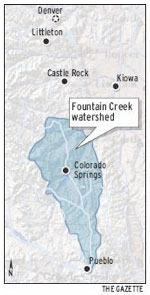
Southern Delivery System: Colorado Springs City Councillor Tom Gallagher wants Reclamation to redo the project EIS

A picture named sdspreferredalternative.jpg

From The Colorado Springs Gazette (Eileen Welsome):

In a 27-page letter sent last month to Interior Secretary Ken Salazar, Councilman Tom Gallagher, a longtime critic of the SDS project, asked that negotiations be suspended and the environmental review process be re-opened to address numerous questions. “It’s time to put the brakes on this and look at alternatives that don’t use Pueblo Reservoir,” he said Thursday…

In his July 7 letter, Gallagher argued that major events have occurred since the environmental review process was completed in 2009, including the abolishment of the stormwater enterprise by Colorado Springs voters and the imminent construction of another pipeline, the Arkansas Valley Conduit, which will be built to serve communities east of the Pueblo Reservoir in the Arkansas Valley.

CSU spokesperson Janet Rummel pointed to letters from the Environmental Protection Agency, the Army Corps of Engineers and U.S. Bureau of Reclamation stating that CSU will still be able to meet its commitment to protect water quality in Fountain Creek, despite the loss of the stormwater enterprise. The construction of the Arkansas Valley Conduit will not affect the storage space that SDS will need in Pueblo Reservoir, she added.

Michael Connor, head of the Bureau of Reclamation, rejected Gallagher’s request on Aug. 3, saying that the environmental review process was complete and that issues raised by Gallagher had been adequately addressed. He added, however, that Reclamation, an agency within the Interior Department, was continuing to monitor this “local and regionally significant” project.

Gallagher’s letter has drawn fire from Mayor Lionel Rivera, who penned his own letter to Salazar, telling him the dissident council member “does not represent the official position of the Colorado Springs City Council on the SDS project.”

More Southern Delivery System coverage here and here.

Southern Delivery System: Colorado Springs Mayor Lionel Rivera is pushing back against Councillor Tom Gallagher over the EIS for the project

A picture named puebloreservoir.jpg

From The Pueblo Chieftain (Chris Woodka):

Last week, Bureau of Reclamation Commissioner Michael Connor responded to a 27-page letter from Colorado Springs City Councilman Tom Gallagher to Secretary of Interior Ken Salazar challenging Reclamation’s evaluation of SDS and claiming that MWH, the engineering firm hired to complete an environmental impact statement, had a conflict of interest. Gallagher asked Salazar to suspend negotiations and reopen the EIS…

Meanwhile, Colorado Springs Mayor Lionel Rivera wrote [U.S. Representative John Salazar] to say the other eight members of the city council want to see a contract awarded so that construction can begin and the project come on line by 2016. “We strongly disagree with Mr. Gallagher’s assertions that SDS requires additional analysis through the National Environmental Policy Act,” Rivera said. “The project has been the subject of analysis for more than a decade, including a comprehensive 5-year review process for the EIS which cost our community $17 million.”[…]

Gallagher said the EIS does not take into account changes in the project that have taken place since Reclamation issued its record of decision in March 2009…

Rivera staunchly defends Reclamation’s process in completing the study. “The SDS alignment originating from Pueblo Reservoir was deemed the preferred alternative,” Rivera said, adding that the Colorado Springs City Council voted 8-1 on July 22, 2009, to implement the alternative with the goal of going online in 2016.

More Southern Delivery System coverage here.

Southern Delivery System: Lake Pueblo storage and conveyance contract negotions between Colorado Springs Utilities and Reclamtion to resume on August 24

A picture named sdspreferredalternative

From The Pueblo Chieftain (Chris Woodka):

The Bureau of Reclamation Thursday announced the next session of negotiations with Colorado Springs will begin at 9 a.m. Aug. 24 at the Pueblo Shrine Club, 1501 West McCulloch Blvd., Pueblo West. Colorado Springs is negotiating contracts with Reclamation for SDS for storage and conveyance of water on behalf of its partners, Fountain, Security and Pueblo West. Colorado Springs also wants a contract for a paper trade exchange of water between Lake Pueblo and Twin Lakes. As part of the deal, Fountain and Colorado Springs would exchange space in the existing Fountain Valley pipeline…

Colorado Springs is seeking 20,000 acre-feet of storage in Lake Pueblo in 2011, and would increase it to 28,000 acre-feet over the next 10 years. Pueblo West wants 10,000 acre-feet; Security, 2,500 acre-feet; and Fountain, 1,500 acre-feet. Colorado Springs also wants an annual contract for a paper trade of up to 10,000 acre-feet annually, which would trade water it stores in Lake Pueblo for Fryingpan-Arkansas Project water in Twin Lakes. Colorado Springs can pump water from Twin Lakes through the Otero Pumping Station, part of the Homestake Project it shares with Aurora.

In a related matter Thursday, Colorado Springs Project Director John Fredell and Project Manager Keith Riley presented an update on dredging costs for Fountain Creek to the Pueblo County commissioners as part of the compliance process for the county’s 1041 permit for SDS. Costs ranged from $500,000 to $1.3 million.

More Southern Delivery System coverage here and here.
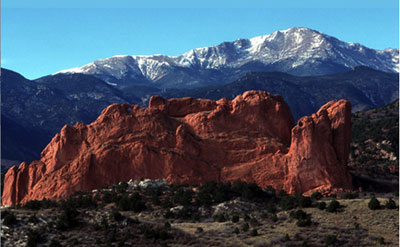
Fountain Creek Watershed Flood Control and Greenway District board meeting recap

A picture named fountaincreek

From The Pueblo Chieftain (Chris Woodka):

The Fountain Creek Watershed Flood Control and Greenway District met with FEMA officials and consultants Friday to review FEMA’s plans to release new flood plain maps for El Paso and Pueblo counties. Pueblo County maps are expected in September 2011 and El Paso County maps to follow in October 2011. “The purpose of today’s meeting is to begin to educate the board on the work the Technical Advisory Committee will be doing,” said Gary Barber, executive director of the district.

The work is significant to the district because the FEMA maps will define the area of primary authority the district has — the 100-year flood plain between Fountain and Pueblo. Perhaps more importantly, the maps will allow the district to develop policies and recommendations for future development along Fountain Creek, Barber said.

Colorado Springs is developing guidelines for development that the technical committee would like to apply throughout the watershed…

FEMA undertook its own study, after looking at old maps that estimated peak flows for a 1 percent annual chance, or the 100-year flood, at 93,000 cubic feet per second in El Paso County and 64,000 cfs right across the county line in Pueblo County, Jula said. There are often differences between counties, but FEMA and the Colorado Water Conservation Board, which oversees flood plain mapping in Colorado, wanted to bridge the unusually large gap on Fountain Creek, Jula said. The new study shows much lower numbers for a 100-year flood, roughly 39,000 cfs at both Fountain and at the confluence with the Arkansas River. “The gauges do not have consistent and concurrent data,” Jula said, pointing out that data sets from seven stream gauges were used. Not all of the gauges have functioned properly throughout the years. Particularly missing are two of the largest floods on Fountain Creek, in 1921 and 1935. The 1965 flood also is estimated, with a range of 47,000-60,000 cfs at Pinon. Under some estimates, at least on some points on Fountain Creek, the 1921 and 1935 floods were probably larger.

More Fountain Creek coverage here and here.

Southern Delivery System: Colorado Springs Utilities briefs the utilities board about storage negotiations with Reclamation in Lake Pueblo

A picture named puebloreservoir

From The Colorado Springs Gazette (Eileen Welsome):

“We’re seeing movement and I’m encouraged by that,” John Fredell, SDS project manager, said during a presentation Wednesday at the monthly meeting of the Utilities Board. The municipally-owned utility and the federal government have held three public negotiation sessions this summer on the contracts needed for the 62-mile pipeline, which will transport water north from the reservoir to Colorado Springs. During the sessions, CSU’s negotiating team has succeeded in whittling the roughly $200 million that the Bureau has been demanding to about $82 million. Utilities contends that’s still too much and would like to see the figure decline by another $40 million or so. The next round of talks are scheduled for late August…

Mike Collins, the leader for Reclamation’s negotiating team, said through a spokesperson that he also was hopeful. “While we have not yet reached agreement on all of the proposals exchanged in the last session, I am optimistic that agreement can be reached.”[…]

During the most recent round of talks, Reclamation suggested charging the utility $41.56 per acre foot of water for the excess capacity storage contracts. By contrast, CSU argued that it should be charged $25.31 per acre foot…The two sides also disagree about other costs, including an agreement that would enable the utility to do “paper” exchanges of water held in the reservoir with water in other facilities, as well as how much credit the Utility should receive for building a $30 million outlet in the damn that will transport water to the SDS pipeline and can be used by other water providers.

More Southern Delivery System coverage here and here.
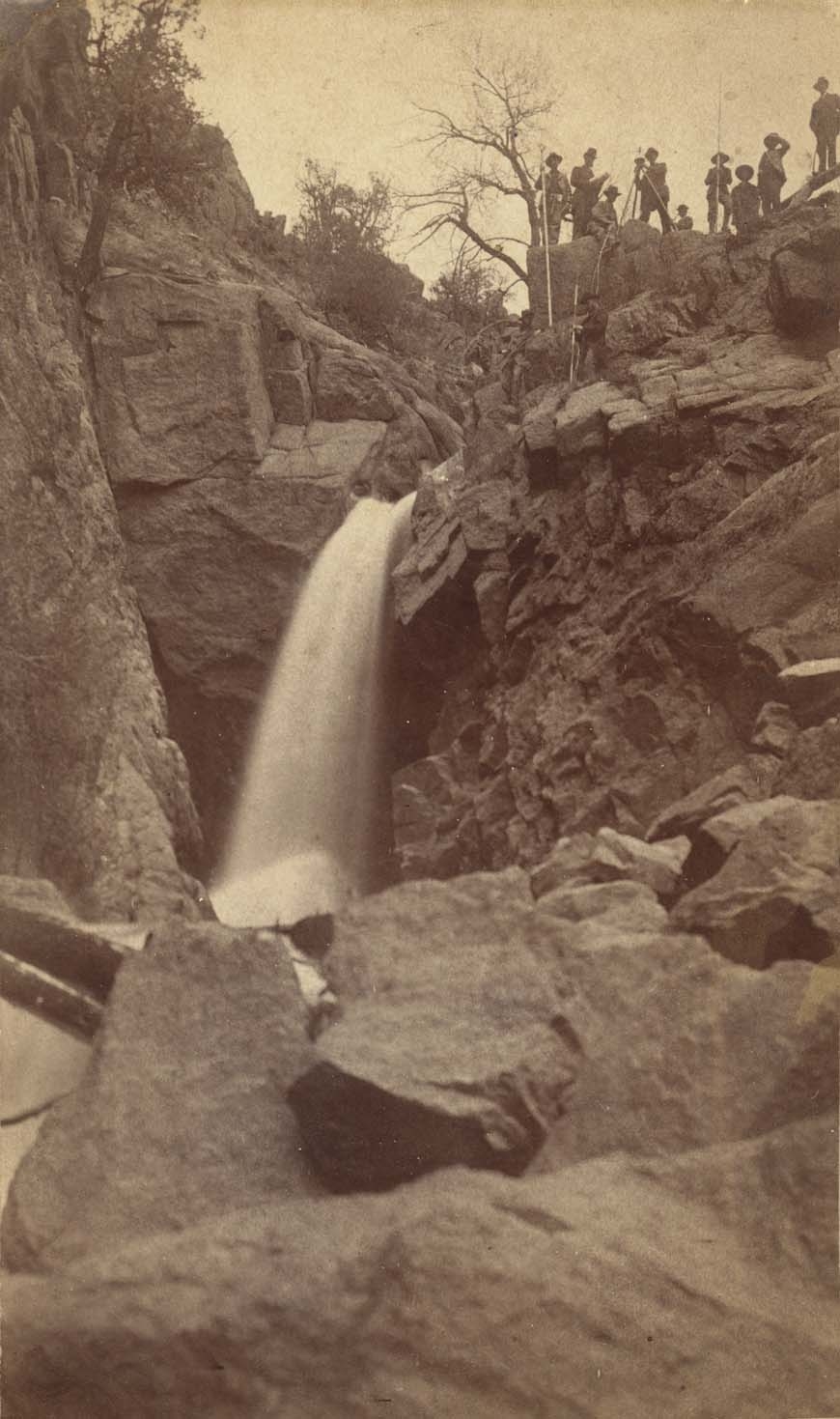
Southern Delivery System: Colorado Springs Utilities presents Reclamation with a counter-proposal in the ongoing negotiations for a an excess capacity storage contract

A picture named sdspreferredalternative

From The Pueblo Chieftain (Chris Woodka):

Colorado Springs backed into a proposed figure of $25.31 per acre-foot annually beginning in 2011. Eventually, the SDS partners would like to store 42,000 acre-feet of water in Lake Pueblo in excess-capacity space — capacity in Lake Pueblo that is not needed for storing Fryingpan-Arkansas Project water. The move came after Michael Collins, Reclamation’s area manager, asked Colorado Springs for a counter-proposal based on a market approach in a Thursday negotiating session at the Fountain Valley School.

His request had come at the end of a day of heated discussions where Reclamation would not respond to a proposal by Colorado Springs based strictly on cost of service. Collins and the rest of Reclamation’s team — federal attorney Chuck Cahoy and contract officer Lynette Smith — faced pointed questioning from SDS Project Director John Fredell and attorney David Robbins. Reclamation had dropped the rate from $50 per acre-foot to $41.56 per acre-foot annually at the end of Thursday’s session…

The proposal would resolve a dispute over control of excess-capacity in the first few hundred feet of pipeline, allowing Colorado Springs to recoup some of the cost, but making it part of the Fryingpan-Arkansas Project managed by Reclamation. Reclamation would apply the same rate to an exchange — really, a paper trade of water stored in Lake Pueblo for project water in upper reservoirs — of up to 10,000 acre-feet annually that Colorado Springs alone is requesting. Colorado Springs would pay for 1,000 acre-feet annually, but there is still disagreement about whether the city would be reimbursed if it did not use the exchange in any given year. “We appreciate receiving the proposal,” Collins said. “We’ll not give it consideration today, but withhold our decision until the next session.”

Here’s where things stood after Friday’s session according to a report from Daniel Chaćon writing for the The Colorado Springs Gazette. From the article:

…representatives from both sides said they were optimistic they could reach a deal. “It’s hard to predict how close we are, really, but I’m very encouraged by the negotiation process,” said Michael Collins, manager of the federal agency’s Eastern Colorado Area Office in Loveland. “We’ve had good sessions all the way along.”[…]

Before the end of today’s negotiation session – the fourth since May – Utilities proposed paying $25.31 per acre-foot, plus a 1.79 percent annual inflation fee. Collins said the federal agency would give the proposal “serious consideration” and provide a response at the next negotiation session, which has not yet been scheduled.

More coverage from Chris Woodka writing for The Pueblo Chieftain. From the article:

On Friday, Colorado Springs proposed building a 90-inch pipeline from the North Outlet Works to the point where the SDS pipeline would turn out to provide Pueblo West water, several hundred feet from the dam. SDS would use a maximum of 150 cubic feet per second in the pipeline, which would have a capacity of roughly four times that. “The SDS partners would use 25 percent,” John Fredell, SDS project director told Reclamation’s negotiating team. “The excess-capacity, you would control.”[…]

Reclamation Area Manager Michael Collins offered Colorado Springs a payment of $287,500 — Colorado Springs estimated $500,000; Reclamation, $75,000 — over three years to oversize the line to 90 inches to the point where SDS becomes a single-purpose project. “Future generations would say we were short-sighted if we did not do this,” Collins said. David Robbins, Colorado Springs attorney, argued that while the cost of using larger pipe is minimal, SDS participants should not bear the costs of building the $30 million North Outlet Works alone if others hook on in the future. “If third parties want to use it, they should be asked to pay the cost,” Robbins said. Friday’s proposal backed off that position. Under Colorado Springs’ calculations, the oversized portion of the pipeline would cost $23 million, but in negotiations reimbursement for only $5 million was requested…

Colorado Springs and Reclamation made progress toward a conveyance contract Friday that would be separate from the excess-capacity storage and exchange contracts that are being negotiated. Robbins suggested numerous changes in the contract language that did not substantially alter the substance of the deal. Reclamation backed off its original stance of charging for conveyance from Pueblo Dam, instead letting the SDS participants use the North Outlet Works they build at no additional charge.

More Southern Delivery System coverage here and here.

Southern Delivery System: Reclamation raises the stakes $200 million

A picture named sdspreferredalternative

From The Colorado Springs Gazette (Eileen Welsome):

At issue are $200 million in potential additional costs that the federal government wants to impose on Utilities and its partners for storage and conveyance of water through Pueblo Reservoir. Utilities contends the costs are unfair and much higher than what other water providers, such as Pueblo, are charged. “We should be treated fairly and equitably,” said Utilities’ John Fredell, SDS project director.

Colorado Springs City Councilman and Utilities board member Sean Paige said the fees are outrageous. “The whole thing is appalling,” Paige said. “The Bureau of Reclamation isn’t there to squeeze every dollar that it can from the city through these negotiations. They’re supposed to be helping us to come to an equitable arrangement to manage this water project.”[…]

Fredell and his team will face off against Bureau of Reclamation officials in a two-day session scheduled to begin 9 a.m. Thursday at Fountain Valley School of Colorado. The negotiations are scheduled to resume 8 a.m. Friday at the same location. Like the previous two sessions, May 25 in Pueblo and June 15 in Colorado Springs, the public is invited. Although public negotiations are a little like showing your cards to opponents in a high-stakes poker game, it’s the policy of the bureau to conduct negotiations in public, said spokeswoman Kara Lamb.

More coverage from Chris Woodka writing for The Pueblo Chieftain. From the article:

The next round of negotiations will begin at 9 a.m. Thursday and continue at 8 a.m. Friday at the Fountain Valley School, 6155 Fountain Valley School Road, Colorado Springs. It will be held in the Bancroft Room of the campus library. The two sides ended far apart at the end of the last session in June. Reclamation’s offer calls for storage and conveyance for $75 an acre-foot and $50 per acre-foot for an annual exchange. An annual inflation factor of 3.08 percent is included.

The terms were called “unacceptable” by SDS Project Director John Fredell at the conclusion of the last session. Colorado Springs is asking for a storage and exchange fee of $17.35 per acre-foot, with no conveyance fee for the structure it wants to build, a North Outlet Works on the face of Pueblo Dam. Its inflation factor is 1.79 percent annually. Colorado Springs is negotiating on behalf of its SDS partners, Security, Fountain and Pueblo West.

More Southern Delivery System coverage here and here.