From the Summit County Citizens Voice (Bob Berwyn):
Even more worrisome to conservation advocates are the projected declines in summer flows. Below Windy Gap Reservoir, July flows could drip by as much as 20 percent, according to the Bureau’s study, which also acknowledged that extensive mitigation measures will be needed to protect West Slope aquatic ecoystems…
But the proposed mitigation falls short of what’s needed to protect the Upper Colorado, according to Trout Unlimited, a cold-water fisheries conservation group.
Here’s the release from Colorado Trout Unlimited (Randy Scholfield):
A new federal report on the environmental impacts of a plan to expand the Windy Gap water diversion project in Colorado falls short of recommending what’s needed to protect the fragile Upper Colorado River, according to Trout Unlimited.
The Final Environmental Impact Statement, released by the U.S. Bureau of Reclamation on Nov. 30, outlines the anticipated effects of the proposed project and recommends needed mitigation.
“This new document is an improvement over the previous version in that it acknowledges the Windy Gap project will worsen conditions in the Upper Colorado River and Grand Lake unless measures are taken,” said Drew Peternell, executive director of Trout Unlimited’s Colorado Water Project. However, the mitigation proposed by the bureau falls far short of what is needed and critical problems continue to be ignored. We urge the Bureau to require additional protective measures to preserve this irreplaceable natural resource.”
“Trout Unlimited’s concerns with the Environmental Impact Statement are echoed by the Upper Colorado River Alliance, a nonprofit group that is also seeking to require more mitigation to protect the river,” said Boulder attorney Steven J. Bushong, a representative of the Alliance.
The report comes out as Trout Unlimited is launching a petition campaign to protect the Upper Colorado River and its tributary, the Fraser River, and the mountain communities, businesses, people and wildlife that depend on them. The petition campaign, based online at DefendTheColorado.org, is being spearheaded by Trout Unlimited to engage advocates for the iconic but threatened rivers. The website allows advocates to sign on to a petition that will be delivered to decision makers before the bureau makes a final decision on the Windy Gap project. That decision is expected in early January.
“The good news is that the Bureau of Reclamation’s Environmental Impact Statement says additional mitigation measures may be added before the agency makes a final decision. That highlights the importance of taking action to stand up for the river now,” Peternell said.
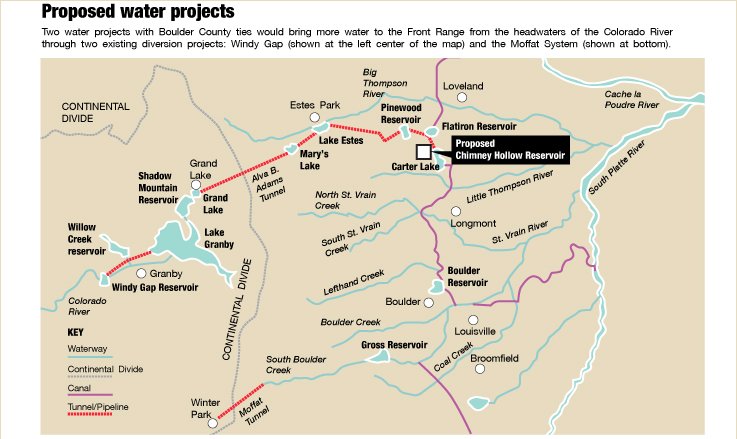
Already 60 percent of the Upper Colorado is diverted to supply Front Range water users. The Windy Gap proposal, along with a separate Moffat Tunnel water project, could divert as much as 80 percent of the Upper Colorado’s natural flows. According to Trout Unlimited, steps must be taken to protect the rivers including:
· Managing the water supply to keep the rivers cool, clear and healthy.
· Funding to deepen river channels and create streamside shade.
· Monitoring of the rivers’ health and a commitment to take action if needed to protect them.
· Bypassing the Windy Gap dam to reconnect Colorado River and restore river quality.“The Final Environmental Impact Statement continues to ignore existing problems that will be made much worse by the Windy Gap project,” said Sinjin Eberle, president of Colorado Trout Unlimited. “A study released by the Colorado Division of Parks and Wildlife earlier this year shows that entire populations of native fish and the insects they feed on have all but disappeared from the Colorado River below the Windy Gap Reservoir. The state study blames the reservoir and the lack of spring flows that clean sediments from the stream beds and warns that expansion of the Windy Gap project poses additional threats to the health of the river and the aquatic life in it.” See http://www.cdphe.state.co.us/op/wqcc/Hearings/Rulemaking/93/Responsive/93rphsTUexG.pdf
The Windy Gap project also impacts the health of Grand Lake. “Grand Lake – once a pristine lake of dramatic clarity and scenic beauty – has become cloudy, weedy and silty because of diversion water pumped into the lake from Shadow Mountain reservoir,” said John Stahl of the Greater Grand Lake Shoreline Association. “Nothing in the FEIS mitigation plan is helpful in addressing the existing problems–at best it maintains the status quo while more likely creating even bigger problems.”
The Environmental Impact Statement indicates that the Bureau of Reclamation will monitor to ensure that mitigation is adequate and will impose additional measures if necessary. “That’s helpful but needs to be more clearly articulated. Another critical addition is the construction of a bypass around the Windy Gap dam,” Eberle added.
The DefendTheColorado.org campaign highlights the people who depend on the rivers.
“The Colorado and Fraser rivers aren’t just bodies of water, they are the lifeblood for wildlife, local communities and the state’s recreation economy,” Eberle said. “But many Coloradans are unaware that these rivers are on the brink of collapse because of diversions. DefendTheColorado.org’s purpose is twofold – to raise awareness about the threats facing the Colorado and Fraser and to give people a way to stand up for our rivers.”
Eberle added, “We can’t afford to let these rivers literally go down the drain.”
A new feature of the website called “Voices of the Fraser” profiles local Fraser Valley residents and visitors who speak eloquently about their connection to the Fraser River and the need to preserve healthy flows. Among the individuals profiled are Olympic skier Liz McIntyre, logger Hoppe Southway and landscape artist Karen Vance.
“It would be a shame to see any of these tributaries dry up just for the sake of developing the Front Range,” said Southway in his profile. “It’s the water my children and grandchildren are going to want to see someday, and I hope it’s protected for future generations.”
Visitors to the site also have added their voices about why the river is important to them.
“I have fished and hiked the Fraser and Upper Colorado river regions for over 30 years and am deeply saddened by the degradation of these great watersheds,” a Golden, Colo., resident wrote.
A Bonita Springs, Florida, resident wrote: “I LOVE fishing that stretch of water and find such a simple peace of being in that area. Please don’t mess with such a special place.”
“As a visitor and fisherman to Colorado on a regular basis, my tourist dollars help the local communities,” noted a resident of Blue Springs, Missouri.