Whither El Paso County’s stormwater efforts now?

From the Colorado Springs Independent (J. Adrian Stanley):

Last week, voters turned down the Pikes Peak Regional Drainage Authority, to be funded by nearly $40 million a year in fees, despite a series of devastating floods in the area and concerns that a lack of stormwater maintenance could put Colorado Springs Utilities’ $841 million Southern Delivery System pipeline project in jeopardy.

“I wasn’t surprised,” Small says of the 53-percent-to-47-percent defeat. The public is resistant to taxes in general, he says, but there’s also the feeling that stormwater really shouldn’t be its problem, because developers should have installed adequate systems in the first place. And for most of the city, stormwater isn’t a problem. Floods tend to concentrate in certain neighborhoods.

“It’s all localized issues,” Small says, “and unless you experience those issues, you don’t relate to the need to manage that stormwater.”

The leading candidates in the April city mayoral election agree that stormwater will need to be addressed with new taxes or fees, and that the key will be communicating better with voters.

El Paso County Commissioner and mayoral candidate Amy Lathen says she sees no reason to throw away two years of work that went into the Authority proposal, including public input, engineering studies and project lists. Lathen was a key player in putting the Authority forward, and she stands by the proposal. But she says the ballot question was only approved a month before the election, leaving little time for a campaign, and misinformation was widespread.

Lathen wants to keep the task force that created the Authority proposal, but explain that proposal more clearly and tweak it to make it more palatable. She also says the task force needs to better explain that while stormwater may not flood your backyard, it can threaten the bridges you drive over daily, or even put access to clean water at risk.

Former mayor and current candidate Mary Lou Makepeace feels similarly. One difference: While Lathen says the plan and money must be regional, Makepeace is willing to consider setting aside city funds for stormwater, though she calls that option undesirable because it could mean cutting back on other city services. Like Lathen, she’d also like to try again for a regional solution, this time with better communication…

Outgoing Colorado Attorney General and mayoral candidate John Suthers, who also prefers a regional solution, says he feels a measure could pass if leaders explain to voters that stormwater infrastructure affects the economy. As attorney general, he says, he was contacted by representatives of major companies “that everyone would recognize” who said they had long considered expanding into the Springs but were dissuaded by political turmoil and poor infrastructure. He says Mayor Steve Bach should have been involved in the Authority early on, and then used his position to champion it. Not doing so, he says, echoing the other candidates, was a “failure of leadership.”

Bach, who has not yet said whether he will run again, has his own plans for stormwater. He hopes to pass a funding mechanism, perhaps a sales tax, that would pay for city infrastructure, including stormwater improvements.

Whether a stormwater program in the Springs is a requirement to operate the Southern Delivery System in early 2016 is debatable. John Fredell, SDS program director, says the permits for the projects only refer to containing additional water, which he says should be fully controlled by new drainage requirements the city set. He notes that Colorado Springs Utilities is committed to spending more than $100 million to repair and protect utility infrastructure from stormwater damage and flooding, and is on track to do so.

But Terry Hart, Pueblo County commissioner and the Pueblo County representative on the Fountain Creek District board, says stormwater work is a requirement of the permits. Pueblo County was meeting with lawyers on Monday, Hart says, to decide what legal action to pursue. That action could include suing to prevent the operation of SDS until a stormwater system is in place.

In a statement to the Independent, influential Pueblo Chieftain publisher Bob Rawlings said, “Colorado Springs and its voters have not been supportive of finding and funding solutions for flood control on Fountain Creek throughout the discussions about Southern Delivery System. It should not have been built and should not be turned on until those questions are answered.”

More stormwater coverage here.

Rejection of stormwater plan could mean lawsuit for Colorado Springs — Colorado Springs Gazette

From The Colorado Springs Gazette (Monica Mendoza):

A failed stormwater proposal could trigger legal action from Pueblo County and is expected to become a campaign issue in the race for Colorado Springs mayor. Voters rejected a proposal Tuesday to create a regional stormwater authority that would have collected annual fees from property owners to pay for flood control projects in Colorado Springs, Manitou Springs, Green Mountain Falls, Fountain and parts of El Paso County.

Now, the lack of a stormwater funding program has one Pueblo County commissioner wondering how promised flood control projects that affect his county will be paid for.

“It’s not an option not to address flooding and stormwater issues,” said Pueblo County Commissioner Sal Pace, who was re-elected to a four-year term Tuesday. “Colorado Springs owes us legally. I expect Colorado Springs to find the money somewhere else.”

Voters rejected a proposal that would have generated about $40 million a year for 20 years to pay for 114 flood control projects. Proponents ran a $200,000 campaign with billboard, television and radio advertisements. But it wasn’t enough to sway opponents, who said the proposal lacked a guarantee that the new money, collected in fees, would be in addition to what each city and the county already spend on stormwater projects, a provision called “maintenance of effort.”

“You give government more money to solve the problem and they spend the money on something else and the problem gets worse,” said Steve Durham, who runs the group Citizens for Cost Effective Government, which spent about $25,000 on radio advertisements opposing the measure. “There is a lack of confidence created by city of Colorado Springs when they ceased their maintenance of effort.”

Pace said by his estimation controlling the water flow in Fountain Creek was part of the deal Colorado Springs Utilities agreed to in 2009 when Pueblo signed off on permits needed for a projected $1 billion Southern Delivery System project to bring Arkansas River water stored in Pueblo Reservoir to Colorado Springs.

When the permits for SDS were inked, Colorado Springs had a stormwater fee in place and a list of projects designed to head off floodwaters going south, Pace said. But the fee ended in 2011 and left Pueblo officials wondering if the promised flood control projects would be built. He had hoped voters would approve the regional stormwater fee proposal.

Pace said he will consult the county’s attorney and look into legal action to ensure the agreements in the permits are followed.

“If Pueblo County believes that Colorado Springs has not lived up to its end of the bargain on the permit, we can take action to revoke the permit,” Pace said. [ed. emphasis mine]

Utilities officials said they are living up to the negotiated terms with Pueblo. They say the stormwater proposal that voters rejected this week was aimed at the backlog of flood control projects while the negotiated permits with Pueblo address future growth in the city.

City Councilman Merv Bennett, who chairs the Utilities Board, said Utilities has committed to spending $131 million to mitigate flooding and make improvements along Fountain Creek.

“We will continue to work closely with Pueblo County commissioners,” Bennett said. “I will call the commissioners and hear their concerns so we can work to address those.”

However, Bennett, who will be up for re-election in April in an at-large City Council seat, said he was disappointed the stormwater fee proposal failed. He hopes stormwater will be a 2015 campaign issue.

“It’s such a critical issue for our city and for our neighbors,” he said.

It may be too soon to start proposing alternative solutions, said Attorney General John Suthers, who announced in September that he intends to run for mayor of Colorado Springs.

“I think we have to be totally open-minded,” he said. “We need to come back. This has to be dealt with but we need to go back through the process of consensus building.”

Mayor Steve Bach issued a proclamation before the election detailing his opposition to the stormwater ballot proposal. Among his concerns were the number of Colorado Springs representatives on the stormwater authority board; whether Colorado Springs would get to spend the money its residents contributed; and whether the authority could make changes to projects and spending without public input. Bach did not return a phone call Wednesday seeking comment.

Suthers agreed that stormwater will become an election issue and expects it to be discussed.

He believes the stormwater proposal was rejected because there was “a failure of collaborative leadership.”

“You had a group of incredibly hard-working citizens that went to work on this for two years, and they had a lot of public hearings and they fashioned a proposal that took into account what they heard,” he said. “Then along comes the mayor, who had every opportunity to participate in this process, and he did not participate in a meaningful fashion.”

Suthers declined to comment on how the lack of a stormwater program affects Pueblo and the permits related to the SDS project.

“This might involve potential litigation that Colorado Springs might be involved in,” he said.

El Paso County Commissioner Amy Lathen, who was on the stormwater task force that brought the issue to the ballot, said the group will talk with voters about what they did not like in the proposal.

“Forty-six percent of the voters believed in our plan,” she said. “That’s a great place to start.”

Lathen was the first to announce her intention to run for Colorado Springs mayor, and said she expects stormwater to be a campaign issue.

“Now, we go back to the drawing board and figure out what is going to be successful,” she said.

“This is too important to let go.”

More stormwater coverage here.
Fountain Creek: “They’re selfish and the vote shows they don’t care about their neighbors downstream” — Jay Winner

From The Pueblo Chieftain (Chris Woodka):

Pueblo County officials are considering legal options after a two-year effort to form an El Paso County drainage authority for Fountain Creek went down the drain Tuesday. Particularly irritating for them was the decision by voters to approve keeping $2 million in tax money for parks while rejecting a plan to fund more than $700 million in flood control backlog.

“They may develop some nice parks, and hopefully they’ll have water to put on those parks,” said Jay Winner, general manager of the Lower Arkansas Valley Water Conservancy District. “They’re selfish and the vote shows they don’t care about their neighbors downstream. The vote on Tuesday was very divisive to Southern Colorado.”

“I’m angry and disappointed,” added Pueblo County Commission Chairman Terry Hart. “They’ve put the question to voters twice and stormwater has failed twice. With these votes, it’s clear the people in El Paso County value entertainment more than honoring their commitments.”

The vote could have repercussions for the Southern Delivery System, an $841 million water pipeline from Pueblo Dam to Colorado Springs.

“Colorado Springs and its voters have not been supportive of finding and funding solutions for flood control on Fountain Creek throughout the discussions about Southern Delivery System,” said Pueblo Chieftain Publisher and Editor Bob Rawlings. “It should not have been built and should not be turned on until those questions are answered.”

The Lower Ark District voted last year to sue the Bureau of Reclamation over its approval of the SDS contract despite the lack of a steady stream of funding for stormwater, which Colorado Springs had indicated was in place during a study. The district asked for a supplemental study monitoring SDS impacts without stormwater funding in place. The lawsuit was put on hold until after the election.

“We did not want to be blamed for the failure of the stormwater vote,” Winner said. “To me, this is not unexpected. I just don’t think they care.”

The Lower Ark board will consider its legal options at its Nov. 19 meeting.

Pueblo County also will huddle with lawyers on potential violations of its 1041 permit for SDS, which includes stormwater controls. Hart said the county also is concerned about the Reclamation permit for use of Lake Pueblo and a state water quality permit in light of Tuesday’s vote.

“Every conversation we’ve had with our friends to the north has been ‘be patient.’ We told them we would sit back and watch,” Hart said. “Our patience is at an end. In fact it may be gone.”

The other commissioners had similar views.

“They’re obligated legally and morally to control stormwater,” said Commissioner Sal Pace. “If they have to dry up some parks or not pave some streets, they need to figure it out.”

“I would share my dismay with Colorado Springs Council President Keith King (who was quoted on the radio Tuesday night),” said Commissioner Liane “Buffie” McFadyen. “They need to regroup and secure funding for flood control on Fountain Creek. I would add that it’s up to their leadership to inform the voters.”

From The Pueblo Chieftain (Chris Woodka):

A two-year effort to get El Paso County rowing in one direction on Fountain Creek flood control fell apart like a sandy bank falling into the stream Tuesday. But Colorado Springs officials have not given up on finding a way to fund flood control.

“I think that it’s unfortunate that the stormwater initiative didn’t pass here in El Paso County, particularly considering the storms, floods and issues we’ve had in the last couple of years,” said Larry Small, a former Colorado Springs council member who now manages the Fountain Creek Watershed Flood Control and Greenway District. “Hopefully the people will become more aware and reconsider the issue at some future point.”

A task force started by Colorado Springs council members and El Paso County commissioners in 2012 became a private organization promoting the Pikes Peak Drainage Authority in this year’s election. But its efforts to promote were counteracted by signs in Colorado Springs front yards that read: “No rain tax.”

Council voted 7-2 and commissioners 5-0 to put the measure on the ballot last summer.

But Colorado Springs Mayor Steve Bach in August issued a proclamation claiming the fee was too high and tied up money for 20 years. He has promoted other ways to fund stormwater control, bundling it with other capital needs. On the day after the election, Bach announced stormwater would be added to the topics at a series of community meetings that will begin next week. In any case, the soonest another election would be held is next April.

“Everything from Mayor Bach to date has grossly underfunded stormwater,” said Pueblo County Commissioner Terry Hart, who added that the county is looking at legal action as a result of the failed vote. “I need to see something concrete.”

Colorado Springs Utilities continues to take the position that the 1041 permit applies to future development, not the historic needs that were listed in the stormwater initiative, said Gary Bostrom, chief of water services. However, Utilities wants to see stormwater control succeed.

“We will remain focused on doing our part to support a longterm solution to fund stormwater infrastructure needs,” Bostrom said. “In addition to our many efforts underway to improve Fountain Creek, Colorado Springs Utilities will continue to work with community leaders to develop a stormwater solution that our residents can support.”

From KRCC:

In El Paso County, voters strongly supported issue 1A for a revenue retention to help fund county parks. Voters rejected a proposal to create a regional drainage authority to fund storm water repairs. In Manitou Springs, issue 2G, which would have prohibited marijuana sales, was soundly defeated.

More Fountain Creek coverage here and here.

Stormwater measure picks up broad support as opponents point out flaws — The Colorado Springs Gazette #COpolitics

Channel erosion Colorado Springs July 2012 via The Pueblo Chieftain

From The Colorado Springs Gazette (Monica Mendoza):

The campaign on stormwater has become a David vs. Goliath match in terms of spending and visible support.

Proponents of El Paso County Measure 1B, which would spend $40 million a year to plan, build and maintain drainage and flood control projects in four cities and portions of the county, have raised nearly $200,000 for their messaging, including television and radio commercials and billboards. The proposal has endorsements from the Regional Business Alliance, local construction and development companies, the Housing and Building Association and the Downtown Partnership.

“We are very pleased with the support we’ve gotten from the community,” said Kevin Walker, co-chairman of the regional stormwater task force that led the charge in developing the proposal. “It’s a lot of people who recognize there is a need to address this issue, and it’s past time to do that.”

The opposition is tougher to gauge. There is no splashy television campaign against 1B – just a handful of signs placed near the billboards. Douglas Bruce, the author of the Taxpayer’s Bill of Rights and the man who coined the phrase “No Rain Tax” in 2008, has a website and has been handing out fliers at events and around downtown.

Bruce said the stormwater proposal is flawed because it attempts to catch up on an estimated $700 million in backlogged projects but does not require future development to pay for flood control. Further, he said, no price tags are attached to the 114 projects listed as part of the plan, and there’s no guarantee that the projects will be built or in which order.

“In my 50 years of being involved in political activity, I have never seen a worse ballot issue,” he said.

Voters in Colorado Springs, Manitou Springs, Fountain, Green Mountain Falls and parts of El Paso County will be asked to create the Pikes Peak Regional Drainage Authority, a governmental entity that would collect fees to pay for planning, building and maintaining flood control projects such as channels, detention ponds and curbs and gutters. The proposal would allow the authority to collect fees based on the size of a property and its impervious surface, meaning driveways, parking lots and rooftops.

This month, the El Paso County Commission approved a resolution of “advocacy” in favor of the stormwater proposal.

“This plan has gone through an arduous development process to make it the most responsible plan possible. Ultimately, the people will decide, but we have to stand up as elected officials to explain to them how big the stormwater problem has become and how important it is to our to public safety, to our roads and bridges, to the protection of private property and to economic development,” said Commissioner Amy Lathen, who was a member of the stormwater task force.

The key question organizers of the proposal have been asked is, “how much is this going to cost me?” The proposed ballot question says the average residential property owner would pay $7.70 per month – $92.40 per year on the residential property tax bill.

The problem with the proposal is that fees would apply to nonprofit agencies and schools, said Vince Rusinak, a retired Air Force civil engineer and member of the Pikes Peak Area Council of Governments. He has been on the board of directors for nonprofit agencies such as the Boys and Girls Club and said that the proposed stormwater fees would take money from programs. A chart of estimated rates shows nonprofits could pay from $41.58 a year to $3,750 a year depending on the amount of impervious surface.

“That is a huge amount to those organizations,” Rusinak said.

It’s true that a stormwater fee would dip into program budgets for nonprofit organizations, said Dave Somers, executive director at the Center for Nonprofit Excellence. But the proposed fee structure, he said, is fair to nonprofit groups and schools and is lower than fees that would be imposed on commercial, industrial and government properties.

In an unprecedented move, the Center for Nonprofit Excellence weighed in on the election issue, giving the proposal its endorsement.

“With the last few years of floods, our board and staff and members recognized the importance of the community coming together in identifying a solution,” Somers said.

Organizers of the initiative believe the authority could collect about $40 million a year. Fifty-five percent of the money collected would be spent on capital projects and that portion of the fee would sunset after 20 years. However, 45 percent of the money, which would be used for administration, maintenance and emergency needs, would continue on until the authority retired it, organizers of the initiative said.

Mayor Steve Bach, who issued a proclamation in August detailing his opposition to the stormwater proposal, is uncomfortable with a never-ending portion of the fee. In his proclamation, he also said the authority could raise fees without voter approval.

Bach, who had been the most visible opponent of the proposal but recently stepped back from public comments on the issue, has said the proposal creates an unnecessary layer of government. Colorado Springs Councilwoman Helen Collins agrees. She said the city of Colorado Springs spent $46 million on stormwater projects in the past two years. An authority, she said, would shave 1 percent of the money collected off the top for administration costs.

Bruce, who finds himself aligned politically with Bach for the first time, applauded the mayor’s proclamation and added that if voters approve the stormwater fee, it will be attached to their annual property tax bill and a property owner could not refuse to pay it or the county would put a lien on their property.

“It’s on a property tax bill,” he said. “If you don’t pay the bill, it’s a threat to your home.”

Colorado Springs tried to solve its stormwater issue in 2008 when the City Council approved the creation of a Stormwater Enterprise – a property fee used to pay for drainage projects. The enterprise was phased out and ended by 2011 after voters approved the Bruce-sponsored Issue 300, and the enterprise was viewed as an illegal tax imposed without voter 
approval.

In August 2012, El Paso County commissioners and the council convened a summit to talk about flooding and drainage problems across the region and how to pay for them. The November ballot issue is modeled after the Pikes Peak Rural Transportation Authority, created in 2004 by voters in Colorado Springs, El Paso County, Manitou Springs and Green Mountain Falls. The PPRTA collects a 1 percent sales tax for transportation and transit improvements.

In November, the stormwater task force commissioned the Washington, D.C.-based WPA opinion research firm to survey 400 registered voters – 80 percent in Colorado Springs and 20 percent elsewhere in El Paso County – to find out if flood control is on residents’ radar. Ninety-five percent of respondents said flood control is important, and two-thirds of those said it is very important. An additional 81 percent said there should be a dedicated funding source to pay for drainage projects.

Bruce said that same survey showed that 44 percent of the respondents agreed with the fee.

“Any ballot issue that starts out under 50 percent before the opposition even surfaces is doomed,” Bruce said. “Ballot-issue support always slides; it doesn’t rise.”

Walker said the 44 percent is the amount of survey respondents who said they would prefer a fee compared with a sales tax or a property tax. It was meant as a research question and not a ballot question, he said. Once the task force settled on a fee structure, it did not conduct another 
survey.

“We are optimistic that we can win,” Walker said. “But it’s not over until it’s over.”

More, from The Gazette:

5 things to know about 
Measure 1B

1. If the measure is approved, Colorado Springs, Manitou Springs, Fountain, Green Mountain Falls and parts of El Paso County would form the Pikes Peak Regional Drainage Authority. The governmental agency would have an 11-member board of directors made up of elected officials from each entity.

2. The authority would collect fees on all property. The fee is based on the amount of impervious surface – driveways, rooftops and parking lots.

3. The authority expects to collect about $40 million a year. Of that, 55 percent of the money would be used for a list of 114 projects identified as high priority for the region; 35 percent of the money would be used for maintenance and operations; and 10 percent would be set aside for emergencies. At the end of 20 years, the portion of the fee – 55 percent – used for capital projects would sunset. The rest of the fee would remain in place until the authority dissolved it.

4. Fees would be added to annual property tax bills. Unpaid property tax bills trigger a lien process.

5. For more information, go to http://PikesPeakStormwater.org or http://NoRainTax.net

More 2014 Colorado November election coverage here.

“If I have 24 hours of floodwater on the Colorado Canal, I’m going to take it. I need it” — Matt Heimerich

Fountain Creek Watershed

From The Pueblo Chieftain (Chris Woodka):

A district formed to improve Fountain Creek last week made an appeal for those with water rights to get involved in the early stages of a study to build flood control structures.

“Water rights protection is something we should do before we get into any other aspect of flood control on Fountain Creek,” Larry Small, executive director of the Fountain Creek Watershed Flood Control and Greenway District told ditch company board members Friday.

Small spoke during the annual meeting of the winter water storage program, bringing experts in to talk about the issue of public safety vs. water rights.

“We’re not working in a vacuum,” said Mark Pifher, who represents the Arkansas River basin on the state Water Quality Control Commission.

Denver’s regional Urban Drainage Authority and the city of Aspen have raised questions with the Colorado Division of Water Resources over how floodwater detention rules work in the state, Pifher explained.

State Engineer Dick Wolfe has adopted policies that say that single-site developments can hold water for 72 hours, but that regional floodwater control projects must augment any water detained with equivalent releases under a substitute water supply plan. That same principle was applied to Fountain Creek when the city of Pueblo built a detention pond behind the North Side Walmart as part of a demonstration project. The city learned it needed an augmentation plan after the project was well underway. Urban Drainage and Aspen officials are not pleased with the policy and are looking at potential state legislation to force a change in that policy, Pifher said.

Short of a blanket change that would allow the 72-hour rule to apply, the Fountain Creek district wants to study whose rights would be affected by holding back a large flood.

A study by the U.S.

Geological Survey completed last year provided solid numbers about how much water dams or detention ponds would hold back at certain points on Fountain Creek. That in turn can be applied to the flows at the Avondale gauge on the Arkansas River, which is upstream from every major ditch except the Bessemer below Pueblo Dam.

Flood stage

After Pueblo Dam went into operation 40 years ago, it was determined that flood stage at Avondale was 6,000 cubic feet per second. Floods upstream of Pueblo Dam are contained by curtailing releases to that level.

The last time flood control protection from that type of event was in 1999. Flows on Fountain Creek are measured and Pueblo Dam can be cut back to prevent that flooding from affecting Avondale as well, said Bill Tyner, assistant division engineer.

“You can have those huge flashy flows on Fountain Creek and find ways to cut back at Pueblo Dam to protect downstream communities,” Tyner said.

Reservoirs on Fountain Creek would have to perform differently, because there would not be Bureau of Reclamation staff on hand to open or shut release gates, he said.

Quenching all thirst

Several storm events that occurred in the past four years caused the Avondale gauge to top 6,000 cfs for several hours.

“Those spot events did not satisfy everyone’s needs downstream,” Tyner said.

That doesn’t matter if you’re a farmer.

“If I have 24 hours of floodwater on the Colorado Canal, I’m going to take it. I need it,” said Matt Heimerich of Crowley County.

“Those floods are the only way we get water in storage,” said Donny Hansen, president of the Holbrook Canal.

The direct rights downstream from Avondale and above John Martin Reservoir can be met with about 4,115 cfs, but storage rights on the canals total 3,631 cfs, he explained. Water rights below John Martin require another 1,534 cfs to be met.

So, all water rights below Avondale on the Arkansas River total about 9,282 cfs.

The 6,000 cfs at Avondale might be enough to satisfy all those rights, since the return flows of one ditch are reused downstream, a factor of about 1.5 times, he said.

But the envisioned dams on Fountain Creek are aimed at stopping monster 100-year floods — the type where heavy rain falls for several days. In the USGS study, a large dam or series of dams upstream of the Fountain Creek confluence would cut in half the peak flow of a 100-year flood — 44,000 cfs, or five times the amount of water needed to fulfill all downstream water rights.

The 100-year flood flow at Avondale, coincidentally, is 44,000 cfs, according to the USGS.

Moving ahead

The Fountain Creek district is not the only agency working at flood control in the Pueblo area. The Pueblo Conservancy District, in the headlines recently for its plan to rebuild the Arkansas River levee through Pueblo, also is responsible for the flood plain from Pueblo to the Otero County line.

“The high flows on Fountain Creek are a source of erosion that affects the land in our district down below,” said Bud O’Hara, a retired water engineer who is on the Pueblo Conservancy District board.

O’Hara showed graphs that point out about a dozen smaller events this year that created the potential for minor erosion events.

Farmers, on the other hand, generally like the erosion on Fountain Creek because it is part of the process that carries sediment downstream to help seal ditches. Many still grumble about the “clear water” that resulted from the construction of Pueblo Dam. In effect, it meant the erosive properties of the river were transferred downstream as more erosion occurred within ditch systems.

Abby Ortega, an engineer for Colorado Springs Utilities working with the Fountain Creek district, asked the farmers to provide suggestions for consultants to study the issue.

“We’re looking at how to build structures and not injure water rights,” she said. “We’re asking for your input.”

“I think the model we should use is the irrigation efficiency rules that was hosted by Dick Wolfe,” Heimerich responded. In that process, farmers and others affected by proposed rules guiding ditch improvements met for 18 months and were able to give immediate feedback. “It’s just too important not to do it right.”

More Fountain Creek coverage here.

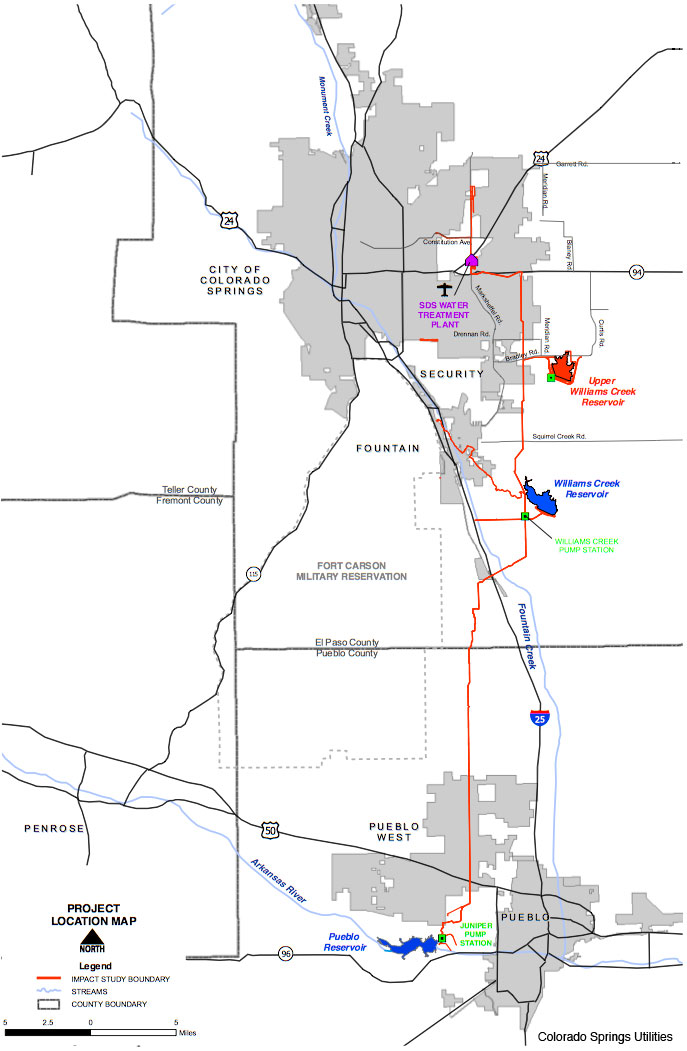
How will CSU’s $50 million for Fountain Creek mitigation be spent?

Southern Delivery System route map -- Graphic / Reclamation
Southern Delivery System route map — Graphic / Reclamation

From The Pueblo Chieftain (Chris Woodka):

While the decision of how to spend $50 million for flood control on Fountain Creek to benefit Pueblo will be made by the parties directly involved, other input will be needed.

“Anyone who wants to come to the table and says, ‘We want to find out where money for these projects will be available,’ is welcome,” Pueblo County Commissioner Terry Hart said.

Last week, Hart made a pitch to the Fountain Creek Watershed Flood Control and Greenway District to begin planning now for the arrival of $50 million in payments from Colorado Springs Utilities after Southern Delivery System goes online in 2016. That money is seen as seed money for projects that could amount to $150 million or more identified in a corridor master plan. The money was negotiated by Pueblo County under its 1041 agreement with Utilities in 2009 for the construction of the SDS water supply pipeline through the county. It is to be used for flood control projects on Fountain Creek that benefit Pueblo County. When the district was established later in 2009, it became the recipient of the money.

“At a minimum, Pueblo County, CSU and the Fountain Creek district need to be involved, and they will have the final say,” Hart said.

But the city of Pueblo and the Lower Arkansas Valley Water Conservancy District also should have input about how the money will be used, Hart said.

The greatest potential damage from Fountain Creek flooding is within the city of Pueblo and in the communities of the Lower Ark Valley downstream from Fountain Creek.

“The Lower Ark District was instrumental in developing the corridor plan, and we definitely need the technical input from the city of Pueblo,” Hart said.

The corridor plan, a joint effort of Utilities and the Lower Ark district, identifies projects between Fountain and Pueblo that could cost several times the $50 million that was earmarked under the 1041 agreement. Pueblo already has participated in pilot projects to demonstrate flood control techniques.

In addition to technical assistance, Pueblo County’s attorneys will have to be involved to determine whether projects meet the conditions of the 1041 permit. This will be important to avoid the kinds of dispute that developed when the Lower Ark raised objections about how its contributions to the district were being spent.

“I see this new committee working in concert with the steering committee (Utilities, Lower Ark and the Fountain Creek District),” Hart said.

More Fountain Creek coverage here.

Boulder unveils flood mitigation plans; Council not on board

Surfing Boulder Creek September 2013 via @lauras

From the Boulder Daily Camera (Erica Meltzer):

The leading version of the South Boulder Creek flood mitigation project would remove 893 homes in southeast Boulder from the 100-year floodplain, but it would also involve building a 23-foot berm through a recognized state natural area with endangered tall-grass prairie habitat.

That was a step too far for Boulder City Council members, and on Tuesday night, they asked the city’s flood engineers to take up discussions with the University of Colorado about using land the university owns for its future south campus instead.

The council heard an update Tuesday on the city’s flood mitigation efforts in the aftermath of 2013’s damaging floods. Boulder remains one of the cities at highest risk for flash flooding in Colorado.

The most likely flood scenarios — and the ones the city’s mitigation efforts are designed to limit — involve intense rainfall over a short period of time, not the days of sustained rain the city experienced last year.

Several council members asked what the city could do about flooding from groundwater, which caused 47 percent of the damage last year, either directly or indirectly in the form of sanitary sewer backups.

The city’s wastewater utility has developed plans to line older clay pipes to reduce groundwater infiltration during large rain events, but there’s no practical or legal way to lower the groundwater table, Jeff Arthur, director of public works for utilities, told the council…

But Arthur stressed that the flood scenarios modeled by the city’s engineers and reflected in floodplain maps are both more likely to occur than an event like the 1,000-year rain of 2013 and more likely to produce significant damage and loss of life.

The flooding in most of Boulder’s major drainageways in 2013 was the equivalent of a 10- to 25-year flood event. Only Twomile Canyon Creek experienced a greater than 100-year flood, while South Boulder Creek, Goose Creek and Fourmile Canyon Creek experienced 50- to 100-year flooding.

The city is in the planning stages of four flood mitigation efforts: Boulder Creek, Bear Canyon Creek, Gregory Canyon Creek and South Boulder Creek.

Mitigation planning efforts on Upper Goose and Twomile creeks, Skunk Creek, King’s Gulch and Bluebell Creek will start in 2016, after floodplain map revisions along those watersheds are complete.

Gregory Canyon will present significant challenges because so many homes are so close to the creek, and it will be impossible to do a mitigation plan that takes those homes out of the 100-year floodplain, short of simply removing the homes, engineers told the council. Instead, engineers are looking for ways to break up the channels to reduce the impact of flooding there.

The South Boulder Creek mitigation planning process has been underway for several years, and consultants and the city’s Water Resources Advisory Board had settled on a $46 million recommendation that would involve a major regional detention area south of U.S. 36 and smaller detention areas near Manhattan Middle School and on the Flatirons Golf Course.

Modeling of likely flood scenarios indicate a 100-year flood of South Boulder Creek would cause $215 million in damage. City Council members watched an animated simulation that showed much of southeast Boulder filling with water.

However, the large detention facility would have a significant impact on open space owned by the city that includes endangered tall grass prairie habitat, wetlands areas and a number of endangered and threatened plant and animal species.

The open space board officially objected to the plan as proposed, and the water resources board revised its position, recommending that the upstream and downstream pieces of the project be separated.

The two smaller detention areas could be built for $23 million with relatively few regulatory hurdles and would still take 294 dwelling units out of the floodplain…

Councilman George Karakehian said building the berm through open space was not politically feasible.

“I think that would be a tough one to get built in our community,” he said.

A revised version of the South Boulder Creek mitigation plan is expected to be presented to the City Council later this fall.

More Boulder Creek coverage here.

The Fountain Creek District launches series of meetings to iron out rights protection with flood mitigation

Fountain Creek Watershed

From The Pueblo Chieftain (Chris Woodka):

The question of how flood control projects on Fountain Creek can be built without harming water rights will be taken up next month in the heart of farm country.

The Fountain Creek Watershed Flood Control and Greenway District will host the first of a series of meetings to discuss the issue during the winter water meeting set for Oct. 17 at Otero Junior College in La Junta.

The winter water meeting will be hosted by the Southeastern Colorado Water Conservancy District and will bring together some of the largest ditch companies east of Pueblo.

The group determines how a court-decreed program that allows farmers to store water in Lake Pueblo or ditch company reservoirs outside the growing season will operate.

That’s similar to the issue at hand on Fountain Creek, where flood control dams have been proposed, primarily to protect property in Pueblo.

At the July meeting of the Arkansas Basin Roundtable, a grant that proposed to look at the feasibility of Fountain Creek dams was rejected out of hand because several farmers objected to altering water rights to accommodate the dams.

They argued that junior water rights would be injured by such storage.

The timed release of water at more useful times in programs such as the winter water program could actually enhance water rights, however. Some have said this is possible with flood control dams.

In fact, the Denver Urban Drainage District is attempting to work through the same issue, Executive Director Larry Small told the board.

“We need to make it clear we have no intention of harming anyone’s water rights,” Pueblo County Commissioner Terry Hart said.

Several other meetings are planned by the Fountain Creek district to determine if flood control can be done in a way that keeps junior rights whole.

Meanwhile, the district is starting to prioritize spending prior to Colorado Springs’ $50 million payment as part of the Southern Delivery System. Here’s a report from Chris Woodka writing for The Pueblo Chieftain:

A district formed to improve Fountain Creek wants to start planning how it will use $50 million in funding that will begin arriving when the Southern Delivery System pipeline comes on line.

“We have to get an idea of what our priorities are before a dime arrives,” said Pueblo County Commissioner Terry Hart, a member of the Fountain Creek Watershed Flood Control and Greenway District board.

The $50 million will be paid to the district over five years by Colorado Springs Utilities as part of its 1041 agreement with Pueblo County. The money is for building flood control projects that primarily benefit Pueblo, such as a dam or series of dams.

SDS is projected to be fully permitted and online as soon as 2016, so the checks could begin coming in early 2017.

The district does not want to be put in a position of having to directly spend the money, but wants to use it to leverage funding from other sources.

“The projects identified so far exceed $100 million,” Hart said. “There could be even more as we branch out of the core area. We need to find the best ways to leverage other grants.”

Hart asked the board to form a committee specifically to look at how the money would be spent. It would include representatives from Pueblo County, the district and Utilities.

That conversation comes even as the district watches the progress of a stormwater vote in El Paso County this November and sets its budget for next year.

The vote will determine whether Colorado Springs and its neighbors will agree to fund stormwater improvements to the tune of $39 million annually beginning in 2016. That would satisfy other requirements of the 1041 agreement.

The district also is looking at whether its own budget could be paid with advance interest payments from Colorado Springs Utilities or if it’s time to pass the hat again among member governments.

At the meeting, Hart noted that the district is relying heavily on voluntary contributions and must start looking at its real operating costs if it is to become sustainable.

Finally, water quality is a concern and responsibility on Fountain Creek as well. Here’s a report from Chris Woodka writing for The Pueblo Chieftain:

While the focus lately has been on reining in water on Fountain Creek, the quality of that water is important too.

“We have a statutory duty to clean up the Fountain Creek watershed,” said Pueblo County Commissioner Terry Hart Friday at the meeting of the Fountain Creek Watershed Flood Control and Greenway District. “There are significant problems that we still don’t know enough about.”

So the board caught up on the science of water quality from Del Nimmo and Scott Herrmann, who have spent years studying water quality on Fountain Creek, the Arkansas River and Lake Pueblo.

The three are interconnected, Nimmo explained.

“We have tremendous resources and they are all connected,” Nimmo said. “They are tied to the reservoir.”

Lesson 1: Invasive species in Lake Pueblo will have more opportunity to spread to Fountain Creek and reservoirs in Pueblo County when the Southern Delivery System pipeline is completed, Herrmann explained.

Lesson 2: Mercury has accumulated in the water and fish in the headwater areas of Fountain Creek and Monument Creek, where the scientists did not expect to find it. Nimmo’s theory is that emissions from power plants or from former smelters in both Pueblo and El Paso counties contributed to this, but that’s not been proved. He suggested the district think in terms of an “airshed” as well as a watershed.

Lesson 3: The researchers have baseline data about water quality prior to the large, destructive Waldo Canyon and Black Forest fires. They also collected samples of the charcoal-laden water after the first big rainfall following the Waldo Canyon Fire in 2012.

“This study needs to be repeated about now, in the next year, to see what effect the fire had,” Herrmann said.

Nimmo and Herrmann have headed up numerous Fountain Creek studies at Colorado State University-Pueblo over the past decade. Herrmann has studied aquatic life in Lake Pueblo since its construction in the early 1970s. Nimmo was involved in other studies on the Upper Arkansas River near Leadville as well.

“We need to continue this type of study,” Hart said. “It should be a district project.”

More Fountain Creek coverage here.

@CityofSteamboat starts to revamp stormwater maintenance program without busting its budget — Steamboat Today

Here’s an excerpt.

A year after the city was grappling with the potentially enormous cost of improving its aging stormwater system, the city has started to revamp its stormwater maintenance program without busting its budget or assessing property owners a new fee to help cover the cost.

The city also is earning kudos as it starts to adopt the recommendations of a much-praised citizen task force that spent more than 500 volunteer hours analyzing the city’s storm water infrastructure.

“We’ve historically maintained maybe a dozen culverts per year, and typically we’re just chasing problems and complaints,” Kelly Heaney, the city’s new water resources manager, said last week as she briefed the council on the improvements. “This year with the additional resources we were able to maintain 45 culverts in less than two months.”

Steamboat City Council members liked what they heard.

The biggest changes the city has made this year include hiring Heaney, increasing the streets maintenance budget and adding two seasonal employees dedicated to drainage maintenance.

All of the stormwater improvements in 2014 cost $302,000 and included $47,000 for capital improvements, according to Public Works Director Chuck Anderson.

The total cost of the improvements this year was far less than some of the multi-million dollar options the city was presented with last year for improving its neglected stormwater system.

Early last year, a Minnesota consulting firm that was paid $180,000 to study the city’s stormwater infrastructure, which includes bridges, culverts and dams, called for the city to possibly spend more than $10 million in new capital projects to upgrade its stormwater system and help manage future flooding and problems associated with annual spring runoff.

Faced with the high cost, city officials at one point floated the idea of assessing a fee to property owners to help pay for the improvements.

Before that, city officials were bracing for recommendations carrying a price tag even higher than the $10 million.

The city assembled the stormwater task force to look over the master plan and make recommendations for how to implement and fund it.

While several other communities in Colorado have turned to new fees on property owners to pay for expensive upgrades, the task force here recommended against that option at this time.

Instead, they called on the city to add more money in the annual budget for personnel to more proactively maintain the system.

More stormwater coverage here.

Sean Cronin: “…as of August 28, 2014, 91% of the 44 damaged ditches are now back online” #COflood

Sean Cronin and John McClow at the 2014 CFWE President’s Award Reception

When asked back in January of 2014 to put something together for Coyote Gulch I responded “am really short on time, my calendar frees up in March”. Well spring came and went, summer was a blur and now it is a full year since the devastating floods of September 2013. To be honest, if I wrote something in January, I think it would have been a bit pessimistic, as often times the recovery efforts were all consuming and really challenged any sense of hope. Ironic that it was the workload of the flood recovery that prevented me from writing and it was the flood that taught me yet another lesson, let things ferment and breath; given time even dire situations will eventually show you an encouraging future.

In September 2013, St. Vrain Creek experienced a catastrophic flood event which uprooted roadways, severely eroded private property, ruined homes, dramatically changed the creek corridor, and significantly damaged or destroyed public and private raw water infrastructure. Because there were limited federal, state and local jurisdictions to modify the post-flood stream condition, it became clear to many that private/public partnerships and multi-agency cooperation was critical for a successful recovery.

During the early weeks of the September 2013 Flood recovery, repairs were occurring in some locations, though in other areas property owners were asking “who is going to fix this?” The St. Vrain and Left Hand Water Conservancy District immediately recognized that the property owners’ rights needed to be a top priority. However, the scale of the flooding disaster and the interconnectivity of a living steam and associated ecosystem presented some financial and interdependency challenges. For example, it was not a stretch to imagine that there would likely be instances of individual efforts to restore specific segments of the stream that would then create problems downstream.

To minimize recovery challenges and maximize limited resources, many agencies, including Boulder County, City of Longmont, Town of Lyons, and the St. Vrain and Left Hand Water Conservancy District, promoted and implemented a strategy of collaboration. The collaboration along St. Vrain Creek started in the weeks following the flood and was quickly viewed by impacted citizens as safe, un-bureaucratic, nimble, and effective. In the months to follow, the Colorado Water Conservation Board (CWCB) provided significant financial assistance to ditch companies, in addition to numerous agencies for the furtherance of collaboration. Today these collaborative efforts are now known as “Coalitions”, and one is occurring in each of the flood impacted tributaries of the South Platte River.

Through vision, leadership, hard work, multi-agency and nonprofit support, and Ditch Company and property owner persistence the recovery effort has far surpassed the expectations of many who stood in awe of the flood ravaged areas. For example, within the boundaries of St. Vrain and Left Hand Water Conservancy District (DWR District 5) 44 of the 94 local ditches suffered damaged infrastructure from the flood at an estimated cost of $18.4M.

Through FEMA, CWCB, and grants administered by Northern Water, financial assistance was provided and as of August 28, 2014, 91% of the 44 damaged ditches are now back online, with 93% expected back online after 2014. Furthermore, many ditch companies recognized the need to rebuild their infrastructure with consideration given to the ecosystem and to design elements that would withstand future high-flow events. In the St. Vrain Creek alone, there are three new diversions that pre-flood were fish impediments, and are now fish passable, with an additional four diversions under consideration or design. Although the collaborative Coalitions didn’t lift a shovel, their collective expertise, continual internal and external communications, and identification of financial and technical resources played a key role in the recovery.

A full report and executive summary of the ditch infrastructure repairs, maps, and photos are available on the website of St. Vrain and Left Hand Water Conservancy District (http://www.svlhwcd.org), under the “2013 Flood” tab.

One year later, the work is still not complete. Each of the Coalitions are actively working on producing their own watershed specific “Master Plans” that when complete will promote a holistic healthy riparian corridor and a stream system that will be better able to handle future floods, while preserving critical infrastructure, including that used for agricultural production. If successful, these Master Plans will be embraced by affected property owners, water rights owners, ditch companies, and government agencies.

As water mangers we are trained to manage around the extremes of drought and spring runoff. September 2013 reminded me that Mother Nature is letting us manage, but when she wants to change the rules, we are pretty much at her mercy. It is said that over time memories of disasters wane resulting in some people rebuilding in a manner that does not mitigate future disaster risk. Time will tell – for now I am hopeful that our professional water community learned from this disaster and those lessons can be passed on to future water managers.

For me, the events that transpired in September 2013 will shape my approach to water management. As I look back, I am confident the water system we rebuilt is reflective of our societal values and a wonderful legacy for future caretakers of our natural resources. Everyone involved in this recovery should be very proud to be in a profession that cares so deeply about “managing” a resource that provides for the incredible quality of life we all enjoy. I will just continue to be mindful who is really in charge.

Below is a gallery of then and now photos of the irrigation infrastructure along the St. Vrain River. Credit to the ditch companies.

Here’s a presentation from Boulder County: 2014-08-05_ByTheNumbers_FinalWithTalkingPoints

Finally, here’s a map of the river with the locations of enhanced fish passage noted.

More St. Vrain River coverage here

Fountain Creek “Creek Week” September 27 thru October 5

From The Pueblo Chieftain (Chris Woodka):

Plans are being made to clean up litter throughout the Fountain Creek watershed during Creek Week, Sept. 27-Oct. 5 in Pueblo and El Paso counties.

The event is sponsored by the Fountain Creek Watershed Flood Control and Greenway District, which was formed five years ago to improve the drainage.

At its last meeting, the Fountain Creek board learned more than 20 groups already have committed time, materials or money to the effort.

Trash that makes its way into Fountain Creek can degrade water quality, harm wildlife, create safety hazards and clog irrigation or drainage structures.

Businesses, churches, schools, nonprofits, neighborhood associations, youth groups, service clubs and individuals are encouraged to form work groups, pick a work date within the time frame, pick a location and pick it up.

Information about Creek Week and how to register a crew is available at http://fountain-crk.org.

More Fountain Creek coverage here.

Fountain Creek flood mitigation dam(s) and the issue of prior appropriation

Flood irrigation in the Arkansas Valley via Greg Hobbs

From The Pueblo Chieftain (Chris Woodka):

A discussion about water rights, the first step to looking at building dams or detention ponds on Fountain Creek, is moving ahead. The project is being coordinated by the Fountain Creek Watershed Flood Control and Greenway District, and would fit in with a larger study looking at flood control on Fountain Creek.

It’s a hot-button issue with farmers in the Lower Arkansas Valley, who see the capture of flood flows on Fountain Creek as a threat to junior water rights. At an Arkansas Basin Roundtable meeting last month, the need for a water rights study killed a proposal to look at the feasibility of building dams.

A $58,000 program by the Fountain Creek district will look at just the water rights issue. It will be funded by Colorado Springs Utilities, Pueblo West, Security, Fountain, the Pueblo Board of Water Works and the Southeastern Colorado Water Conservancy District, with in-kind support from Utilities and the Fountain Creek district. The process will bring together downstream water rights holders and state officials in a series of meetings to identify how water rights could be harmed by projects meant to provide public safety and what action could be taken to mitigate the damage.

All of the questions about how water moves throughout the Arkansas River basin would not be answered, but some ways to provide water through releases from Lake Pueblo or by timing releases from Fountain Creek structures would be explored, said Mark Shea, Fountain Creek point man for Utilities.

“There could be other beneficial uses, providing waterfowl or fish habitat, and allowing flood flows to be exchanged up Fountain Creek,” Shea said.

Melissa Esquibel, Pueblo board member of the Lower Arkansas Valley Water Conservancy District, said the Lower Ark also should be involved in the project.

“There is a lot mistrust and misinformation, so we need to take the right path,” she said. “There are legitimate concerns that arise from past issues.”

Pueblo County Commissioner Terry Hart agreed.

“If we are perceived as an 800-pound gorilla, we’ll get nowhere,” Hart said. “We’re talking about people and their livelihoods.”

Pueblo City Councilwoman Eva Montoya, who chairs the Fountain Creek board, said the dialogue is an opportunity to balance public safety and the need to protect water rights.

“We need to rebuild trust,” she said.

More prior appropriation coverage here.

“It’s a well thought out proposal that we’ve been working on for two years” — Dennis Hisey #COpolitics

Fountain Creek Watershed

From The Pueblo Chieftain (Chris Woodka):

El Paso County voters will decide in November whether to implement a fee to provide $39 million annually for stormwater protection by creating the Pikes Peaks Regional Drainage Authority. Commissioners Tuesday finalized an intergovernmental agreement and placed the issue on the ballot on a 5-0 vote.

“It’s a well thought out proposal that we’ve been working on for two years,” said Dennis Hisey, chairman of the commissioners. “It’s a vehicle that will put our stormwater protection on track with other communities throughout the state.”

The 11-member authority would include the mayor of Colorado Springs, five members appointed by Colorado Springs City Council, two members appointed by commissioners and one each from Fountain, Manitou Springs and Green Mountain Falls.

The authority would collect up to $39 million in 2016 through fees collected on property within the Fountain Creek watershed. The fee would be determined based on impervious surface area, density, land use and ownership, according to the IGA. Over the next 20 years, the money would go toward a $700 million list of projects, and after that, a smaller fee would pay for maintenance. The average homeowner would pay about $7.70 per month.

Mayor Steve Bach opposes the fee, which he calls a tax, and has suggested alternative ways to finance improvements Colorado Spring needs and is obligated to make under its permits for the Southern Delivery System. Colorado Springs City Council supported the IGA by a 7-2 vote.

“We’re expecting a robust campaign,” Hisey said. “Any time you ask for money, there’s a need to educate the voters and make your case.”

More stormwater coverage here.

Dam dilemma looms for planners — The Pueblo Chieftain

Fountain Creek Watershed

From The Pueblo Chieftain (Chris Woodka):

Building dams to slow down the pace of floodwater could save lives and reduce the destruction of property. But, it might also deprive a farmer of irrigation water or even deliver more to neighbors with more senior water rights. It could cause conflicts with neighboring states that have entered into compacts with Colorado.

Dams, detention ponds and even debris basins meant to trap sediment while allowing water to flow freely in areas ravaged by wildfire could be subject to state water rights administration. That’s the opinion of officials at the Colorado Division of Water Resources.

“I think we’ve clearly articulated how we view the law and there are not any gaps from an administrative standpoint,” said State Engineer Dick Wolfe.

But districts formed to control stormwater are discussing whether state water law could block efforts to stem the worst effects of floods. And they’re looking at changing the law to give more weight to arguments to detain water.

The Urban Drainage and Flood Control District, which was formed to assist Denver metro area counties with stormwater protection, has asked the state to clarify its position on whether flood control would have priority in any instance. Meanwhile, the Fountain Creek Flood Control and Greenway District is preparing a series of conversations with water rights holders on the same topic.

“If we as a district are going to be successful, we have to become involved,” Executive Director Larry Small told the Fountain Creek board at its August meeting.

The state’s position is that detaining water in a regional project could injure junior water rights.

In 2011, the state explained that its policy of allowing 72-hour detention of floodwater applies only to single-site projects, rather than regional detention ponds, said Kevin Rein, deputy state engineer. The rule has often been invoked in flood control discussions and usually misinterpreted. The Fountain Creek district found out about this firsthand when it constructed a demonstration project along Fountain Creek in Pueblo behind the North Side Walmart. It was required to file a substitute water supply plan.

But there are no hard and fast rules governing flood detention.

“We do not find a legal basis to make an absolute finding that diversions of stormwater into regional water quality detention are allowable, nor do we find a basis to determine that such diversions would cause no injury,” Rein concluded in his letter to the Urban Drainage district.

Even the debris basins built by Colorado Springs after the Waldo Canyon Fire have the potential to run afoul of state water law, said Steve Witte, Division 2 engineer. “If they encounter groundwater, they have to be augmented with a SWSP,” Witte said. “If it’s in a normally dry stream, it may qualify as an erosion control dam, which if it holds less than 2 acre-feet of water is statutorily exempt.”

So far, the state has looked at about 30 of those structures in the Colorado Springs area.

Flood control is not impossible. One of the stated benefits of Pueblo Dam under the Fryingpan-Arkansas Project is to provide protection from floods. The operating rules of the dam allow holding back water if the Arkansas River is above 6,000 cubic feet per second at the Avondale gauge — a level that satisfies most water rights downstream.

However, Fountain Creek officials know they could have a tough time trying to unravel the water rights questions that will accompany any dam or detention pond project.

“It’s going to be a tough fight, but the best way is to confront it,” said Pueblo County Commissioner Terry Hart. “We have to put an effort together to try to negotiate it up front. The only way to identify the issues is to speak to those who might be hurt downstream.”

More stormwater coverage here.

2014 Colorado November Election: Colorado Springs City Council approves IGA connected with stormwater enterprise ballot issue

Pikes Peak with Garden of the Gods in the foreground

From The Pueblo Chieftain (Chris Woodka):

Colorado Springs City Council Tuesday approved an intergovernmental agreement connected with a ballot issue to form the Pikes Peak Regional Drainage Authority. The vote was 7-2.

The issue is expected to be placed on the ballot by El Paso County commissioners at their meeting next week. It would establish the authority to include the county, Colorado Springs, Fountain, Green Mountain Falls and Manitou Springs. The authority would raise about $39 million annually through fees to address a $700 million backlog in stormwater projects.

Stormwater control on Fountain Creek was one of the premises Colorado Springs Utilities used to obtain permits from Pueblo County and the federal government in order to build the Southern Delivery System.

Colorado Mayor Steve Bach immediately opposed the measure. He said the average bill of $92.40 per year would be 77 percent higher than the fee for the former stormwater enterprise and roughly the same amount homeowners now pay (in property taxes) for all city services combined.

“I believe this IGA is not fair to the citizens of Colorado Springs,” Bach said in a statement.

More 2014 Colorado November election coverage here.

Woodland Park stormwater management

From the Colorado Springs Independent (J. Adrian Stanley):

These are the facts accepted by all parties: Last summer and this summer, Green Mountain Falls has seen destructive floods following unusually heavy rains. The town was not affected by the Waldo Canyon Fire. The floods are not the result of runoff from a burn scar. And Woodland Park, located up the pass, has added major developments in recent years, including some alongside Fountain Creek.

Public officials interviewed for this story said they weren’t ready to start playing the blame game. But some people in Green Mountain Falls, especially those who live or own businesses along the creek, are getting edgy. A few have seen bridges washed out multiple times. Mayor Lorrie Worthey says even her home, which is located on a hill, recently had a flooded mudroom.

“There is more water coming down from Woodland; Woodland has grown a lot,” Worthey says carefully. “With that, we are going to get more water.”

Bill Alspach, Woodland Park’s public works director and city engineer, also is cautious when speaking of the Green Mountain Falls flooding. “Woodland Park has strived to be a good steward of the headwaters,” he says.

Woodland Park development affects two watersheds, Fountain Creek and the South Platte. Since the 1990s, the Fountain Creek side has seen the building of Walmart and Safeway stores, each with sprawling parking lots. An apartment complex is also currently under construction.

Alspach says Green Mountain Falls shouldn’t be affected by such development because Woodland Park has had strict stormwater development requirements since 1994. Driving behind the Walmart, he points out two large, grassy retention ponds that slowly release runoff during storms. He’s checked those ponds during downpours, he says, and they’ve been doing their job.

The Safeway doesn’t have such ponds, but Alspach says that’s on purpose, because allowing the water to run off there was found to reduce peak flows in the creek. The apartment complex also has retention ponds, and sits next to a $2.1 million stormwater project that was recently completed by the city and the Federal Emergency Management Agency. Water flows in an underground box culvert, and is slowed by barricades before it hits a large channel.

He also points out private and public retention ponds that dot the town, especially in newer developments.

Woodland Park just forked over $100,000 for stormwater repairs needed after a damaging July storm, and is still paying off bonds from major stream work in 1998 and 1999. Alspach says he’s working his way west-to-east along Fountain Creek, doing upgrades. By the end of next year, he hopes to be close to finishing all the improvements in the city area, and to have a study in hand of what needs to be done on private and Teller County land that stretches between the eastern edge of the city and the Walmart.

All this work has been done, Alspach notes, with money from grants, Woodland Park’s limited general fund budget, a special streets fund and stormwater fees. It’s been done despite the fact that the town is too small to be bound by state permits for water quality.

“We have really endeavored to do the right thing for a long time,” he says.

More stormwater coverage here.

2014 Colorado November election: El Paso County Stormwater issue on November ballot #COpolitics

Fountain Creek Watershed

From The Colorado Springs Gazette (Monica Mendoza):

It’s the end of the third quarter in the proposed stormwater funding plan, and a group of residents who have been working on the issue for two years have their game faces on. They saw a contract approved by the El Paso County Board of Commissioners on Tuesday that outlines how a regional stormwater authority would work and be governed should voters approve it in November.

But as the task force members and their consultants huddled after the meeting, there was little time to feel cocky about the victory. It’s a milestone, said Dave Munger, co-chair of the regional stormwater task force, but the game isn’t finished – or won – yet.

“The fourth quarter will be the election,” he said.

Munger’s co-chair and consultant to the group Kevin Walker added: “Nov. 4 is when it will be over.”[…]

If the committee work was the first two quarters of the game, then the third quarter got rough and tumble in recent meetings as [Colorado Springs Mayor] Bach, council members and the rest of the task force hashed out the details of the stormwater contract, called an intergovernmental agreement. The council approved the contract, without most of Bach’s proposed changes.

Bach held a news conference Aug. 13, announcing that he would not support the proposed stormwater authority. The same day the task force held a news conference to tout its plan.

And now the campaign season, or the fourth quarter, begins, Walker said.

Voters will be asked to OK an annual stormwater fee, which would be roughly $92 a year for a home with 3,000 square feet of impervious surface. If approved, a regional authority expects to collect about $39.2 million a year for 20 years.

Most of the money would be spent on construction projects and maintenance and operations of existing flood control projects.

About 10 percent of the fees collected would be set aside for flooding emergencies.

More 2015 Colorado November election coverage here.

2014 Colorado November election: Pikes Peak Regional Drainage Authority issue to be on ballot, Mayor Bach balks

Pikes Peak with Garden of the Gods in the foreground

From The Pueblo Chieftain (Chris Woodka):

El Paso County commissioners Tuesday voted 4-0 to put an issue on November’s ballot that would create the Pikes Peak Regional Drainage Authority to pay for storm water control. Voting for the measure were Chairman Dennis Hisey, Amy Lathen, Darryl Glenn and Peggy Littleton. Commissioner Sallie Clark was absent.

The authority would raise $39.2 million annually to address a $700 million backlog in stormwater projects in the Fountain Creek watershed.

Stormwater control is one of the premises Colorado Springs Utilities used in gaining approval from the Bureau of Reclamation and Pueblo County to build the Southern Delivery System, a pipeline to ship water from Lake Pueblo to El Paso County.

“With this step, the hard part’s over,” Hisey said.

Last week, Colorado Springs City Council approved, on a 7-2 vote, an intergovernmental agreement with El Paso County and other cities in the Fountain Creek drainage.

The next day, Mayor Steve Bach said he opposed the authority. proposals for ways to fund stormwater control within Colorado Springs.

A list of projects, which will be attached to the ballot proposal has yet to be approved, and will probably be in place by the El Paso County commission’s Sept. 2 meeting, Hisey said.

That would give Colorado Springs City Council time to review the list.

From The Colorado Springs Gazette (Matt Steiner):

The approval is a huge step in “controlling stormwater,” said Commissioner Amy Lathen, who has played a major role in the regional stormwater task force that first met in August 2012. Dave Munger, co-chairman of the task force, was at Tuesday’s meeting and joined a small contingent who let out a smattering of applause after the commission’s vote.

Munger echoed Lathen about the need to solve stormwater issues regionally.

“Everyone, just about everyone, is aware of stormwater and its significance. Everyone agrees that it is a regional problem,” he said, noting that governments working together will create “a synergy that we’ve never realized.”

The decision appeared to be an easy one for the commissioners. But some debate arose after Colorado Springs Deputy City Attorney Tom Florczak gave the commissioners 18 projects the city insists be added to a list attached to the county’s 
resolution.

Florczak said the City Council did not include a project list in its resolution that passed on a 7-2 vote Aug. 12.

“The concern of the administration was that by having the list, it is limited,” Florczak said.

“It boils down to one word, flexibility,” said Steve Gardner, the Colorado Springs director of public works who was with Florczak on Tuesday.

After the City Council’s vote on the PPRDA, Mayor Steve Bach held a news conference announcing that he would not support the stormwater initiative.

More 2014 Colorado November election coverage here.

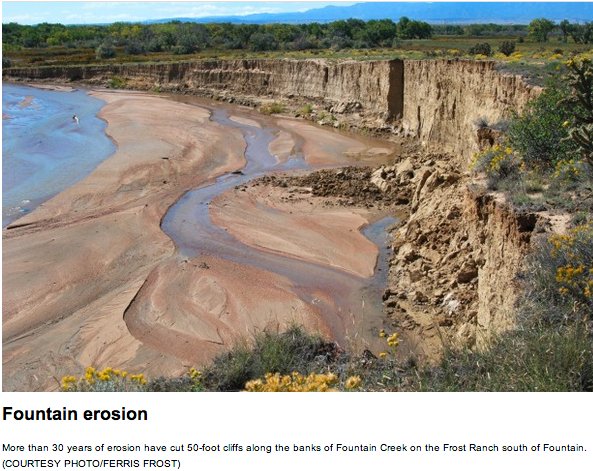
Fountain Creek erosion mitigation project results encouraging

Fountain Creek erosion via The Pueblo Chieftain

From The Pueblo Chieftain (Chris Woodka):

A project to restore a small portion of Fountain Creek could have benefits for longer reaches.

“There are 51 miles of bank on each side of the creek from Colorado Springs to Pueblo,” said Larry Small, executive director of the Fountain Creek Watershed Flood Control and Greenway District. “Now we know a method to use to control erosion.”

Small was giving a report to the Arkansas Basin Roundtable, which gave the green light to a $146,000 state grant toward the $189,000 project last year to undertake the project on Frost Ranch, located in El Paso County about 25 miles north of Pueblo.

The project restored the channel and fortified the bank along 480 feet of the Frost Ranch. Past floods had eaten away about 70 feet of the bank, including vegetation. Three tiers of dirt secured by netting rising about 4 feet were chosen as the way to restore this particular area. About 7,500 willow plants, along with grasses and other vegetation to hold the shore.

Work began in April and was completed in mid-May.

The first test of the work came on May 23, when the creek swelled to 3,000 cubic feet per second, rising nearly to the top of the newly constructed embankment, Small said. The work held, and the moisture spurred plant growth. About 75 percent of the plants survived.

A larger wave of water, 5,000 cfs, came on July 23. While some of the water overtopped the bank and deposited sand along the top, the bank stayed in place.

The roundtable applauded the district’s efforts.

“Frost Ranch has been an excellent neighbor to the creek,” said SeEtta Moss of Canon City, who was appointed to the roundtable to represent environmental interests. “I’m delighted to see what’s been done.”

More Fountain Creek coverage here.

Colorado Springs City Council OKs regional stormwater contract — Colorado Springs Gazette

From The Colorado Springs Gazette (Monica Mendoza):

Members of the regional stormwater task force cheered Tuesday when the Colorado Springs City Council voted 7-2 to approve a contract for a stormwater funding program that was two years in the making.

With a sigh of relief following the vote, council member Jan Martin said the city has been trying to find a way to pay for millions of dollars in stormwater, flood control and drainage projects needs for a decade…

The contract and proposed November ballot language that would create a regional stormwater authority still needs to be approved by the other parties in the intergovernmental agreement: the El Paso County Board of County Commissioners, Green Mountain Falls, Fountain and Manitou Springs. All have indicated they will OK the contract.

The contract – the result of dozens of public meetings, community surveys and hours of public discussion – outlines the terms and duties of a Pikes Peak Regional Drainage Authority, a governmental agency that would plan regional flood control projects.

Voters are expected to be asked to OK an annual stormwater fee, which would be roughly $92 a year for a home with 3,000 square feet of impervious surface. If approved, a regional authority expects to collect about $39.2 million a year for 20 years. Most of the money would be spent on new construction projects, and maintenance and operations of existing flood control projects. A pot of money – about 10 percent of the fees collected – would be set aside for flooding emergencies.

An 11-member board would oversee the planning of the regional stormwater projects, and Colorado Springs would have six seats on the board.

But not everyone is happy. Mayor Steve Bach plans to hold a press conference Wednesday to detail his objections to the contract. He says it binds the city to a list of projects and does not give the city flexibility in cases of flooding emergencies. The contract infringes upon the city’s ability to manage its affairs, he said.

The stormwater contract requires that money collected from property owners in each city be spent in their city over a five-year rolling average, except for the emergency fund. Bach said spending the emergency pot of money will be decided by the authority’s board, which could reject a Colorado Springs project, he said.

“(The emergency fund) will not be returned to each city over a five-year rolling average,” he said. “Is it fair for third-party bureaucracy to have no responsibility to return it if we have an emergency in our city?”[…]

Bach also raised concerns about the proposed ballot language. He said it doesn’t detail the amount of the fees that will be assessed on each property.

“We need to be straight with the voters,” Bach said…

El Paso County Commissioner Amy Lathen, a member of the stormwater task force, noted that Colorado Springs is guaranteed a majority of the seats on the board, and said it is disingenuous for Bach to suggest that Colorado Springs, which has 80 percent of the flood control needs, would get short shrift.

From The Pueblo Chieftain (Chris Woodka):

Colorado Springs City Council approved, 7-2, an intergovernmental agreement Tuesday that is expected to lead to a vote on a regional drainage authority for El Paso County.

“I supported a regional process (when a stormwater task force started meeting). It made sense at the time and it still makes sense,” said Keith King, council president. “Let’s put it in the hands of the voters.”

Most council members said the agreement is not perfect, but supported the opportunity to ask voters for approval of the authority. Helen Collins said there are too many taxes already and Don Knight said it does not protect Colorado Springs adequately in voting against the agreement.

The authority would raise $39 million in 2016 and is expected grow over the next 20 years to meet a backlog of more than $700 million in stormwater projects and to maintain them. Money would be spent proportionally in the participating communities.

While council OK’d the agreement, El Paso County Commissioners will have to place the issue on the November ballot, which they could do as early as next week. The IGA also must pass muster with Manitou Springs, Fountain and Green Mountain Falls.

It’s important to Pueblo County because Colorado Springs City Council abolished its short-lived stormwater authority in 2009. The authority was one of the premises of the Southern Delivery System, including Pueblo County’s 1041 land-use permit and the Bureau of Reclamation’s contract for use of Pueblo Dam and Lake Pueblo.

Colorado Springs Utilities pledged to avoid worsening flooding on Fountain Creek as a result of SDS in permit hearings.

“Down-streamers like me have watched the stormwater issue for some time and we’re excited something is being done,” said Dennis Hisey, an El Paso County commissioner from Fountain who sits on the Fountain Creek Watershed Flood Control and Greenway District.

“This is a collaborative process such as I have never seen,” said Amy Lathen, a commissioner who has worked with the El Paso County stormwater task force since 2012. “We will not take a step without full agreement on the IGA.”

Council spent nearly three hours wading through the agreement’s details, with Assistant City Attorney Tom Florczak, former Pueblo city attorney, leading the panel through changes Mayor Steve Bach wanted.

Bach met Monday and Tuesday with the council and county to negotiate changes, which was portrayed in contrasting ways by his chief of staff, Steve Cox, and Lathen.

Cox maintained that Bach had little time to review the document.

Lathen said Bach had made public, misleading statements about the agreement, particularly in portraying the assessment to property owners as a tax, rather than a fee.

During the council meeting there also was some discussion about how costs would be divided among authority members and an emergency fund. Bach wants to make sure Colorado Springs’ needs are met, and some council members were wary that Colorado Springs would bankroll payments owed by smaller communities.

“We could have a huge storm that messes up the Fountain River through Pueblo,” King said. “Do we need to treat this as an insurance policy?”

From The Colorado Springs Gazette (Monica Mendoza):

Pueblo County Commissioner Sal Pace has closely followed the negotiations over the proposed El Paso County stormwater initiative and is crossing his fingers that political bickering won’t keep the issue from the November ballot.

Pace has talked about Colorado Springs’ floodwaters for years and says the stormwater initiative is directly tied to the $1 billion Southern Delivery System, a regional project that brings Arkansas River water stored in Pueblo Reservoir to Colorado Springs.

Stormwater management in Colorado Springs has been on Pueblo’s radar since Colorado Springs Utilities committed to Pueblo and Pueblo County that it would be in compliance with stormwater responsibilities before 2016 – when the water is due to start flowing north.

When the permits for SDS were inked, Colorado Springs had a stormwater fee in place and a list of projects designed to head off floodwaters going south, Pace said. But the fee ended in 2011 and left Pueblo officials wondering if the promised flood control projects would be built.

“We know there will be more water in Fountain Creek because of SDS,” Pace said. “Part of the SDS permit was a guarantee of no increase in stormwater flows.”

Pace said if Colorado Springs’ stormwater issues are not resolved, Pueblo could take Utilities to court and challenge the SDS permits that were based on stormwater controls. No one wants to go down that path, he said.

“The fact that Colorado Springs and El Paso County are moving in this direction is a very positive step,” he said.

Colorado Springs City Council is expected to vote on the proposed regional stormwater contract, called an intergovernmental agreement, for the creation of the Pikes Peak Regional Drainage Authority at its Tuesday meeting. El Paso Board of County Commissioners will consider the contract and ballot language at its Aug. 19 meeting.

The authority, if approved by voters in November, would collect about $39 million a year for the next 20 years to pay for flood control projects in the Fountain Creek Watershed, 928 square miles with a perimeter of 160 miles. Fountain, Green Mountain Falls and Manitou Springs also are considering joining the authority.

Mayor Steve Bach has raised concerns about the proposed contract, saying that it is too restrictive when it comes to the city planning stormwater projects within the city limits. He also worries that the city would not be able to quickly respond to a flood emergency.

“We have to be careful not to put ourselves in a straight jacket,” Bach said. “What if priorities change in a few years? Colorado Springs can’t change its priorities without a supermajority of the (stormwater) board.”

Bach sent a letter to the council July 31 outlining his concerns, which include the need for Colorado Springs to have seven seats on the 11-member governing board. He said he hoped the council would consider his concerns and adjust the contract before approving it.

“I would like to support the IGA,” Bach said. “But if it is so onerous and interferes with the business of the city, I may be forced to oppose the ballot initiative.”

The council appears ready to approve the contract without the mayor’s changes.

Council president Keith King said the stormwater task force designed a regional program so that flood control projects could be planned together among the four cities and county. It would defeat the purpose of a regional project if it were to change the contract to allow Colorado Springs to act on its own.

“I’m afraid we are probably at an impasse,” King said.

Last weekend, the stormwater task force conducted a phone survey asking potential voters whether it would matter to them if Bach did not support the stormwater initiative. The results, however, are “being kept close to the vest,” said Rachel Beck, a task force member.

Councilwoman Jill Gaebler said a conflict between the mayor and council could affect voters. Some, she said, equate the bickering to distrust.

“People want us to work together,” she said.

Gaebler said she believes Bach has the city’s best interests in mind with his proposed changes to the stormwater contract. But his proposal comes too late, she said.

“This task force has been meeting for two years,” she said. “Ever since I’ve been on council, every month an invitation was sent to (the city attorney) and the staff and no one ever attended.”

Richard Skorman, business owner and member of the stormwater task force, said he doesn’t expect the recent strife to influence voters.

“No one should beat themselves up for bringing up issues at the last minute,” Skorman said. “I think everyone at the table wants the same thing.”

Skorman said Bach’s request for seven seats on the board seems reasonable, given that Colorado Springs will contribute roughly 80 percent in fees and need 80 percent of the flood control projects.

“All of those things are important,” he said. “But the biggest goal is for us to finally address flooding problems. There seems to be unanimous support for that.”

More stormwater coverage here.

“…there is a proposal afoot that would extend [EPA] jurisdiction and accompanying regulations far beyond what makes sense” — Sallie Clark

Groundwater movement via the USGS

Here’s a guest column (The Pueblo Chieftain) from Sallie Clark dealing with the Environmental Protection Agencie’s proposed clarification of “Waters of the US” under the Clean Water Act:

Coloradans have a special appreciation for the beauty of nature all around us. Everyone benefits from the beauty and bounty of America’s rivers, streams, lakes and other waterways. Of course, these natural resources should be protected from irresponsible polluters, and regulations are in place to ensure clean water in our communities.

But, there is a proposal afoot that would extend federal jurisdiction and accompanying regulations far beyond what makes sense. The National Association of Counties (NACo) sees this proposal as a critical issue, and in my role as First Vice President of NACo and a Colorado county commissioner, I am concerned about how these rule changes will impact local communities.

A new rule, proposed by the Environmental Protection Agency and the Army Corps of Engineers, would erase the distinction between bodies of water — such as streams and lakes — and ditches on the side of a road. According to the proposed redefinition of “Waters of the U.S.,” a river would be no different than a public safety ditch; a lake no different than an emergency flood mitigation system.

This latest example of over-regulation makes no sense and creates more confusion than it seeks to address.

Local water conveyances, such as ditches and flood control channels, may fall under federal regulation in this unworkable proposal. It is unclear how far it would extend into drainage systems. That means counties would be required to obtain federal permits to do routine maintenance work on a roadside ditch or storm-water drain. These are essential components of effective water management.

In many cases, the nation’s counties are responsible for maintaining storm drains and other water conveyance systems that keep people safe from rising waters. They often pay a high price to wait for the federal government to issue permits. This new red tape would slow down the process even more and potentially put more people in harm’s way by inhibiting projects that keep water off of roads and away from homes.

The costs and delays of this federal over-regulation would have a significant impact on public safety and economic prosperity. To give a concrete example of some of these concerns, maintaining drainage is critical to keeping our roads safe and open for use, and it requires daily attention. Increasing fees due to additional regulatory permitting for all runoff, as anticipated by the proposal, could bring maintenance efforts to a halt.

How this regulation would be administered is unclear and would be especially cumbersome if it went directly through federal offices not adequately equipped to accommodate heavier permitting.

The expense for plan preparation would add costs not accounted for in our existing budgets.

If fully exercised every basic culvert maintenance or repair could be held up, placing not only a burden on counties financially, but also putting citizens at risk due to delays, as all work would have to first be reviewed and approved by a federal agency.

The approach taken by this proposal would drain local budgets and create delays in critical, time-crucial repairs with no demonstrated long-term environmental benefit.

Federal over-regulation and unfunded mandates unnecessarily hinder counties’ ability to get things done for local citizens. All of us want to protect the environment, but we cannot allow over-regulation to do more harm than good.

Sallie Clark is first vice president of the National Association of Counties and an El Paso County Commissioner.

More Environmental Protection Agency coverage here.

Texas-based builders fined $310,000 by EPA for stormwater violations at Air Force Academy construction site — @bberwyn

2014 Colorado November election: El Paso County stormwater proposal scaled back #COpolitics

Flooding in Colorado Springs June 6, 2012

From The Pueblo Chieftain (Chris Woodka):

An upcoming stormwater vote in El Paso County has been slightly scaled down. Following a meeting with El Paso County commissioners last week, an intergovernmental agreement being promoted by a stormwater task force now proposes raising $39.2 million annually rather than $48 million as suggested in the first draft of the agreement.

The fee for a typical home would drop to $7.70 per month, rather than $10 per month. The fee would be levied for 20 years and the money used toward addressing a backlog of $700 million in stormwater projects and maintenance of stormwater structures.

The agreement includes Colorado Springs, Fountain, Manitou Springs and Green Mountain Falls as well, and if all agree the formation of the Pikes Peak Regional Drainage Authority would be placed on the November ballot by commissioners.

It’s important to Pueblo because controlling flood water on Fountain Creek is one of the premises Colorado Springs used in obtaining permits for its Southern Delivery System. With its SDS permits in hand, the Colorado Springs City Council abolished its stormwater enterprise in late 2009, based on its interpretation of a vote.

The lower amount still would be sufficient, said Jay Winner, general manager of the Lower Arkansas Valley Water Conservancy District.

“The proof will be if they can get it passed in November,” Winner said. “It’s a lot more than they have now, so anything they do will be an improvement.”

The biggest remaining hurdle to getting the issue on the ballot is the rift between Mayor Steve Bach and the Colorado Springs City Council.

Bach last week sent a letter suggesting changes in the IGA that would allow cities to prioritize their own projects, allow non-elected officials to serve on the board, lock in the proposed rates and include nonprofits and churches in assessments.

Bach has not participated in the task force meetings that have been going on since 2012, and has suggested alternative ways of financing stormwater control.

More stormwater coverage here.

Stormwater: Camp Creek mitigation pond working

Camp Creek channel via City of Colorado Springs

From KRDO.com (Carl Winder):

The City of Colorado Springs has seen their flood project in Camp Creek go through hail, heavy rain and flash flooding. The good news is the water has stayed within the banks of the creek protecting people, but maintaining the flood project will not be cheap.

City Stormwater Engineer Tim Mitros said after the sediment and debris came down from last September’s floods, Camp Creek became a top priority for the city. A year later after the floods, Mother Nature put the flood project to the test. This time there is a pond to stop a majority of the debris, and a steady stream going through the Colorado Springs neighborhood near the creek…

He said if the sediment pond is full, about $100,000 will have to be spent to clean the pond, which will come from the city’s general fund.

Gary Rombeck lives in the neighborhood near Camp Creek. He said he took a look at the flood project saving his life, along with other people down stream; he said you can’t put a price on safety.

Mitros said the sediment removed from Camp Creek is put in North Douglas Creek, which is meant to slow down water during flooding.

The city wants to put another $4 million toward improving the Camp Creek flood project, but it’s waiting for the grant money.

More stormwater coverage here.

#SouthPlatte River: The Town of Julesburg, Sedgwick County and State of Colorado hope move the river back to it’s original channel

Julesberg Colorado via dankalal.net

From the Julesberg Advocate (Devin Wilber):

Years ago, the South Platte River ran down the center of four channels running by Julesburg. Over time, the moving of water in the channels built a dam and transferred the water to the channel furthest south. This divergence has caused major problems over the years, and flooding in the past two years has only made those problems worse. The Town of Julesburg, Sedgwick County and State of Colorado are now taking steps to fix those problems and move the river back to it’s original channel.

Town Manager Allen Coyne said that it’s not going to be an easy fix to solve all of the problems in the river. Over 40-50 feet of riverbank has been eroded on the south channel since the flooding in September 2013. One 6 inch water line has been broken, and other damage has been done to fiber optic conduits.

The State Workers are also renovating the bases of the bridge, because the foundation is showing because all of the water erosion.

Town Manager Allen Coyne said that about two weeks ago a waste water line had broken. Allen said that the Town is using a temporary waste water line while the other one is being replaced, so there is no waste in the river. Coyne would continue to say that they will fix some older problems, like the 6 inch conduit that has been broken for a couple of years. You may have seen this pipe sticking out of the water on the east side of the bridge. The 6-inch cast iron water line that was installed in 1969 was broken in the September 2013 flood.

All interstate businesses continue to have service with a permanent 10-inch water line. While surveying the damage from the floods, the crews found a few 4-inch fiber optic conduits had broken. The optic lines themselves are fine, but the conduits holding them are cracked. These lines are said to belong to PC Telecom and RNHN (which connects over 20 rural hospitals together).

The Town is looking for help from the Department of Homeland Security and Emergency Management for money to help fund the project. The Town is working with Concrete and Utilities Specialist, Alan Keir, who put in the last water line in 2005 and whose dad put in the 1969 water line. The Town has also applied to the Army Corps of for a permit to perform the repairs.

More South Platte River Basin coverage here.

El Paso County Regional stormwater enterprise proposal takes shape

Channel erosion Colorado Springs July 2012 via The Pueblo Chieftain

From The Colorado Springs Gazette (Monica Mendoza):

Mayor Steve Bach made a last-minute attempt to control the board of a proposed regional stormwater authority, which if approved by voters in November will oversee millions of dollars a year in construction of drainage projects.

In a proposal to take the creation of a regional stormwater authority to the voters, Colorado Springs would have a majority of the seats on an 11-member board. Bach, who would have one seat on the board, wanted to appoint three of its six Colorado Springs members, which would give him control of four of the city’s six votes. And he wanted to appoint nonelected officials, meaning no City Council members.

He was flatly denied.

On Tuesday, the Colorado Springs City Council and the El Paso County Commission met to hammer out the details of an intergovernmental agreement, the contract that defines a regional drainage authority, should voters approve its creation in 
November.

Bach did not attend the meeting, but his chief of staff, Steve Cox, and deputy city attorney Tom Florczak made clear that if the group did not give Bach more control over the stormwater board, he would not support the proposal.

“That is not collaboration, that is an ultimatum,” said County Commissioner Sallie Clark, and she and the rest of the group said they were having none of it.

Clark told Cox she was frustrated that Bach was trying to negotiate terms when he had been absent from two years of planning meetings.

“The person who is not here to help figure this out is the mayor,” she said.

Instead, the group proposes a Pikes Peak Regional Drainage Authority governed by 11 board members – two elected officials from the county; four elected officials from Colorado Springs, including the mayor; two Colorado Springs elected officials appointed by the mayor; and one elected official each from Fountain, Manitou Springs and Green Mountain Falls.

Colorado Springs has the majority of the seats because the city has 80 percent of the estimated $700 million in stormwater needs, organizers of the proposal said.

Under the proposal, the owner of a home with 3,000 square feet of impervious surface would pay an estimated $7.70 a month, or $92 a year on their county property tax bill. That amount was lowered from a proposed $9.14 a month by county commissioners, who said their CFO crunched the numbers and looked at fees paid in other Colorado cities to better estimate the costs of construction projects. The program would collect about $39.2 million a year.

Plus, the cities and county still could apply for state and federal grants to help pay for flood control projects, said Amy Lathen, El Paso County commissioner and member of the stormwater task force that has studied the issue for two years.
“All of those factors combined is further evidence to support a more conservative proposal,” she said.

The group also agreed Tuesday that fees would not increase in the first five years. Rate increases would be capped at 1 percent per year for 15 years.

The proposed drainage authority would plan and manage flood control projects throughout the Fountain Creek Watershed, which is a 927-square-mile area that drains into the Arkansas River at Pueblo and is bordered by Palmer Divide to the north, Pikes Peak and the Rampart Range to the west and minor divide 20 miles east of Colorado Springs…

Task force members said they are confident in their proposal. A November poll of 400 residents showed that 
81 percent of respondents wanted a dedicated funding source and 73 percent of respondents said they favored a regional approach to planning and building the flood control projects.

The Colorado Springs and Fountain city councils are expected to vote on the proposed intergovernmental agreements at their meetings Aug. 12. El Paso County commissioners are expected to vote on the agreement Aug. 19. 
The commissioners are expected to vote on the ballot question that will go to voters.

Lathen said she feels good about the proposal for a regional authority and collection of stormwater fees.

“We’ve done our homework,” she said.

More stormwater coverage here. More 2014 Colorado November election coverage here.

Fountain Creek: The Lower Ark and Fountain Creek districts are looking for common ground

Fountain Creek
Fountain Creek

From The Pueblo Chieftain (Chris Woodka):

The olive branch appears to be bobbing like a log caught in the flow of Fountain Creek on a rainy day. The Fountain Creek Watershed Flood Control and Greenway District Friday agreed to revive its nearly submerged intergovernmental agreement committee with the Lower Arkansas Valley Water Conservancy District and Colorado Springs Utilities after weeks of feuding.

The Lower Ark district has threatened legal action over what it considers to be misspent funds by the Fountain Creek district. Meanwhile, the Fountain Creek district is making the case that all of its actions have been done by the book.

The controversy revolves around $450,000 in expenditures that the Lower Ark says should have been entirely within the corridor, defined in state legislation as the flood plain between Fountain and Pueblo.

Larry Small, executive director of the Fountain Creek district, pointed out Friday that the corridor is defined as the area between Colorado Springs and Pueblo as indicated in the master plan developed by the Lower Ark district and Utilities. Projects funded by the district are, in fact, in the master corridor plan, he said. Small showed photos of progress on the projects, which aim at bank stabilization and erosion control.

Contentious issues should be resolved as the district moves forward, said Pueblo County Commissioner Terry Hart.

A meeting on July 18 among Hart, Pueblo City Councilwoman Eva Montoya (who also chairs the Fountain Creek board), Lower Ark General Manager Jay Winner and Mark Shea of Utilities began to heal the wounds, Hart said.

“We recognize how crucial the Lower Ark is to this district,” Hart said. “If the Lower Ark or anyone else has concerns, we need to take those seriously.”

Montoya said if there are problems with the way money is being spent, they should be brought up as decisions are being made, rather than after the fact in threatening legal letters.

“Raise the issue right away, rather than sit and get PO’d about it,” she said.

At one point in the meeting there was friction between Small and Melissa Esquibel, a member of the Lower Ark board who also sits on the Fountain Creek board.

Hart tried to smooth the waters, saying that the IGA committee should continue to meet and clear up the past issues. He also asked the Fountain Creek district board to look into forming a committee to begin looking at how to spend the $50 million that will be coming to the district after Southern Delivery System goes online in 2016.

From The Pueblo Chieftain (Chris Woodka):

Pueblo County’s representatives on a district formed to improve Fountain Creek appear to differ on the need for a dam.

County Commissioner Terry Hart said the district needs to urgently answer questions about water rights and other issues associated with controlling flood water on Fountain Creek.

Meanwhile, Jane Rhodes, who owns property on Fountain Creek and was chosen to represent landowners, questioned whether a dam should or could be built at a meeting Friday.

“We don’t need a dam on the river,” Rhodes said. “Where would you put it anyway?”

Hart took a different view, however.

“We can’t slow down. We have a mission and a need,” he said.

The central issue has become water rights vs. property damage.

Earlier this month, the Arkansas Basin Roundtable bowed to the opinion of downstream farmers that any dam on Fountain Creek would harm junior water rights. Later, Water Division 2 Engineer Steve Witte offered the opinion that the water from page 1A rights question must be answered before any flood control projects are built on Fountain Creek. On Friday, Hart said there could be ways that junior rights could benefit from storage on Fountain Creek, a prospect that Witte also outlined. But ditch companies are unwilling to discuss those possibilities, Hart said.

“It’s emotional for them, so they don’t even want to talk about it,” Hart said.

The issue could threaten any project that attempts to capture floodwaters, said Scott Hobson, Pueblo’s assistant city manager for community investment. He pointed to the difficulty Pueblo had in satisfying the state’s conditions for its 15-acre flood water detention demonstration project near the North Side Walmart.

“Who’s going to pay for the litigation that comes with these projects?” he asked after the meeting.

The Fountain Creek district is continuing to work with Colorado Springs Utilities to find other funding sources for its proposed study of dams.

“I get tired of coming up with an idea, then getting it shot down as weeks and months go by,” Hart said.

From The Pueblo Chieftain (Chris Woodka):

A stormwater task force is stepping up efforts in El Paso County to put a measure on the November ballot that would create a regional stormwater authority.

“They’re gearing up for a full-fledged regional campaign,” Executive Director Larry Small told the Fountain Creek Watershed Flood Control and Greenway District Friday.

That includes public meetings, billboards and other methods to promote a stormwater fee for Colorado Springs and other communities in El Paso County.

The task force is proposing a fee structure based on square footage of impervious surface — roofs, driveways and sidewalks — that would cost the average homeowner about $10 monthly. That would raise about $48 million annually to address a $700 million backlog in stormwater projects throughout the region. The proposal would create a 13-member board made up of elected officials and provide services proportionate to population.

Colorado Springs Mayor Steve Bach disagrees with the plan, favoring an approach that takes care of the city’s problems only.

The creation of a stormwater authority would help reduce stormwater runoff — flows from cloudbursts or snowmelt — into Fountain Creek.

As a condition of its 1041 permit for Southern Delivery System with Pueblo County, Colorado Springs indicated it would continue to control stormwater at the same level as in early 2009, and would make certain that future development would not increase Fountain Creek flows. However, Colorado Springs City Council abolished the stormwater enterprise in 2009, touching off a controversy over commitment to controlling floods on Fountain Creek.

More Fountain Creek watershed coverage here and here.

In Colorado rainwater harvesting is complicated

stormoverthelagaritahills

From The Pueblo Chieftain (Chris Woodka):

Don’t run out and buy a rain barrel. Even if you’re lucky enough to catch a downpour, it is illegal to collect rainwater from rooftops in Colorado in most cases.

The Pueblo Chieftain ran an article in its Real Estate section Friday that suggested rain barrels could be used to meet water needs. That may be true in other parts of the United States, but collecting water in rain barrels in Colorado is allowed only under certain circumstances.

Two bills passed by the Legislature and signed by the governor in 2009 allow for rainwater collection:

SB80 allows residential well owners to collect water from the roof of primary homes only, if no other water supply is available from a city or water district. The collection has to be part of the well permit for the property.

HB1129 provided for developers to build in rainwater collection if the development is approved as one of 10 statewide pilot projects.

Otherwise, rainwater collection is illegal.

The Colorado Division of Water Resources considers rainwater to be part of the property of the people of the state as defined by the Colorado Constitution.

“As a result, in much of the state, it is illegal to divert rainwater falling on your property expressly for a certain use unless you have a very old water right or during occasional periods when there is a surplus of water in the river system,” the division states on its website.

“This is especially true in the urban, suburban and rural areas along the Front Range.

“This system of water allocation plays an important role in protecting the owners of senior water rights that are entitled to appropriate the full amount of their decreed water right, particularly when there is not enough to satisfy them and parties whose water right is junior to them.”

More water law coverage here.

Colorado Springs City Council endorses regional stormwater plan — The Colorado Springs Gazette

From The Colorado Springs Gazette (Monica Mendoza):

The council voted Tuesday on a resolution, which was merely a public statement of endorsement. It now is up to the El Paso County Commissioners to put the stormwater issue on the November ballot. Commissioners will be asked by the stormwater task force to finalize the ballot language by Aug. 28.

The City Council still must consider, and will vote on, an intergovernmental agreement, which spells out the details of how an authority would operate. The proposed authority is modeled after the Pikes Peak Rural Transportation Authority and the Southeast Metro Stormwater Authority.

PPRTA, which was created in 2004 by voters in Colorado Springs, El Paso County, Manitou Springs and Green Mountain Falls. PPRTA collects 1 percent sales tax for transportation and transit improvements. Voters approved a list of projects when they approved the creation of the PPRTA.

The Southeast Metro Stormwater Authority includes Centennial, Arapahoe County, and three water districts. The authority sets and collects fees, has a staff and oversees the projects for the region.

Under the Pikes Peak stormwater task force proposal, voters will be asked to approve a stormwater fee based on their property’s impervious surface. The fee could be collected for 20 years. Organizers of the proposal say a typical Colorado Springs residential property owner would pay $9.14 a month, based on the average lot size with about 2,000 to 3,000 impervious surface.

Voters also would see a list of proposed flood control projects as part of the ballot question and a breakdown of what percentage of the collected funds would go toward new construction, maintenance and operations.

Task force leaders are hopeful that El Paso County, Manitou Springs, Green Mountain Falls and Fountain will join the authority and work on regional flood control projects together.

More stormwater coverage here.

SDS construction reaches Colorado Springs ahead of schedule and under budget — The Colorado Springs Gazette

Southern Delivery System route map -- Graphic / Reclamation
Southern Delivery System route map — Graphic / Reclamation

From The Colorado Springs Gazette (Emily Donovan):

Huge pipes being tunneled underground near the intersection of Powers Boulevard and Constitution Avenue is the first big sign after almost two decades of work to increase the water available to the Colorado Springs area by a third…

Pipeline construction at the busy intersection is ahead of schedule, expected to be complete in September rather than November, said SDS spokesperson Janet Rummel…

A $125 million facility that will be able to process 50 million gallons of water a day, the treatment plant on the east side of Colorado Springs is halfway constructed, also ahead of schedule. Construction began in March 2013 and will be finished in fall of 2015. The plant is expected to put out drinking water in April 2016…

SDS construction is estimated to cost $847 million – $147 million less than the original estimation in 2009.

Rummel said money was saved by asking engineers to make designs that would be cost-effective without damaging drinking water quality, like keeping every part of the water treatment plant under the same roof instead of separate buildings.

This means SDS will cause less of a utilities rate increase for CSU customers than originally expected in 2009…

“This is the future of Colorado Springs,” said Jay Hardison, CSU water treatment plant project manager.

More Southern Delivery System coverage here and here.

Lower Dolores study details native fish needs — The Dolores Star

From The Dolores Star (Jim Mimiaga):

A conceptual plan for aiding native fish on the Lower Dolores River was approved by the Dolores Water Conservancy District in June. The District has been negotiating with Colorado Parks and Wildlife, the BLM, Forest Service, and conservation groups on ways to improve native fish habitat below McPhee Dam. The result is the Lower Dolores River Implementation, Monitoring, and Evaluation Plan, focusing on three native fish: the flannelmouth sucker, bluehead sucker, and roundtail chub.

“The plan provides a more coordinated approach for improving native fish habitat, with a focus on additional monitoring,” said Amber Clark, with the San Juan Citizen’s Alliance.

After McPhee Dam was built, small spills, as well as non-spill years from 2001-2004, began reducing the quality and amount of habitat required to meet the needs of native fish. Spring releases from the dam are later in the season, which has reduced the chance for spawning and survival of native fish.

“Protecting the native fish species locally is important because the healthier they are, the less likely they will be seen by the (U.S. Fish and Wildlife) agency as requiring protective status under the Endangered Species Act,” said Ken Curtis, an engineer with the Dolores Water Conservancy District. “Working to help these species keeps control of our river at a local level.”

The implementation plan presents known and preferred habitat conditions and lifecycles of native fish within six separate stretches of the river below McPhee dam, four of which are a focus of conservation: Dove Creek Pump Station to Pyramid (Reach 3), Pyramid to Big Gypsum Valley (Reach 4), Slickrock Canyon (Reach 5), and Bedrock to San Miguel confluence (Reach 6) Reach 3 (nine miles)

Roundtail Chub are most abundant in Reach 3 and have a relatively stable population there. Mature roundtail are smaller than in other Western Slope rivers, indicating they are adapting to low flows. Fish counts at the Dove Creek area counted 140 roundtail chub, the highest in 13 years.

Bluehead and flannelmouth suckers are present, but in low abundance. In 2013, eight bluehead and one flannelmouth were counted. Habitat is good for bluehead, a more cold tolerant fish.

Reach 4 (38 miles)

Disappointment enters the Dolores in this stretch, flushing sediment into the main channel.

All three native species are found in this stretch as well as problematic non-natives including the black bullhead and smallmouth bass, a voracious predator.

Studies show that populations shift toward non-native species during prolonged low-flow periods. In 2004, native species made up less than 50 percent of the fish caught. After a prolonged spill in 2005, 84 percent of the fish sampled were flannelmouth sucker or roundtail chubs. Because of silt buildup from Disappointment Creek, improving flows here would especially help native fish beat out non-natives.

In August 2013, flooding showed that Reach 4 below Disappointment caused unnatural silting, causing a significant fish kill.

A lack of water limits critical dilution effects, and there is an unnatural buildup of silt because of infrequent flushing flows. “During a flash flood event on Disappointment, the surge of debris-filled water flows into the Dolores River, but there is no water to help dilute the surge of silt-laden water,” said Jim White, a CPW fish biologist.

Monitoring native species at Big Gypsum will remain a priority as it appears that the population may be sensitive to low flow.

Flows are a big factor. In 2005, when there was a managed spill, biologists found 150 flannelmouth per hectare at the Big Gypsum site. While in 2004 when there was no spill, flannelmouth were counted at five fish per hectare.

In April 2013, a PIT-tag array was installed across the river just above the Disappointment Creek confluence. Fish are implanted with grain-size microchips and can be detected when they move. Only a few fish have been tagged in the lower Dolores, but more implants are planned. Data shows native fish move up and down the river. The cost of the PIT-tag array is about $75,000.

Slickrock Canyon (32 miles)

All three native fish species are found,but in low abundance. This canyon is difficult to survey, and can usually be floated if there is a spill from McPhee reservoir. The last survey was in 2007, but more are needed to determine if the stretch has rearing habitats for native fish. A relatively large number of small native fish was found near the mouth of Coyote Wash, suggesting tributaries play an important role for young fish.

Bedrock to the San Miguel River confluence (12 miles)

There are a lot of unknowns. It is highly affected by natural salt loading through the Paradox Valley. The salinity is a barrier for fish between the Dolores River below the San Miguel and Slickrock Canyon. A salinity injection well is operated by the Bureau of Reclamation here to mitigate the problem. Researchers want to ascertain the levels of salinity. A second PIT-tag array is considered near Bedrock to help figure out how fish move .

Spill management

Mimicking a natural hydrograph for native fish is one goal of the implementation plan.

McPhee stores most of the Dolores River spring runoff, and exports much of the storage to the Montezuma Valley of the San Juan River Basin. The result is a lack of spring flushing flows in the Lower Dolores to move sediment and create natural habitat.

When inflow into the reservoir exceeds capacity, the spill benefits boaters and the downstream fishery. However, a prolonged drought has limited spill years. The reservoir holds a fishery pool of 29,824 acre-feet allocated downstream throughout the year by CPW. Spill water doesn’t count against the fishery pool, but it is subject to shortages in dry years.

The report suggests ways to optimize the fish pool and spills for the benefit of native fish.

Thermal regime management sends water downstream earlier, in March and April rather than in May, to keep water cooler and delay the fish spawn until after the whitewater season.

Biologists have documented that when spill water is released in May, the low flows on the lower Dolores have heated up, cueing fish to spawn early.

“The fry and eggs are washed away in the whitewater, a hit on survival,” White said.

A model indicates that flow volumes of 125-200 cfs on May 1 may be necessary to keep water below 15C at the Dove Creek Pumps. More water downstream may keep water cool enough to delay spawning. A gauge at James Ranch will monitor conditions.

Flushing flows range from 400-800 cfs are important to prepare spawning areas and improve oxygenated flow around eggs.

Habitat flows ranging from 2,000 cfs to 3,400 cfs are necessary for resetting channel geometry, scouring pools, creating channels for fish nurseries. The Bureau of Reclamation urges increasing the fish pool to 36,500 acre-feet a year. A fund of $400,000 is earmarked for buying additional water, but none has been acquired using these funds.

“There has always been a desire for more water for the downstream fishery,” says Curtis, of DWCD. “Before there is a blanket grab for additional water, there needs to be a specific focus on how it will help, and those questions are being pursued.”

The goal of the Implementation Plan is to maintain, protect, and enhance the native fish populations in the Dolores River.

The area is susceptible to being overrun by small mouth bass and affords opportunity for their suppression by removing caught fish.

Managed spills scour the river bottom, and move sediment in ways that benefit native fish and their young.

Blueheads are rarely detected in this stretch.

Biologists see the problem as two-fold:

The Snaggletooth Rapid is in this stretch, making fish sampling a challenge, but regular fish monitoring is encouraged in the report.

More Dolores River watershed coverage here and here.

Fountain Creek: “It seems to me at some point there will be a balance between water rights and property rights” — Steve Witte

Fountain Creek flood debris May 2014 via The Pueblo Chieftain

From The Pueblo Chieftain (Chris Woodka):

Would a dam on Fountain Creek make a difference in a situation such as last week’s drainage along the Arkansas River?

“It is something we need to talk about,” Water Division 2 Engineer Steve Witte said Monday, looking back at a wild ride of a week on the river. “It’s a discussion that needs to take place. It seems to me at some point there will be a balance between water rights and property rights.”

The Arkansas Basin Roundtable earlier this month turned away a grant request from the Fountain Creek Flood Control and Greenway District to study the practical effects of building a dam or system of detention ponds on Fountain Creek.

Chief among objections: the damage to junior water rights. By changing the peak flow on Fountain Creek floods — delaying the time it takes water to reach points downstream — junior water rights might not come into priority.

On the other hand, the peak flows that came crashing off the prairie into already full canals caused three of them to blow out after storms early last week.

“We already have an example, Pueblo Dam, of how we can reduce flood damage,” Witte said. “On the South Platte, they already are using upstream, out-of-priority storage. They use the water where it exists and determines who gets it later.”

Answering the basic question of whether those types of programs might work on Fountain Creek — the largest single tributary to the Arkansas River in Colorado — needs to be explored. Otherwise the only option to catch floodwater below Lake Pueblo is John Martin Reservoir, Witte said.

“I hope they’ll come back with a revised request,” he said.

One of the problems with last week’s storms is that much of the water was flowing in from unmeasured creeks and gullies. There are no gauges on Chico Creek or Kramer Creek, both a few miles east of Pueblo. Chico Creek boosts flows past the Avondale gauge, but no one can be sure just how much is being contributed to the river. The break in the Colorado Canal was caused by heavy flows on Kramer Creek near Nepesta.

“We were just flying blind,” said Witte, who witnessed the flooding at Nepesta.

The water from several tributaries hit the Arkansas River at the same time, creating “waves” that peaked quickly and then subsided. Some falsely high readings caused unnecessary worries downstream, where no major flooding occurred.

While the system of satellite river gauges has grown in the past 25 years, and provide easy access to information on the Internet, some malfunctioned during last week’s storms. Division of Water Resources staff scrambled to find out what was happening.

“I think we’ve improved, but there is still an element of human judgment,” Witte said. “We need to have people on the ground to verify if our gauges are accurate.”

More Fountain Creek coverage here and here.

2014 Colorado November election: El Paso County voters to decide on stormwater enterprise? #COpolitics

Fountain Creek erosion via The Pueblo Chieftain

From The Colorado Springs Gazette (Emily Donovan):

The Pikes Peak Stormwater Task Force is trying to explain its stormwater prevention proposal so the public will understand why they might be asked to pay $10 a month.

The task force, a citizen’s group of engineers, business leaders, community activists and elected city and county officials formed in 2012, has been hosting a series of public meetings to explain its proposal and ask for public opinion. A December poll commissioned by the Task force found that 95 percent of El Paso County residents think stormwater is a significant problem, but there isn’t the same consensus on who should pay to address the problem.

It’s a complicated topic, but the task force says its solution makes sense. Here are the key points the task force has covered in its public meetings:

How serious is the stormwater issue?

Right now, the Colorado Springs area’s stormwater infrastructure would flunk out of class. The American Society of Civil Engineers gave Colorado Springs’s stormwater infrastructure a D-minus on its 2012 report card.

Stormwater runoff is rain and melted snow that flows over impervious surfaces – like parking lots, rooftops, driveways – and doesn’t get absorbed into the ground. It causes streets, bridges, houses and businesses to flood and damages water quality by washing debris down gutters and streets into storm drains.

Colorado Springs Utilities (CSU) has spent an estimated $100 million since 2000 rebuilding crumbling infrastructure near creeks that have been destroyed by runoff during floods, estimated Carol Baker, CSU stormwater engineer. Other utilities providers, businesses and homeowners also pay to repair stormwater damage.

People who live next to the banks of Fountain Creek have lost property as water levels raised, said Rachel Beck, the task force’s media contact. Water flows into the street, yards and driveways in neighborhoods that don’t have proper storm drains.

Colorado Springs is the only major city on the Front Range of the Rocky Mountains that does not have a stormwater management program, Beck said.

What’s the task force’s solution?

The task force wants to construct protection against stormwater runoff in the Fountain Creek watershed and the city of Falcon. Its proposal would create a regional authority – a board of 13 people who are already elected officials – that would make sure those projects happen.

There would be seven representatives from Colorado Springs, mostly city council members and either the mayor or the mayor’s chosen representative, two representatives from the El Paso County Commissioners, representatives from Manitou Springs, Fountain and Monument, and a shared representative for Green Mountain Falls and Palmer Lake.

An independent engineering firm created the project list to prioritize the most-needed projects. The list is public, meaning elected officials would be held accountable for getting projects done on time.

How would the projects be paid for?

The board would charge a fee on property owners based on how much impervious surface is on a property. The money would be collected monthly for the next 20 years and cost about the same as in other Front Range communities. For the average homeowner, this would cost $10 a month, said Dave Munger, task force co-chair.

A fee rather than a tax must be imposed because governments and nonprofits are tax-exempt but contribute significant impervious surface that contribute to stormwater runoff.

All of the money collected from this fee would be designated for stormwater prevention and management. Nine percent of the fee collected would be saved in case of emergency and 1 percent would fund administration.

Other projects recognized as high priority for Colorado Springs, like streets, parks, public safety buildings or information technology, could not be funded using money collected from this proposed fee.

Is this fair?

The proposal includes a system of checks and balances to make sure no one city is favored over another.

Colorado Springs would have more people on the board than other cities, but that’s because the city has 70.7 percent of the affected citizens and 70 percent of impervious surfaces, Beck said. Regardless, Colorado Springs could not make decisions without collaborating with other representatives, Munger said.

To pass a vote, the council requires a supermajority. Two-thirds of the board members, including at least four representatives from Colorado Springs, a representative from the County Commissioners, and representatives from the small communities, have to agree for a vote to count.

Additionally, money collected in each community would fund the projects in that community over a five-year rolling average.

Financial benefits

Good stormwater infrastructure is good for the economy, Beck said. According to an analysis by University of Colorado at Colorado Springs economics professors, the proposed stormwater infrastructure construction would create 360 jobs with annual labor income of $16.3 million, add $21 million to the local economy and increase gross domestic product by $50.1 million, all in the first year.

Today, the task force’s necessary capital improvements would cost $706 million. If the proposed projects had been started 25 years ago, the cost would have been a third of that, according to the UCCS economics analysis.

“If we keep delaying this, the price tag is going to continue to go up,” Beck said.

Playing politics

The next step is politics. The task force plans to have a ballot question by the end of August and to ask the El Paso County Commissioners to refer the proposal to the Nov. 4 ballot. Only the cities that would participate in the program would vote on the measure.The Colorado Springs City Council will discuss the task force’s proposal at its Monday work session. The council will consider supporting the proposal, but the proposal would still need voter approval. Mayor Steve Bach opposes the regional plan in favor of one that only deals with Colorado Springs. Other cities in the county, such as Manitou Springs, have not decided whether or not they will support the task force. And with one final meeting on Wednesday to get their point out to the public, the Task Force is quickly running out of time to get the stormwater issue on the November ballot.

Colorado Springs would be the first area in the country that the general public has voted on a stormwater management program, Beck said. She said city councils have taken care of it everywhere else.

The Lower Ark District alleges misallocation of Fountain Creek funds

Fountain Creek Watershed

From The Pueblo Chieftain (Chris Woodka):

A feud between two water districts over how Fountain Creek grant money is being spent deepened this week. The Lower Arkansas Valley Water Conservancy District Monday mailed letters to state and federal agencies claiming that the Fountain Creek Watershed Flood Control and Greenway District “illegally spent or committed” funds that were used as matching funds for grants.

Fountain Creek District Director Larry Small denied there is any wrongdoing.

“We have a record of all decisions and those making these charges were a part of the decision,” Small said. “Maybe they need their memories refreshed.”

Lower Ark board members said the money from their district and Colorado Springs Utilities, more than $450,000, is supposed to be used in the Fountain Creek corridor — defined in statute as the area in the flood plain south of Fountain and north of Pueblo.

Additionally, any money applied under Pueblo County’s 1041 permit toward Colorado Springs’ $50 million obligation for flood control must benefit Pueblo.

But grants for fire mitigation studies on Upper Fountain Creek and for trails in the Colorado Springs area have been pressed by the Fountain Creek district without proper consultation, the Lower Ark board said.

“It continues to anger me that these people in El Paso County continue to believe that the state line ends at southern El Paso County,” said Anthony Nunez, a former Pueblo County commissioner who represents Pueblo County on the Lower Ark board.

On Wednesday, he and other board members were fuming that Small had canceled a meeting in Rocky Ford to discuss the issues.

Small had notified the Lower Ark and other participants in the district by email that the July 25 meeting would be in Fountain, rather than Rocky Ford as planned at last month’s meeting.

The state statute does not allow meetings outside Fountain Creek district boundaries, which includes Pueblo and El Paso counties, Small explained.

That infuriated Nunez, who complained that the Upper Fountain grant includes Woodland Park, which is in Teller County.

Contacted after the meeting, Small said Woodland Park is paying its own way in that grant, and agreed with the Lower Ark board that no Fountain Creek district money can be spent outside its boundaries.

More Fountain Creek coverage here.

Fountain Creek: “Is there a way to balance the needs of flood control and water rights?” — Larry Small

Fountain Creek Watershed

From The Pueblo Chieftain (Chris Woodka):

Overshadowing the need to look at the technical details of a study for a dam or detention ponds on Fountain Creek is how it would be funded. As of this week, the study has been battered about with all the care of an uprooted tree bobbing in the water. Other water issues may be getting snagged on it.

In May, Colorado Springs City Council stonewalled funding the study.

This week, the Arkansas Basin Roundtable couldn’t get past the issue of water rights and shrugged off consideration of a state grant for $135,000 that would have been part of a $220,000, 2-year study to look at the consequences of a dam and the feasibility of building it.

Larry Small, executive director of the Fountain Creek Watershed Flood Control and Greenway District, was frustrated after the meeting. Small walked the roundtable through the years of studies that led up to the conclusion that the best way to protect Pueblo from stormwater runoff in Colorado Springs — much of it made worse by development in the last 40 years — is to stop the water upstream of Pueblo.

“Is there a way to balance the needs of flood control and water rights or do we just throw up our hands?” Small said at one point during the meeting. “It may not be possible, but we need to find out.”

After the meeting, he was clearly frustrated.

“This is such a small part of the overall costs,” he said, slapping his hand against a folder of supporting information for the study.

During the meeting, several roundtable members made the point that junior agricultural water rights could be harmed during a flood.

The Fountain Creek district has attempted to deal with that in the past, including a comprehensive workshop on the topic, attended by some farmers, in December 2011.

Some saw value in looking at the water rights question just to determine if the rest of the study could proceed.

“This at least gets the conversation on the table,” said Jay Winner, general manager of the Lower Arkansas Valley Water Conservancy District.

In the end, the water rights question became a deal stopper.

There also are side issues that play into the question, such as a simmering feud between the Fountain Creek and Lower Ark districts about how matching money for grants has been applied under an intergovernmental agreement among the districts and Colorado Springs.

“I would encourage the IGA partners to come together soon and resolve their differences,” said Alan Hamel, the basin’s representative on the Colorado Water Conservation Board.

Hamel was one of the few roundtable members who spoke in favor of the grant.

“I think this is a wakeup call for the Fountain Creek district,” Winner said. “You don’t just sit up in Fountain and pretend to rule the world. The district needs to realize it’s in the water business.”

More Fountain Creek watershed coverage here and here.

Chatfield Reallocation Project: “This a premier state park, and it’s going to have the heart knocked right out of it” — Polly Reetz

Proposed reallocation pool -- Graphic/USACE
Proposed reallocation pool — Graphic/USACE

From The Denver Post (Joe Vaccarelli):

The Army Corps of Engineers has approved an expansion of Chatfield Reservoir that will also bring some infrastructure improvements to the park, but patrons shouldn’t expect to see work done any time soon. According to Army Corps of Engineers project manager Gwyn Jarrett, it could be three to four years before work is underway and two to three years after that before it’s complete.

The project was approved in late May and has been in discussion since the mid-1990s. The expansion will add 20,600 acre feet of water capacity — which could raise water levels in the reservoir by 12 feet — for joint use, flood control and water conservation. The $183 million project will help supply water providers in the metro area and across the Front Range as population and demand increases.

“This project will meet a portion of the expected demand in Colorado,” Jarrett said. “It’s not going to solve the problem, but it will help with the growing population.”

Once construction does start, most of the work will be done in the off-season, but people can expect that certain portions of the park could be closed at times. Part of the construction will include improving some of the amenities at the park such as new recreation buildings, picnic tables, beach areas and bathhouses.

“A lot of amenities date back to the mid-to-late 1970s when the project was constructed,” Jarrett said.

Chatfield State Park manager Scott Roush said the park doesn’t have to do much to get ready for the construction, but his staff will be involved with the design process when that kicks off, possibly this fall.

Part of that discussion will include the marina, which may have to move because of the rising water levels.

Public feedback had not been all positive, as some organizations feel that this project will damage some environmental aspects of the park.

The plan will flood more than 500 acres of the park and inundate some cottonwood trees near the reservoir, destroying habitat for several species of birds.

“We initially thought at first that (the project) was fairly benign, but we didn’t know that it will do massive environmental damage on one of the largest parks in the metro area,” said Polly Reetz, conservation chairperson for the Audubon Society of Greater Denver.

Reetz had other problems with the plan, saying that increasing the capacity of the reservoir doesn’t guarantee more water. She was also displeased that the state passed legislation to permit loans to water providers in order to pay for the project.

Roush said that while they will lose some trees, some would be relocated to other parts of the park.

“There’s been a lot of feedback about the cottonwood trees. We’re going to lose some trees; they will come back eventually,” he said.

But Reetz said there is no guarantee that the trees will come back and she was surprised the corps went with the proposal, saying it was the most harmful environmentally.

“It’s a really bad deal for the public,” Reetz said. “This a premier state park, and it’s going to have the heart knocked right out of it.”

More Chatfield Reservoir coverage here.

Give your input on regional stormwater management. Starting 7/1, a regional task force will hold public meetings

Reducing the Impact of Stormwater Challenges — Nancy Stoner

aspen
From the Environmental Protection Agency (Nancy Stoner):

Stormwater pollution is a dilemma all across the country – even in beautiful mountain towns like Aspen, Colorado. Pollutants such as oils, fertilizer, and sediment from the steep mountains that tower over the town, can be carried via stormwater and snowmelt and deposited into waterways like the Roaring Fork River. This has a huge impact on the ecosystem.

Last month, I toured the Jennie Adair wetlands, a bio-engineered detention area designed to passively treat stormwater runoff in Aspen. I saw firsthand how the city is working to deal with its stormwater challenges. Before this project, stormwater did not drain to a water treatment facility. It used to flow directly into the Roaring Fork River and other water bodies within the city limits, having significant impacts on the water quality.

To reduce this impact, Aspen designed a passive stormwater treatment facility that also serves as an attractive and natural looking feature in a beautiful park that is dedicated to the memory of John Denver. The innovative and beautiful design uses boulders and large rocks that were naturally present on site, to shape the channel that carries runoff from the roads and from a vault into the detention pond where sediment and other pollutants settle out. On the other side of the pond, the water comes out crystal clear and drains right into the Roaring Fork River.

I was impressed by the use of green infrastructure to improve water quality and that they made such a beautiful public park out of it and did so voluntarily. This is a town that is dedicated to clean water. The people of Aspen should be proud.

Green infrastructure, similar to what is being built in Aspen and many other cities across the country, can be a cost-effective approach for improving water quality and can help communities to stretch their infrastructure investments further. Green infrastructure reduces and treats the water at its source, often delaying the time it takes to clear the structure. Therefore green infrastructure often reduces flooding within the area the project is constructed.

Since 2007, the EPA has supported the idea of green infrastructure to control storm events. The Agency has formulated strategic agendas, built community partnerships, and provided technical assistance to many communities seeking to implement green infrastructure practices.

Aspen has shown us that with a little innovation we can reduce our impact on the environment while enhancing its beauty.

More stormwater coverage here.

Mesa County wants explanation of stormwater charges billed by the Grand Valley Drainage District

stormwateroutlet

From The Grand Junction Daily Sentinel (Emily Shockley):

A $13,250 bill to Mesa County from the Grand Valley Drainage District will go unpaid for now as county personnel seek an explanation for the charge.

The district’s board of directors decided in April to begin charging the county, the town of Palisade and the cities of Grand Junction and Fruita a monthly fee starting in June for using the district’s equipment by allowing water that drains off local government-owned buildings, streets, roads, alleys and other land to spill into the district drainage system rather than building and using their own storm water drains.

The fee may be impossible to enforce, though, according to Acting Mesa County Attorney David Frankel.

A letter Frankel drafted to Mesa County commissioners explains that the district can assess taxes and fees, but not on exempt properties. The county is exempt from taxation on real property under state statute. Frankel added that he does not believe county roadways can be charged the same way as property is by the district and, since it would take taxpayer money to pay the bill, Frankel added the fee may violate Taxpayer’s Bill of Rights prohibitions against creating or raising taxes without voter approval.

“I think we have some strong arguments against this charge,” Frankel told commissioners Monday during a discussion of the bill’s validity.

Drainage istrict staff wrote in a rationale for the “urban storm water fee” that local government bodies are unwilling to fund engineering studies to determine how the district can handle an influx of runoff from urban land, including roadways.

The board decided to charge local government entities to raise money for water quality monitoring, operating and maintenance costs in urban parts of the valley, and to study regulations associated with non-agricultural water, among other costs.

The district plans to charge the county $13,250 per month, the city of Grand Junction $11,911 per month, the city of Fruita $4,278 per month and the town of Palisade $354 per month.

Fruita and Grand Junction have notified the district that they do not plan to pay the fee. Palisade Town Administrator Rich Sales said Monday that he plans to discuss the bill with town trustees to decide what to do.

County commissioners on Monday directed Frankel and Julie Constan, an engineer with the Mesa County Public Works Department, to draft a letter to the district asking why it believes it has the authority to bill local governments and how the district determined how much to charge each entity.

District documents show the rate for each entity is based on square footage of “impervious areas” those entities are responsible for, but does not specify which land and roadways are involved in the calculation or whether all of those roads and properties touch parts of the drainage system.

Drainage District Manager Kevin Williams did not return a call for comment Monday afternoon [June 23].

More stormwater coverage here.
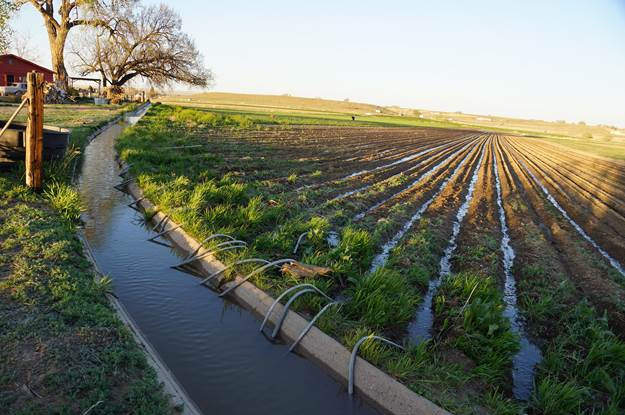
Southern Delivery System update: $359 million spent so far, >44 miles of pipe in the ground

Southern Delivery System route map -- Graphic / Reclamation
Southern Delivery System route map — Graphic / Reclamation

From The Pueblo Chieftain (Chris Woodka):

Tunneling under Fountain Creek is proving more difficult than expected for the Southern Delivery System. Some pipeline near Pueblo Dam has been laid in solid rock. And the temporary irrigation system to provide water for native vegetation over the pipeline scar through Pueblo County contains 50 miles of pipe (main line and laterals) and 15,000 sprinkler heads. Those were some of the highlights of a progress report by Mark Pifher, SDS permit manager, to the Lower Arkansas Valley Water Conservancy District Wednesday.

“The tunneling project was more difficult than we thought,” Pifher said. The work was being done just over the El Paso County line from the west side of Interstate 25, with a tunnel-boring machine 85 feet below ground.

Because of the difficulty, a second borer from the east side one mile away is being used.

“They had better meet in the middle,” Pifher joked.

More than 44 miles of the 50 miles of 66-inchdiameter pipeline from Pueblo Dam to Colorado Springs has been installed; a treatment plant and three pump stations are under construction; and a Fountain Creek improvement project has nearly been completed, he said. All of the pipeline in Pueblo County has been installed, and revegetation has begun on 323 acres that were disturbed in Pueblo West and on Walker Ranches. The irrigation system is so large that it has to run in round-the-clock cycles seven days a week, Pifher noted.

“It’s apparently the largest sprinkler system in the state,” he said.

Another 484 acres has been planted with native seed in El Paso County.

As of March, $359 million has been spent on SDS, with $209 million going to El Paso County firms, $65 million to Pueblo County companies, $900,000 to Fremont County contractors and $84 million to businesses in other parts of Colorado.

More Southern Delivery System coverage here.

Colorado Springs: North Douglas Creek detention designed to keep stormwater out of neighborhoods

pikespeak

From The Colorado Springs Gazette (Matt Steiner):

Tim Mitros, the stormwater manager for the City of Colorado Springs, showed off the latest flood mitigation project Wednesday, unveiling a large sediment detention basin along North Douglas Creek that should keep tons of water, mud and bigger debris from invading residential areas.

The basin will hold about 25,000 cubic yards of sediment and can be cleaned out after each torrential storm, Mitros said. The new pond replaces a series of five smaller basins that filled quickly in early September 2013 after torrential rains pounded the Waldo Canyon fire burn scar and the rest of the Front Range from El Paso County to the Wyoming border.

“It was supposed to be a 10-year fix,” Mitros said, noting that the city was surprised at how quickly the smaller basins filled and knew it had to come up with a Plan-B.

Now when water and debris come raging down North Douglas Creek the large pond should stop most of the flow. And an “alluvial fan” below the basin will likely slow the water and spread out the rest of the torrent before it reaches the city’s storm sewers, Mitros said.

Mitros and Flying W Ranch Foundation executive director Aaron Winter are relieved that the project has been completed before the 2014 monsoon season and potential heavy thunderstorms hit the burn scar. Storms in early July, mid-August and September of 2013 threatened North Douglas Creek and left Manitou Springs cleaning up after flash floods poured over U.S. Highway 24, out of Williams Canyon, destroyed multiple homes and flooded businesses along Manitou Avenue.

“There is a lot of debris that is staging in the upper parts of North Douglas Creek,” Mitros said. “We expect in larger storms that the debris will start to flush out.”

According to the city official, an estimated 60,000 to 100,000 cubic yards of mud and debris are sitting along the creek less than a mile above the new detention basin. He said it took just about 60,000 cubic yards to fill the five smaller ponds.

Winter said the work that the city has done, as well as other projects by volunteers with the Coalition for the Upper South Platte, have helped reassure the foundation that its neighbors to the east will be protected.

“Knowing that this basin is in place to protect the homes downstream is a big weight off our shoulders,” he said.

More stormwater coverage here.

The Lower Ark questions distribution of Fountain Creek funds

Fountain Creek Watershed

From The Pueblo Chieftain (Chris Woodka):

Money targeted for Fountain Creek projects to benefit Pueblo County is being spent in El Paso County out of compliance with an intergovernmental agreement, the Lower Arkansas Water Conservancy District charged Wednesday. The Lower Ark board instructed its attorney to send letters to the Fountain Creek Watershed Flood Control and Greenway District threatening legal action, and to agencies where the money has been used for matching funds.

The money was contributed to the district under an IGA that includes the Lower Ark district and Colorado Springs Utilities. The IGA says a steering committee of representatives from all three groups will meet to advise the Fountain Creek board how to spend the money.

The money came from the Lower Ark district and Utilities with the understanding that there would be a balance of projects in El Paso and Pueblo counties. Since Utilities’ share is being deducted from its payment under Pueblo County’s 1041 permit for Southern Delivery System, all of the projects should benefit Pueblo County, said Lower Ark General Manager Jay Winner.

“We fought for that money and it is to be used in Pueblo County,” said Anthony Nunez, a former Pueblo County commissioner who sits on the Lower Ark board. “It always seems Pueblo comes out on the short end with El Paso County. . . . It’s blatantly illegal what they’re doing.”

Some of the money has gone for grants to build trails or to fire-damaged areas in El Paso County, projects which Winner claims have no benefit to Pueblo County.

The steering committee has not met for more than a year, but the Fountain Creek district has designated $98,000 in matching funds for five grant requests since then, and at its May meeting redirected $25,000 from a grant that was denied to a dam study that is poised to move forward.

That’s illegal, because the IGA requires steering committee approval, Winner said.

The board voted to have attorney Peter Nichols write to the Fountain Creek district and the agencies, which awarded grants based on what it considers misappropriated matching funds.

“We’re the only policing agency for this malfunction,” added Reeves Brown, another Pueblo County member of the Lower Ark board.

Mark Pifher, permit manager for SDS, was at the meeting and argued that the dam study grant now being considered would entirely benefit Pueblo. He also made the point that Pueblo representatives sit on the Fountain Creek board that approved the grants.

Winner said that doesn’t matter because the IGA specifically instructs the district to move any expenditures through the steering committee first.

“I think Colorado Springs Utilities should be as outraged about this as we are,” Winner told Pifher. “I question whether the district is just a vehicle for Colorado Springs to avoid paying the $50 million it owes to Pueblo County.”

More Fountain Creek coverage here.

Pueblo West Utilities Board members and staff are trying to make sense of SDS MOU with Colorado Springs

Pueblo West
Pueblo West

From The Pueblo Chieftain (Chris Woodka):

Pueblo West is pondering whether it even needs to turn on Southern Delivery System early after the metro district board waded through the process that led up to a controversial memorandum of understanding that would allow that to happen. The MOU apparently represents years of complex negotiations between Colorado Springs attorneys.

Three board members, Chairman Lew Quigley, Mark Carmel and Judy Leonard, voted on May 27 to talk about the MOU in open session, rather than behind closed doors.

But at Tuesday’s metro board meeting — devoted solely to water issues — board members and staff wrangled over what the document means and how it should be drafted.

The MOU could pave the way for Pueblo West to begin using a new 36-inch pipeline from the north outlet on Pueblo Dam ahead of schedule. It’s needed because Pueblo West is reaching the limits of its current delivery line, and to provide redundancy if anything should happen to its sole supply source, said Manager Jack Johnston. Johnston said the MOU was merely conceptual, and the argued that details of it needed to be explained in executive session.

“This is really our bus to drive,” Johnston said.

Carmel countered that a more open discussion in public among Pueblo West, Colorado Springs needed.

Pueblo County commissioners and attorneys objected to details of the agreement which required Pueblo West to obtain approval of 1041 permit conditions, saying Colorado Springs is attempting to bully the metro district.

“This was presented to me as an ultimatum. … I suspect this new board will go back to the drawing board to give you a new direction,” Carmel said. He wanted to delay action until a full board could act — board member Jerry Martin was not at Tuesday’s meeting.

Quigley objected to discussing the agreement in executive said that a meeting behind closed doors was needed to explain how the agreement related to several other lawsuits in order to protect Pueblo West’s legal position.

Board member Barbara Bernard favored discussing such an agreement in executive session if necessary.

“Yes, I want to know how we got to this point,” she said. “I need as much counsel as we can have.”

From The Pueblo Chieftain (Chris Woodka):

Colorado Springs Utilities was trying to make sure the clock wouldn’t start ticking if Pueblo West got water early under a controversial agreement.

That’s how Mark Pifher, permit manager for Southern Delivery System, explained the situation Wednesday to the Lower Arkansas Valley Water Conservancy District during his update on SDS progress.

The agreement was to have been discussed in executive session on May 27 by the Pueblo West Metropolitan District, but newly elected board member Mark Carmel objected to talking about it behind closed doors, claiming the agreement would hold Pueblo West “hostage.”

The issue escalated when Pueblo County commissioners and attorneys claimed Colorado Springs was using bully tactics to pressure Pueblo West into gaining county approval of 1041 permit conditions from the county.

“Pueblo West wanted delivery of the water as soon as possible,” Pifher said. “The concern we had was that if the water is delivered to Pueblo West, will all the other conditions be expedited?”

Among those conditions is the beginning of $50 million payments to the Fountain Creek District and other Fountain Creek issues. Utilities and the Lower Ark have been in negotiations over Fountain Creek issues for the past nine years.

“What we’re asking is that Pueblo West go to the commissioners so those other conditions will not be triggered,” Pifher said.

The agreement also contained a provision that would require Pueblo West to stop using the new pipeline if Colorado Springs did not meet SDS conditions.

On Tuesday, the Pueblo West board discussed the agreement with Manager Jack Johnston and attorney Harley Gifford.

Carmel and board President Lew Quigley wanted an open discussion of the agreement. Johnston said it had been negotiated over several years by staff and attorneys. Gifford said it is tied to other legal issues that need to be discussed in executive session.

The 36-inch water line from the north outlet is nearly complete and would provide redundancy for the existing 24-inch line Pueblo West has connected to the south outlet. The new line would provide up to 18 million gallons per day in addition to the 12-million-gallon capacity of the existing line.

More Southern Delivery System coverage here and here.

Regional stormwater task force hits a snag — The Colorado Springs Gazette

Flooding in Colorado Springs June 6, 2012

From The Colorado Springs Gazette (Monica Mendoza):

Members of a regional stormwater task force have been hopeful that the towns of Monument, Palmer Lake, Manitou Springs, Green Mountain Falls and Fountain would join El Paso County and Colorado Springs to form a regional stormwater authority that would collect fees and plan for stormwater projects together, but the Town of Monument is not sold on the idea, its mayor said Monday.

“The biggest objection I have is we do not care for adding another layer of bureaucracy on top of everything we do,” said Mayor Rafael Dominguez. “We have a water fund, as part of a mill levy, and some of that money goes to stormwater.”

Monument, north of Colorado Springs, has a population of about 5,700. Dominguez estimates stormwater needs are about $10 million. Those projects could get lost in the hundreds of millions of dollars in projects needed throughout the Fountain Creek Watershed, a 927-square mile area bordered by the Palmer Divide to the north, Pikes Peak to the west and a minor divide 20 miles east of Colorado Springs.

“One of the biggest things that stood out in this plan is that an emergency in another municipality will become an emergency in Monument,” he said. “We don’t want to get bogged down with other problems – Manitou Springs, God bless them, they got issues.”

Palmer Lake also might bow out of a regional stormwater effort, while Fountain and Manitou Springs officials say they still must review the plan and intergovernmental agreements before signing off…

Task force leaders say if voters approve a stormwater fee in November, the estimated $50 million collected annually would be in addition to what cities and the county already spend on stormwater projects. Each entity would get what it put in over a five-year rolling average, organizers have said.

Green Mountain Falls and Palmer Lake mayors could not be reached Monday for comment.

Manitou Springs already has a stormwater enterprise fee and collects about $280,000 a year, said Mayor Marc Snyder. He wants to ensure that if Manitou Springs joins a regional group that his town, where flooding was disastrous last year, would receive at least what it already spends…

Fountain does not collect a stormwater fee, said Mayor Gabriel Ortega. The town had discussed creating a stormwater enterprise fee but first wanted to wait for the regional task force plan…

Munger said a stormwater authority could be formed with fewer than the original seven entities. The intergovernmental agreements would allow any of the neighboring towns to join any time, he said.

More stormwater coverage here.
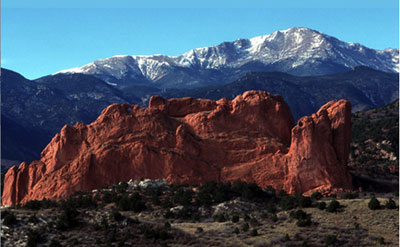
“This proposed MOU is a heavy-handed tactic by [Colorado Springs Utilities]” — Ray Petros

Pueblo West
Pueblo West

From The Pueblo Chieftain (Chris Woodka):

Pueblo County officials believe Colorado Springs Utilities is trying to pressure Pueblo West for help in meeting 1041 permit requirements for the Southern Delivery System. After obtaining a copy of a draft memorandum of understanding that was to be considered by the Pueblo West metro board in executive session last month, two commissioners and the county’s water attorney say it’s the same type of coercion Utilities tried to exert on the county earlier.

“It’s bully tactics. I think it’s terrible and totally inappropriate,” said Terry Hart, chairman of the county commissioners. “This is the second time in a couple of months where Utilities is trying to negotiate approval of 1041 conditions. In this case, it pits Pueblo West against Pueblo County, when there’s no good reason to do it.”

Commissioner Sal Pace agreed: “Whether Pueblo West has access to its own water has nothing to do with conditions on Fountain Creek.”

Water attorney Ray Petros was equally blunt: “This proposed MOU is a heavy-handed tactic by Utilities to withhold water deliveries to Pueblo West as a lever against the county in the event the county had to consid­er suspending the SDS permit.”

Pueblo West has not approved the MOU, and Jack Johnston, the metro district manager, portrayed it as a working document “at the staff and attorney level.”

However, newly elected Pueblo West board member Mark Carmel objected at his first official meeting to considering the deal in executive session. He was backed by Chairman Lew Quigley and board member Judy Leonard.

Johnston said a document for public consideration would be ready for discussion in open session, probably in mid-June.

But the document provided to The Chieftain by Carmel, and shared with the county, asks Pueblo West to get the county to sign off on several conditions of the 1041 permit before Pueblo West can turn on SDS.

Among other things, the agreement instructs Pueblo West to obtain written confirmation from Pueblo County that four politically charged conditions of the county’s 1041 permit have been met or “will not be triggered . . . by use of SDS facilities.”

Those conditions include the payment of $50 million to a special district for Fountain Creek flood control, the Pueblo Arkansas River flow program, the adaptive management scenario for Fountain Creek and Colorado Springs stormwater management. Each of those has led to complicated political negotiations or even court cases for Colorado Springs. Pueblo West has been in court with Pueblo County over the flow program.

Pueblo County ran into the same tactics when it asked Utilities to release interest money from the $50 million early to fund dam studies on Fountain Creek, Hart and Pace noted.

“In any event, holding Pueblo West hostage casts Springs’ Utilities as a bully,” Petros said. “It’s certainly counterproductive to a cooperative approach for addressing environmental mitigation of the SDS Project.”

More Southern Delivery System coverage here and here.

Fountain Creek: There is still a ton of flood debris to manage from last September’s #COflood

Fountain Creek flood debris May 2014 via The Pueblo Chieftain

From The Pueblo Chieftain (Chris Woodka):

Fountain Creek is littered with logs, uprooted cottonwoods and debris from high flows in September. All aimed at Pueblo and the Lower Arkansas Valley. In fact, many are in Pueblo right now.

The Fountain Creek Watershed Flood Control and Greenway District Friday came to the realization that debris from the September downpour has not been removed from the creek, raising the possibility of increased damage if flooding occurs this year.

Unlike 2013, this summer could be wet. The Climate Prediction Center is calling for more moisture in Colorado; that could mean rain over large areas near Colorado Springs and the Black Forest that burned last year.

“Trees are staged everywhere,” said John Chavez, stormwater coordinator for El Paso County.

Removing the trees is expensive and there isn’t much money to do it. El Paso County is eligible for federal flood relief money, while Pueblo County is not.

Richard Skorman, a member of the Fountain Creek board, said people may not realize the danger that still exists.

“There was so much effort right after the fire,” he said.

Pueblo Councilwoman Eva Montoya, who chairs the Fountain Creek board, acknowledged there still are large trees in the Fountain Creek channel through Pueblo that could clog things during a big downpour.

Larry Small, the executive director of the district, said he observed many downed trees as well as erosion along Fountain Creek in northern Pueblo County.

Last month, he directed the Colorado Department of Transportation to remove trees it had stacked just downstream of the bridge at Fountain. The state has been slowly removing the trees.

“I think it’s important for people to realize the communities are working together, because this affects everybody,” she said.

More Fountain Creek coverage here.

Paying for stormwater drainage is a conundrum in the Grand Valley

Colorado River via Wikipedia

From The Grand Junction Daily Sentinel (Gary Harmon):

The Grand Valley Drainage District will send out the first of regular monthly invoices to Mesa County and the three Grand Valley municipalities for its services in collecting water off untaxed government facilities. District officials say they’re concerned that they face liability for the water that runs off streets, government buildings and parking lots and other impervious surfaces that collect in the drainage system they operate. The district has taken several steps to reduce financial woes that officials detailed to Mesa County and municipal officials last year. District Chairman Mark Harris said it’s clear that the district is short of the revenue needed to deal with day-to-day activities and insulate itself from liability for the kinds of waters that end up in the ditches and pipelines the district operates.

Waters such as those that flow off the impervious surfaces of government facilities fit into a category different from that of the agricultural runoff the district was designed to collect nearly a century ago. What are now called “regulated,” as opposed to agricultural, waters flow into the district’s system, which covers lands from Palisade to Loma north of the Colorado River. The pressure to treat regulated waters differently than agricultural runoff is growing, Harris said.

“People who tell us not to worry about water quality are just not paying attention,” Harris said.

The district collects a mill levy of 1.245, but government entities don’t pay property taxes.

So, the district will send invoices next month to Mesa County, $13,250.40; Grand Junction, $11,910.80; Fruita, $4,277.60; and Palisade, $354.29.

“It’s not in the budget,” Mesa County Commission Chairman John Justman said.

“I don’t know if we can pay it.”

Fruita City Manager Clint Kinney said Fruita disagrees with the assessment.

“Their approach doesn’t make any sense,” Kinney said, noting in a memo to the City Council that, “The district must be crazy.”

By the same logic, Kinney noted in the memo, Fruita could charge the district for the use of those same impervious surfaces, such as roads.

The Grand Junction City Council is to discuss the district at a future meeting, the city said.

In no small part, the invoices are intended to get the attention of the local governments and bring them to the bargaining table, Harris said.

The county and cities should “pay their fair share of the cost of conveying and managing the regulated urban storm waters they produce.”

More stormwater coverage here.

Colorado Foundation for Water Education’s “Urban Waters Bike Tour” recap


It was a grand time the other day cycling along the South Platte and hearing about current projects, operations, hopes and plans.

The tour was from the Confluence of Clear Creek and the South Platte River to Confluence Park where Cherry Creek joins the river.

Along the way we heard about Clear Creek, water quality in the South Platte Basin, infrastructure investments, and education programs.

A recurring theme was the effort to reach out to a younger generation through the school system.

Darren Mollendor explained that the program he honchos attempts to get the students to connect to their neighborhood parks. This includes an understanding of pollution, pollution abatement, and habitat improvement. He invited us all to go camping at Cherry Creek Reservoir when students from the upper and lower Cherry Creek watershed get together later this summer.

Michael Bouchard (Denver Parks and Recreation) detailed planned improvements along the river through Denver. Most of the new facilities will also have an education focus, including native flora at some locations.

Metro Wastewater is one of the largest clean water utilities in the nation, according to Steve Rogowski. The Metro District is directing a huge investment to comply with tougher treatment standards.

At the Burlington Ditch diversion Gray Samenfink explained operations under the ditch. The ditch is a supply for Barr Lake, other reservoirs, and direct irrigators. Several municipalities also take water off the ditch. The new diversion and flood control structure replaced the old dam at the location.

Caitlin Coleman (Colorado Foundation for Water Education) was tasked with keeping the tour on track. That was no easy task. When you get young and older, students, water resources folks, educators, conservationists, scientists, attorneys, engineers, and ditch riders together there’s going to be a lot of stuff to talk about.

Click here to go to the CFWE website. Become a member while you are there. That way you’ll know about these cool events in advance so you won’t miss the fun.

More Colorado Foundation for Water Education coverage here.

The Southern Delivery System has been a long time coming

Southern Delivery System route map -- Graphic / Reclamation
Southern Delivery System route map — Graphic / Reclamation

Here’s part one of an in-depth look at the Southern Delivery System from John Hazlehurst writing for the Colorado Springs Business Journal. Click through and read the whole article. Here’s an excerpt:

Contending that the denial [of Homestake II] had been arbitrary and capricious, the two cities [Aurora and Colorado Springs] appealed the decision to the courts. In a comprehensive description of the city’s water system and possible future sources of supply given to City Council in 1991, CSU managers said that “extensive litigation is expected to continue.”

Denied by the Colorado Court of Appeals and the Colorado Supreme Court, the cities appealed to the U.S. Supreme Court, which declined to hear the case.

City officials were stunned. They couldn’t believe that a coalition of Western Slope “enviros” and ski towns had prevented them from developing water to which the city had an undisputed right. They had believed the Environmental Protection Agency’s 1990 decision to scuttle Denver’s proposed Two Forks Dam near Deckers on the South Platte River was an outlier, not a sign of things to come…

Slow to recognize that mountain communities now had the power to kill their water development plans, Utilities officials looked at another alternative. Instead of taking water directly from the wilderness area, the city proposed to build a dam on the mainstem of the Arkansas at Elephant Rock, a few miles upstream of Buena Vista.

A grassroots rebellion against the project was soon evident, as hand-lettered signs appeared along U.S. Highway 24, which parallels the Arkansas. The signs carried a simple message: “Don’t Let Colorado Springs Dam this River!”

It soon became clear that Chaffee County commissioners would not issue a construction permit for any such project, dooming it before the first planning documents were created…

If trans-mountain diversions or dams on the Arkansas were no longer feasible, that left a single alternative for developing the city’s water rights. CSU would have to let its water flow down to Pueblo Reservoir, construct a diversion structure on the dam, and pump it uphill to Colorado Springs.

It would be, water managers believed, the easiest project to build and permit.

“It was just a pipeline,” said CSU water resources manager Gary Bostrom, who has worked 35 years for Utilities. “What could go wrong?”[…]

“We didn’t really understand the importance of partnering with and involving the public in decision-making,” said [Gary Bostrom], “until the Southern Water Project.”[…]

The plan for the Southern Delivery System was presented to City Council in 1992. Among the material submitted to councilmembers was a comprehensive description of the city’s existing water system. Water managers made sure Council was aware of the importance of the task before them.

“The massive scope of this project,” CSU staff noted, “requires a very long lead time to allow for complexities of numerous permitting processes, land acquisition, litigation, design, financing and construction.”

Of all the variables, CSU managers and elected officials gave the least weight to those that may have been the most significant…

“We weren’t worried about hydrology,” said Bostrom. “The years between 1980 and 2000 were some of the wettest years on record. The water was there for the taking. Shortages on the Colorado weren’t part of the discussion.

“We knew about the Colorado River Water Compact of 1922 (which allocated Colorado River water between Mexico and the upper and lower basin states), but it wasn’t something we worried about.”

Then as now, 70 percent of the city’s water supply came from the Colorado River. SDS would tap the city’s rights on the Arkansas, diversifying the portfolio.

“We have to plan for growth,” said Bostrom. “That’s what history tells us. We know that it will be expensive, but the cost of not building a system well in advance of need would be much greater. People complained about the cost of the Blue River (trans-mountain diversion) project in the 1950s, but we wouldn’t have a city without it — we wouldn’t have the Air Force Academy.”

But even as the project moved slowly forward, the comfortable assumptions of a wet, prosperous future began to unravel.

“Exactly 15 years ago today (April 29, 1999),” said Bostrom, “we were in the middle of a flood — remember? We didn’t know it, but that was the day the drought began.”

More Southern Delivery System coverage here and here.

Blue River “State of the River” meeting recap #ColoradoRiver

Blue River
Blue River

From the Summit Daily News (Ali Langley):

About 80 people — water managers, weather experts, government officials and interested community members — attended the event hosted by the Colorado River District at the Community Center in Frisco Tuesday, May 6. Discussion revolved around snowpack, runoff, flooding and the state water plan…

[Joanna Hopkins, board president of Blue River Watershed Group] spoke about the group’s restoration project of Ten Mile Creek, impacted by decades of mining, railroads, highways and development, and presented before and after photos of the work. The group will now focus attention on restoration of the Upper Swan River Watershed, where dredge boats in the early 20th century mined for 2 miles and the group and its partners will work to turn the river “right side up.”[…]

[Troy Wineland, water commissioner for the Blue River basin] pointed to a graph and asked the audience to consider this year’s snowpack levels. “What does that surplus, that bonus, that cream on the top, what does that mean to you?” he said. Better rafting, some said. Fishing. Full reservoirs…

Bob Steger, water resources engineer with Denver Water, discussed Dillon Reservoir operations. The utility’s main priorities for the reservoir are maintaining its water supply and reducing flood risk, he said, but it also considers boating, rafting, kayaking, fishing, endangered fish and its upcoming construction project.

The utility began lowering the reservoir level in late February, just like in other high-snowpack years, he said. Going forward, the reservoir will start filling in mid-May or June, depending on whether the spring is wet or dry.

The Roberts Tunnel, which brings water from Dillon to Denver, won’t be turned on until mid-June or July, he said, and the utility will replace the large gates that control outflow to the Blue River likely sometime between August and October…

Ron Thomasson, a hydrologist with the U.S. Bureau of Reclamation who oversees Green Mountain Reservoir operations, said he expects to fill that reservoir in mid-July.

He talked about how more runoff will improve habitat for four endangered fish species in the 15-Mile Reach of the Colorado River and showed his “obligatory snowpack graph.” Then he presented spaghetti plots to explain that when experts say “most probable scenario” what they really mean is, “It’s actually no more probable than any other scenario. It just happens to be in the middle.”[…]

explained the rare conditions that combined to cause record-breaking flooding in the Boulder area in September. Then he switched to the “crazy winter that you just lived through” in Summit and what to expect in the six- to eight-week runoff season produced by seven months of snow.

He joked about the polar vortex, a phenomenon that’s been around forever but didn’t make the media until this winter, and he showed more spaghetti plots saying, “Those averages are beautiful. They give us something to think about. They never happen.”

Those excited about a surplus should remember the rest of the state is experiencing drought conditions. “You fared well,” he said. “It’s not always going to work that way, so please be grateful.”

Then he asked for volunteers to help collect real-time precipitation data with rain gauges for http://cocorahs.org.

Jim Pokrandt, chair of the Colorado Basin Roundtable that represents Summit and five other counties, emphasized problems with low levels in Lake Powell and Lake Mead and focused on the state water plan, which the roundtable is helping to create.

Of the 14 states in the West, Colorado is one of four without a water plan. The other three are Washington, Oregon and Arizona…

“Transmountain diversion should be the last tool out of the box,” he said. “Conservation and reuse needs to be hit hard.”

If a new transmountain diversion must be constructed, it should be done along the lines of the recent agreement between West Slope stakeholders and Denver Water.

One audience member asked why reducing population growth wasn’t one of the considered solutions. Most of the projected growth “is us having children,” Pokrandt said. “It’s the elephant in the room, but it’s the one that you really can’t touch.”

He said in some parts of the Front Range, the untouchable issue is green grass.

More Colorado River Basin coverage here and here.