Click the link to read the release on the NRCS website:
Dry conditions have dominated the water year until recently, and the below median precipitation and snowpack has led to below median streamflow forecasts for all major basins. The water year is still young and with recient storms there is still time for conditions to improve.
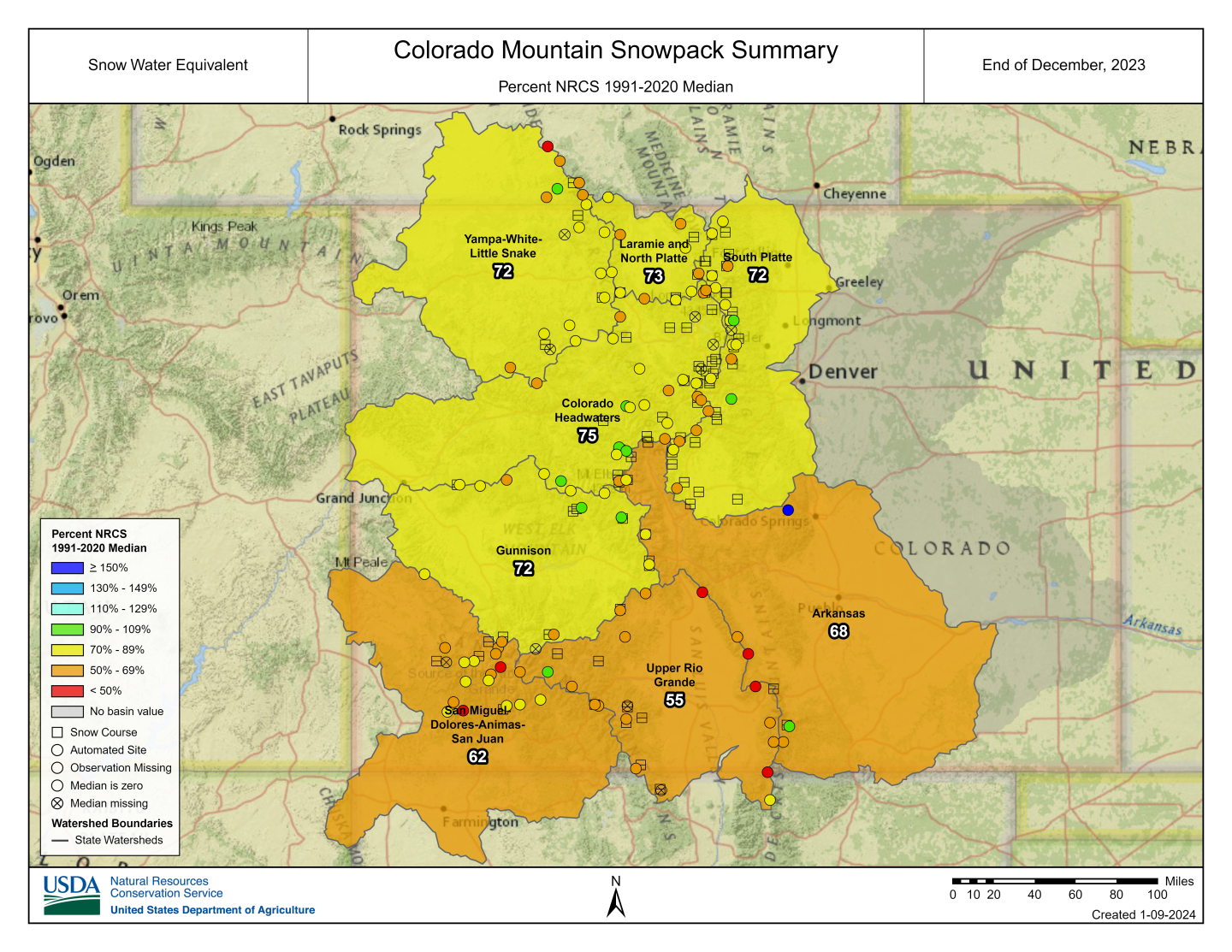
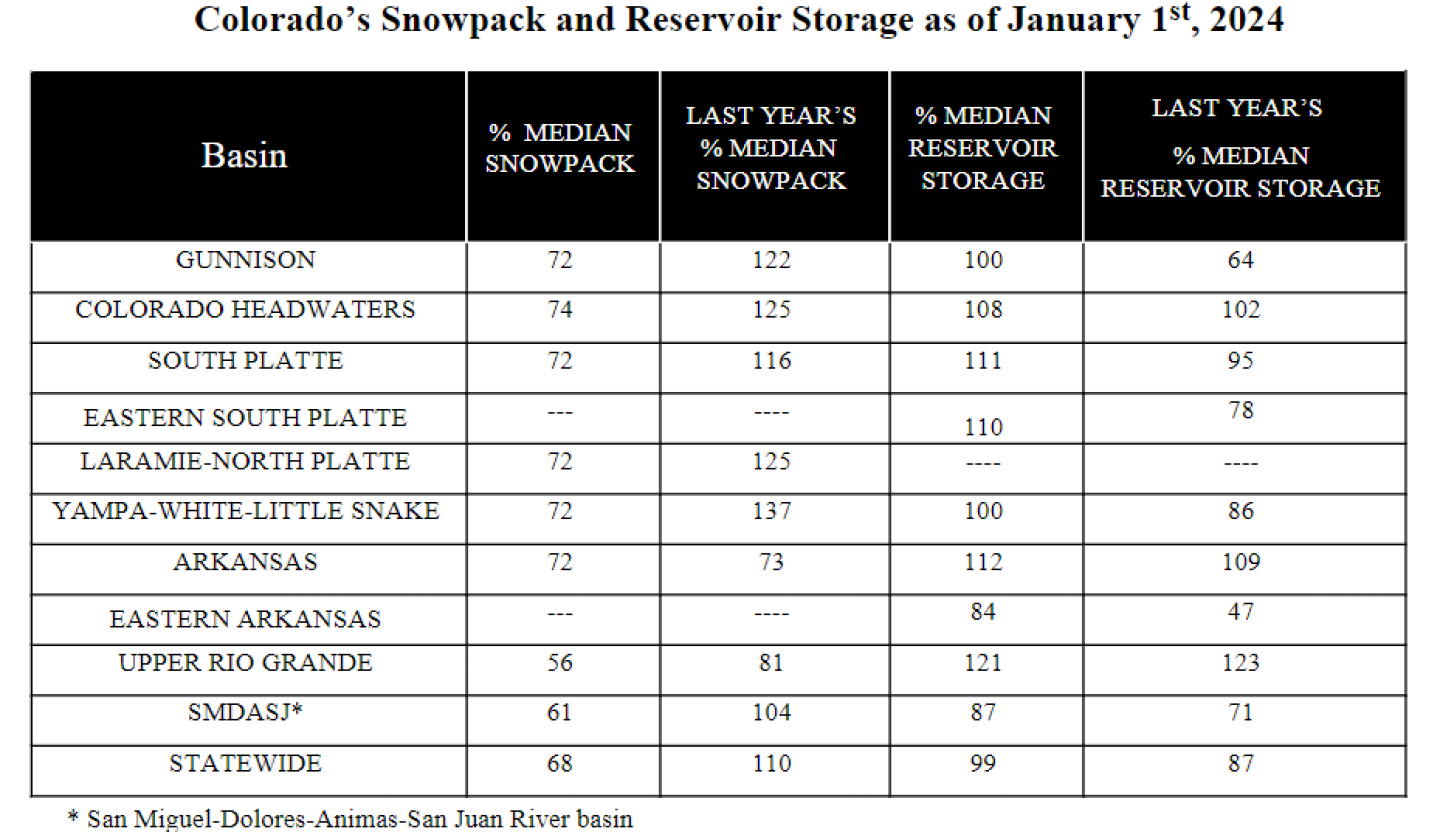
Denver, CO – January 9th, 2024 – The New Year brings a cautious yet hopeful outlook, following early January storms that have begun to pivot the state from a dry start to a more promising winter season. Recent climatic fluctuations, characteristic of the current El Niño phase, have led to a below-average snowpack statewide. NRCS Hydrologist Nagam Gill offers a hopeful perspective: “The early January storms have served as a pivotal juncture for our state’s snowpack levels, which initially raised concerns. We’re now witnessing signs of improvement, indicative of the dynamic and responsive nature of our watershed to meteorological influences.” As of January 1st, snowpack was at 68 percent of normal, reflecting the need for consistent snowfall to reach average winter accumulations. Yet, the data signals an upward trend, with statewide snow water equivalent improving from 68 to 71 percent of normal in the first week of January. The San Miguel-Dolores-Animas-San Juan River basin showed significant improvement, rising from 62 to 71 percent of normal in just a week. “While the Upper Rio Grande River basin remains low, there has been improvement with the most recent storm cycle from 55 to 63 percent of normal. This is a testament to the rapidity with which conditions can evolve,” Gill comments on the potential for swift changes in the wake of each new storm.
Colorado snowpack basin-filled map December 31, 2024 via the NRCS.
Streamflow forecasts for January 1st reflect a mixed picture, with some basins like the Arkansas reaching 85 percent of normal and the San Miguel-Dolores-Animas-San Juan at 68 percent of normal. Late summer precipitation trends offer a glimpse into soil conditions, with July’s drier spell particularly evident in the southern basins, ranging from 22 to 42 percent of median. However, a shift in the late season brought about above-normal rainfall in the northern regions and significantly improved moisture in the south from 63 to 112 percent of median, setting a favorable stage for runoff. Gill remarks, “A late summer uptick in soil moisture, lays the groundwork for priming basins for efficient hydrological response come spring.”
Contrasting with the snowpack’s slow start, reservoir storage offers a silver lining and is faring better than the previous year, thanks to last season’s generous snowpack. As the year concluded, reservoirs across the state have reported healthy storage levels at 99 percent of median. The Upper Rio Grande and Arkansas basins report reservoir storages at 121 and 112 percent of median, respectively. Gill mentions the broader implications: “These reservoir levels are more than just numbers; they’re a buffer – This increased capacity provides a much-needed buffer against the variability of snowpack accumulation and positions Colorado to better handle the ebb and flow of seasonal precipitation.”
Existing green growth policies are leading nowhere fast, so scientists say it’s worth exploring alternatives like degrowth to stay within planetary boundaries.
With Earth’s average annual temperature speeding toward 1.5 degrees Celsius faster than expected and global climate policy on a treadmill, an increasing number of researchers say it’s time to consider a “restorative pathway” to avoid the worst ecological and social outcomes of global warming.
In a study published today in Environmental Research Letters, an international team of scientists wrote that reaching global goals could require focusing on ways to drive rapid changes in the way people live, move, work and eat; on making sure that global wealth is distributed more equitably; and on restoring and protecting biodiversity and ecosystems like forests, oceans, fields and rivers that are critical to removing carbon dioxide from the atmosphere.
The restorative approach should be considered soon because the pace of climate impacts to ecosystems and communities is speeding up, the authors said. Climate extremes are outpacing decades of efforts to cap global warming with tools like carbon trading and offsets. Those are hallmarks of the green growth path mapped out by various United Nations-sponsored climate pacts like the Kyoto Protocol and the Paris Agreement, as well other ancillary agreements. They all aim to keep growing the global economy while reducing greenhouse gas emissions to net zero by 2050—partly based on assuming that large quantities of carbon dioxide will be directly removed from the air and stored by giant machines by then.
Many countries, like France, Sweden and the United States, have reduced emissions while continuing to grow their economies—called decoupling—over the last few decades, but research shows it’s not happening nearly fast enough to cap global warming.
Total global emissions, atmospheric greenhouse gas concentrations and the global average temperature all climbed to record highs during the past 30 years, amounting to about half the total greenhouse gas accumulations in the atmosphere since the start of the industrial age.
“It’s almost too late. We need to get cracking with this,” said Manfred Lenzen, a sustainability researcher at the University of Sydney and co-author of the new paper. “A lot of people think 1.5 is dead already, that we have to realistically aim for staying below 2C,” he said, adding that green growth—decoupling emissions from economic expansion—might have worked if the world had taken it seriously in 2000.
Starting then, it would have taken only a 2 percent annual reduction of greenhouse gas emissions to reach net zero by 2050; starting now means cutting global emissions by 7 percent a year, but the green growth approach is not cutting emissions by anywhere near the required rate, he said. And, particularly as outlined in the policy guiding reports from International Panel on Climate Change, it relies on deployment of unproven technologies.
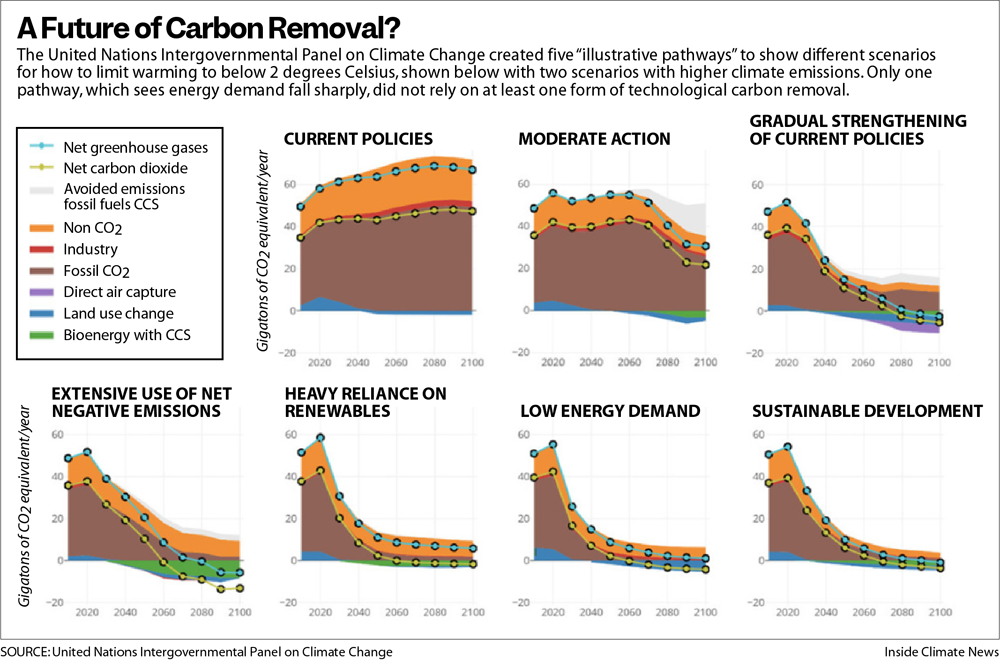
A future of carbon removal? Credit: Inside Climate News
Carbon-removal technology, for example, is still decades away from deployment at a scale that would match the IPCC’s pathways to cap global warming at 1.5 degrees Celsius, as per the Paris Climate Agreement, said Lenzen.
Lenzen also co-authored a 2021 paper describing a “degrowth” alternative to the existing IPCC options, based on the idea of shrinking economies in rich countries in a controlled way by reducing production and consumption, in order to protect natural resources and reduce environmental damage while improving well-being.
Degrowth Research is Going Mainstream
A 2023 study in The Lancet Planetary Health journal showed that, even in countries with falling emissions and growing economies, emissions are not declining at rates compliant with the Paris Agreement. At the current rates, it would take those countries on average more than 220 years to reduce their emissions by 95 percent, the goal targeted for 2050.
The authors of that study wrote that those decoupling rates in high-income countries “cannot legitimately be considered green … To achieve Paris-compliant emission reductions, high-income countries will need to pursue post-growth demand-reduction strategies, reorienting the economy towards sufficiency, equity, and human wellbeing, while also accelerating technological change and efficiency improvements.”
Another 2023 paper in Nature described widespread scientific skepticism, especially in high-income countries, about the existing strain of tech-driven green growth, and also called for exploring “post-growth perspectives, including [growth-neutral] and degrowth strategies, to cultivate a more comprehensive discourse on sustainable development strategies.”
In any case, Lenzen added, “We’re not giving technology the chance to catch up with consumption, and that has been the dynamics over the past decade,” he said, describing a decades-long trend that is now leading researchers to look at alternative economics built on ecological sustainability and social justice.
The new paper doesn’t specifically use the term “degrowth,” but shares common themes, like focusing on human wellbeing and reduction of inequality. That “opens the possibility of talking about alternative sustainability scenarios without being too provocative about it,” said Lorenz Keyßer, a degrowth researcher at the University of Lausanne. That could make it more palatable to a wider audience, he added, including to the community of scientists who build the complex climate models that integrate human behavior with climate physics.
“Compared to their pathway, I think degrowth thinking is more explicit in terms of the proposed changes,” he said. “And it’s more openly ‘radical’ in the sense of being more pessimistic about green growth and decoupling, and in favor of a more transformative approach, which also includes ruptures and conflict.”
But research on degrowth, and similar related concepts like circular economies, or donut economics, is growing, and the European Parliament last year tasked its research service to study “beyond growth” alternatives, including a hard look to determine whether the European Union Green Deal is really sustainable.
Developing country leaders also recently spelled out steps that could have a huge cumulative impact and help protect vulnerable countries from climate impacts.
Speaking at COP28 in the context of global equity in climate financing, Barbados Prime Minister Mia Mottley said a global financial services tax of 0.1 percent could raise $420 billion, and a 5 percent tax on oil and gas profits would raise another $200 billion, while a 1 percent tax on the value of shipping would raise $70 billion.
And there would have to be some new global compact that “allows countries to recognize that they cannot only act in their own deliberate interest, but they have to also act in the interest of the preservation of global public goods,” Mottley said.
“We happen to be talking about climate,” she added. “But we could easily be talking about pandemics and big pharma. We could easily be talking about the digital divide and big tech.”
“Radical Incrementalism”
Oregon State University ecologist William Ripple, co-author of the new paper, said the findings show that their restorative pathway should be included in climate models along with the five “shared socioeconomic pathways,” or SSPs, that are used by the U.N.’s Intergovernmental Panel on Climate Change.
Current emissions trends, societal denial and lack of political will make their scenario a tough sell, but he said its merits can’t be honestly debated if it’s not included as an option for policy makers.
Their findings suggest a path of “radical incrementalism,” with small short-term steps to achieve big changes, like reducing the need to mine for metals or log forests to levels that don’t threaten biodiversity and ecosystem integrity, with per capita GDP stabilizing over time.
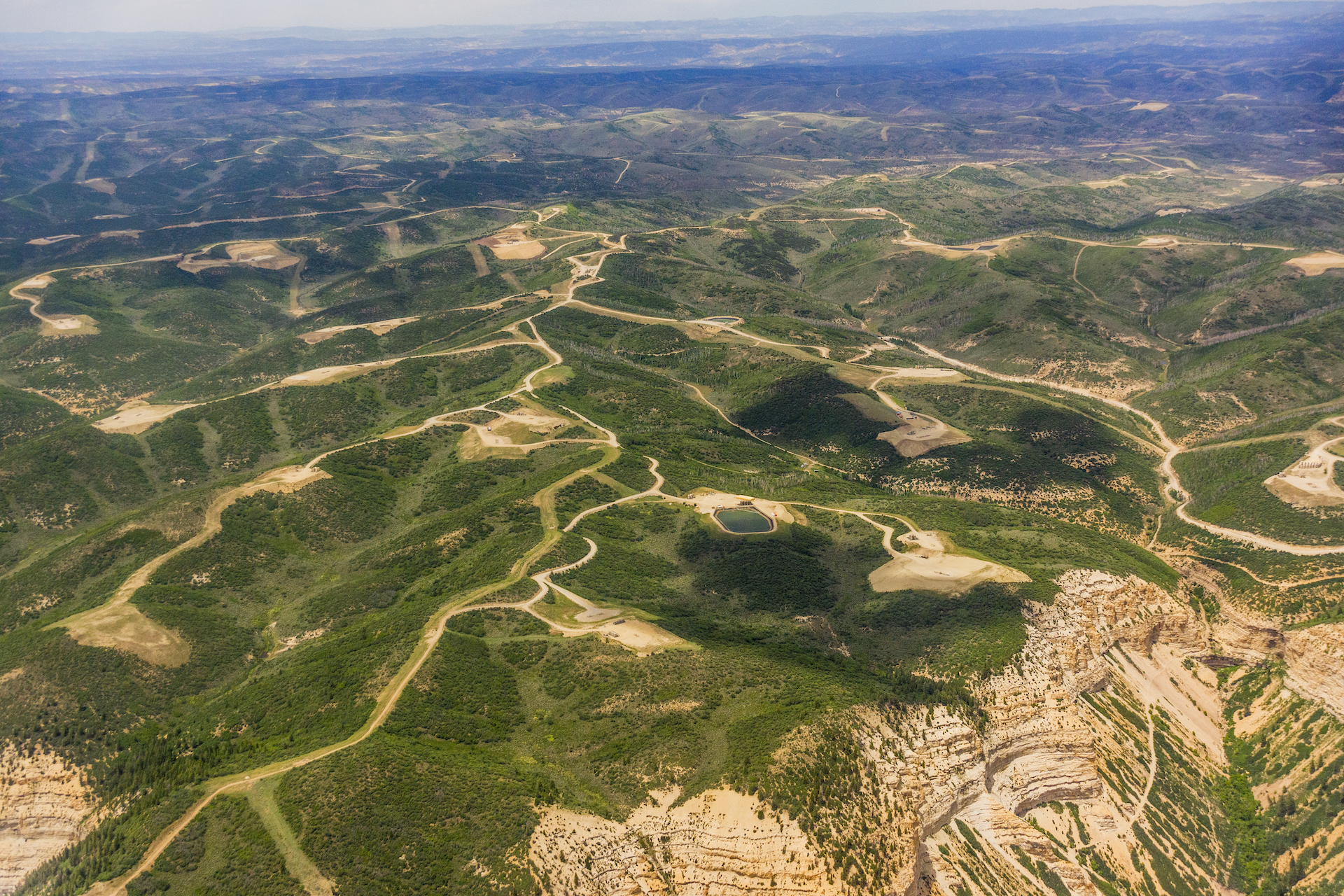
Oil and gas infrastructure is seen on the Roan Plateau in far western Colorado. (Courtesy of EcoFlight)
“Ending fossil fuel subsidies and public lands fossil fuel extraction projects would be great first steps for the U.S. and other developed countries, where applicable,” he said. “These actions would be low-hanging fruit and a good start in the process of radical incrementalism.”
Directly phasing out fossil fuel use is also critical, Ripple added. “An important step in this direction would be the adoption of a global coal elimination treaty since the coal industry has extremely harmful impacts on the climate and human health.”
For the paper, the team compiled a 500-year dataset for several key global climate indicators to measure humanity’s consumption of resources over the period.
“The results show a great acceleration of resource use and impacts since about 1850,” he said. “This illustrates that climate change is a symptom of the broader problem of ecological overshoot, the overexploitation of the Earth, which is driving several environmental crises.” The restorative pathway was designed to tackle this underlying issue, he added.
*As our current predicament makes clear, business-as-usual isn’t working and continued economic growth in wealthy countries isn’t sustainable,” Ripple said. “This motivated us to call for a shift toward post-growth economics where quality of life and societal wellbeing are the main priority.”
The key to curbing ecological overshoot means greatly reducing overconsumption and waste, especially by the wealthy, and implementing ecological economics that would focus on social justice rather than continued growth, he said.
One of the global measures they used dating back to 1820 shows the top 10 percent of the world’s wealthiest have consistently received at least 50 percent of all income, illustrating global economic inequality over the long term.
“The magnitude of this inequality,” he said, “provides further evidence that we need a dramatic change. We face multiple serious and interrelated social and environmental crises. We need economic policies that guide humanity toward more equitable resource use patterns.”
Screen shot from episode of “Tom Talks” April 2020.
Click the link to read the editorial on the AZCentral.com website. Here’s an excerpt:
December 29, 2023
The Colorado River Indian Tribes and Gila River Indian Community began irrigating farmlandthousands of years ago using water from the rivers that are now their namesake. Water stewardship is an inextricable part of their community fabric and identity, and its leaders carry a deep obligation to care for what the Creator has provided. The rest of us are relatively new to the water management debate, not the other way around…
Lewis and Colorado River Indian Tribes Chairwoman Amelia Flores have become influential water caretakers in Arizona and across the Colorado River basin. And their leadership comes at a crucial time for us all, as sustained drought and ever-increasing temperatures slash the amount of water flowing through the river on which 40 million people rely. That makes them The Arizona Republic’s 2023 Arizonans of the Year…
Lewis and Flores were born and raised on their reservations — Lewis just south of metro Phoenix and Flores about 150 miles west of the city. Lewis grew up with a front-row seat to history as his father, the late Rod Lewis, fought to secure the community’s water rights after upstream dams had decades earlier dried up many of its farms, leading to one of the nation’s largest water settlements…
Flores, meanwhile, spent nearly three decades as the tribes’ archivist, where elders mentored her on the community’s history and traditions, many of which revolve around water. She was elected the community’s first chairwoman in 2020. Her community holds one of Arizona’s largest and oldest Colorado River water allocations, laying claim to roughly 720,000 acre-feet of first-priority water.
Both have a clear vision for their communities and a relentless drive to achieve it.
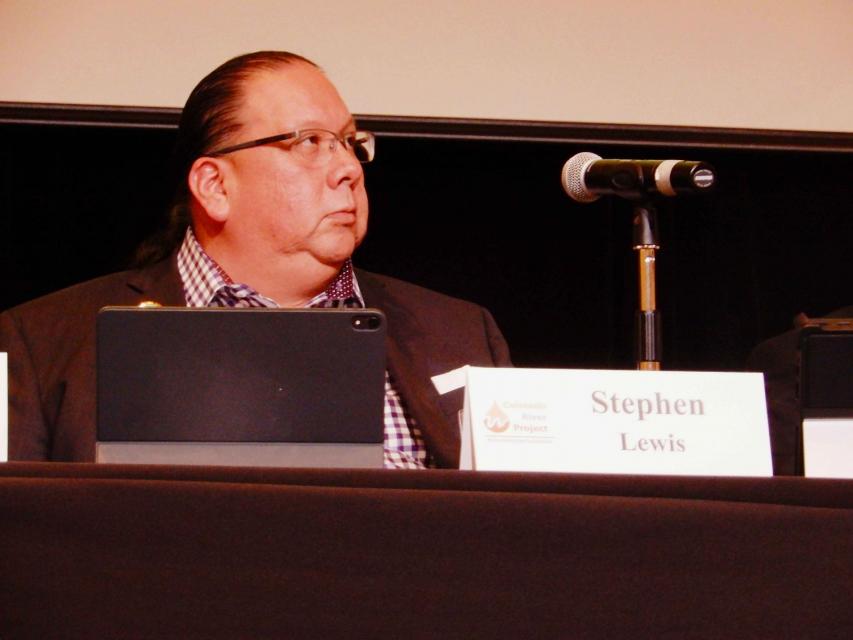
Gila River Indian Community (GRIC) Gov. Stephen Roe Lewis advocates early engagement of tribes in the decision-making process. (Source: Water Education Foundation)
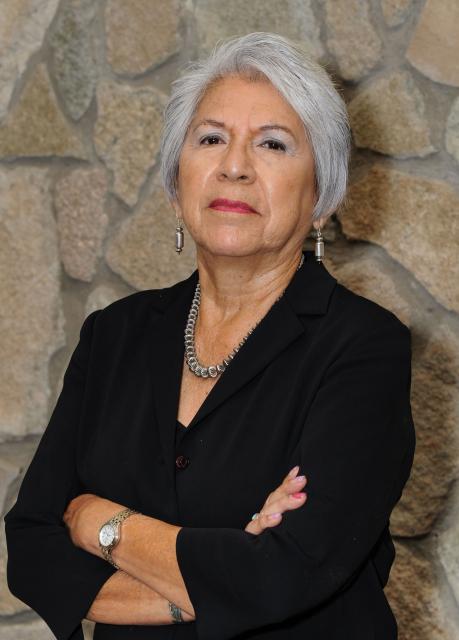
Amelia Flores, chairwoman of the Colorado River Indian Tribes. (Source: CRIT)
There was not much loss in reservoir storage in the Colorado River basin in December 2023. Total storage in the basin’s reservoirs only declined by 17,000 acre feet during the month, and the combined contents of Lake Mead and Lake Powell increased by 68,000 acre feet. At year’s end, the basin’s water users have only consumed 21% of the gain in storage caused by the large snowmelt of 2023.
Here are a few graphs depicting where we stand at the start of the new year.
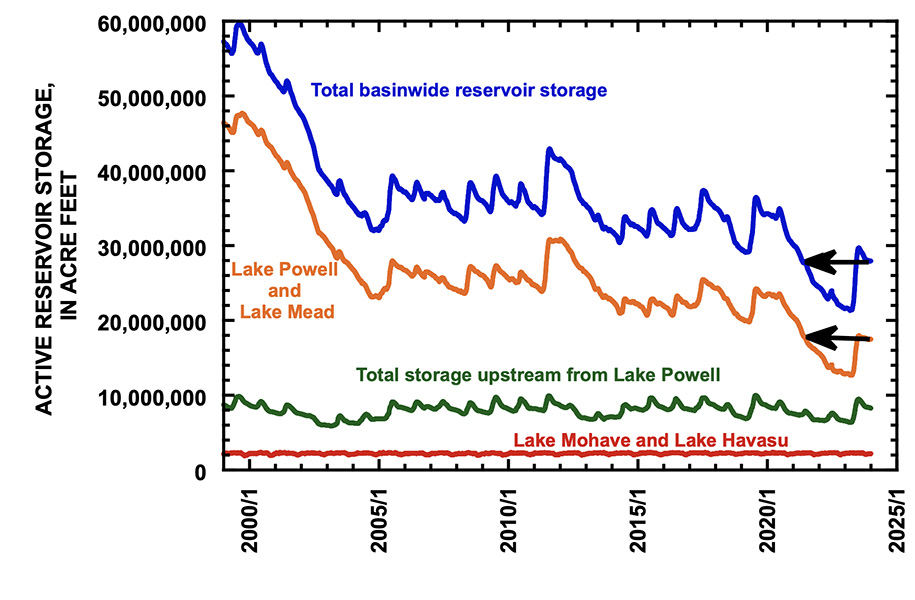
1. The amount of water stored in the basin’s reservoirs remains at an unprecedented low condition. On 31 December 2023, total basin storage was 28.0 million acre feet (af), of which 17.5 million af was in Lake Mead and Lake Powell (Fig. 1). The total amount of water stored in the basin is the same as it was in early May 2021. At that time, storage was less than at any other time in the 21st century, but we drained the reservoirs much more in the summer and fall of 2021 and 2022. The recovery of storage caused by the large runoff in 2023 provided some relief to the ongoing water-supply crisis, but water storage remains critically low.
Figure 1. Graph showing active water storage in 42 reservoirs in different parts of the Colorado River basin. Conditions at the end of December 2023 are comparable to conditions in early May 2021, indicated by the black arrows. Data downloaded at https://www.usbr.gov/
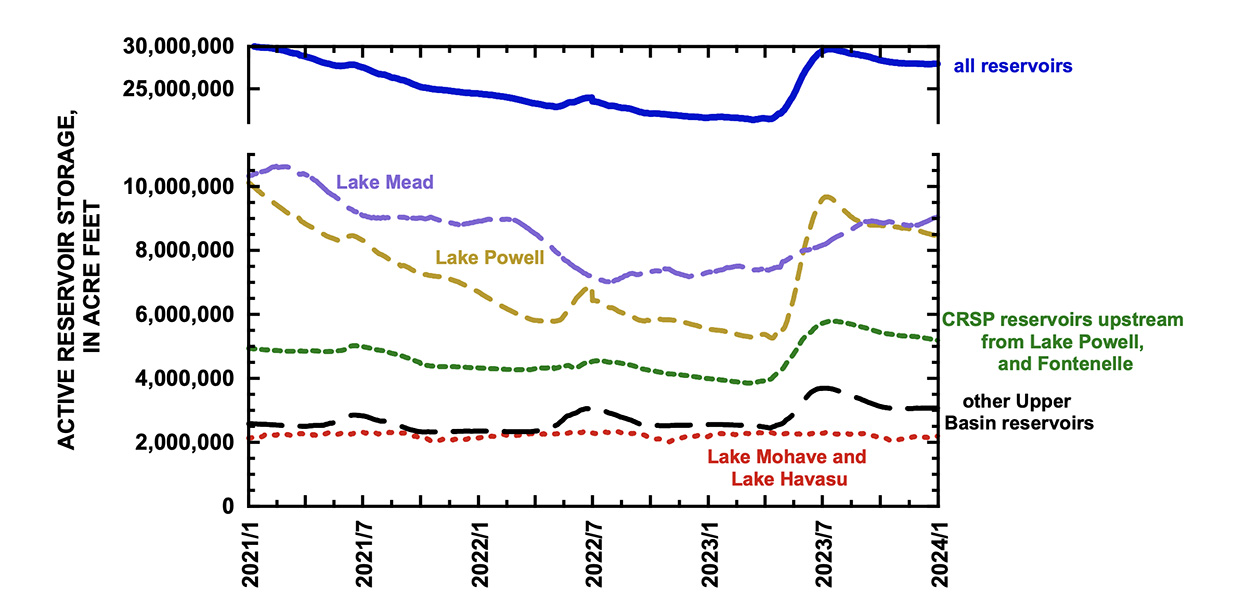
2. Most of the basin’s water storage is in Lake Mead and Lake Powell (Fig. 2). Releases from Lake Powell and reductions in Lower Basin water use were sufficiently large that there was significant recovery of storage in Lake Mead. At the end of December, storage in Lake Mead (9.05 million acre feet) exceeded storage in Lake Powell (8.44 million acre feet) by approximately 600,000 acre feet. The difference in storage between the two reservoirs is much less than during the previous two years when more water was stored in Lake Mead.
Figure 2. Graph showing water storage since January 2021. Note that storage in Lake Mead was significantly greater than in Lake Powell in 2021 and 2022. Large spring runoff in 2023 was captured in Lake Powell, and some of that accumulated inflow was subsequently released to Lake Mead. The rate of reduction in storage in reservoirs upstream from Lake Powell significantly slowed after mid-fall 2023. The category “other Upper Basin reservoirs” includes Strawberry, Granby, McPhee, Dillon, Starvation, Nighthorse, and smaller reservoirs. Water storage in Lake Mohave and Lake Havasu remains nearly constant. Note that the vertical axis is an arithmetic scale that has a break. Data downloaded at https://www.usbr.gov/
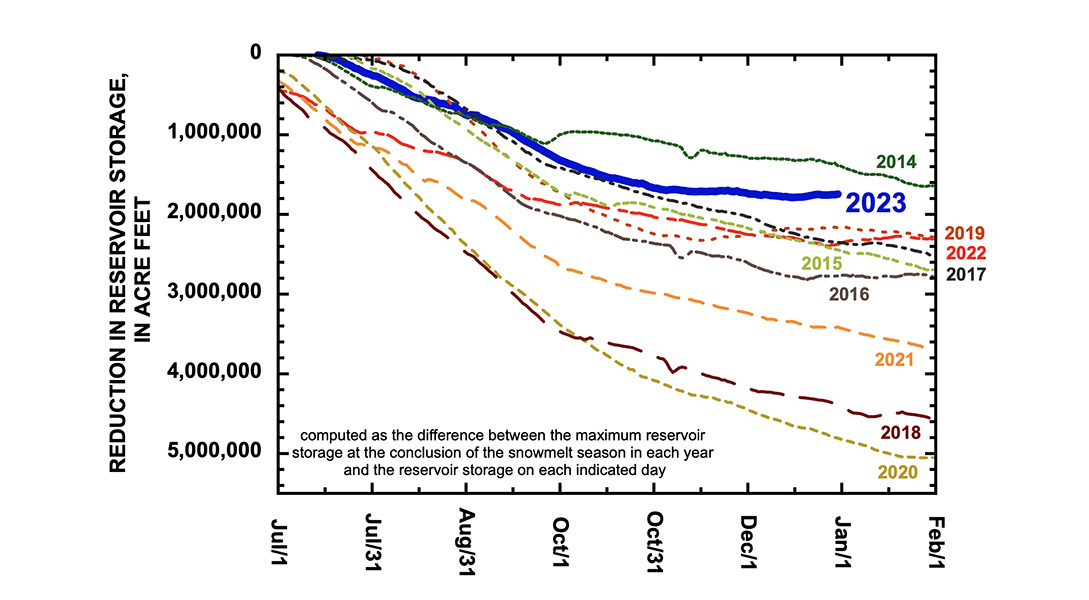
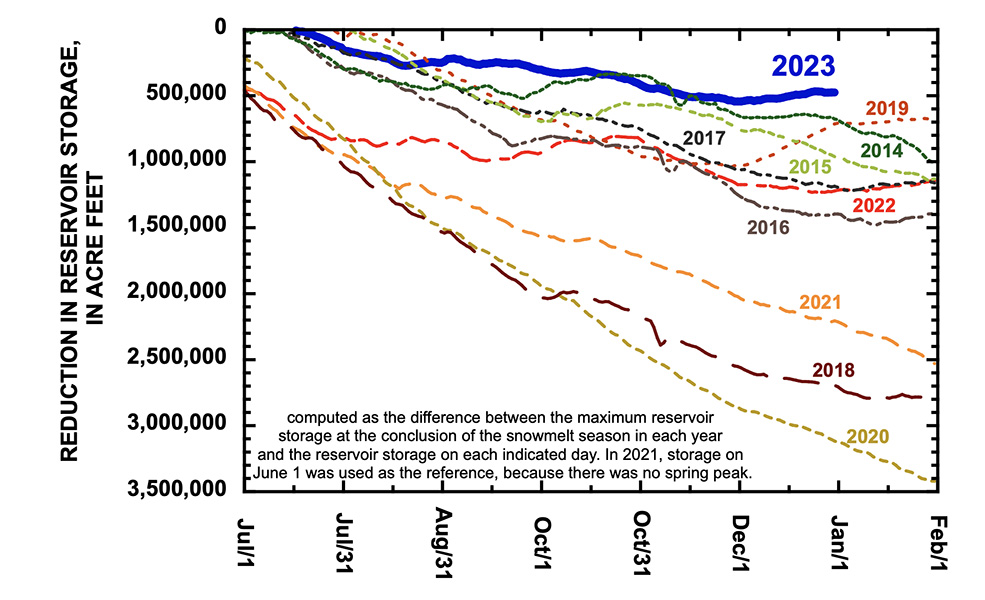
3. The rate of loss in reservoir storage this year remains low relative to the rate of loss in previous years (Fig. 3), especially the rate of decline of the combined storage in Lake Mead and Lake Powell. (Fig. 4) The basin’s water managers are doing a good job of reducing use and conserving water in reservoirs. Reclamation’s estimate of probable consumptive water use in the Lower Basin in 2023, issued 31 December 2023, is 5.78 million acre feet, nearly 900,000 acre feet less than Lower Basin consumptive use in 2022. Will that degree of water conservation be enough? That depends on how much snowmelt occurs this spring.
Figure 3. Graph showing the rate of reduction in basin-wide reservoir storage in each of the past ten years. The reduction in storage has been at a much slower rate than in other years. Each year that plots lower than 2023 on this graph reflects a higher rate of loss in storage than this year.
Figure 4. Graph showing the rate of reduction in the combined storage in Lake Mead and Lake Powell in each of the past ten years. The reduction in storage has been slower than in any other recent year. Each year plotting lower than 2023 on this graph reflects a higher rate of loss in storage than in this year.
Acknowledgement: Eric Kuhn and John Fleck provided helpful suggestions that improved this posting.