Navajo Dam operations update January 19, 2024 #SanJuanRiver #ColoradoRiver #COriver #aridification

Bluff UT – aerial with San Juan River and Comb Ridge. https://commons.wikimedia.org/w/index.php?curid=6995171

From email from Reclamation (Susan Novak Behery):

January 17, 2024

At 3:00 PM on January 29th (Monday), the release at Navajo Dam will be transferred to the 4×4 Auxiliary outlet, where the release will be reduced to 250 cfs.  The minimum release will accommodate instream work for the Turley Manzanares Ditch Company Diversion Dam Rehabilitation Project.  The release will be transferred back to the power plant and increased back to its current level of 350 cfs at 8:00 AM the following morning, January 30th, 2024 (Tuesday). You may expect some silt and discoloration downstream in the river during this time due to the location of the intake of the 4×4.

This scheduled operation is subject to changes in river flows and weather conditions.  If you have any questions, please contact Susan Behery (sbehery@usbr.gov or 970-385-6560), or visit Reclamation’s Navajo Dam website at https://www.usbr.gov/uc/water/crsp/cs/nvd.html

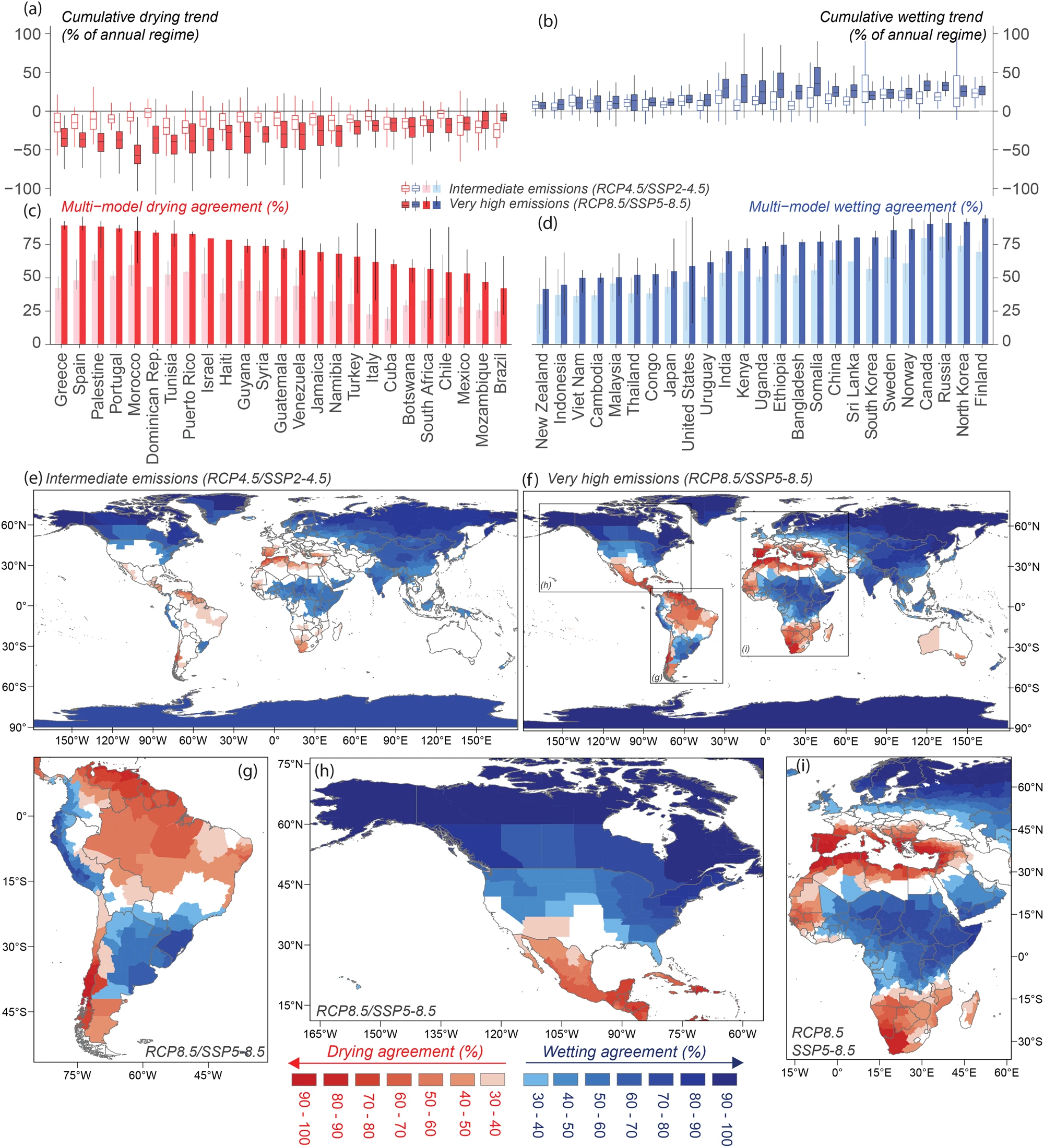
Article: Significantly wetter or drier future conditions for one to two thirds of the world’s population — Nature #ActOnClimate

a, b Box-whiskers plots of cumulative change in precipitation regime over a 120-year period across GCMs for selected countries with higher agreement and affected populations. c, d Selected countries ranked by drying and wetting multi-model agreement (vertical lines denote intra-country variability showing the 10th and 90th spatial percentiles). e, f Spatial distribution of drying and wetting multi-model agreement for states. Rectangles on f very high emissions panel focusing on regions with strong intra-country variability are shown in detail on panels for g South America, h North America, i Africa, and Europe. White regions indicate no substantial agreement for drying and wetting. Refer to Figs. S1 and S2 and Supplementary Data for seasonal agreement across all countries and states globally.

Click the link to access the article on the Nature website (Ralph TrancosoJozef SyktusRichard P. AllanJacky CrokeOve Hoegh-Guldberg & Robin Chadwick). Here’s the abstract:

Future projections of precipitation are uncertain, hampering effective climate adaptation strategies globally. Our understanding of changes across multiple climate model simulations under a warmer climate is limited by this lack of coherence across models. Here, we address this challenge introducing an approach that detects agreement in drier and wetter conditions by evaluating continuous 120-year time-series with trends, across 146 Global Climate Model (GCM) runs and two elevated greenhouse gas (GHG) emissions scenarios. We show the hotspots of future drier and wetter conditions, including regions already experiencing water scarcity or excess. These patterns are projected to impact a significant portion of the global population, with approximately 3 billion people (38% of the world’s current population) affected under an intermediate emissions scenario and 5 billion people (66% of the world population) under a high emissions scenario by the century’s end (or 35-61% using projections of future population). We undertake a country- and state-level analysis quantifying the population exposed to significant changes in precipitation regimes, offering a robust framework for assessing multiple climate projections.

Forest Service withdraws key permit for controversial #Utah oil-train project opposed by Coloradans — #Colorado Newsline #ActOnClimate #KeepItInTheGround

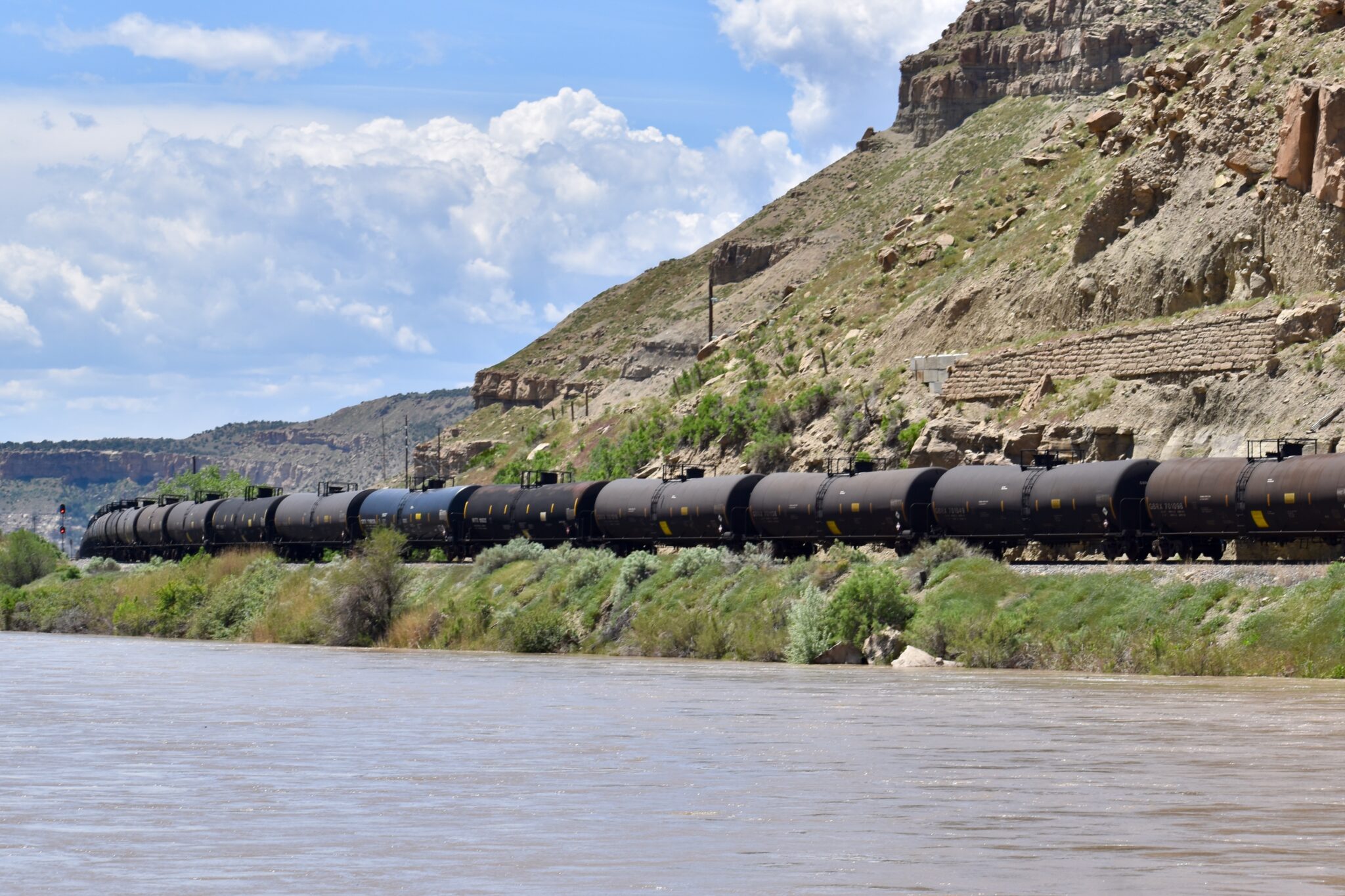
A train of tanker cars travels the tracks along the Colorado River near Cameo on May 16, 2023. (Chase Woodruff/Colorado Newsline)

Click the link to read the article on the Colorado Newsline website (Chase Woodruff):

January 18, 2024

A controversial Utah oil-train proposal opposed by Colorado communities and environmentalists was dealt another blow this week when the U.S. Forest Service withdrew a key permit for the project.

In an announcement published Wednesday, Ashley National Forest Supervisor Susan Eickhoff blocked the issuance of a permit to the Uinta Basin Railway to construct 12 miles of railroad track through a protected area of the national forest in northeast Utah. The stretch of track in question is part of the proposed railway’s 88-mile connection between the oil fields of eastern Utah’s Uinta Basin and the existing national rail network.

The project has drawn fierce opposition from Coloradans. A federal “downline analysis” estimated that 90% of the resulting oil-train traffic — as many as five fully loaded, two-mile-long trains of crude oil tankers per day — would be routed through environmentally sensitive and densely populated areas in Colorado, en route to oil refineries on the Gulf Coast. The oil trains would more than quadruple the amount of hazardous materials being shipped by rail through many Colorado counties.

Colorado’s Eagle County and five environmental groups sued to overturn the Uinta Basin Railway’s approval, and in August 2023 a panel of federal judges ruled that the approval process contained “numerous” and “significant” violations of the National Environmental Policy Act. The ruling vacated portions of the project’s environmental impact statement and ordered the federal Surface Transportation Board to redo its analysis of key environmental risks.

Because the Forest Service’s decision in August 2022 to grant a right-of-way permit to the project was based on that flawed analysis, the agency has withdrawn its decision pending further proceedings at the STB.

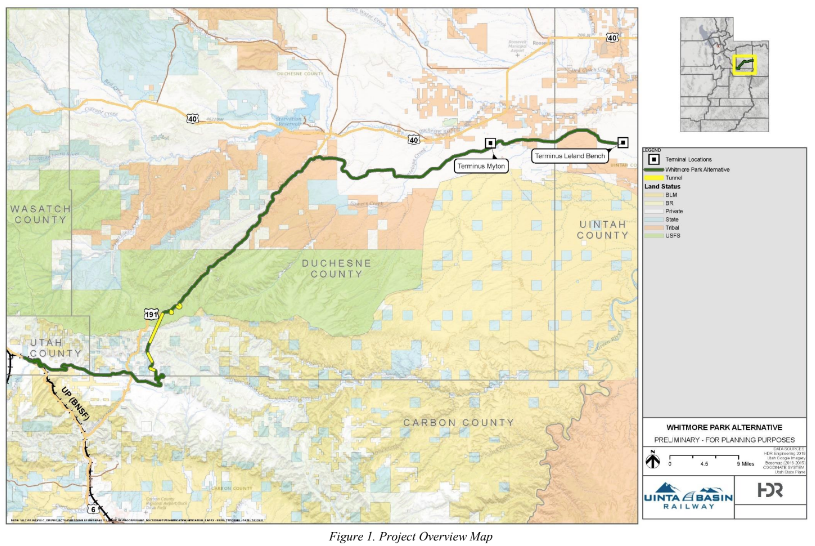
This map, included in U.S. Forest Service documents evaluating the Uinta Basin Railway proposal, shows the 88-mile length of the route. Tunnels are shown in yellow.
CREDIT: COURTESY IMAGE

“If the deficiencies are addressed and resubmitted for consideration, the Forest Service may issue a new decision,” Eickhoff wrote in a Jan. 17 letter.

“This is wonderful news for the roadless forest in Utah’s Indian Canyon and the wildlife who call it home,” said Ted Zukoski, senior attorney with the Center for Biological Diversity, one of the groups that sued to block the project. “It’s a victory for the Colorado River and nearby communities that would be threatened by oil train accidents and spills, and for residents of the Gulf Coast, where billions of gallons of oil would be refined. If the oil train’s backers attempt to revive this dangerous scheme, we’ll be there to fight it again.”

In a press release, Democratic U.S. Sen. Michael Bennet of Colorado, who had urged multiple federal agencies to put a stop to the project, applauded the Forest Service’s move.

“A derailment along the headwaters of the Colorado River could have catastrophic effects for Colorado’s communities, water, and environment,” Bennet said. “I’m glad the Forest Service has taken this important step to protect the Colorado River and the tens of millions of people who depend on it.”

Backers of the railway project include the Seven County Infrastructure Coalition, a group of Utah county governments in the oil-rich Uinta Basin. The coalition’s petition for a rehearing of the case by the U.S. Court of Appeals for the D.C. Circuit was denied in December, though the ruling could still be appealed to the U.S. Supreme Court.

“We’re still looking at options,” Greg Miles, a Duchesne County commissioner and co-chair of the coalition, said during a Jan. 11 public meeting. “We may be making a decision here within the next month.”

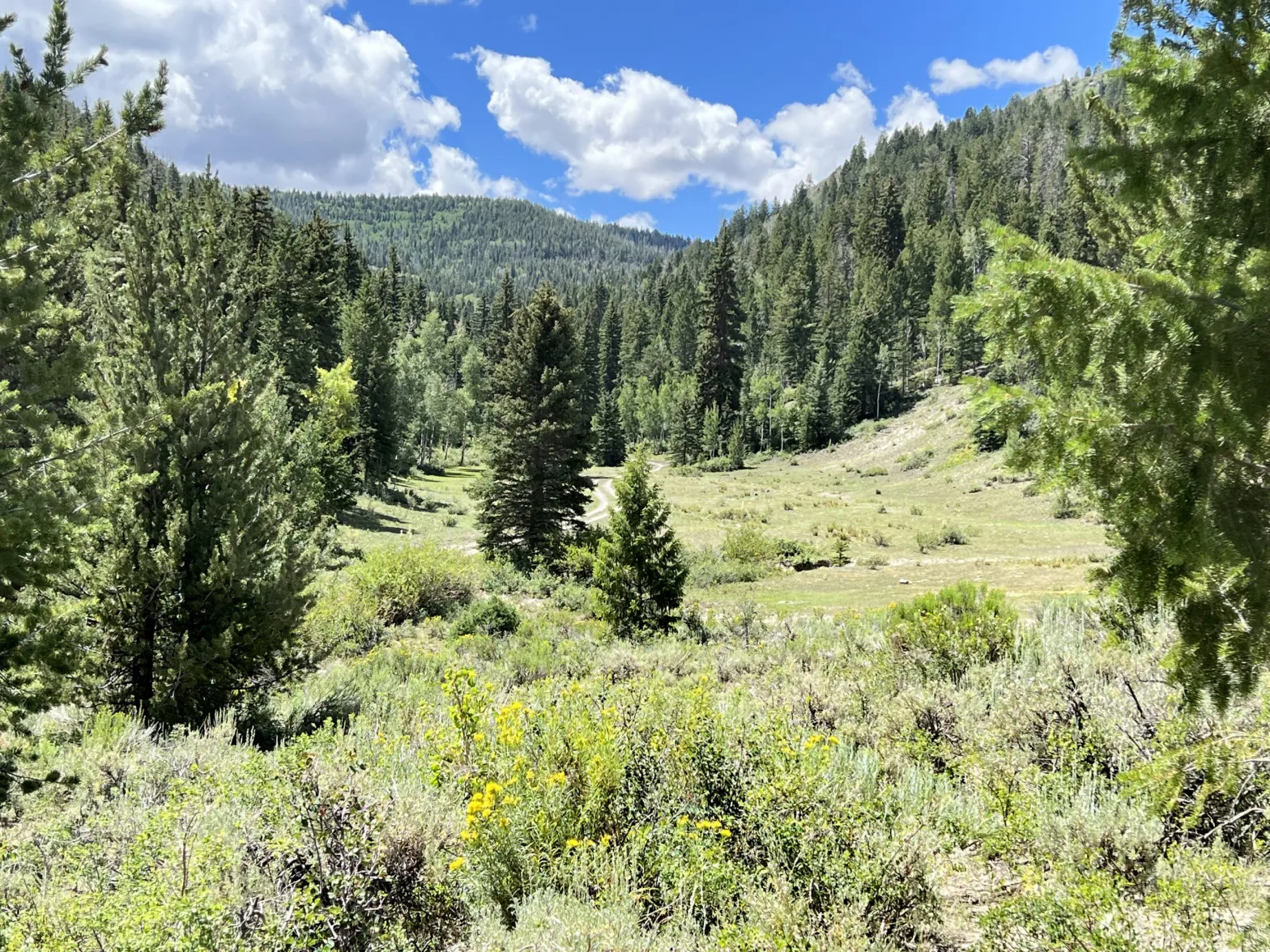
Dirt track to the right leads to a borehole site for a tunnel under the Ashley National Forest roadless area, part of the Uinta Basin Railway proposal which U.S. Forest Service officials approved in July 2022.
CREDIT: AMY HADDEN MARSH/ASPEN JOURNALISM

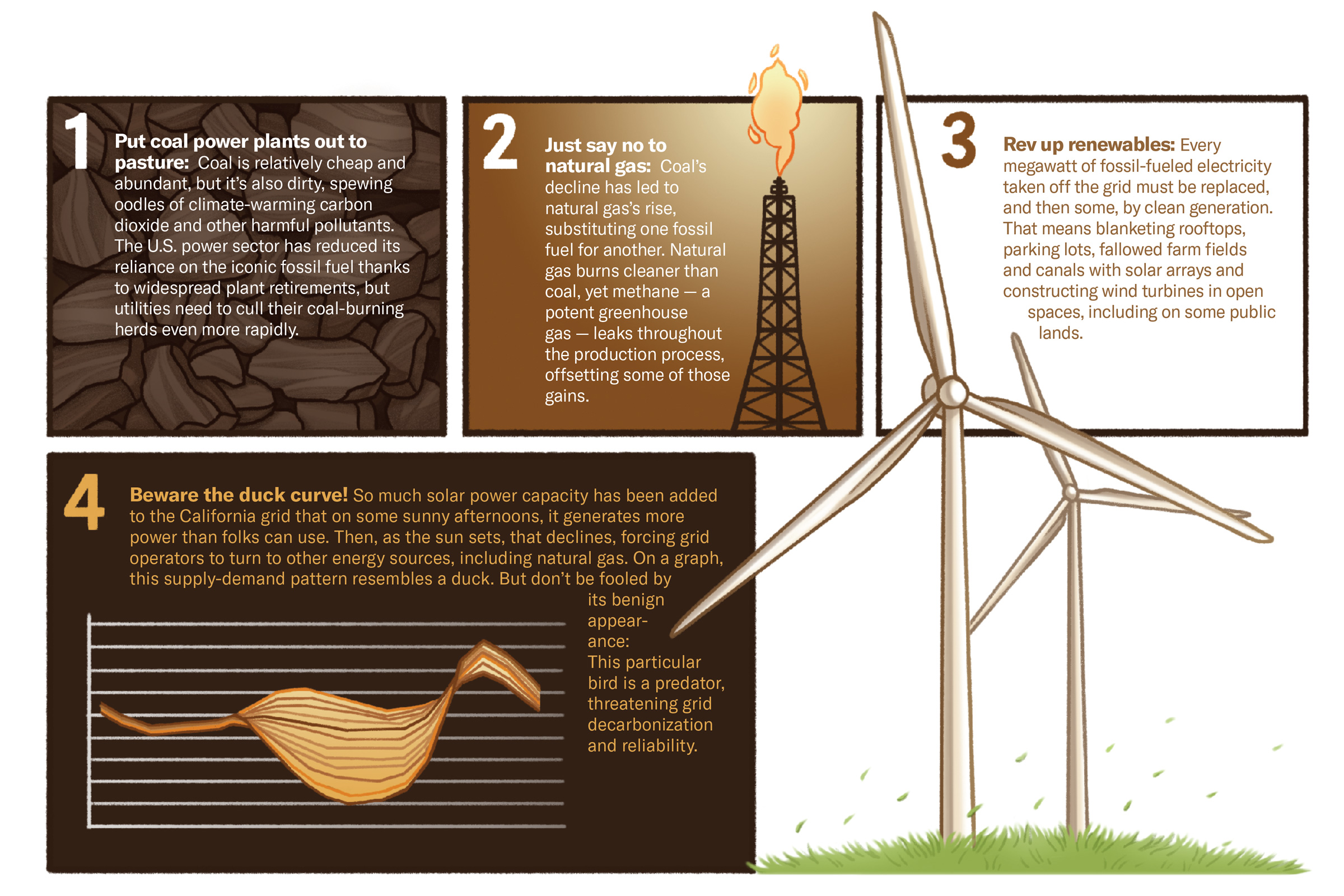
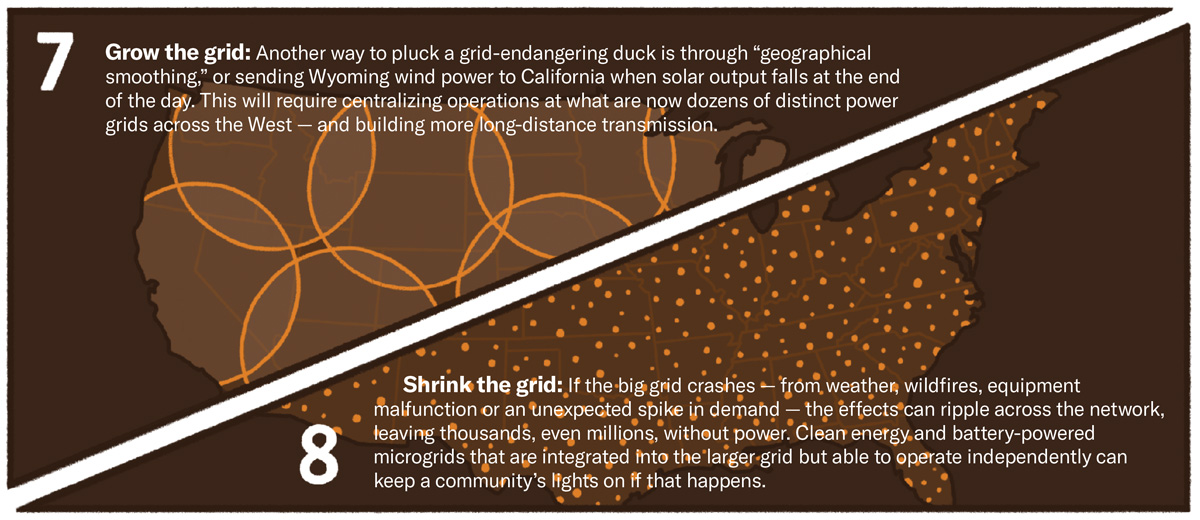
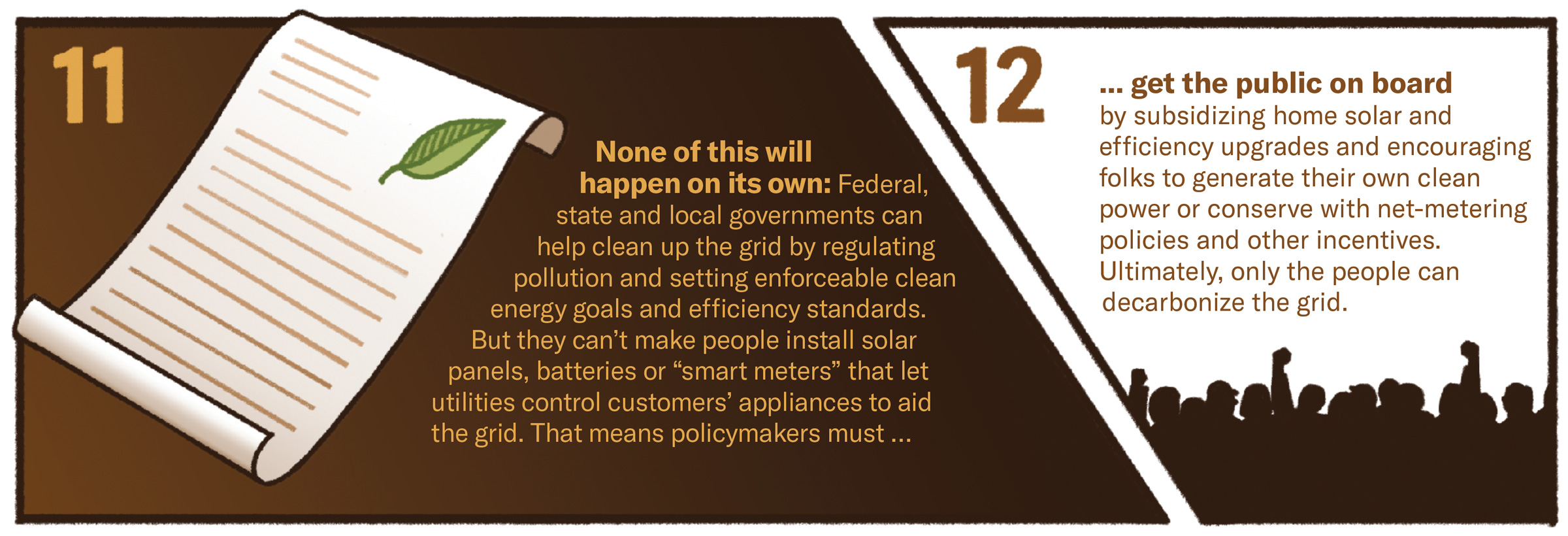
12 not-so-easy steps to decarbonize the grid: Electrifying will make a difference if that power comes from clean sources — Jonathan P. Thompson (@HighCountryNews) #ActOnClimate #KeepItInTheGround

Click the link to read the article on The High Country News website (Jonathan P. Thompson):

When it comes to the country’s climate change culprits, the biggest offenders lurk in the transportation sector: Altogether, planes, trains and automobiles, etc., emit 28% of the nation’s greenhouse gases, plus other nasty pollutants that harm anyone who lives near highways and airports. Industrial sources — factories, cement plants, steel mills, etc. — spew nearly one-fourth of our climate-warming pollutants, while commercial and residential buildings are responsible for 13%, and agriculture contributes 10%.

Experts generally agree that the best way to reduce all these emissions is to electrify everything: Just replace petroleum-powered vehicles, natural gas-fired heaters and stoves and coal-fired cement kilns and steel furnaces with their electric analogs. After all, an electric vehicle’s tailpipe emits zero greenhouse gases or other pollutants. In fact, electric vehicles don’t even have tailpipes.

There is one nagging little detail, though: The energy producing all that electricity has to come from somewhere, generally from greenhouse gas-emitting fossil fuels. The electric power sector is the nation’s second-largest emitter of greenhouse gases, after transportation. Electrifying everything might do little more than redistribute emissions from buildings and cars to the power grid. Unless, that is, the power grid is decarbonized, a simple — but monumental — task: The electric power sector needs to quit fossil fuels, cold turkey. And that requires massive investments in new power sources and innovation to remake the grid for a carbon-free world.

SOURCES: Energy Information Administration, Environmental Protection Agency, Oregon Solar Dashboard, California Independent System Operator, Harvard Kennedy School Belfer Center, National Renewable Energy Laboratory. Illustrations by Hannah Agosta/High Country News

$3.5 million
Funding the New Mexico Mortgage Finance Authority has allocated to help install rooftop solar on low-income households. 

21,894 megawatt-hours
Amount of electricity produced by utility-scale solar facilities in Oregon in 2015. 

1.69 million megawatt-hours
Amount produced in 2022.

500 megawatts 
Amount of battery storage on California’s grid in 2018. 

8,000 megawatts
Amount of battery storage on California’s grid today.

SOURCES: Energy Information Administration, Environmental Protection Agency, Oregon Solar Dashboard, California Independent System Operator, Harvard Kennedy School Belfer Center, National Renewable Energy Laboratory. Illustrations by Hannah Agosta/High Country News

103.5%
Amount of California’s total demand met by solar power on May 8, 2022, a record. 

16,044 megawatts
Amount of solar generation on the California grid on Sept. 6, 2023, just after noon, the all-time record so far. 

1,000
Feet of irrigation canal to be covered by solar panels at a Gila River Indian Community project in Arizona.

SOURCES: Energy Information Administration, Environmental Protection Agency, Oregon Solar Dashboard, California Independent System Operator, Harvard Kennedy School Belfer Center, National Renewable Energy Laboratory. Illustrations by Hannah Agosta/High Country News

1.05 billion tons
Amount of coal burned for electricity generation in the U.S. in 2007.

469 million tons
Amount burned in 2022.

7.1 trillion cubic feet
Amount of natural gas burned for electricity generation in the U.S. in 2007.

12.4 trillion cubic feet
Amount burned in 2022.

SOURCES: Energy Information Administration, Environmental Protection Agency, Oregon Solar Dashboard, California Independent System Operator, Harvard Kennedy School Belfer Center, National Renewable Energy Laboratory. Illustrations by Hannah Agosta/High Country News

371.5 million metric tons
Carbon dioxide emissions from burning natural gas to generate electricity in 2007.

661 million metric tons
Amount emitted in 2022.

2.33 billion 
2007 total emissions (natural gas and coal).

1.5 billion
2022 total emissions.

SOURCES: Energy Information Administration, Environmental Protection Agency, Oregon Solar Dashboard, California Independent System Operator, Harvard Kennedy School Belfer Center, National Renewable Energy Laboratory. Illustrations by Hannah Agosta/High Country News

Illustrations by Hannah Agosta/High Country News

Jonathan Thompson is a contributing editor at 
High Country News. He is the author of Sagebrush Empire: How a Remote Utah County Became the Battlefront of American Public Lands. 

Article: Cost and Energy Metrics for Municipal Water #Reuse — ACS Publications

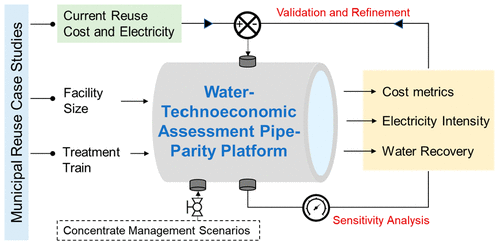
Graphic credit: ACS Publications article “Cost and Energy Metrics for Municipal Water Reuse”

Click the link to access the article on the ACS Publications website (Daniel E. Giammar*, David M. Greene, Anushka Mishrra, Nalini Rao, Joshua B. Sperling, Michael Talmadge, Ariel Miara, Kurban A. Sitterley, Alana Wilson, Sertac Akar, Parthiv Kurup, Jennifer R. Stokes-Draut, and Katie Coughlin). Here’s the abstract:

Municipal water reuse can contribute to a circular water economy in different contexts and with various treatment trains. This study synthesized information regarding the current technological and regulatory statuses of municipal reuse. It provides process-level information on cost and energy metrics for three potable reuse and one nonpotable reuse case studies using the new Water Techno-economic Assessment Pipe-Parity Platform (WaterTAP3). WaterTAP3 enabled comparisons of cost and energy metrics for different treatment trains and for different alternative water sources consistently with a common platform. A carbon-based treatment train has both a lower calculated levelized cost of water (LCOW) ($0.40/m3) and electricity intensity (0.30 kWh/m3) than a reverse osmosis (RO)-based treatment train ($0.54/m3 and 0.84 kWh/m3). In comparing LCOW and energy intensity for water production from municipal reuse, brackish water, and seawater based on the largest facilities of each type in the United States, municipal reuse had a lower LCOW and electricity than seawater but higher values than for production from brackish water. For a small (2.0 million gallon per day) inland RO-based municipal reuse facility, WaterTAP3 evaluated different deep well injection and zero liquid discharge (ZLD) scenarios for management of RO concentrate. Adding ZLD to a facility that currently allows surface discharge of concentrate would approximately double the LCOW. For all four case studies, LCOW is most sensitive to changes in weighted average cost of capital, on-stream capacity, and plant life. Baseline assessments, pipe parity metrics, and scenario analyses can inform greater observability and understanding of reuse adoption and the potential for cost-effective and energy-efficient reuse.

Article: #ClimateChange and the global redistribution of biodiversity: substantial variation in empirical support for expected range shifts — Environmental Evidence #ActOnClimate

An American pika jumps between rocks, carrying flowers and grasses in Rocky Mountain National Park. Photo Credit: Dave Showalter

Click the link to access the article on the Environmental Evidence website (Madeleine A. RubensteinSarah R. WeiskopfRomain BertrandShawn L. CarterLise ComteMitchell J. EatonCiara G. JohnsonJonathan LenoirAbigail J. LynchBrian W. MillerToni Lyn MorelliMari Angel RodriguezAdam Terando & Laura M. Thompson). Here’s the abstract:

Background

Among the most widely predicted climate change-related impacts to biodiversity are geographic range shifts, whereby species shift their spatial distribution to track their climate niches. A series of commonly articulated hypotheses have emerged in the scientific literature suggesting species are expected to shift their distributions to higher latitudes, greater elevations, and deeper depths in response to rising temperatures associated with climate change. Yet, many species are not demonstrating range shifts consistent with these expectations. Here, we evaluate the impact of anthropogenic climate change (specifically, changes in temperature and precipitation) on species’ ranges, and assess whether expected range shifts are supported by the body of empirical evidence.

Methods

We conducted a Systematic Review, searching online databases and search engines in English. Studies were screened in a two-stage process (title/abstract review, followed by full-text review) to evaluate whether they met a list of eligibility criteria. Data coding, extraction, and study validity assessment was completed by a team of trained reviewers and each entry was validated by at least one secondary reviewer. We used logistic regression models to assess whether the direction of shift supported common range-shift expectations (i.e., shifts to higher latitudes and elevations, and deeper depths). We also estimated the magnitude of shifts for the subset of available range-shift data expressed in distance per time (i.e., km/decade). We accounted for methodological attributes at the study level as potential sources of variation. This allowed us to answer two questions: (1) are most species shifting in the direction we expect (i.e., each observation is assessed as support/fail to support our expectation); and (2) what is the average speed of range shifts?

Review findings

We found that less than half of all range-shift observations (46.60%) documented shifts towards higher latitudes, higher elevations, and greater marine depths, demonstrating significant variation in the empirical evidence for general range shift expectations. For the subset of studies looking at range shift rates, we found that species demonstrated significant average shifts towards higher latitudes (average = 11.8 km/dec) and higher elevations (average = 9 m/dec), although we failed to find significant evidence for shifts to greater marine depths. We found that methodological factors in individual range-shift studies had a significant impact on the reported direction and magnitude of shifts. Finally, we identified important variation across dimensions of range shifts (e.g., greater support for latitude and elevation shifts than depth), parameters (e.g., leading edge shifts faster than trailing edge for latitude), and taxonomic groups (e.g., faster latitudinal shifts for insects than plants).

Conclusions

Despite growing evidence that species are shifting their ranges in response to climate change, substantial variation exists in the extent to which definitively empirical observations confirm these expectations. Even though on average, rates of shift show significant movement to higher elevations and latitudes for many taxa, most species are not shifting in expected directions. Variation across dimensions and parameters of range shifts, as well as differences across taxonomic groups and variation driven by methodological factors, should be considered when assessing overall confidence in range-shift hypotheses. In order for managers to effectively plan for species redistribution, we need to better account for and predict which species will shift and by how much. The dataset produced for this analysis can be used for future research to explore additional hypotheses to better understand species range shifts.

The Significance of Chevron Deference: Two new #SCOTUS cases, Loper Bright Enterprises v. Raimondoand Relentless Inc. v. Dept. of Commerce, may impact federal agencies’ ability to perform their duties — The Natural Resources Defense Council

The U.S. Supreme Court Building, current home of the Supreme Court, which opened in 1935. By Senate Democrats – 7W9A9324, CC BY 2.0, https://commons.wikimedia.org/w/index.php?curid=92666722

Click the link to read the article on the Natural Resources Defense Council website (David Doniger):

January 12, 2024

The U.S. Supreme Court is scheduled to hear arguments on January 17 in a pair of cases that could weaken the ability of federal agencies to confront the wide array of challenges the modern world throws at us, from protecting clean air and water to assuring the safety of food and medicines to preventing stock fraud and other financial scams, and more.

The cases Loper Bright Enterprises v. Raimondo and Relentless Inc. v. Department of Commerce challenge the authority of federal agencies to make their best judgments about the detailed rules and standards required to carry out laws that Congress has passed and tasked those agencies to administer.

The cases narrowly involve the management of the Atlantic herring fishery. The stakes, though, are much broader: whether the courts will continue to respect the decisions of the expert agencies, or whether judges will be set free to impose their own preferences on agency actions and decisions. [ed. emphasis mine]

The result could put hundreds of such decisions in the hands of unelected lower-court judges rather than agency professionals who have deep expertise in their appointed fields and who are accountable to the elected branches of government—the president and Congress.

At issue is a legal doctrine called Chevron deference. It came out of the 1984 case of Chevron USA v. Natural Resources Defense Council. In that case, the U.S. Supreme Court ruled that both agencies and courts must follow Congress’s laws when they are clear and unambiguous. But when laws have more than one reasonable interpretation, courts must defer to the reasonable choices made by the expert agencies that Congress has tasked to administer those laws.

NRDC lost that case. In the four decades since, NRDC has both lost and won other cases that have been decided based on the Chevrondoctrine. But NRDC respects the legal framework that the doctrine provides and the important values it serves. 

Congress passes the laws the federal agencies administer. And Congress gives agencies the responsibility to administer those laws. 

Federal agencies are directly accountable to the U.S. president, the only public official elected nationally to serve the entire country. They are also accountable to Congress, which controls their funding and, through the Senate, decides whether to confirm each agency’s senior leadership nominees.

It is these publicly accountable federal agencies, not unelected judges, that have the responsibility, as well as the legal and technical expertise, to administer our laws in a way that ensures they achieve the purpose Congress intended.

Below are answers to key questions about this foundational legal doctrine and the important stakes these new cases have for the country.

What’s the Chevron case all about?

Federal agencies have both the responsibility and the expertise to administer the laws passed by Congress, to ensure that those laws achieve their intended purpose. For well over a century, the Supreme Court has given great weight and respect to agency interpretations of the laws that Congress told them to carry out. 

Under long-standing precedent, when Congress has decided a specific policy issue, agencies and courts must carry out the legislature’s decisions. But when Congress has tasked an agency to flesh out Congress’s policy choices and the agency has made a reasonable determination, then the courts are supposed to respect those determinations.

Forty years ago, the Supreme Court affirmed this doctrine in the Chevron case, saying that federal courts generally must defer to an agency’s reasonable interpretation on points where a statute leaves room for an agency to fill in details or has more than one reasonable interpretation. In such cases, unelected federal judges, lacking the same technical expertise, may not substitute their personal policy preferences for agency interpretations.

Why is the doctrine of Chevron deference so important?

It protects the essential role of federal agencies in writing the rules and standards required to administer laws passed by Congress to protect, for example, public health, worker safety, the integrity of financial markets, or the quality of our air, food, water, and medicine.

It allows federal agencies—which are accountable to elected officials and have developed decades of expertise in the tasks that Congress has assigned to them—to do their duty on the public’s behalf, without having their reasonable policy choices second-guessed by unelected judges. 

It provides judges with clear guidelines for resolving legal disputes regarding the administration of laws intended to safeguard the public.

And it clarifies the roles of the three branches of federal government (legislative, executive, and judicial) so as to promote nationwide consistency in the administration of our laws and minimize the number of conflicting court decisions due to diverse policy inclinations from individual judges.

That entire legal framework—and the protections, assurances, guidelines, and clarity it provides—is now being challenged before the U.S. Supreme Court.

How is this doctrine being challenged?

In both Loper Bright Enterprises v. Raimondo and Relentless Inc. v. Department of Commerce, several herring boat owners have asked the Court to do away with or weaken the doctrine of Chevrondeference, and the essential public protections it provides. If the Court decides to overturn Chevron, it will have to set a new test for judges reviewing agency decisions. 

A ruling that weakens or reverses the Chevron deference doctrine could allow hundreds of unelected lower court judges to make decisions based on personal preferences, disregarding the expertise of the federal agencies that are accountable to the public through the elected branches of the president and Congress.

That could undermine safeguards the public has counted on for decades and the ability of federal agencies to administer the laws that Congress passes. 

How might this case put public safeguards and protections at risk?

In confronting the complex challenges of the modern world, Congress doesn’t have the bandwidth, expertise, or foresight to address every detail, answer every question, or anticipate every new development that might arise in administering its laws. 

So, when Congress enacts a law to advance some national purpose—protecting clean air, for example—Congress makes the big decisions and then relies on federal agencies to administer the law. That means crafting the detailed and technical rules and standards needed to achieve the law’s intended purpose, and to adapt those rules to keep pace with unforeseen and evolving risks.

This ensures that policy decisions are enacted into law and administered by the two branches of government—legislative and executive—that are accountable to the public, because they are composed of or responsible to elected officials. And it further ensures that laws are administered to achieve the purpose that Congress intended and are not thwarted by unelected judges inserting their personal policy choices.

How is that approach threatened by these cases?

This approach had been the foundation of sound governance in this country for many decades, but the Chevron deference doctrine affirmed it in 1984.

Reversing or weakening Chevron deference could upend that approach by opening the door to rulings in lower courts around the country that reflect the personal policy preferences of unelected judges who lack expertise in the relevant subject matter. That could unleash a torrent of litigation ai med at weakening or eliminating rules and standards we’ve relied on for decades to ensure the efficient functioning of society and protect us all from needless risk.

What was NRDC’s argument in the original Chevron USA v. Natural Resources Defense Council?

We argued that the Clean Air Act was unambiguous on the specific issue involved in that case. But the Supreme Court decided that Congress had given the U.S. Environmental Protection Agency (EPA) the authority to make a policy choice on that issue, and the Court later told the lower courts that in such situations, they should respect the agencies’ reasonable choices. 

The Court’s ruling upheld a deregulatory decision by the Reagan administration (a decision by Justice Neil Gorsuch’s mother, Anne McGill Gorsuch, who was Reagan’s first EPA administrator). The Court’s decision was widely hailed by conservative judges and legal scholars—including conservative justices such as Antonin Scalia—as the right way for courts to conduct themselves. The Chevron doctrine has been followed for 40 years since in literally thousands of lower court decisions.

Now, however, an alliance of billionaire businessmen and conservative groups has turned against this useful doctrine. They want judges, not the agencies Congress has tasked to carry out its laws, to make these policy decisions. The small herring boats are out front in these cases, but siding with them in court are big business interests that want to avoid the safeguards our environmental, health, and financial laws demand of them. 

Aren’t judges supposed to interpret our laws? Isn’t that why we have an independent judiciary?

Yes. It’s the job of federal courts to ensure that federal agencies carry out the will of Congress, as expressed in the passage of laws.

That means federal courts must first determine whether Congress has already decided the policy question at issue in a case. If so, that’s the end of the story. The court’s job then is to compel the agency to do what Congress intended.

But, when Congress decides to task an agency with choosing the right approach, within a certain range, the courts have a duty to respect that congressional choice. In such cases, the judge’s job is to determine whether an agency’s choice falls within the bounds Congress has set. If so, the court’s duty is to uphold that reasonable agency decision. If not, the court’s duty is to overturn the agency’s actions and make the agency stay within those bounds.

Does the Chevron doctrine undermine judicial authority?

No. It gives courts clear guidelines for resolving legal disputes involving laws that agencies implement that are ambiguous or lend themselves to more than one reasonable interpretation.

Sometimes, for instance, a law will provide an agency with a range of options, or a range of parameters, and leave it up to the appropriate federal agency to determine the best way to carry out what Congress intended. Other times, a law will be imprecise as to the specific actions required to administer it, in the expectation that such determinations will be made by the agency that has the expertise to make those decisions.

It is in those instances, where the law leaves room for reasonable interpretation, that the Chevron deference doctrine provides courts with clear guidelines: Defer to the expertise of the appointed agency, which is accountable to the public, not the personal preferences or predilections of an unelected judge who lacks the appropriate expertise.

Does the Chevron doctrine place too much power in the hands of agency bureaucrats?

No. Federal agencies are accountable to the two elected branches of government—the president and Congress. 

Congress controls the funding of federal agencies. Congress tasks these agencies to administer the laws passed by Congress. And Congress, through the Senate, decides whether to confirm a president’s appointments to each agency’s senior leadership positions.

Why is agency expertise important?

Federal agencies are staffed by professionals with technical, legal, and scientific expertise in areas relevant to their field, whether that involves, for instance, defending federal ocean waters from the hazards of oil and gas drilling; protecting savings and investments by ensuring the integrity of capital markets; or safeguarding the public from dangerous chemicals in our air, water, or food.

Agency expertise therefore represents a significant public asset, accrued at substantial public investment. Taxpayers expect, and have a right, to benefit from the judgment and knowledge a staffer acquires over the course of a career devoted to, for example, food safety, water quality, or public health.

What else informs agency decisions and rulemakings?

Agency decisions and rulemakings are informed by a transparent process of public comments, hearings, and inquiry, all of which must be conducted in accordance with the U.S. Administrative Procedure Act. That ensures public input in agency decisions. It further ensures that agency actions are supported by the best available science, economic analysis, and other relevant information. 

Once rules or standards are put into place, the politically accountable branches can amend or even repeal them, as conditions warrant.

Finally, federal agencies are accountable to both the president, the only public official elected through a national vote to represent the entire country, and to Congress, through its powers of oversight, funding, and authority to amend or repeal laws and regulations.

Is this what some conservatives call the administrative state?

We rely on the federal government to help advance and defend the national interests, values, and aspirations that gather us as a nation. Providing responsible public oversight—to ensure the efficient functioning of our society and to protect us all from needless risk—is an essential part of its job.

To perform those duties effectively, the executive branch operates federal agencies staffed by professionals with expertise appropriate to their appointed fields.

Congress controls the funding for those agencies and passes the laws that the agencies administer, subject to judicial overview. The agencies are directly accountable to the president, who is directly accountable to the public. Where the system falls short, oversteps its bounds, or requires updates, the Constitution provides the legislative, judicial, and executive branches sufficient tools to make needed adjustments.

What some wrongly call the administrative state is actually our federal system of governance at work. The doctrine of Chevron deference provides a legal framework that helps to make our government more effective at serving the public.

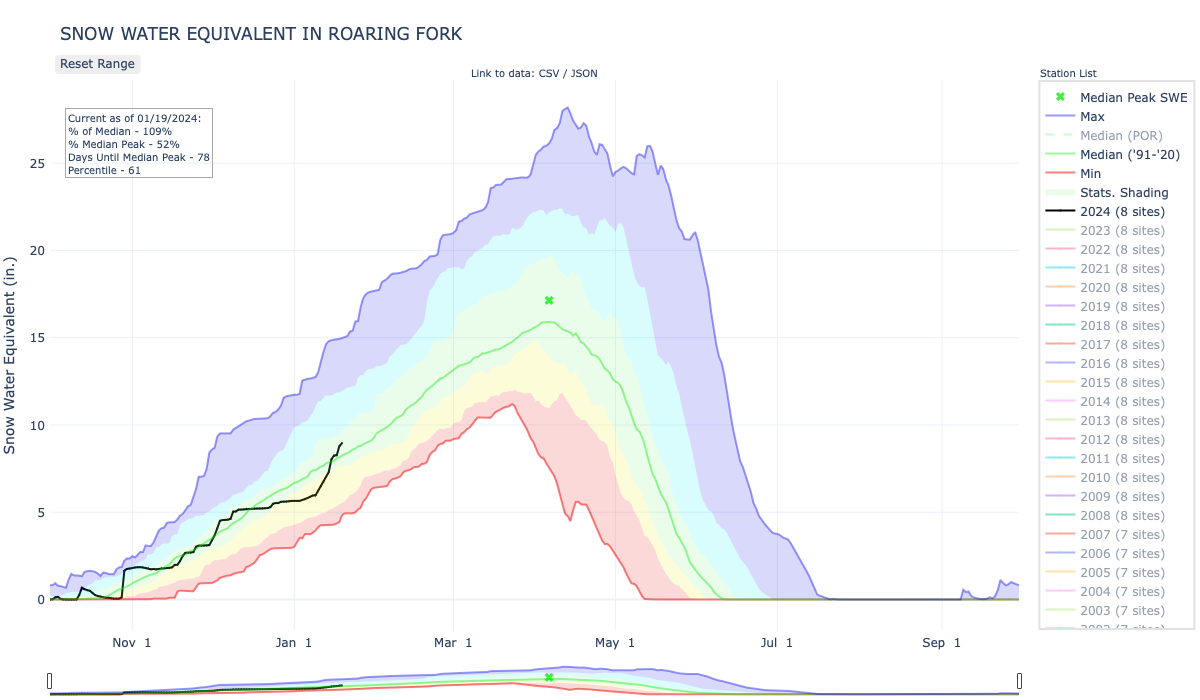
Weekend storm boosts #RoaringForkRiver Basin #snowpack to median — The #Aspen Daily News

Click the link to read the article on the Aspen Daily News website (Scott Condon). Here’s an excerpt:

January 16, 2024

For the Roaring Fork Basin overall, the snowpack soared from just 85% of average on Thursday morning to 102% on Monday morning, according to the NRCS. The Fryingpan Valley was the biggest gainer from the storms. The Chapman Tunnel Snotel site is at 107% of median. The Ivanhoe site is at 128%, Kiln is at 105% and Nast Lake is boasting a snowpack at 145% of median. Meanwhile the Independence Pass Snotel site remains well below the rest of the basin. Independence was at only 67% of median as of Thursday morning. That improved to 80% by Monday morning with more snow falling. Nevertheless, that’s the lowest reading in the region. In the Crystal River drainage, McClure Pass was at 82% of median as of Monday morning. The North Lost Trail Snotel site outside of Marble was at 117%. The Schofield site, which typically has one of the highest snowpacks in the region, was at 90% Monday.

Map of the Roaring Fork River drainage basin in western Colorado, USA. Made using USGS data. By Shannon1 – Own work, CC BY-SA 4.0, https://commons.wikimedia.org/w/index.php?curid=69290878

Wet January helping #snowpack rebound — The #GrandJunction Daily Sentinel

Click the link to read the article on The Grand Junction Daily Sentinel website (Dennis Webb). Here’s an excerpt:

January 17, 2024

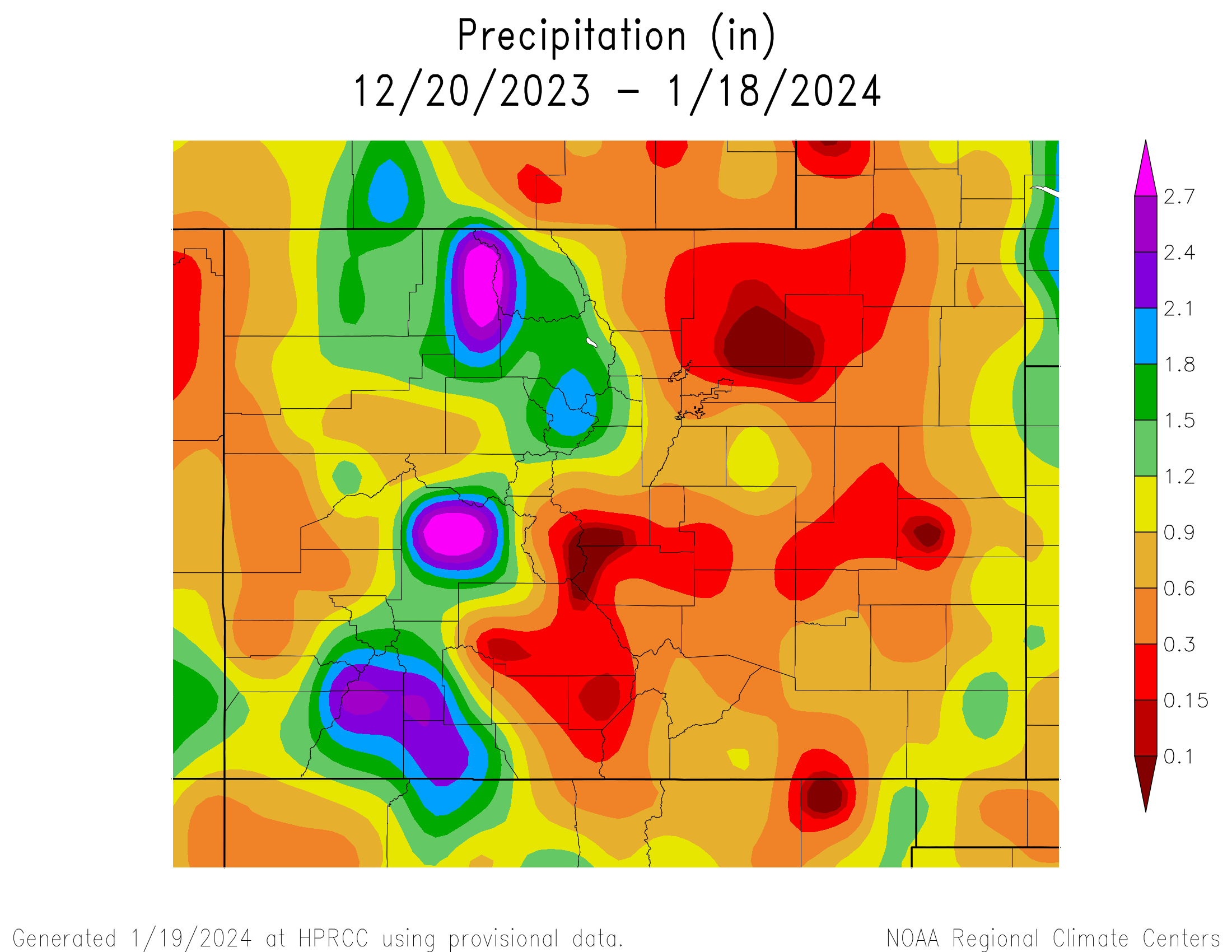
The National Weather Service in Boulder reported that from Friday through Monday, many areas in the central and northern mountains got 2 to 3 feet of snow, with some areas getting up to 4 feet, and wind gusts topping 100s mph in a few areas. Powderhorn Mountain Resort on Tuesday was reporting 8 inches over the past 48 hours. That was after it said it got more than 3 feet of snow over six days through last Thursday, including a whopping 24 inches in just 24 hours early last week. As of last week, all lifts and runs are now open at the resort. Vail Resorts is reporting seven-day snow totals at its Colorado ski areas ranging from 29 inches at Keystone Resort to 4 feet at Crested Butte Mountain Resort…Tom Renwick, a forecaster for the National Weather Service in Grand Junction, said the weekend storm produced about 50 inches of snow at Rabbit Ears Pass in the Steamboat Springs area and 51 inches at Green Mountain north of Vail, and much of the central mountain corridor got about 2 feet at higher elevations. In southwest Colorado, accumulations varied from about 4 to 8 inches in the foothills to a foot in higher elevations, he said. He said the Gunnison area had accumulations ranging from a foot to a foot and a half and Grand Mesa got around one foot in areas…

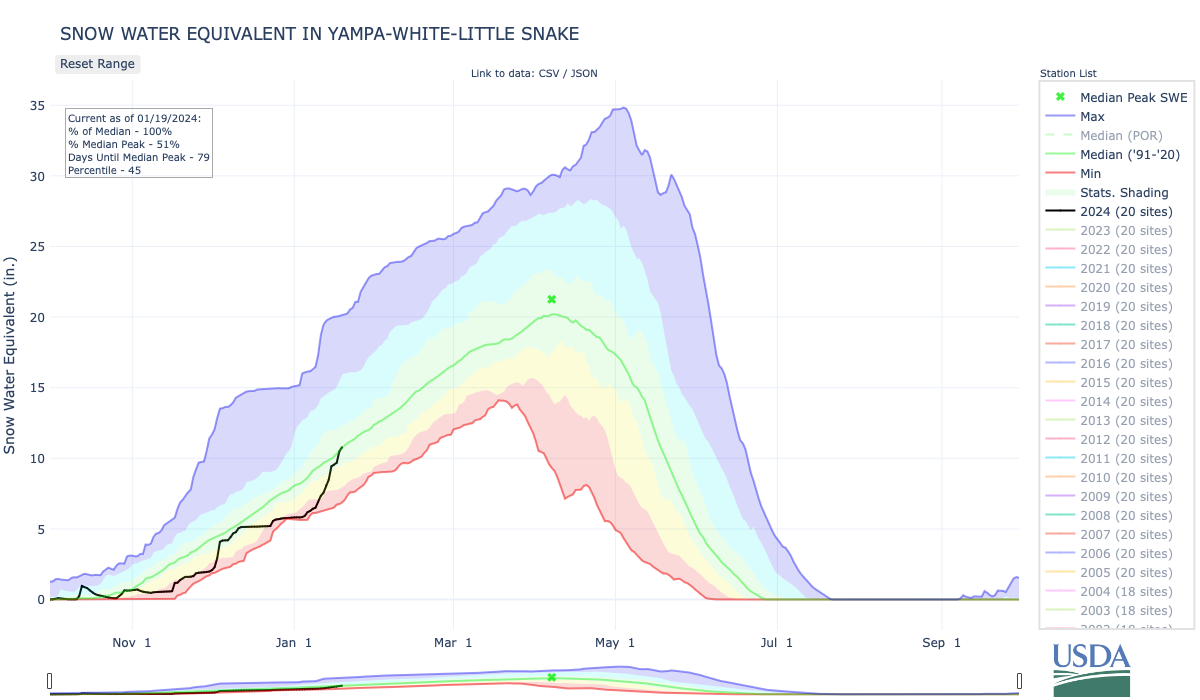
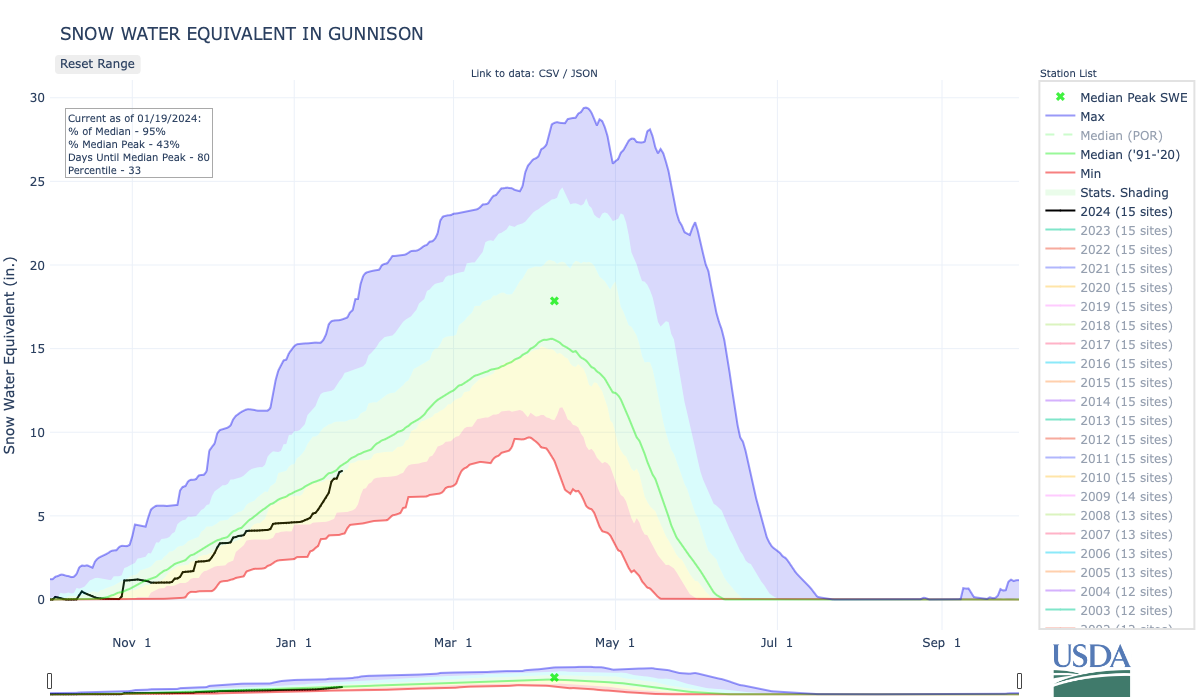
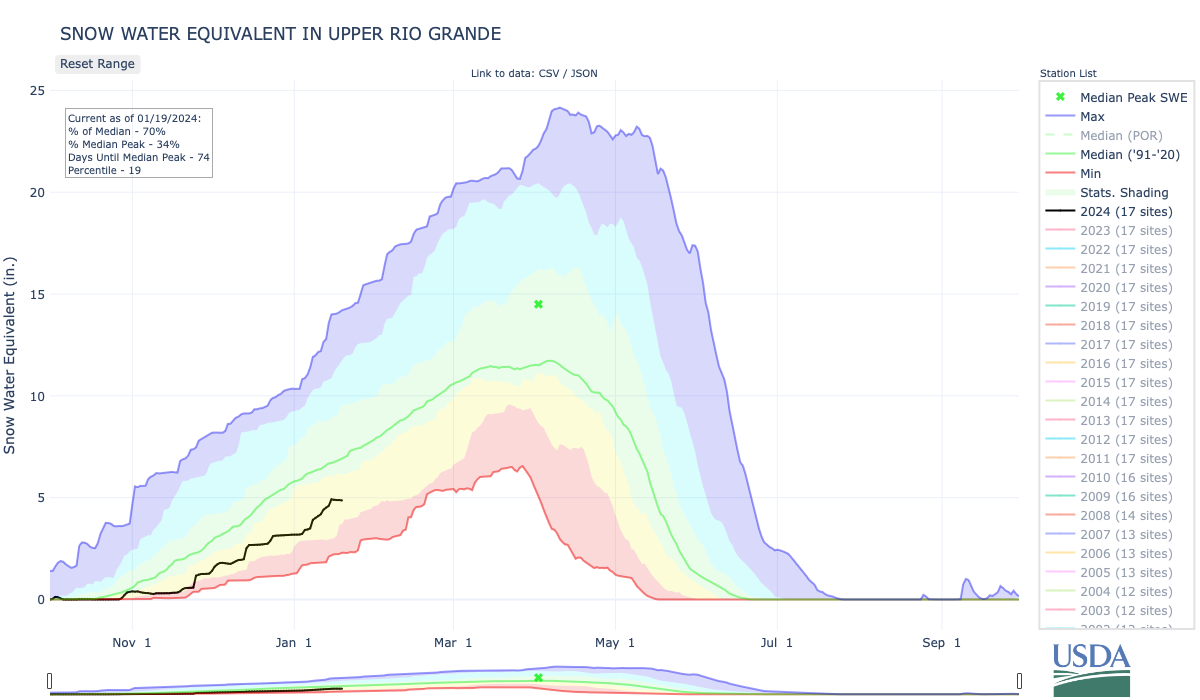
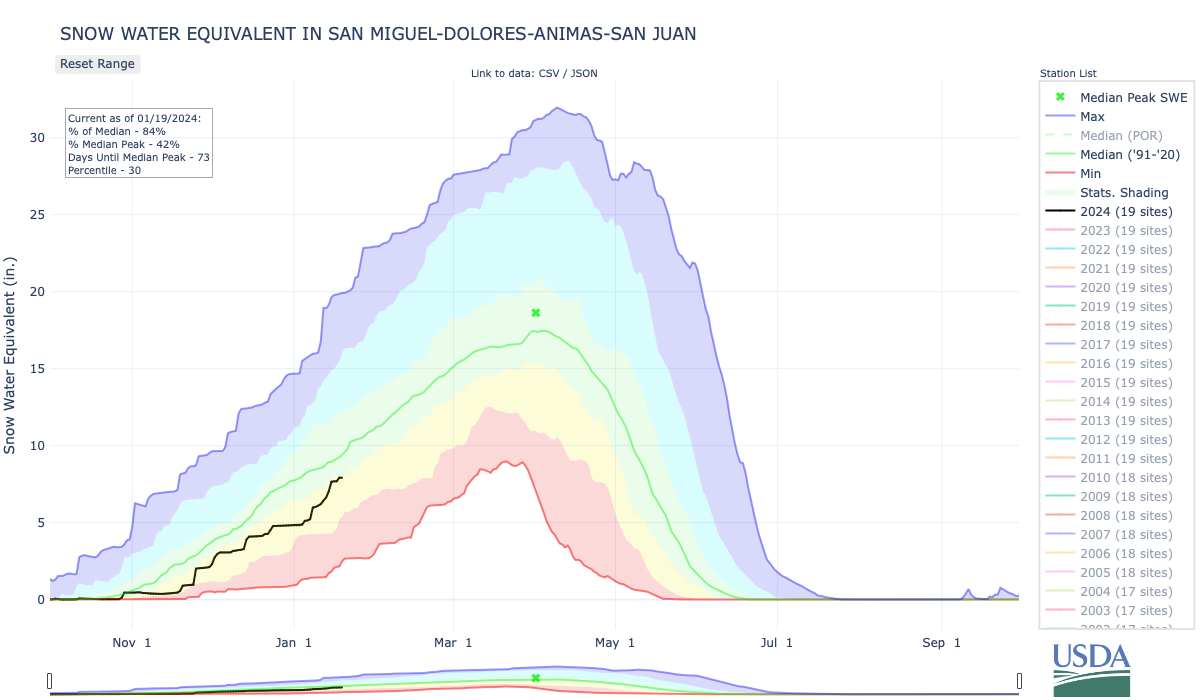
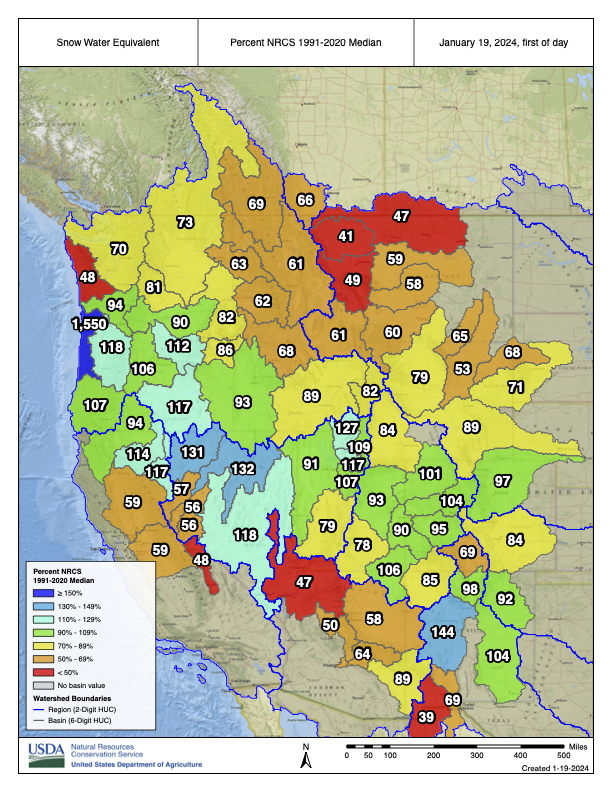
Snowpack in the Colorado River headwaters basin on Tuesday stood at 96% of normal for Jan. 16, with the Yampa/White/Little Snake river basins at 94% and the Gunnison River Basin also at 94%, according to the Natural Resources Conservation Service. The Upper Rio Grande River Basin’s snowpack has increased to 71% of median from just 55% at the start of the month, the combined San Miguel/Dolores/Animas/San Juan basins stood at 84% of normal Tuesday and the Arkansas River Basin was at 85%.

Westwide SNOTEL basin-filled map January 19, 2024 via the NRCS.

#ColoradoRiver January 2024 Most Probable 24-Month Study — Reclamation #COriver #aridification #LakeMead #LakePowell

Map credit: AGU

Click the link to read the memo on the Reclamation Website (Noe Santos and Alex Pivarnik):

The operation of Lake Powell and Lake Mead in the January 2024 24-Month Study is pursuant to the December 2007 Record of Decision on Colorado River Interim Guidelines for Lower Basin Shortages and the Coordinated Operations of Lake Powell and Lake Mead (Interim Guidelines) and reflects the draft 2024 Annual Operating Plan (AOP). Pursuant to the Interim Guidelines, the August 2023 24-Month Study projections of the January 1, 2024, system storage and reservoir water surface elevations set the operational tier for the coordinated operation of Lake Powell and Lake Mead during 2024.

The August 2023 24-Month study projected the January 1, 2024, Lake Powell elevation to be less than 3,575 feet and at or above 3,525 feet and the Lake Mead elevation to be at or above 1,025 feet. Consistent with Section 6.C.1 of the Interim Guidelines the operational tier for Lake Powell in water year (WY) 2024 will be the Mid-Elevation Release Tier and the water year release volume from Lake Powell will be 7.48 million acre-feet (maf).

The 2022 Drought Response Operations Agreement (DROA) Plan1 for May 2022 through April 2023 was amended to suspend 2022 DROA Plan releases as of March 7, 2023. A total DROA release of approximately 463 thousand acre-feet (kaf) occurred under the 2022 DROA Plan. Reclamation will attempt to maximize DROA recovery in the Upper Initial Units in WY 2023 and through April 2024. Reclamation will provide monthly DROA accounting, including DROA releases and recovery, which can be found online at: https://www.usbr.gov/ColoradoRiverBasin/documents/dcp/DROA/DROSummarySheet.pdf.

In May of 2023, the DROA Parties agreed to the 2023 DROA Plan. The 2023 DROA Plan does not include any DROA releases, but rather provides for recovery of prior DROA releases from the units upstream of Powell.

Reclamation will continue to carefully monitor hydrologic and operational conditions and assess the need for additional responsive actions and/or changes to operations. Reclamation will continue to consult with the Basin States, Basin Tribes, Mexico, and other partners on Colorado River operations to consider and determine whether additional measures should be taken to further enhance the preservation of these benefits, as well as recovery protocols, including those of future protective measures for both Lakes Powell and Mead.

The August 2023 24-Month Study projected the January 1, 2024 Lake Mead elevation to be below 1,075 feet and above 1,050 feet. Consistent with Section 2.D.1 of the Interim Guidelines, a Shortage Condition consistent with Section 2.D.1.a will govern the operation of Lake Mead for calendar year (CY) 2024. In addition, Section III.B of Exhibit 1 to the Lower Basin Drought Contingency Plan (DCP) Agreement will also govern the operation of Lake Mead for CY 2024. Lower Basin projections for Lake Mead take into consideration updated water orders to reflect additional conservation efforts under the LC Conservation Program.