If you thought #FortCollins’ warm December was odd, you’re right. Here’s how weird it was — The Fort Collins Coloradoan

Colorado Drought Monitor four week change map ending January 2, 2024.

Click the link to read the article on the Fort Collins Coloradoan website (Miles Blumhardt). Here’s an excerpt:

Fort Collins had a very dry and warm December 2023

  • The city received no measurable snowfall in December, which is the first time that happened since 2002. Before 2002, it happened only three other times, the last of which was in 1935.
  • The city received 0.14 inches of precipitation, which fell as rain. It was the driest December since 2018.
  • The average temperature was 37.3 degrees, which was the warmest for December since 1980.
  • December reached above 60 degrees five times, including the high of 65 degrees on Dec. 6 and the last balmy day of 62 degrees on Dec. 21.
  • It never got colder than 15 degrees. That happened on Christmas night and was the highest minimum temperature for the month since the beginning of city weather record-keeping in 1889. Compare that to December 2022, when we dropped to minus 17 degrees, the coldest temperature recorded of any month since the 1990s.

Despite a dry December, 2023 was a wet one for Fort Collins

  • 2023 was the fourth-wettest year on record, ending with 24.36 inches of precipitation, which was 153% of our 1991-2020 normal of 15.88 inches.
  • The last wetter year was in 1997, the year of the Spring Creek Flood, when we received 25.23 inches.
  • The city’s record for precipitation in a calendar year is 28.28 inches in 1961.

#Colorado charts new protections for state waters left vulnerable by U.S. Supreme Court ruling: New definition of ‘waters of the United States’ excludes wetlands, small streams — Colorado Newsline #WOTUS

Sandhill Cranes Dancing. Photo by: Arrow Myers photo courtesy Monte Vista Crane Festival

Click the link to read the article on the Colorado Newsline website (Lindsey Toomer):

JANUARY 4, 2024

Following the U.S. Supreme Court’s decision narrowing the reach of the Clean Water Act, states including Colorado must now pick up the slack to protect water the federal government no longer will. 

The new definition of “waters of the United States,” or WOTUS, excludes a large number of wetlands that now require state regulation if they are to be protected. Brett Hartl, government affairs director at the Center for Biological Diversity, said the clear impact of the 2023 Sackett v. Environmental Protection Agency case is that many small streams and wetlands are no longer protected by the Clean Water Act. 

Hartl said the sooner Colorado acts to create regulations around wetlands the better, because right now it would be legal if someone wanted to dredge and fill a wetland for development. He said the state should start by simply looking at what used to be protected by the Clean Water Act and create a similar regulation system where people need to apply for a permit and mitigate damage. 

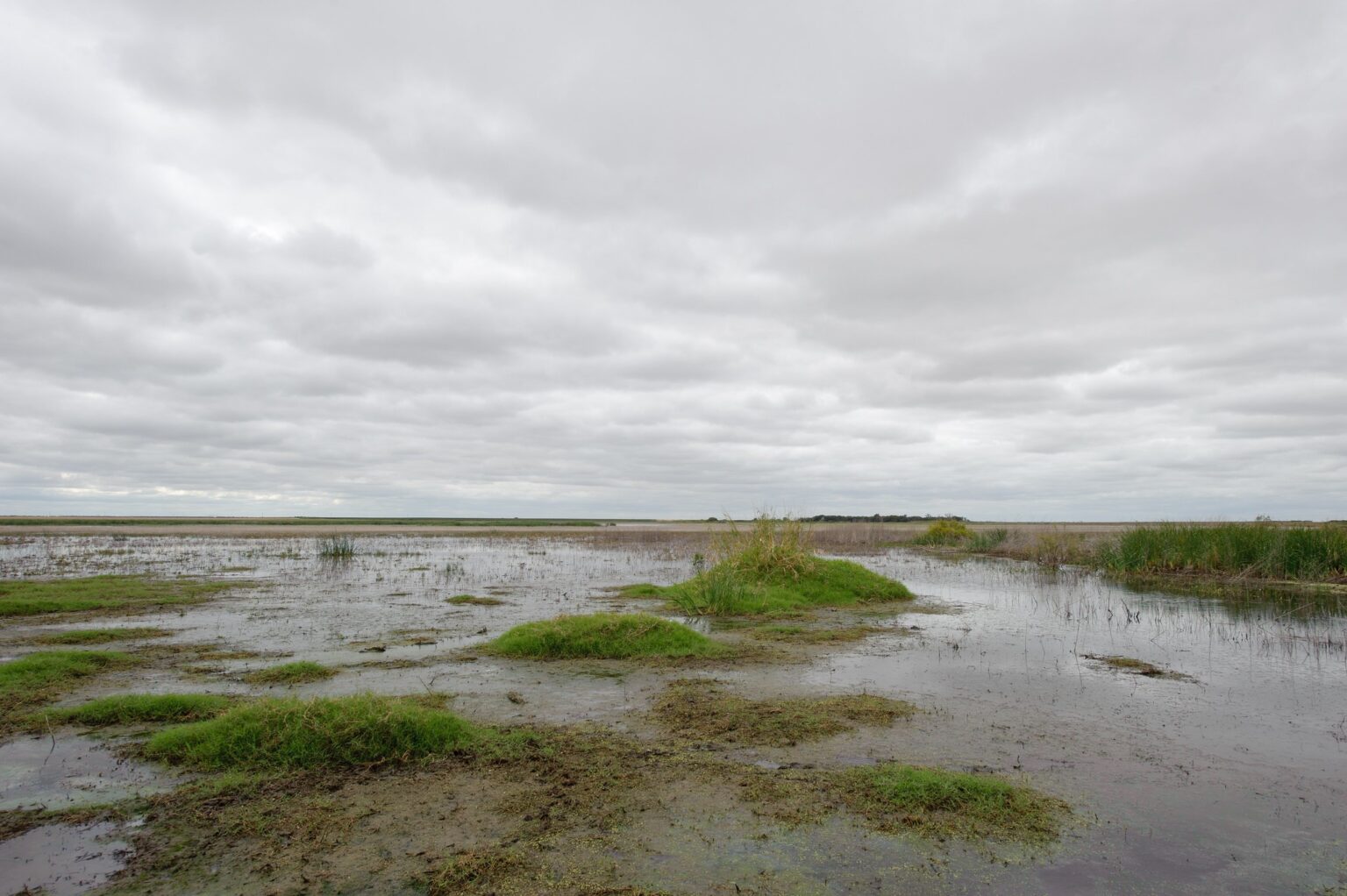
Millions of acres of wetlands recently lost federal protection under the Clean Water Act after a U.S. Supreme Court ruling. Some states are attempting to fill the void, but permitting programs — and the staff needed to enforce them — have proven costly. Flickr/USDA NRCS TX

“My guess is that the state has a fairly good idea of what areas within the state face the most development pressure at any given time — a wetland high up in the mountains inside a park or wilderness area or state forest or whatever is probably not at as great a threat as something maybe on the outskirts of Boulder or Denver where there’s intense pressure to develop,” Hartl said. 

Katherine Jones, a spokesperson for Colorado Gov. Jared Polis, said up to 50% of state waters are at risk of no longer being protected by the Clean Water Act following the Sackett decision. Colorado’s Department of Public Health and Environment’s Water Quality Control Division said the Sackett ruling “will likely result in all ephemeral and many intermittent waters, which constitute the majority of Colorado’s stream miles, being outside the scope of federal Clean Water Act jurisdiction.”

Polis’ proposed 2024 budget included “a placeholder of $600,000” to serve as an initial investment toward a clean water program, Jones said. CDPHE requested supplemental funding from the Colorado Legislature so it can prepare for development of a program to protect vulnerable waters and has engaged with interested stakeholders since the Trump administration’s efforts to change the Clean Water Act in 2020. 

“One of Governor Polis’ top priorities is protecting Colorado’s environment and our precious, clean water resources for the health and safety of Coloradans, as well as industries like agriculture and recreation,” Jones said in a statement. 

As the state gets started, Hartl said it could quickly establish an interim standard to maintain the status quo and to prevent anyone from “cynically taking advantage of the situation” as it takes the time to determine the best course of action.

‘Enforcement actions’

The Water Quality Control Division approved an enforcement policy in July so the state can track unpermitted discharges of dredge and fill material into state waters. The new policy encourages entities to notify the state when they plan to dredge and fill in state waters, and it also leaves room for unspecified “enforcement actions” in cases when an entity pursues dredge and fill activity in waters that would have been protected before the Sackett ruling. It does not apply to larger projects that would require significant mitigation and previously would have required a federal 404 permit.

Kelly Hunter Foster, senior attorney for Waterkeeper Alliance, said it’s good how quickly CDPHE took action after the Sackett decision, but that action is not a long-term solution. Creating a permanent system can be complex, she said, as the state must develop a permitting system, standards and mitigation requirements.

“There is a need to figure out what can be added to existing regulations and what statutory changes are necessary in order for the state to step in,” Foster said. “In particular, a permitting program will have to be set up for dredging and filling of wetlands and other waters that lost federal protections, and I think that the state agency needs additional resources to fill the major hole in clean water protections that was left as a result of the Sackett decision.”

Colorado Parks and Wildlife has a Wetland Wildlife Conservation Program that offers funding for projects that will protect wetland habitats, with over $1.1 million available. Joey Livingston, spokesperson for Parks and Wildlife, said the program has been around since 1997. 

“The level of federal protection for wetlands has fluctuated over the years, so the importance of voluntary, incentive-based wetland conservation programs (like ours) is highlighted during times like these,” Livingston said of the Sackett decision. 

Hartl said the loss of any one wetland won’t have drastic consequences, but more cumulative impacts arise as more and more wetlands are destroyed. In particular, he said wetlands help with flood mitigation as they soak up excess water, and floods have continuously gotten worse the more wetlands are lost. Hartl said it’s well documented how the U.S. has seen evidence of this with wetlands being dredged and filled since colonization, and “the court just ignored it.” 

“Wetlands store pollution, they address flooding and runoff, they are very much part of what helps maintain clean water and drinking water as well as healthy ecosystems that support wildlife,” Hartl said. “If you get rid of all of those natural functioning systems and you pour concrete over them, when rain happens and when there is a wet year or floods, this is why oftentimes floods get worse, because we’ve eliminated all the natural ability to slow those floods.”

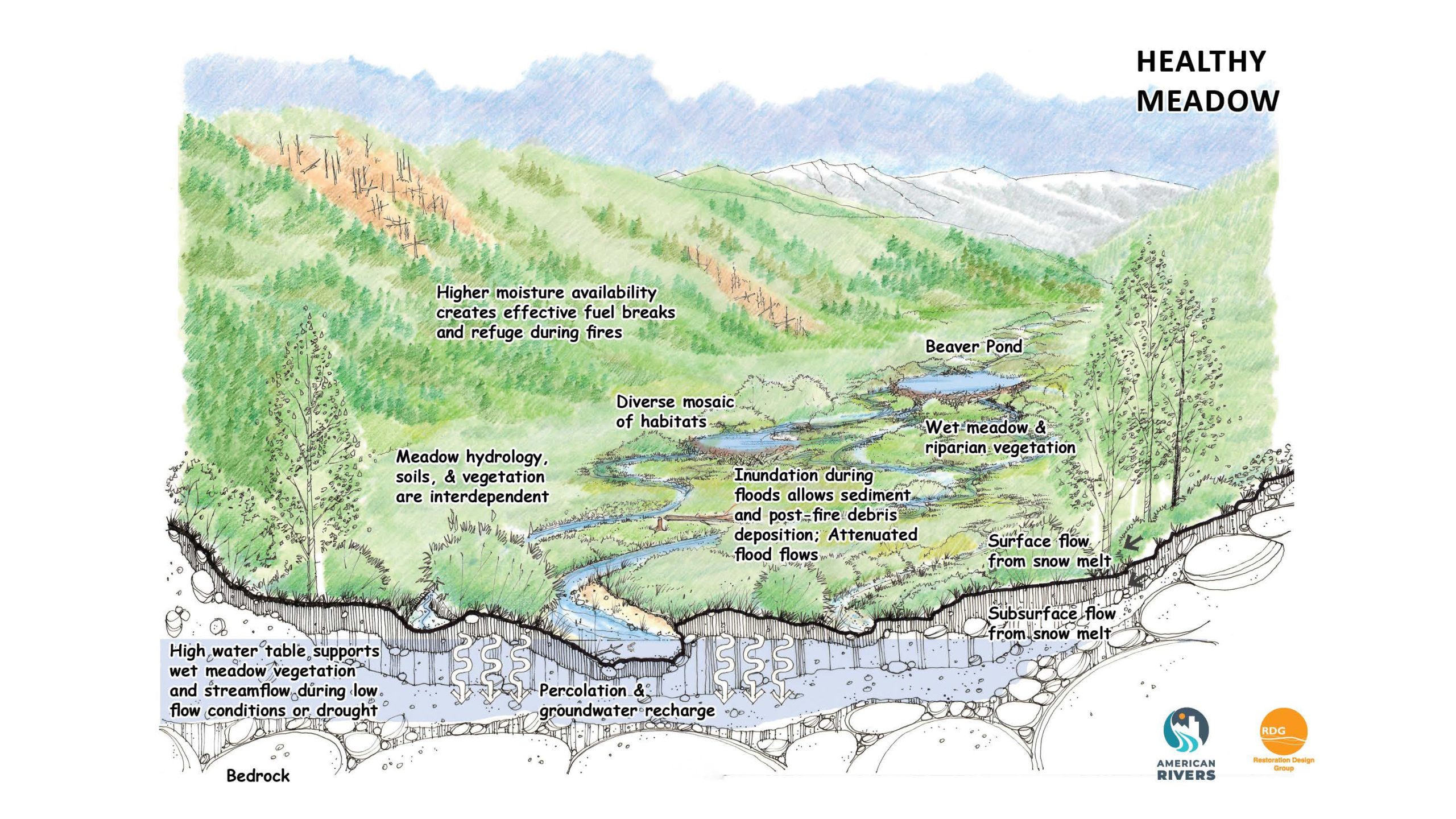
Healthy mountain meadows and wetlands are characteristic of healthy headwater systems and provide a variety of ecosystem services, or benefits that humans, wildlife, rivers and surrounding ecosystems rely on. The complex of wetlands and connected floodplains found in intact headwater systems can slow runoff and attenuate flood flows, creating better downstream conditions, trapping sediment to improve downstream water quality, and allowing groundwater recharge. These systems can also serve as a fire break and refuge during wildfire, can sequester carbon in the floodplain, and provide essential habitat for wildlife. Graphic by Restoration Design Group, courtesy of American Rivers

Our Power is Rivers: Good Hydro versus Bad Hydro and the Future of Energy in the Pacific Northwest — @AmericanRivers #ActOnClimate

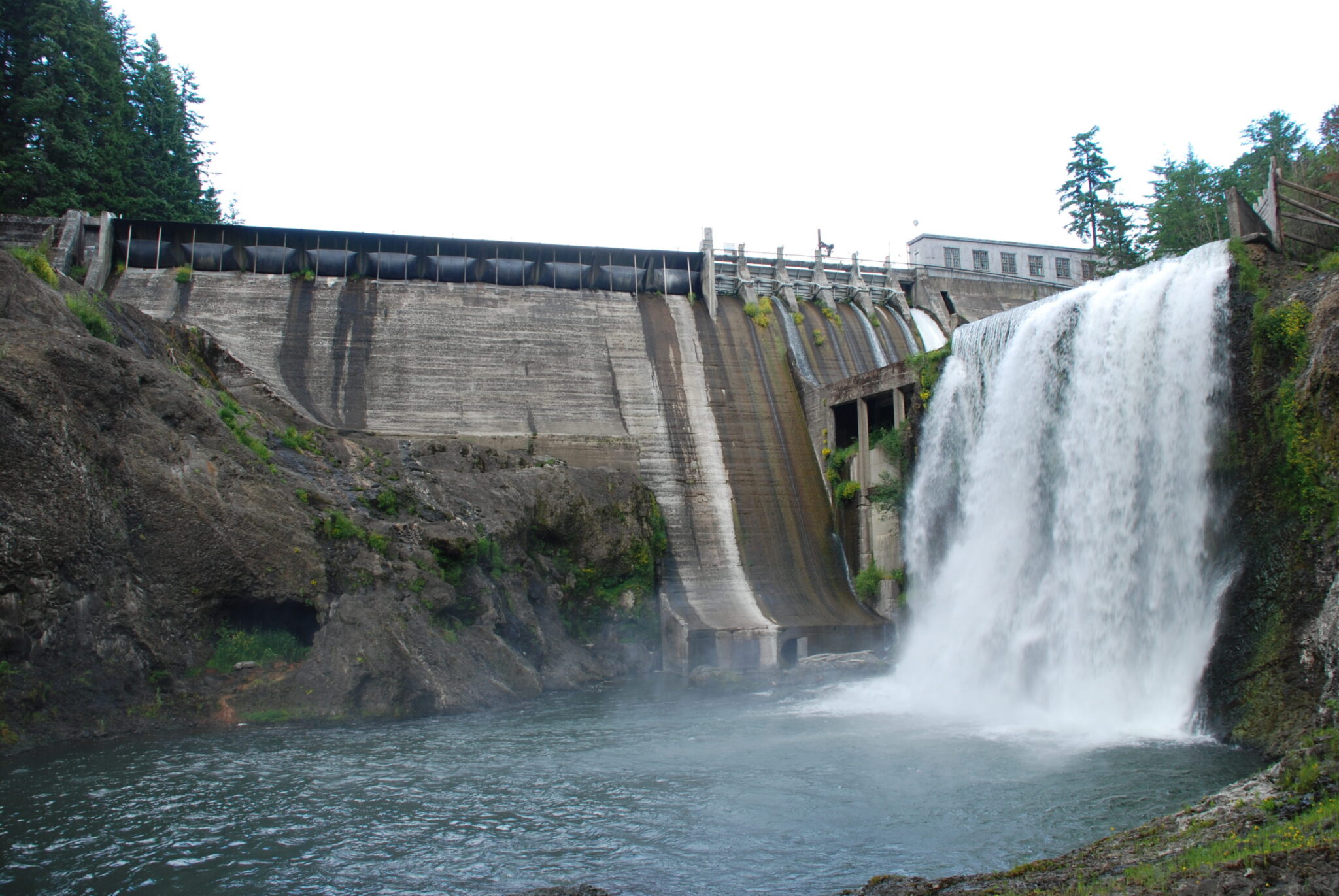
Condit Dam (removed in 2011), Washington | Photo by Thomas OKeefe via American Rivers

Click the link to read the article on the American Rivers website (Kyle Smith):

October 13, 2023

There is an ongoing debate in the Pacific Northwest around whether hydropower as a whole is “good” or “bad”. But this conversation misses important details and nuance.

There are thousands of dams blocking rivers across the Northwest. Many dams provide energy, transportation, flood control, and irrigation. But many are causing more harm than good – and they are falling apart. As a society, we are making choices about the costs and benefits of dams: Which ones can be operated in a more environmentally friendly and economically viable way? And which dams need to be removed?

Dams harm rivers. They can destroy fish and wildlife habitat, degrade water quality, and turn free-flowing rivers into slow moving reservoirs that emit methane, a potent greenhouse gas that causes climate change. Dams in the Pacific Northwest have been a main cause of salmon extinction and a source of painful injustice for the region’s Tribal Nations.

American Rivers has always taken a pragmatic, solutions-oriented approach to dams and hydropower. While we lead the movement to remove outdated dams, we are also a founding member of the Hydropower Reform Coalition, working to improve the operations of dams whose continued operation is important for our energy supply and economy. For the past several years, we’ve also been working with the hydropower industry in the “Uncommon Dialogue on Hydropower, River Restoration, and Public Safety” – finding common ground on plans to retrofit and rehabilitate dams that still serve an important purpose and remove dams that pose a safety risk.

Simply put: American Rivers is ensuring our nation prioritizes healthy rivers, whether that’s by making hydro dams more river- and fish-friendly, maximizing the performance and efficiency of dams, and removing dams whose costs outweigh their benefits.

So, what does this look like in the Pacific Northwest where 50 percent of our annual energy generation comes from hydro? Major dams, including those on the Columbia River, helped build our world-class economy and will continue to support our vibrant region. But we must take a hard look at dams that are causing far more harm than good.

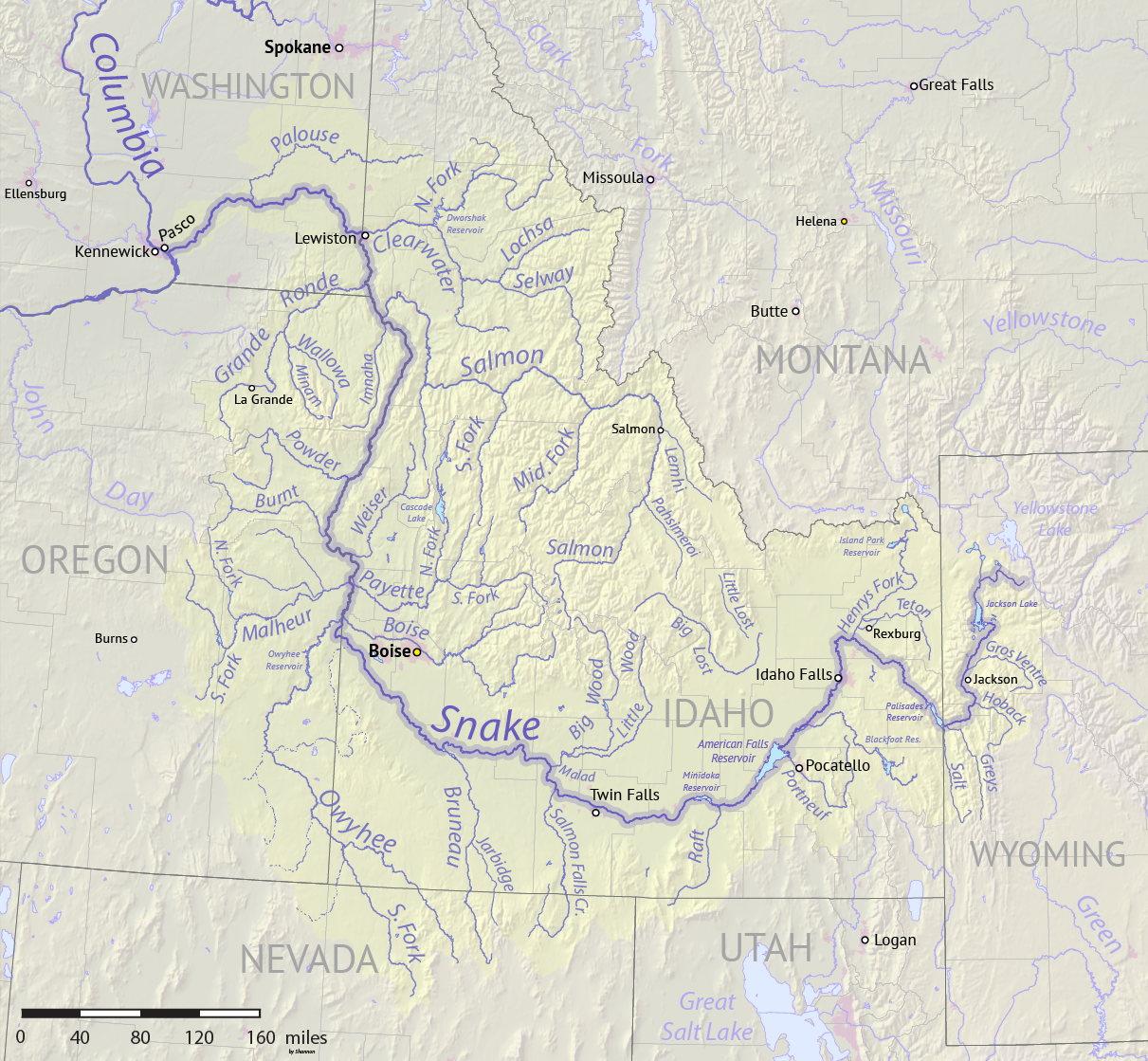
The lower four Snake River dams, which stretch between Tri-Cities, WA and Lewiston, ID, were constructed between 1957 and 1972. These dams provide around 900 average megawatts of power — around 4% of the Northwest’s energy generation. They also provide irrigation for crops grown around the Tri-Cities, as well as transportation for barge traffic between the Tri-Cities and Lewiston. While the services the lower four Snake River dams provide are valuable to surrounding communities, those services can be replaced with alternative technologies. Breaching the earthen portion of the dams is the best solution we have to solve the significant impacts the dams are having on salmon, steelhead, killer whales, Tribal Nations, and economies that rely on these species.

Unlike the mainstem Columbia dams, the lower four Snake River dams are “run of the river” projects that do not provide flood control and store relatively little water in the reservoirs behind each dam. In summer months, those reservoirs bake in the hot sun, raising water temperatures and creating harmful conditions for cold water-dependent salmon and steelhead. In 2015, warm water in the lower Snake was responsible for killing over 95% of the year’s adult sockeye salmon run. Impacts on juvenile salmon are harder to measure, but conservative estimates are that upwards of 50% of juvenile salmon die between Lower Granite Dam on the Snake and Bonneville Dam on the Columbia during their journey to the ocean, and that figure is likely much greater in years when water temperatures rise above 70 degrees.

As we mentioned before, the lower four Snake River dams combined produce an average of around 900 megawatts. Compare that with John Day Dam on the mainstem Columbia 50 miles east of Hood River, which by itself produces around 1,200 average megawatts, and you begin to see why these four dams are the target of so much attention. Four times the negative impacts from dams and their harmful slackwater reservoirs, for less power than John Day Dam alone just doesn’t make sense as we envision a new clean energy future.

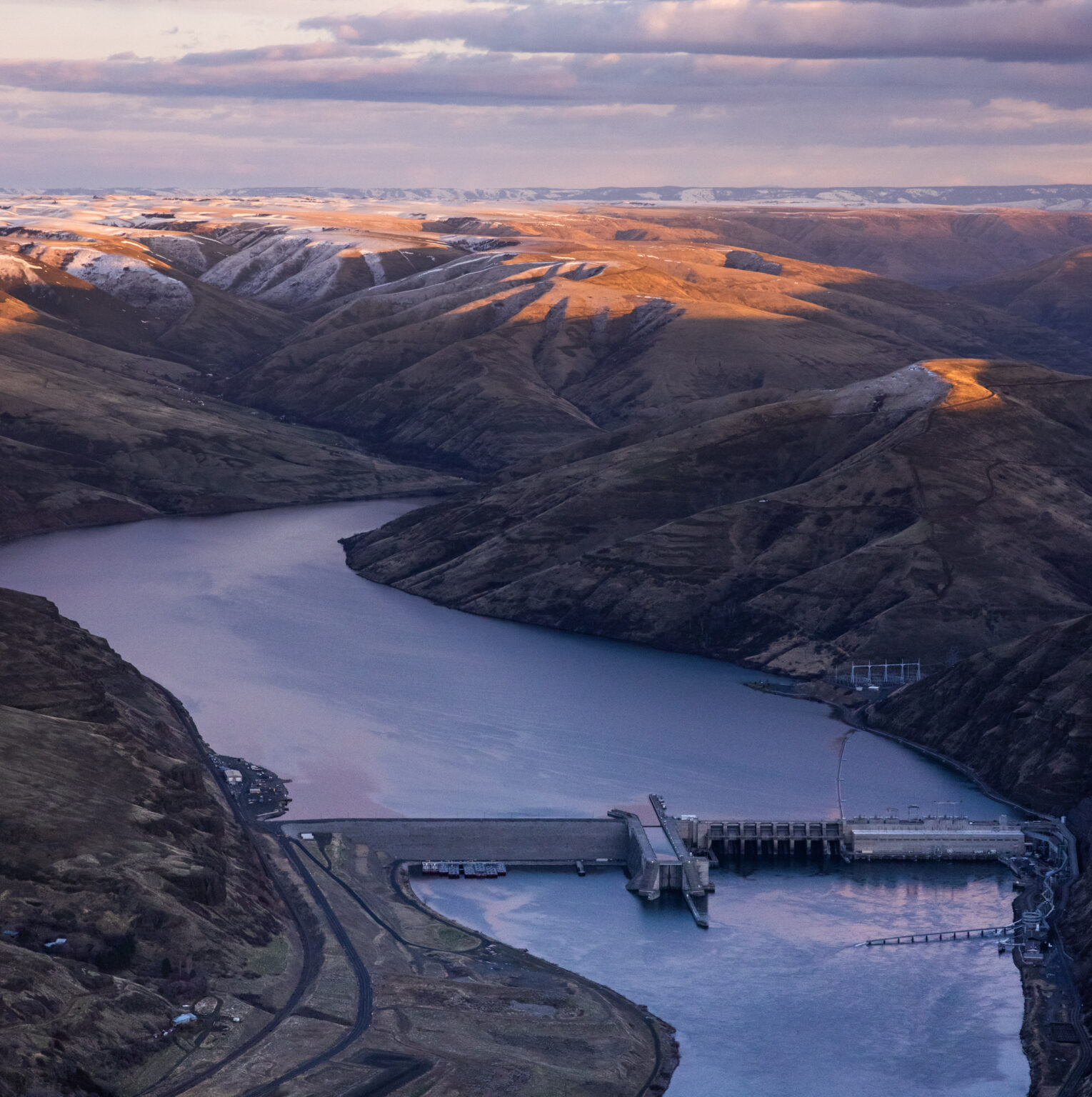
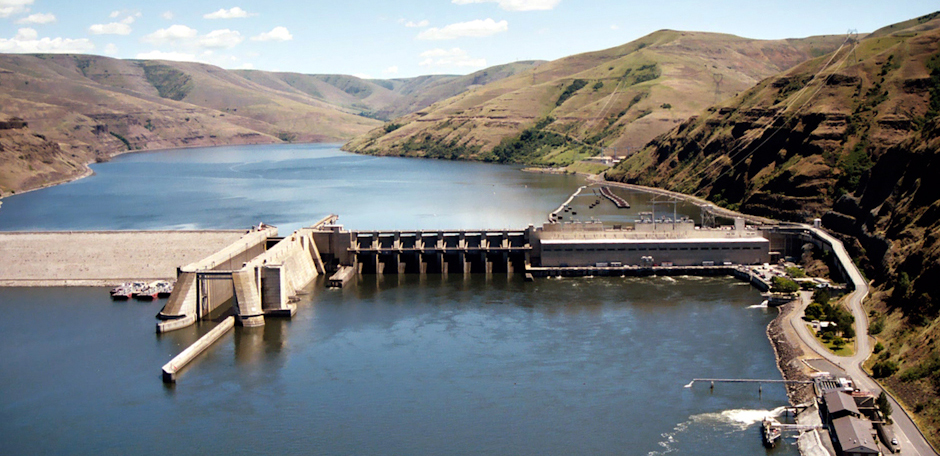
Granite Dam on the Snake River | Photo: Army Corps of Engineers

Finally, no form of energy can be considered clean if it leads to the extirpation of as many species as the lower four Snake River dams continue to cause, particularly when you consider the value those species have for Tribal Nations that have lived in the Columbia Basin since time immemorial. The American Fisheries Society, the National Oceanic and Atmospheric Administration, Trout Unlimited, and many other science-based organizations all recognize that breaching the lower four Snake River dams must be the centerpiece action for restoring salmon populations in the Columbia Basin.

Tribal Nations across the Northwest are leading this initiative to breach the lower four Snake River dams because of these negative impacts. The largest impact being to the salmon populations; their dwindling numbers directly impact the culture and traditions of tribal members and their future generations. In addition, with the harm placed on salmon by these dams, treaties made between the U.S. Government and the Tribes are being violated. We have a moral and ethical obligation to uphold our treaty promises and to save Snake Basin salmon and steelhead from extinction.

As we work to develop a bold new clean energy future for the Pacific Northwest, hydropower will continue to be an important part of our generation portfolio. When measured on the whole, it becomes clear that the lower four Snake River dams cannot be a part of that vision. We must build a system that is reliable, resilient, and equitable. We must continue working together to achieve a future of healthy rivers, abundant salmon, and affordable, reliable clean energy.

Map of the Snake River watershed, USA. Intended to replace older File:SnakeRiverNicerMap.jpg. Created using public domain USGS National Map data. By Shannon1 – Own work, CC BY-SA 4.0, https://commons.wikimedia.org/w/index.php?curid=62294242

#ColoradoRiver States Are Racing to Agree on Cuts Before Inauguration Day: #California, #Arizona and others, fearing a political shake-up of negotiating teams after the November election — The New York Times #COriver #aridification

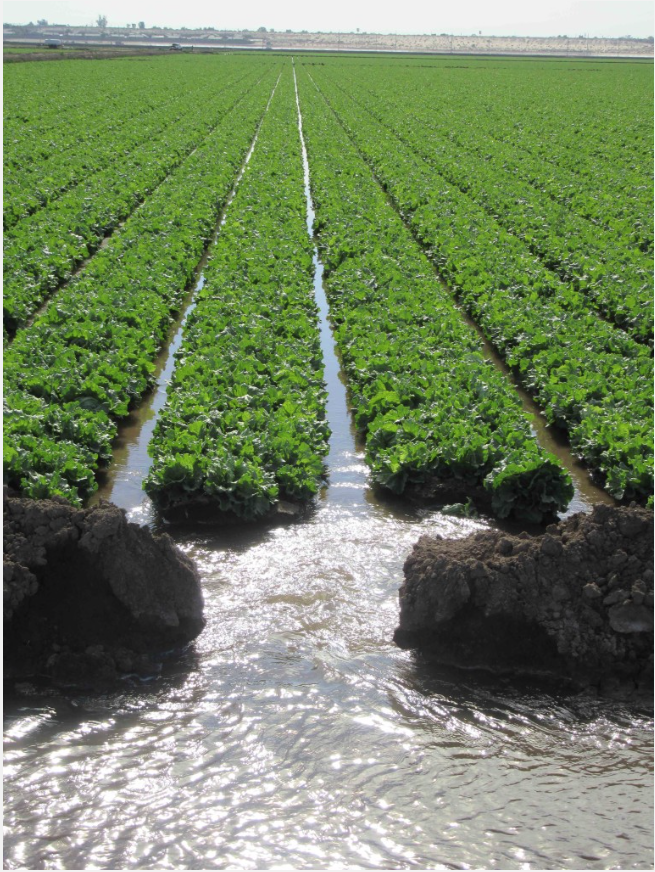
A field of produce destined for grocery stores is irrigated near Yuma, Ariz., a few days before Christmas 2015. Photo/Allen Best – See more at: http://mountaintownnews.net/2016/02/09/drying-out-of-the-american-southwest/#sthash.7xXVYcLv.dpuf

Click the link to read the article on The New York Times website (Christopher Flavelle). Here’s an excerpt:

January 6, 2024

Negotiators are seeking an agreement that would prepare for extraordinary cuts in the amount of river water that can be tapped.

“New plot using the nClimGrid data, which is a better source than PRISM for long-term trends. Of course, the combined reservoir contents increase from last year, but the increase is less than 2011 and looks puny compared to the ‘hole’ in the reservoirs. The blue Loess lines subtly change. Last year those lines ended pointing downwards. This year they end flat-ish. 2023 temps were still above the 20th century average, although close. Another interesting aspect is that the 20C Mean and 21C Mean lines on the individual plots really don’t change much. Finally, the 2023 Natural Flows are almost exactly equal to 2019. (17.678 maf vs 17.672 maf). For all the hoopla about how this was record-setting year, the fact is that this year was significantly less than 2011 (20.159 maf) and no different than 2019” — Brad Udall

“How do we live with the river that we have, not the river that we hope and dream for?” said Becky Mitchell, the lead negotiator for the state of Colorado…

The rules that govern the distribution of Colorado River water expire at the end of 2026. Negotiators are trying to reach a deal quickly, in case the White House changes hands. It’s not the prospect of a Republican administration that is particularly concerning, negotiators said, but rather a change in personnel and the time required to build new relationships between state and federal officials…

“Whenever there’s an administration change, that significantly disrupts things,” said JB Hamby, chairman of the Colorado River Board of California and that state’s lead negotiator. “If we can get a draft ready and in place by the end of the year, that will ensure that we get the hard work done.”

From left, J.B. Hamby, chair of the Colorado River Board of California, Tom Buschatzke, Arizona Department of Water Resources; Becky Mitchell, Colorado representative to the Upper Colorado River Commission. Hamby and Buschatzke acknowledged during this panel at the Colorado River Water Users Association annual conference that the lower basin must own the structural deficit, something the upper basin has been pushing for for years. CREDIT: TOM YULSMAN/WATER DESK, UNIVERSITY OF COLORADO, BOULDER