

Click the link to read the article on The Los Angeles Times website (Ian James). Here’s an excerpt:
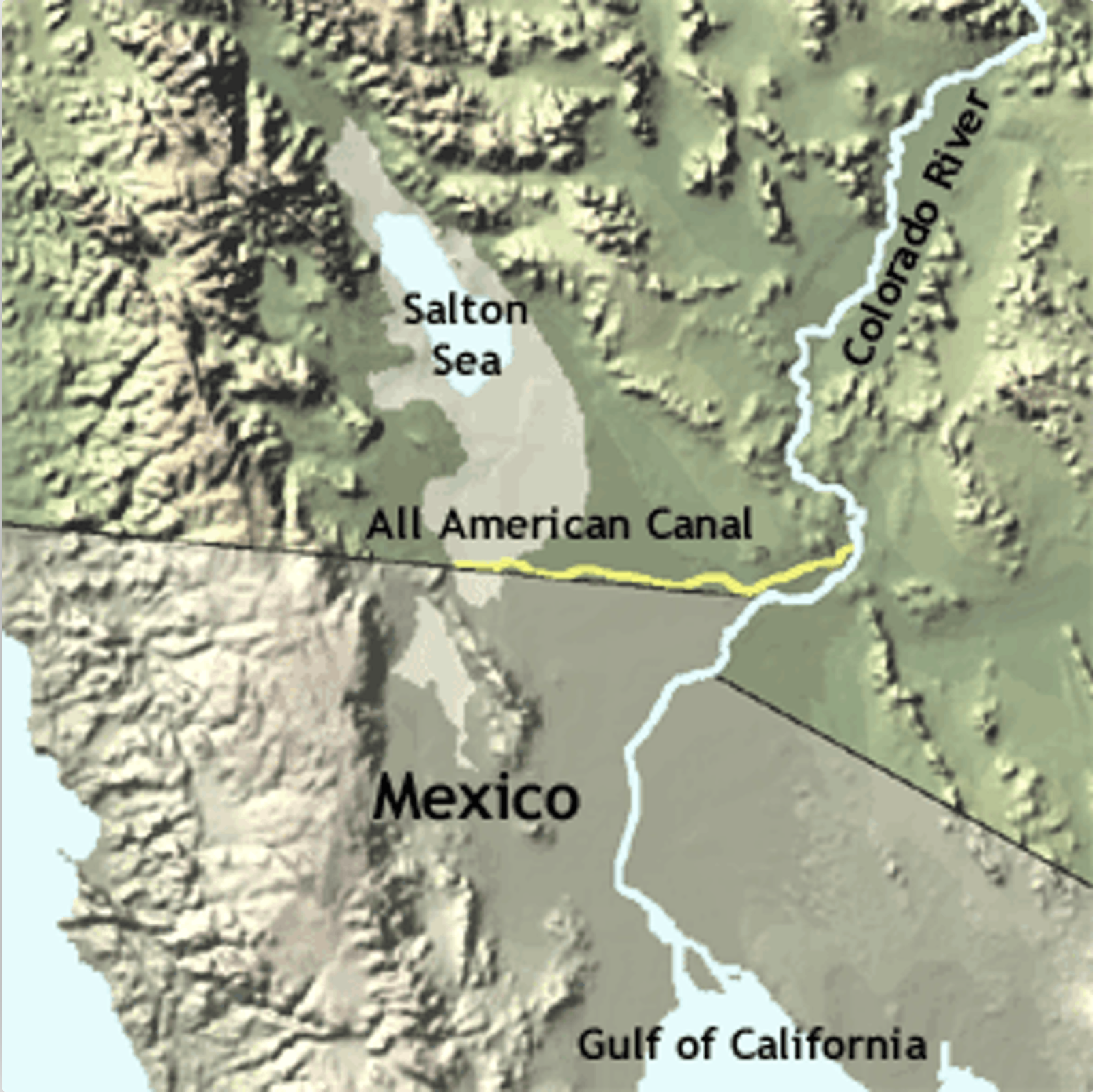
California’s Colorado River Board said Wednesday [December 13, 2023] that several water agencies and one tribal nation signed the first in a series of agreements that will conserve up to 1.6 million acre-feet of water. The agreements build on previous commitments by California, Arizona and Nevada to reduce water use by 3 million acre-feet over three years, cutting usage by about 14% across the Southwest. Much of the reductions are occurring in exchange for payments funded through the Inflation Reduction Act. The deals to reduce water use are aimed at boosting the levels of Lake Mead, the nation’s largest reservoir near Las Vegas, which now stands at 34% of capacity.
The latest agreements “represent another critical step in our collective efforts to address the water management challenges the Colorado River Basin faces due to drought and climate change,” said federal Reclamation Commissioner Camille Calimlim Touton. “Addressing the drought crisis requires an all-hands-on-deck approach, and close collaboration.”
[…]
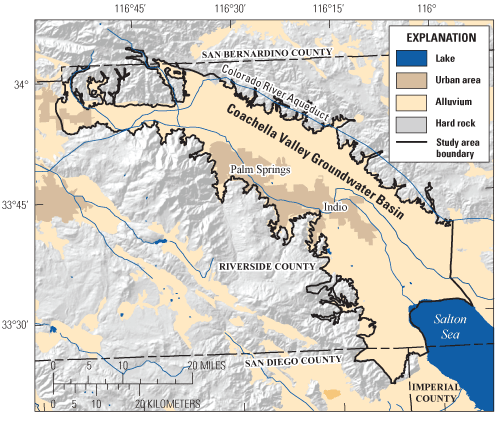
Scientists have found that roughly half the decline in the river’s flow this century has been caused by rising temperatures, and that for each additional 1.8 degrees of warming, the river’s average flow is likely to decrease about 9%…Interior Department officials said the newly signed agreements secure conservation pledges of up to 643,000 acre-feet of water through 2025. The agreements, which were announced in Las Vegas, include $295 million in federal funds for conservation, water efficiency and protection of environmental resources. An acre-foot of water is enough to supply about three average homes for a year. The Coachella Valley Water District has agreed to save up to 105,000 acre-feet of water through 2025, roughly 10% of its supply from the river. The district’s proposal was approved earlier this year, and involves curtailing the use of Colorado River water for replenishing groundwater. In exchange, the federal government is paying $400 per acre-foot of water…
In another agreement, the Quechan Tribe of the Fort Yuma Indian Reservation agreed to save up to 39,000 acre-feet of water in the next two years…Leaders of California’s Imperial Irrigation District, which delivers the single largest share of Colorado River water to farmland in the Imperial Valley, this month approved another agreement to conserve up to 100,000 acre-feet of water…That deal secured reductions in water use through an existing agricultural conservation program in the Imperial Valley and negotiations among several agencies. About half of the water had previously been earmarked to be sent to the San Diego County Water Authority under a water transfer agreement, but will instead remain in Lake Mead. The conserved water is enough to raise the reservoir’s level 1.5 feet…
Jack Schmidt, a professor who leads Utah State University’s Center for Colorado River Studies, recently analyzed reservoir levels and said in a blog post that “the rate of loss this year is much lower” than in all but one of the previous 10 years, “suggesting that current policies of reducing consumptive use may be working.”
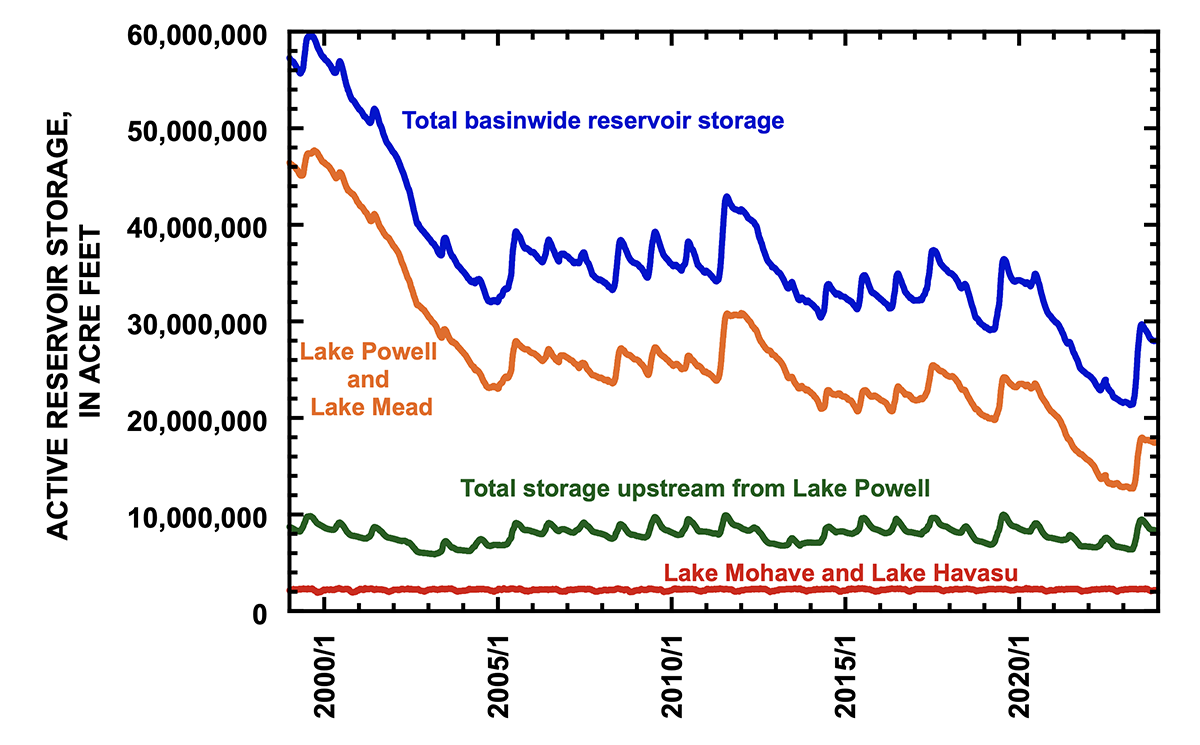
He noted that while this year’s ample snowpack in the Rocky Mountains brought an increase in reservoir levels, a portion of those gains have been used. He said the amount stored in the river’s reservoirs is now the same as it was in May 2021.

Click the link to read the article on the AZCentral.com website (Debra Utacia Krol). Here’s an excerpt:
While water managers from two countries, 30 tribes, seven states and countless other federal, state and local water managers discussed how to address the Colorado River’s structural deficit this week, Indigenous women were working to grow the next generation of water policy leaders. Some of those women were honored Wednesday [December 13, 2023] at the annual Tribes and Water Luncheon during the Colorado River Water Users Association meeting. The Indigenous Women’s Leadership Network was formed to connect emerging Native women working in environmental and natural resources fields to established women leaders, according to Daryl Vigil, co-chair of the Tribes and Water Initiative. The leadership network is part of the tribal water initiative. But to the women in the program, it’s not just about networking, learning leadership skills or scholarships. It’s a way to restore women’s rightful place in tribal societies, as leaders, culture holders and bearers, and nurturers.
Lorelei Cloud, the acting Southern Ute Indian Tribe Chairwoman, is the network’s current co-chair. The leadership positions change hands over time to give other women leadership opportunities, Cloud said. Other current co-chairs could be part of a Native Who’s Who: former Fort Mojave Indian Tribe Chairperson and environmental and cultural activist Nora McDowell; Gwendena Lee-Gatewood, the first woman chairperson of the White Mountain Apache Tribe who now serves as a policy manager for the American Indian Cancer Foundation; and Fort Yuma-Quechan Tribal Councilmember Darnella J. Melancon, who’s also a noted crisis intervention specialist.
“We wear different hats — mother, daughter, office staff, hydrologists and attorneys,” Cloud said. “But those roles don’t end when we get home.”
[…]
Colonization caused oftentimes catastrophic upheavals in social systems that had sustained communities and allowed them to thrive for millennia. Native women have labored to restore these systems ever since. Native women tend to be overlooked in a patriarchal mainstream society, Cloud said. But for more Indigenous women to enter leadership roles in tribal governments, environmental and water programs and the legal profession, women have a duty to help each other, she said…
[Autumn] Powell said her mother and aunts loomed larger than the men in the family. But when she left the nation to attend college, she learned that not everybody thinks having women in leadership roles is a good thing. “The patriarchy is misdirected,” said Powell, a geography major at the University of Maryland at Baltimore County who studies how place has value from the human perspective. She also learned that Native people on the East Coast have suffered greatly from colonial erasure. “‘They don’t live here,'” she recounted people saying about local Natives. “I said they were literally right here.”
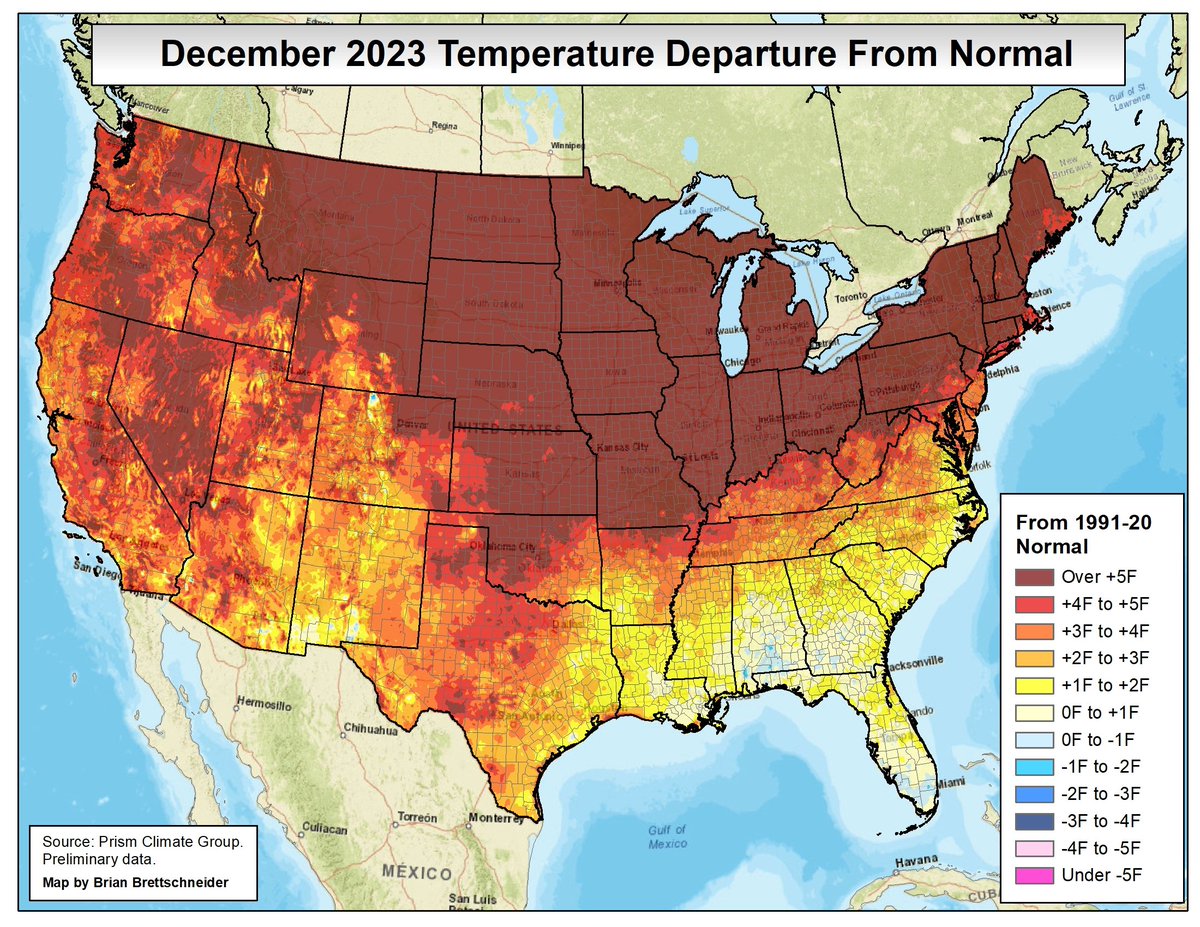
It was 0.67°F (0.37°C) warmer than December 2021.