August 19, 2024
For years, the Hualapai Tribe tried to work with the U.S. Bureau of Land Management by actively voicing their concerns about a lithium exploration project near Wikieup, in northern Arizona.
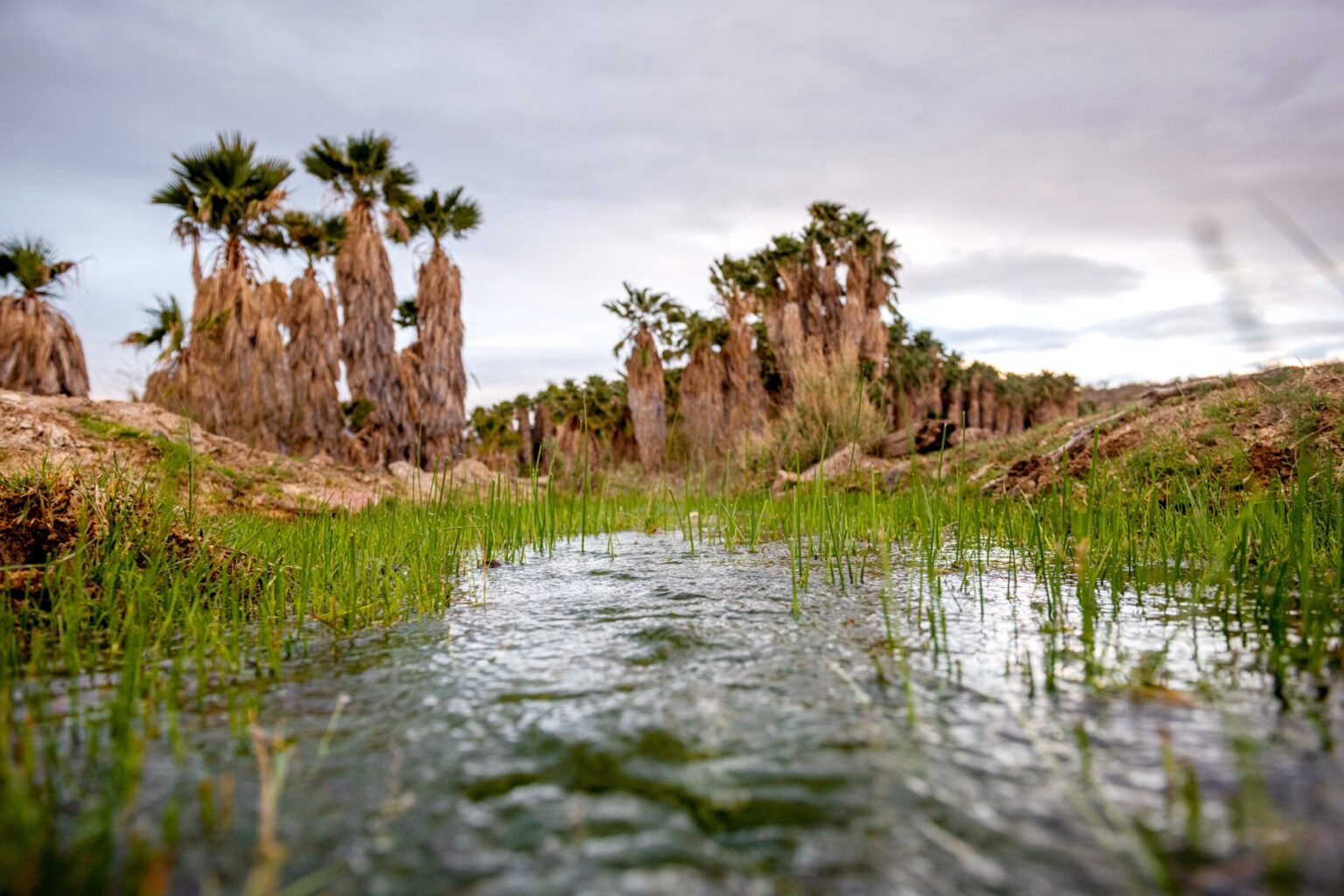
The project allows a mining company to drill and test over 100 sites across BLM land that surrounds one of the Hualapai Tribe’s cultural properties, among them Ha’Kamwe’, a medicinal spring sacred to the tribe.
Ha’Kamwe’ is featured in tribal songs and stories about the history of the Hualapai people and their connection to the land. The historic flow and spring temperature are important attributes for its traditional uses, according to the tribe.
Out of concern for Ha’Kamwe’, the tribe submitted multiple public comments, sent several letters of concern and participated in tribal consultations with BLM throughout the planning phase for the Big Sandy Valley Lithium Exploration Project. Big Sandy, Inc., a subsidiary of Australian mining company Arizona Lithium, leads the project.
“It doesn’t feel like the BLM really heard us or took our comments into full consideration,” said Ka-voka Jackson, the director of the Hualapai Department of Cultural Resources, adding that the tribe often felt as if it was “never taken seriously.”
Big Sandy, Inc. has been seeking approval for its project since 2019, and the Hualapai Tribe has been voicing its concerns every step of the way. However, their efforts still fell flat, as BLM gave the project the green light on June 6.
BLM’s approval of the Big Sandy Valley Project allows the mining company to drill and test up to 131 exploration holes across 21 acres of BLM-managed public land to determine whether a full-scale lithium mining operation could be viable.
Two months later, the Hualapai Tribe filed a lawsuit against the Bureau of Land Management, challenging its approval.
Lawsuit: BLM refused to consider alternatives
Ha’Kamwe’ is located within the Hualapai Tribes property known as Cholla Canyon Ranch, and the boundaries of the Big Sandy Valley project nearly surround the entire property.
Only one portion of the tribe’s land does not border the drilling project. Jackson said it’s “surprising, appalling and, frankly, disgusting” that the BLM is trying to say there are no adverse effects on the tribe’s cultural property or cultural resources.
“The tribe maintains that we are opposed to this project,” she said. “This lawsuit is to make sure that BLM is going through the proper processes.”
“These exploratory wells — some of which will be drilled close to Ha’Kamwe’ — will penetrate deep below ground into the aquifer that supports the spring’s flows,” the lawsuit states. “The Project will also create noise, light, vibrations, and other disturbances that will degrade Ha’Kamwe’s character and harm Tribal members’ use of the spring for religious and cultural ceremonies.”
The lawsuit claims that the project violated mandates under the National Environmental Protection Act and the National Historic Preservation Act. Ha’Kamwe’ is recognized as a traditional cultural property and is eligible to be listed on the National Register of Historic Places.
“The litigation is asking for full compliance with the National Historic Preservation Act (NHPA) and the National Environmental Policy Act (NEPA),” said Earthjustice Senior Attorney Laura Berglan, who is part of the team representing the Hualapai Tribe.
This includes BLM taking a “hard look” at the environmental impacts of the exploration activity, as well as considering the impact of its actions on historic properties, she said.
The lawsuit claims that BLM approved the mining project without appropriately considering a reasonable range of alternatives or taking a hard look at water resources under the NEPA and moved forward with the project without providing mitigation measures under the NHPA for Ha’Kamwe’ and other resources important to the tribe, thus violating both acts.
“This isn’t a situation where the tribe wasn’t engaged throughout,” Berglan said, adding that the Hualapai Tribe had provided BLM with traditional Indigenous knowledge related to the project. Still, it was not fully taken into account.
Berglan said the tribe has been trying to work with BLM for years, and has committed a substantial amount of time and resources to review drafts of the environmental assessments and submit extensive comments.
“A lot of time has gone into this process, and to be sort of disrespected by not taking into account their Indigenous knowledge that this (project) is going to have impacts on Ha’kamwe’ is troublesome,” she added.
The lawsuit argues that the tribe even asked BLM to consider alternatives to the project — such as drilling fewer wells or moving them farther from the spring — to reduce its adverse effects. However, BLM refused to consider a reasonable range of alternatives to the project proposal.
“BLM violated NEPA by failing to consider a middle-ground alternative that would address the tribe’s concerns,” the lawsuit states
The Arizona Mirror contacted BLM for comment on the lawsuit, but a representative said the bureau does not comment on pending litigation.
‘We were ignored’
Jackson said that the Hualapai Tribe does not want this mining project to happen, and like many other tribes in Arizona, they are experiencing just how hard it is to stop mining operations in the state.
“We submitted all our comments,” Jackson said. “We were ignored.”
Jackson said the tribe filed the lawsuit because it believes BLM did not follow the proper processes during the Sandy Valley project’s environmental analysis phase.
“Not all of those comments were addressed, and when the (environmental assessment) had been finalized, the BLM said there were no adverse effects on historic property, which is very contradictory to all the tribe’s comments that have been submitted to the BLM,” Jackson said.
Jackson said that before BLM finalized the environmental assessment, the tribe tried to stay in constant communication with the bureau to stay current on the project and were hopeful the bureau would consider their comments, but did not hear back.
“It’s been very upsetting for us,” Jackson said, adding that it’s been hard for the tribe because they are going up against an agency that has a lot of their ancestral homelands in their legal possession.
Dolores Garcia, the public affairs specialist at the BLM Arizona State Office, said in an email to the Mirror that BLM conducted outreach to tribes for consultations over the past three years. Details on the type of outreach efforts were not provided.
The tribes include the Chemehuevi Indian Tribe, the Colorado River Indian Tribes, the Fort Mojave Indian Tribe, the Hopi Tribe, the Hualapai Tribe, the Navajo Nation, the Salt River Pima-Maricopa Indian Community, the Yavapai-Apache Nation and the Yavapai-Prescott Indian Tribe.
“Tribal consultation is considered confidential government-to-government communication, so we cannot discuss specific details related to consultation,” Garcia said.
However, Garcia said that, based on input from the tribes and the public, BLM worked with the proponent to revise its exploration plan, which included removing the use of a groundwater well within a few hundred feet of Ha’Kamwe’ and a nearby staging area.
“Water needed to support the drilling operations will be trucked to the site,” Garcia said. “The proponent has also committed to providing the opportunity for the Hualapai Tribe and other descendant tribal communities to monitor ground disturbing activities onsite.”
Jackson said their experience with how BLM moved forward on this lithium project did not give the tribe much faith in potential future projects.
She said when projects like Big Sandy Valley get proposed in the area, the tribe hopes that the BLM will come to work with them and take their comments seriously because they have been the stewards of the land for generations.
“We still use Ha’Kamwe’ as a community,” Jackson said. “When people go there, they have this sense of being, a sense of place, a sense of belonging, and a really deep ancestral tie there.”
‘Temporary’ disruptions don’t need permanent fixes, BLM says
As part of its environmental assessment, BLM listed several short- and long-term effects, including the temporary disruption to cultural practices at or near Ha’Kamwe’ and the impact on native wildlife and vegetation of up to 21 acres.
Even with these effects included in the assessment, which are concerns the Hualapai Tribe has brought up multiple times, BLM concluded that the Big Sandy Valley project would not significantly impact the quality of the area and an environmental impact statement was not needed.
“Visual, noise, and vibration effects from drilling activities would be temporary,” the BLM wrote in its final report. “Coordination with and providing notice to the Hualapai Tribe of drilling activities in the vicinity of the Ha’Kamwe’ may reduce impacts to cultural practices at or near the hot spring.”
Jackson said the tribe and its members have every right to be out at Ha’Kamwe’ utilizing the spring for prayer and healing because it is part of their spirituality and religion. Tribal members have full access to the property and can use it whenever necessary.
“Having that type of noise occurring is really disrupting,” she said. “It takes away from a lot of the spirituality and ability to practice ceremony in peace.”
Jackson said the tribe will have to deal with the disruptions throughout the project’s 18-month duration.
“That’s a long time for tribal members to be affected, and that disrupts all of our activities,” she added. “It disrupts our spirituality.”
The drilling project threatens not only ceremonial ways of life but also natural resources the tribe relies on. Jackson said the community gathers native plants only found in the Big Sandy Valley area, including willows for basket making, traditional tobacco, and clay.
“Those plants coming from that area have meaning,” she said, and they are the same native plants their ancestors gathered from.
“When we gather, we’re not restricted to just the Hualapai property,” Jackson said because tribal members gather on the public BLM land in the area, too.
“That’s our right as people to be able to go out there and gather,” she added, and the bulldozing that will occur to create the paths to the drilling sites will have an impact. “The desert will never recover from all that.”
Jackson said part of what makes the area sacred for the tribe is maintaining the integrity of the land, and the tribe feels that the mining operations will permanently change the location.
They’re concerned about how the project will impact the spring because the drilling will occur so close to the site.
According to BLM, to minimize impacts on Ha’Kamwe’, a water source that was previously proposed to be used for the project has been removed from the plan, and a staging area that would have been set up near Ha’Kamwe’ has also been removed.
“Analysis of water resources has determined that the water source for Ha’Kamwe’ is located in a deeper aquifer,” the report states. The proposed drilling is not anticipated to reach the aquifer, according to BLM, and if water is intersected during the drilling, the hole shall be plugged using cement grout or bentonite clay.
Jackson said the tribe does not think that is good enough because if the mining hits the water and does utilize bentonite clay or cement grout, there is no guarantee that it won’t have an adverse effect or potentially block off the underground water that flows through the spring.
“If the temperature were to be affected that’s changing the entire character of the spring and the integrity of it,” Jackson said, which is a big deal for the tribe because Ha’Kamwe’ translates to “warm spring.”
“We’re going to try every way we can to try and stop this operation,” Jackson said, adding that this is the first lithium mining project of its kind on their homelands and they’ve opposed it the entire time.
“It’s kind of scary looking into the future, seeing how these mining companies can kind of get away with this and how the BLM is letting it happen, even when they know how it will negatively impact the tribes and the tribe’s sacred lands,” Jackson said.