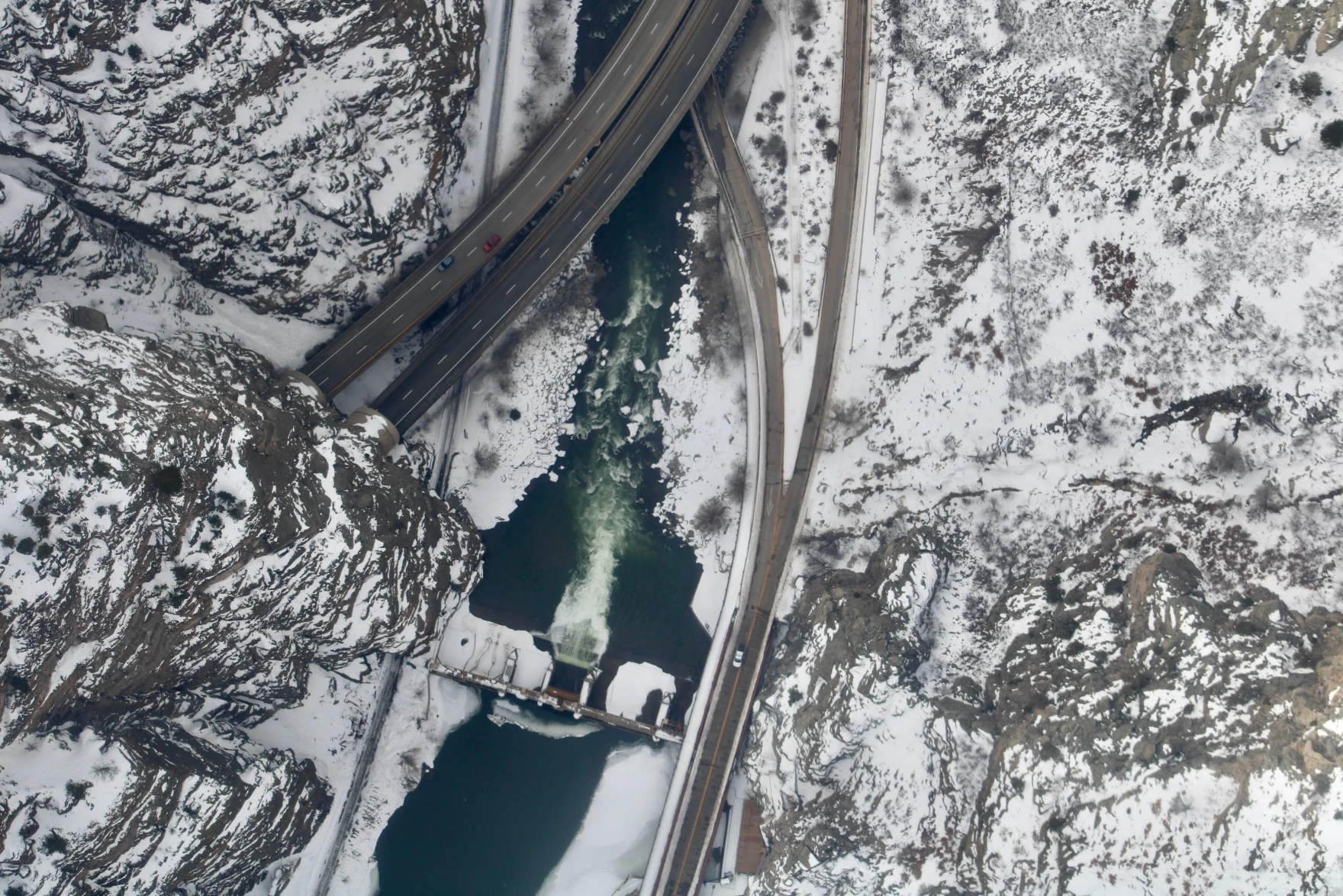
The Colorado River flows through the Shoshone diversion structure on Jan. 29, 2024. A group trying to purchase Shoshone’s water was set to receive $40 million from the federal government. Their efforts, along with dozens of other projects across the West, will have to wait. Photo credit: Alex Hager/KUNC
Click the link to read the article on the KUNC.org website (Alex Hager):
January 27, 2024
This story is part of ongoing coverage of the Colorado River, produced by KUNC and supported by the Walton Family Foundation.
Payments to help Western states respond to drought are on pause after an order from President Donald Trump. A pool of $388.3 million from the Inflation Reduction Act had already been allocated to fund water conservation projects by the Biden administration, and its future now hangs in the balance.
The Colorado River supplies water for about 40 million people from Wyoming to Mexico, but its stretched thin. Climate change is cutting into supplies, and the cities and farms that depend on it are struggling to cut back on demand. Federal funding has been a pivotal part of Western states’ response to that reality, with billions of dollars from the Biden administration helping pay for a wide variety of programs – incentivizing farmers to use less water on their crops, improving wildlife habitat and much more.
This latest tranche of money was originally destined for projects in Colorado, Utah, Wyoming, New Mexico, and four different Native American tribes. A specific list of projects the Biden Administration wanted to fund was released in the waning days of its time in the White House. Days later, shortly after his inauguration, President Trump signed an executive order calling for the government to “immediately pause disbursement of funds appropriated under the Inflation Reduction Act.”
Those awaiting the federal funds hope that the pause is only temporary.
Steve Wolff, general manager of the Southwestern Water Conservation District in Durango, Colorado, is awaiting news on the fate of $25.6 million originally designated for his group to improve habitats in wetlands and streams.
“I just hope that both Democrats and Republicans across the West recognize the importance of this funding and what it does for local communities,” Wolff said. “And that they will be able to push the right political buttons in D.C. to make this money get distributed as it was presented by the Bureau of Reclamation.”
Officials with the Bureau of Reclamation, the federal agency which manages dams and reservoirs across the West, did not respond to KUNC’s request for comment.
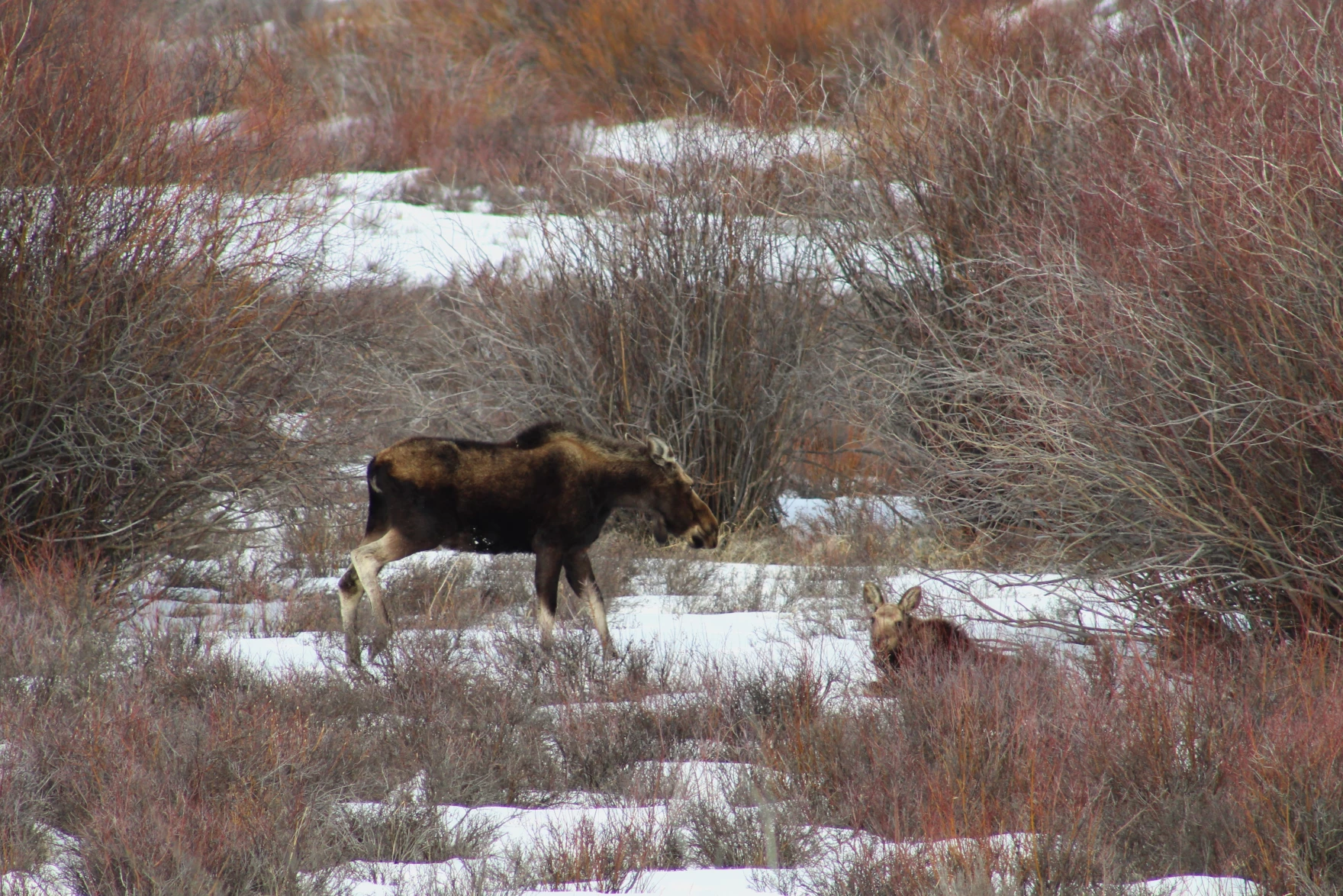
A moose walks alongside the Green River in Sublette County, Wyoming on March 27, 2024. A project to improve riparian habitat along the Green River is among those awaiting details on $388.3 million in federal grants. Photo credit: Alex Hager/KUNC
The list of projects awaiting funding is long. Colorado alone accounts for 16 different projects, all of which are awaiting at least half a million dollars. Money was also allocated to ten projects in Utah, five in Wyoming, two in New Mexico, six on tribal land and three that span state lines.
Utah’s Division of Wildlife Resources would receive up to $37.2 million for five different projects. A spokeswoman for that agency told KUNC that its experts “seem confident” that the projects will still be funded, and the agency understands the federal pause on Inflation Reduction Act funding to be more focused on energy-related programs.
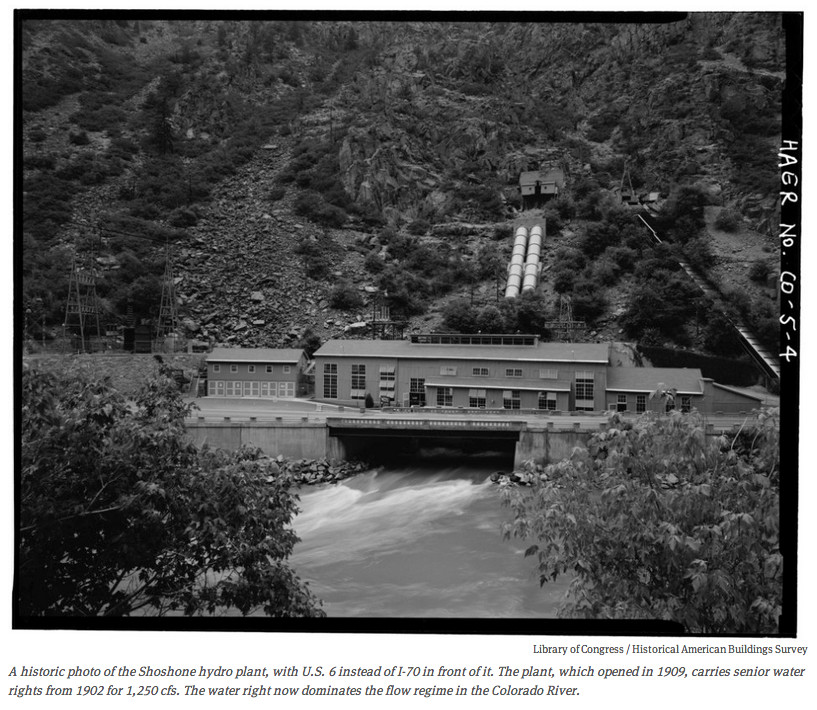
Shoshone Hydroelectric Plant back in the days before I-70 via Aspen Journalism
The single largest grant in the funding pool is for the Shoshone Water Rights Preservation Project in Colorado. The Colorado River District is in the midst of a yearslong push to buy water currently used by a hydroelectric plant and make sure it keeps flowing to Western Colorado. The plan would quell long-held anxieties that a fast-growing city in the Denver area could buy the water instead. The agency has been slowly pooling money from local governments towards its $99 million goal, but this federal grant of up to $40 million represents the biggest chunk of money it would put toward the purchase.
Alex Funk, a water policy expert at the Theodore Roosevelt Conservation Partnership, said the government typically has a lengthy review process for grants like these, and the Biden Administration reviewed and announced them extraordinarily quickly.
“We’re certainly anticipating a thoughtful review of some of these awards,” Funk said. “But we’re hoping that that momentum continues.”
Some of Funk’s work receives funding from the Walton Family Foundation, which also supports KUNC’s Colorado River coverage.
While Trump’s team has given relatively few indications about how it will deal with Colorado River matters, Interior Secretary nominee Doug Burgum spoke about them briefly during a Senate confirmation hearing. Funk called those comments “largely encouraging,” especially when it comes to the tense negotiations about water sharing between states that use the Colorado River.
“[Burgum] certainly signaled that he wanted his agency to be supportive of ongoing dialog and collaboration to keep that process on track,” Funk said.
Shortly after Trump won the 2024 election, top water negotiators said they did not expect the new president to shake up their talks, and said federal water policymakers have typically been technocrats, shielded from partisan turnover in Washington, D.C.
In December, a number of water policy experts expressed concern about the future of federal funding after the Biden Administration supplied Colorado River users with a “once-in-a-generation windfall.”
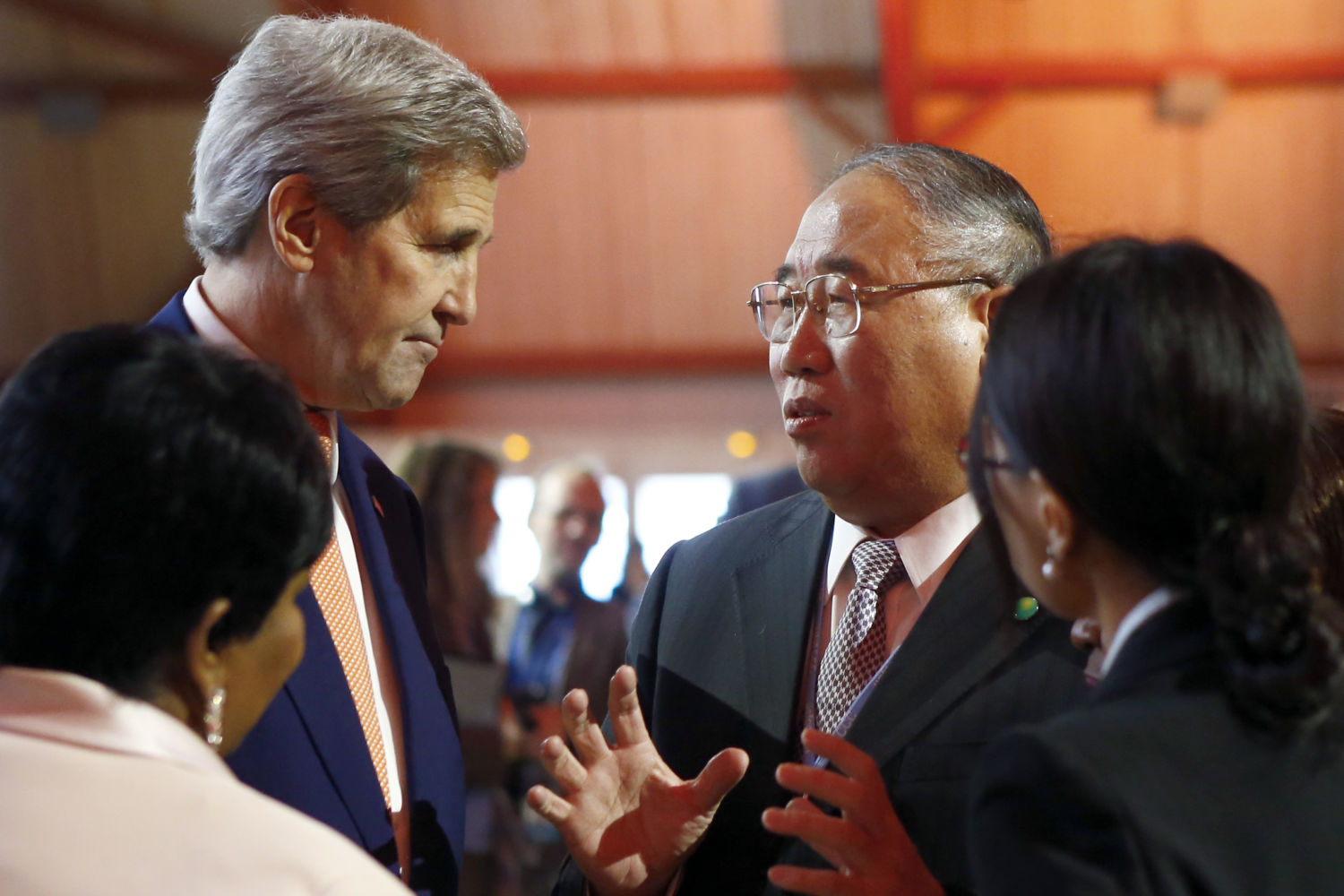
John Kerry, then U.S. secretary of state, with China’s special representative on climate change, Xie Zhenhua, at the 2015 Paris climate conference. FRANCOIS MORI / AP PHOTO
Click the link to read the article on the Grist website (Joseph Winters & Naveena Sadasivam):
January 20, 2025
Within hours of being sworn into office on Monday, President Donald Trump announced a spate of executive orders and policies to boost oil and gas production, roll back environmental protections, withdraw from the Paris climate accord, and undo environmental justice initiatives enacted by former president Joe Biden.
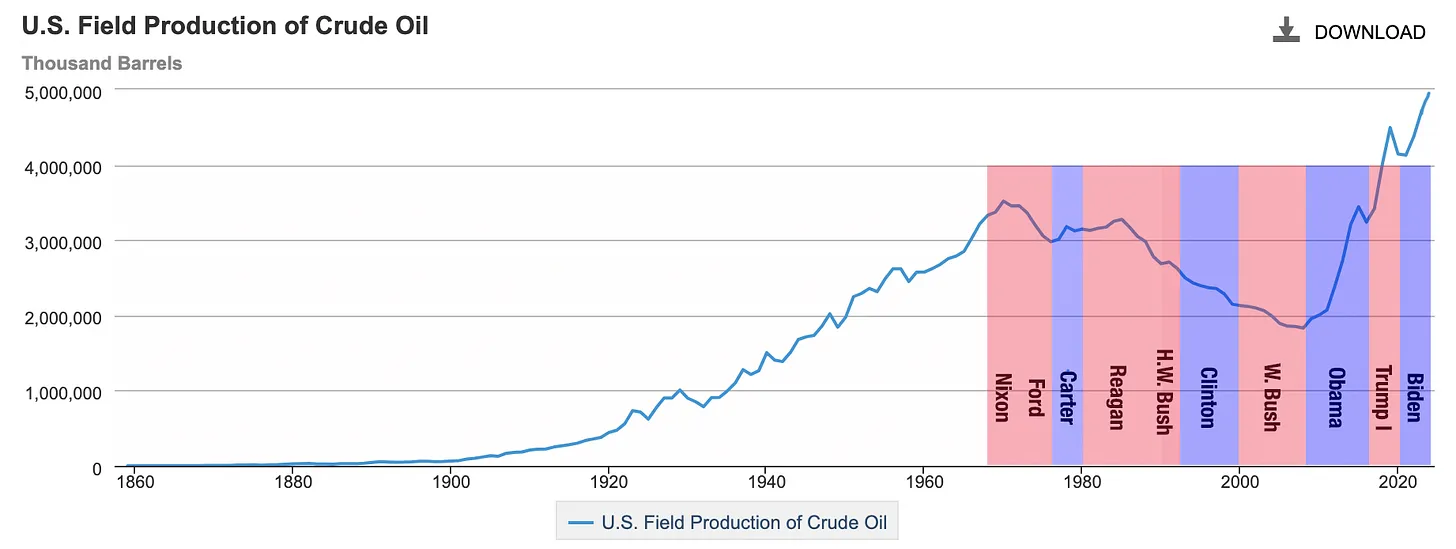
Conventional wisdom — and political donations — would indicate that Republicans are friendlier than Democrats to the oil and gas industry. And, in fact, that’s probably true: Democrats are more likely to pass regulations on drilling; Republicans are more likely to give oil corporations massive tax cuts. But in spite of all of that, Over the last fifty years, Republican presidents have been more likely to oversee crude oil production declines, while production has generally increased under Democrats, with the exception of the Clinton administration. In fact, the current surge in production began during Obama’s first year, and has continued through Biden’s entire term. This doesn’t mean that Democrats spur production. What it means is that more regulations don’t hamper production, and rescinding those regulations — and corporate tax cuts — don’t spur production. There are many forces in play, and the occupant of the White House is merely one of them, and a relatively insignificant one at that. Source: EIA, Land Desk.
Trump has called climate change a “hoax,” and appointed oil industry executives and climate skeptics to his Cabinet. His first-day actions represent a complete remaking of the country’s climate agenda, and set the tone for his administration’s approach to energy and the environment over the next four years.
‘Drill, baby, drill‘
Among the most significant actions Trump took Monday was declaring “an energy emergency,” which he framed as part of his effort to rein in inflation and reduce the cost of living. He pledged to “use all necessary resources to build critical infrastructure,” an unprecedented move that could grant the White House greater authority to expand fossil fuel production. He also signed an executive order “to encourage energy exploration and production on federal lands and waters, including on the Outer Continental Shelf,” and another expediting permitting and leasing in Alaska, including in the Arctic National Wildlife Refuge.
“We will have the largest amount of oil and gas of any country on Earth, and we are going to use it,” Trump said during his inaugural address. “We are going to drill, baby, drill.”
The U.S. Strategic Petroleum Reserve can store 714 million barrels of crude oil, but currently holds about 395 million. Under his administration, he said, the cache will be filled “up again right to the top.” He also said the country will export energy “all over the world.”
“We will be a rich nation again,” he said, standing inside the Capitol Rotunda, “and it is that liquid gold under our feet that will help.”
Richard Klein, a senior research fellow for the international nonprofit Stockholm Environment Institute, noted that fossil fuel companies extracted record-high amounts of oil and gas during the Biden administration. Even if it is technologically possible to boost production further, it’s unclear whether that will reduce prices.
Dan Kammen, a professor of energy at the University of California, Berkeley, said it is a “direct falsehood” that increasing fossil fuel extraction would drive down inflation. He agreed that the U.S. should declare a national energy emergency — but for reasons exactly the opposite of what Trump had in mind. “We need to quickly move to clean energy, to invest in new companies across the U.S.,” Kammen told Grist.
Denver Water’s sustainability operations include generating energy from solar power panels installed on the roof of its Administration Building, parking garage and over its visitor’s parking lot at its Operations Complex near downtown. Photo credit: Denver Water.
Exiting the Paris Agreement (again)
Trump delivered on his promise to once again withdraw from the 2015 Paris Agreement, the United Nations pact agreed upon by 195 countries to limit global warming that the new president referred to on Monday as a “rip-off.” In addition to signing an executive order saying the U.S. would leave the agreement — titled Putting America First in International Environmental Agreements — Trump also signed a letter to the United Nations to set the departure in motion. Due to the rules governing the accord, it will take one year to formally withdraw, meaning U.S. negotiators will participate in the next round of talks in Brazil at the end of the year. By this time next year, however, the U.S. could join Iran, Libya, and Yemen as the only nations that aren’t part of the accord.
“It simply makes no sense for the United States to voluntarily give up political influence and pass up opportunities to shape the exploding green energy market,” Ani Dasgupta, president and CEO of the nonprofit World Resources Institute, said in a statement. Only 2 in 10 Americans support quitting the Paris Agreement, according to a poll by the Associated Press.
Trump’s announcement came just 10 days after the National Oceanic and Atmospheric Administration declared 2024 Earth’s hottest year on record, one marked by life-threatening heat waves, wildfires, and flooding around the world. Experts say things will only get worse unless the U.S. and other countries do more to limit greenhouse gas emissions.
“Much of the very fabric of life on Earth is imperiled,” climate scientists wrote last October. They noted then, even before Trump’s election, that global policies were expected to cause temperatures to climb 2.7 degrees Celsius (6.9 degrees Fahrenheit) by 2100. One analysis by Carbon Brief estimated that a second Trump administration would result in an extra 4 billion metric tons of climate pollution, negating all of the emissions savings from the global deployment of clean energy technologies over the past five years — twice over.
Coyote Gulch’s Leaf in Byers Canyon on the way to Steamboat Springs August 21, 2017.
“In other words, you’ll be able to buy the vehicle of your choice,” he said during his inaugural address — even though there is no national mandate requiring the sale of electric vehicles and consumers are free to purchase any vehicle of their liking. [ed. emphasis mine] The Biden administration did promote the technology by finalizing rules that limit the amount of tailpipe pollution over time so that electric vehicles make up the majority of automobiles sold by 2032. Under Biden, the U.S. also launched a $7,500 tax credit for consumer purchases of EVs manufactured domestically and planned to funnel roughly $7.5 billion toward building charging infrastructure across the country.
“Rolling back incentives to build electric vehicles in the United States is going to cost jobs as well as raise the price of travel,” said Costa Samaras, a professor of civil and environmental engineering at Carnegie Mellon University who served as a senior policy leader in the Biden White House. “Fueling up an electric vehicle costs between one-third and one-half as much as driving on gasoline, not to mention the benefits for reducing air pollution. Ultimately, to lower the price of energy for U.S. consumers, we need to diversify the sources of energy that we’re using and ensure that these are clean, affordable, and reliable.”
Youth activists rally for climate justice in front of the US Capitol in Washington,DC (photo from earlier in the year). Image: Lorie Shaull,CC BY-SA 2.0, via Wikimedia Commons
Rescinding environmental justice initiatives
Trump signed a single executive order undoing nearly 80 Biden administration initiatives, including rescinding a directive to federal agencies to incorporate environmental justice into their missions. The Biden-era policy protected communities overburdened by pollution and directed agencies to work more closely with them.
That move was part of a broader push that Trump described as an attempt to create a “color-blind society” by stopping the government from “trying to socially engineer race and gender into every aspect of public and private life.” Klein said the objective was “embarrassing.” Kammen said it was a “huge mistake” to move away from environmental justice priorities.
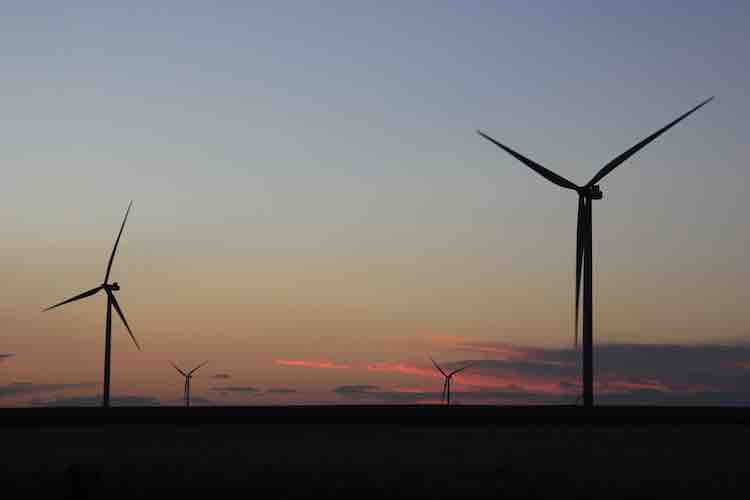
Cheyenne Ridge, located between Burlington and Cheyenne Wells, near the Kansas border, is one of many wind projects on Colorado’s eastern plains. Soon, new transmission will enable far more wind and solar projects. Photos/Allen Best Photo credit: Allen Best/The Mountain Town News
Blocking new wind energy
Trump officially barred new offshore wind leases and will review federal permitting of wind projects, making good on a promise to “end leasing to massive wind farms that degrade our natural landscapes and fail to serve American energy consumers.” The move is likely to be met with resistance from members of his own party. The top four states for wind generation — Texas, Iowa, Oklahoma, and Kansas — are solidly red, and unlikely to acquiesce. Even Trump’s pick for Interior secretary, Doug Burgum, refused to disavow wind power during a hearing last week, saying he would pursue an “all of the above” energy strategy.
Many state and local policymakers, including the members of America Is All In, a climate coalition made up of government leaders and businesses from all 50 states, pledged to take up the mantle of climate action in the absence of federal leadership.
“Regardless of the federal government’s actions, mayors are not backing down on our commitment to the Paris Agreement,” said Phoenix Mayor Kate Gallego, in a statement. “Our constituents are looking to us to meet the moment and deliver meaningful solutions.”