How do President Trump’s Executive Orders Impact Your Clean Water? — Leda Hua (AmericanRivers.org)

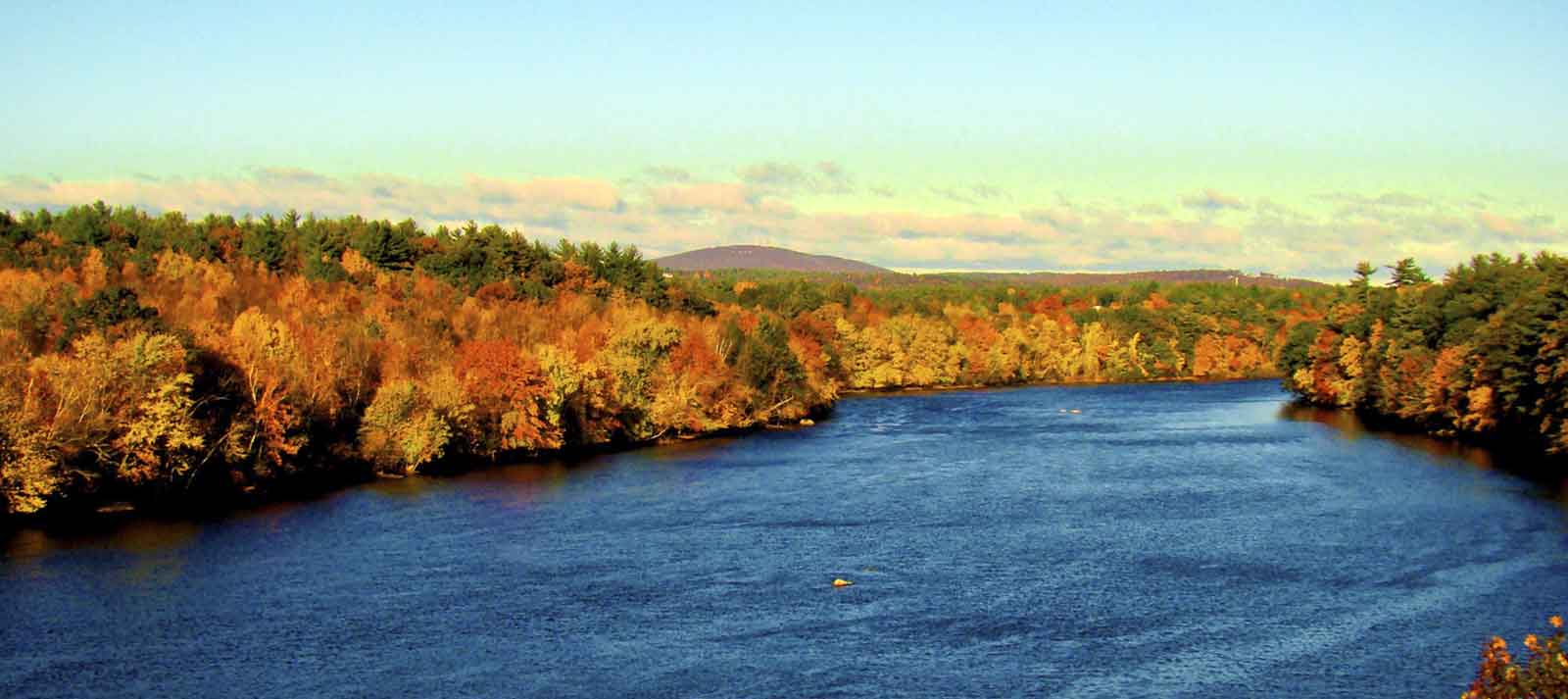
Merrimack River, New Hampshire | Merrimack River Watershed Council

Click the link to read the article on the American Rivers website (Leda Hua):

January 22, 2025

Following his inauguration, President Trump issued a number of executive orders focused on climate and energy—actions that could have major impacts on the rivers and clean water that all Americans depend on. President Trump has said he wants our country to have “the cleanest water,” which is why we must prevent any actions that harm our rivers and drinking water sources.   

That’s why we need a responsible national energy strategy that is considerate of our water resources. Responsible energy development means meeting the needs of people without damaging the environment that our health and water wealth depend on.  

No matter who you are or where you live, we all need clean, safe, reliable drinking water. Most of our country’s water comes from rivers. Public opinion research shows that Republican, Democrat, and Independent voters of all ages and races overwhelmingly support protections for clean water.  Clean water is a basic need, a human right, and a nonpartisan issue we can all agree on. 

The details and implementation of these executive orders will matter as we pursue the dual goals of energy and water security. 

We cannot return to days where polluters were allowed to devastate rural and urban communities and their natural resources. But these executive orders eliminate efforts to safeguard communities from environmental harm, putting their drinking water at risk.  

In addition to protecting Americans from pollution, we also need to help families and businesses prepare for increasingly extreme weather. As Asheville, North Carolina and other communities in the Southeast continue to recover from Hurricane Helene, and thousands in Los Angeles are without homes following recent catastrophic fires, we should be bolstering policies to fight climate change and working to strengthen communities in the face of severe floods, droughts, and fires.  

Created by Imgur user Fejetlenfej , a geographer and GIS analyst with a ‘lifelong passion for beautiful maps.’ It highlights the massive expanse of river basins across the country – in particular, those which feed the Mississippi River, in pink.

Stable on the #ColoradoRiver: When “good” is not good enough — John Fleck and Jack Schmidt (InkStain.net) #COriver #aridification

Stable isn’t good enough. Credit: Jack Schmidt/InkStain

Click the link to read the article on the InkStain.net website (John Fleck and Jack Schmidt):

January 14, 2025

Preliminary year-end Colorado River numbers are stark. Total basin-wide storage for the last two years has stabilized, oscillating between 30 and 27 maf (million acre-feet), where storage sits at the start of 2025[1]. That is lower than any sustained period since the River’s reservoirs were built (Fig. 1). Stable is better than declining, but we did not succeed in rebuilding reservoir storage during 2024’s excellent snowpack but modest inflow. Although reservoir storage significantly increased after the gangbuster 2023 snowmelt year, we have not protected the storage gained in 2024 when inflow to Lake Powell was ~85% of normal from a 130% of normal snowpack. We can’t rely on frequent repeats of 2023; we must do better at increasing storage in modest inflow years like 2024.

Why is this happening?

Less water. Credit: InkStain

The phrase “the new normal” can be misleading, suggesting a new, more stable state for the climate. It’s not gonna be stable. But by one reasonable measure – total estimated natural flow in the Colorado River at Lees Ferry – Calendar Year 2024 was typical of the first quarter of the 21st century, with a preliminary estimate of 12.1 million acre-feet “natural flow.” Thus, the calendar year average annual natural flow at Lees Ferry between 2000 and 2024 has been 12.4 maf/yr, down from 14.3 maf for the period 1930-1999. An additional 770,000 af/yr in side inflows between Lees Ferry and Lake Mead add to the available water supply[2].

That we made the cuts needed to stabilize reservoir levels with a natural flow at Lees Ferry as low as 12.1maf would have been a substantial achievement in the wetter “before times.” Now, it’s table stakes. The most important point is that we absolutely did not rebuild storage in 2024, despite a 130 percent snowpack. We must do better in reducing total basin consumptive use.

Once again in 2024, we saw substantial water use reductions among the states of the Lower Colorado River Basin. Total U.S. Lower Basin main stem use of 6.08 maf is the lowest since 1985 (meaning the lowest since the Central Arizona Project came on line). California’s use, based on preliminary numbers published by Reclamation seems to be the lowest since 1950, and use by the Imperial Irrigation District seems to be the absolute lowest in a dataset that goes back to 1941. These are important achievements, to be celebrated.

With regard to the other two major U.S. areas of use – Lower Basin tributaries and the Upper Basin as a whole – we have no idea what 2024 consumptive use was. This is a problem. Lower Basin main stem use is quantified through Reclamation’s annual accounting reports and reported on a nearly daily basis during the course of the water year. River flows and reservoir levels across the basin are similarly reported in public, transparent ways. That’s how we’re able to provide the data you see above. Anyone can download and crunch the numbers. The general public can’t readily do that for consumptive use in the Upper Basin or Lower Basin tributaries.

As Elinor Ostrom noted in her classic book Governing the Commons, shared understanding of the resource is crucial to successful water management. Increasingly, areas of uncertainty have become contested ground, as the genuine technical uncertainties collide with the motivated reasoning of political actors across the basin. [ed. emphasis mine]

With respect to the Upper Basin, we note that the rhetoric that Upper Basin water users suffer shortages in dry years has shifted to a broader claim that Upper Basin users always suffer shortages. We quote here from the Upper Basin states’ January 2 press release: “There are acute hydrologic shortages in the Upper Basin every year – there simply isn’t enough water in any year to satisfy current needs in the Upper Basin every year. The Upper Basin has made uncompensated cuts to their water users every year for the past 24 years.” Some of the data to support this assertion was presented at the December 2024 UCRC meeting, and we look forward to a more complete and transparent accounting of these data, because these data are crucial to a robust Colorado River management discussion. The Upper Basin’s experience of “acute hydrologic shortages … every year” is exactly what John Wesley Powell described in 1878 in the first edition of The Arid Lands Report.  Nothing has changed, and the challenge of agriculture throughout the watershed has been well known for 150 years. We also note that consumptive use data throughout the basin has not been integrated with the important findings of Richter et al (2024) who documented the proportion of water used by different agricultural sectors. They estimated that 55% of all Colorado River water use supplies livestock feed.

We leave a discussion of Lower Basin tributary use for another post but note that in both the cases of the Upper Basin use and Lower Basin tributary use, the numbers are entangled in the current Upper Basin-Lower Basin feud, which makes serious efforts to think about how to manage water at the Basin scale, rather than simply defending parochial interests, much more difficult. It is important that the general public not employed by a state or water agency, and therefore not beholden to local parochial interests, help the basin community as a whole navigate these technical issues.

Conclusion

The stable reservoir levels at the end of 2024, despite another year of deep Lower Basin water use reductions, should be cause for alarm. Deeper cuts are needed. But without a shared understanding of water use elsewhere in the basin, we’re flying blind.

[1] Basin-wide reservoir storage reached a peak of 29.7 maf on 13 July 2023 and was subsequently drawn down to 27.5 maf by mid-April 2024. Inflow from 2024 snowmelt rebounded basin-wide storage to 30.0 maf on 6 July 2024, and storage was subsequently drawn down to 27.4 maf by 31 December 2024. Retention of storage in Lake Mead and Lake Powell has been somewhat better during the same period. Combined storage in Lake Mead and Lake Powell peaked in mid-July 2023 at 18.0 maf, declined to 17.1 maf by mid-May 2024, increased to 18.5 maf on 8 July 2024, and was 17.3 maf on 31 December 2024. Thus, storage in the two largest reservoirs at year’s end was slightly greater than it was at its spring 2024 minimum just before storage increased when significant snowmelt reached Lake Powell.

[2] This estimate is calculated as the difference between annual flow measured just upstream from Diamond Creek in western Grand Canyon and measured at Lees Ferry.

Udall/Overpeck 4-panel Figure Colorado River temperature/precipitation/natural flows with trend. Lake Mead and Lake Powell storage. Updated through Water Year 2024. Credit: Brad Udall

#FortCollins is restricting water-loving turf grass in certain places: What to know — The Fort Collins Coloradoan #conservation


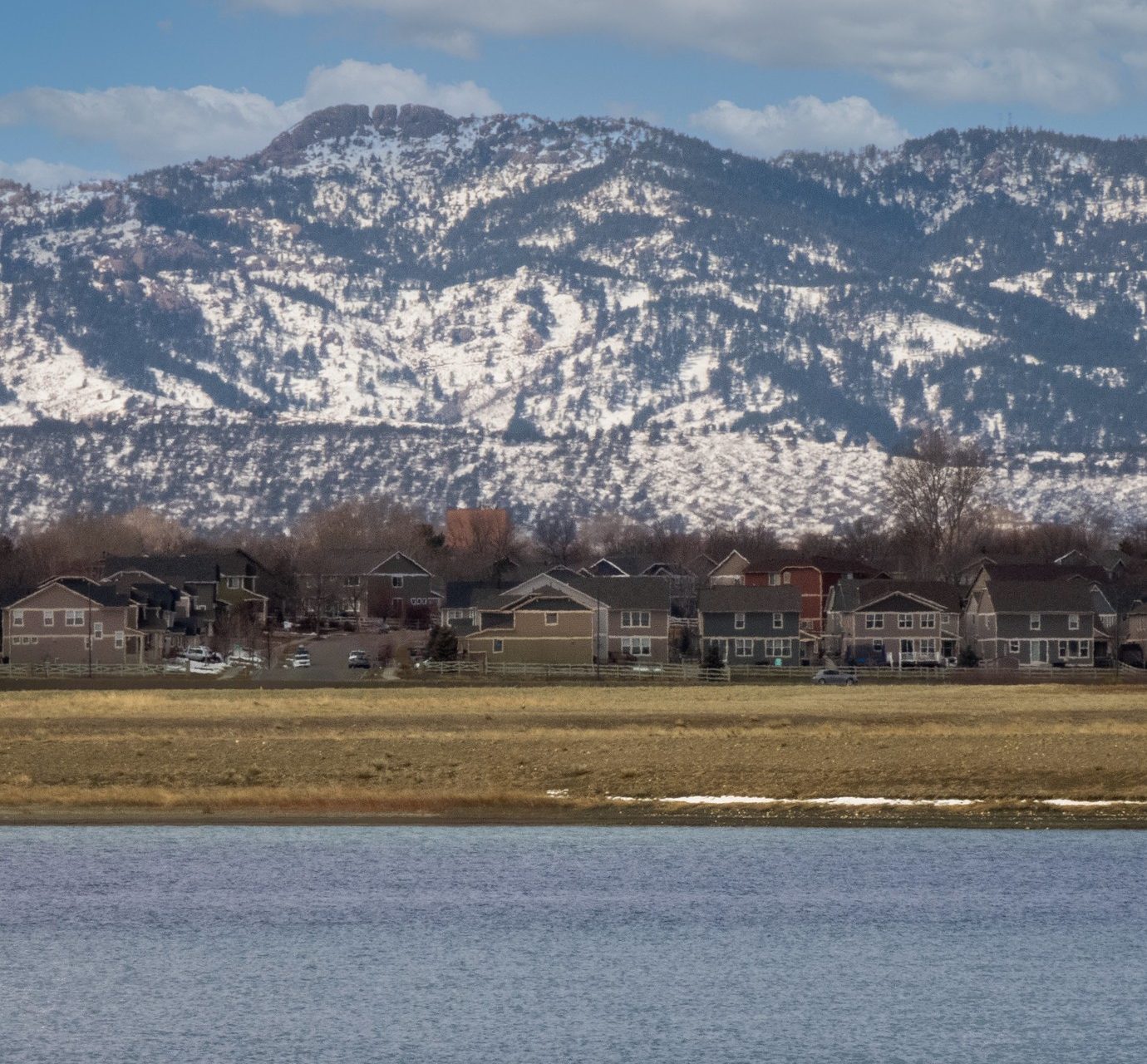
Photo: Herb Saperstone/ City of Fort Collins via Colorado State University

Click the link to read the article on the Fort Collins Coloradoan website (Rebecca Powell):

January 24, 2025

In an effort to reduce water use in Fort Collins and keep landscapes looking good in the face of drought, City Council is requiring developers to mostly give up using grasses like Kentucky bluegrass and turf-type tall fescue. Council members voted Tuesday to change landscaping standards for future development and redevelopment, but the new rules won’t apply to single-family homes, duplexes or accessory dwelling units. They will apply to everything else: businesses, multifamily residential, dedicated irrigation, streetscapes and parkways…

City Council is making the change, in part, to comply with a new Colorado law that restricts high-water grass to “functional” areas like playgrounds, sports fields, picnic grounds, amphitheaters, active areas of parks and golf course playing areas…

  • In addition to putting limits on high-water grasses, moderate-water grasses will also not be allowed except for in functional areas. So this rules out many of the grasses typically used for lawns in Colorado: Kentucky bluegrass, turf-type tall fescue and ryegrass.
  • The changes require 50% of a landscape to consist of living plants (at maturity) to avoid full rock hardscapes.
  • Areas of less than 75 square feet may not use irrigated grass at all.
  • The changes will also reduce the water budget for a project to 11 gallons per square foot annually, from 15 gallons per square foot now.

A Guide to Fighting for Wild Rivers | Presented by OARS

Yampa River near Deer Lodge Park. Photo credit: Allen Best/Big Pivots

Premiered Jan 22, 2025

Discover the magic of the Yampa, the last wild river in the Colorado River Basin, and learn how to build a movement to protect a wild river near you. Step 1: Be proactive… Since 2012, OARS has joined forces with American Rivers and Friends of the Yampa, to host an annual Yampa River Awareness Project (YRAP) river trip. This initiative invites key decision-makers, stakeholders, and activists on a transformative rafting journey along the free-flowing Yampa River, offering them the chance to experience firsthand what could be lost if the river is threatened by a major dam, diversion, or dewatering project. Filmed during the 2024 YRAP trip, A Guide to Fighting for Wild Rivers illustrates how immersing people in a river’s beauty and sharing its ecological significance fosters deep, personal connections that inspire long-term conservation. Each trip builds a growing network of passionate river defenders, united by a shared commitment to preserving the Yampa for future generations. Explore Yampa River rafting trips: https://bit.ly/49DoNCA The step-by-step conservation model shared in the film takes a cue from early river crusaders like David Brower, Bus Hatch, and Martin Litton, whose advocacy efforts helped achieve several major conservation wins for western rivers, galvanized by people’s love of a place.

🎥 Film by Logan Bockrath

Announcement: Public water systems grant availability for emerging contaminants: Grant application deadline is March 21 — #Colorado Department of Public Heakth & Environment

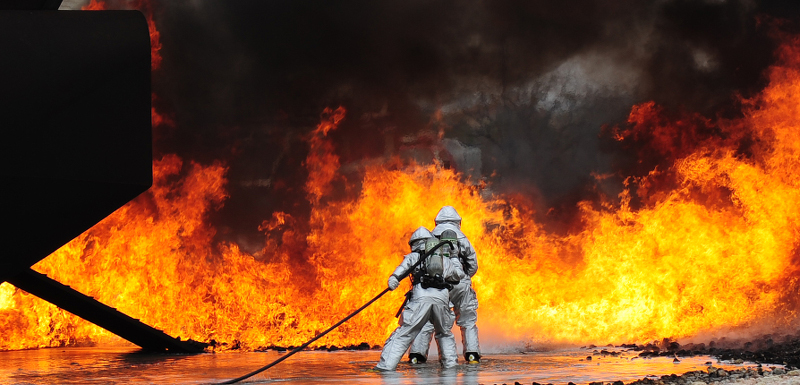
Firefighting foam containing PFAS chemicals is responsible for contamination in Fountain Valley. Photo via USAF Air Combat Command

From email from CDPHE:

January 24, 2025

The Water Quality Control Division (division) is pleased to announce the Request for Applications (RFA) for the Emerging Contaminants in Small or Disadvantaged Communities Grant Program. This RFA is open as of January 24, 2025. 

This program helps non-transient, non-community or community public water systems in small or disadvantaged communities. The funds can help with planning, design, and infrastructure to reduce public health risks from emerging contaminants, including PFAS (per-and polyfluoroalkyl substances), manganese, and others. 

The details of this RFA are located on the division’s website. Written questions and inquiries regarding the RFA are due on February 7, 2025, by 2:00 p.m. MDT.

The application deadline is March 21, 2025, at 11:59 p.m. MDT.
Lenguaje y accesibilidad
Si necesita ayuda en español o en otro idioma, póngase en contacto con la división escribiendo a cdphe.commentswqcd@state.co.us.

EVs 31.5% of all #Colorado new-car sales during Q4 2024: The latest news from Colorado’s transition in vehicles — Allen Best (BigPivots.com) #ActOnClimate

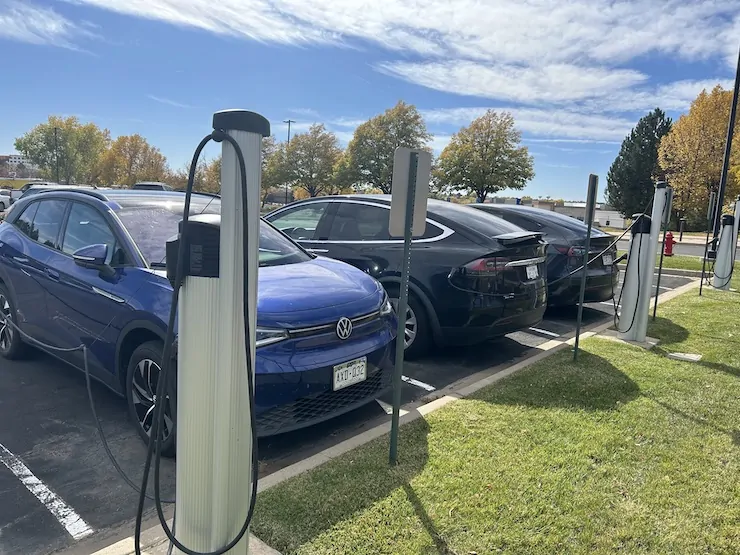
EVs charging at Tri-State. Photo credit: Allen Best/Big Pivots

Click the link to read the article on the Big Pivots website (Allen Best):

January 24, 2025

EVs and plug-in hybrids constitute 31.5% of all new-car sales during Q4

During the fourth quarter of 2024, electric vehicles and plug-in hybrids constituted 31.5% of all new car sales in Colorado, according to the Colorado Automobile Dealers Association.

As of mid-January, according to Atlas Public Policy, Colorado had 169,117 EVs and plug-in hybrids on the road. Colorado has a goal of 940,000 EVS by 2030.

Pueblo gets $11.5 million for 260 EV charging ports

Pueblo is getting $11.5 million in federal grants for installation of 260 EV charging ports near low- and moderate-income neighborhoods.

Pueblo has plenty of low- and moderate-income neighborhoods. It also has a new city administration that in December requested that the city scrap the resolution adopted in 2017 that called for 100% renewable energy by 2035. The ostensible reason given by the mayor was a dislike of the EV fleet for vehicles.

The grant was among 11 announced by the U.S. Department of Transportation totaling $112 million. The money is coming from the Bipartisan Infrastructure Law.

Denver, Greeley, and Commerce City are also getting transportation grants. The single biggest grant will go to southeastern Colorado, where 12 individual passing lanes are to be created between Pueblo and the Kansas state lane. Total aid: $40 million.

The Roaring Fork Transportation Authority is to get a little over $1 million to help create a new alignment for the VelociRFTA Bus Rapid Transit lane through Glenwood Springs to I-70.

Easier to get EV chargers in multifamily housing

Colorado is now allowing for property developers, managers and contractors seeking state grants to install EV charging stations to apply once for multiple locations.

The applications are due no later than Feb. 14. Eligible projects include multifamily housing, work places, tourist destinations and community charging. The standard grants are for up to $250,000, with up to six level-2 charging ports per application.

More information here.See the full list of grants here.

Coyote Gulch’s Leaf in the hotel parking lot upon arriving in Grand Junction May 21, 2023.